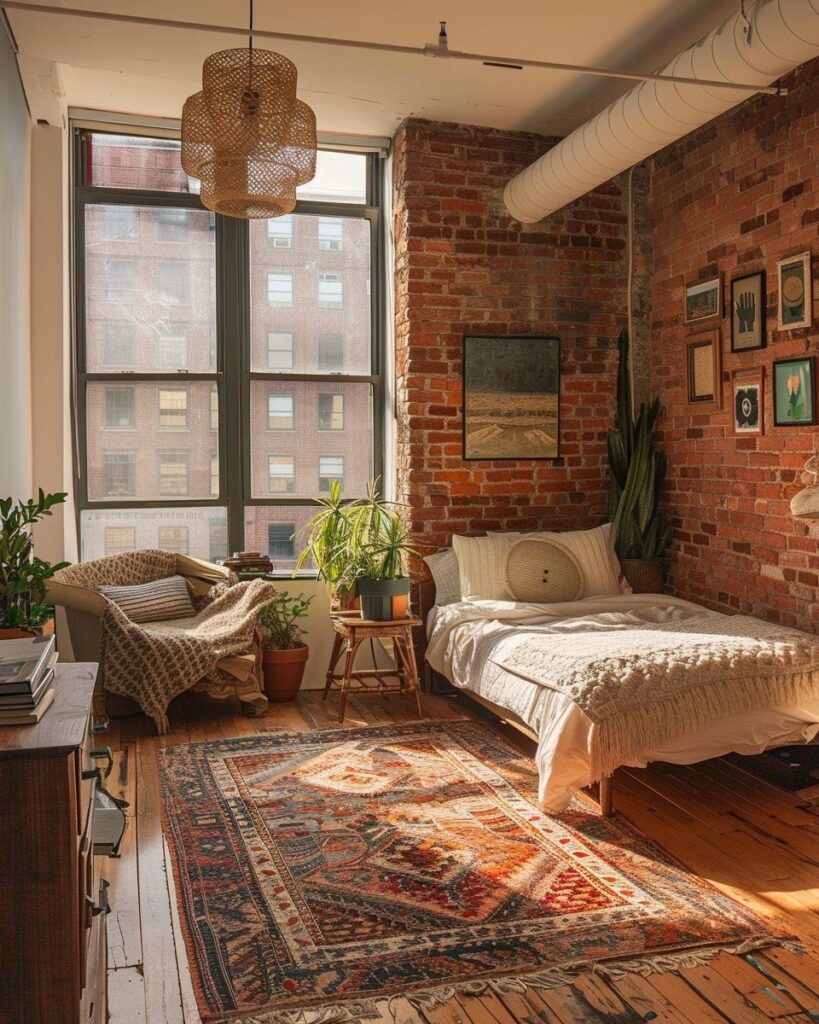
Whether you rent or own decides most of this list, since wallpaper, drapery, a mural and a bold dark paint color can come off or go over easily, while exposed brick, textured 3D panels and backlit stone need real building and planned wiring.
The ideas run from a gallery wall of art you already own, which costs almost nothing, to fluted panels and backlit stone that cost far more than paint.
Pick by what your lease and your weekend allow, then let the wall behind the bed carry the feature.
1. Wallpaper
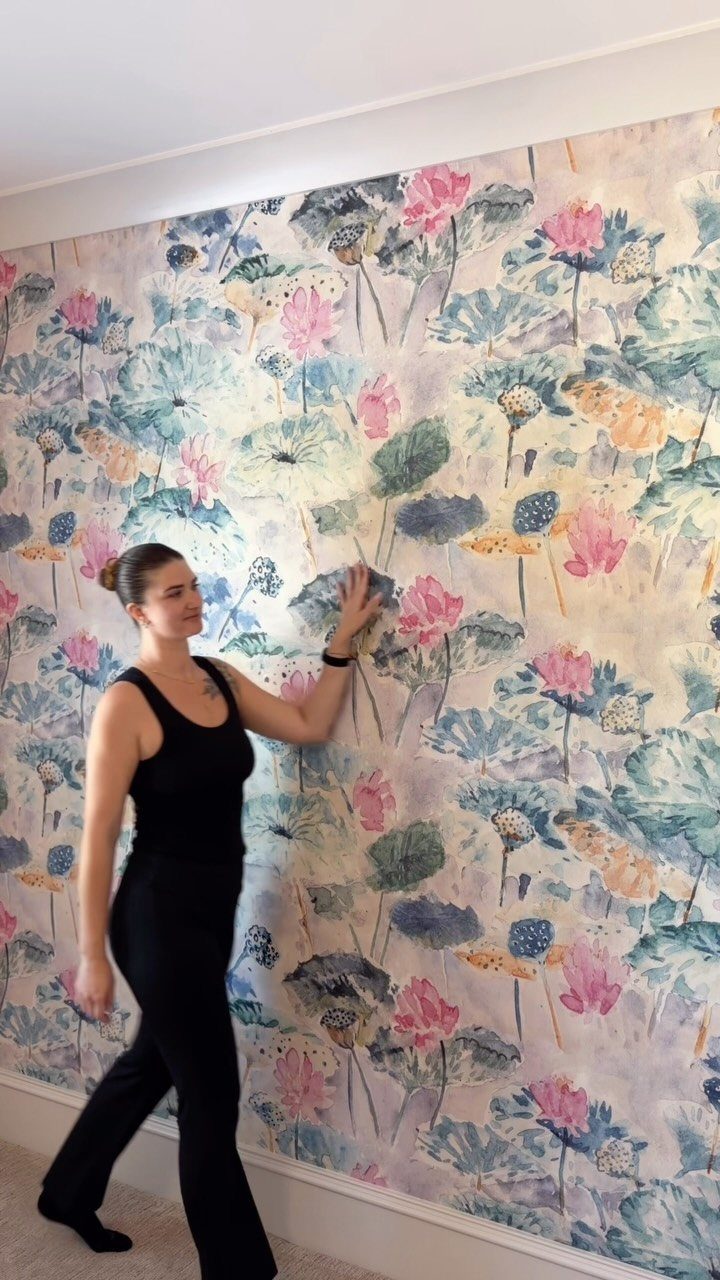
Pattern scale decides whether wallpaper works behind a bed. A large floral like this watercolor lotus print needs a wide, uninterrupted stretch of wall, so keep it to the wall the bed sits against and leave the rest plain.
Wallpaper has the widest range of styles of any feature wall option: florals, stripes, textures, bold graphics.
I would pick the print first and the paint color second, pulling a quiet shade from the pattern for the other walls. White trim, as in this room, keeps a busy design from feeling crowded.
2. Shiplap
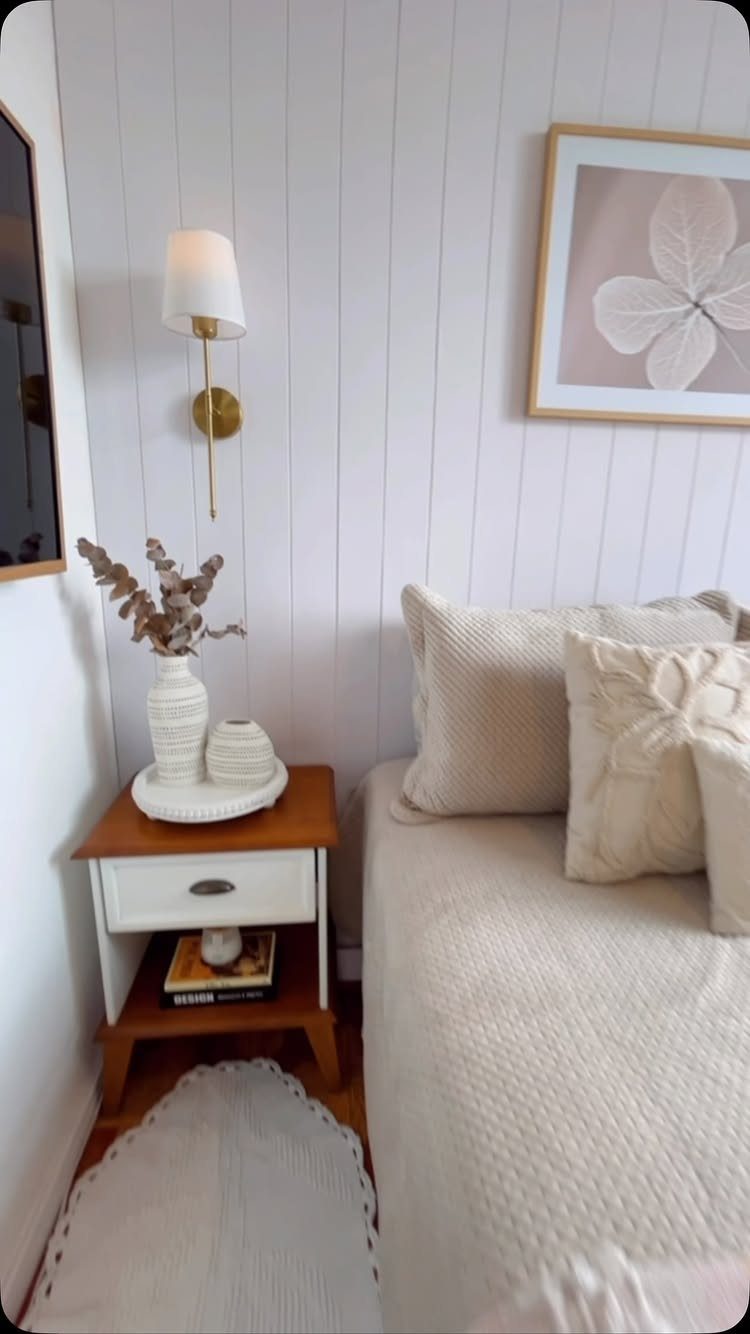
White shiplap gives a bedroom a coastal or rustic feel, depending on what you put against it. Wooden nightstands and a botanical print lean rustic; blue linens and rope or woven accents lean beachy.
Running the boards vertically, as in this corner, is my preference over the usual horizontal. It makes the wall feel taller without changing the look.
I would paint the whole wall in a single white so the board lines carry the interest. Keep the decor simple, because the grooves already supply the texture.
3. Exposed Brick
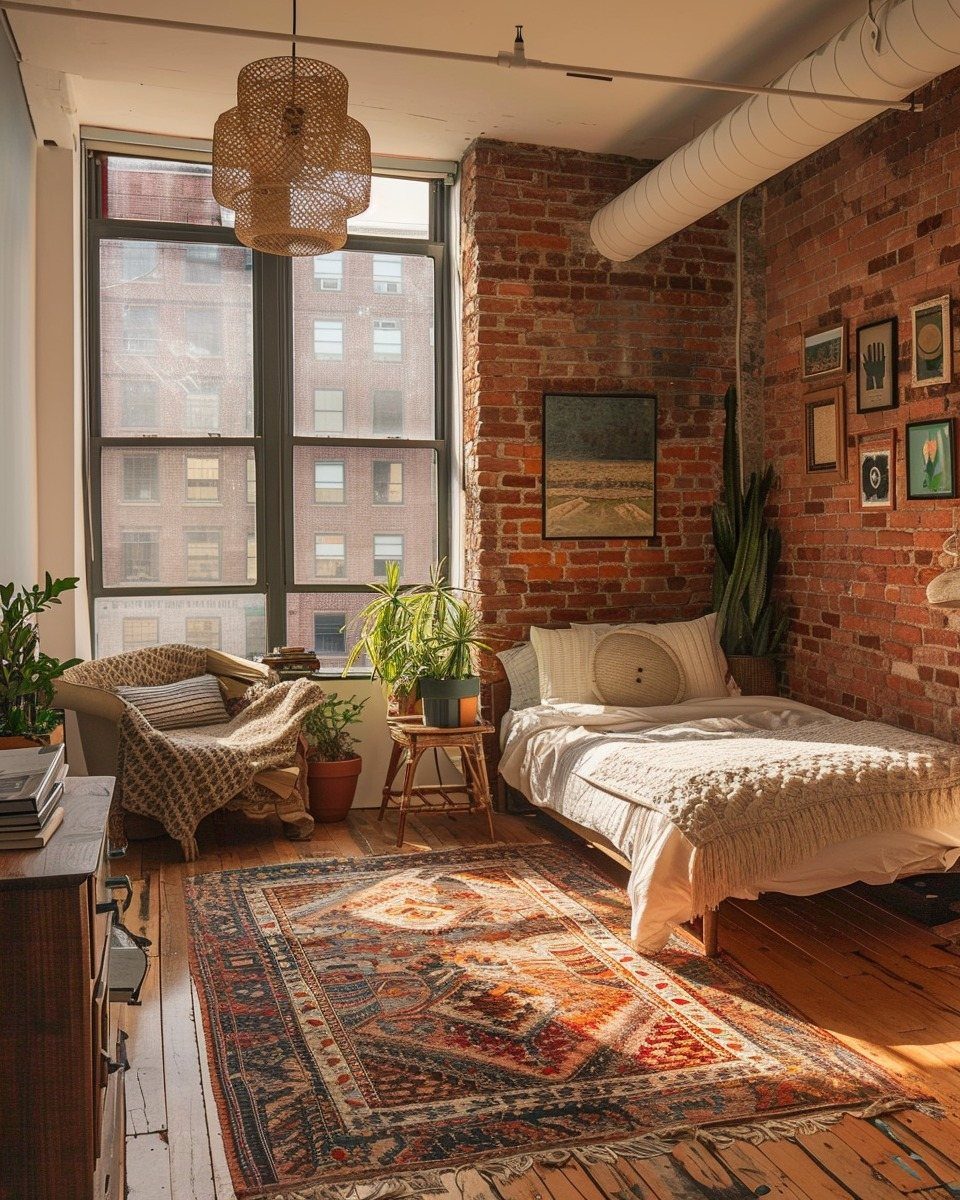
A brick wall already comes with its own color and texture, so the job is building the room around it.
Warm red like this pairs well with white bedding and a patterned rug, which keeps the industrial edge from feeling cold.
Plants soften the hard surface, and a big window like this one balances the weight of the brick with daylight.
If your walls are drywall, brick is not a weekend project. Renters in particular should look at it as a find to enjoy rather than something to install.
4. Bedroom Accent Wall: Vertical Slats
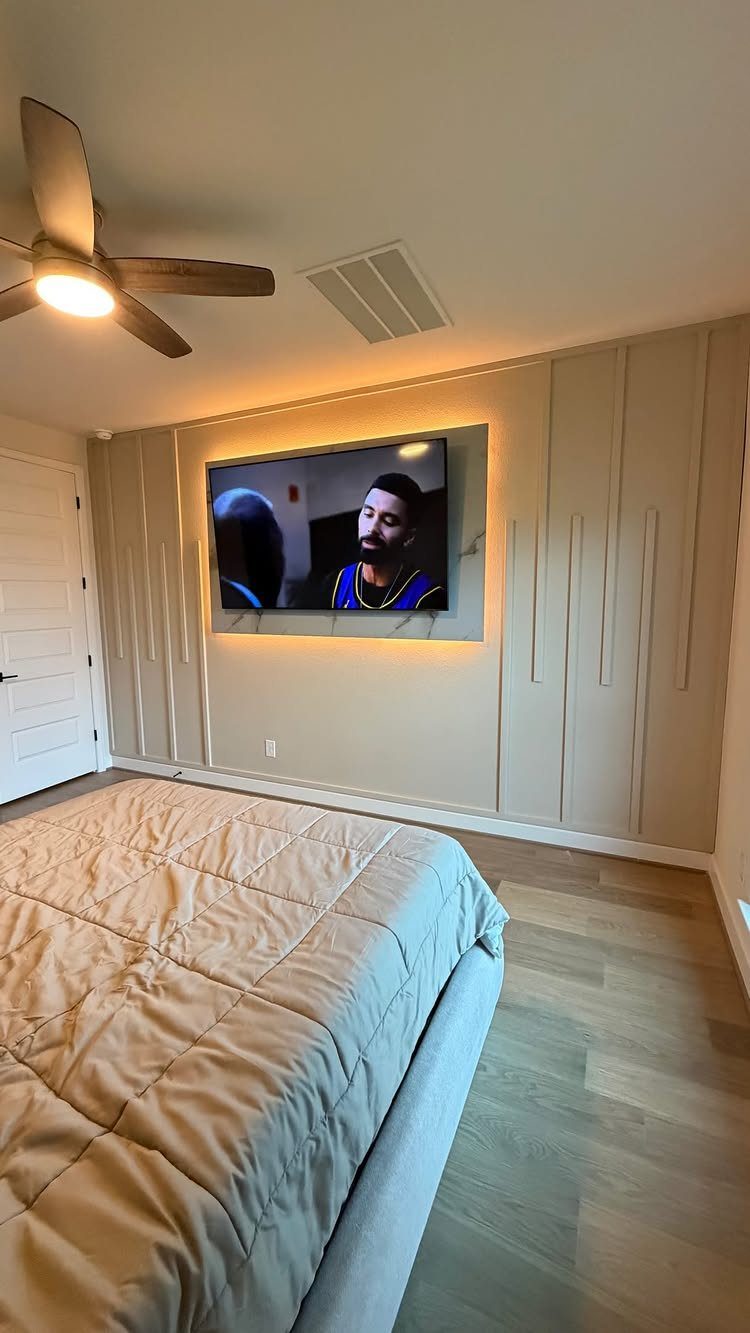
Vertical slats pull the eye up, which makes them my first pick for a bedroom with a lower ceiling. Run them floor to ceiling so the lines are not interrupted.
A beige or other light tone, as here, keeps the wall calm and ties in with light wood flooring.
Slats also give a mounted television a tidy backdrop, and a recessed spot with a backlight adds a soft glow at night.
Choose a finish close to your floor color so the wall reads as part of the room.
5. Geometric Pattern
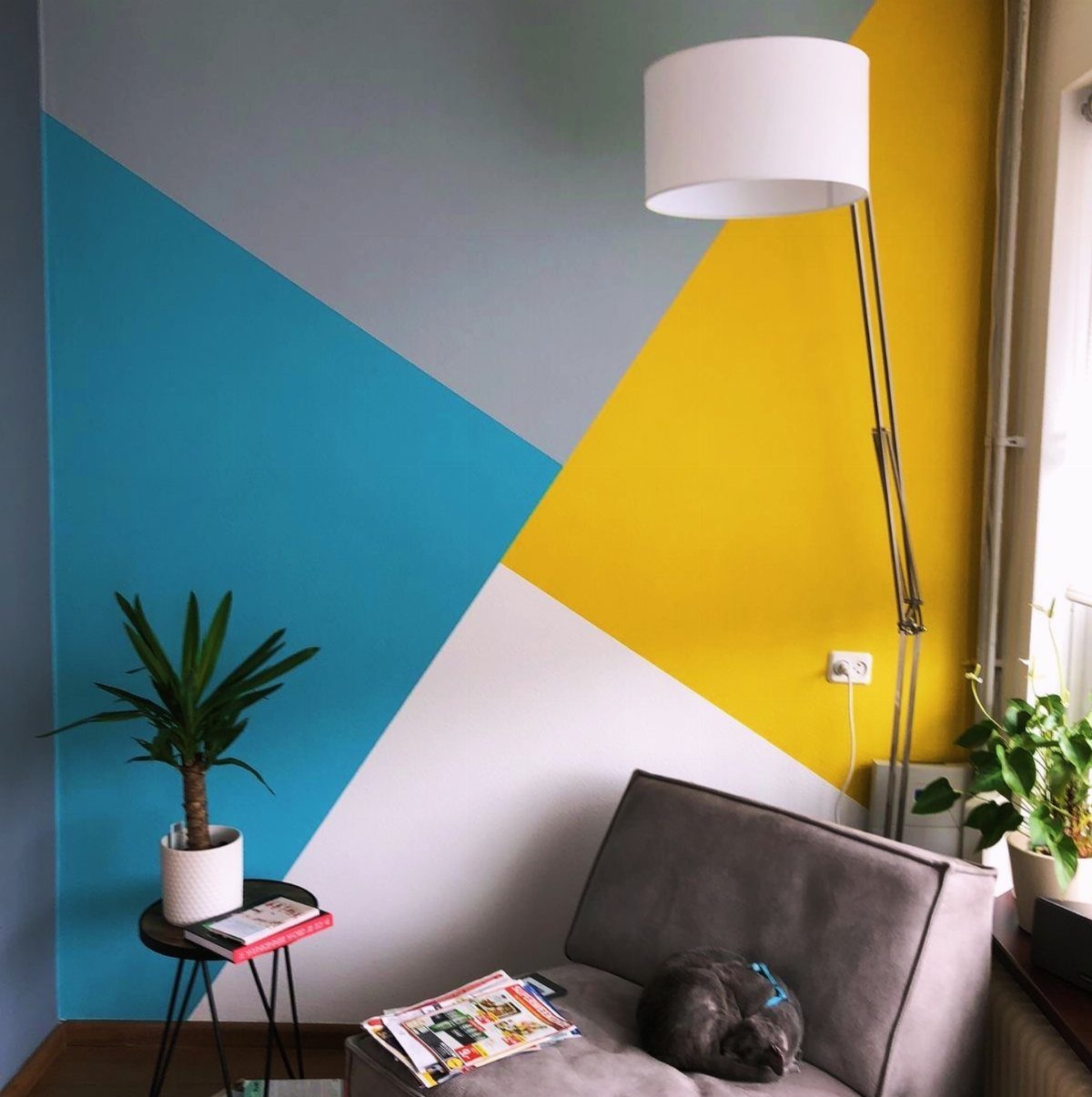
A geometric wall is the most personal option for a bedroom, because you design the shapes yourself. Blocks of blue, grey, yellow, and white, as in this painted version, keep a small palette doing the work.
Paint is the cheap way in. Limit the palette to a few colors, and repeat one of them elsewhere in the room, on a chair or a lamp, so the wall feels planned.
Sketch the layout at scale before you pick up a brush; mistakes in a pattern like this are obvious.
Think outside the box – as well as traditional bedroom feature wall ideas like paint and wallpaper, panels, artwork, murals and even ceramics are all characterful ways to pack a punch.
6. Gallery Wall
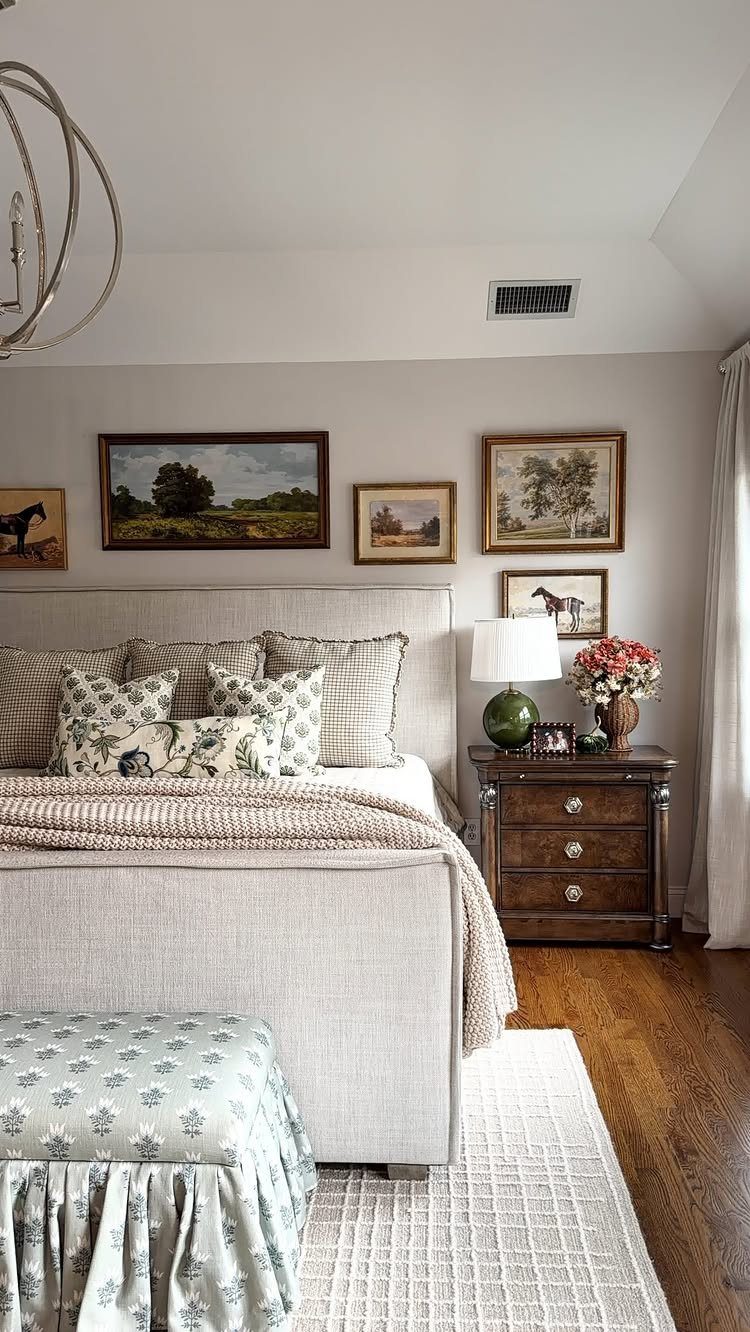
A gallery wall lets you build the feature from art you already own, so the cost can stay close to zero. Above a bed, framed pieces in similar frames, like landscapes and animal paintings, look deliberate rather than random.
Lay the frames on the floor first and shuffle them until the spacing feels even. Then trace each one on paper, tape the templates to the wall, and adjust before you drive a nail.
Grey paint behind the art lets the colors stand out.
7. Bold Dark Accent Wall
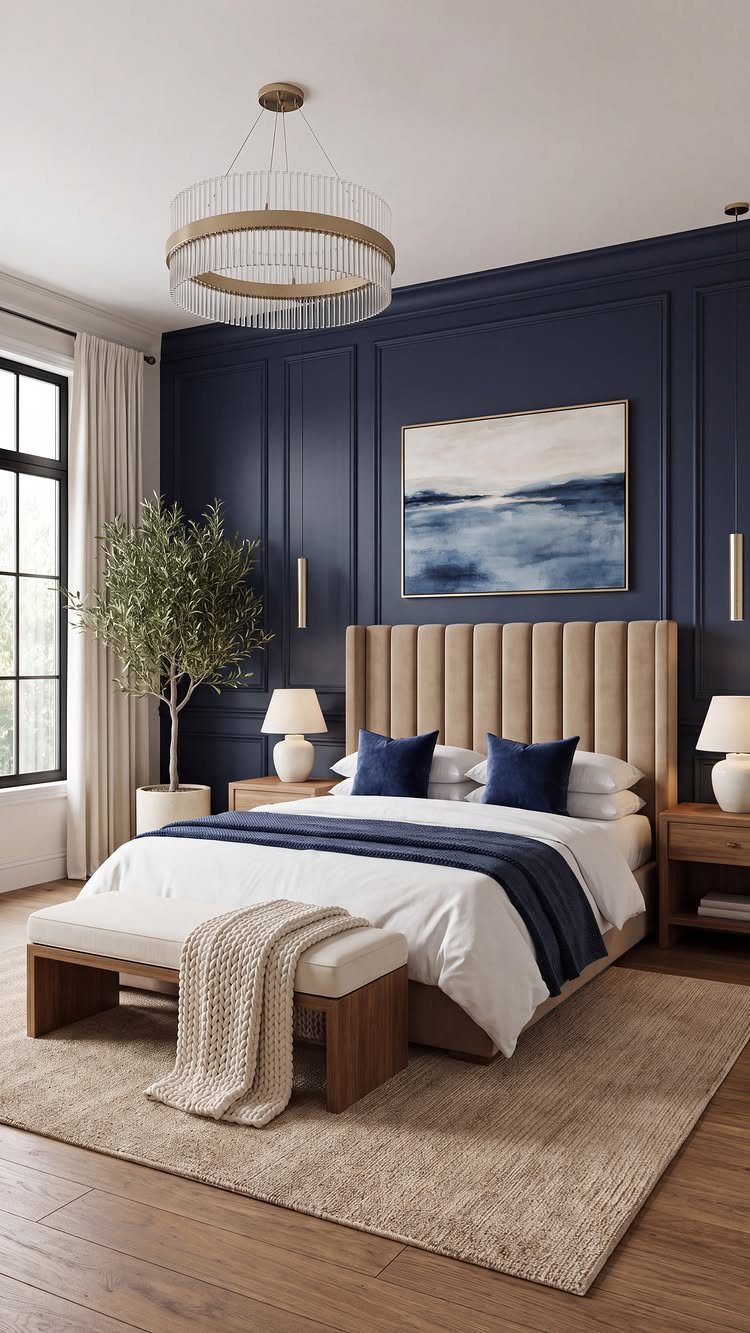
Navy on the wall at the head of the bed gives a room depth that a pale wall can’t, and the paneling adds shadow lines so the color doesn’t read flat.
Keep the other walls light, as here, so the dark one looks chosen rather than heavy.
A tan or beige headboard stands out well against it. Paint is the budget route, and a matte finish hides small wall flaws better than gloss.
Dark paint is easy to undo with primer and 2 coats, which makes it a fair bet for renters who have permission to paint.
8. Dramatic Drapery
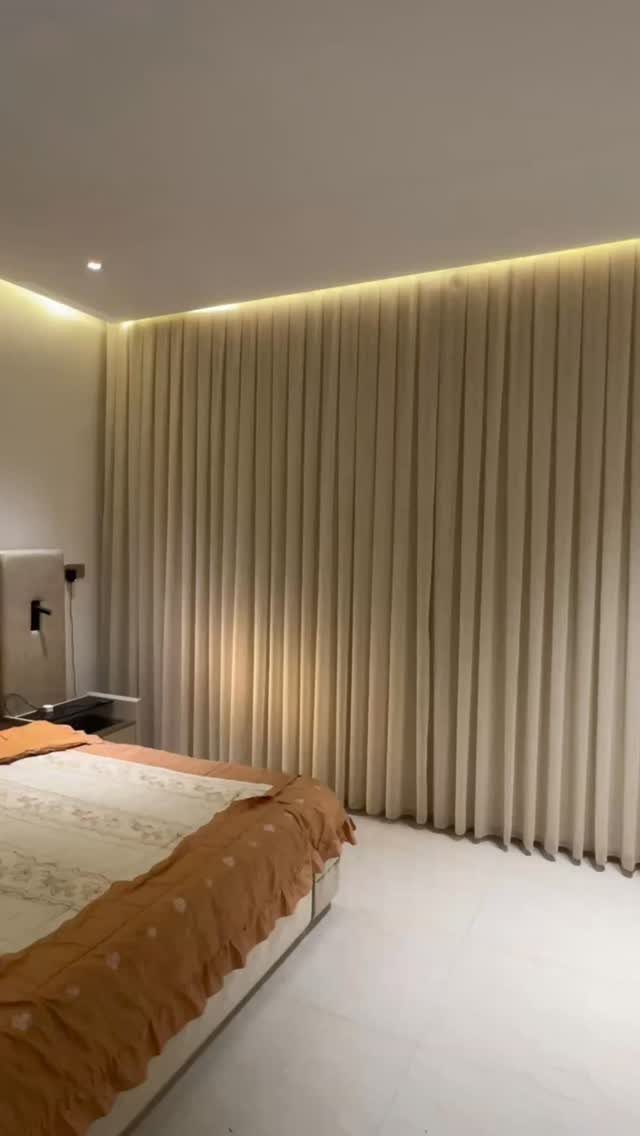
Floor-to-ceiling pleated drapery turns a whole wall into fabric, and I like it for how it softens a room full of hard edges. It also hides an ugly wall, a window or a closet behind it.
Hang the rod near the ceiling and use more fabric than the width needs; fullness makes pleats look rich instead of stretched.
Beige keeps drapery calm, and a warm light mounted above the rod, such as a cove light, lets the folds cast shadow.
Fabric costs less than most wall materials, and curtains are the one option here a renter can take down.
9. Mural
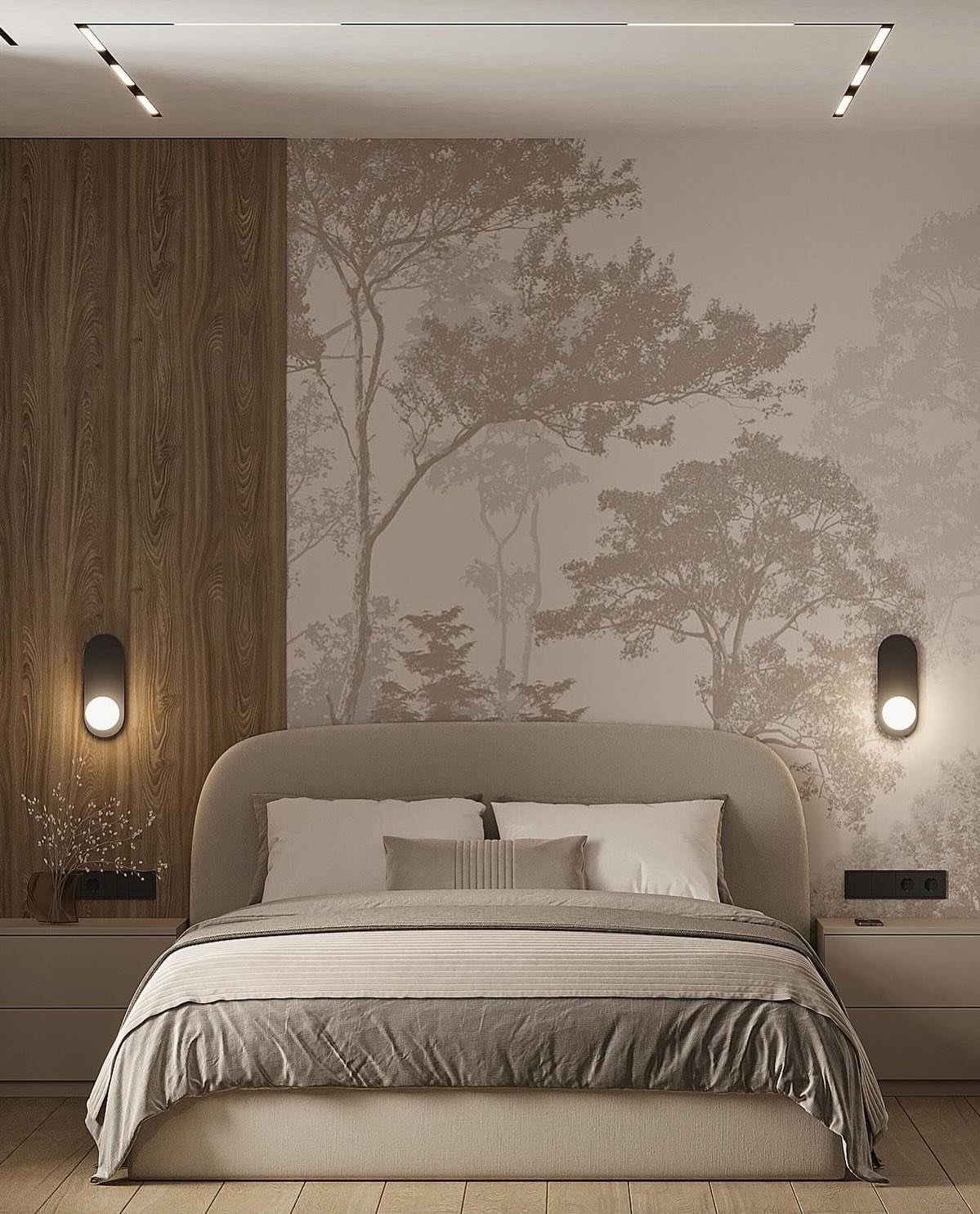
Muted tones let a mural of trees sit behind a bed without competing with it. Soft, low-contrast color reads as a backdrop, and that’s what I’d choose for a room meant for sleep.
Wood paneling alongside, as here, warms the scene. Hand-painting is cheapest but takes skill; a self-adhesive or printed mural suits beginners better, and a renter can take it down later.
Hang sconces on either side of the bed so the art isn’t blocked by lamps on the nightstands.
10. Textured 3D Wall Panels
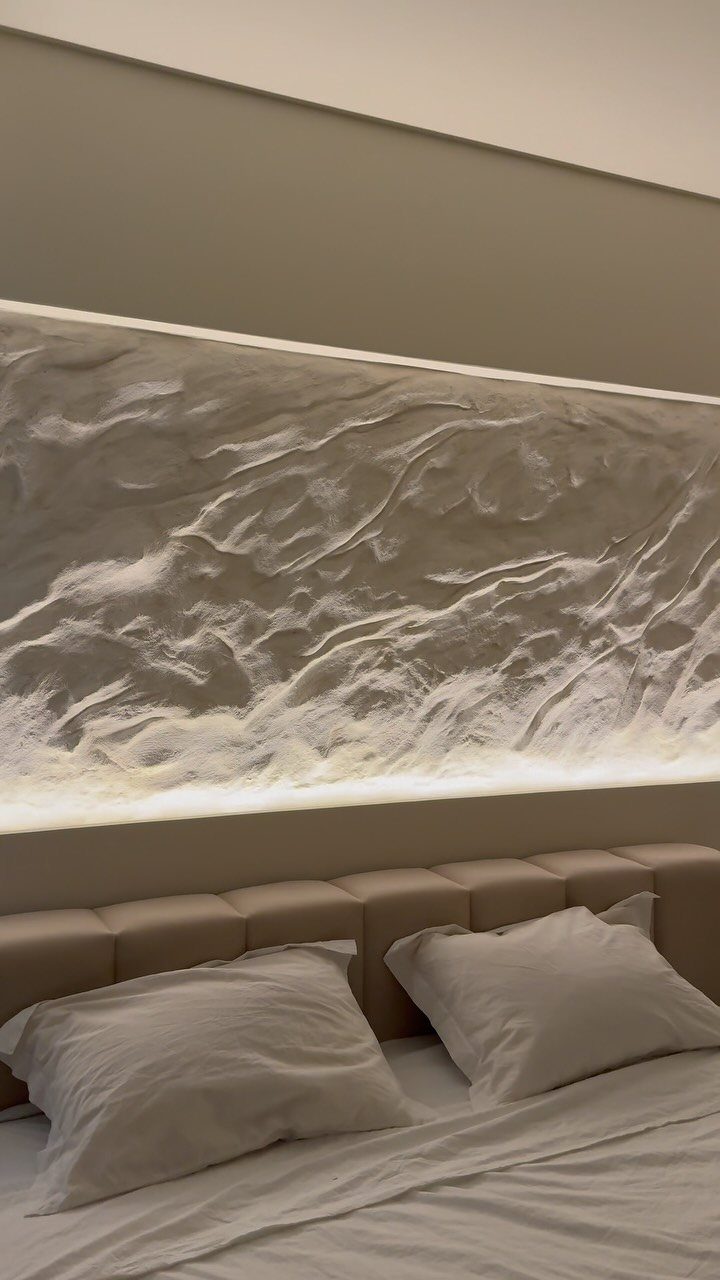
A wavy 3D panel wall is all about light. Strip lighting along the top grazes the ridges and throws soft shadows, so even an all-white wall has movement.
Keep everything else quiet. A tufted beige headboard, white bedding and no competing art let the waves carry the room.
Panels cost more than paint, and the lighting adds to the bill, so I’d do one wall only, the one the headboard sits against.
11. Fluted Wall Panels
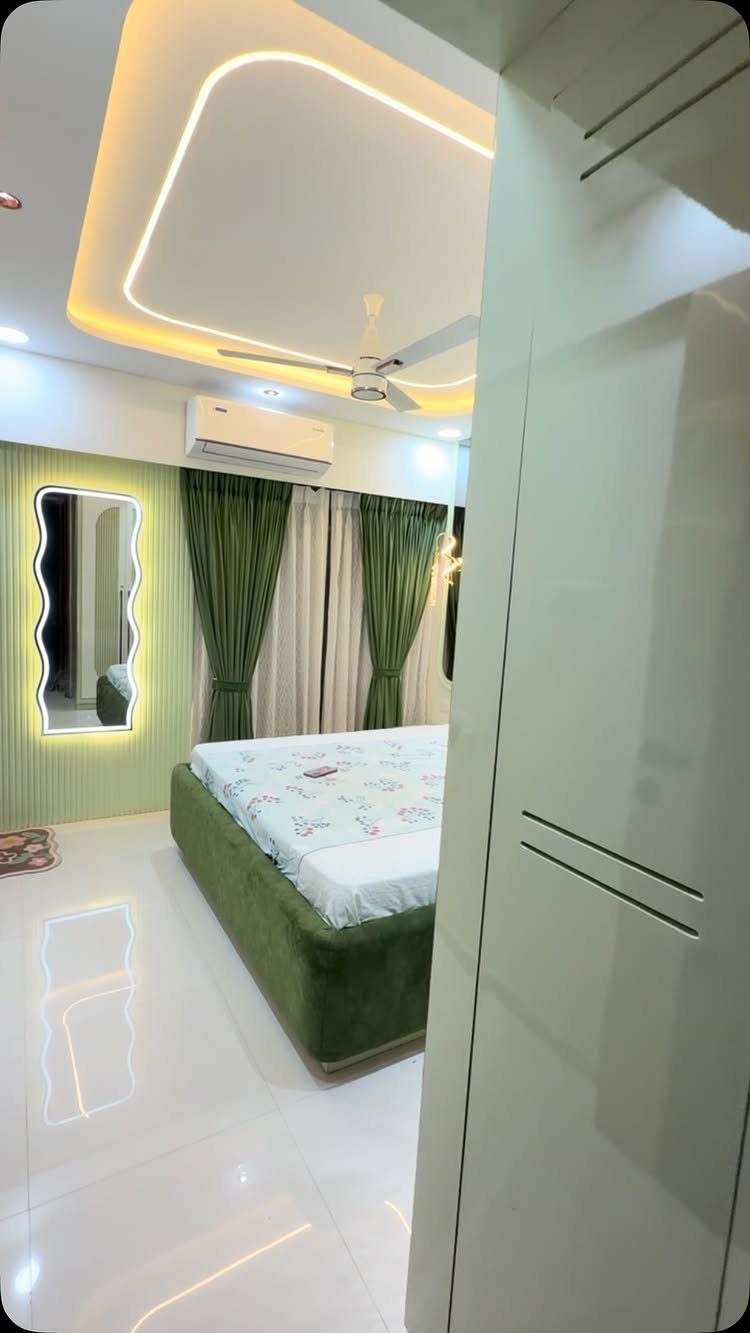
Fluted panels give a wall vertical ribs that catch light differently from every angle, and color makes them bolder. Green, as here, is my favorite pick for a calm bedroom because it pairs well with white floral bedding.
A mirror with a wavy edge echoes the soft lines, and matching curtains tie the color into the room. Paint the panels the same shade throughout so the ribs, not the color, create the contrast.
Use one color on one wall and leave the other three plain.
12. Backlit Textured Stone
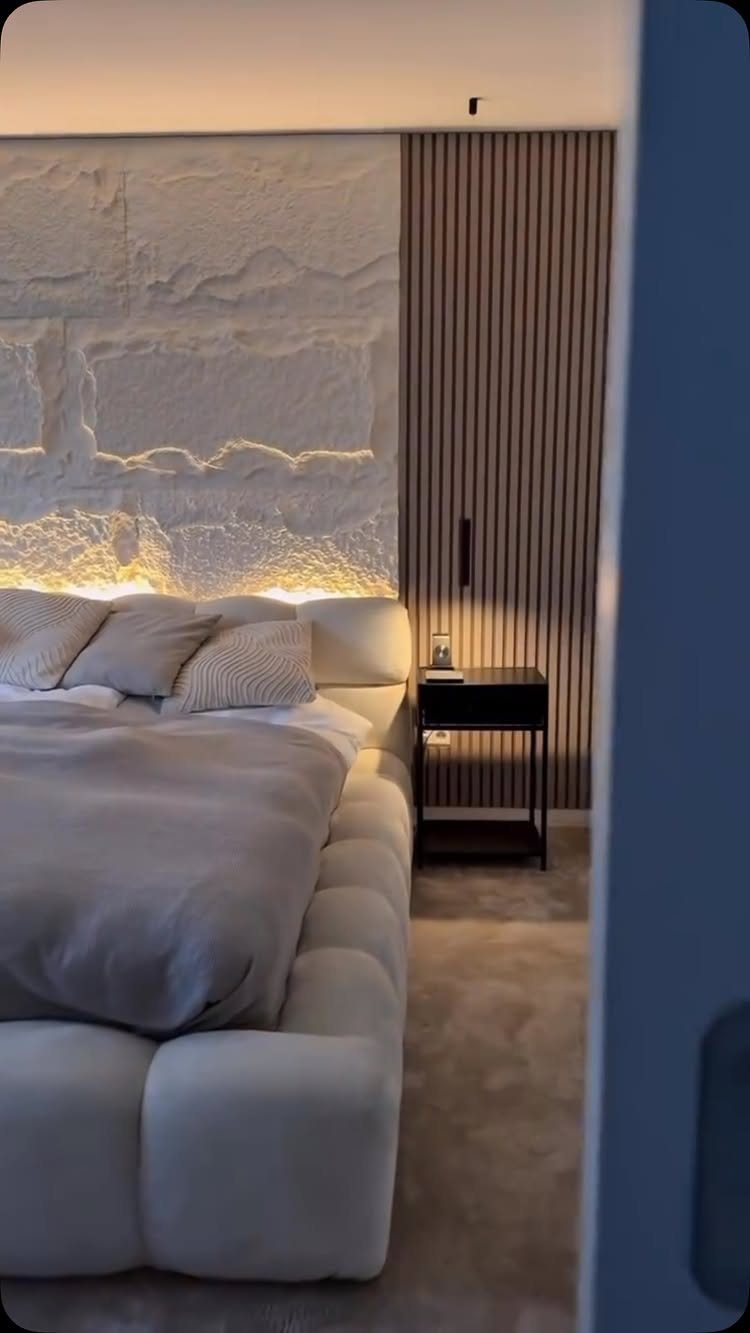
Textured white stone with warm backlighting gives a bedroom the glow of a hotel lobby. The light rakes across the surface and shows every ridge, so choose a warm bulb color rather than a cool white.
Run it directly behind the bed so the stone and its glow sit right at the headboard, and keep the bedding plain so the texture doesn’t compete.
A black nightstand adds a hard contrast that keeps all that white from washing out.
This is a bigger build than paint or paper, since the wiring has to be planned before the stone goes up.
Choosing the Right Wall
Start with the wall your eye lands on first when you open the door. In most bedrooms that is the one behind the bed, since it anchors the room and frames the headboard.
Spend a minute standing in the doorway and looking in, ahead of any shopping. Whichever wall you notice first is the one to feature.
Color and Mood Effects
Deep blues, blacks, reds and greens all add a romantic feel to a bedroom, and they make a good base for art, shelves and mirrors. Bright, neutral frames stand out sharply against a dark wall.
Black works better than most people expect. It hides the shadow lines behind furniture and frames light bedding, and a textured black surface catches light, so it looks less flat than plain paint.
Balance it with warm wood, creamy textiles and layered lighting. In a room with little daylight, paint a single wall dark and leave the side walls lighter instead of covering every surface.
Light colors do the opposite job: they open a room and make it feel airy.
Materials and Maintenance
Before you commit, think about how much upkeep a material asks for. Touching up paint is simple, but wood and wallpaper ask for more care as the years go by.
Wood collects dust in its grooves and edges, so plan on regular wiping. Wallpaper is harder to repair if a corner lifts or a spot gets stained, and a damaged strip can be tough to match later.
Choose the material you will still be willing to look after in a year. A simpler finish that stays clean beats an ambitious one that slowly gets neglected.
Frequently Asked Questions
What are some creative wall decor ideas for a master bedroom?
Vertical slats, fluted panels, a hand-painted geometric pattern and a mural of trees all give a master bedroom more personality than plain paint.
Slats run floor to ceiling make a lower ceiling feel taller, while a geometric wall in a few colors costs little and is entirely your own design.
For a master bedroom, I’d give all the drama to the wall behind the bed and leave the other 3 walls plain so they don’t compete.
Which wall should be the accent wall in a bedroom?
Behind the bed wins most of the time, because the headboard already sits there and the wall gives the whole room its center.
A quick test: stand in the doorway, see which wall your eye hits first, and put the feature there.
A wall with a built-in focal point, such as a large window or a fireplace, can carry the feature treatment just as well.
Does an accent wall have to be painted?
No.
Wallpaper, shiplap, slats, fabric drapery, a mural, 3D or fluted panels, and a gallery wall of framed art all make an accent wall without paint. Drapery and peel-and-stick style murals are the easiest to take down, which suits renters.
What colors are in for feature walls?
Deep navy, charcoal, brick red and forest green suit a moody, cozy bedroom, and they make art, shelves and mirrors stand out.
In a room that gets little daylight, I’d paint only the bed wall dark and keep the side walls a shade or two lighter. Pale shades work the other way and let a small room feel open and bright.
How to paint a feature wall in a bedroom?
Choose the wall behind the bed, then use a matte finish, which hides small wall flaws better than gloss.
If you want a bold geometric pattern, draw it to scale on paper first and stick to 2–3 colors so it stays clean. Dark paint can be covered later with primer and 2 coats if you change your mind.





