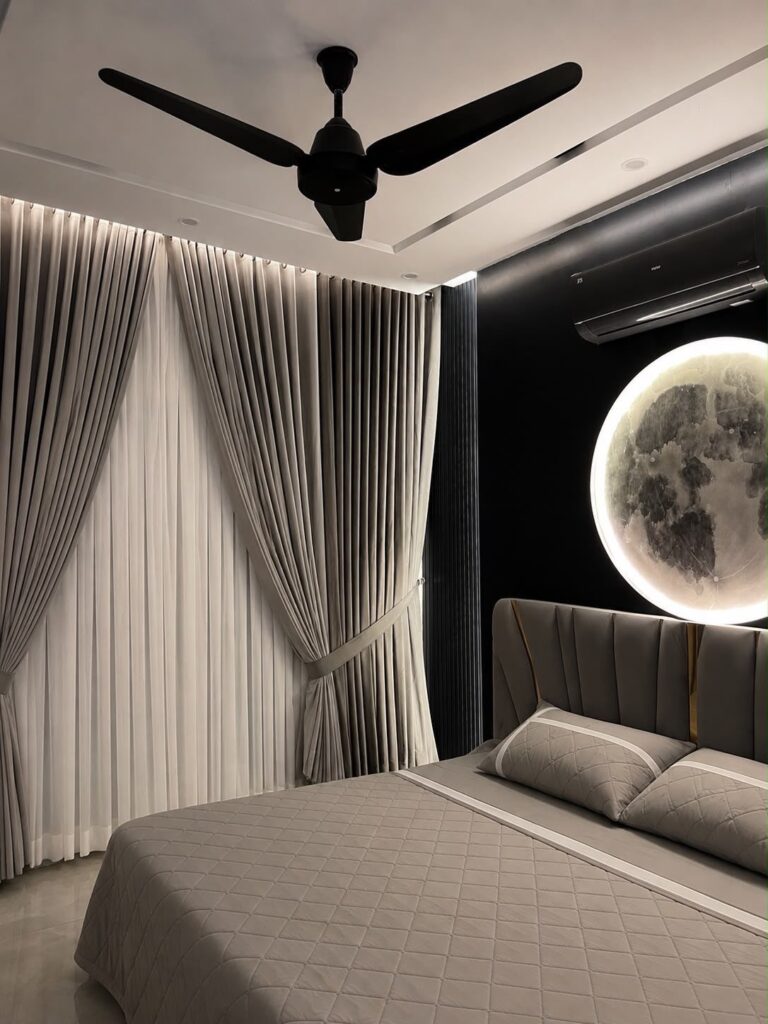
Which curtain design fits depends on how much light and privacy the room needs, because the ideas here run from a canopy over the bed and bamboo shades that need no panels at all to bold textures, velvet and silk, and plain warm neutrals.
1. Canopy Curtains
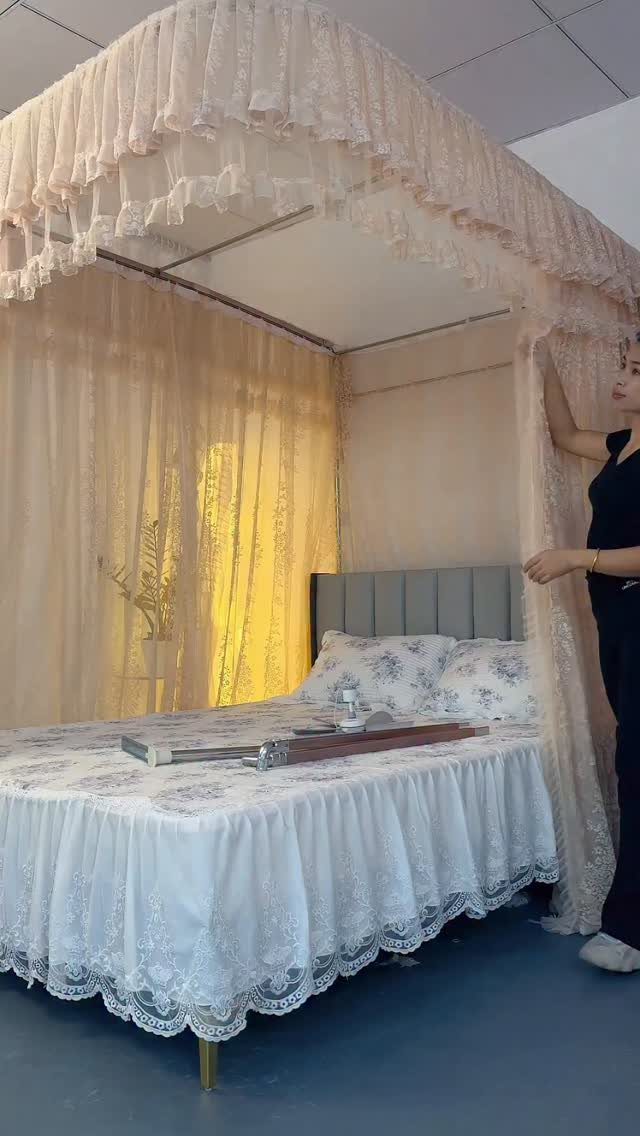
A lace canopy draped over the bed gives a bedroom a regal feel without any construction.
For a rental, I’d choose lightweight panels over anything that needs heavy hardware, since lace has little weight to carry. Keep the bedding in one color family so the lace is the only detail doing the talking.
2. Warm Neutral Solid Curtains
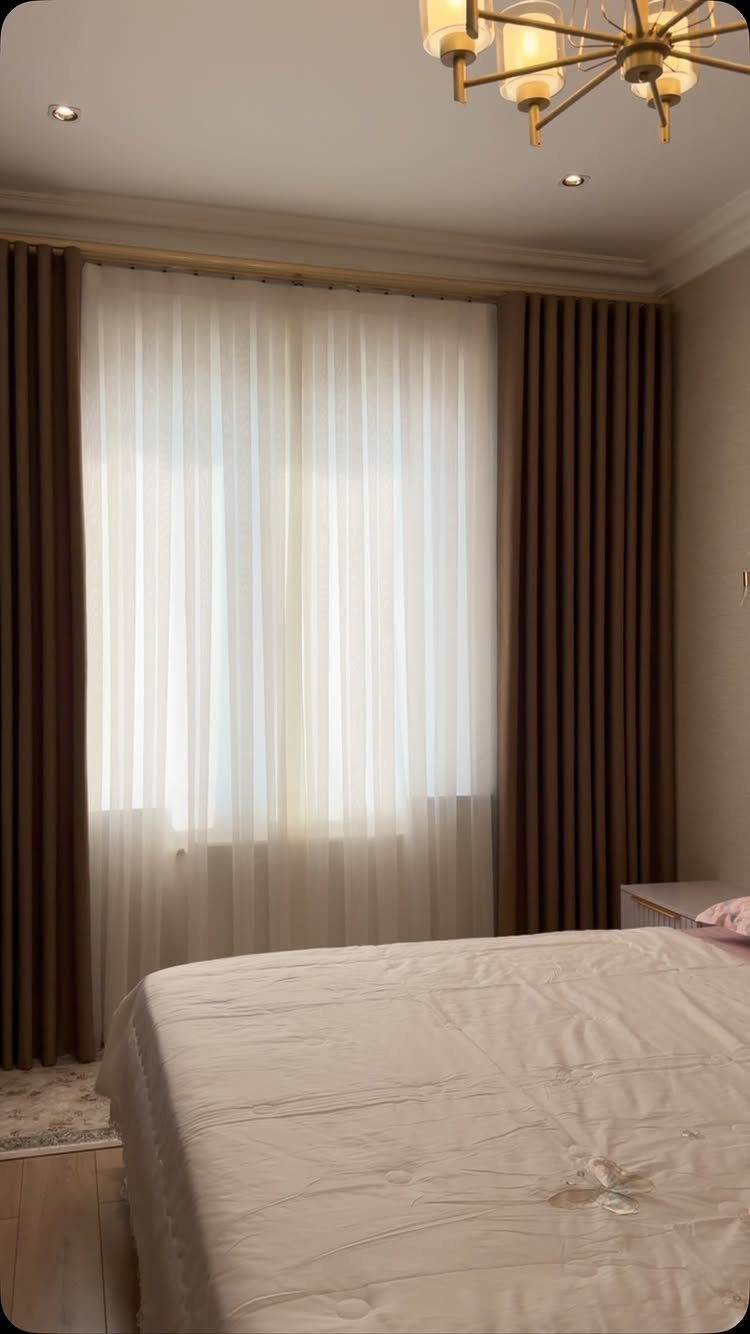
Solid warm brown panels on either side of sheer white curtains give a window a calm, grounded frame. Brown reads as a neutral, so it sits easily with a white comforter and a gold chandelier.
I like this pairing because the sheer layer keeps daylight soft while the brown adds weight.
Choose one warm shade and stick with it. Patterns can wait for pillows or a throw if the room starts feeling too plain.
3. Hang Curtains High
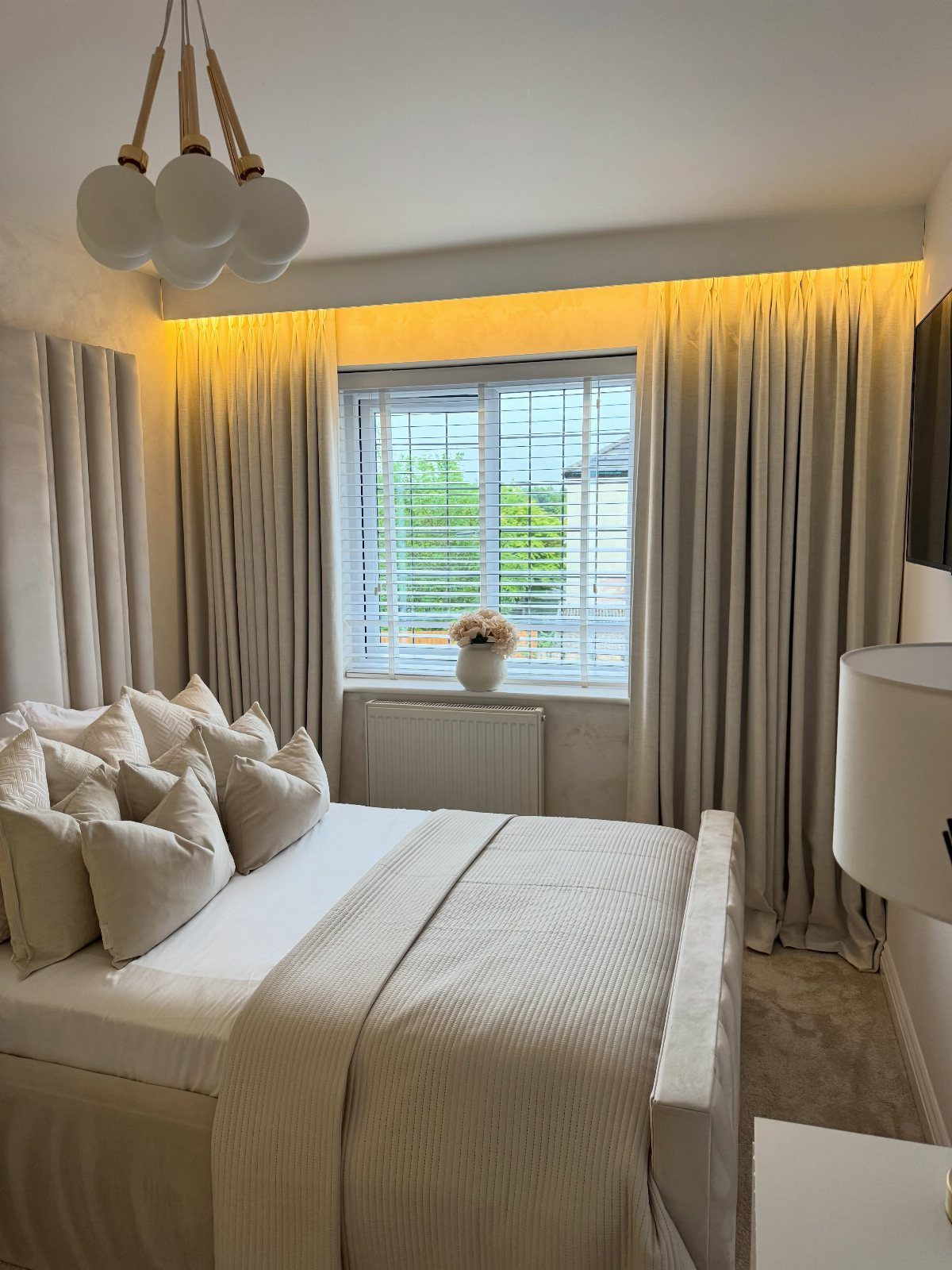
Ceiling-height curtains make a window look taller than it is, and a bedroom with a standard window benefits most. Beige panels hung well above the frame pull the eye upward, even with blinds still in place underneath.
Mount the rod near the ceiling and let the fabric fall long. Keeping the curtains close to the wall color, as here, makes the height feel built in rather than added on.
4. Layered Curtains
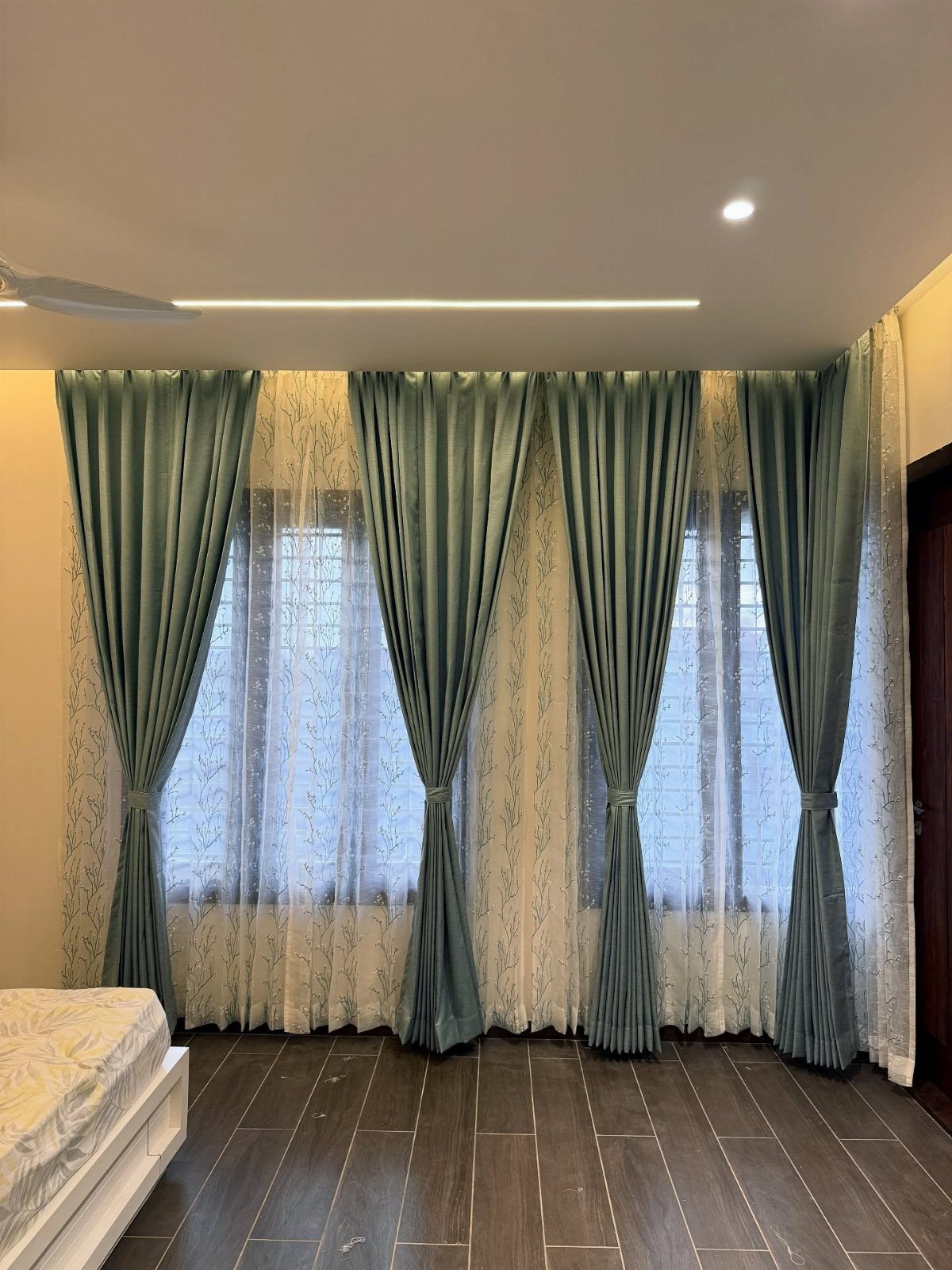
Sheer panels behind heavier drapes let you control light and privacy separately, and tying back the outer layer leaves the sheers up full-time.
The lace softens the light all day; the teal panels frame the window and can be pulled shut when you want privacy or darkness.
Tie-backs keep the heavier fabric out of the way, so the pattern in the lace stays visible.
A white bed frame lets the teal stand out as the single strong color. I’d hang both on a double rod.
5. Bold Designs & Textures
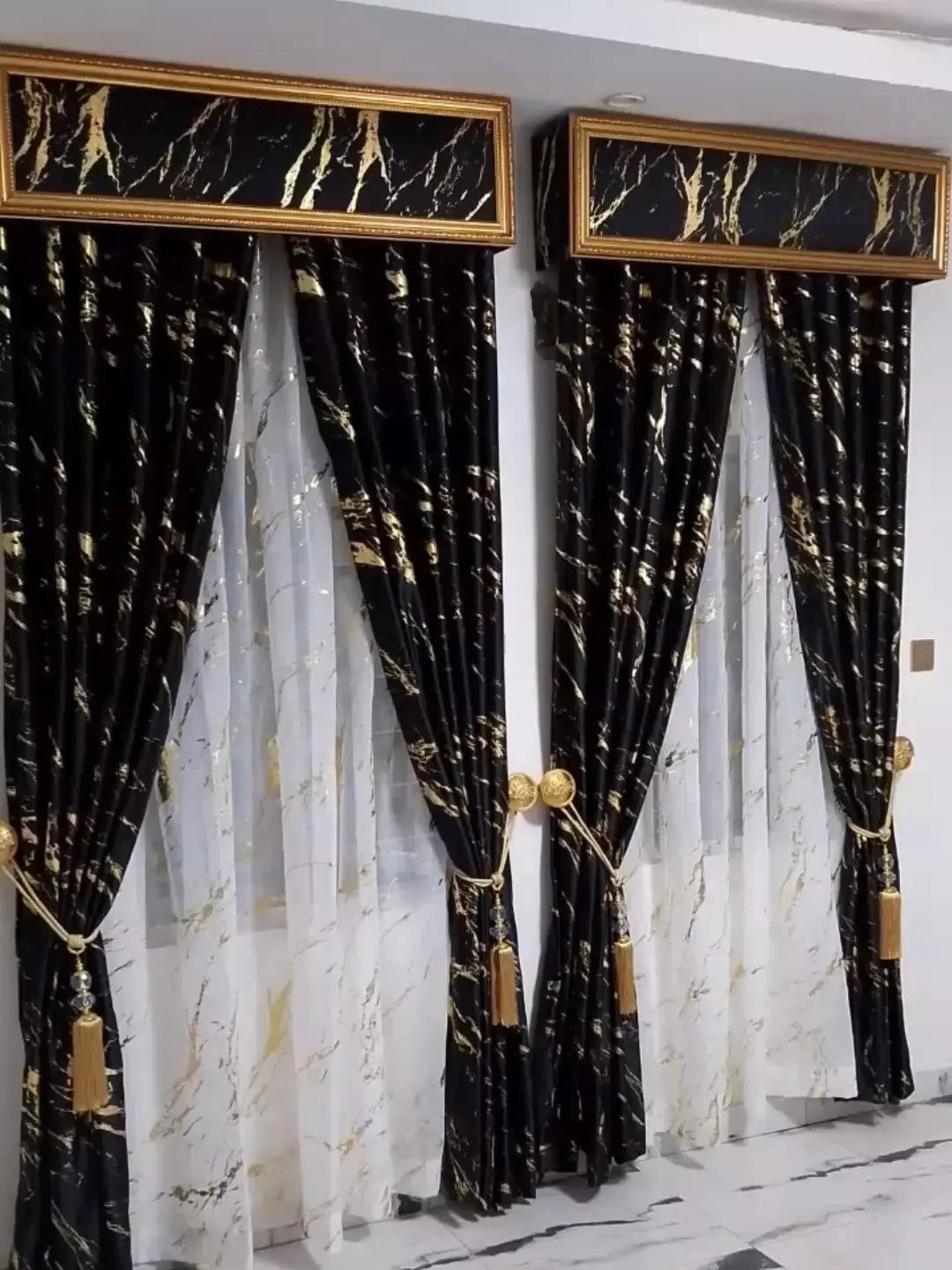
Black and gold marble-patterned curtains turn the window into the focal point of the room. Matching valances and gold tassels push the drama further, while sheer white under-curtains stop the dark pattern from swallowing the light.
This works best when the rest of the room stays quiet.
With a pattern this strong, I’d keep bedding and walls simple. It’s a bold choice, so pick it only if you’re ready to commit to the look.
6. Velvet and Silk Curtains
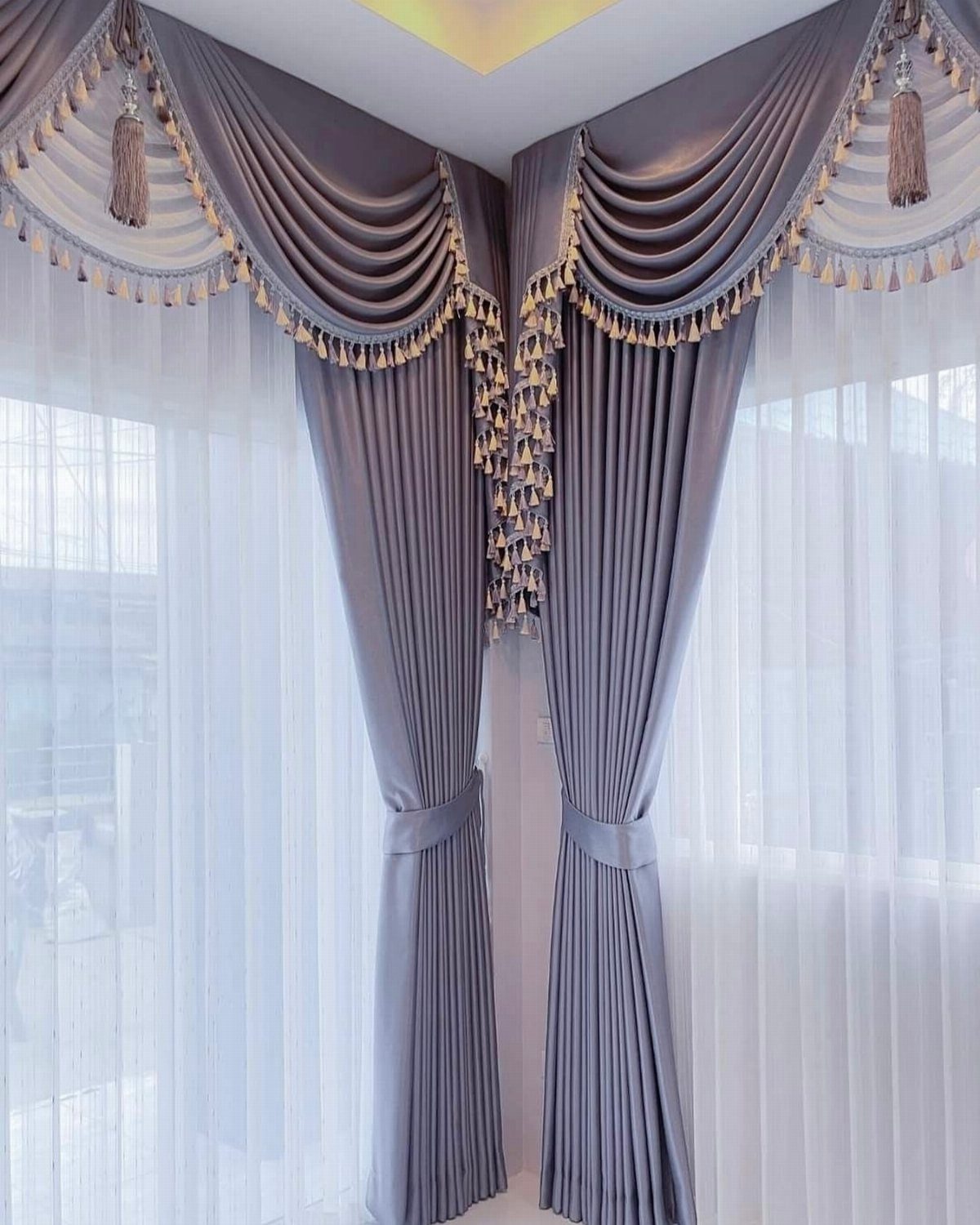
Grey velvet and silk curtains with gold tassels and swags bring a formal, hotel-suite mood to a corner of a room. The grey keeps the rich fabric from feeling too loud, and sheer white under-curtains soften the glow.
These are materials that cost more than basic cotton, so I’d spend on the fabric and keep the trim simple.
Tassel valances do plenty of work on their own. One pair of windows is enough for this much detail.
7. Floral Window Curtains
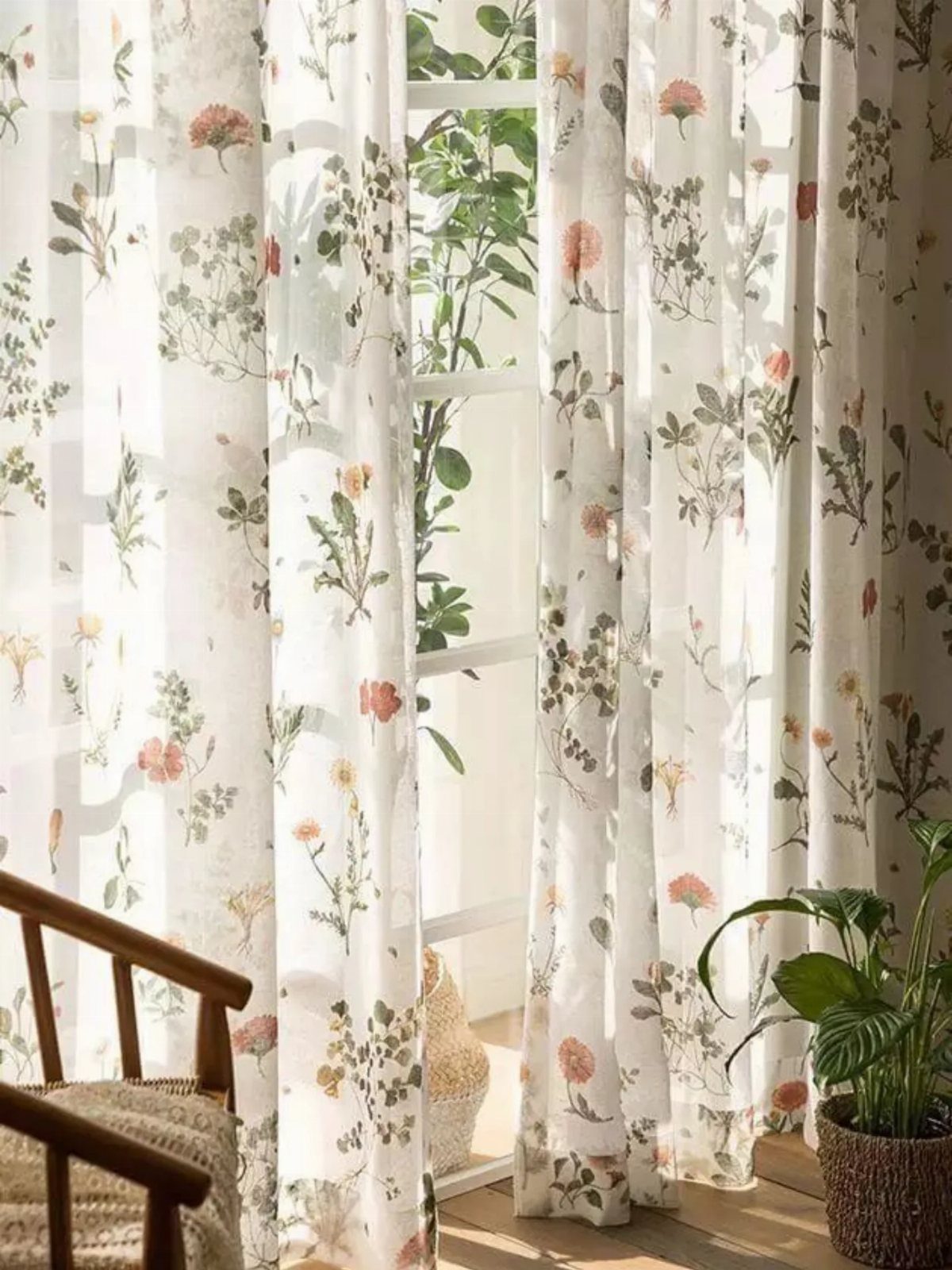
Sheer white panels with an orange floral print let a sunny window carry color without closing the room in. The print glows when light comes through, so a small pattern on a pale ground works better than a dark one.
If the bedding already has a pattern, choose solid pillows so the flowers stay the one print in the room.
8. Vertical Stripe Curtains
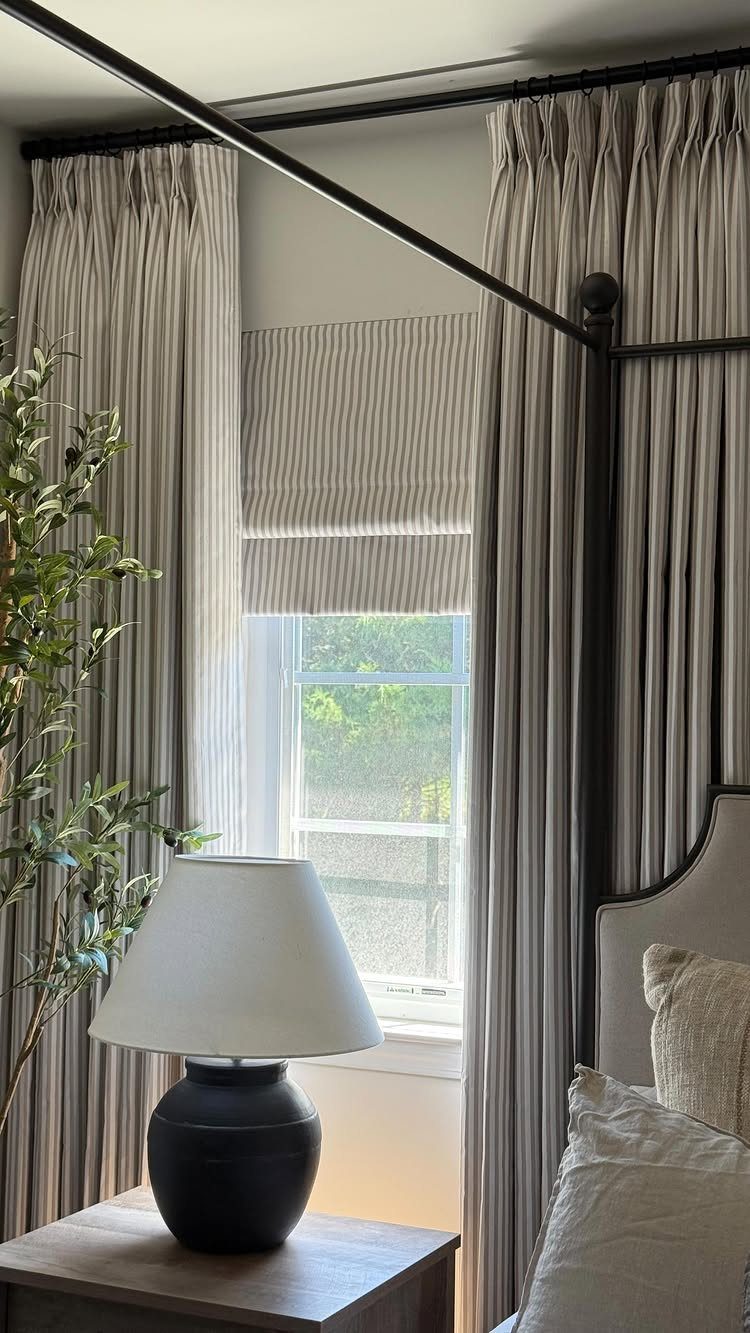
Vertical stripes draw the eye up, which makes a low ceiling or a small bedroom corner feel taller. Grey and white is a calm pairing, and a matching Roman shade keeps the window looking finished.
Hang the curtains as close to the ceiling as the room allows, since stripes only stretch the wall if they run uninterrupted. Against a black bed frame, a soft grey stripe is easier to live with than a high-contrast one.
9. Bamboo Shades

Bamboo shades bring natural texture to a window, and the woven look sits well next to wood, like a built-in window seat with a green cushion. They suit neutral linens because the warm tone adds interest without adding pattern.
For a renter, an inside-mount shade is the simplest route, and the room needs no curtain panels at all. If the bedroom feels too bare, add a pair of plain curtains at the sides.
Choosing Curtain Color
Curtain color works best as the one place in a bedroom where you add color on purpose. Neutral walls give you the most room to do that with an accent shade.
You have 2 routes. Matching the curtains to the walls makes a room feel airy and spacious if the walls are light, and cozy and intimate if both walls and drapes run dark.
Contrast is the bolder route. Soft pastel walls with deep jewel tones will energize a room.
I go for a quieter contrast when clients want definition without the punch: curtains a few shades softer than the wall color still frame the window but keep the room settled. That is the version I like best.
Matching everything reads intentional if you keep it in one color family: walls, curtains and bedding all in variations of soft blue hold a room together without flatness.
Types of Curtains
Sheer curtains let in soft natural light, but a bedroom usually calls for blackout.
Blackout comes in levels, so choose the darkness you actually need. A kid’s room that has to stay dark for naps is a good case for the deepest level.
Layering gets you both. Put a sheer layer, such as linen or chiffon, closest to the window for daytime light.
For full darkness or better temperature control at night, I hang the lined or insulated panel in front of the sheers, with the sheer layer staying closest to the window.
If you want airy curtains on show and still need darkness, hang cheap white blackout panels on their own rod behind the pretty ones. Nobody sees them, and guests still get a dark room.
In tight bedrooms, I mount a double rod so the sheer hangs closest to the window and the blackout layer sits in front on the outer track.
Heavy velvet curtains can highlight a moody bedroom design, while sheer curtains can make a room feel more spacious. It’s also worth considering whether you want your curtains to block out light entirely or allow some light to filter into the room.
Hanging Techniques
I default to mounting the rod near the ceiling and letting the fabric fall to the floor unless the room gives me a reason not to. It makes the room feel larger, and the panels look intentional.
I measure the full window frame, top to bottom and side to side, before I order fabric or mark holes for hardware. Careful measuring is what separates a luxe look from a guess.
When I layer panels, I set the rod positions so each layer gets roughly a third of the space between the window and the wall.
Hanging curtains is a job where you can save money by doing it yourself, as long as you measure first and take your time.
Frequently Asked Questions
What is the current trend for bedroom curtains?
Bold patterns and natural materials lead right now. Oversized prints work best when the walls and bedding stay quiet, and woven bamboo shades paired with plain linen panels bring in texture without adding more pattern.
A strong print needs a calm room around it, or it overwhelms the space.
Should my curtains be lighter or darker than my walls?
Neither direction is wrong, so pick based on whether you want the window to fade into the wall or stand out against it.
Curtains close to the wall color make a light room feel airy and a dark room feel cozy.
If you want the window defined without a loud contrast, go a couple of shades lighter than the wall; the panels outline the glass, and the room still reads as calm.





