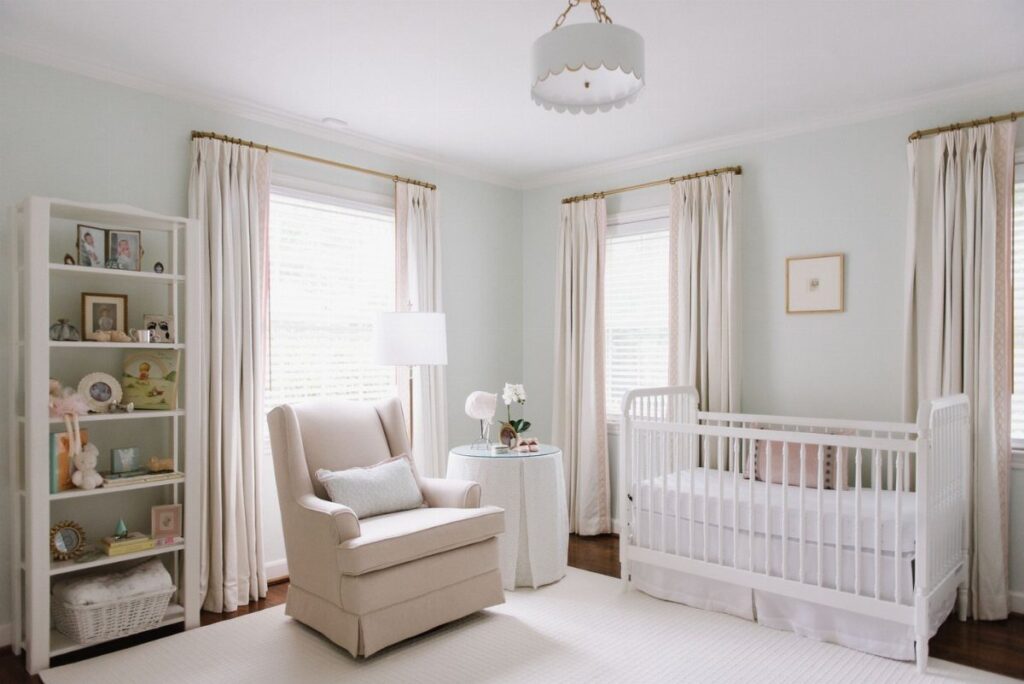
Whether you can paint decides which of these blue and green nurseries fits your home.
Owners can go all in with painted walls, while renters can get a similar blue and green mix from bedding, a rug and a few bins on an open shelf.
The ideas run from a single swapped-in pillow or lamp base to wallpaper and paneling, and the cheaper the green item, the easier it is to adjust once the baby is home.
1. Robin’s-Egg Blue Nursery
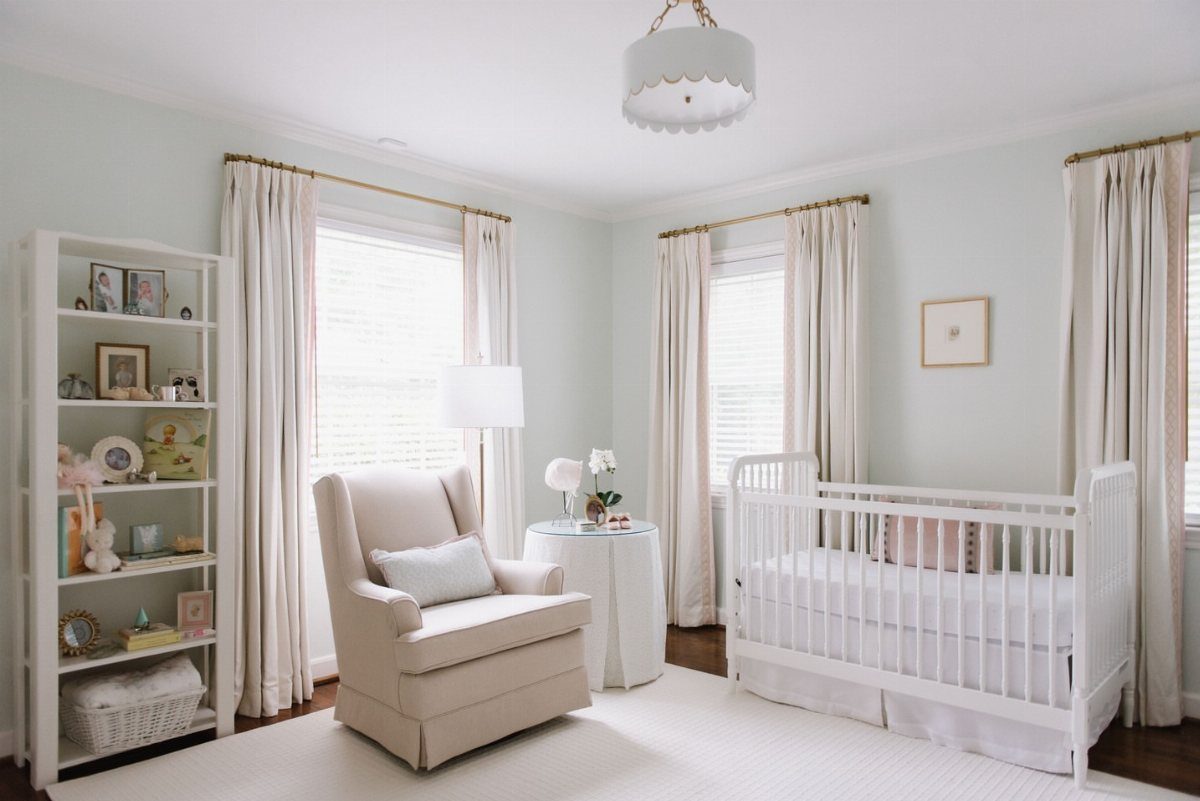
The pale blue-green leans soft rather than sweet.
Pick the paint in daylight, since a swatch on a small card can read bluer or greener than the finished wall.
Keep the furniture neutral and let the walls carry the color; that’s the easiest way to avoid a room that feels busy.
A green throw or a leafy print can come later, once the baby arrives and you know what the room needs.
Just because a blue is bright doesn’t mean it’s not comforting. For Piera Gelardia, Farrow & Ball’s St. Gile’s Blue was the perfect reflection of her daughter Viva’s personality: energetic but peaceful.
— Domino
2. Periwinkle Blue and Sage Green
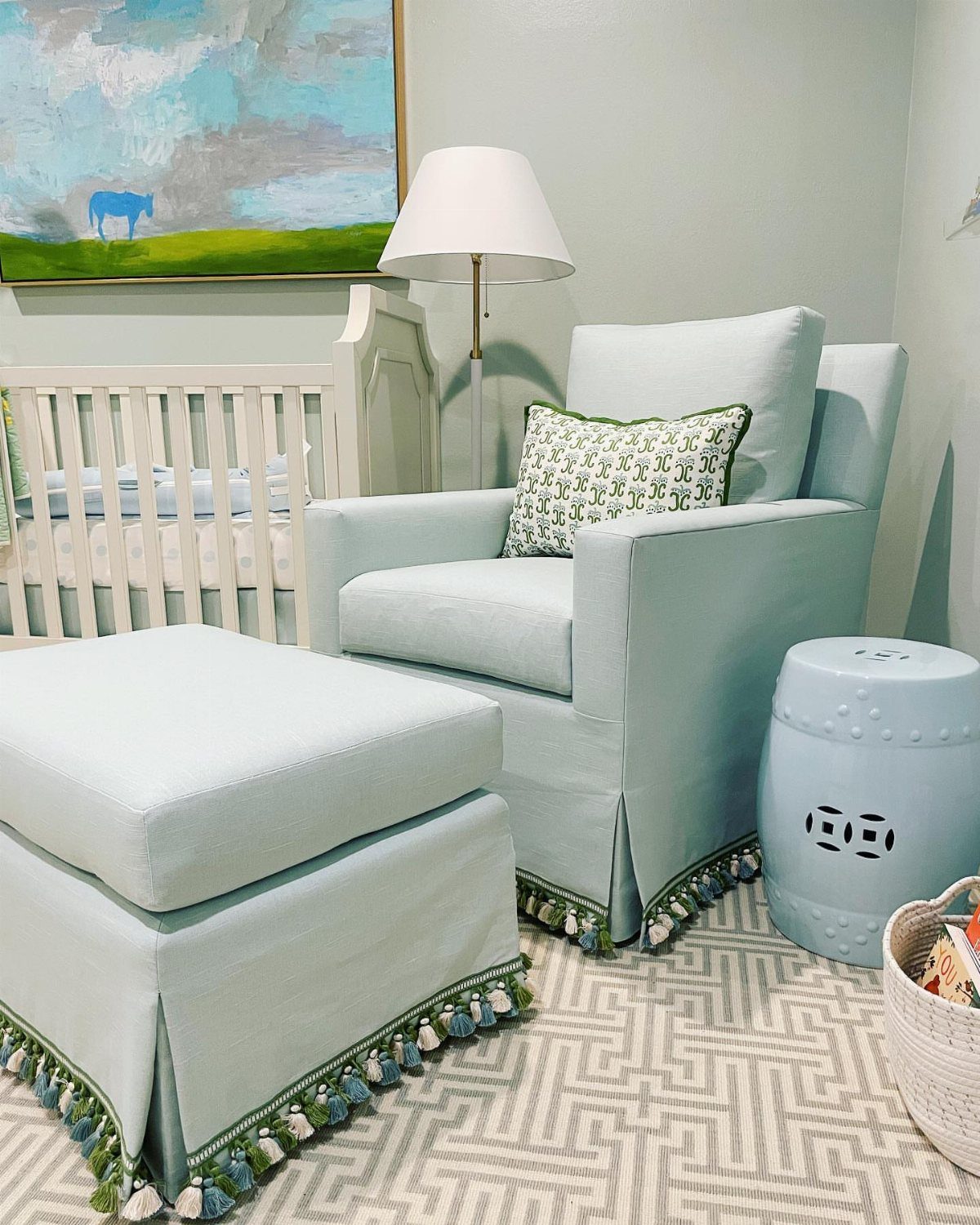
Periwinkle leans a little purple, and sage green calms it down so the pair feels grown-up instead of babyish.
For a weekend, buy one large blue piece and repeat the green in 2 or 3 small things, like a pillow, a throw, or a plant pot. Small green items are cheap to swap if the mix feels off.
A quirky painting, like a blue cow, gives the palette a personality that paint alone can’t.
3. Layering Textures
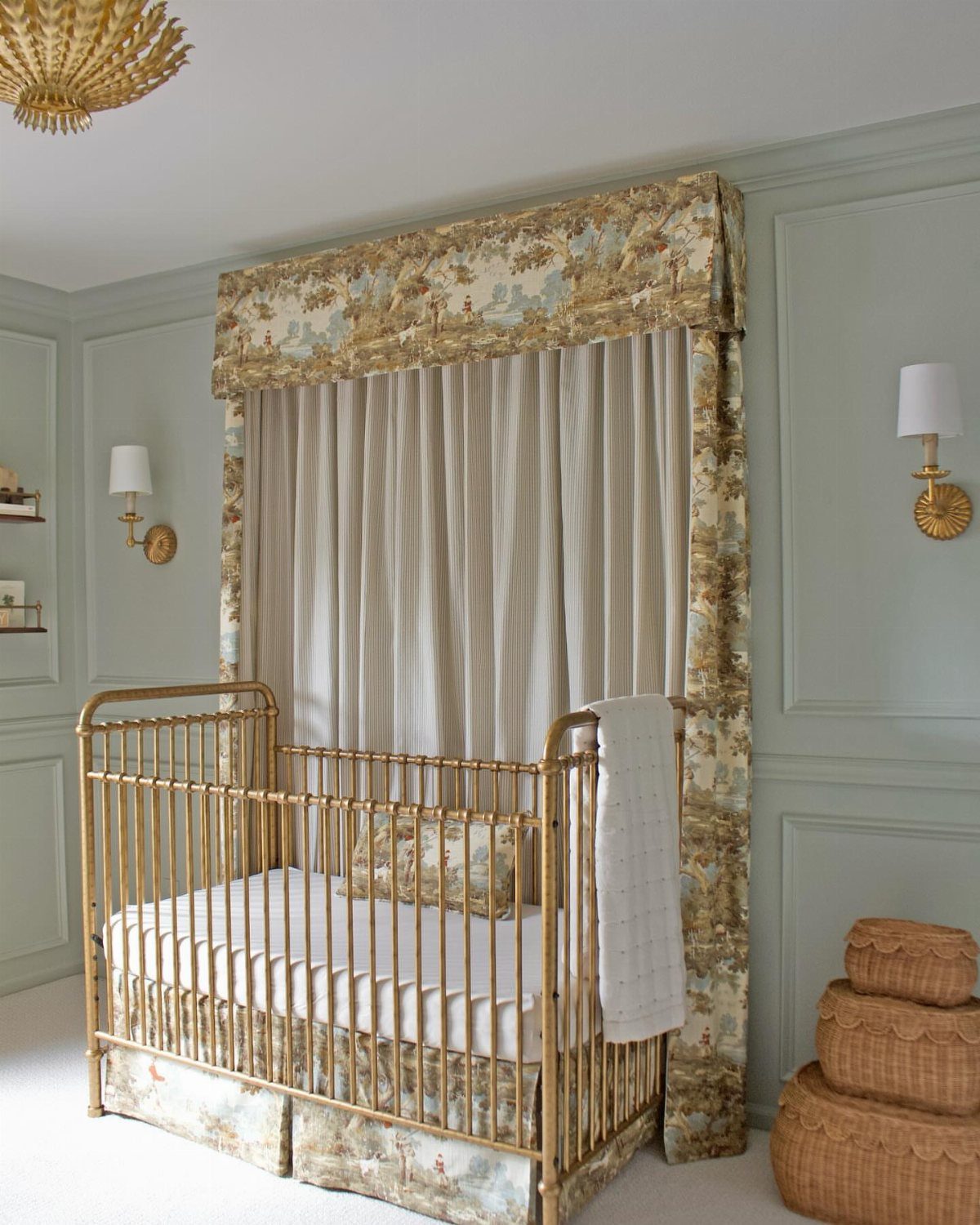
Metal, fabric and wood add depth without adding more colors; a gold metal crib against pale green paneled walls is a good example of how few materials it takes.
A patterned bed skirt and a canopy each bring a different print, and the gold sconces and chandelier tie them together.
Keep the layers in one color family so the patterns read as a set. I’d limit the metallic finish to 1 or 2 spots, since gold repeated everywhere starts to feel heavy.
Swapping lamps or curtains is the cheapest way to try this.
4. Gender-Neutral Design
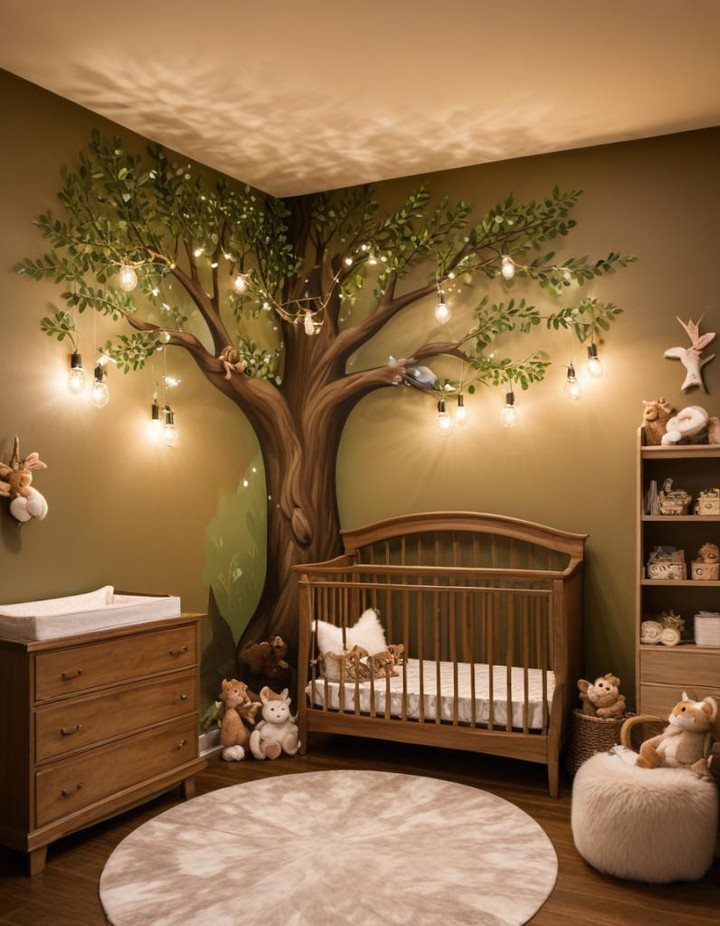
Olive green walls skip the pink-or-blue question entirely, and a tree mural with string lights gives the room a story instead of a gender. Wooden furniture and a round rug keep a gender-neutral blue and green room warm.
If you want blue in the mix, bring it in through small things like a stuffed animal or a blanket, and leave the walls green. That keeps the room flexible for a second child.
Olive is darker than most nursery colors, so test it on the wall first and check it at night under lamplight.
5. Light Blue Walls with Green Accents
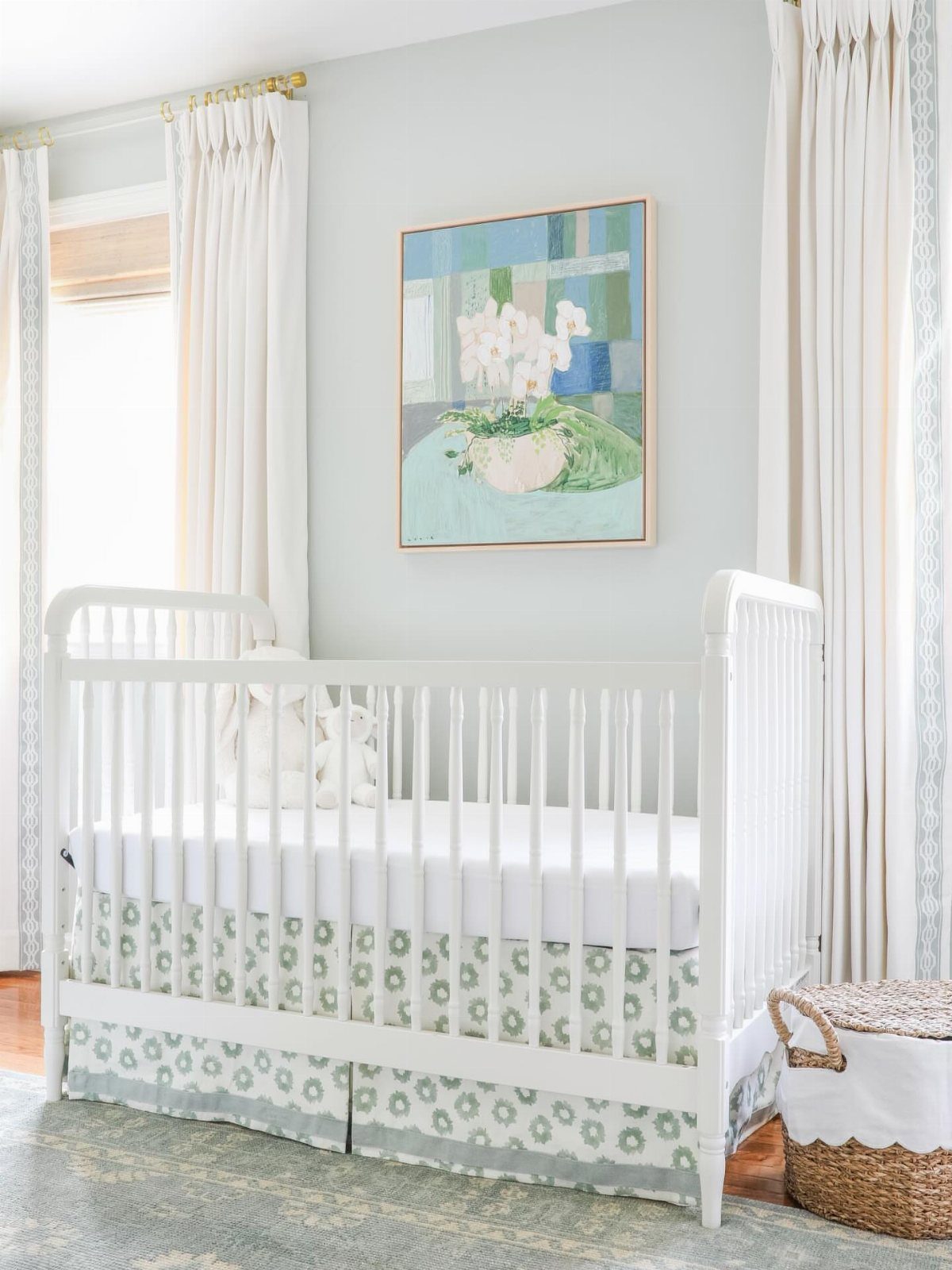
Soft blue walls do the quiet work here, and green does the talking: a patterned bed skirt, an area rug and a blue-green floral painting. Because the walls stay pale, the green patterns can be bolder without crowding the room.
Repeat one green in at least 2 places so it looks planned. A rug is the best start since it covers the most floor and costs less than repainting.
I’d choose a painting that includes both colors, because it ties the blue walls and green textiles together.
6. Blue and Green Nursery Accents
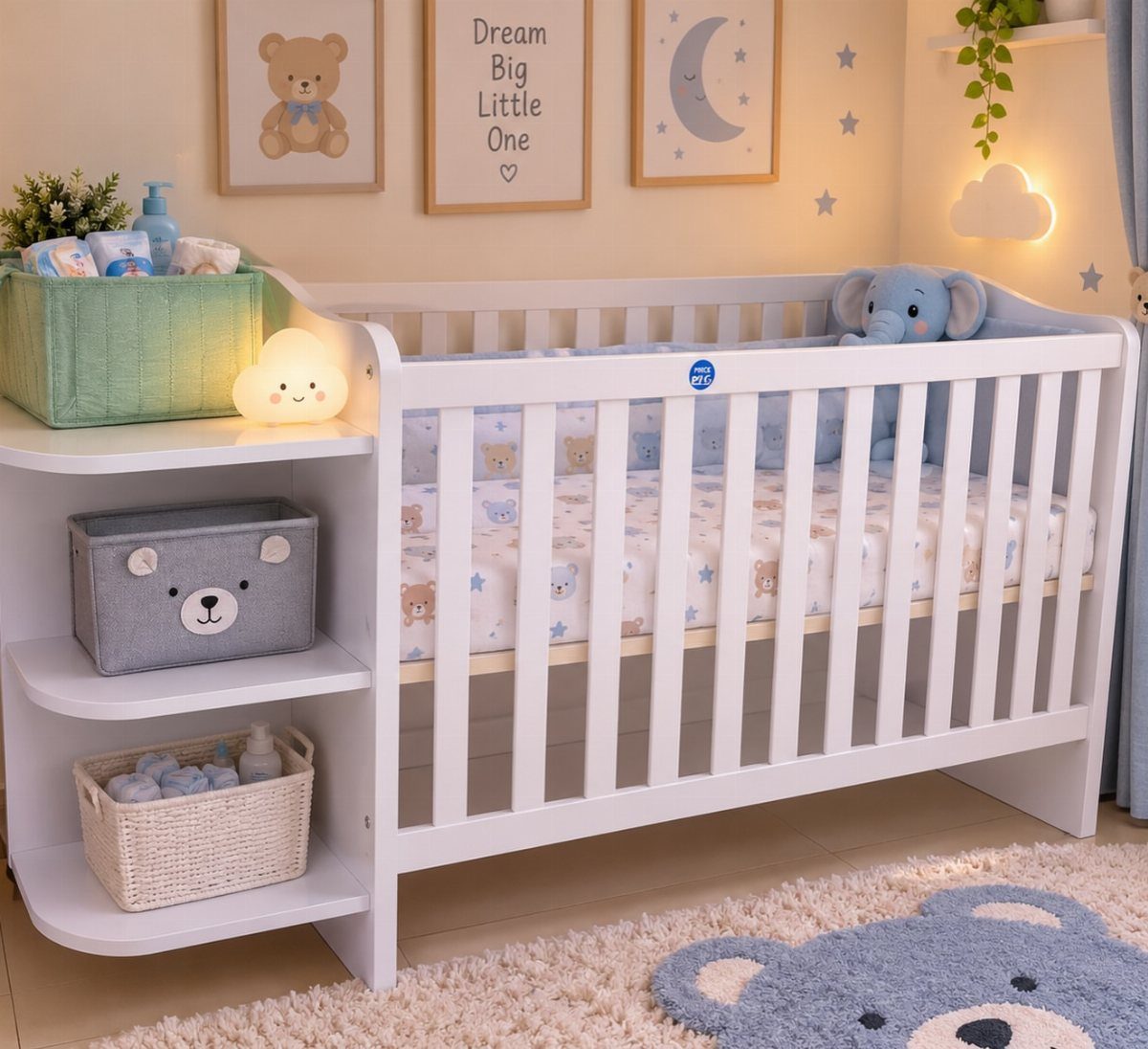
A neutral nursery with a white crib is the easiest place to start with color, because every blue or green item can be swapped out later.
Blue crib bedding and a blue bear rug supply the blue, while green and grey bins on an open shelf supply the rest.
Bins are my favorite way to add green: they hold the clutter and count as decor. Buy a matching set so the shelf looks tidy.
This approach suits renters, since nothing needs paint.
7. Blue Stripes with Green Wainscoting
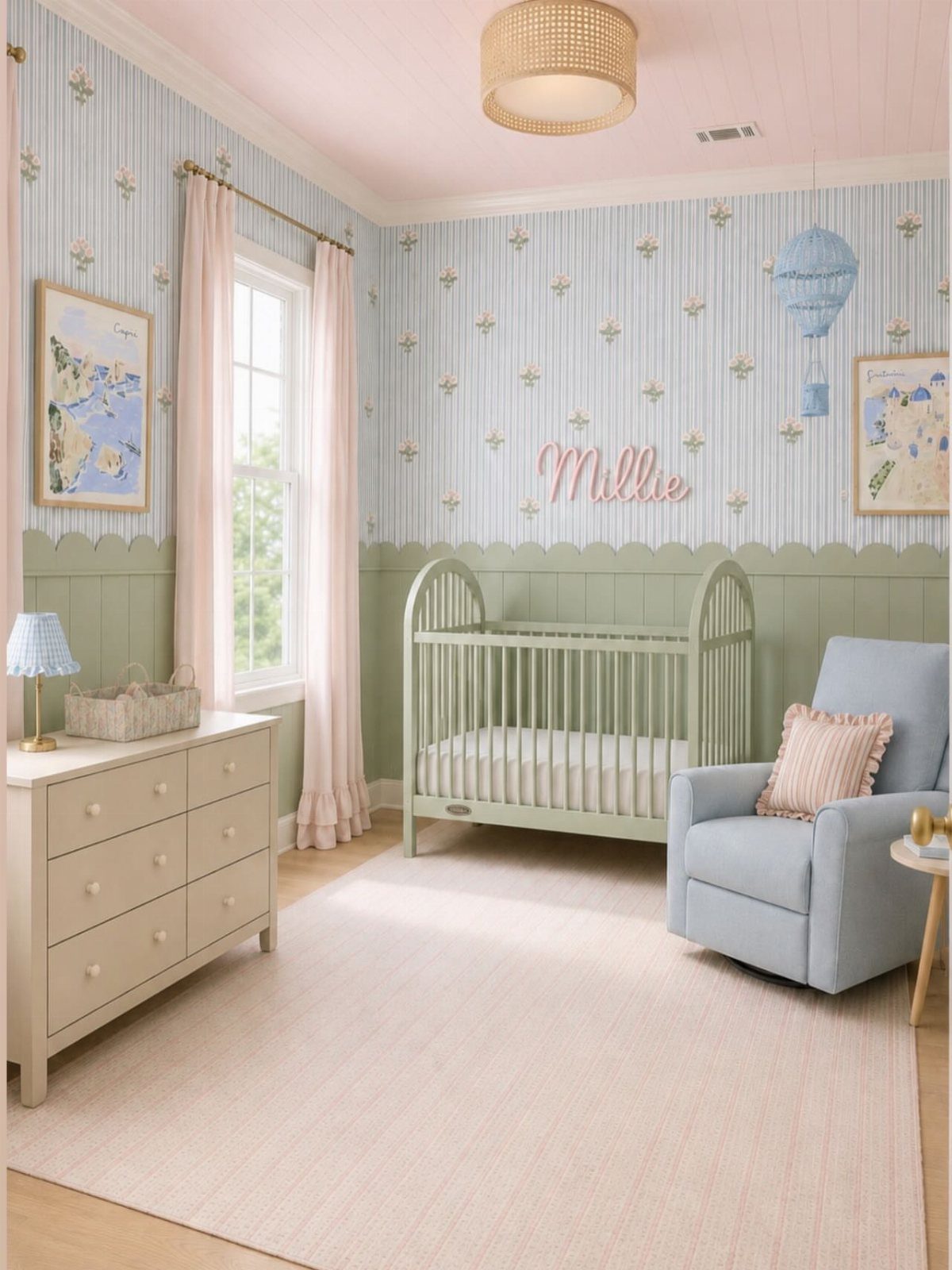
Wainscoting in sage green below and pale blue stripes above splits the wall into 2 calm zones, and the stripes make the ceiling feel taller.
A crib painted the same green as the wainscoting blends into the lower wall and keeps the room from looking cluttered.
Match the crib and wainscoting as closely as you can, or the 2 greens will fight. I’d keep the dresser white, since the stripes and the paneling already supply plenty of pattern.
Wallpaper is the pricier part; if the budget is tight, paper only the upper wall and paint the lower half.
8. Blue Check Wallpaper with Green Accents
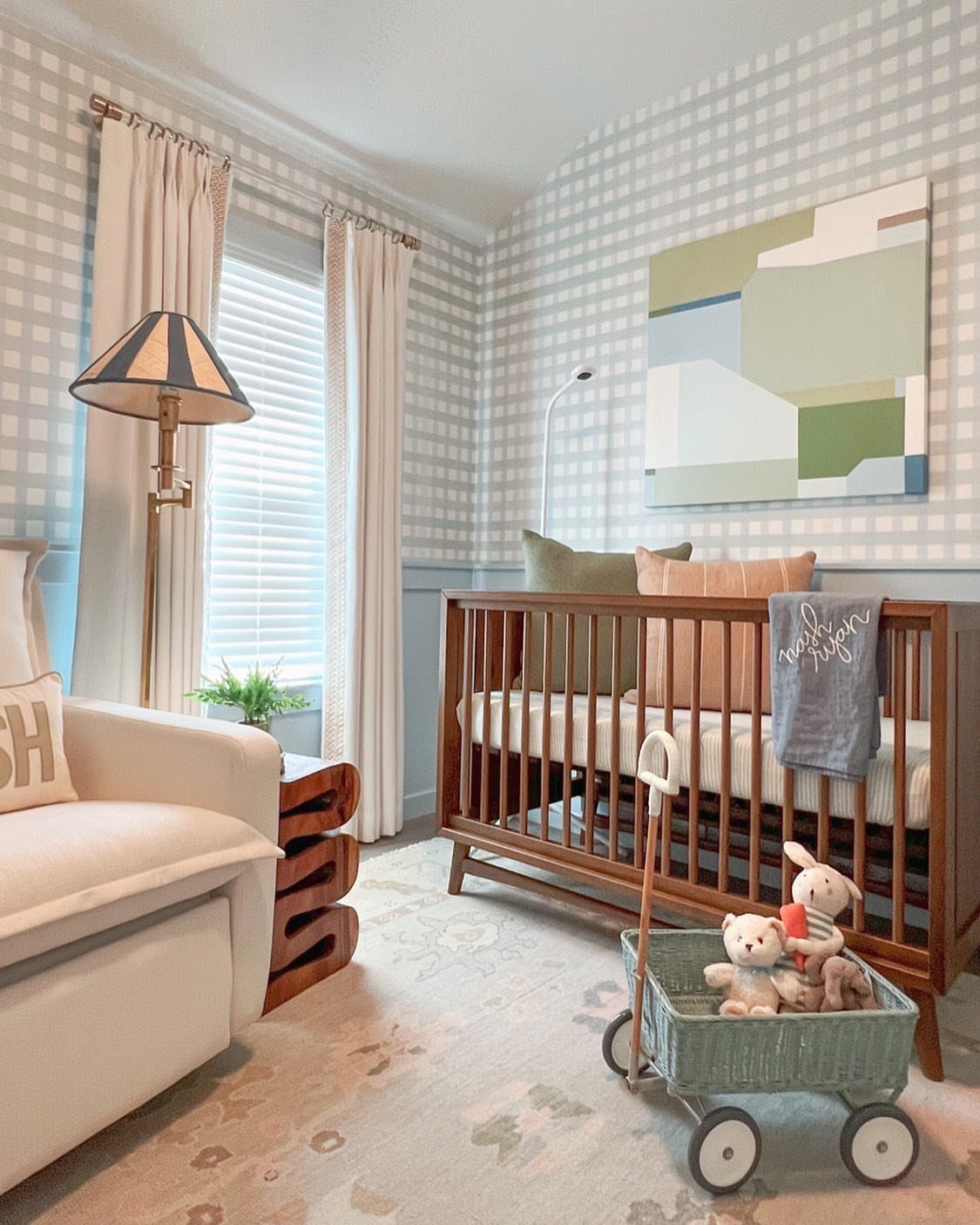
Blue and white checks give a nursery a classic, country feel, and a wooden crib keeps it warm instead of stiff.
Because the wallpaper is already a pattern, I’d bring green in through solid or soft things: a painting with green tones, a stuffed animal or a basket.
Keep the other pieces plain, like a white armchair, so the check stays the star. A small check reads calmer than a big one.
Green decor is cheap to swap, so you can adjust the balance after the room is set up.
Choosing Colors for Nurseries
Pale powder blues keep a nursery quiet and calm, and a deeper navy or a grayed, smoky blue gives the walls more weight. Green next to either one brings a fresher feel.
Blue is also a cool color, so warm it up. Wood tones, layered textiles and soft lighting balance cool walls and keep the room cozy at 2 a.m.
Pair blue with beige, white or gray when you want the room to stay neutral and flexible. Those shades let the blue and green stay the only real colors.
Themes like coastal, nautical, travel, woodland and classic all sit well with a blue palette, so pick the one that fits your taste.
Incorporating Personal Touches
Personal touches give a nursery character that a store-bought set can’t. A name sign is the simplest one, and hanging it on a wall across the room, well away from the crib, keeps it in view without any fall risk.
If you choose a metal finish for the sign, repeat it once or twice, say in a mirror frame or curtain hardware, so it looks planned.
Family mementos work well on open shelves. A hand-me-down shelf unit is a good home for them, and the age of the piece adds character no new furniture can.
Keep the display small: a few meaningful items with space around them read as intentional, while a crowded shelf reads as clutter.
Designing for Longevity
Choose a simple crib, a dresser with a plain shape and a neutral rug, since those still work in a toddler room.
Spend your budget on furniture and keep the color in things that are cheap to replace: bedding, pillows, curtains and wall art. When your child outgrows a theme, you swap items instead of repainting.
A dresser with a changing pad on top can later lose the pad and stay a dresser. A storage bench and baskets also hold toys for years.
Pick a paint color you would still like in a few years, so the walls never need to change.
Frequently Asked Questions
Is blue a good color for a nursery?
Yes. Blue is calming and timeless, and it works at any depth from pale powder to navy or smoky gray-blue.
Yes, and it’s one of the safest picks, but blue runs cool, so I balance it with a warm-bulb lamp on a dimmer and a natural wood crib or dresser before the room ever feels chilly at 2 a.m.
How do I make a blue nursery feel warm and cozy?
Add wood tones, layered textiles and soft lighting.
Blue is a cool color, so these balance it. Wooden furniture, a rug and lamps with a gentle glow are cheap places to start.





