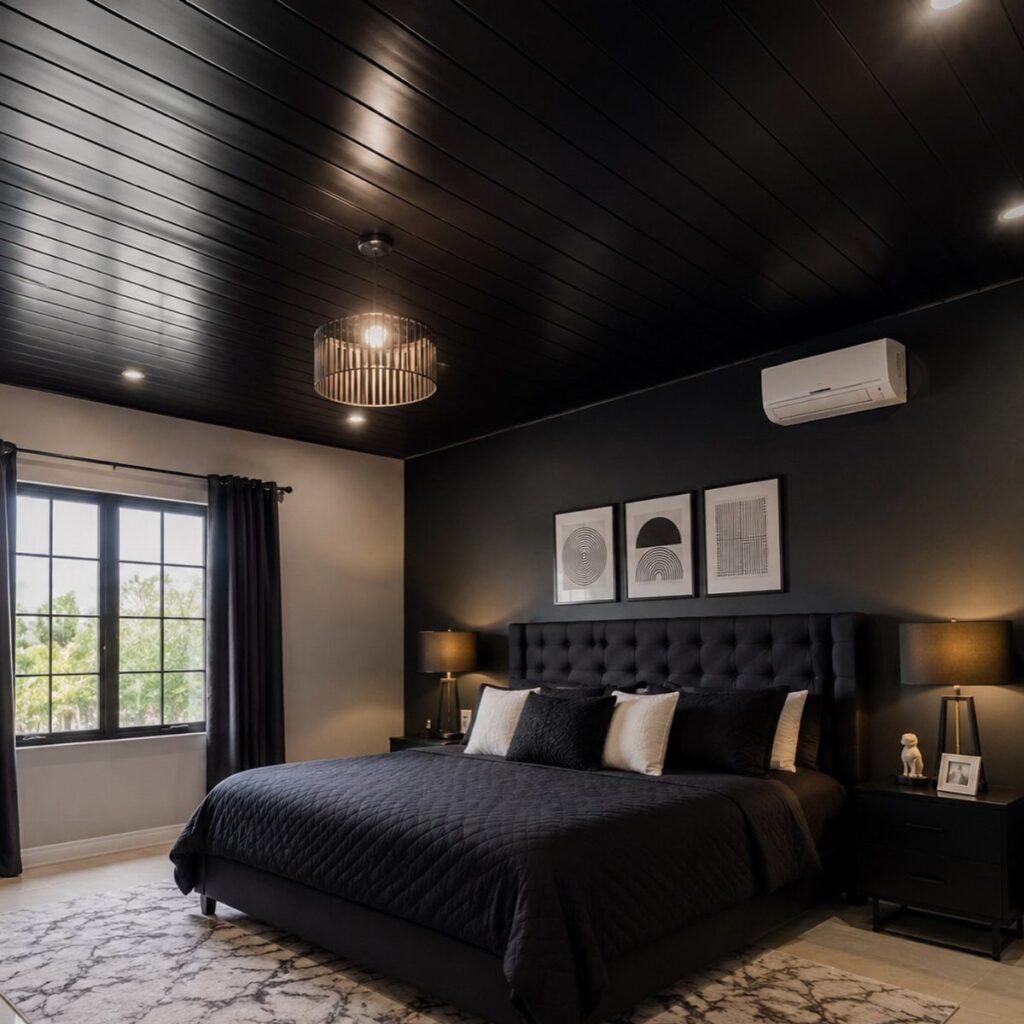
Daylight decides how much black a bedroom can handle: a bright room carries a full black wall, while a dim one does better with a softer charcoal or a partial black wall.
The ideas here run from a partial black wall to a full textured wall behind the bed, and the work ranges from a weekend of paint to geometric patterns, slats, and accent lighting.
1. Partial Black Wall
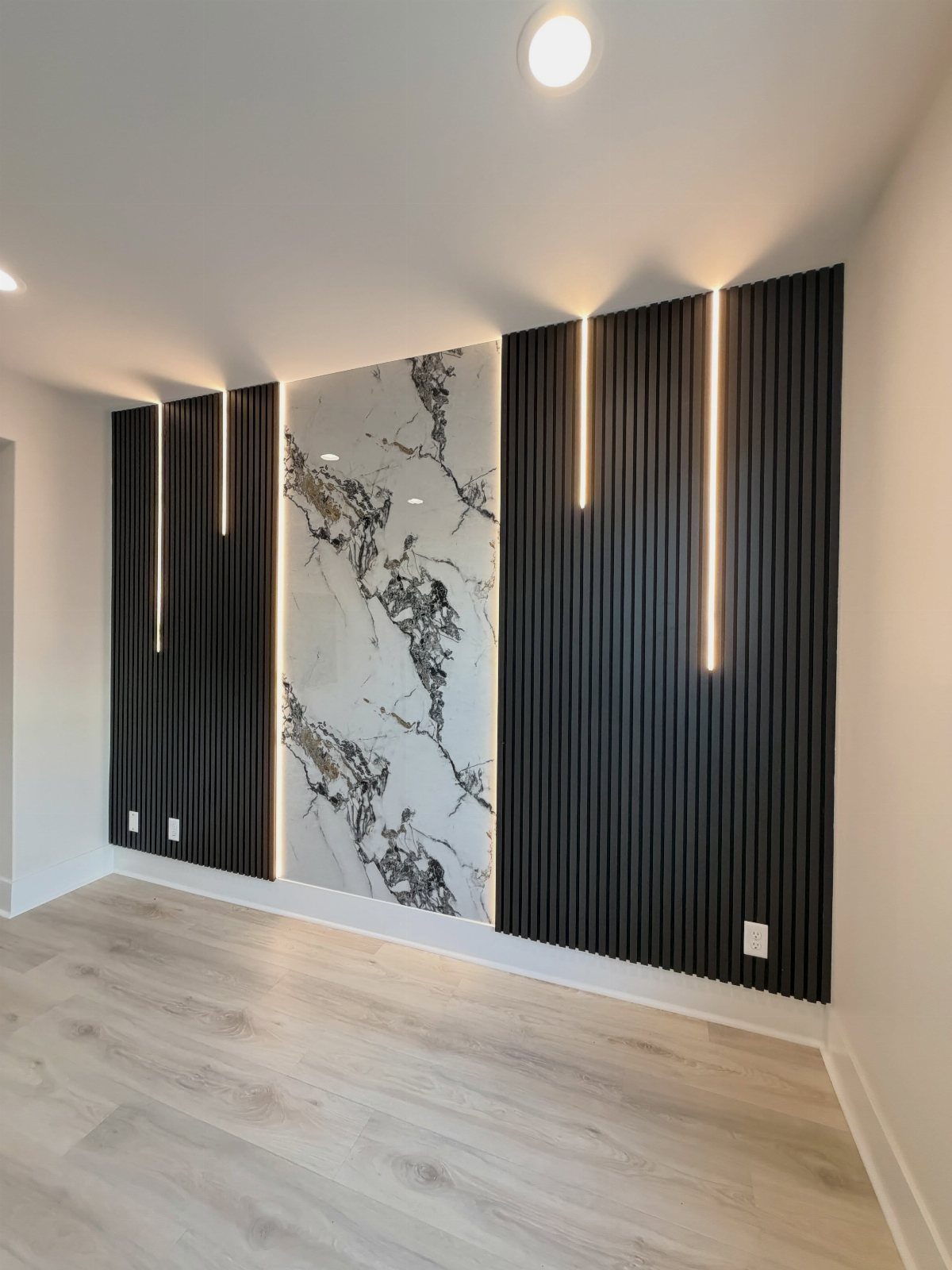
A black wall doesn’t have to run edge to edge. Here, black slats frame a single white marble panel, and the contrast does the work a full paint job would.
For a weekend version, keep the black to one section and leave a lighter material at its center.
Marble is the pricey part, so a stone-look panel or a painted board is a cheaper stand-in. Light wood floors keep the room from feeling heavy.
2. Natural Light with Black Accent Wall
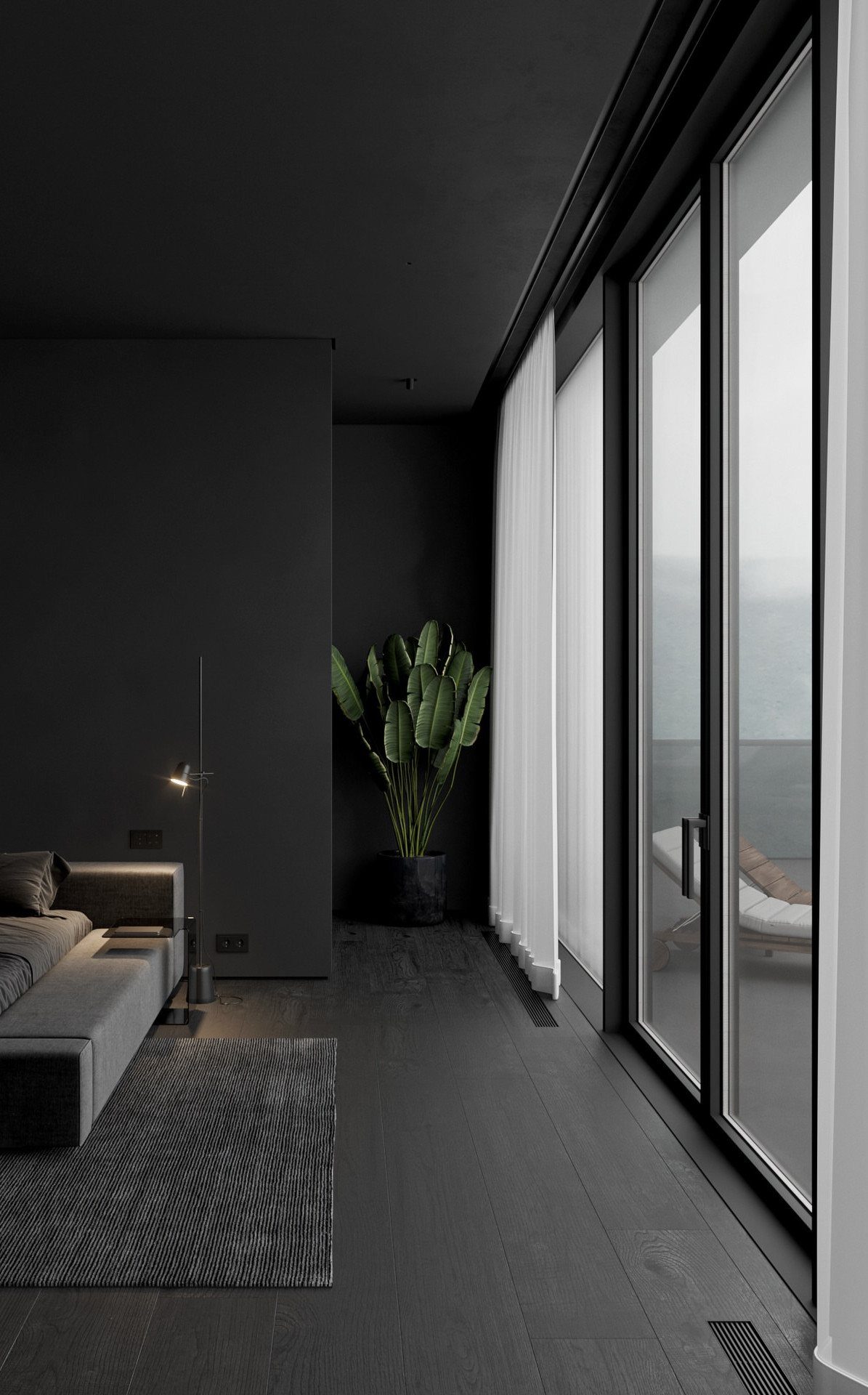
Daylight pours across the matte surface and softens it, so the room reads calm instead of cave-like.
White curtains are what I’d pick here: they let the light through and keep the dark walls from swallowing the window.
If your room has one small window, paint only the wall facing it. A large plant adds a living green against the dark.
3. Textured Black Wall
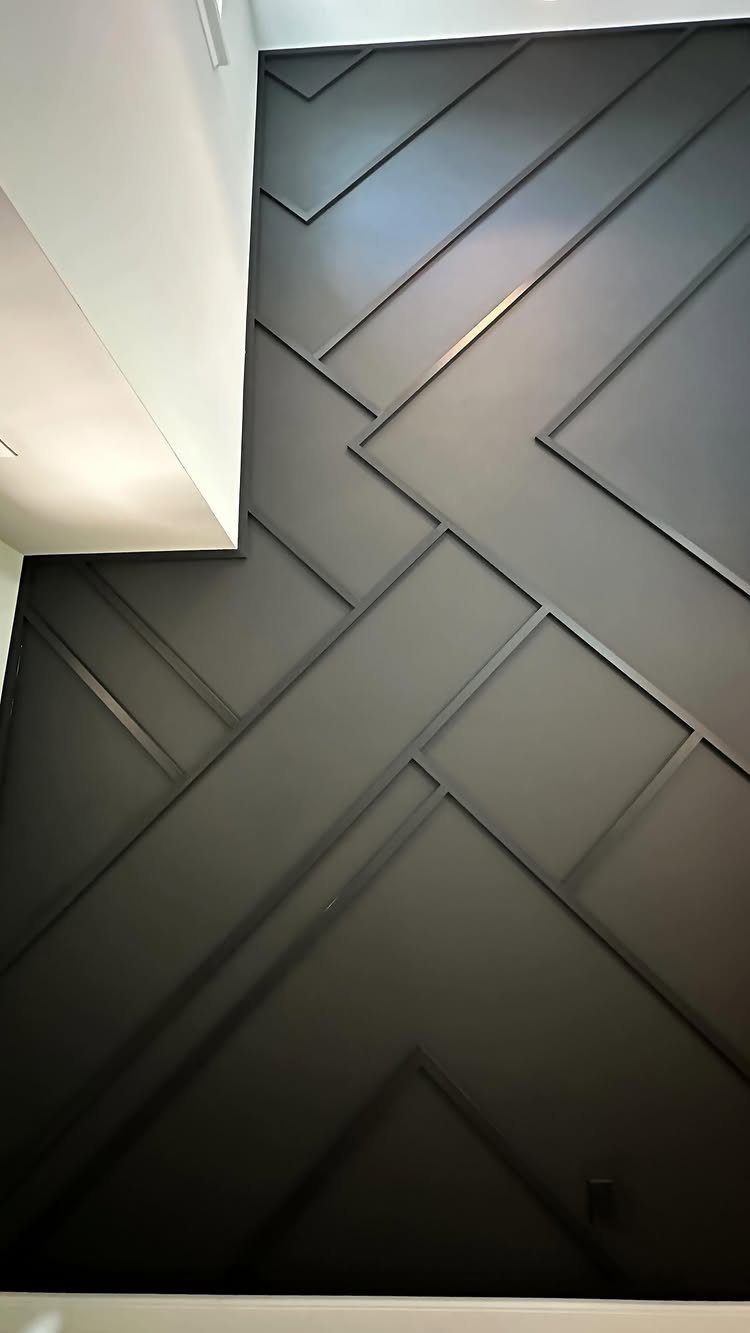
Flat black paint hides nothing, but raised texture gives the eye something to follow. Wooden slats set in an intersecting geometric pattern throw small shadows, which makes a single wall feel deeper.
Paint the pieces matte black so the pattern reads as one surface.
I’d keep the design bold and simple, since a busy grid fights with bedding. Texture like this is a good way to make one wall the star without adding any other decor.
4. Accent Lighting
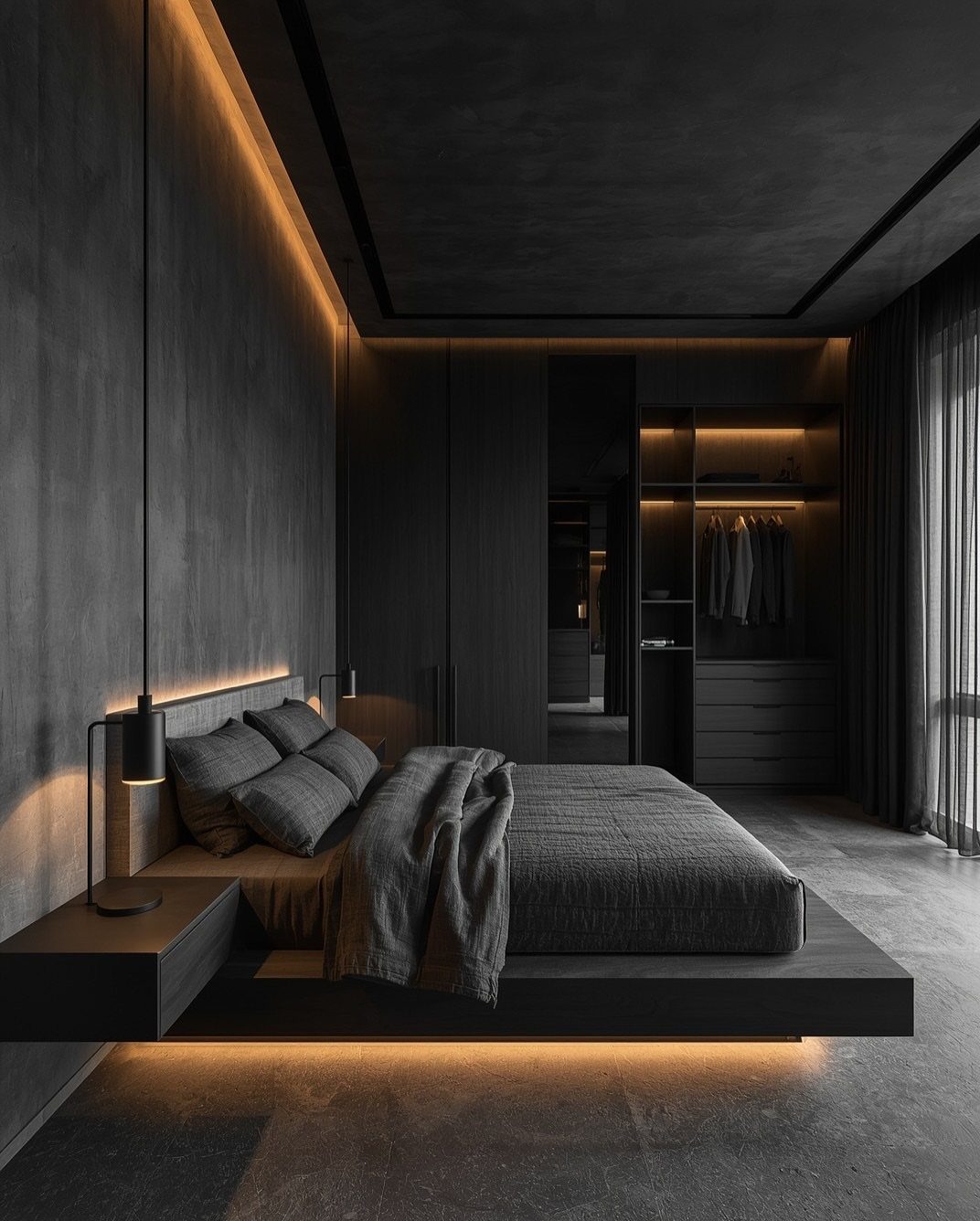
Warm LED strips tucked into the architecture make a dark room glow rather than disappear. The orange tone against dark grey walls and ceiling feels cozy, and it outlines the low platform bed and built-in wardrobe.
Hide the strips behind a ledge or under the bed frame so you see the glow, not the diodes.
I’d pick a warm tone over cool white, which turns dark walls harsh and flat. Put the lighting on a dimmer if you can.
5. Black Accent Wall with Mirrors
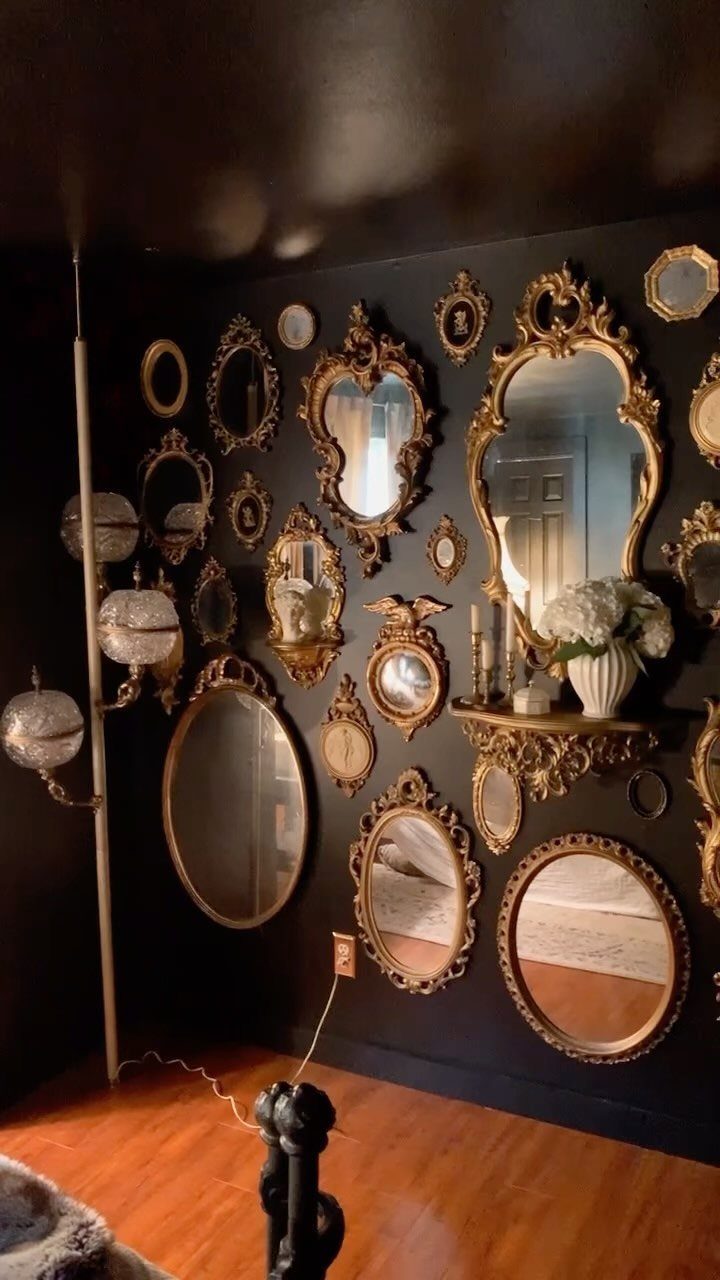
Gold frames look richer against black than they ever do on white. A cluster of ornate mirrors on a matte black wall bounces light around and adds a layered, gallery feel.
Mix sizes and keep the frame finish consistent, so the group looks collected instead of random.
A small shelf with fresh flowers breaks up the mirrors. Mirrors beat canvas art on a dark wall because they work as both decor and light source.
6. Black Accent Wall Behind the Bed
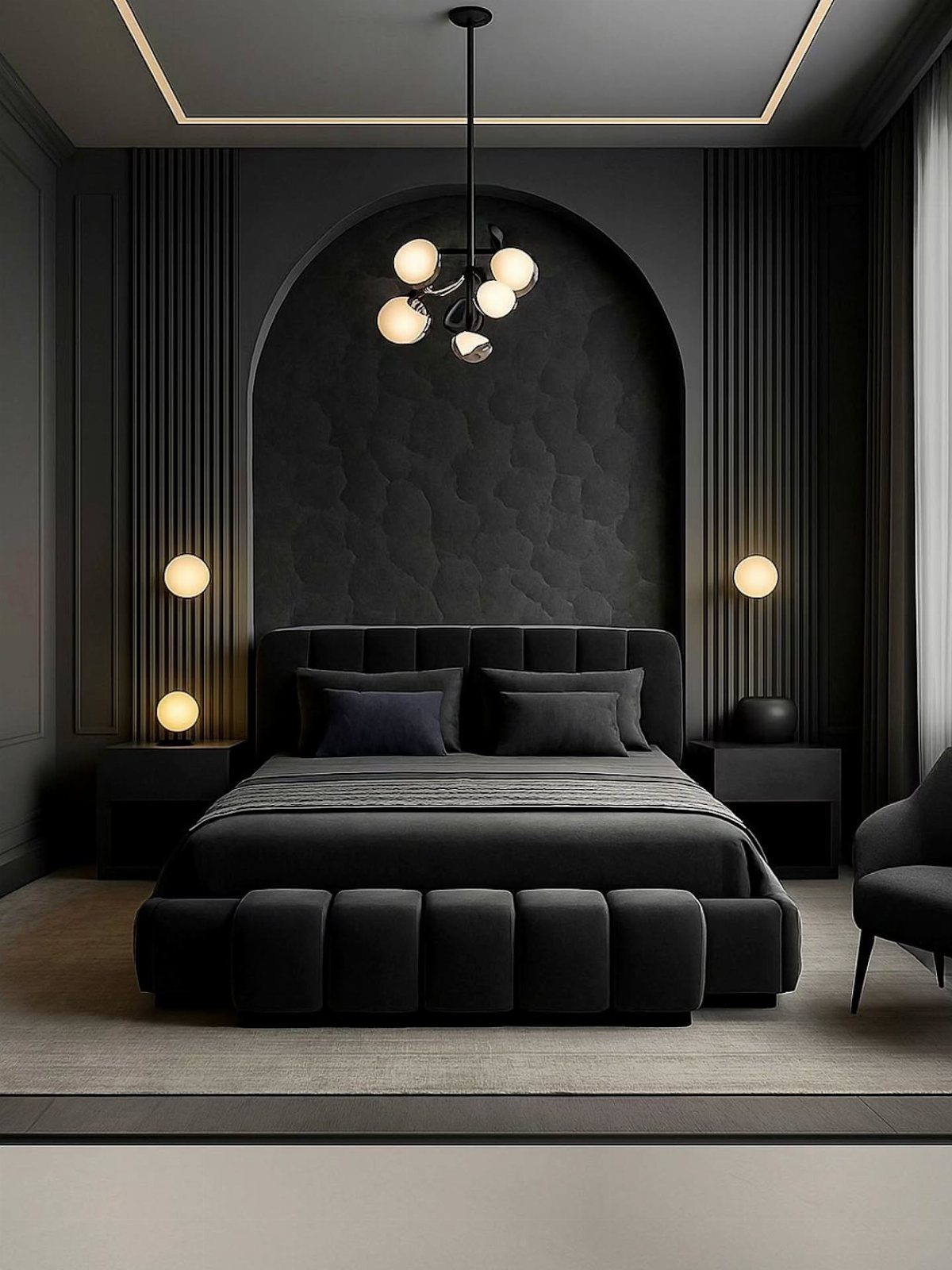
The headboard wall is where a black wall earns its keep, since it’s the first surface anyone sees on walking in.
A textured finish adds depth, and here the black upholstered bed sits right against it for a moody, tone-on-tone look.
Matching black nightstands keep the lines tidy.
A sculptural chandelier with spherical forms adds shape overhead, so the room doesn’t turn into one flat dark block. I’d pick one statement light and stop there.
7. Geometric Patterns on Black Wall
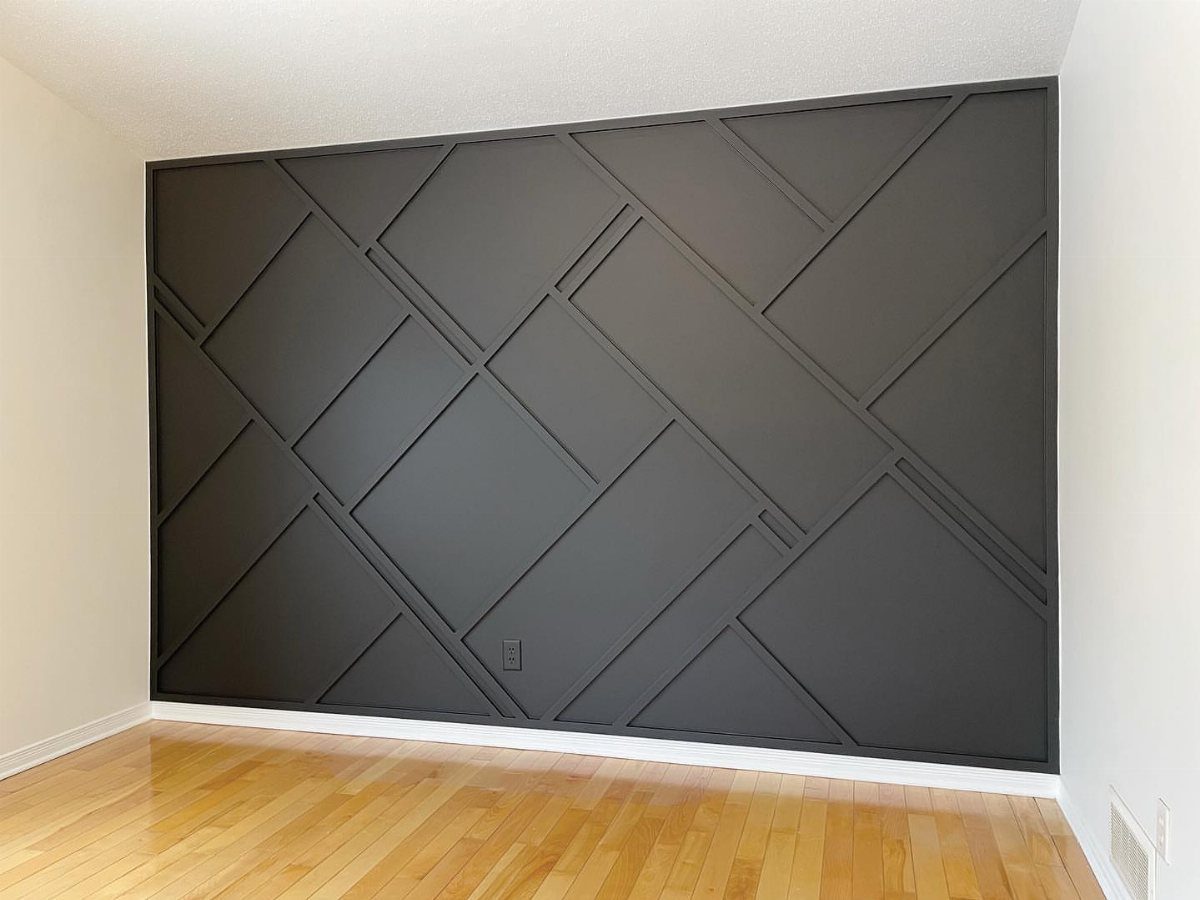
Raised lines that cross in a grid give a black wall its own pattern without any paint tricks. Against white side walls and light hardwood, the shadows between the ridges do the decorating.
Using a single matte black on both the wall and the raised pieces lets shadow draw the pattern, so the shapes show up as light changes through the day instead of as contrast between colors.
I’d keep the grid large and the lines few, because a tight pattern gets busy fast. Then skip framed art on that wall.
8. Black Slatted Gallery Wall
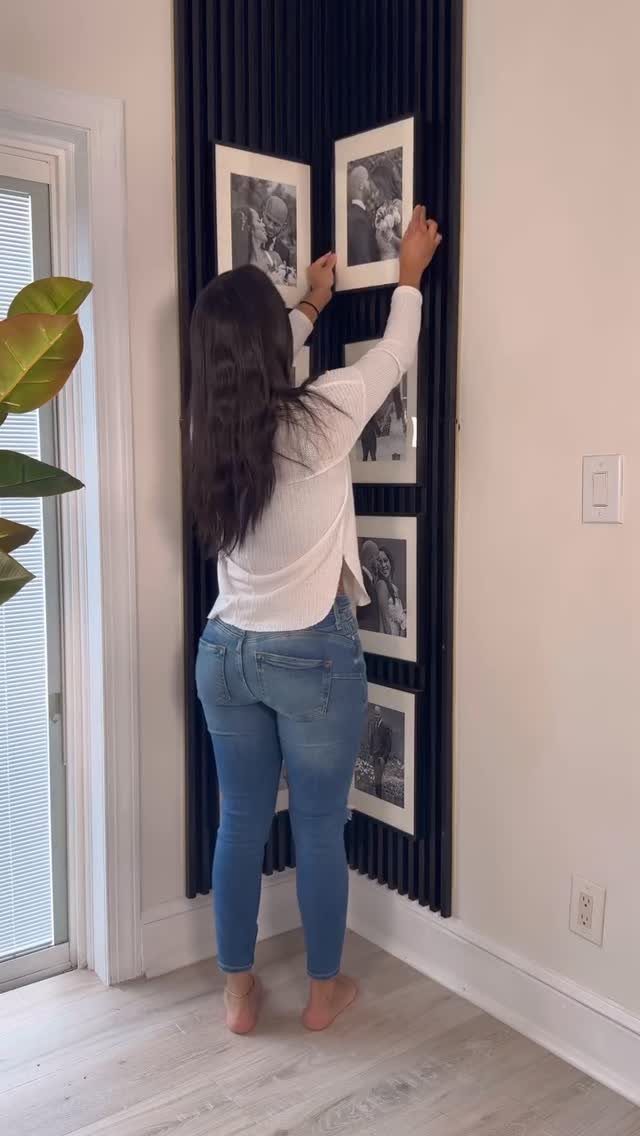
Black-and-white photos look sharp on vertical black slats, since the print tones echo the wall instead of competing with it. Set against white walls and light floors, the whole thing feels graphic and calm.
Lay the frames on the floor first and shuffle them until the spacing feels even, then hang.
Keep the frames thin and consistent in finish. I’d pick white mats, which give each photo an edge against the dark wood.
9. Black Accent Wall TV Setup
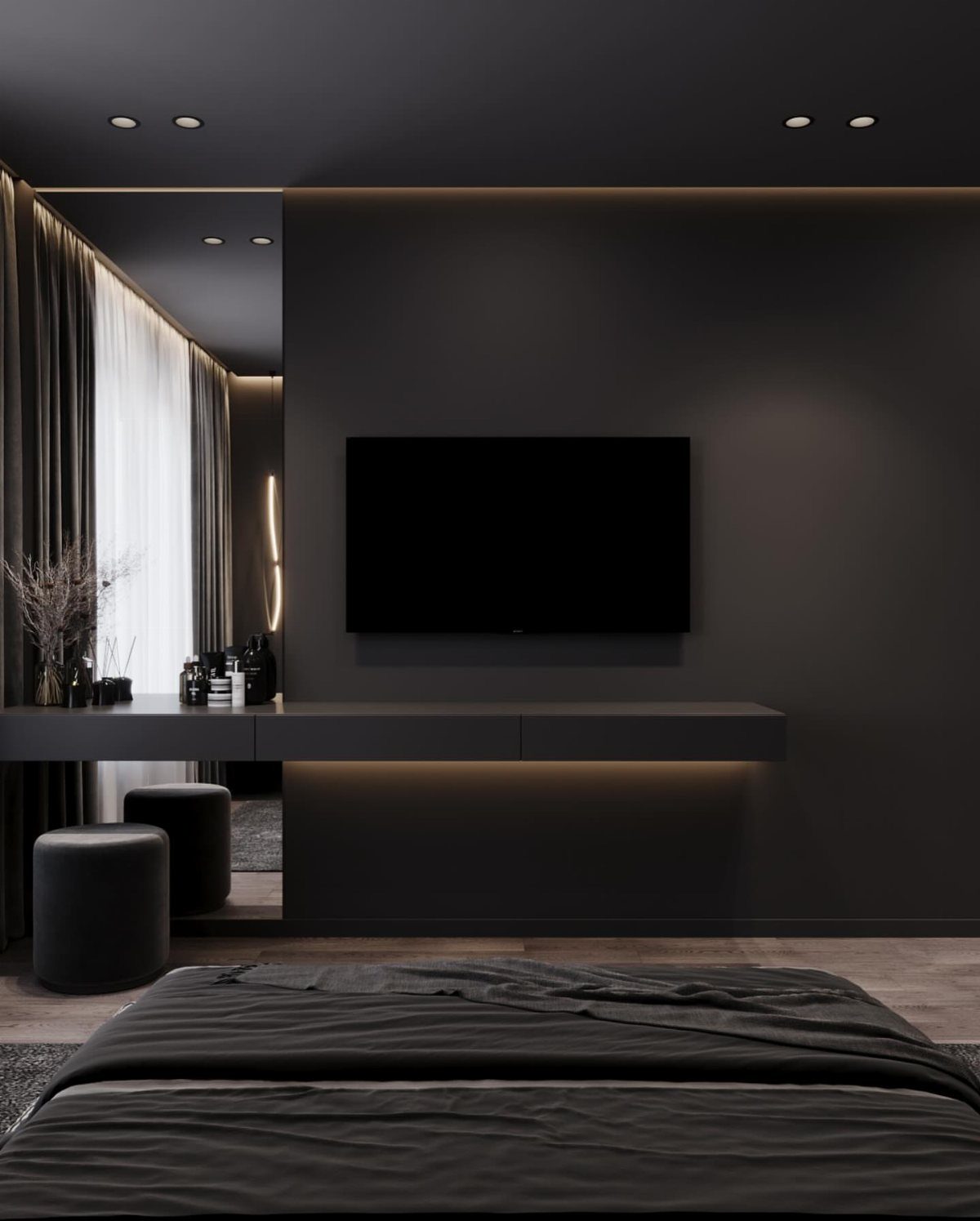
A TV can sit comfortably on a dark charcoal wall, because the screen blends in when it’s off. Charcoal is softer than pure black, which suits a room where you’ll watch late at night.
Mount the set flat and add a floating shelf with built-in light beside or below it, so the glow balances the screen.
I’d choose dark grey linens to match the wall. 2 ottomans at the foot of the bed give extra seats without crowding the room.
Balancing Black Walls
A black wall stays comfortable when most of the room around it is light. Keep the other 3 walls white or a pale neutral, and the black reads as a deliberate accent instead of a cave.
Watch how daylight moves across the wall through the day. Moving light brings out depth and softness in the color, so a bright room can handle black more easily than a dim one.
Warm materials finish the balance. Wood tones, linen, and a woven throw take the edge off the contrast and keep the bedroom from feeling cold.
Black may be a neutral color, but to many it can be an intimidating wall color choice compared to clean whites and airy shades of greige. It makes sense: the bold hue commands attention and can easily become the focal point of a space.
— Clare
Choosing the Right Black Shade
A soft black, like a charcoal with a hint of brown or blue, is the safer pick when pure black sounds like too much commitment.
You still get strong contrast against white bedding and trim, but the wall reads warmer and the room doesn’t feel boxed in.
Sample before you commit. Paint a large swatch and look at it in morning light and again at night, since dark colors shift more than pale ones.
You can also tone a black wall down with what you put against it. Mirrors, fabric, neutral wood, and framed pictures all break up the dark surface, so you get the drama without it dominating the room.
Decorating Around Black Walls
Mix at least 3 kinds of surface around a black wall: something soft like linen or wool, something natural like wood, and something with a little shine like metal or glass.
Black makes each of them stand out more than a light wall would.
Let the wall’s finish suit your style. Black wallpaper fits midcentury, vintage, or eclectic rooms, while a textured black finish leans traditional, rustic, or Mediterranean.
If the wall carries pattern, keep the rest of the room mostly neutral so nothing competes. Repeating black in one other spot, such as a dark light fixture, ties the wall to the room.





