Owning the walls or renting them decides which of these bedrooms is realistic: a feature wall, full wall built-in wardrobes and a coffered ceiling accent need permission and carpentry, while matching lamps, an under-bed accent glow and floor-to-ceiling curtains come off cleanly when the lease ends.
The ideas run from soft panelling and a calming color palette to a circular canopy bed and a hot pink neon sign.
1. Add Panelling for Texture
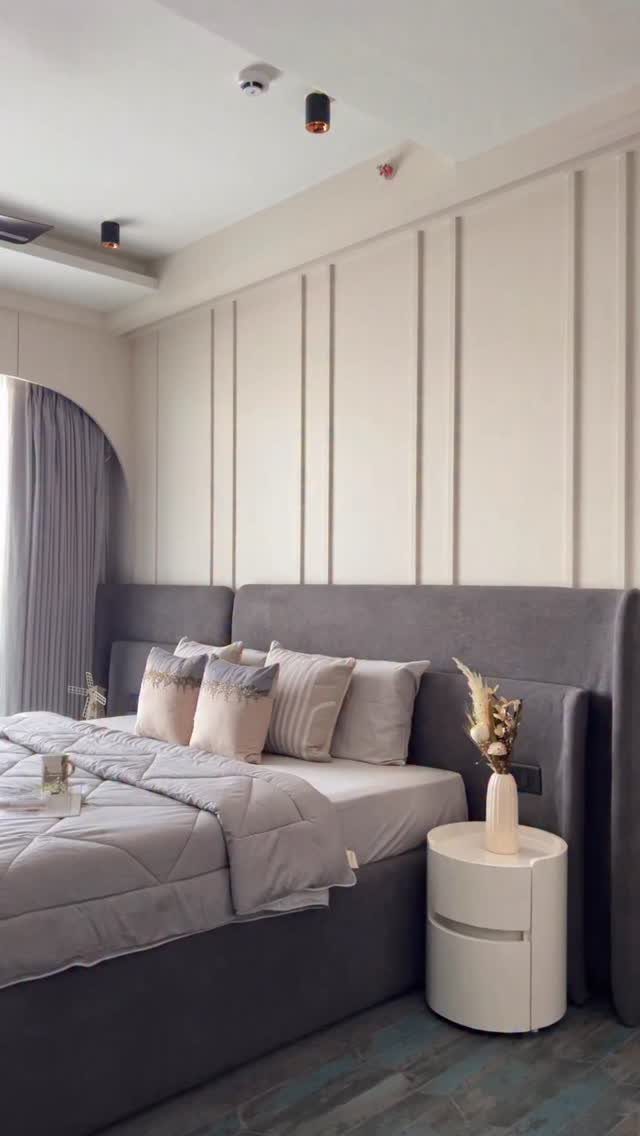
Vertical paneling gives a plain wall something a coat of paint can’t: shadow lines that shift as daylight moves.
Behind a grey upholstered bed, cream or white panels keep the look quiet while adding depth, so you get texture without piling on more pillows or patterns.
Paint the panels and the wall in one color.
The grooves then do the work, and the room stays calm. Panels also pair well with a small white side table, since nothing competes with the wall.
I’d keep the paneling directly behind the headboard, where it works as both backdrop and frame.
2. Ambient, Task, and Accent Lighting
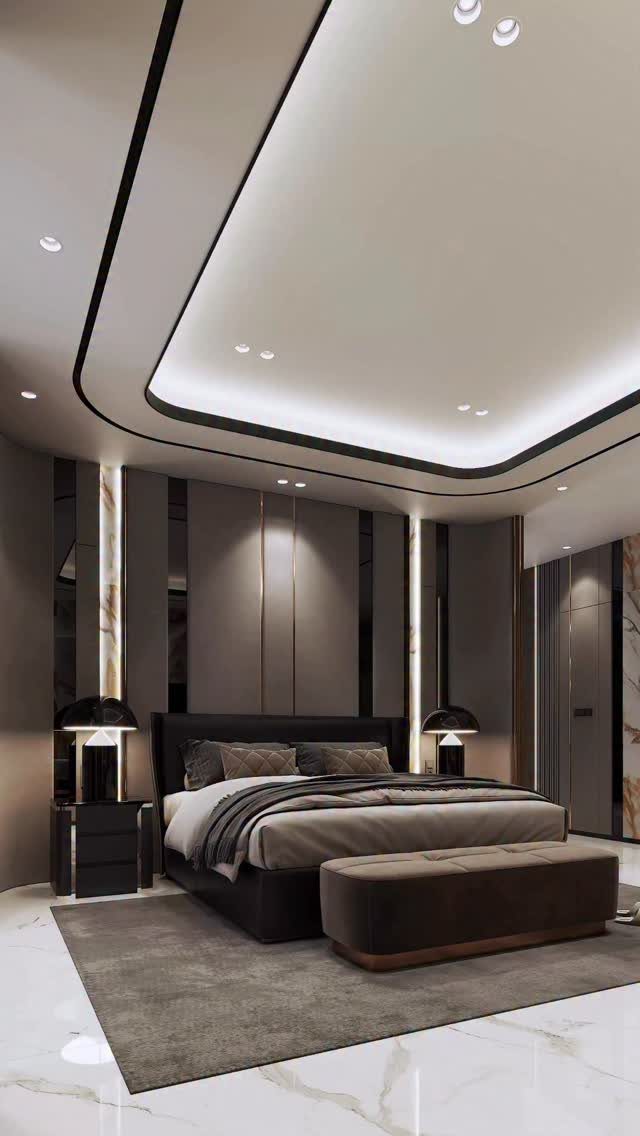
A single ceiling fixture leaves a bedroom flat, and layering fixes that. Recessed spotlights handle general light, LED strips in a ceiling recess add a soft glow, and bedside lamps give you light close to the pillow for reading.
Put each layer on its own switch or dimmer if you can.
Then the room can run bright for getting dressed and low for winding down. Renters can copy the idea with plug-in lamps and stick-on LED strips.
A neutral room like this one depends on lighting for its mood, so spend there before buying more decor.
3. Floor-to-ceiling Curtains
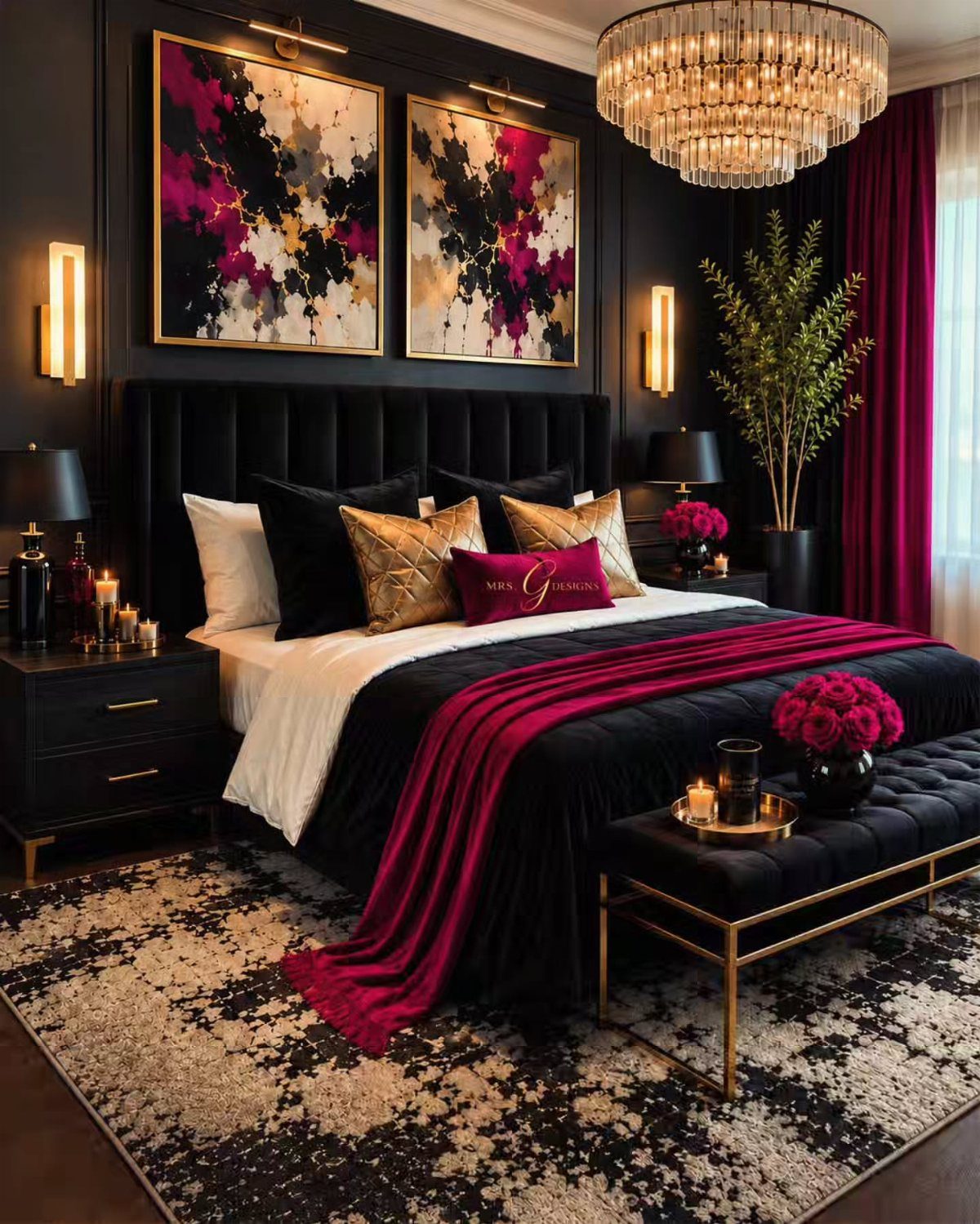
Hang curtains high, close to the ceiling, and let them reach the floor. That one move makes a window look taller and a room feel grander, and it works even on ordinary windows.
Bold fabric can carry a whole room. Magenta against black walls and a velvet bed is a daring pairing, but a deep, saturated curtain is the easiest way to try strong color without repainting.
In a smaller room, pick a shade close to your walls for a calmer version.
Choose a heavy, lined fabric so the folds hang full and the light stays out.
4. Rounded Furniture Pieces
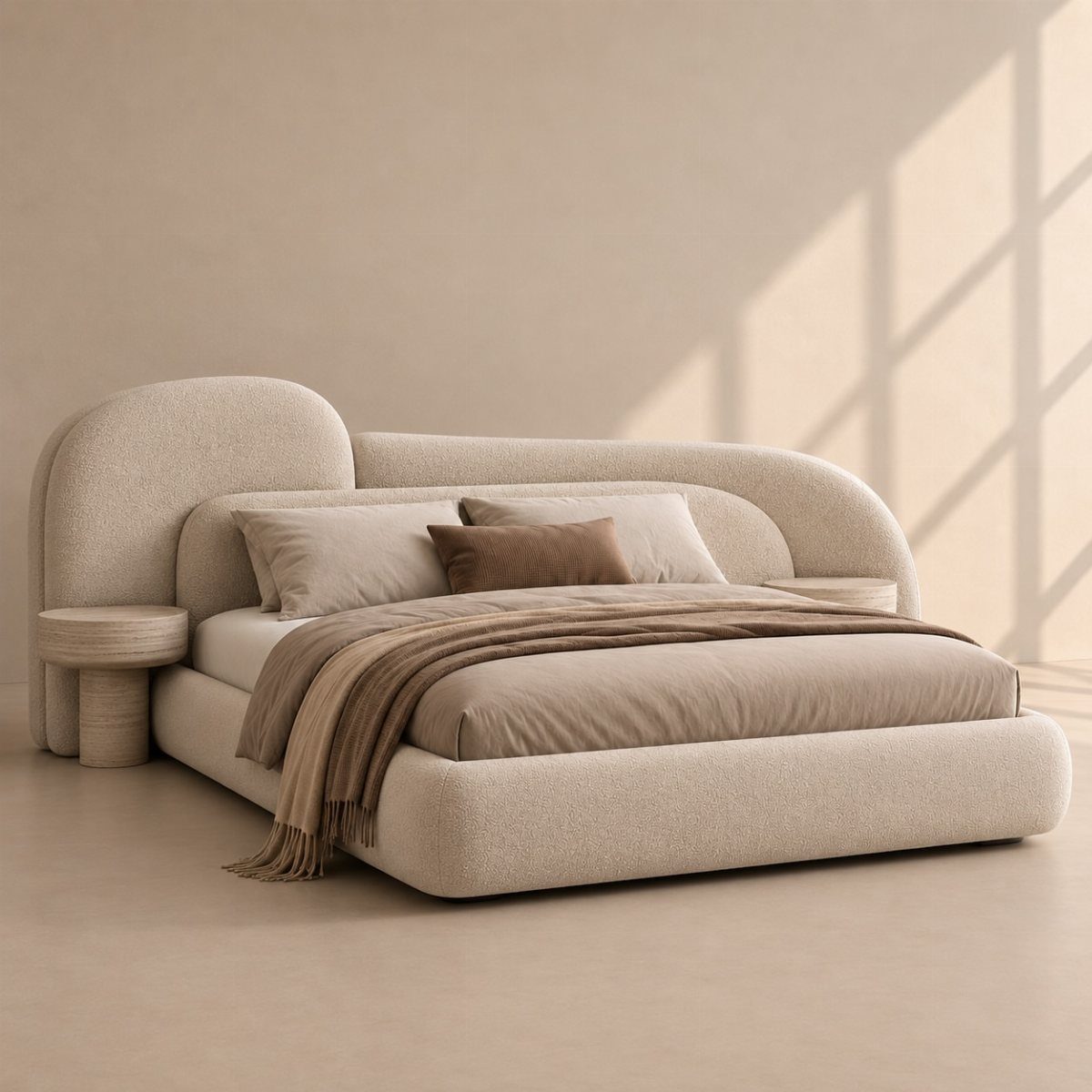
Curves soften a bedroom faster than any throw pillow does. A bed with a rounded upholstered frame and headboard, paired with a round nightstand, removes the hard corners you’d otherwise bump into at night.
Beige upholstery keeps it gentle, and a small round side table fits tight spaces better than a boxy one.
If a new bed isn’t in the budget, start with the nightstand; it’s the cheapest piece to swap and the curve still reads.
Stick to one or two curved pieces so the room feels intentional, not themed.
5. Choose a Calming Color Palette
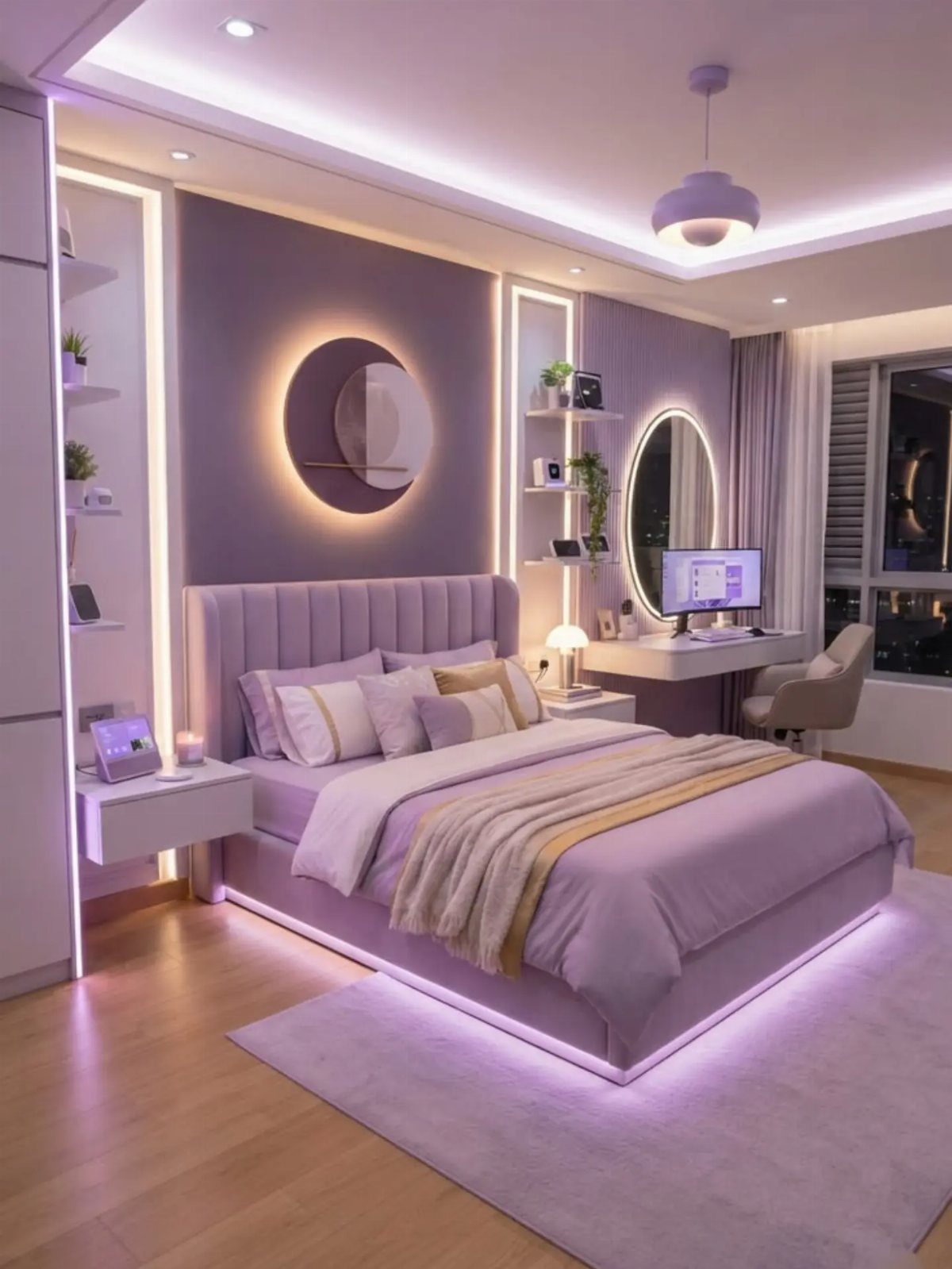
Purple is a bolder route to calm than the usual grey or beige, and this room proves it works when the shade stays soft and the lighting stays low.
A tufted bed, under-bed LED accents and a circular wall light all share one color family, so nothing jars.
Pick one main hue and let lighting carry the rest. Colored bulbs and LED strips are cheap, and they’re easy to undo if you rent.
Even with a desk in the room, a single palette keeps the workspace from feeling like an office.
6. Create a Cozy Reading Nook
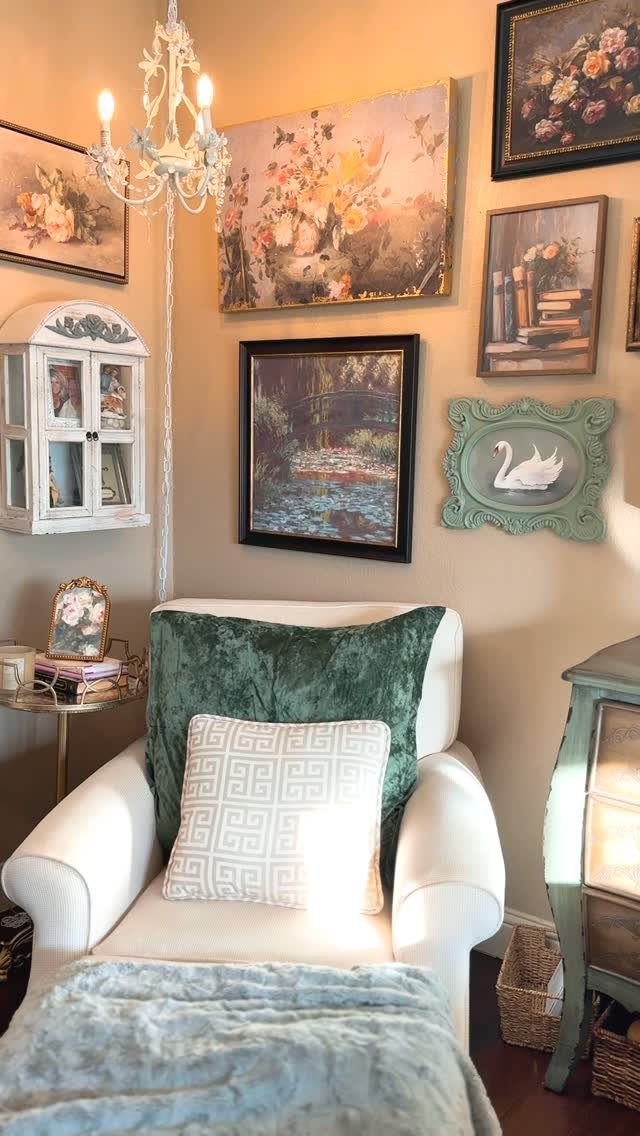
One armchair, a side table and a throw are enough to turn a spare corner into a reading spot.
Choose a chair you can curl up in, then add a blanket within reach and a table big enough for a mug and a book.
Hanging framed paintings above the chair gives the corner a backdrop, and a small chandelier makes it feel like its own room.
Put it near a window or a lamp so you aren’t reading in the dark.
7. Bed and Mattress
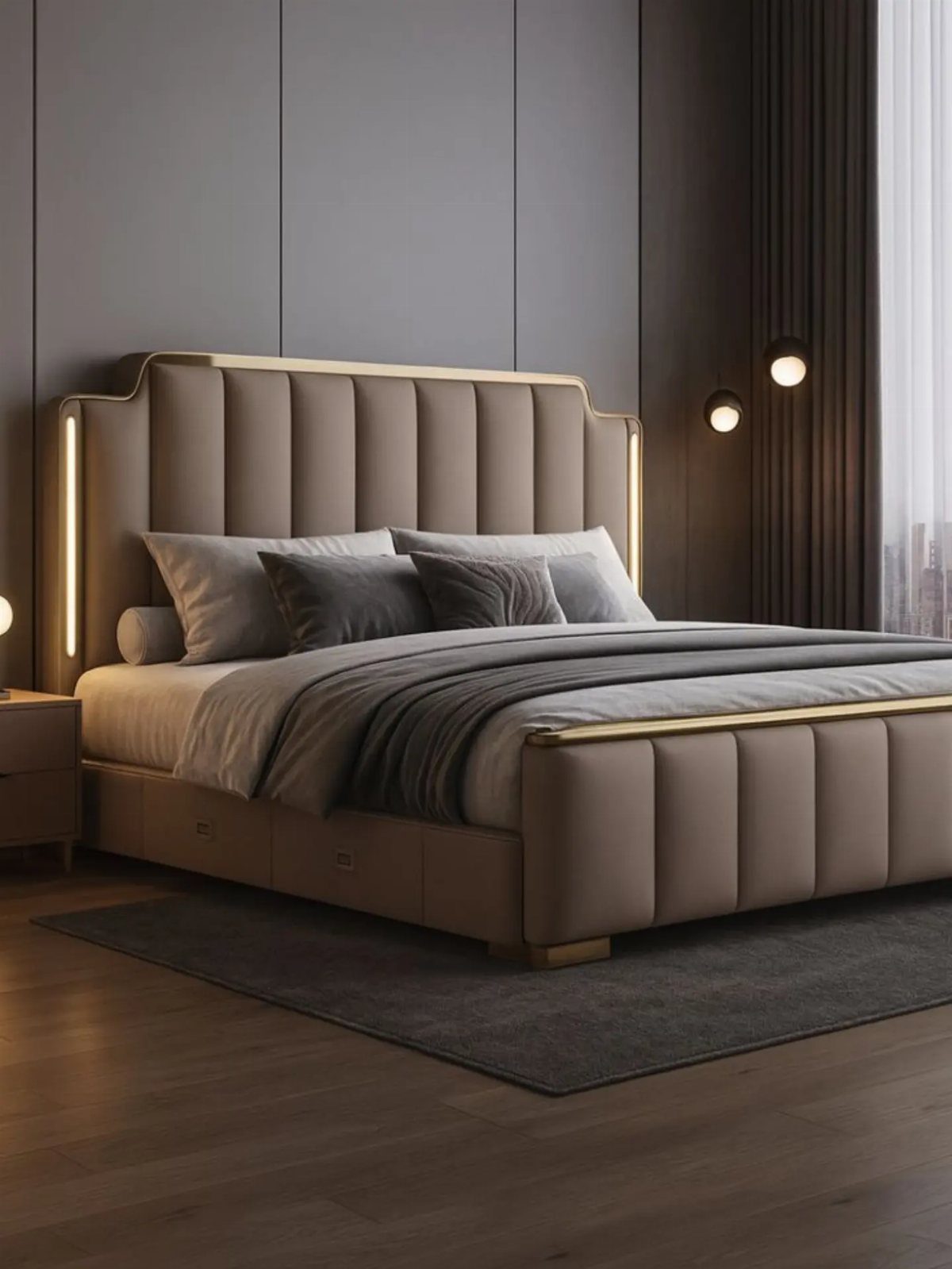
A bed is the biggest thing in a master bedroom, so it deserves the largest share of the budget.
Spend on the mattress before the frame. A plain frame with a good mattress will serve you better than a showpiece frame over a tired one.
Built-in lighting is a nice extra, though I’d rank comfort first.
8. Japandi Master Bedroom
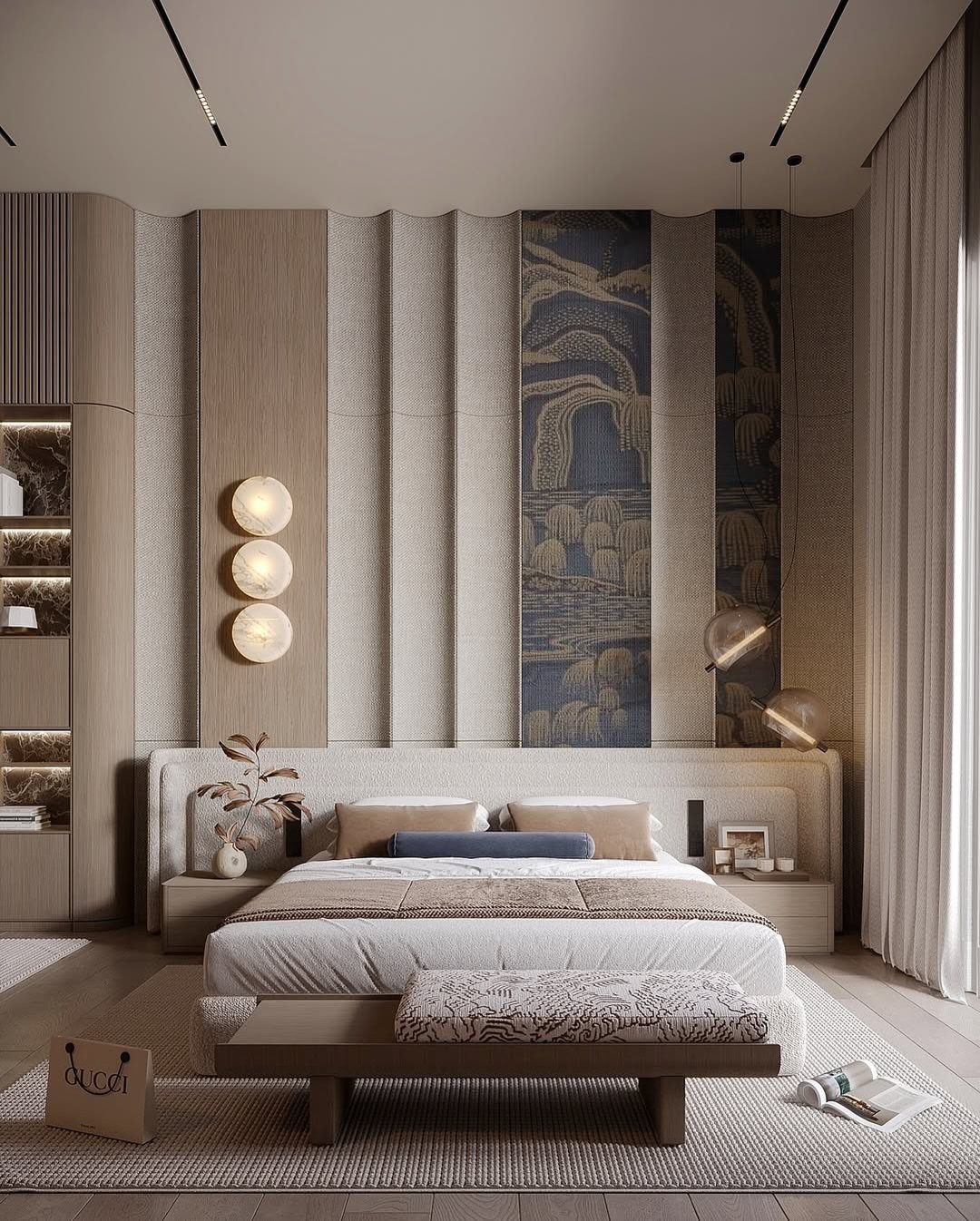
Japandi rests on restraint: a neutral palette, textured wall panels and round lighting that hangs quietly overhead. Spherical pendants soften the straight lines of a large bed and a low bench.
Keep the color count tiny so one accent can stand out. A single blue mural on the wall does that job, and everything else stays calm around it.
Pick texture over pattern. Panels, a woven rug and linen bedding add depth without clutter.
9. Matching Lamps and Nightstands
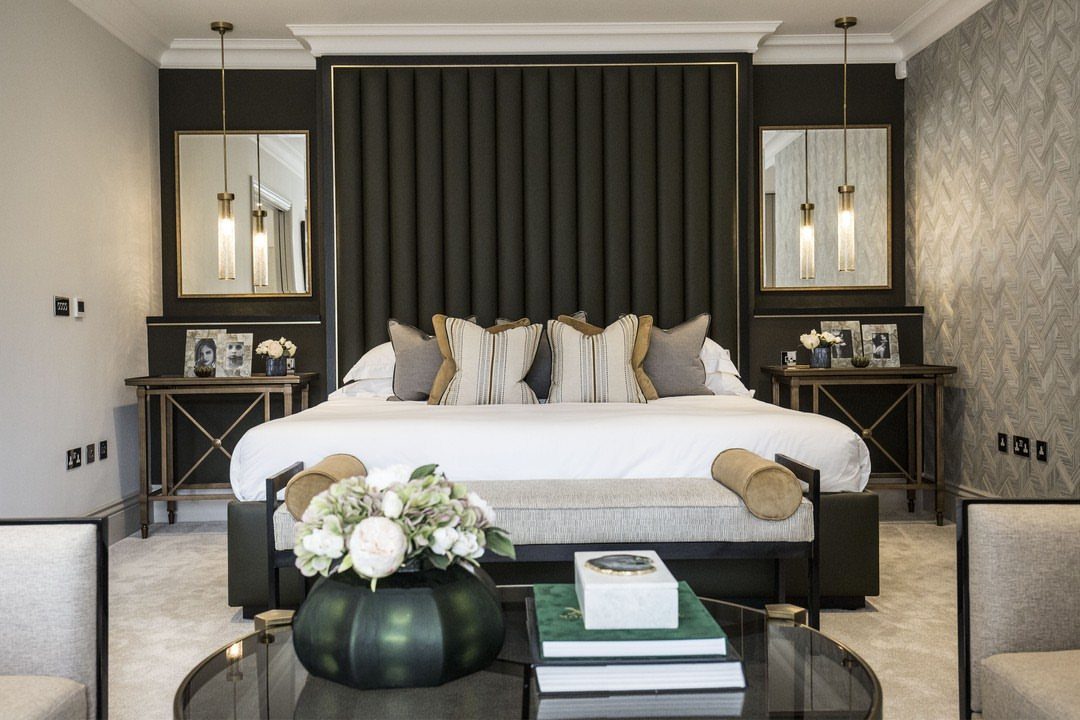
Two identical nightstands and two identical pendant lamps give a bed instant symmetry, and symmetry reads as polished.
Hanging pendants beside the bed also clear the nightstand tops, which matters when the tables are small. Renters can get the same balance with matching table lamps on matching tables.
Buy pairs, not near matches. Slightly different heights or finishes look like a mistake rather than a choice.
10. Feature Wall
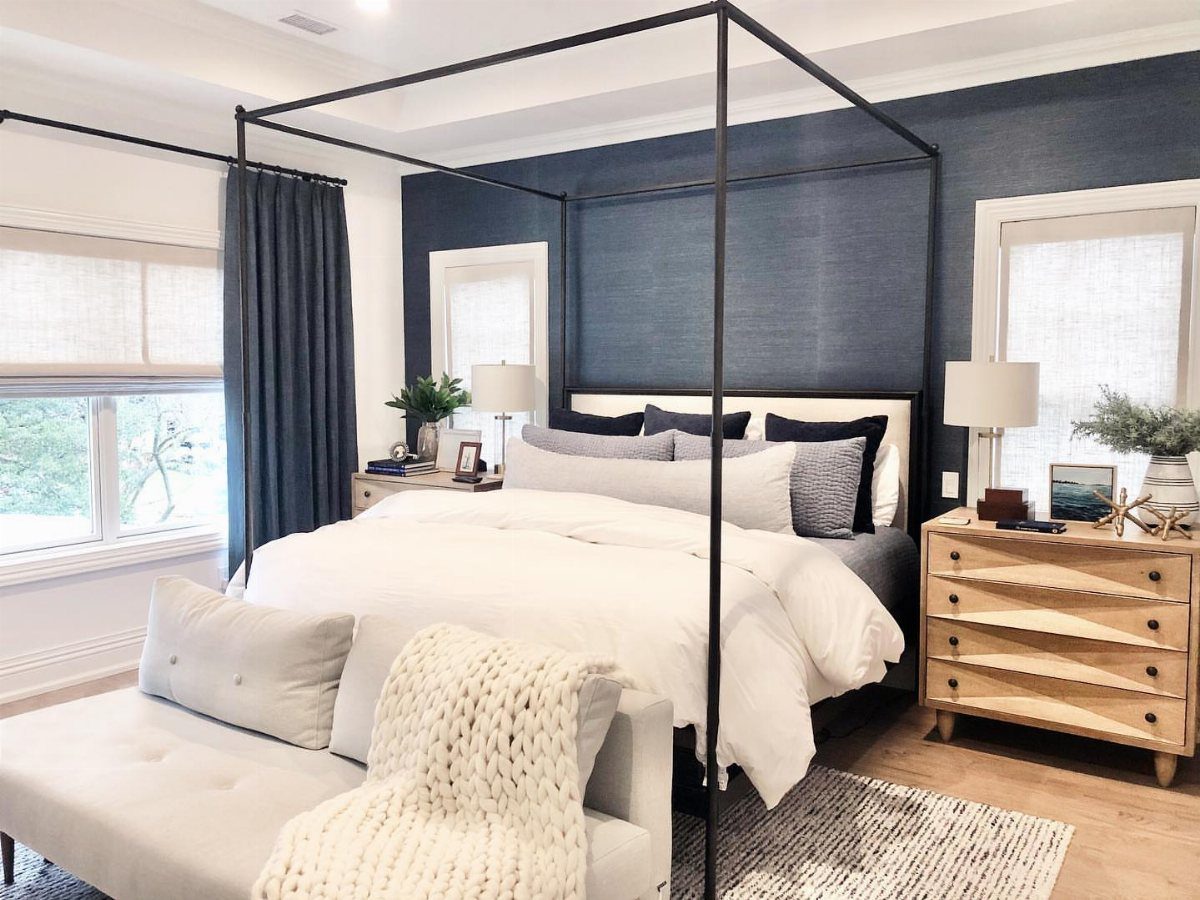
One wall in a deep color gives a bedroom a focal point, and the headboard side is the natural pick. Navy with a textured finish makes a black canopy bed and white bedding stand out sharply.
Warm wooden nightstands keep the dark wall from feeling cold. Paint only that one wall and leave the others light, so the room stays open.
A textured finish costs more effort than flat paint, so I’d try a small section first.
11. Hot Pink Neon Bedroom Decor
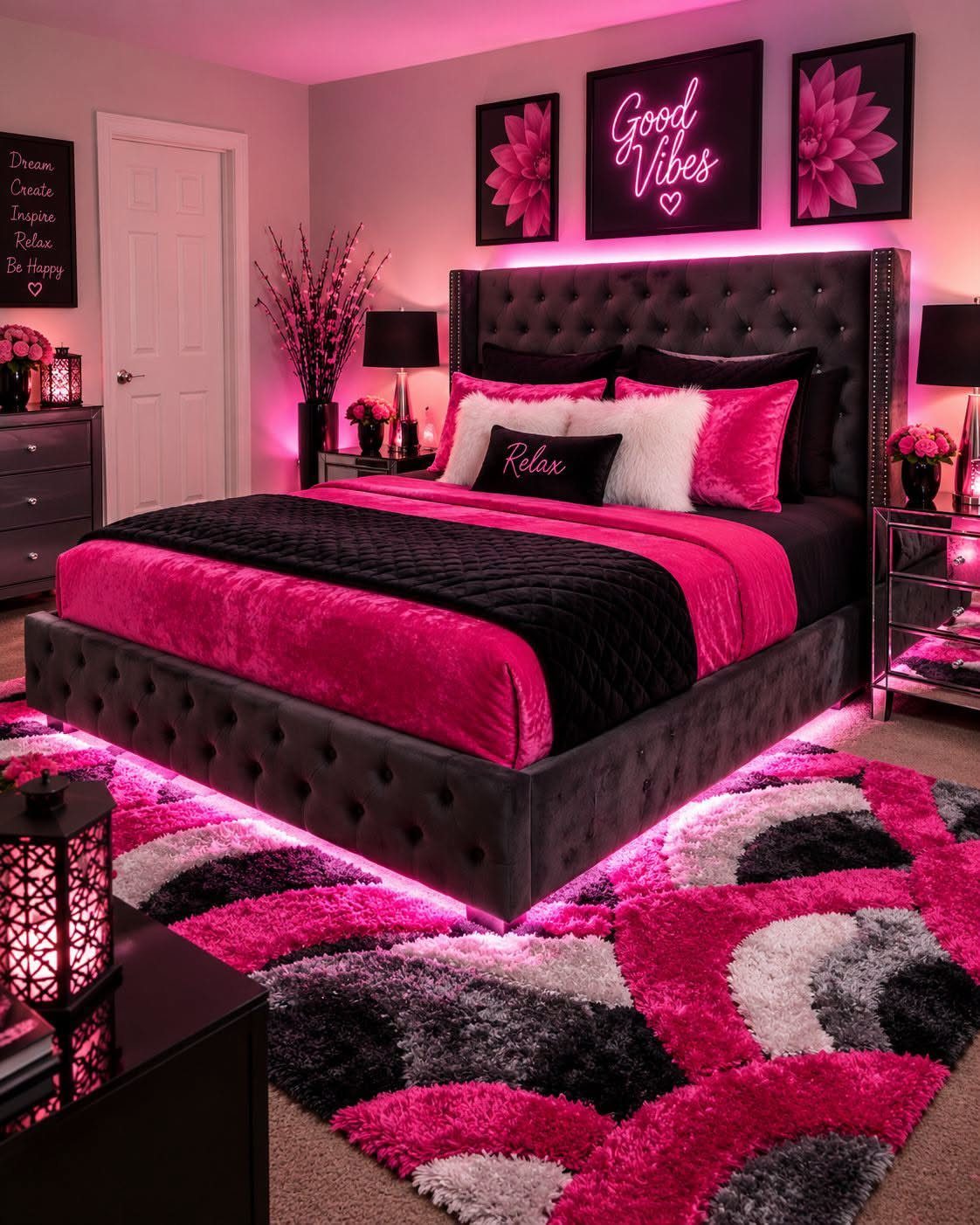
Hot pink works in a bedroom when the bed stays grey. Tufted grey upholstery acts as a neutral base, and the bold bedding and a plush patterned rug carry all the color.
Neon signs finish the look. Short words like "Relax" suit a bedroom best, and a sign is easy to take down if you rent.
Limit the pink to bedding, rug and signs. Painting walls pink as well would be too much.
12. Master Bedroom with Integrated Desk
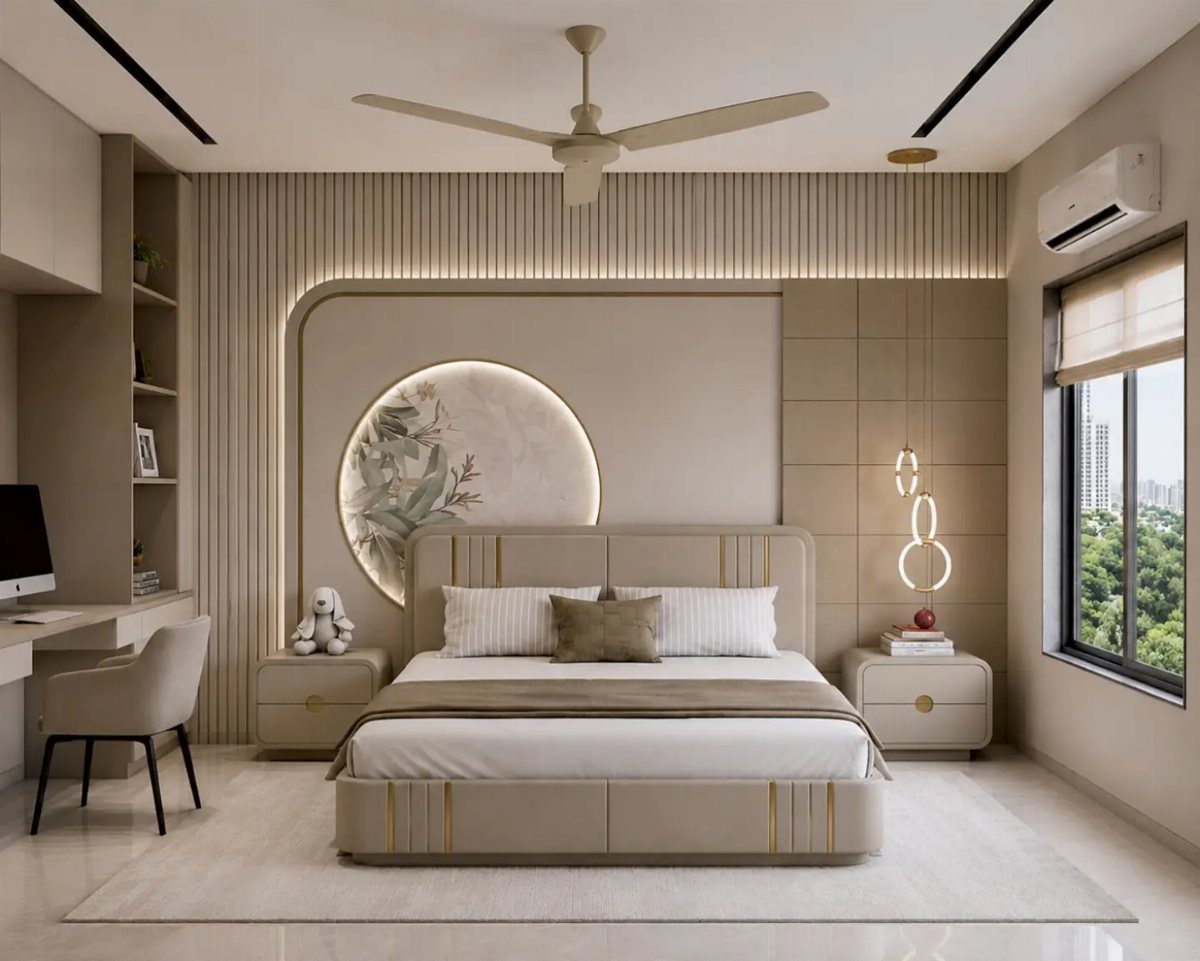
A built-in desk beside the bed gives you a work surface without taking over a second room. In a beige bedroom with a padded bed, it blends in, and a circular backlit wall piece adds a soft glow for evenings.
Match the desk finish to the room’s palette so it reads as furniture, not an office. Tuck the chair in when you finish for the day.
Keep the desktop clear, because clutter will be the first thing you see from bed.
13. Circular Canopy Bed Setup
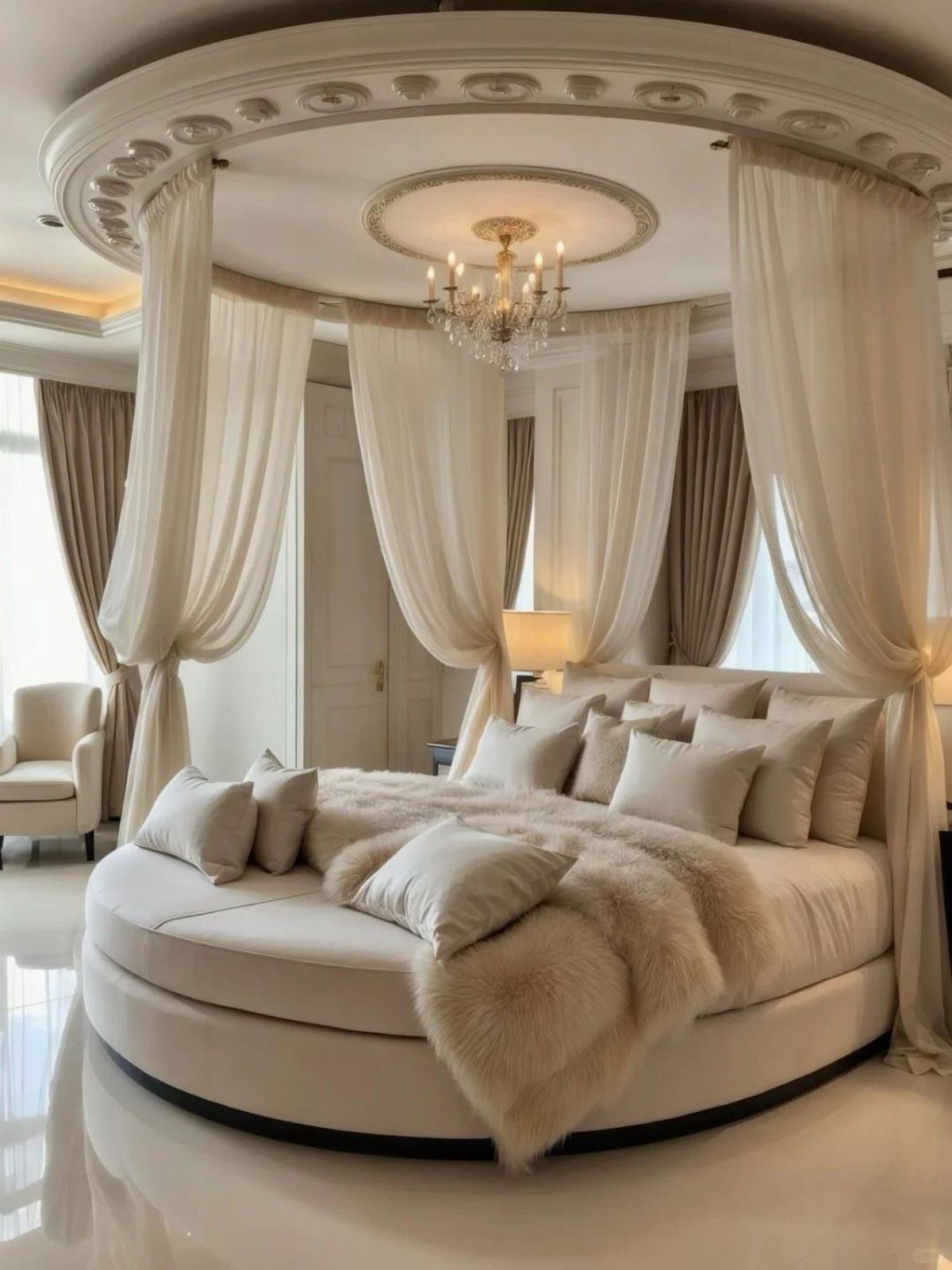
A round bed under a gathered canopy turns the sleeping area into its own small room. Hang the drapes from a ring or frame centered over the bed, and let the fabric fall in soft folds to the floor.
Sheer white keeps the look airy, and a chandelier centered above the canopy finishes the symmetry. A fur throw at the foot adds texture without breaking the white scheme.
Renters can get a similar feel with a ceiling hook and a lightweight ring, though a round mattress usually means custom bedding.
14. Decorative Coffered Ceiling Accent
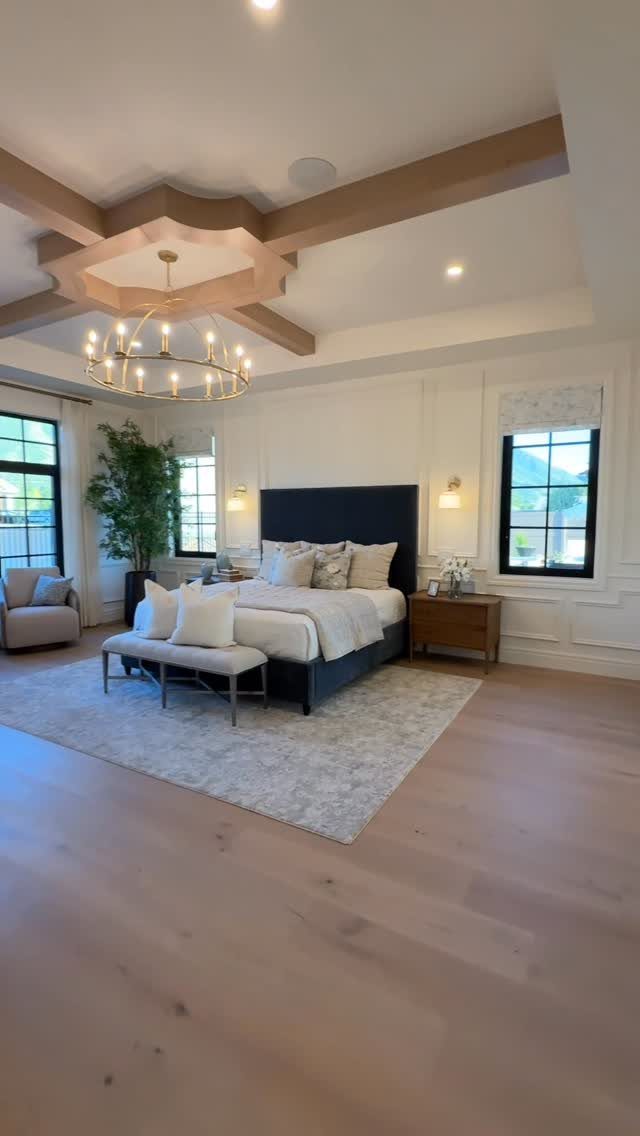
Beams set into a ceiling in a grid pattern give a bedroom architecture that paint alone can’t. Brown beams against a white ceiling add warmth overhead, and a gold chandelier hung at the center draws the eye straight to it.
Navy bedding works well beneath this, since the dark blue balances the shine of the gold. Light wood floors and white paneled walls keep the room from feeling heavy.
Real coffers mean carpentry, so I’d price the job first. Wood trim fixed to a flat ceiling is the cheaper route.
15. Under-Bed Accent Glow
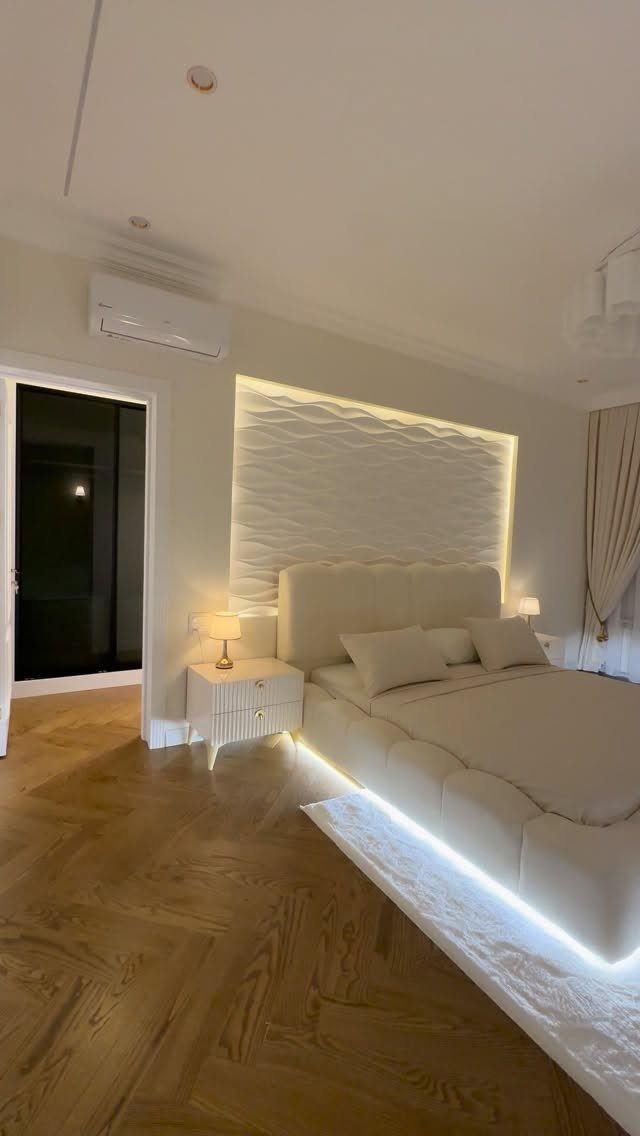
A platform bed with a hidden light strip underneath looks like it floats, and the soft glow doubles as a night light for walking to the bathroom.
Keep the light warm and low.
A strip in a color that matches your bedding reads as a gentle accent, and a dimmer lets you set the level. Stick-on LED strips make this an easy weekend job, and they come off cleanly if you rent.
Pair it with a quiet wall texture and a plain white nightstand lamp, so the glow stays the one showpiece.
16. Full Wall Built-In Wardrobes
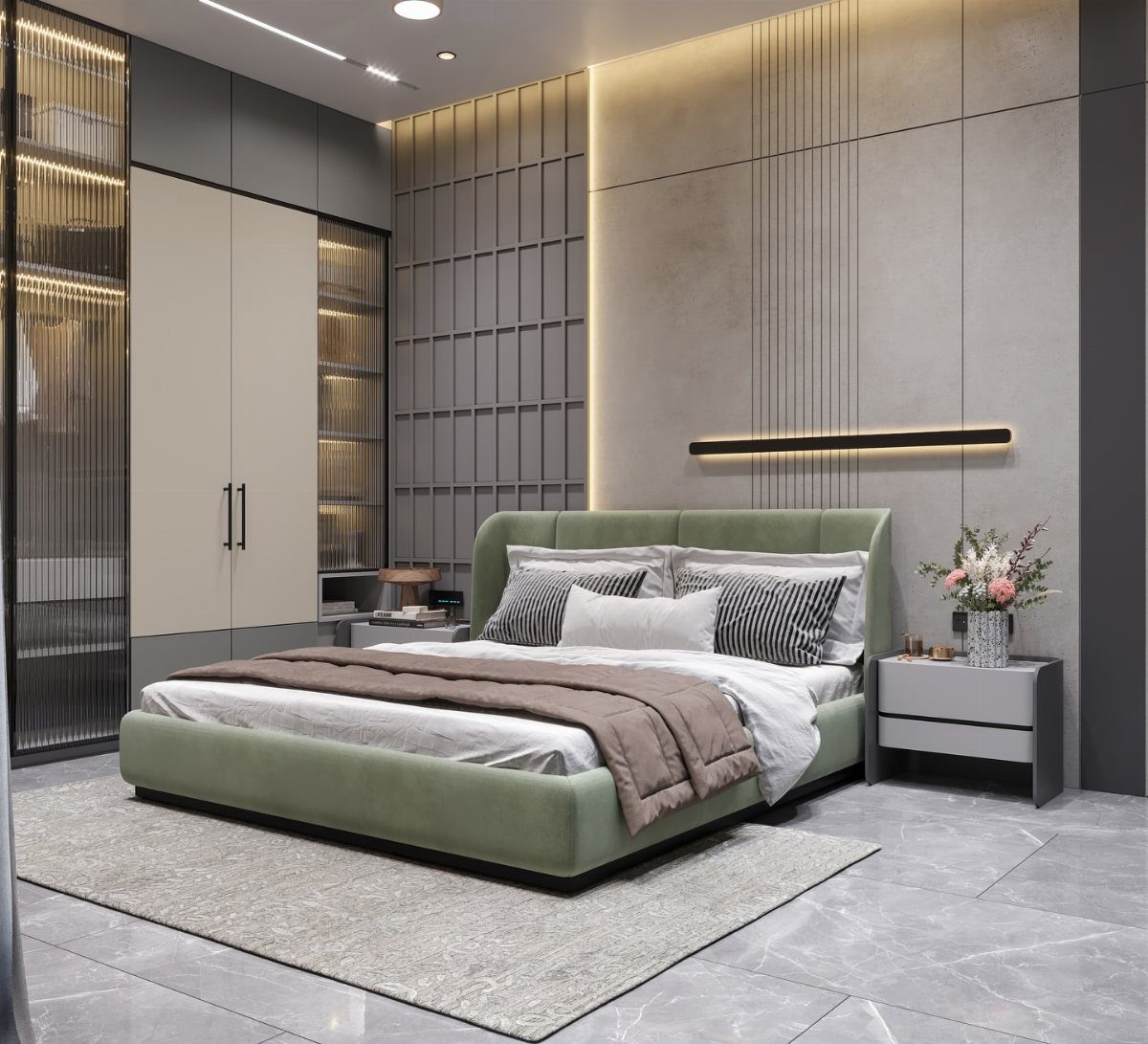
Wardrobes that run floor to ceiling across a whole wall hide clutter better than any dresser, and they use height that most bedrooms waste.
Mixing solid doors with a few glass ones breaks up the bulk and lets you display a few favorite pieces.
Color-match the doors to the wall so the storage fades into the room. A textured gray accent wall beside it adds interest without competing.
Built-ins cost far more than freestanding units, so I’d compare quotes before committing. Modular wardrobe systems can give a similar look for less.
Essential Elements for Master Bedrooms
A calm master bedroom starts with the walk-around space. Leave room to move freely on both sides of the bed, and keep only the furniture you use every day.
For color, lighter muted shades like peach, lavender, sage green, white and pale gray read as serene.
Cool hues such as blue, green, gray and purple also set a calm tone. If those aren’t your colors, pick what you can rest in; a bedroom should suit you first.
A deep emerald, navy or plum pillow, throw or lamp base gives a pale room an anchor, and 2 or 3 small doses do more than one big one. A pillow or a small throw is enough to try it.
Sheets are the cheapest luxury here. Natural fibers like cotton, linen and silk breathe best, and for sheets a thread count between 200 and 400 is the range to shop in.
Trends for Master Bedrooms
Texture over color is the direction I’d follow right now. Timber grounds a bedroom, and soft finishes from the bed to the rug make it feel finished without adding a single loud shade.
Sculptural furniture and organic shapes are also current, along with a lounge element such as a bench or chair. Pick one or two pieces rather than all of them.
Drapery over blinds is another shift, and tonal, tailored bedding keeps the bed looking crisp. For contrast, one small dark note, like a black picture frame or a charcoal lamp, is all a pale room needs.
Finish with something personal, like art or an object you actually love. That’s what keeps a trend-driven room from looking like a catalog page.
Designing Small Master Bedrooms
In a small master bedroom, the layout matters more than the decor. Keep the plan simple and leave enough room to walk around the bed; if you can’t, the room has too much furniture.
Lighter, muted colors such as pale gray, white or sage green make walls feel farther away. Add a darker jewel tone in one small accent so the room doesn’t go flat.
Choose furniture that does 2 jobs, like a bench with storage inside or a nightstand with a drawer. Then cut anything you don’t need daily.
A rug and tonal bedding add softness without eating floor space, and floor space is what a compact bedroom has the least of.
Frequently Asked Questions
How should a master bedroom look?
Calm, simple and personal.
Soft hues such as sage, lavender, peach, white and light gray calm a room down, and leaving about 24–30 inches clear on both sides of the bed lets you move around easily, which helps the space feel restful.
Prefer a different palette? Go with whatever shades let you unwind, because you’re the one sleeping there.
Why do people no longer say “master bedroom”?
I can’t answer that with confidence, because nothing I have on hand covers the history of the term.
What I can say is that the room itself is the same: the main bedroom, usually the largest, built around the biggest bed in the home.





