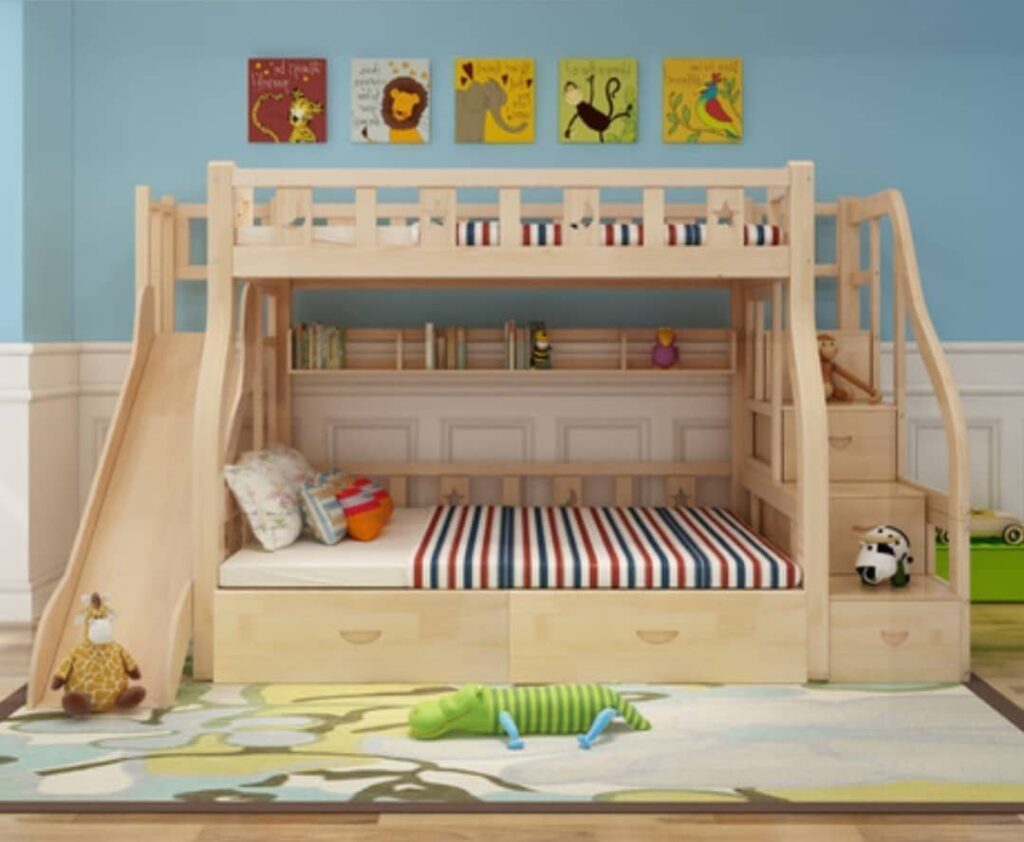
Ceiling height limits which models work, and a slide or swing or playhouse detail needs clear floor around the frame.
The ideas run from a wood frame with a slide to a playhouse bed that takes days to assemble, and from built-in layouts for owners to kits renters can move.
1. Bunk Beds with Slides
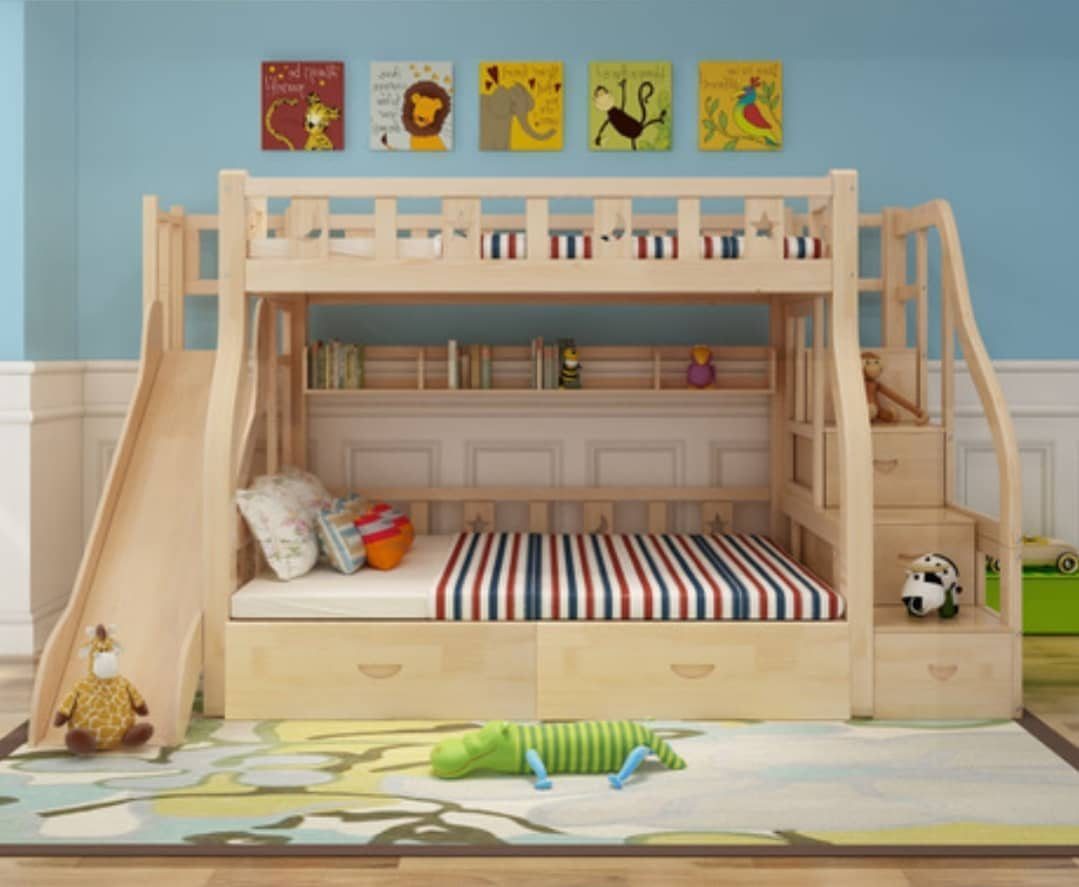
A slide turns the way down from the top bunk into the best part of the day, and that alone solves the morning argument over who climbs first.
The stairs in this version beat a ladder for small kids, since the steps are wider and the built-in shelving beside them gives books and stuffed animals a place.
I’d pick light wood like this when the room already has color. A slide takes up floor space, so keep the rug and any toy bins well clear of the landing zone.
2. Playhouse Beds
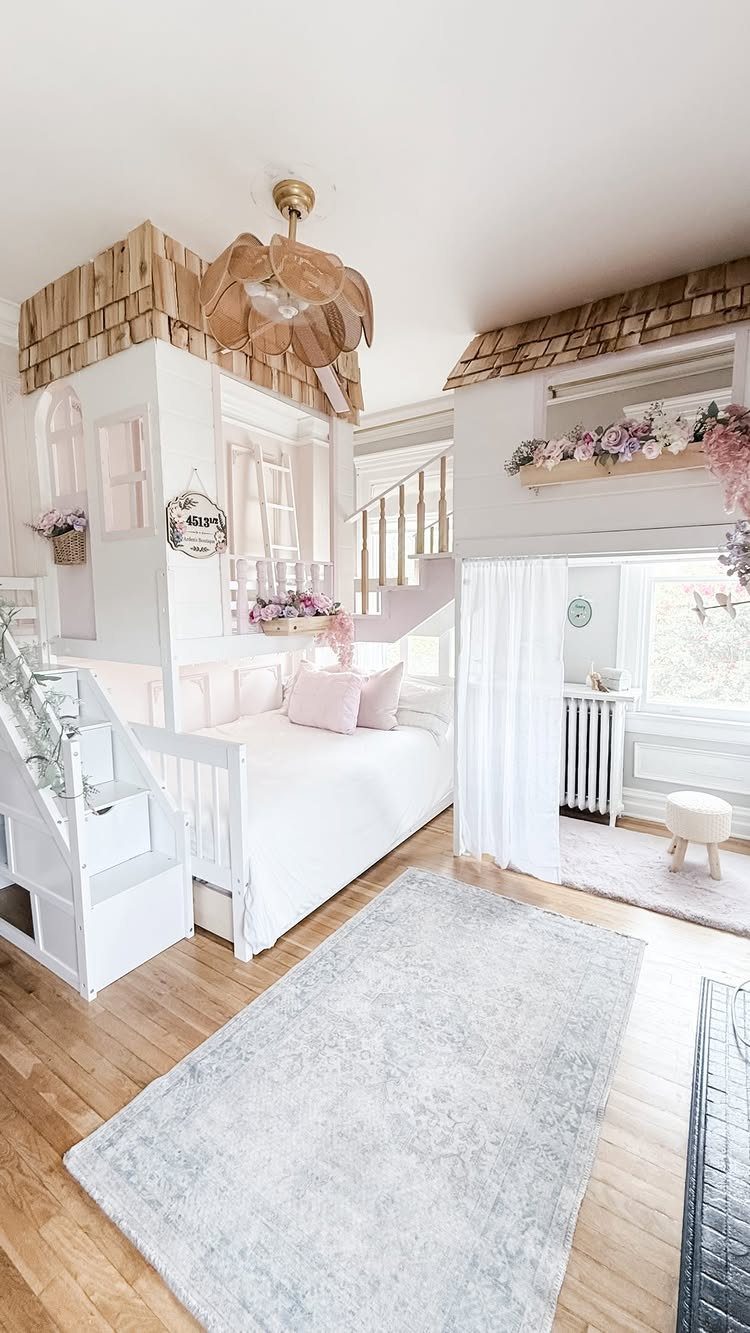
Give a bed a pitched roof, stairs and a curtain, and it stops being furniture and becomes a little house. The shingled roof is what sells it, and the curtain adds a door that kids can close for a hideout.
This one was built from a book of design plans, according to the maker, who gave the book as a birthday gift and spent 2 weeks assembling the bed with help.
I’d plan for the same: a project over a couple of weekends, with a second pair of hands for the roof.
3. Built-In Bunk Beds
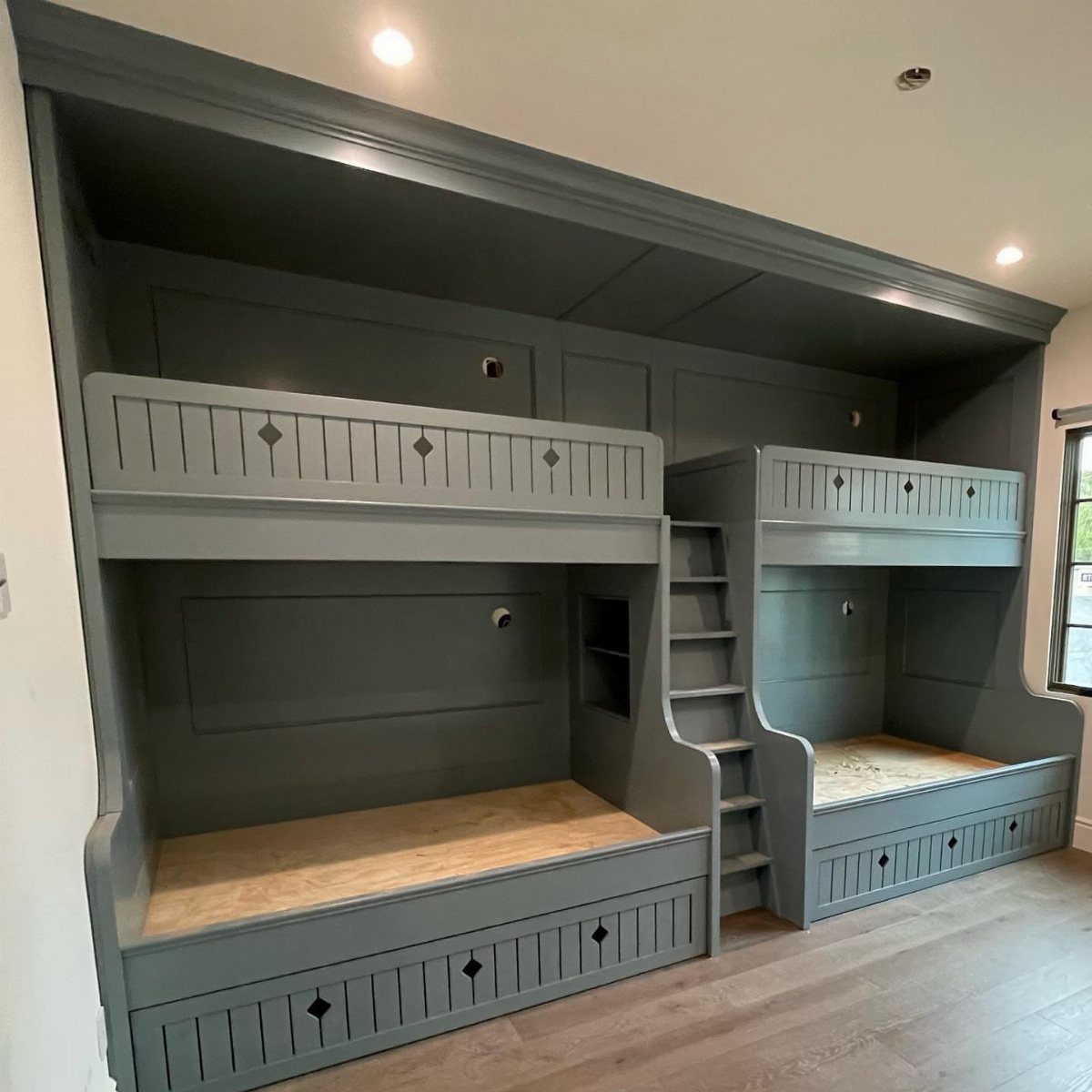
Built-ins make a bunk bed look like part of the house instead of something parked against a wall. Painting the frame grey, as here, keeps it calm and lets bedding carry the color.
Drawers under the lower bunk are the feature I’d insist on.
They hold off-season clothes and extra sheets, which frees the closet. Custom work costs more than a kit and is harder to move, so it suits owners better than renters.
4. Loft Beds with Play Areas
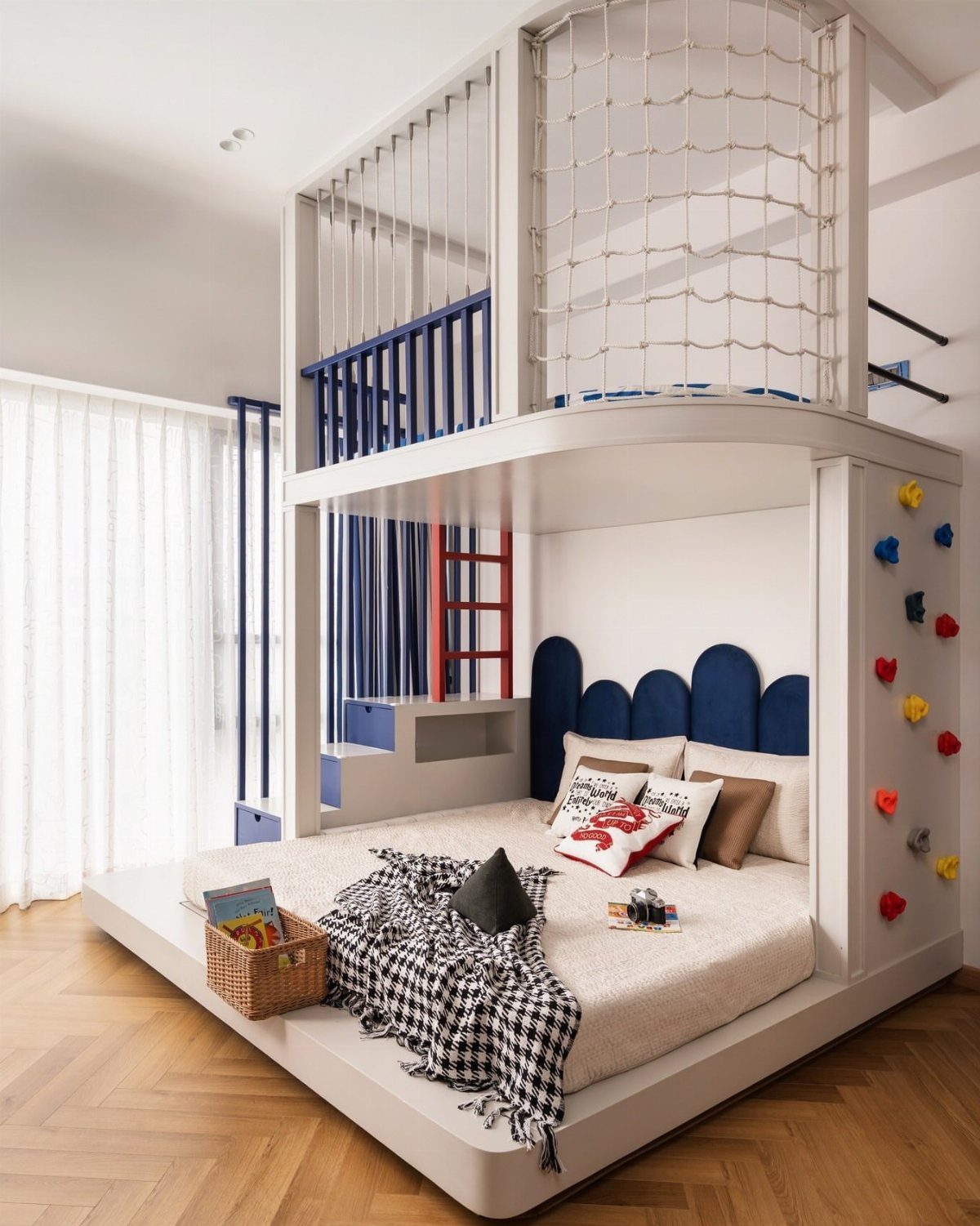
Raise the bed high enough and the whole floor underneath becomes yours.
A loft with a climbing wall and rope net, like this white one, makes the way up part of the play, so kids use the bed as a gym too.
Underneath, I’d put a full-size bed, which turns the room into a sleepover spot. Check that the railings are tall and the net is anchored well, since kids will test every rung.
5. Triple Bunk Beds
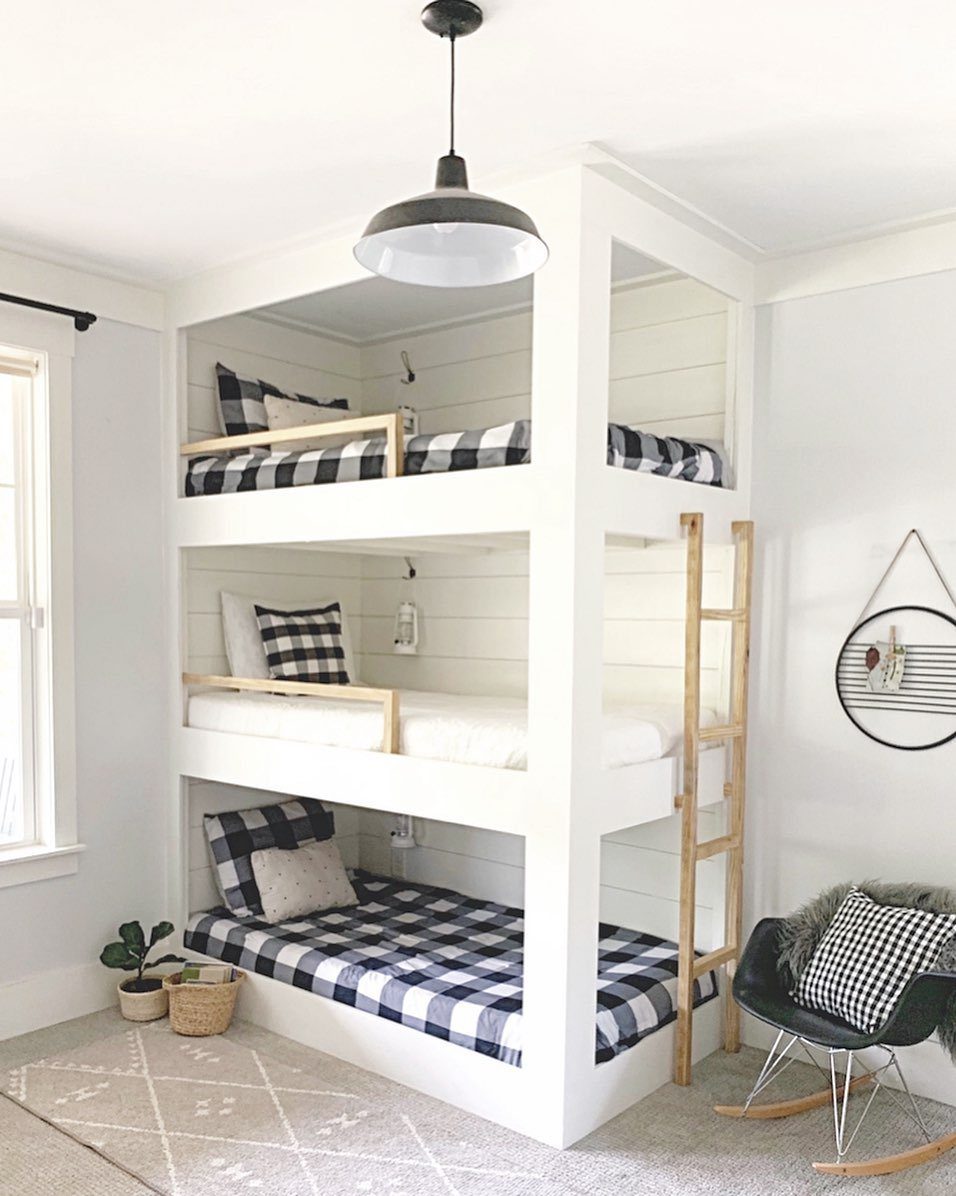
Three beds stacked in one corner is the answer for a shared room that is short on floor. Building them in, as this white set shows, lets you use wall space that otherwise sits empty.
A ladder gets steep at the top, so give the youngest child the lowest bunk.
Leave floor space for a small chair, such as a rocker, and the corner reads as a room of its own instead of leftover space beside the beds.
6. Princess Castles
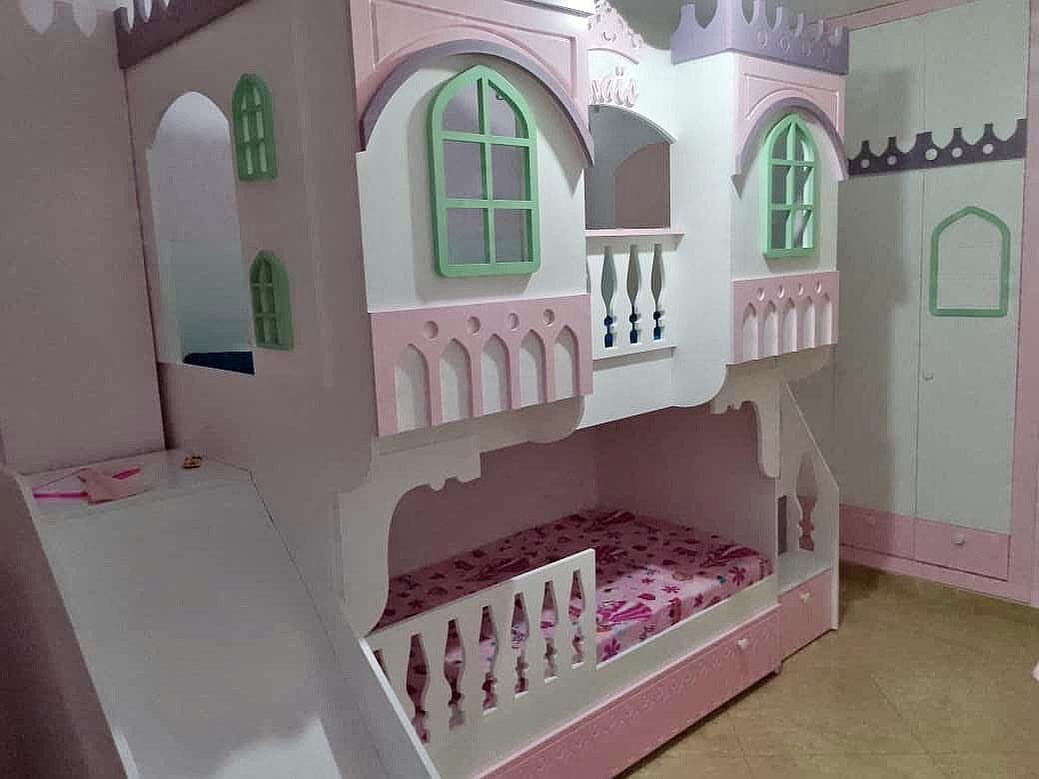
A castle bunk turns pretend play into a daily habit, and a built-in slide gives the top bunk a dramatic way down. Pink and white with green window frames reads as a storybook tower, and the floral mattress finishes it.
I’d keep the walls a soft neutral so the bed is the star. Decor that is built into the bed is harder to change, so expect it to appeal for only a few years.
Funfairs, theme parks and a trip to the circus are just a few childhood past times that can be relived in the imagination with help from a bunk bed and wall mural.
7. Bunk Bed with Hanging Swing
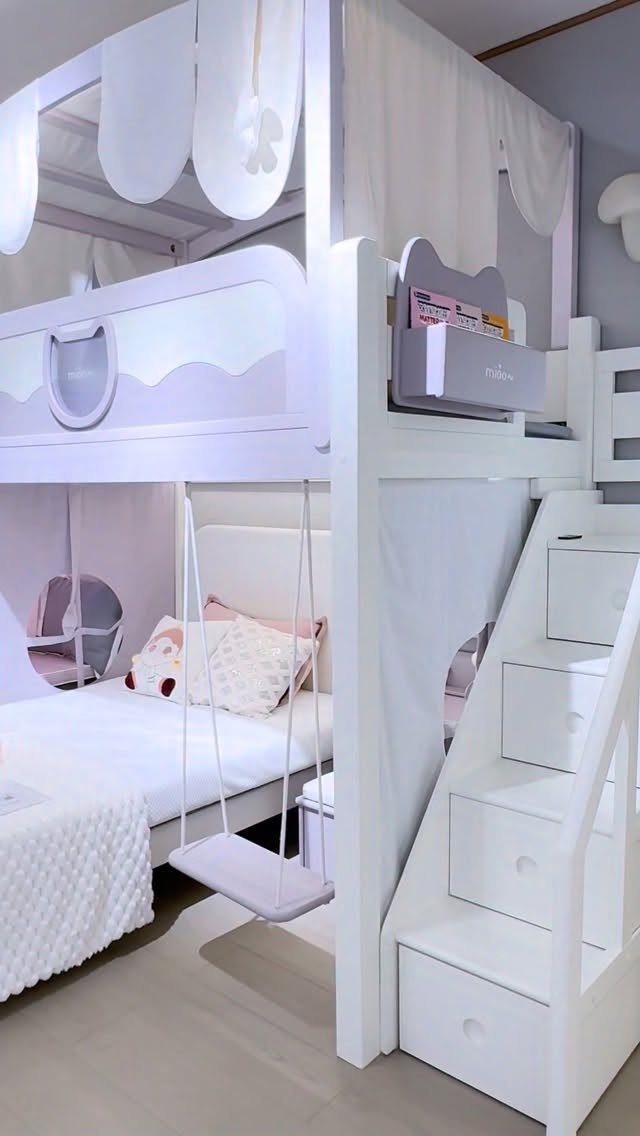
A swing hung under the top bunk gives the floor space below a job, and kids tend to use it more than the bed itself.
White wood, drawers built into the stairs and plain white curtains keep the whole piece quiet, so the swing is the one playful note.
Stair drawers are the part I’d choose over a ladder every time, since they hold shoes, pajamas or small toys.
Hang the swing from hardware rated for a child’s weight and mount it where it can’t hit the stairs or the wall. Keep the swing’s arc clear of furniture.
8. Vehicle-Themed Play Bunk Bed
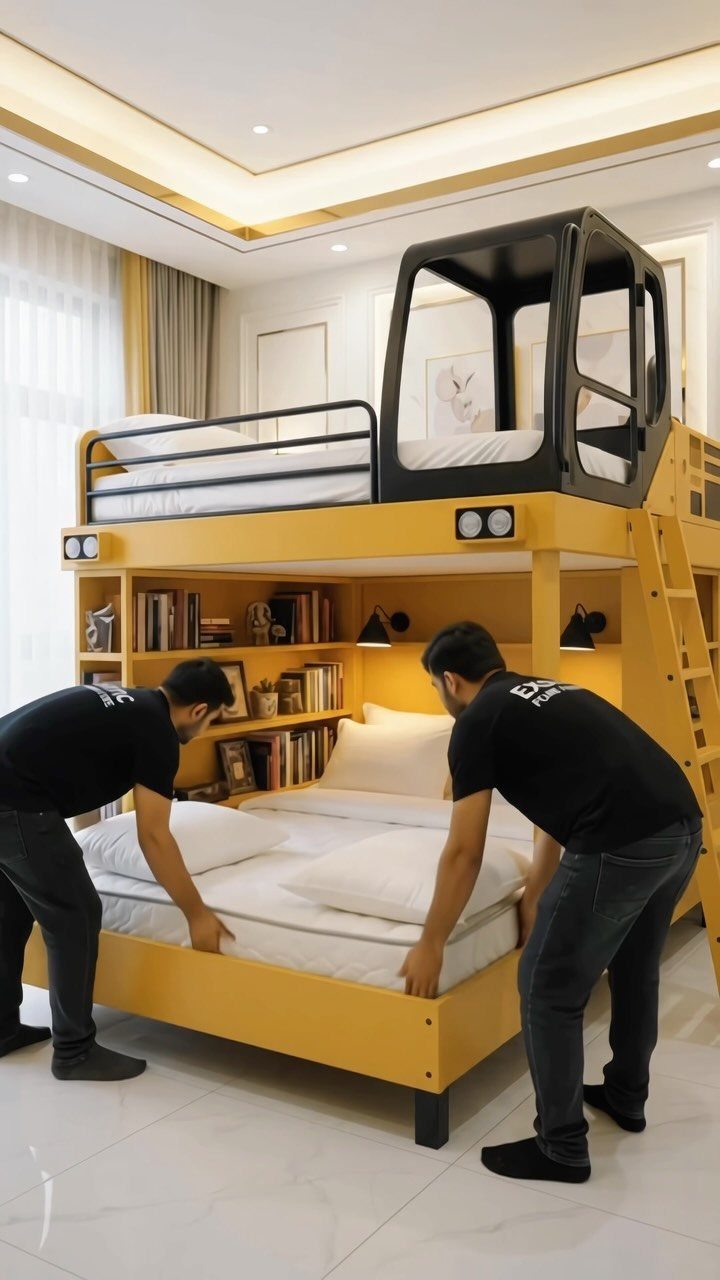
A top bunk shaped like a vehicle cabin gives a kid a driver’s seat to climb into every night.
Yellow and black is a bold pairing, and it works because the bookshelves below keep the lower half practical instead of themed.
Bookshelves in the base are the feature I’d copy. Books stay in reach of the lower sleeper, and the shelves replace a dresser you’d otherwise need floor space for.
Bunk frames come in many pieces, so set aside a weekend and a second adult.
Maximizing Space
Pushing a bunk flush against one wall leaves the middle of the room open, and that open floor is what a play area needs.
Start with the wall length, then sketch where the toy storage and rug will land, since the frame you pick should fit that plan and not the other way around.
Cubbies or shelving built into the bed’s end can stand in for a separate playroom shelf, and drawers at the base can hold shoes, so a bulky cabinet may not be needed at all.
Each piece you fold into the bed is a piece of floor you keep.
Durability and Materials
Solid wood and metal are the 2 frames I trust for daily climbing, jumping and wrestling. Wood looks warmer and can be repainted when tastes change; metal is usually lighter and easier to take apart for a move.
Check the slats and the rail joints before you commit. Wobble at the corners shows up fast in a busy room, so tighten the hardware again after the first couple of weeks and every few months after that.
Avoid frames that feel thin or flexible in the showroom or in photos of reviews. In a high-use room, I would spend more on the frame and less on accessories.
Customization Options
Many frames let you choose the ladder configuration, so match it to the room: put the ladder on the side that leaves your walkway clear.
A staircase runs pricier than a ladder, yet it’s the safest route to the top bunk, and each step can hold a drawer for extra storage.
Drawers tucked under the lower bunk hold bedding and toys, and a trundle that rolls out handles the friend who stays over.
Slats built into the frame usually mean no box spring is required, so you spend less and the mattress sits a few inches lower.
Both metal and wood frames are sold in twin, full and twin-over-full, with a range of finishes, so choose the look that fits the room. Check ceiling height before ordering, since a low ceiling limits which models fit.
Frequently Asked Questions
Are playhouse beds safe for young children?
If the bed fits the child’s size and ability and you follow the weight limits and assembly steps, most are safe enough.
A house-style bed that sits low to the floor works better for toddlers and preschoolers, and you’ll want clear space around the ladder or sides.
I’d also plan on a second adult for assembly, since a roof and stairs add pieces that need to be fastened properly.
What is the best bed for sleepovers?
A bunk bed with a trundle is the simplest answer. A trundle slides out from underneath when someone sleeps over, then tucks away flat the next morning.
Are wood or metal bunk beds better for kids who play hard?
Both hold up to daily climbing and jumping if the frame feels solid. Go over the bolts and screws after a few weeks of use, then check them again every couple of months.
How do you keep a bunk bed from taking over the floor in a kids’ room?
Push the bunk flush against one wall so the middle of the room stays open for play.
Then fold storage into the bed itself: cubbies or shelves at the end, and drawers at the base for shoes, so you may not need a separate cabinet.
Sketch where the rug and toy bins will go first, and choose the frame to fit that plan.





