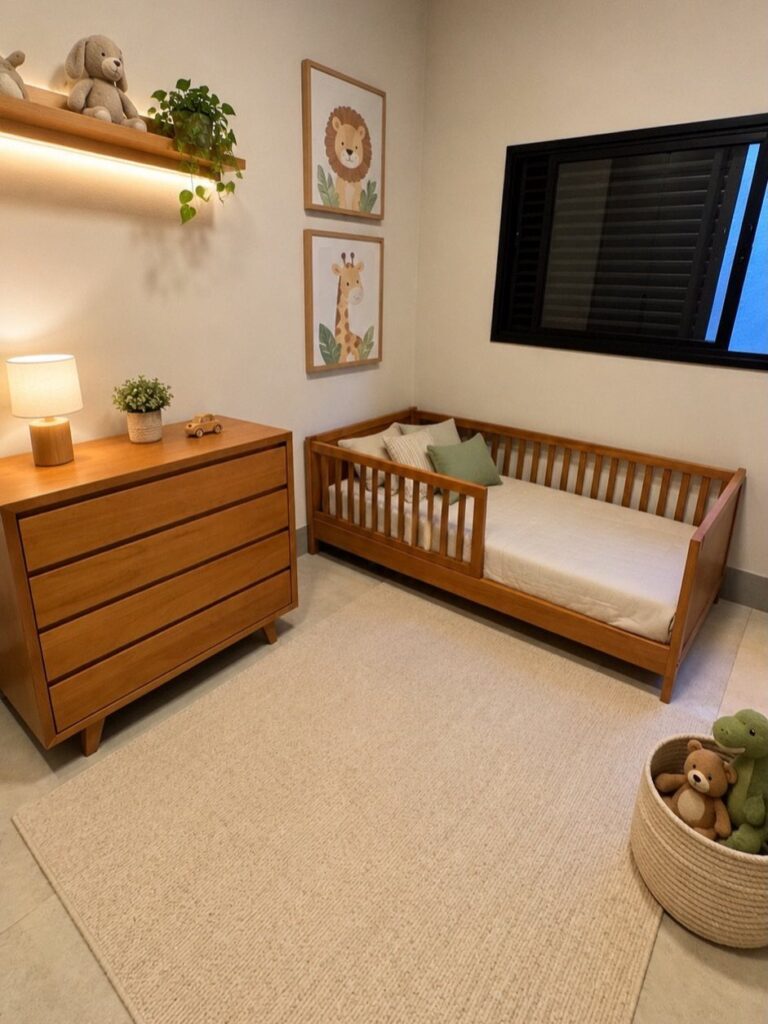
Dark wood in a nursery can go as light as a white dresser and pale walls or as deep as brown paneling with a greyish-brown crib, and the room’s size and light decide where you land.
A small or dim nursery does better with light walls and a tiny repeating pattern, while a bigger, brighter room can handle dark walls and moody tones if the rest of the palette stays quiet.
Dark wood soaks up light, so a chandelier, a pair of sconces and a mirror with a gold frame will help make up the difference.
1. Calm and Soothing Environment
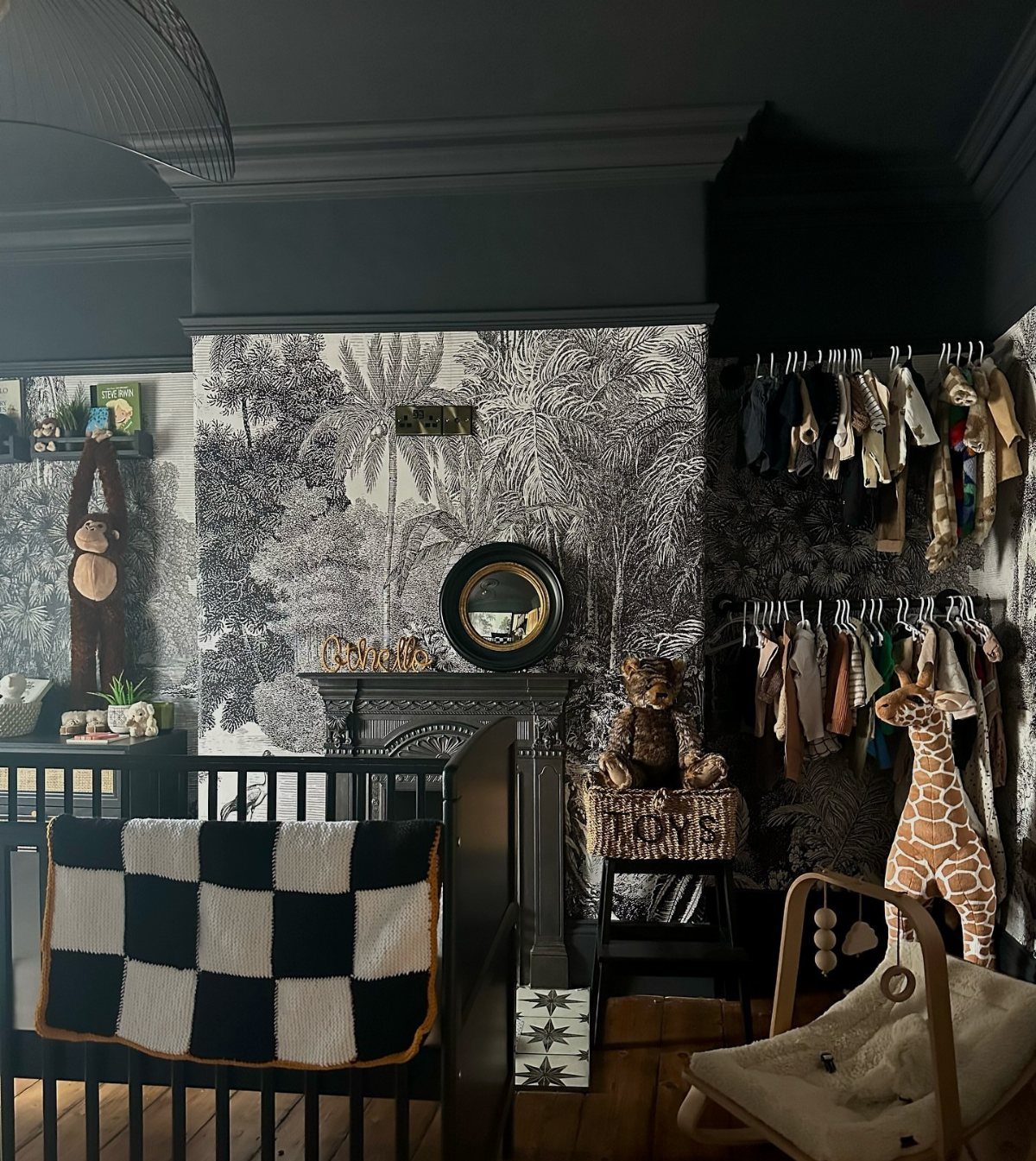
Dark colors can help a baby sleep better, and a charcoal wall with a black crib is the clearest way to use that. A black-and-white tropical wallpaper keeps the dark scheme from feeling flat.
I’d stay with a tight range of blacks, greys and whites so the room reads quiet rather than busy. Pick one patterned surface and let everything else sit calm beside it.
2. Dark Furniture with Metallics
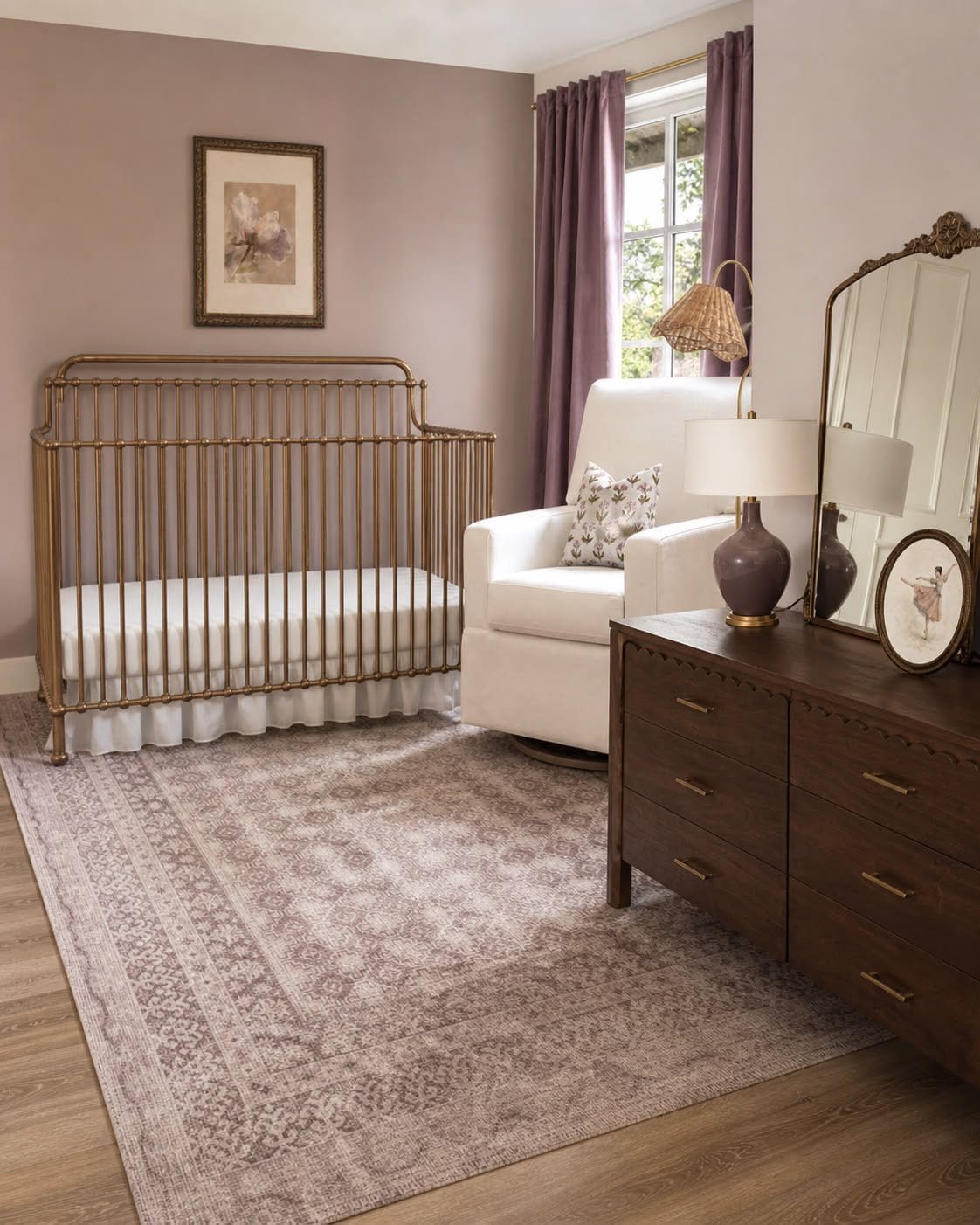
Gold hardware or a gold-finished crib frame gives dark wood a warm partner, and a mauve wall color keeps a dark dresser from feeling heavy. Metal catches light while wood absorbs it, so the two balance each other.
I’d keep the metal to one or two big pieces rather than scattering gold everywhere. The white glider rests the eye, and a patterned rug ties the finishes together.
3. Light-colored Walls with Dark Furniture
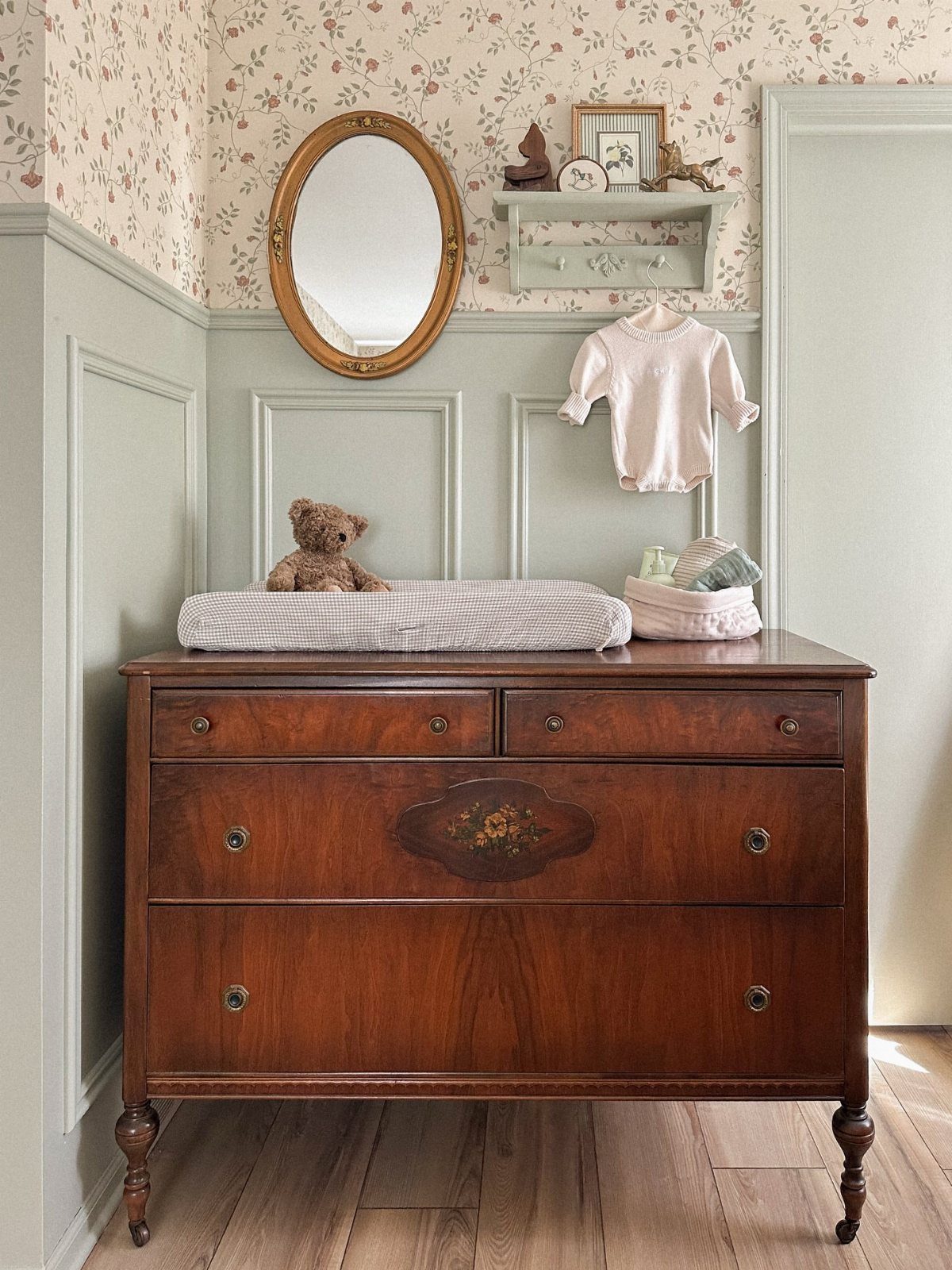
Light green wainscoting under floral wallpaper gives a dark wood dresser plenty of room to stand out without weighing down the room. Pale walls make the dresser look like the anchor rather than a heavy block.
Paint is the cheap route if wainscoting feels like too much work for a weekend. A soft tint on the lower wall and a light floral above does most of the same job.
4. Don’t Go Overboard on Colors
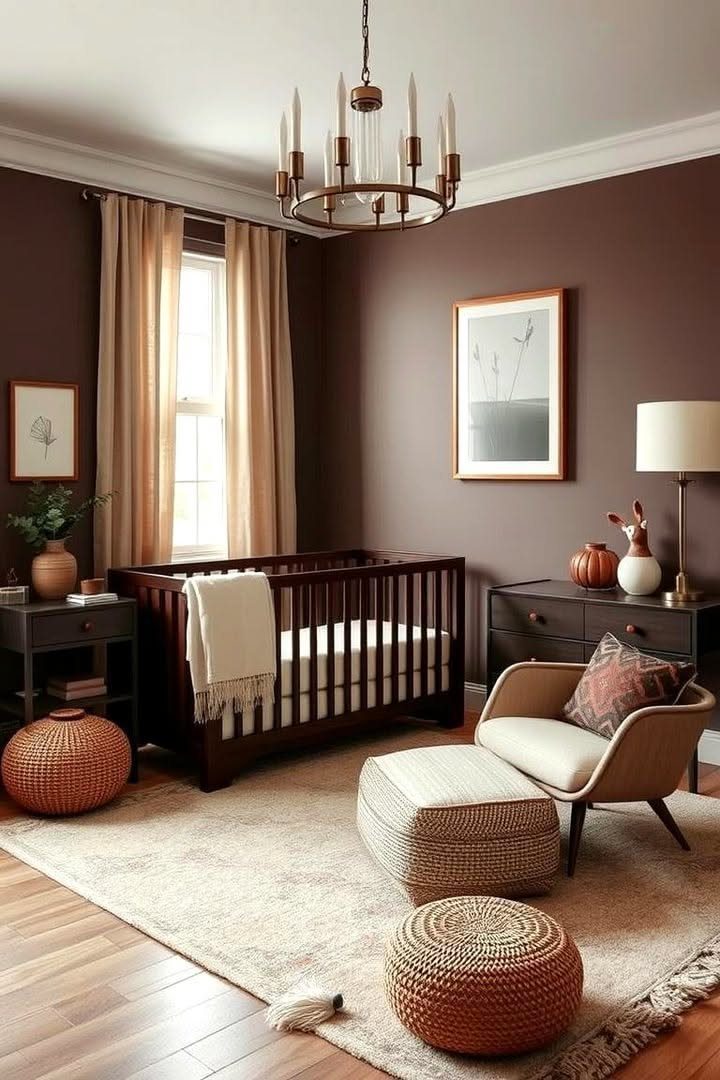
Dark brown walls and dark wood furniture can look rich when the rest stays neutral.
Limiting the palette is what keeps it harmonious, so I’d choose two or three tones and repeat them. Woven poufs add texture without bringing in another color, and one gold light fixture is enough for a warm accent.
5. Dark Furniture with Small Patterns
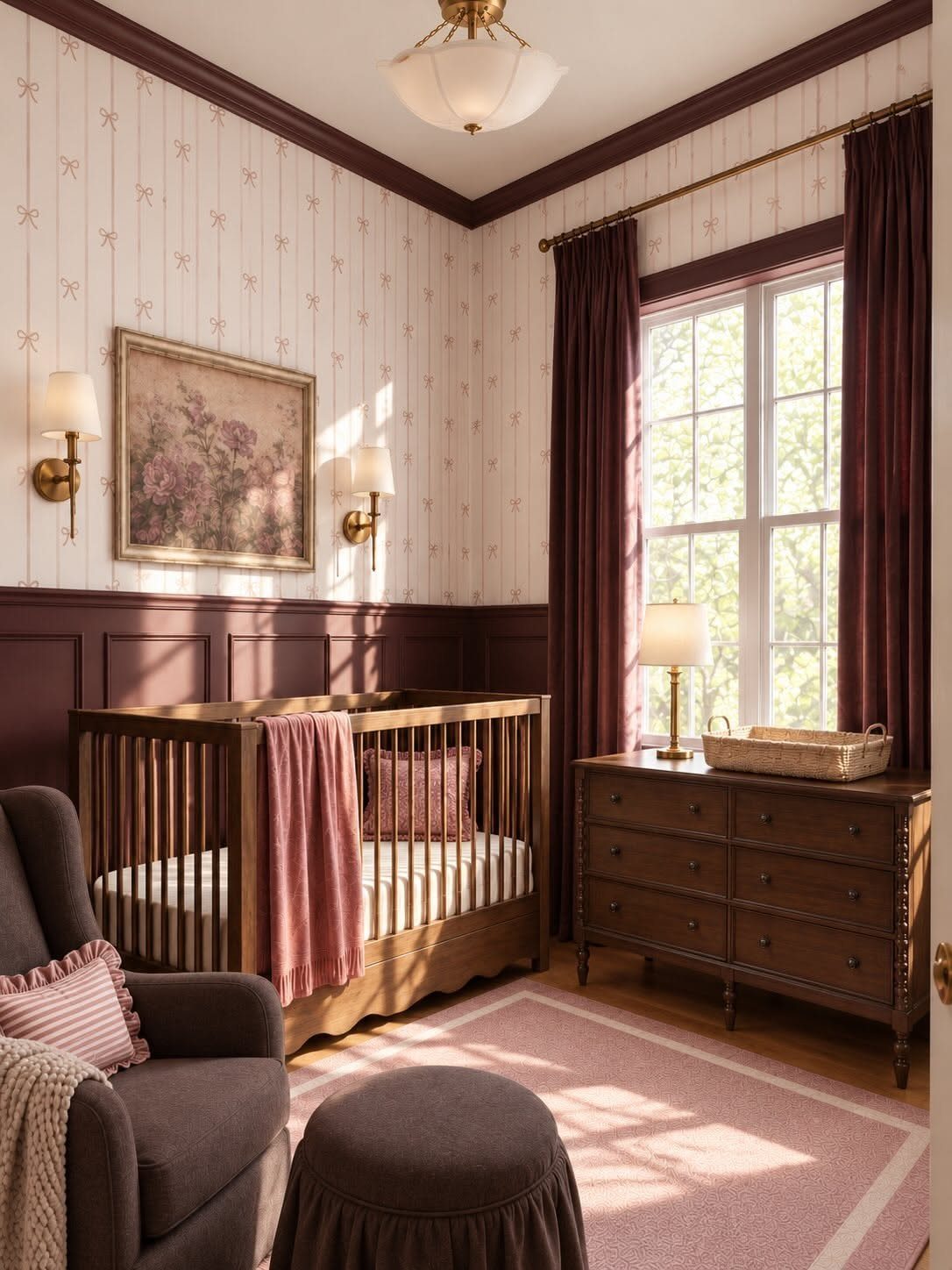
Small patterns suit dark furniture better than large ones, because a tiny bow print reads as texture instead of competing with a heavy crib and dresser. Large motifs fight with dark wood’s visual weight.
Pick one small-scale wallpaper and pull a single accent color from it, like burgundy curtains, so the pattern and the dark wood don’t compete. A plain grey armchair keeps everything else quiet, and I’d stop at one pattern.
6. Light Fixtures for Ambient Lighting
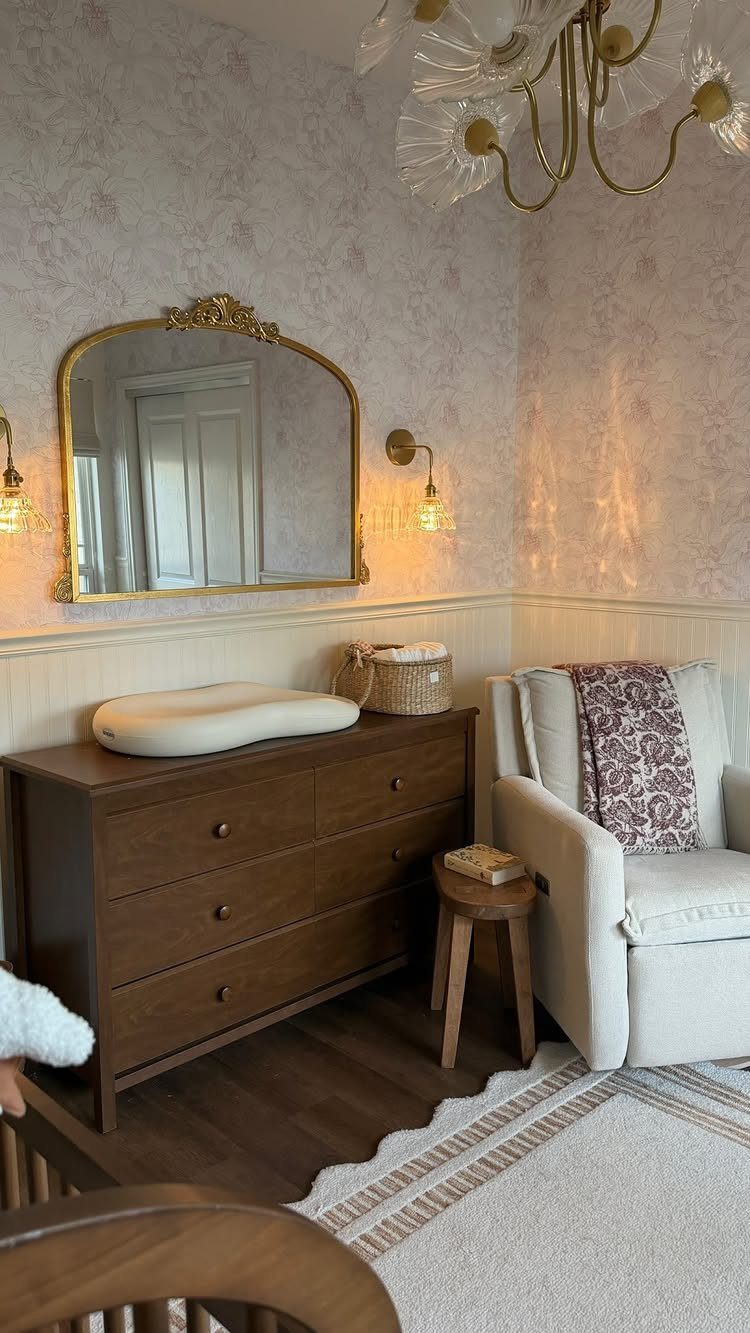
Dark wood absorbs light, so a nursery built around it needs several soft sources instead of one overhead bulb. A chandelier, wall sconces and a gold mirror to bounce the glow all help.
Warm bulbs keep the room gentle at night feedings. Sconces cost less than rewiring a ceiling, and a mirror opposite a light doubles its reach.
7. Gender-neutral Nursery with Dark Wood Furniture
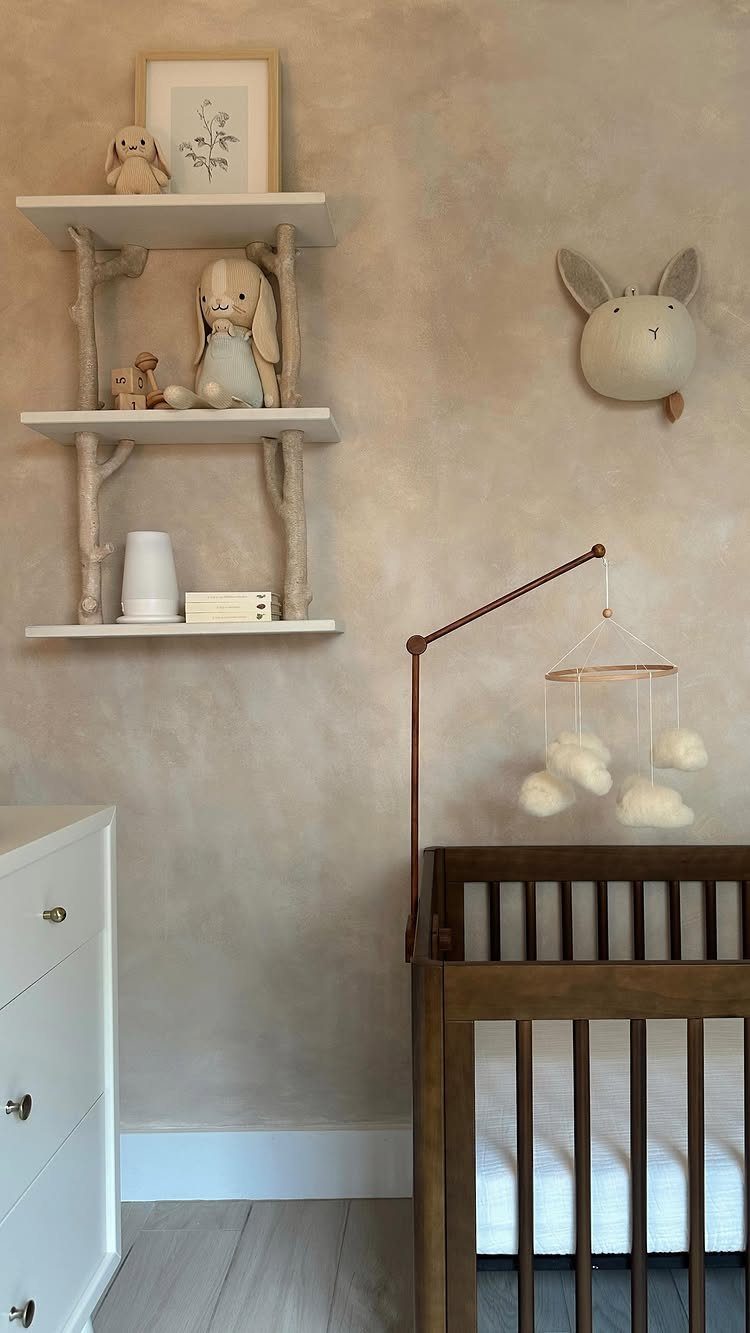
Dark wood suits any baby, because the wood carries no gender message at all. A crib in a deep tone against a beige textured wall reads as classic and calm.
White floating shelves and a white dresser keep the room light, so nothing needs to be pink or blue.
I’d let the toys and books on the shelves supply the color, since they change as the child grows and cost nothing to swap.
8. Dark Walls and Moody Tones
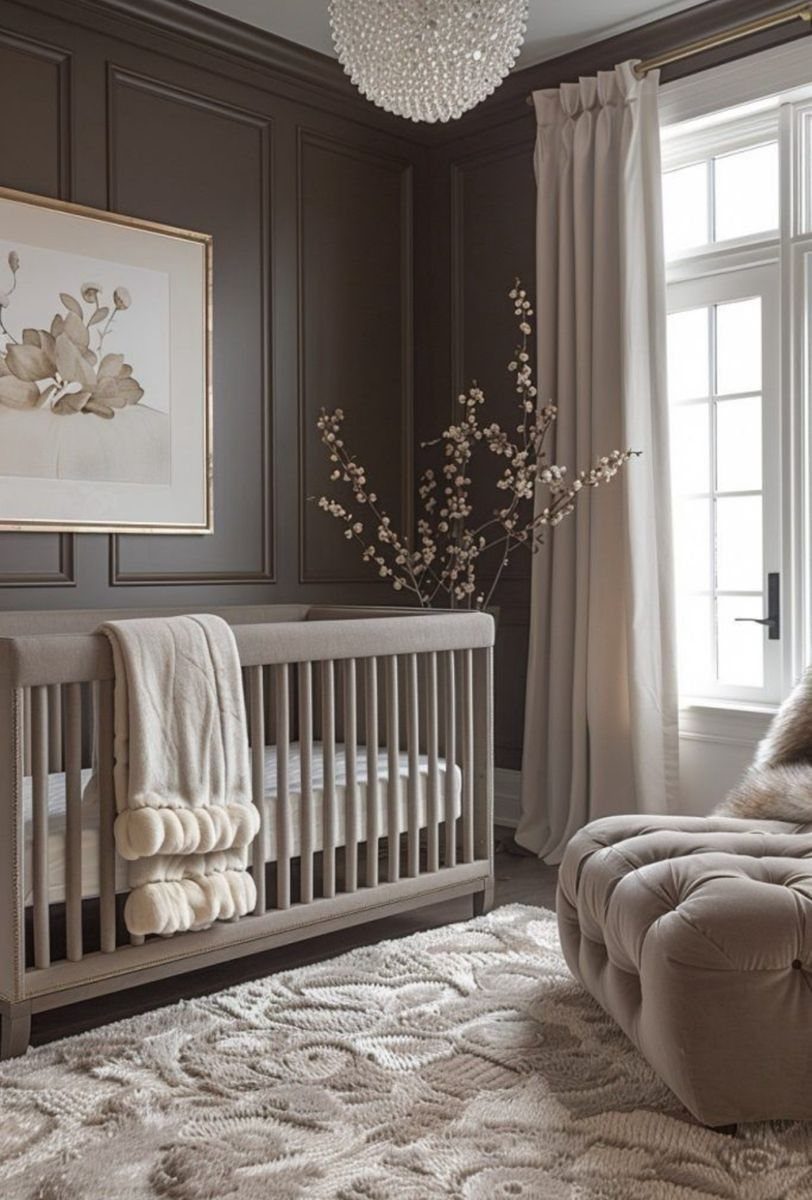
Paneled walls in dark brown turn a nursery into a small library, and a greyish-brown crib settles into that color instead of fighting it. Classic molding is what gives the room its traditional, finished look.
Pale curtains and a white chandelier keep the dark from closing in, and I’d always add both. A tufted ottoman and a textured rug bring softness, so the room feels cozy rather than stern.
Dark paint is the cheaper way in if real paneling is out of budget for a weekend.
Benefits of Dark Furniture
Dark furniture is easier to live with day to day.
Fingerprints, spit-up splashes and scuffs from a toy truck show less on a deep finish than on pale paint, so a quick wipe with a damp cloth usually keeps a crib and dresser looking tidy.
Sleep is the other reason to choose it. Babies react to light, and a dim, dark-toned room tells them it’s time to rest.
Pair a dark crib with deep wall color and the room sends a stronger cue that it’s time to wind down, which may help a baby settle faster.
Light colors look lovely in photos, but a darker room does the quieter job at 2 a.m.
Many parents are opting for dark colors in the nursery for a number of reasons. Whether you go with dark colors for the walls or the furniture itself, there are benefits to favoring rich colors instead of the traditional pastels.
Color Combinations
Contrast is the rule I’d start with. Dark furniture needs something light beside it, or dark walls need white furniture, so the eye has a place to rest.
For a ready-made palette, try a walnut dresser with a navy crib, a light blue armchair and ottoman, a light grey rug and neutral walls.
The blue stays soft because the walls and rug are quiet, and the walnut keeps it from feeling too sweet.
Pastels also work well against dark wood. Pick one pastel for the largest soft piece, like a chair, and let the rest stay neutral.
Design Tips
Big motifs shrink a compact nursery, so I lean toward a tiny repeating print that reads as texture instead of pattern.
Spread the pattern around in modest doses: floral curtains, a patterned rug and a small-scale print on a throw pillow or glider cushion can work together if the scale stays small.
Olive green walls with botanical art are a good base for that mix.
Keep surfaces clear, too. Dark pieces look best with plenty of empty space around them, so store extras in baskets or closed drawers and leave the dresser top for one or two items.
Frequently Asked Questions
Should you use dark colors in your nursery?
Yes, if they suit your taste and the rest of your home.
Dark furniture hides fingerprints, spit-up splashes and toy scuffs better than pale paint. Low light and deep wall color also signal bedtime more clearly to a baby, so naps and night feedings can wind down a little quicker.
Keep something light nearby, like white furniture or pale curtains, so the room doesn’t close in.
How to arrange furniture in a nursery?
Give dark pieces plenty of empty space around them, and light the room in layers.
Give the changing table its own bright, focused lamp, and keep the lighting by the crib gentle and spread out so it never glares into a baby’s eyes.
Is dark wood furniture in fashion?
Dark wood works in nurseries because it reads as classic rather than trendy. Dark walnut or espresso on a crib looks quiet and classic against a textured beige wall, and nobody will read it as pink or blue.
Pairing it with a light dresser, pale walls or soft pastels keeps it feeling current instead of heavy.





