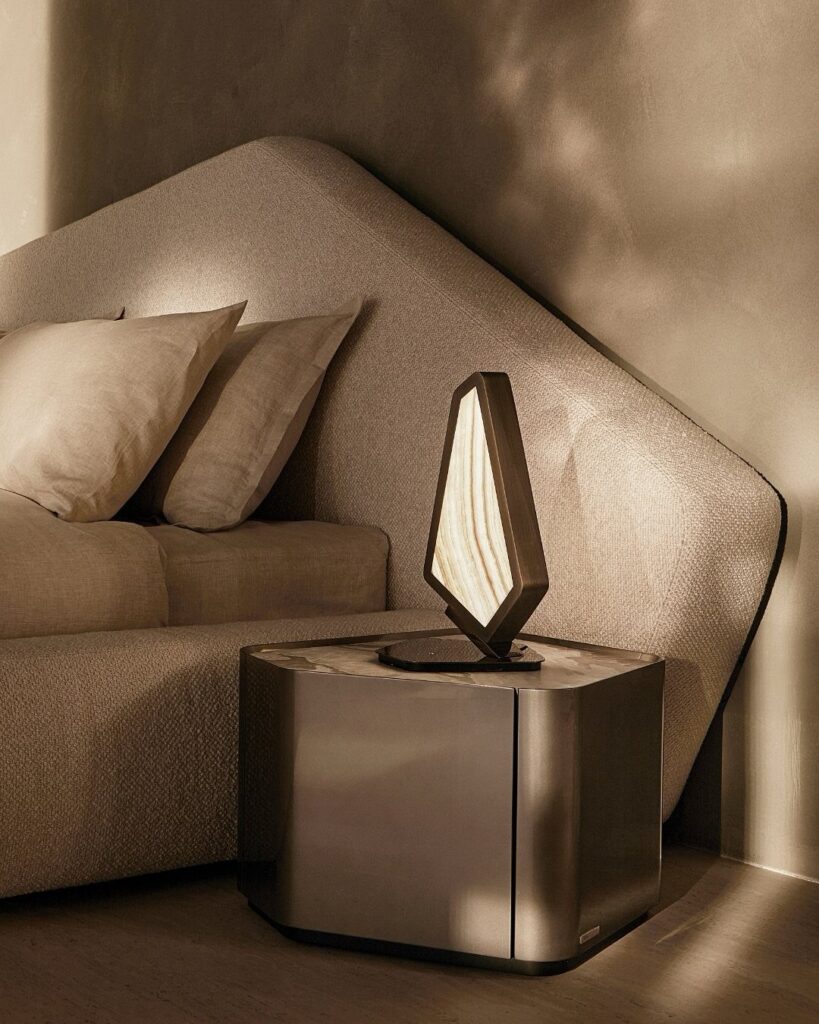
Renters get that look from an upholstered headboard, velvet fabrics, wide-hung drapes or a statement mirror, while owners can add wall paneling, built-in wardrobes or custom furniture.
Some of these are one piece you bring home today; others are built-ins that need a contractor and a few weeks. Even the quietest rooms here rely on layered lighting, with 3 sources at different heights, each on its own switch.
1. Luxury Lighting
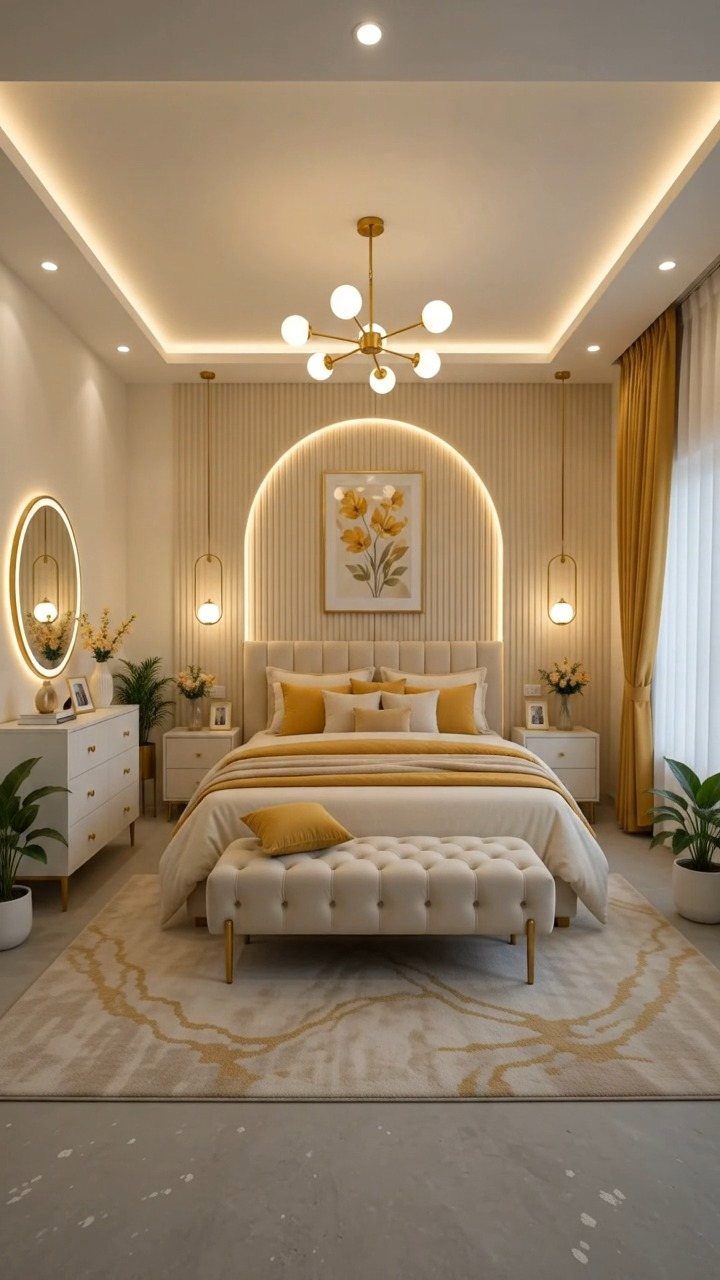
A single overhead fixture rarely feels luxurious; 3 sources at different heights do. A statement chandelier gives the room its personality, while recessed ceiling lights supply the even, practical glow for dressing and cleanup.
Put each layer on its own switch, and a dimmer on the chandelier if the budget allows. That way the room can go from bright to soft without a single lamp being moved.
I would spend the most on the chandelier and keep the recessed lights plain.
2. Sculptural Furniture
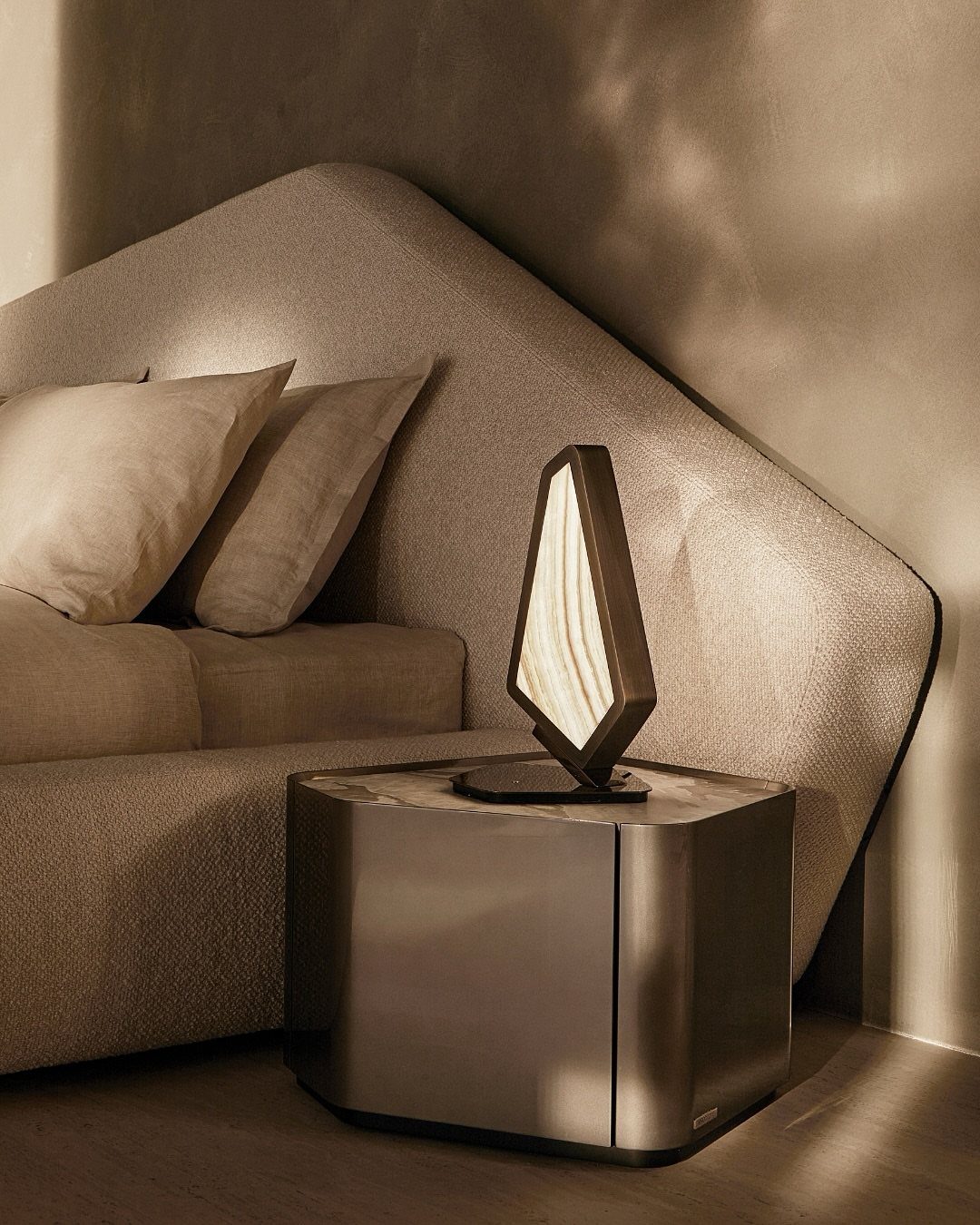
Pair a soft, curved bed with hard-edged pieces, and both look better. A metallic cubic nightstand beside a rounded beige frame creates exactly that push and pull, and a geometric lamp on top adds a third shape.
Keep the contrast to one or two pieces. If every surface is sculptural, the room reads as a showroom instead of a bedroom.
A lamp is the cheapest way to try this before committing to a bigger piece.
3. Tailored Bedding
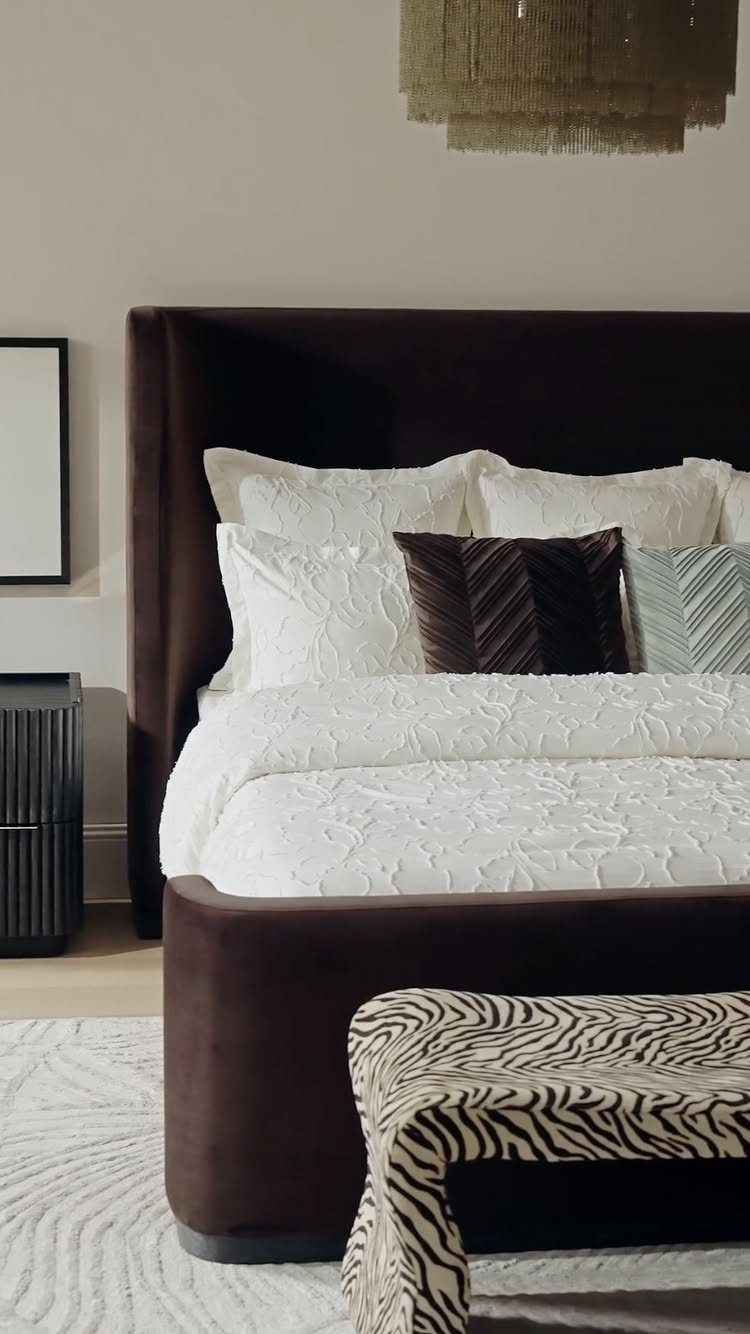
White textured bedding looks most expensive when it sits against something dark, like a deep brown velvet frame.
Stay with one color family for sheets, duvet and pillows, and let texture do the work: waffle, matelassé or linen all read richer than flat cotton.
Choose a single accent for the bench at the foot of the bed. A bold pattern there stays interesting because the bedding behind it is calm.
Layer pillows in odd numbers, and stop before the bed turns into a pile.
4. Custom Furniture
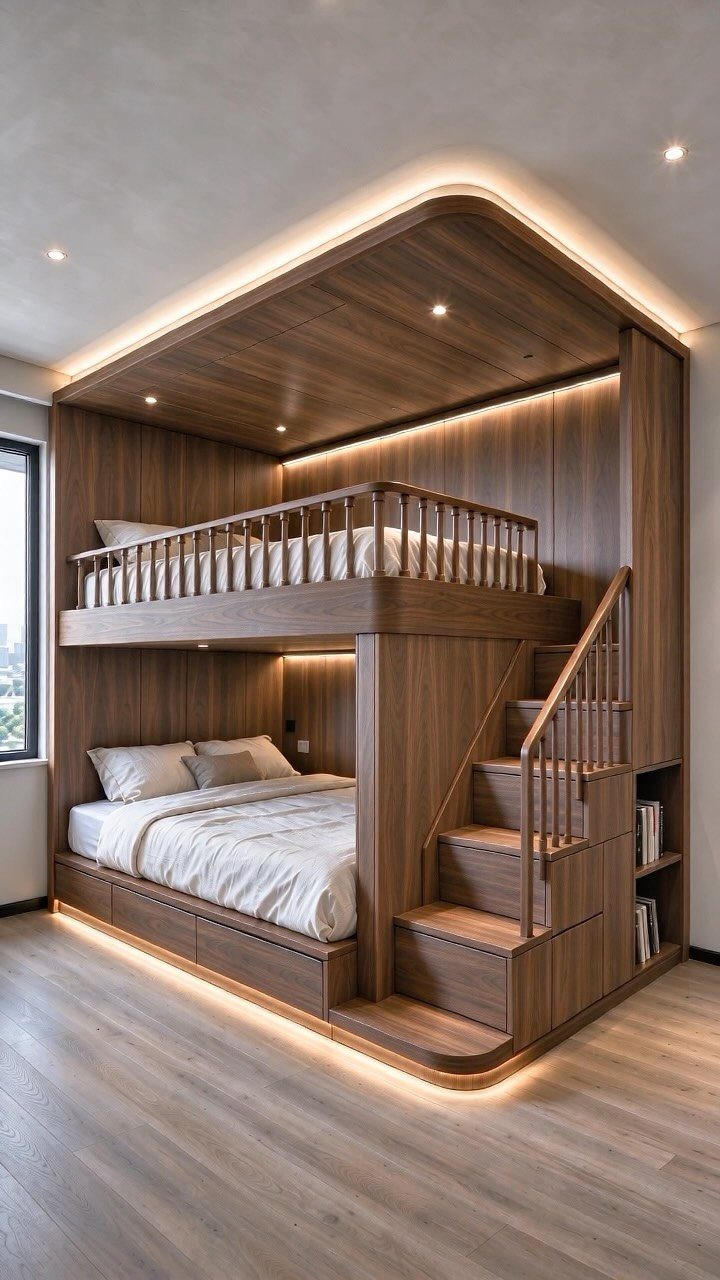
Drawers under the platform and LED strips along the steps give you storage and a night path in one build.
Custom work costs more than store-bought furniture, so spend where the function is. Drawers and lighting earn their price; extra trim does not.
A dark wood finish looks rich, but warm LEDs keep it from feeling heavy.
5. Velvet Fabrics
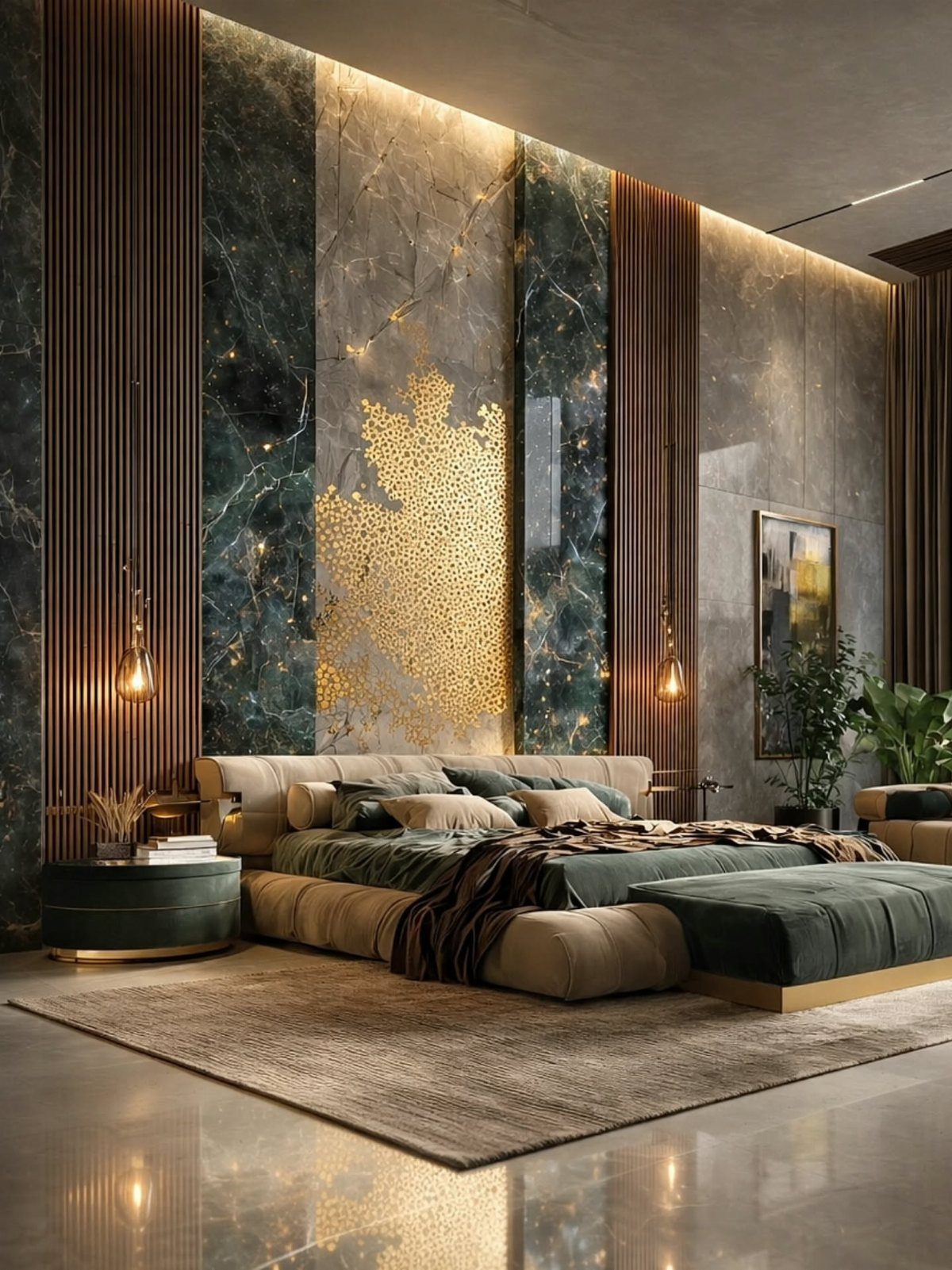
Velvet is the fastest way to add depth on a budget, and small pieces are the place to start.
Jewel-tone drama doesn’t require a velvet-covered bed. A dark green ottoman or nightstand set against a cool stone or marble-look wall gives the same punch for a fraction of the cost.
Pick one velvet color and repeat it once or twice, such as an ottoman plus a pillow.
Deep green sits well next to cool marble and gold, because the green calms the shine of the metal and the stone keeps the color from feeling heavy.
Velvet shows lint and crushed pile, so a soft brush keeps it looking fresh.
6. Soft Neutral Colors
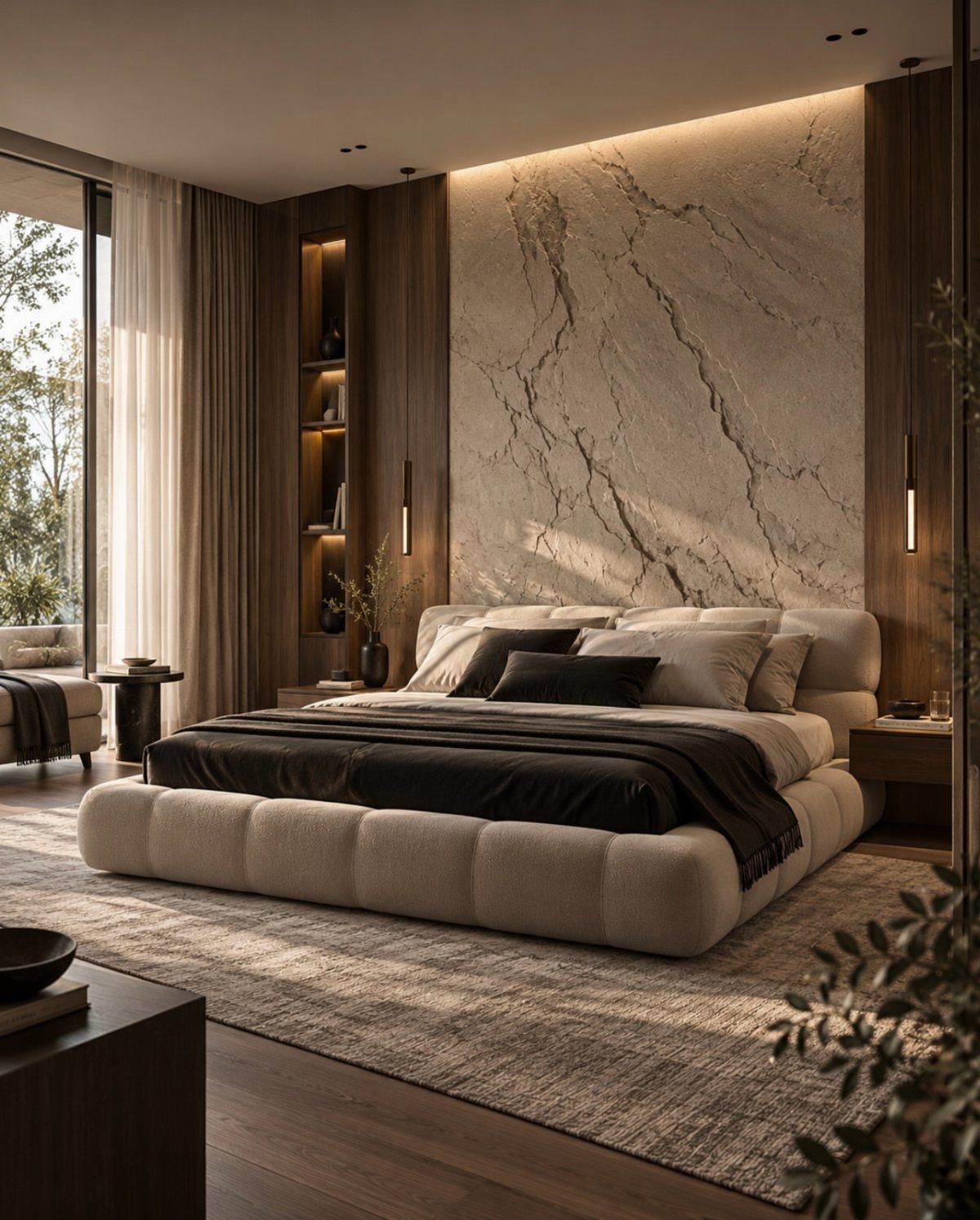
Beige on the bed, pale walls and sheer curtains keep a bedroom calm, and the quiet palette lets materials stand out. Marble and dark wood paneling supply the richness, so the soft color never reads as bland.
For a rental, skip the stone and get the same effect from a beige upholstered headboard and sheers hung wide of the window.
I would keep every neutral within one warm family, because mixing cool grays with creamy beiges shows up fast.
7. Luxury Bedroom Wallpaper
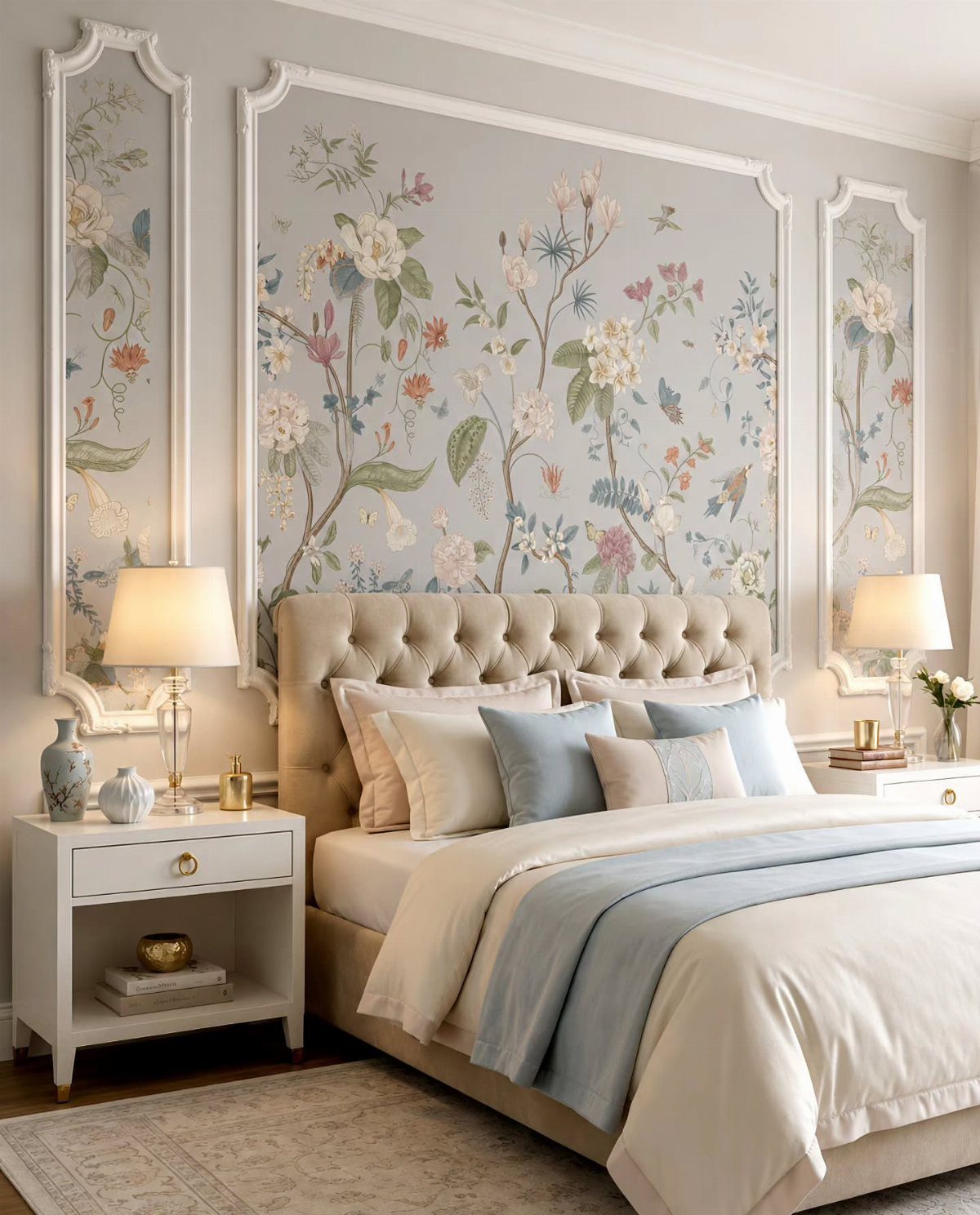
When you frame wallpaper with molding, it reads as a panel or mural instead of full-wall coverage, which keeps pattern from overwhelming a room. The molding frames the paper like artwork, and the bed becomes its frame.
Keep everything else in the bed quiet. Light blue and cream bedding picks colors from the print without competing with it.
I would paper only this one wall. A single wall costs far less than a whole room and still gives the bedroom its personality.
8. Small Luxury Bedroom Interior Design Solutions
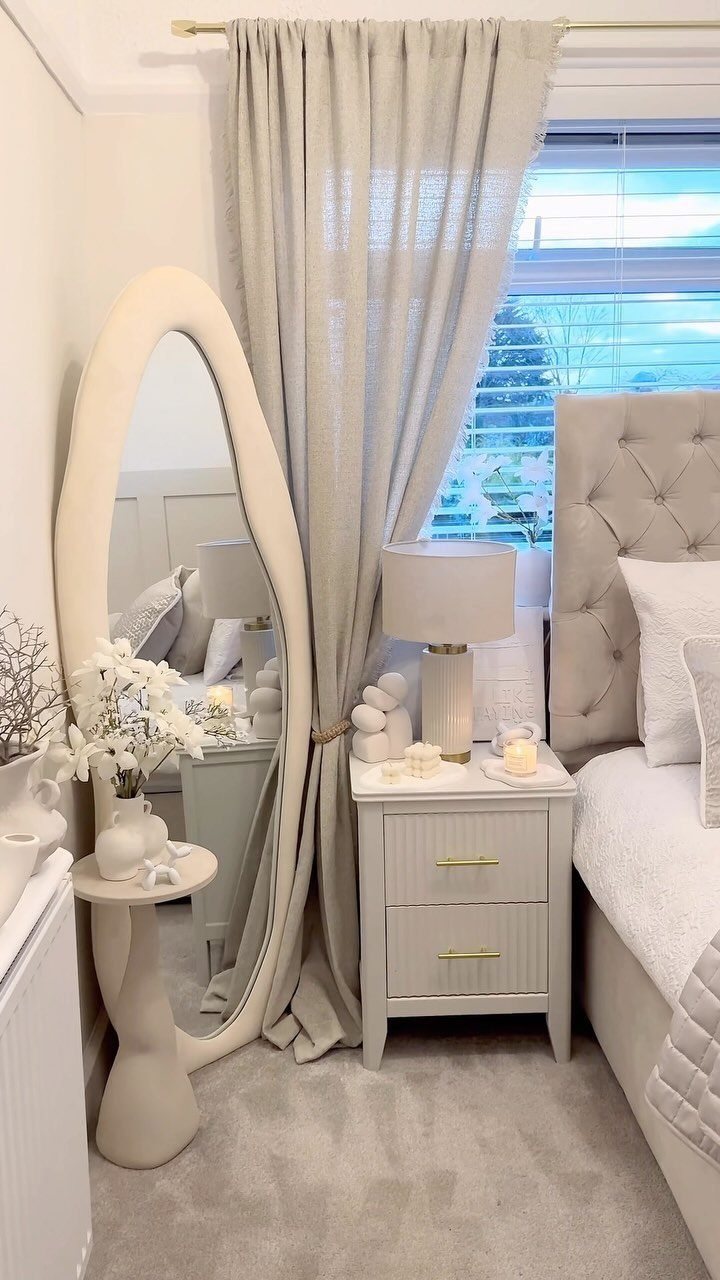
Small rooms get a lift from one tall, organic-shaped mirror, which adds height and a soft curve in a corner without taking floor space.
Keep the palette neutral, as the grey headboard and nightstand do here, so the eye reads one calm space instead of several small pieces. Tufting on the headboard supplies the richness, so you can skip extra decor.
A small side table with fresh flowers is enough styling. I would stop there, because in a compact bedroom every added item reads as clutter.
9. Luxury Rugs
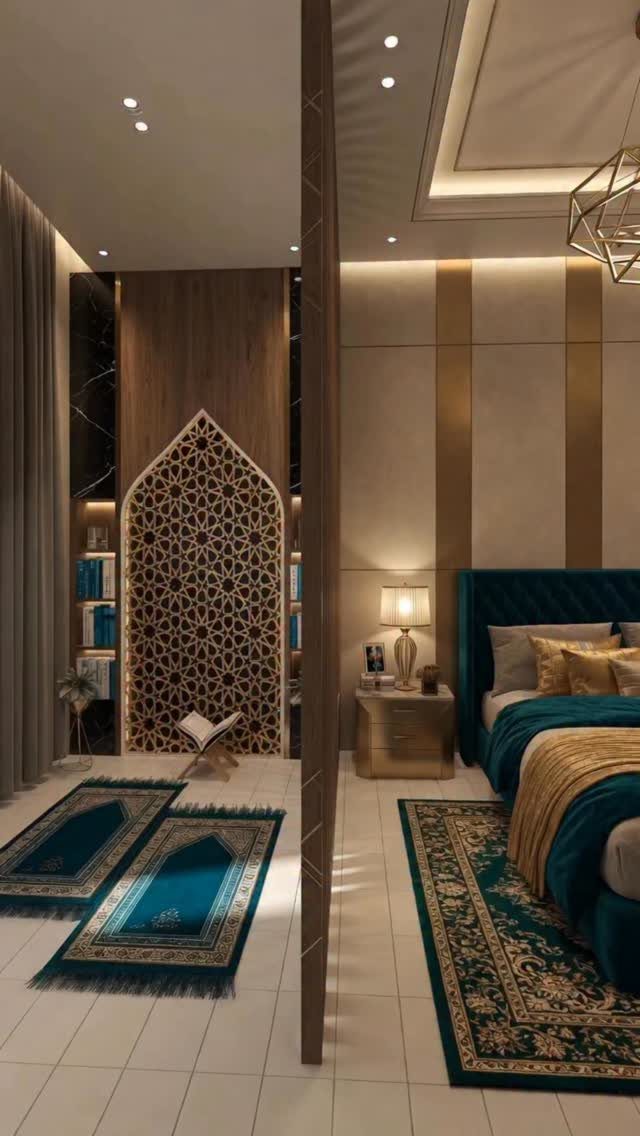
Several ornate rugs laid side by side make a bold pattern across a light tiled floor, and the soft pile gives you a warm step out of bed.
Teal and gold carry the same colors as the velvet bed and gold accents, so the rugs feel planned instead of added on. Pick rugs that repeat colors you already have, and the pattern settles into the room.
Tile is cold underfoot, so I would put at least one rug where your feet land first in the morning.
10. Use Timber to Ground the Bedroom
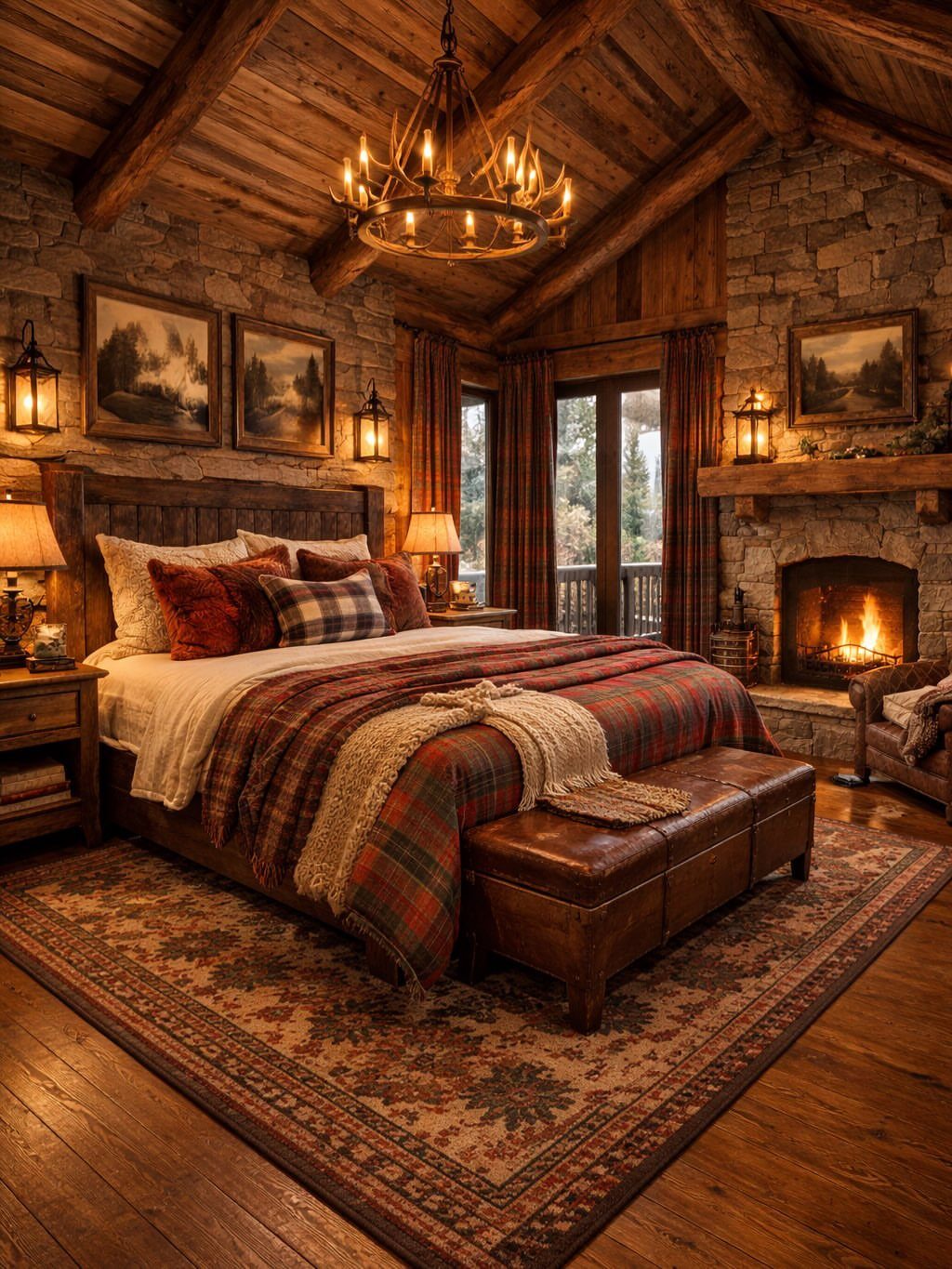
Exposed beams make a tall ceiling feel anchored, and if the room is large enough, a fireplace or stone accent wall finishes the job.
Beams like these are a structural choice, so most renters and first-home owners will not be installing them. Get the same warmth from wood furniture, a wood headboard or a leather bench at the foot of the bed.
Plaid bedding suits the rustic look. I would keep the chandelier large, because a big timber ceiling swallows a small fixture.
11. Flowing Drapes
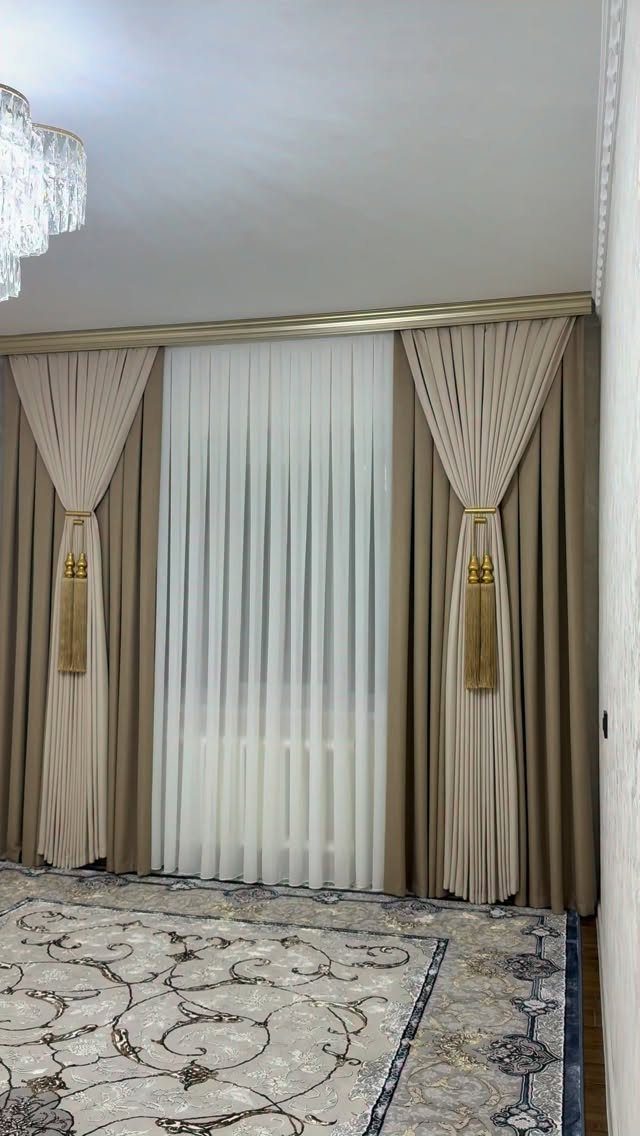
Layer sheer white curtains behind beige drapes and you get soft daylight by day and privacy at night, from one window.
Gold tassels on the tiebacks add a finishing touch without a lot of money. Hang the rod high and wide so the fabric falls long and full instead of stopping at the glass.
I would keep the drapes plain and let the tassels carry the detail, especially over a patterned rug where the floor already has plenty going on.
12. Chaise Lounge
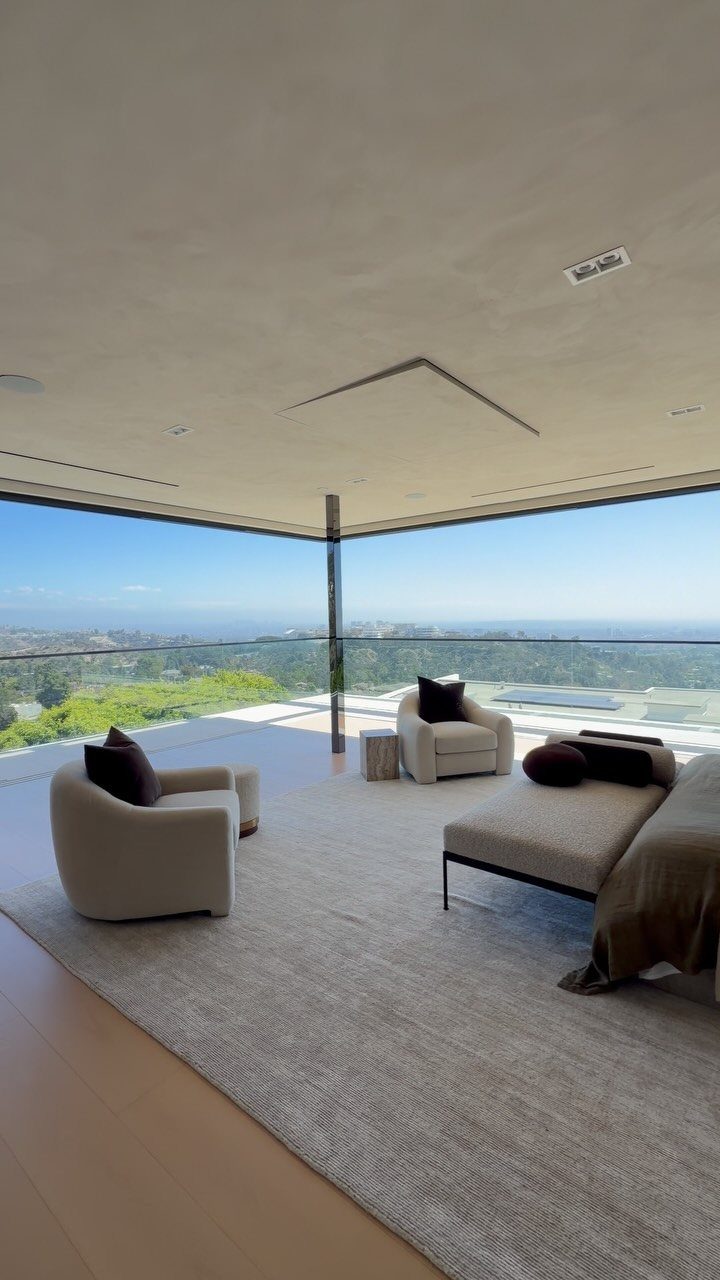
A chaise lounge at the window gives you a place to sit and read instead of treating the bedroom as a room that exists only for sleep.
Pair it with a couple of armchairs in the same cream, as this setup does, and the seating reads as one group. Keep the chaise clear of the bed’s walking space so it stays easy to move around.
If floor space is tight, I would pick the chaise over 2 armchairs, since it gives you a place to stretch out.
13. Built-in Wardrobes
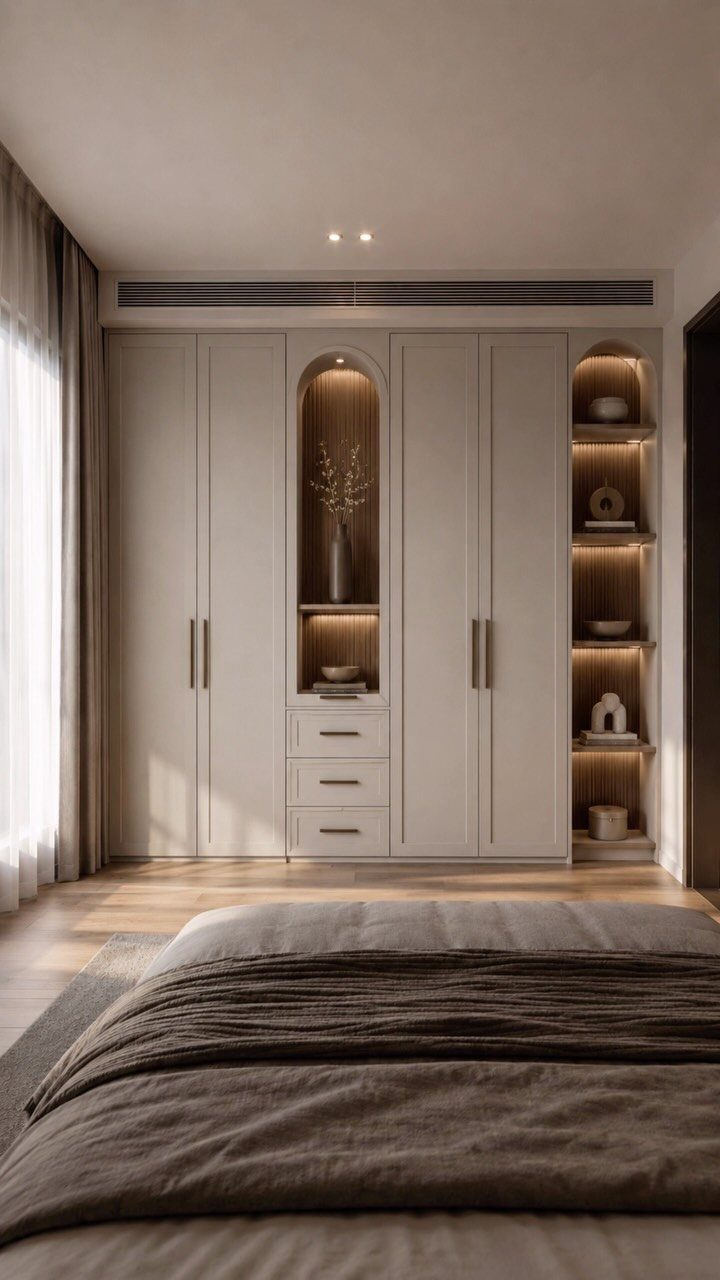
Arched niches with a light inside turn a plain wardrobe wall into a display, and the cream finish keeps the wall quiet beside brown linens.
Put the lit niche at eye level, where one folded sweater or a single bag can sit in it. Keep the doors and shelving in the same cream so the niche is the only moment of contrast.
Built-ins cost more than freestanding units, so I would spend on the niche and lighting and keep the rest of the cabinetry simple.
14. Furniture with Rounded Edges
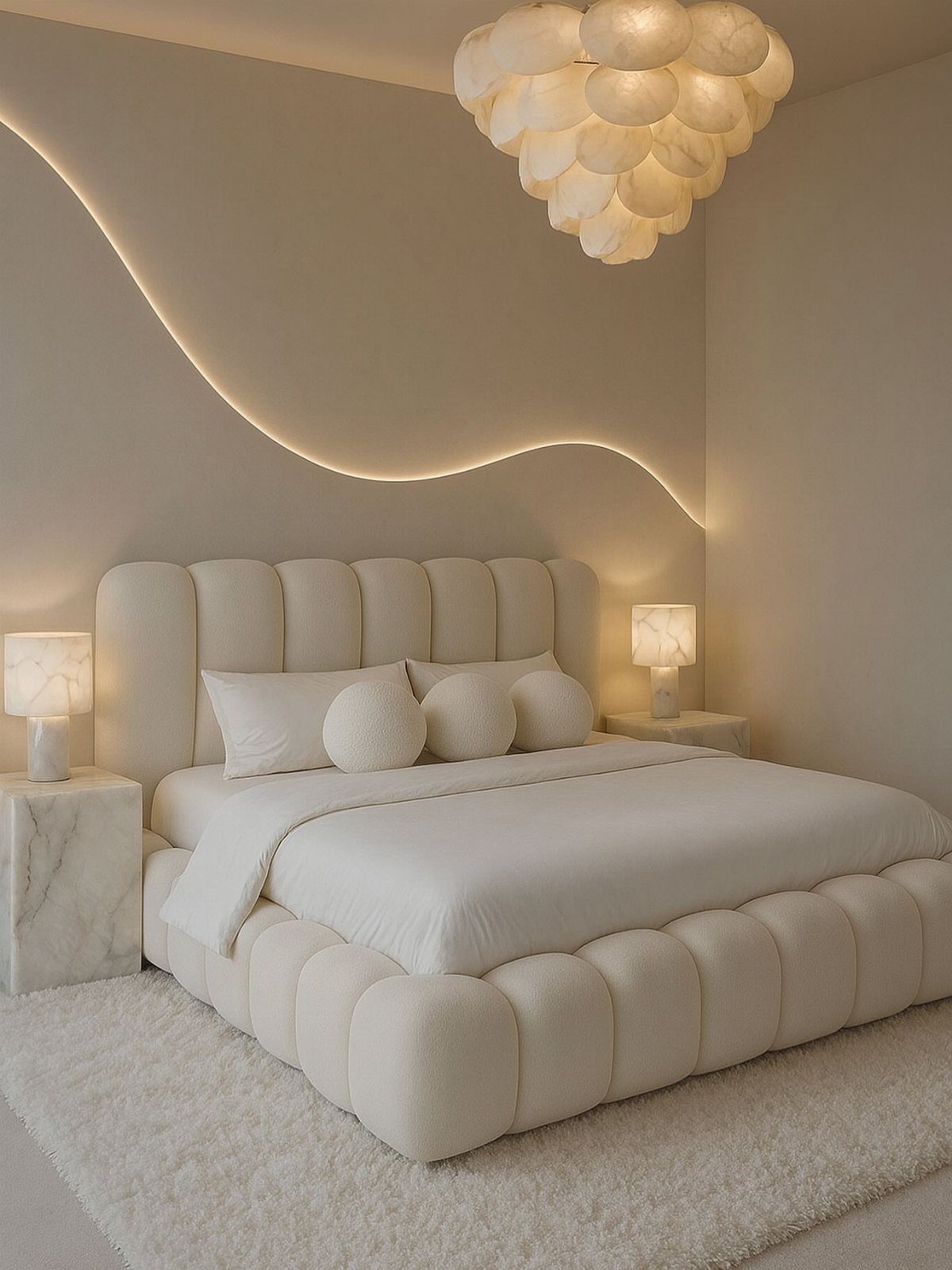
A rounded, channeled bed frame in white gives a room softness before a single pillow is added. Marble nightstands answer it with a cool, solid surface, so the curves never feel too sweet.
Repeat the curve once or twice more, as the cloud-like ceiling light and the curved wall strip do here. Past that, the shapes start to compete.
I would choose the bed first and let everything else follow its curve.
15. Darker Furniture
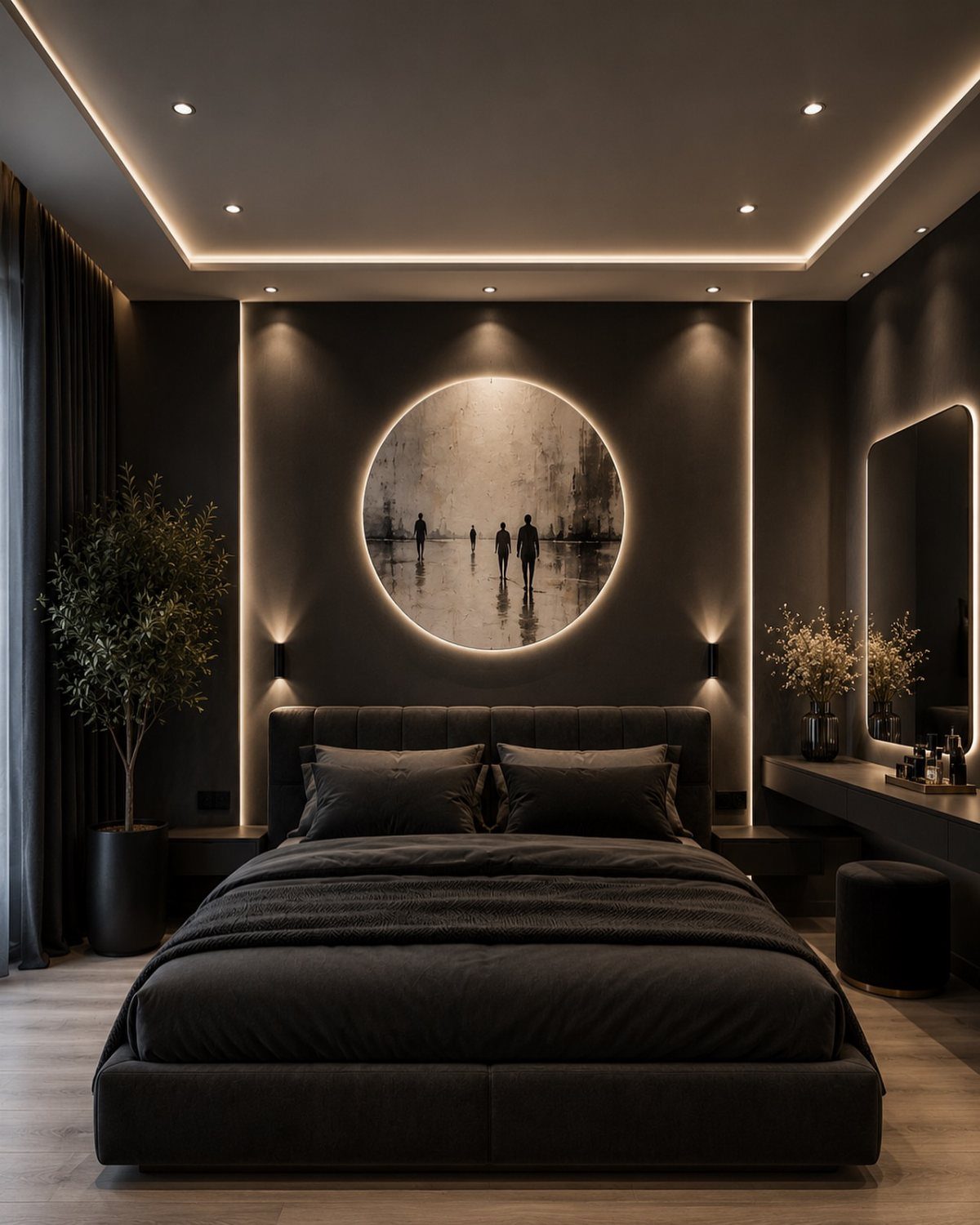
Dark grey upholstery against dark walls makes a bedroom feel enclosed in a good way, like a hotel suite after sundown. Backlit circular artwork keeps that depth from turning gloomy, because the glow gives the eye somewhere to land.
Stay in one dark family for bed and walls, and let the light do the contrast. A small tree adds a living green note without brightening the palette.
A dark room needs lighting you can dim, so plan for that before you paint.
A master bedroom covered in shades of cream is a mainstay, but there is no reason not to have a vibrant, colorful boudoir.
16. Wall Paneling
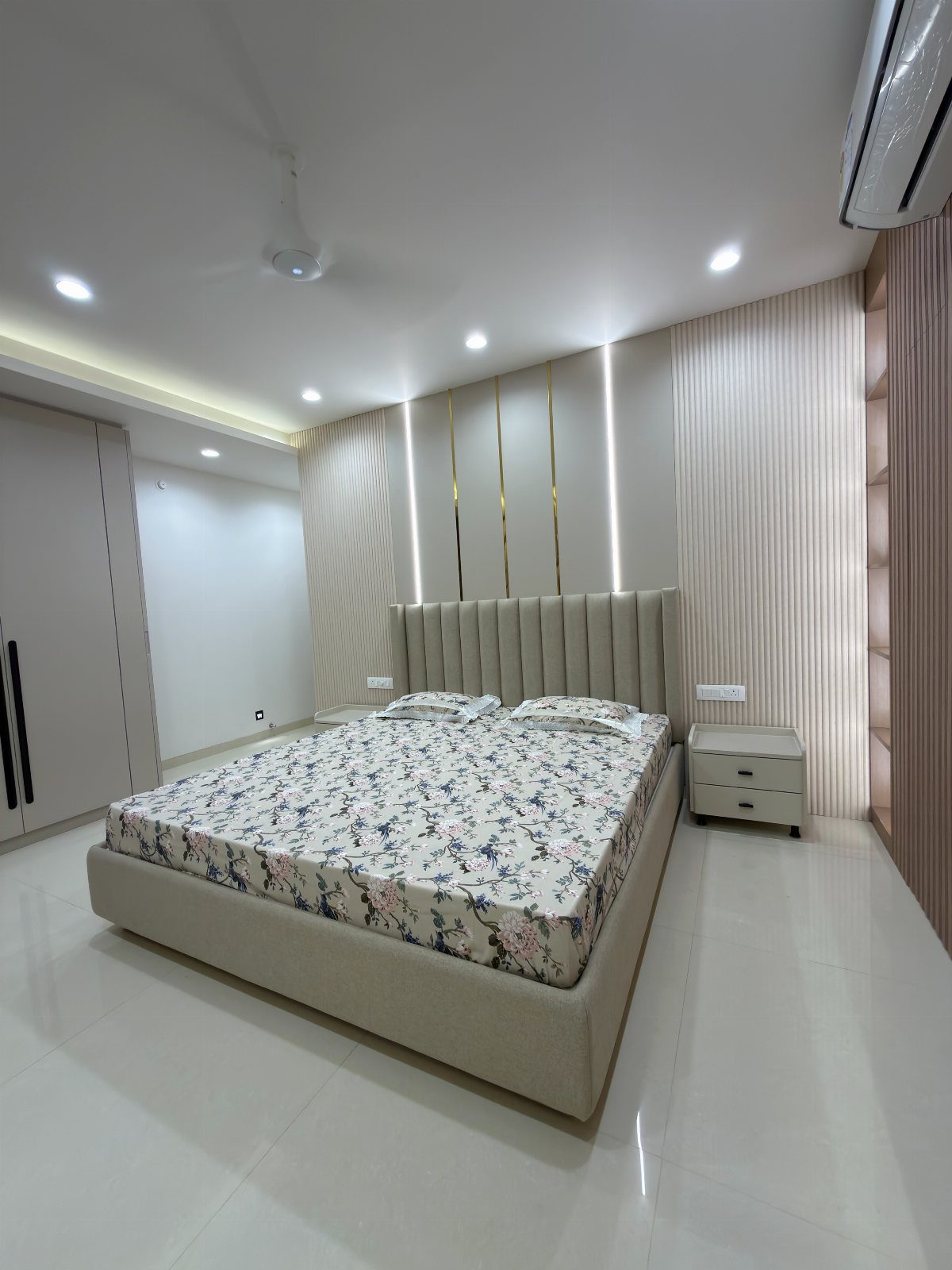
Fluted paneling behind the bed gives a flat wall depth, and a channeled headboard in beige echoes the same vertical lines. Gold accents and LED strips set into the panel make it glow at night.
Run the paneling floor to ceiling so it reads as architecture, not decoration. Floral bedding works because the wall is already patterned in texture; keep the rest of the room calm.
I would put the LED strips on a dimmer, since a panel this bright can overpower a bedroom at bedtime.
17. Strategically Placed Mirrors
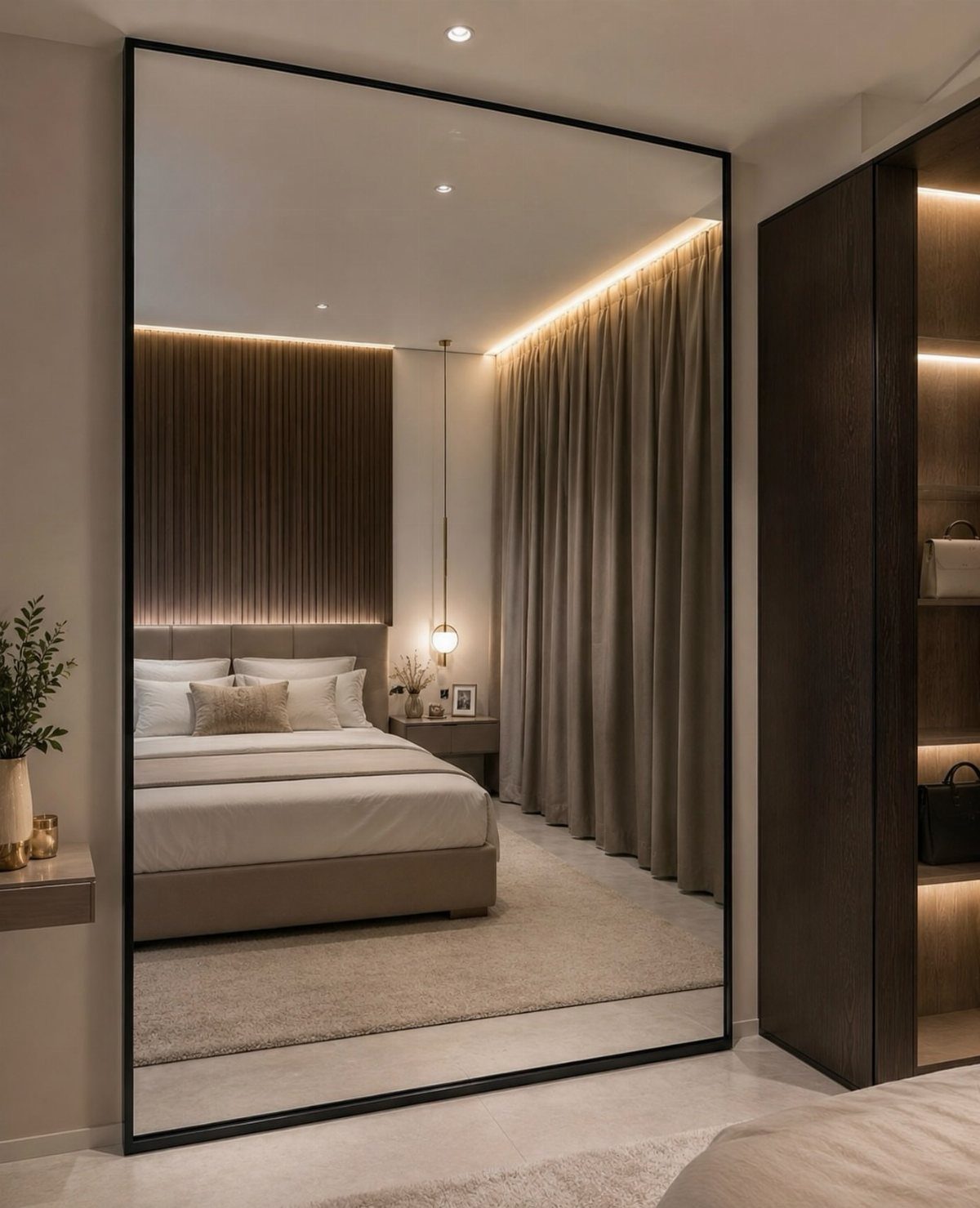
A large mirror with a thin black frame doubles the view of the room, pulling in the beige curtains, wood accent wall and rug so the space looks wider.
Hang or lean it opposite a feature you want repeated, like the wood wall or the window, instead of facing a bare corner. Pick a frame that matches other dark details in the room.
I would avoid aiming it straight at the bed, since a mirror reflects whatever sits in front of it, tidy or not.
18. Walk-in Closets
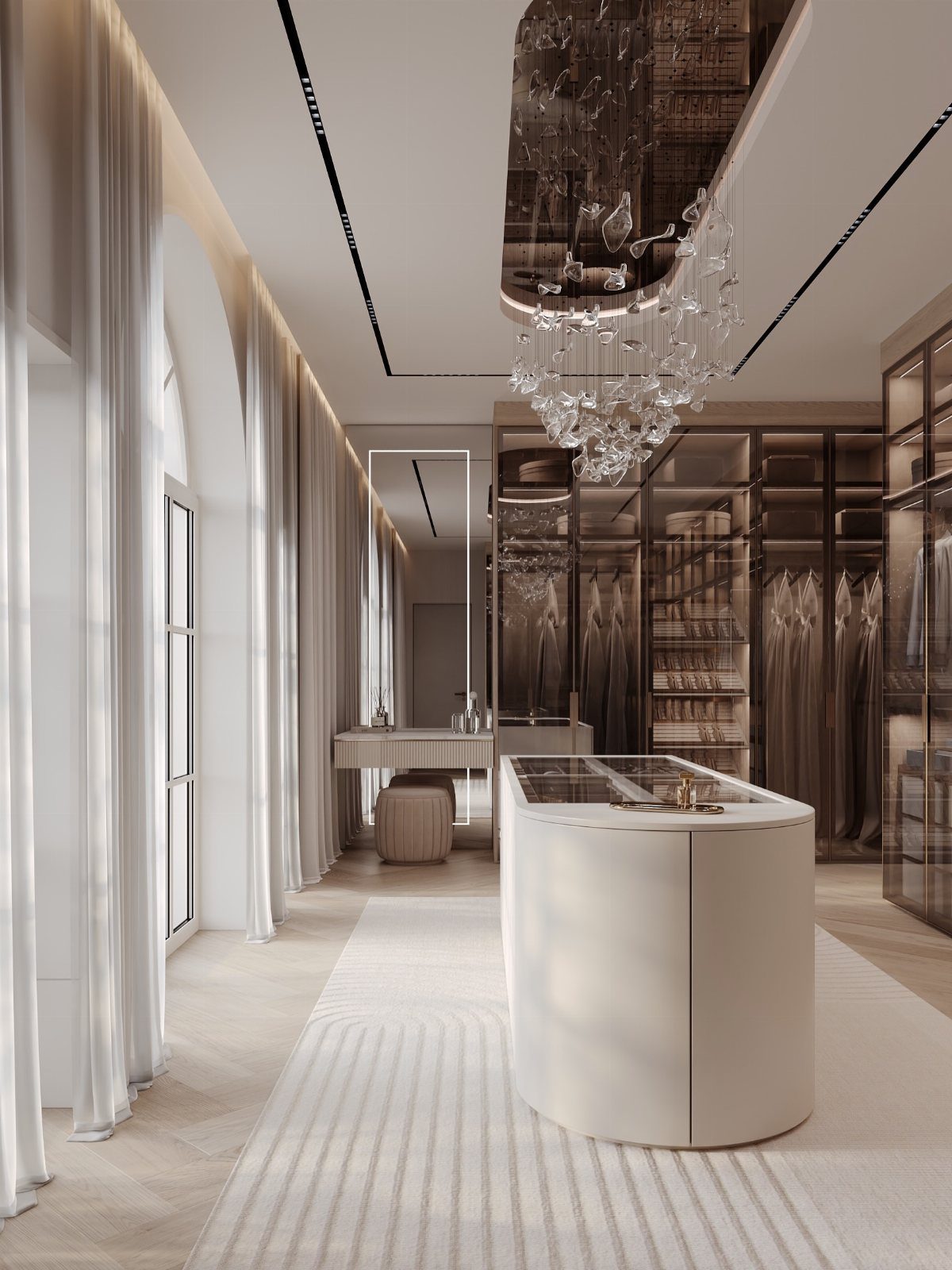
Glass-fronted wardrobes make a closet feel like a boutique, because clothes become the decor. A central island gives you a spot to lay out outfits, and a vanity corner keeps getting ready in one place.
Few of us have this much space, so borrow one piece: a glass-door cabinet, an island-style table, or a single chandelier.
Glass shows clutter, so I would keep the contents folded and sorted by color.
Key Elements of Luxury Bedrooms
Luxury comes from quality, detailing and balance, not from piling on more. A calm, roomy bedroom usually starts with 5 choices: premium materials, layered lighting, custom-designed furniture, a balanced palette and clean storage that hides clutter.
For materials, favor ones with real texture and a soft luster: solid wood, marble, leather, velvet, wool and chrome-plated metal. Wood veneer and marble-look finishes are a fair way to get the same effect on a smaller budget.
I stick to soft neutrals: off-white, pale gray, warm taupe, anything that holds color without announcing it. Then add one deep shade, like forest green, navy or burgundy, or a touch of gold or silver.
Skip anything flashy or jarring. Quiet materials in a quiet palette read as upscale.
Creating a Calming Atmosphere
Blue is a strong choice if you want a bedroom that settles you down at night. Layer several shades of it, and mix textures and patterns, so the room has depth instead of looking flat or dull.
Plants add calm too. A single fiddle leaf in the corner fills vertical space when the room gets good light, or you can hang a few air plants if the floor plan is tight.
Natural materials bring warmth: bamboo blinds, wooden accent furniture and a jute rug. If you want low maintenance, a preserved moss wall or framed botanical prints give a similar feel with no watering.
Balance these natural pieces with what you already own, so the room feels cohesive and not like a collection.
Frequently Asked Questions
What is in a luxury bedroom?
A luxury bedroom relies on material quality, lighting that works in layers, furniture sized to the room, a restrained color plan and storage that stays out of sight.
I use solid wood, marble, leather, velvet and wool when the budget allows, because real texture reads immediately. Veneer and engineered stone give you the look for less if you choose carefully.
What is the new bedroom trend?
Soft textures and calm neutral palettes lead right now, with tactile fabrics like linen, bouclé and velvet adding depth in place of bold color. Texture does the work that loud color used to do.
How can I make my bedroom look nice?
Start with layered lighting: 3 sources at different heights, each on its own switch, feel far richer than one overhead fixture.
Stick to one color in the bedding and vary the weave instead: waffle, matelassé and linen all add depth without pattern. Add one accent, like a patterned bench or a single velvet piece, and stop before the room looks crowded.
Can a small bedroom look luxurious?
Yes, with a restrained palette and a few well-chosen pieces.
A full-length mirror and a padded headboard both add presence in a small room without taking up floor area. Neutral walls and linens let the room read as one unbroken space, and a single accent like fresh flowers is enough.
What are some popular interior design styles for bedrooms?
Soft neutral luxury is the most popular, built on beige, off-white and pale gray with a touch of gold or brass.
Rustic styles use timber and plaid, and dark moody rooms pair deep gray upholstery with dimmable lighting. Textured wall paneling and upholstered headboards work across most of these styles.





