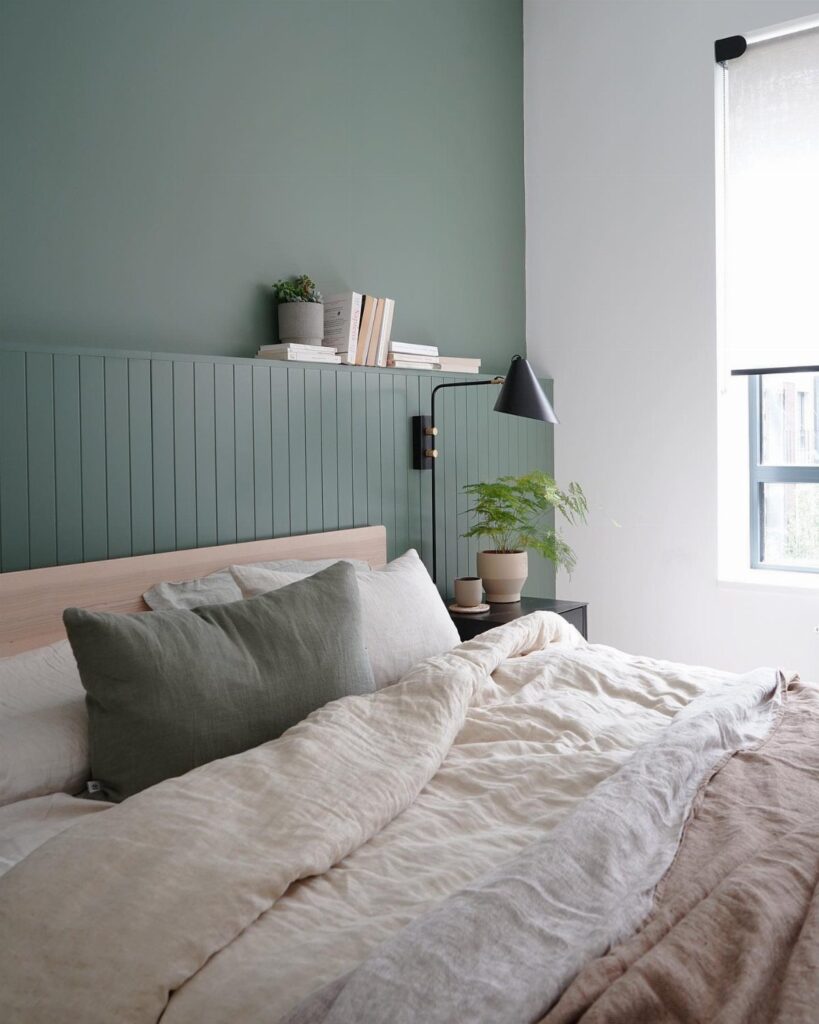
The 6 palettes here, light green, beige and taupe, pale blue, white, muted yellow, and grey and white, can start with one gallon of paint on the headboard wall or stay off the wall entirely with new bedding, a rug, or a lampshade, so renters can skip the roller.
Pick by what you want the room to do: beige and taupe to slow the evening down, pale blue or light green for sounder sleep, and muted yellow accents when mornings need a little lift.
1. Light Green Bedroom Walls
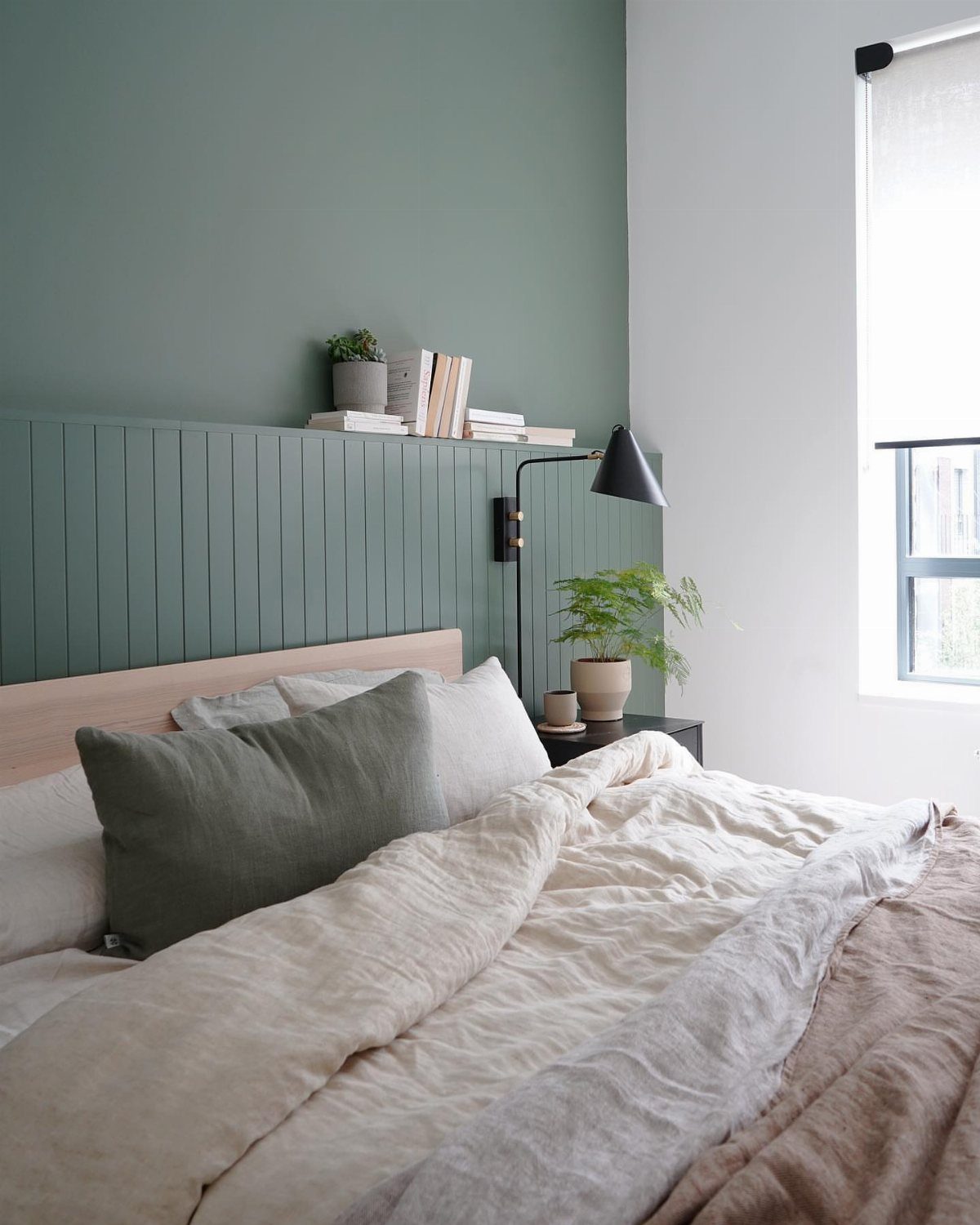
Light green walls with vertical wood paneling give a bedroom a calm, grounded feel, and green is the feng shui color tied to growth and vitality. I would paint just the headboard wall and keep everything else quiet.
White or neutral linens let the green carry the room. Choose a soft, grayed green over a minty one, since it reads gentler at night under a lamp.
Paneling plus a gallon of paint is a realistic weekend project on a modest budget.
2. Beige and Taupe Bedroom Colors
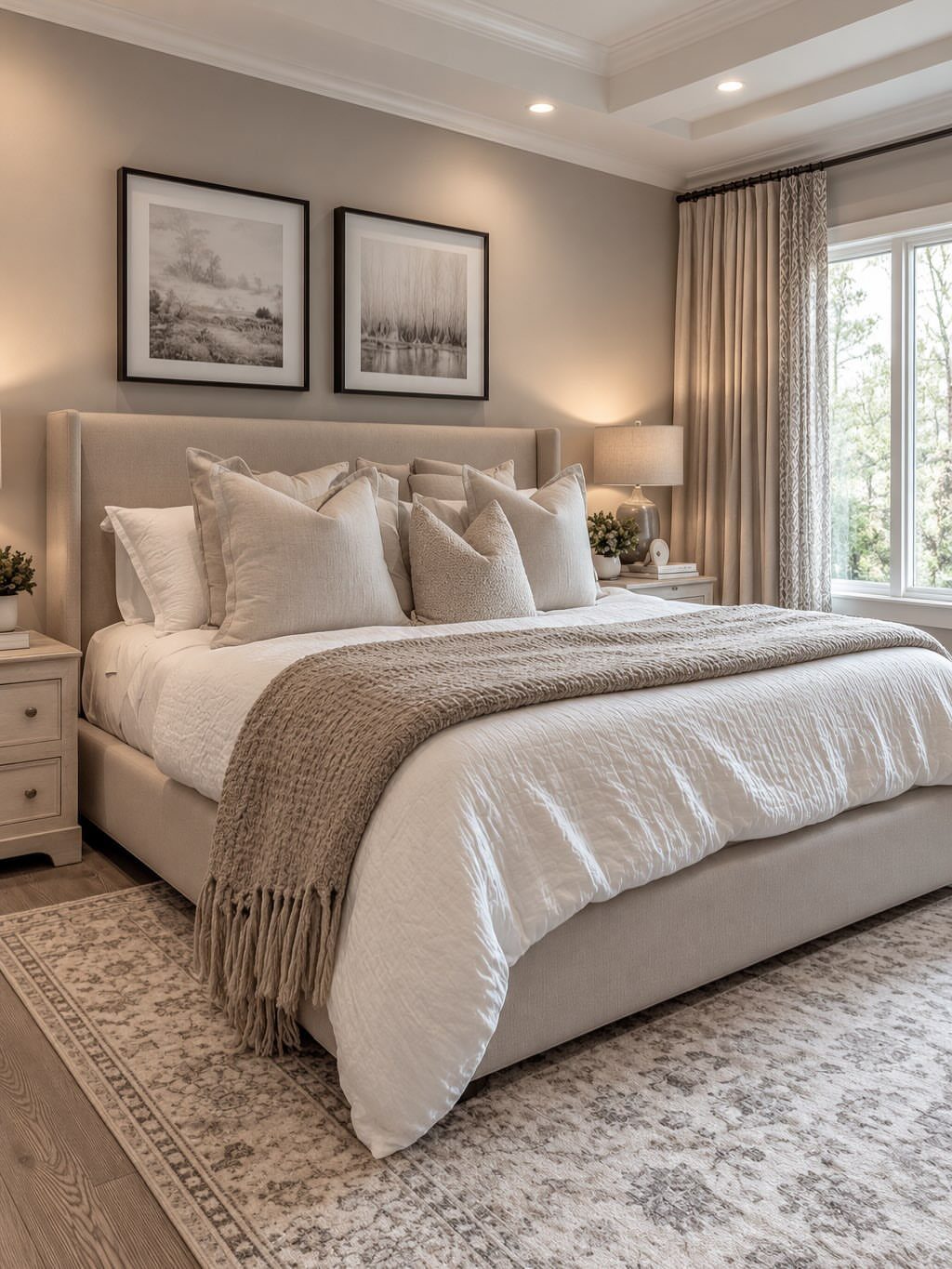
Beige and taupe work as a pair because taupe adds the depth that beige alone lacks.
Paint the wall behind the bed taupe, then keep the bed, throw and pillows in beige and cream so the room stays warm without turning flat.
Tone-on-tone rooms need that contrast, or they go dull fast.
For renters, swapping bedding and a rug costs less than repainting.
3. Pale Blue Bedroom Colors
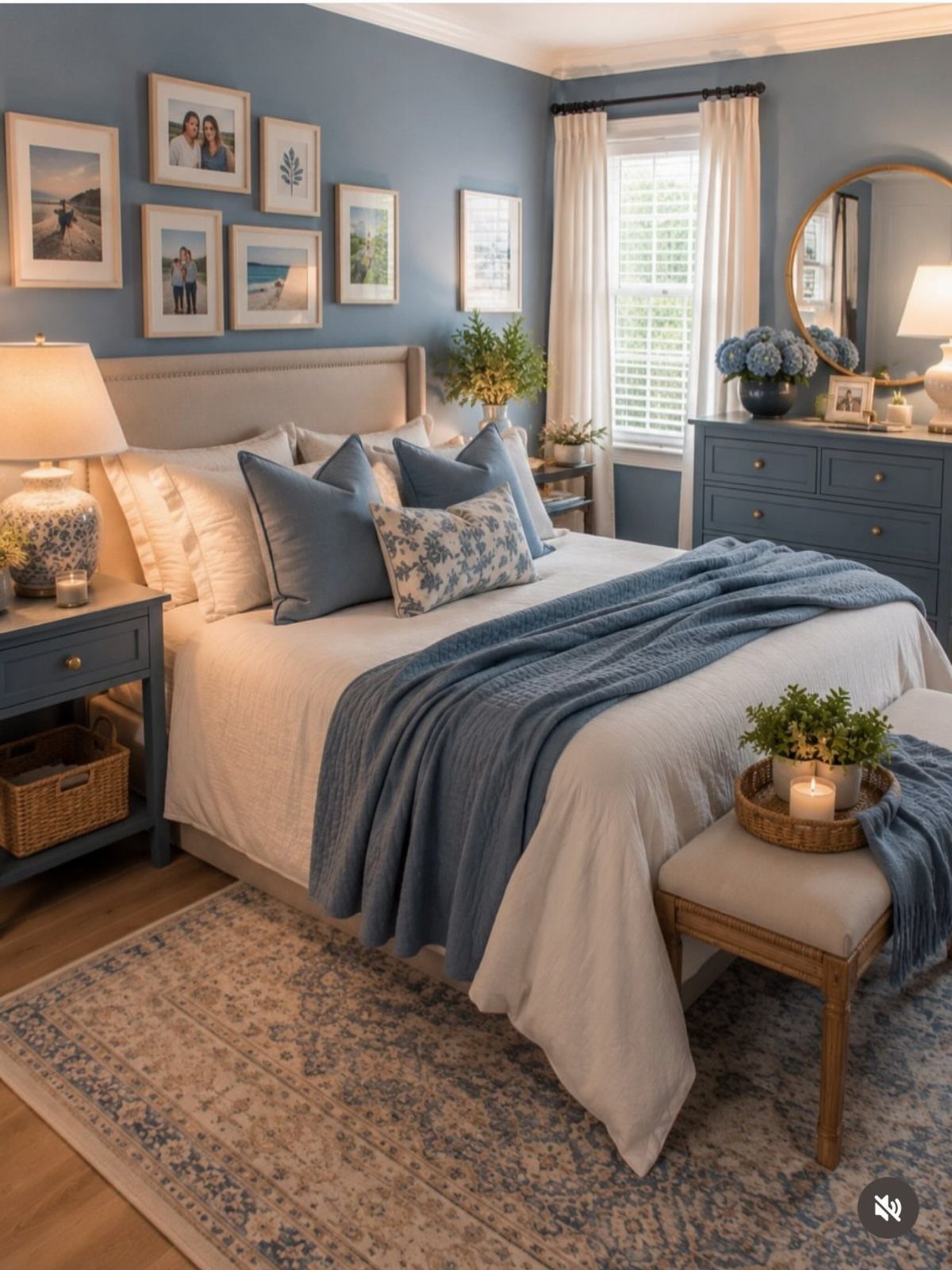
Pale blue is the feng shui pick for relaxation and peace, and it suits small bedrooms where you want walls that quietly recede. Matching the walls, bedding and a dresser, as this idea does, makes a very restful room.
I would break up the blue with white trim and a few wood or metal pieces so it never feels chilly. A round mirror and a photo gallery wall add personality without adding more color.
Test a sample patch first, because blue shifts with the light.
According to Feng Shui, these colors help promote security and calmness, ideal for walls or large furniture. They mimic natural landscapes, helping to absorb stress and invite restorative vibes.
4. White Bedroom Colors
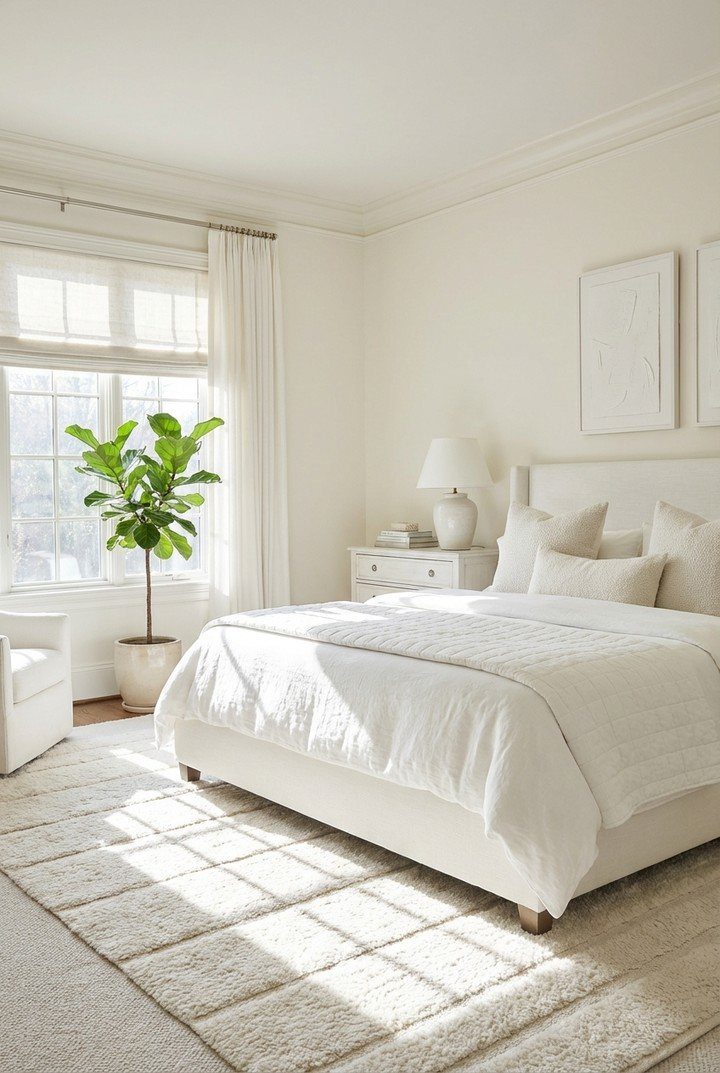
White is the feng shui choice for clarity and tranquility, and an all-white bedroom feels open and clean. Texture does the work: a thick rug, layered bedding and a few soft throws keep white from looking clinical.
A live plant, like a fiddle-leaf fig, adds the one living color the room needs. Pick a warm white over a stark one if your light is cool.
White shows dirt quickly, so washable bedding is worth the money.
5. Muted Yellow Bedroom Accents
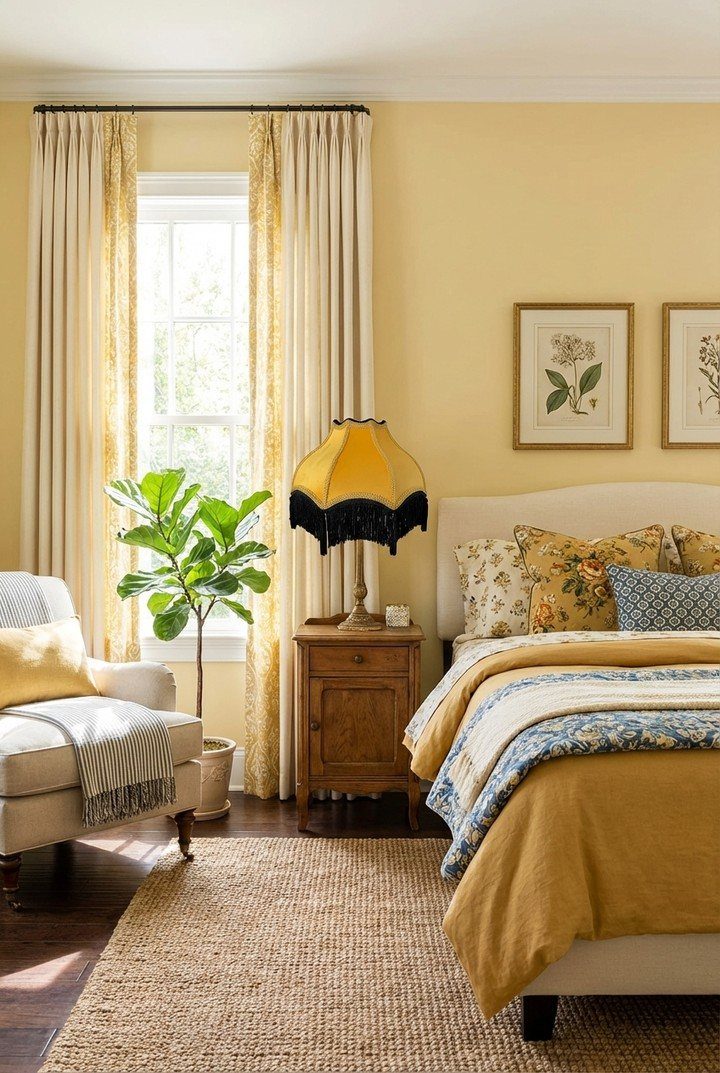
Muted yellow lifts mood and sharpens clarity, which makes it a good accent rather than a full-room color. Keep the walls pale, then add yellow in small doses: a mustard duvet, a lampshade, patterned curtains.
I like a jute rug and a white armchair underneath, because neutrals stop the yellow from overwhelming. Choose dusty, buttery tones over bright lemon; they stay soothing at bedtime.
Swapping a duvet or lampshade is the cheapest way to try it.
6. Grey and White Bedroom Palette
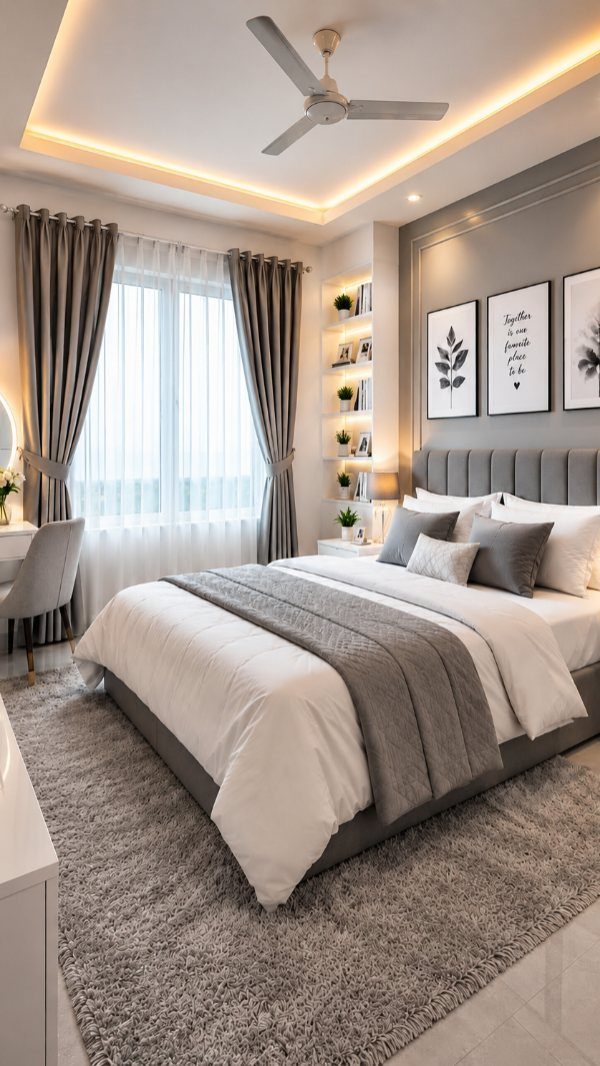
Grey and white is the modern, calming route: a grey upholstered bed and grey wall, with white bedding to keep it light.
Add a grey rug and curtains, then lean on soft textures so the room feels cozy instead of cold.
Warm ceiling light matters a lot here. Cool bulbs make grey look flat, so I would choose warm white bulbs for the fixtures overhead.
Hang a few framed pieces on the grey wall for a focal point.
Feng Shui Principles
Feng shui translates literally as "wind water," and it rests on the idea that everything is made of energy, called chi, which shapes how a space feels to live in.
You don’t have to buy into the belief to use the practice, since it overlaps with design, architecture and environmental psychology.
In a bedroom, the working method is simple: arrange furniture and natural elements so the room feels balanced and easy to move through.
Feng shui aims at better sleep and well-being, so test each change against one question: is the space calmer when you turn out the light?
Treat color as one tool among several. Paint can’t fix a room that feels crowded or restless.
Bedroom Layout
Furniture placement shapes sleep as much as wall color does, so lock in where the bed and dressers go first, then pick paint.
Color can also follow the room’s compass direction. Matching your palette to the direction the room faces is a classic feng shui step for balancing energy, so check a compass app on your phone before choosing.
Bright red and orange make poor main colors for a bedroom, because they tend to keep the mind too alert for sleep. Soft blue, green and lavender suit a restful layout better.
Personal Goals
Decide what you want the room to do, then pick colors to match.
For relaxation, go earthy: beige, tan or soft yellow help the mind slow down. For romance, use pink or purple accents, and keep red and blue to small decor pieces rather than walls or sheets.
If mornings are a struggle, small accents in orange or magenta, like a throw pillow or a lamp shade, can help you get moving sooner. They brighten mornings without taking over the room.
If sound sleep is the priority, pair soft blue or pale green with a clutter-free space.
For couples who want a romantic feel, purple and red work well together, and a bit of orange adds some warmth. If you sleep solo, pick soothing shades that suit your own taste and stop there.
Frequently Asked Questions
What are the best bedroom colors for couples?
For a romantic room, I’d reach for blush pink or a dusty lavender on the bedding or a single wall, then add one warm orange note, like a lamp base or a throw.
Red and blue work better as small accents, such as a pillow or a framed print, than as wall paint or sheets.
If you and your partner like different colors, soft blue bedding with green pillows blends both tastes and keeps the room calm.
How should I place my bed according to feng shui?
Set the bed so it sits catty-corner to the door, and leave the same amount of floor on each side.
From there you can see who walks in without lying in line with the doorway, and feng shui reads that view as security. Settle the bed and dresser positions first, then choose paint.
Which color bedsheet is lucky?
Red and gold are the colors traditionally called auspicious, but red is a poor fit for a bedroom.
If you want luck without the buzz, keep red to a small decor piece and use white or neutral sheets, since white is tied to clarity and tranquility.
What colors should be avoided in feng shui bedrooms?
Skip bright red, orange and neon shades as main colors. They stimulate the mind and make it harder to wind down, and deep blue or black can feel heavy and bring on worry.
What is the best feng shui color for sleep?
Soft blue or pale green, paired with a clutter-free room, is the best bet for sound sleep. Pale blue also helps in a small room, since it recedes and makes the walls feel farther away.
Pick a green with some gray in it over a minty one; mint turns sharp under a bedside lamp, while the muted shade stays soft.





