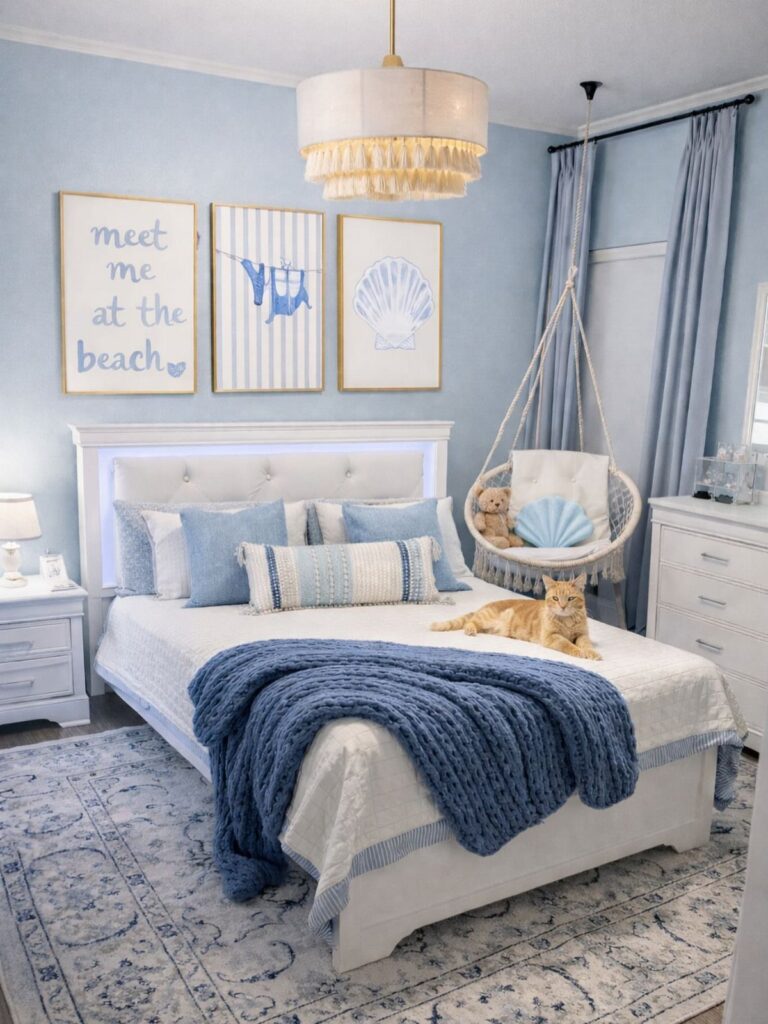
Light decides how much blue works: a dim bedroom looks larger in a pale shade, and a room flooded with light at sleeping hours can carry navy without feeling heavy.
The list covers a navy accent wall, blue and white bedding, a toile canopy bed and a blue velvet headboard, plus lighter jobs like painted trim or a few blue throw pillows.
Natural wood tones are the easiest fix for blue and white that feels cold, and the Adding Warmth section below shows how to bring them in.
1. Navy Accent Wall
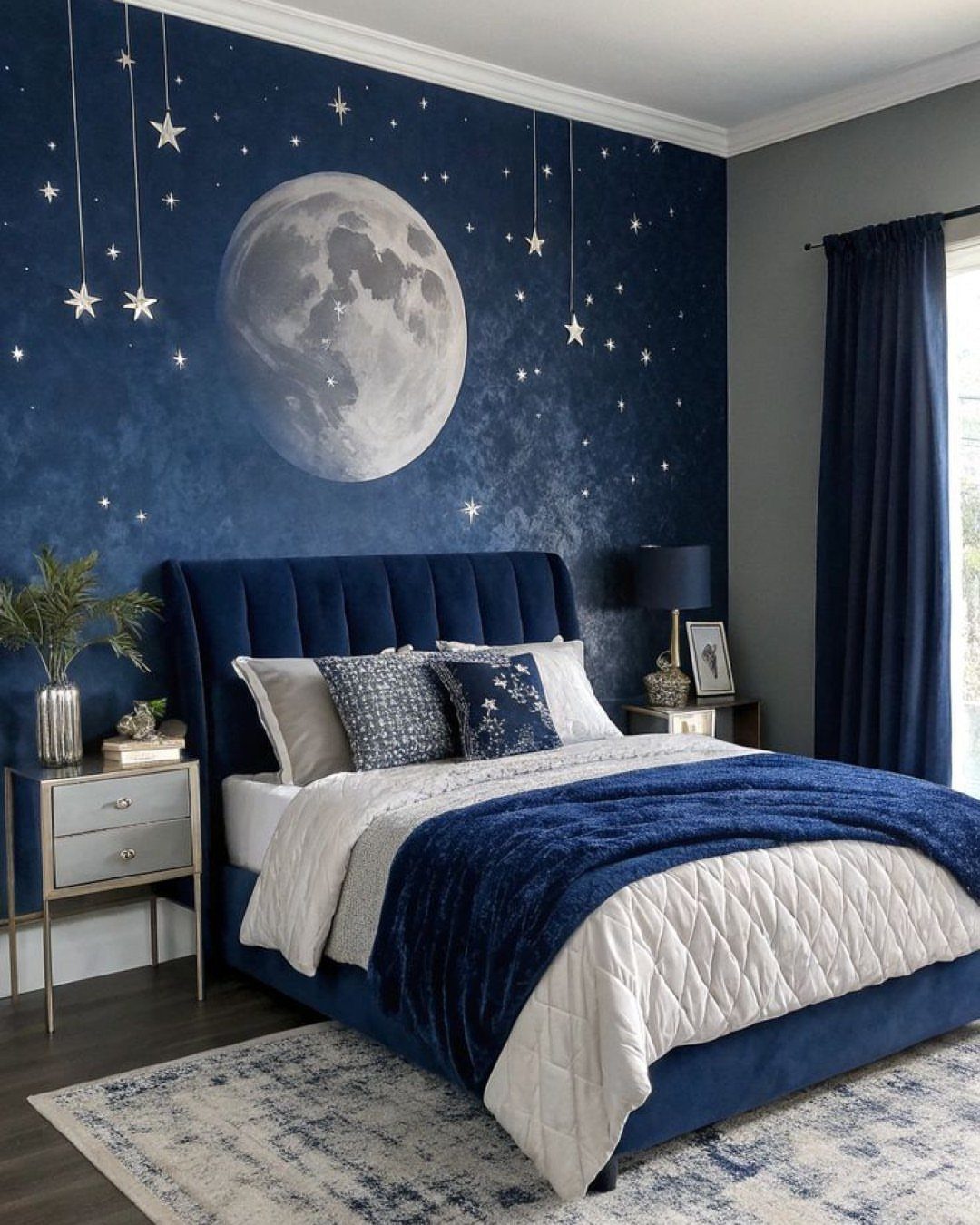
One deep navy wall behind the bed gives the room a focal point, and the velvet bed against it shows how well navy holds a texture.
Pick the wall the bed sits against, since that is the one you see from the door and the pillow.
I would keep everything else pale. White bedding and a blue and white rug let the navy stay the only heavy color, which keeps a smaller room from closing in.
A mural like the moon and stars is a bold extra, and plain paint works just as well.
2. Blue and White Bedding
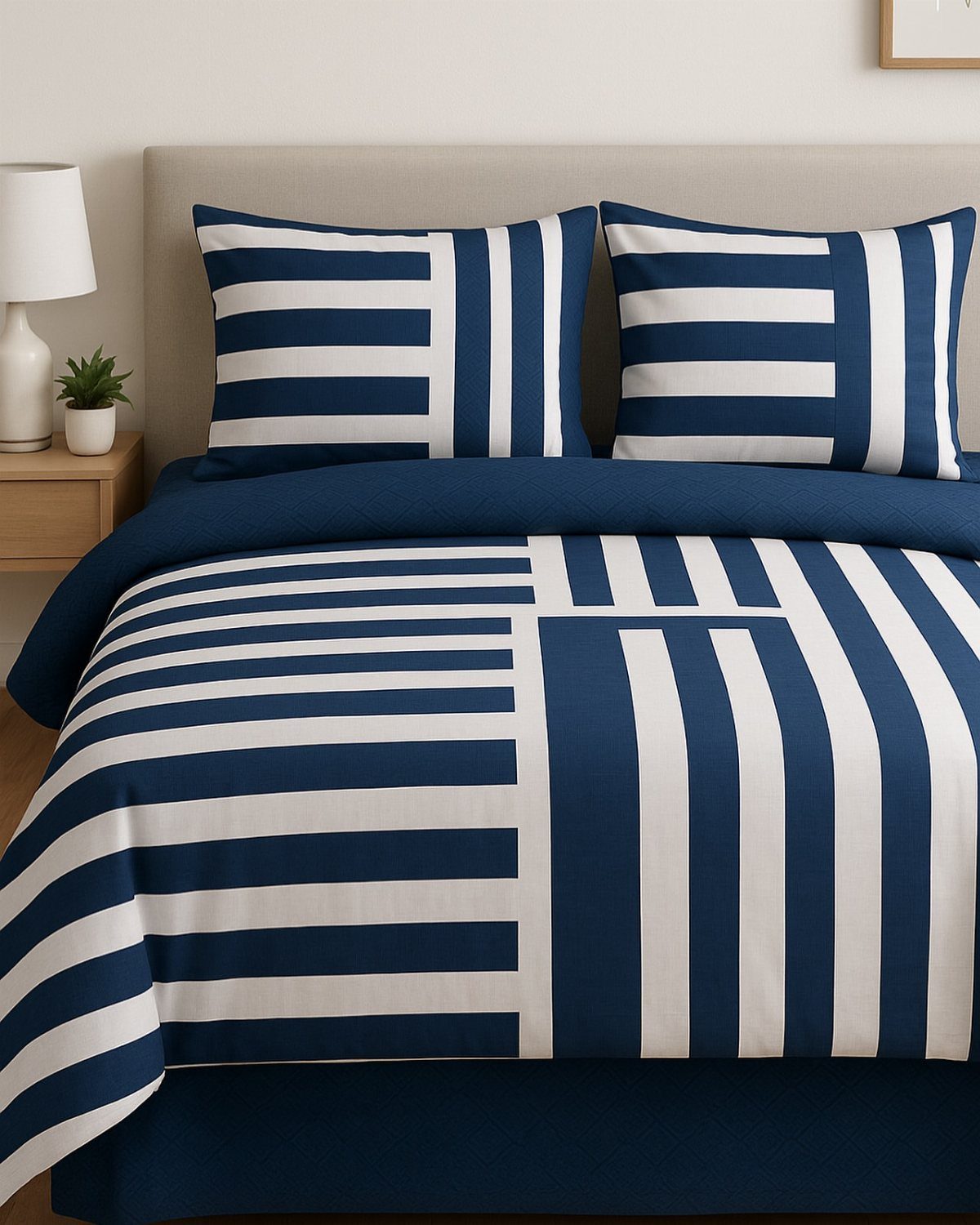
Navy and white stripes are the easiest way into this palette, and I like them because they read casual without looking careless. A striped comforter with matching pillows covers the whole bed in one purchase.
If you want a calmer look, pick a comforter where white is the dominant stripe and navy the thinner one.
Blue and white bedroom ideas are timeless, and one of the most classic interior design combinations, perfect for creating a serene yet fresh aesthetic.
3. Blue and White Checkered Bedding
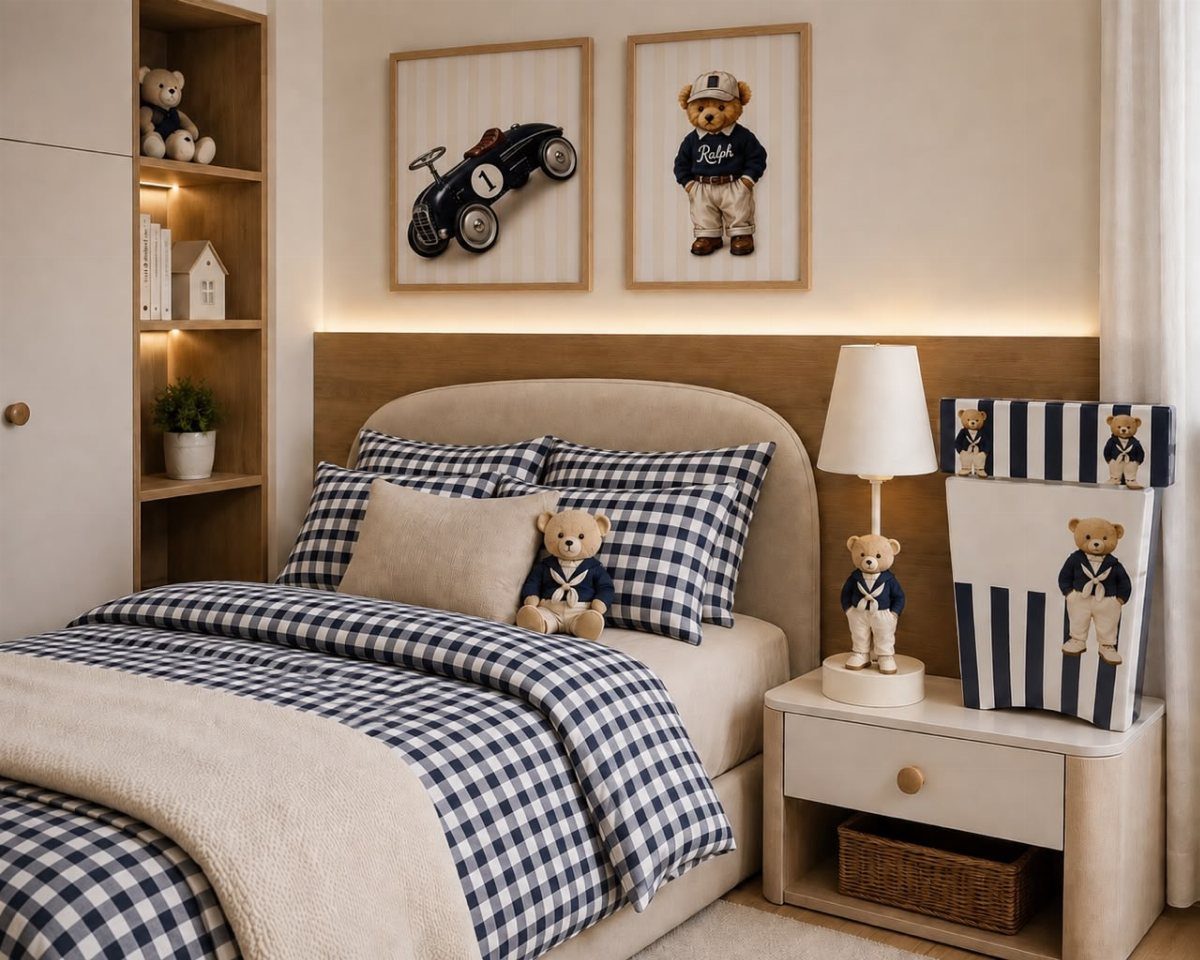
Checks have a gentle, old-fashioned charm that stripes never quite get, and blue and white is the classic pairing. Because the pattern is so busy, I would let it be the only pattern on the bed.
Keep the headboard, nightstand and lamp plain, as in this room, and any art can carry the playful note. Teddy bear prints on the wall suit a child’s room or a guest room with a soft side.
A checked quilt is also an easy swap in and out, so it costs little to try.
4. Coastal Blue and White Linen Bedroom
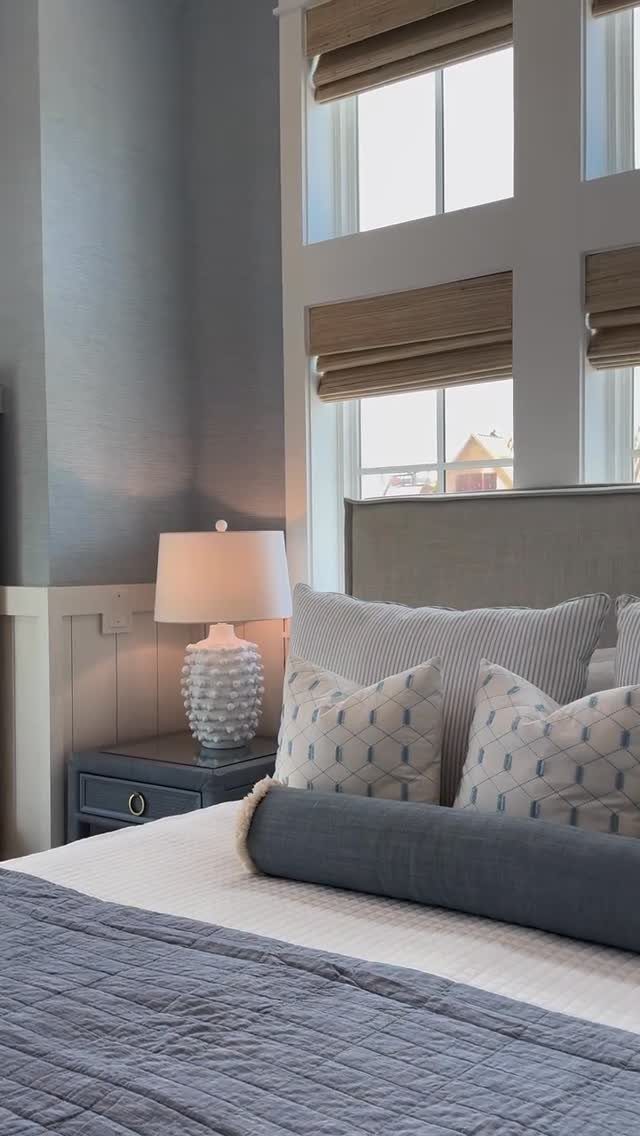
Linen has movement: it wrinkles, drapes and softens, so a blue and white bed never looks stiff. That relaxed texture is what makes a bedroom feel coastal without a single shell on the shelf.
Here a quilted blue coverlet and patterned pillows sit in a light blue room, with tan roman shades adding a warm, sandy neutral. I would copy that shades-and-blue pairing, because the tan stops all that blue from going cold.
A white textured lamp keeps the palette tight.
5. Floor-to-Ceiling Curtains
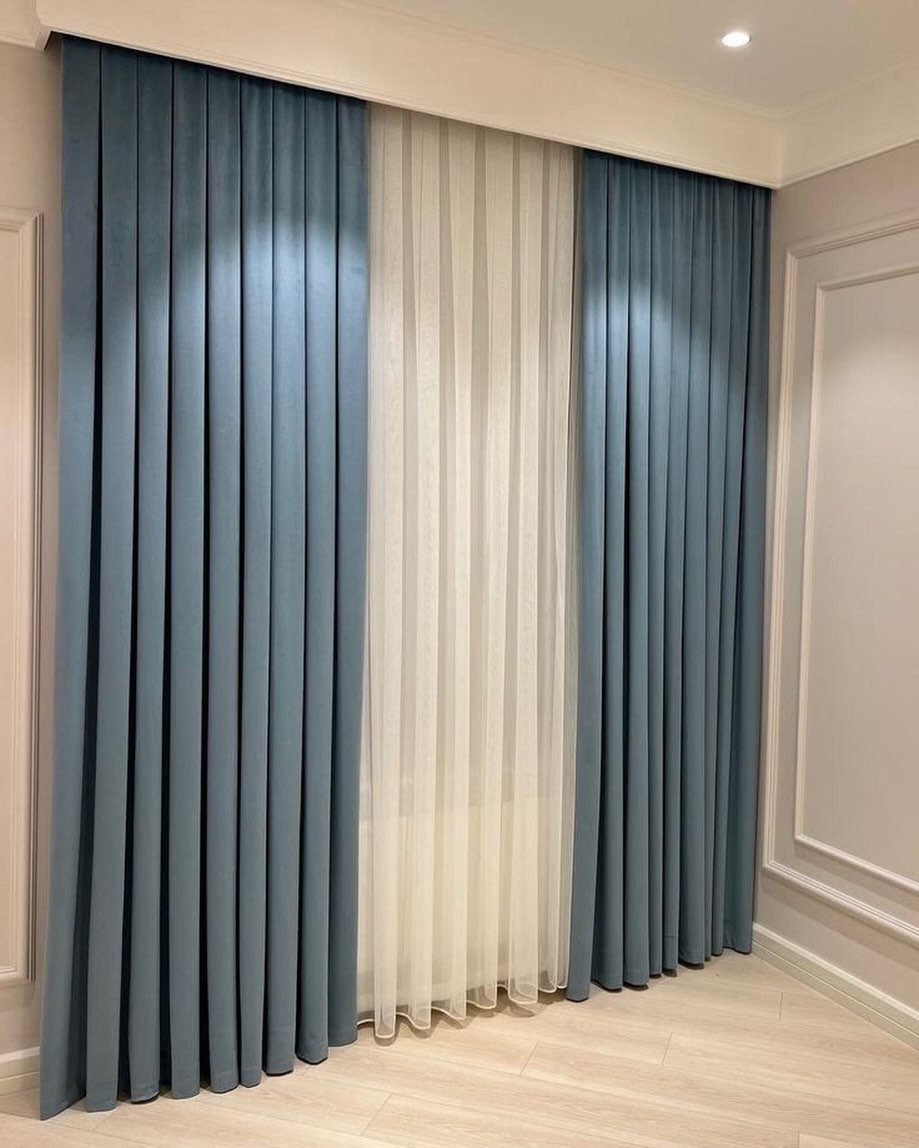
Hang the rod close to the ceiling and let the panels reach the floor, and a standard window suddenly looks taller. That height is the whole effect, so mount high rather than just above the frame.
Blue and white panels work best against white walls and pale wood floors, where they are the only color moving through the room. Go wide enough that the fabric can look full when closed.
Ready-made panels in a long length are the budget route, and hemming tape fixes small length gaps.
6. Blue Ceiling
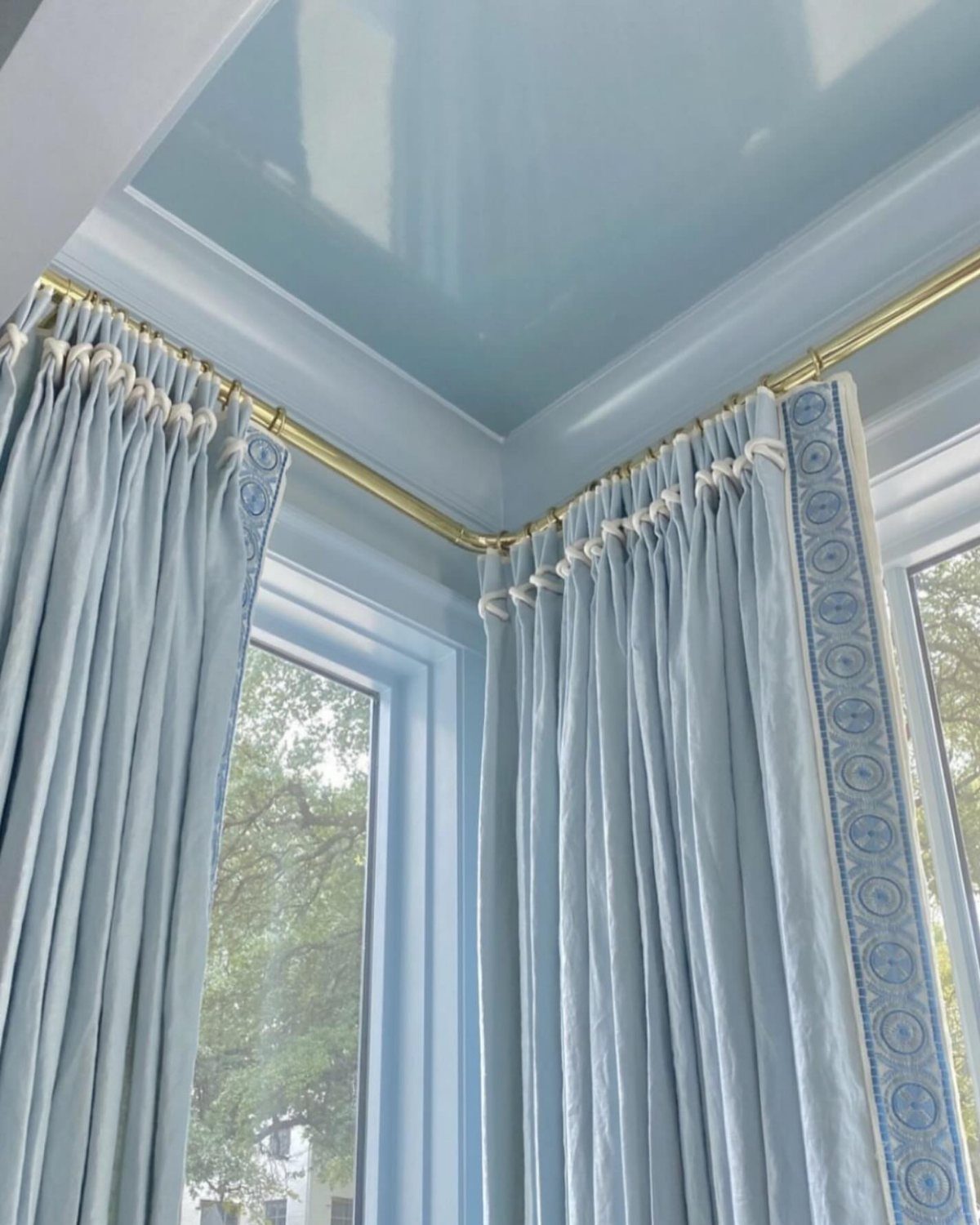
A glossy light blue ceiling gives a bedroom personality without adding one more object. The sheen picks up window light and bounces it around, so the ceiling feels like sky rather than a lid.
Gold curtain rods and blue curtains with a patterned border echo it nicely. I would keep the walls white or very pale so the ceiling stays the surprise.
Paint it last, with a roller on an extension pole. Gloss shows every flaw, so patch and sand first.
7. Blue Throw Pillows
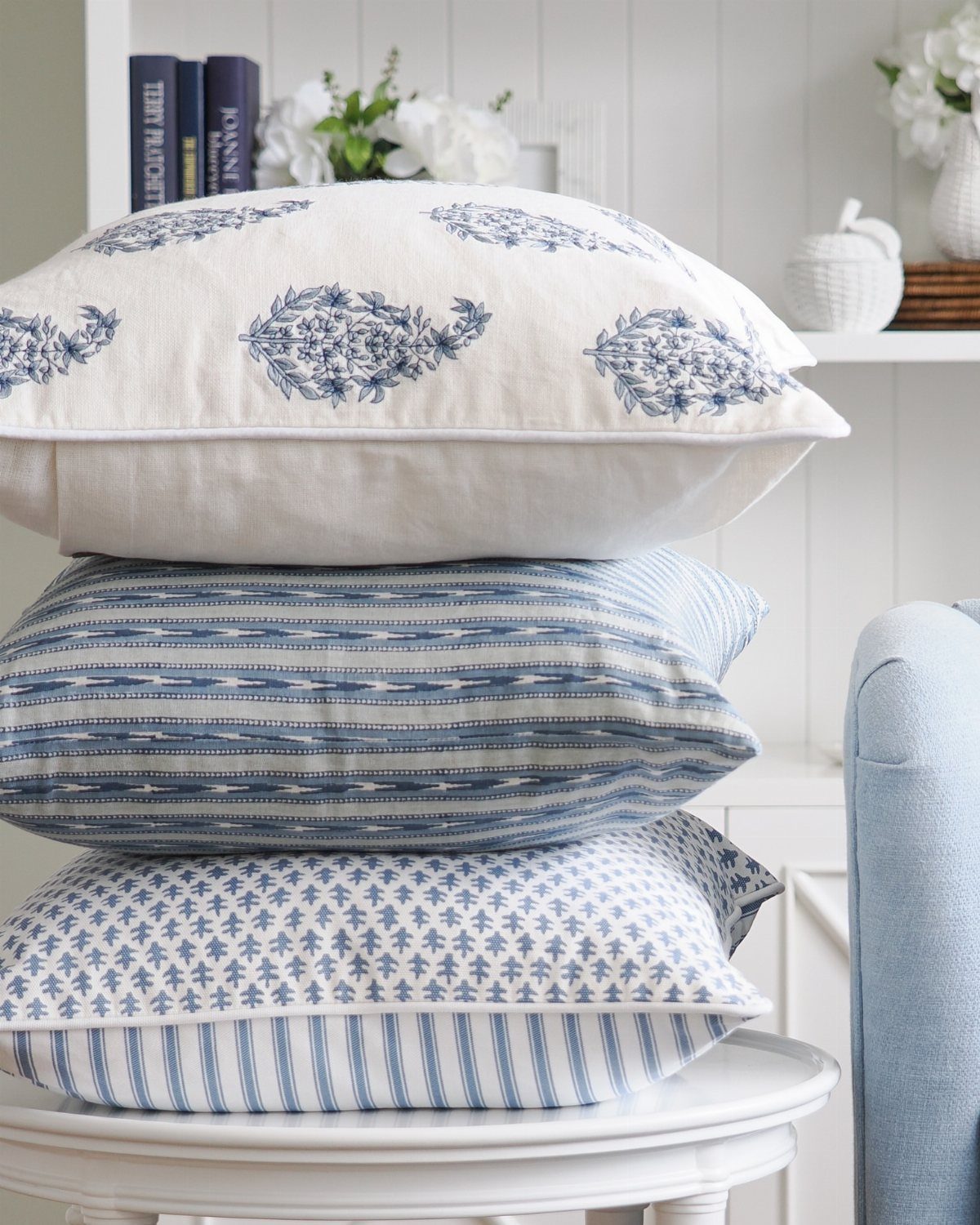
Pillows are the cheapest way to bring blue into a room, and a stack of 3 patterned ones does it in about a minute.
Mix one larger pattern with a smaller one and a plainer third, so the stack has a rhythm and nothing fights.
Because they are so easy to swap, I would buy one pattern you love and build around it. Keep everything around the pillows white and the blue stays a small, calm accent.
8. Blue and White Decorative Accents
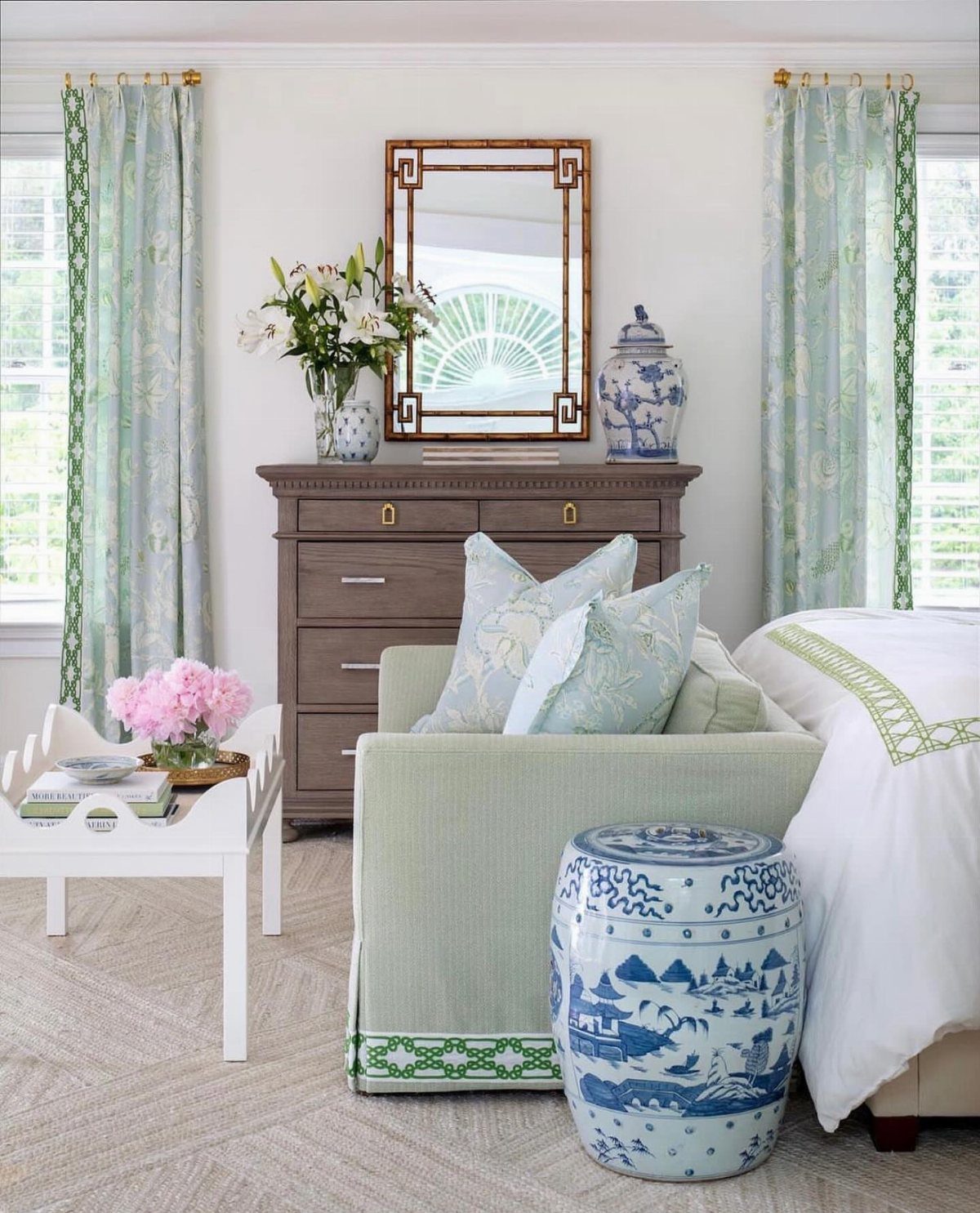
Small ceramic pieces in blue and white tie a bedroom together faster than a new bedspread would.
A ginger jar on a dresser or a garden stool beside the bed repeats the palette in a glossy finish that cotton and linen can’t give.
I would stop at two or three pieces. Group them, leave bare surface around them, and let the curtains and pillows carry the rest of the pattern.
A garden stool also works as a spare bedside table.
9. Natural Wood Tones

Wood is what keeps a blue and white room from feeling like an icebox. A light wood bed frame, with a woven pendant overhead, adds a warm, sandy note against pale blue bedding and white walls.
Match the wood tones where you can. One light finish on the frame and similar natural fibers in the light fixture read as a plan rather than a pile.
If a new frame is out of budget, a rattan or jute lamp shade brings in the same warmth for far less.
10. Blue Bedroom Walls
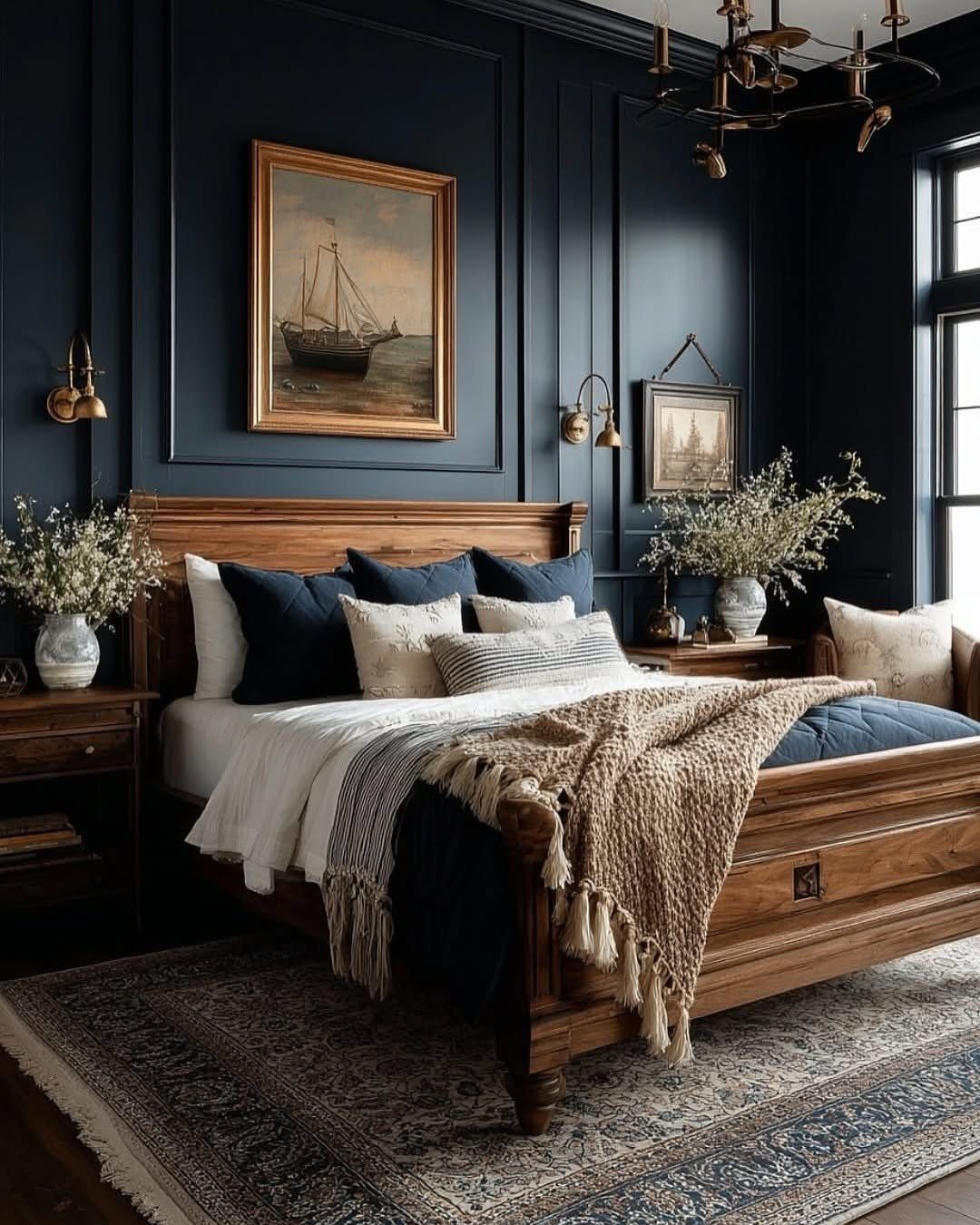
Paneled walls in dark navy turn the whole room into the backdrop, so the bed and art can stay simple. Paneling adds depth that flat paint lacks, which is why a deep blue looks rich here rather than heavy.
White and blue linens stand out well against it, and I like a wooden bed for the warmth. Gold frames suit navy nicely.
Dark walls take more coats than pale ones, so plan on a full weekend, and prime first.
11. Blue Velvet Headboard

A channel-tufted headboard in blue velvet gives the bed a strong shape, and the vertical stitching lines make the wall behind it look taller.
Navy or peacock velvet looks richer than the same shade in cotton, and the pile shifts from deep to pale as the daylight moves across the room.
With a headboard this bold, I would keep the bedding white and limit the blue to a couple of accent pillows. A neutral wall behind it lets the color do the work.
A padded headboard runs well past the cost of a gallon of paint, so measure your bed and check the width and height of each option first.
12. Blue and White Toile Canopy Bed
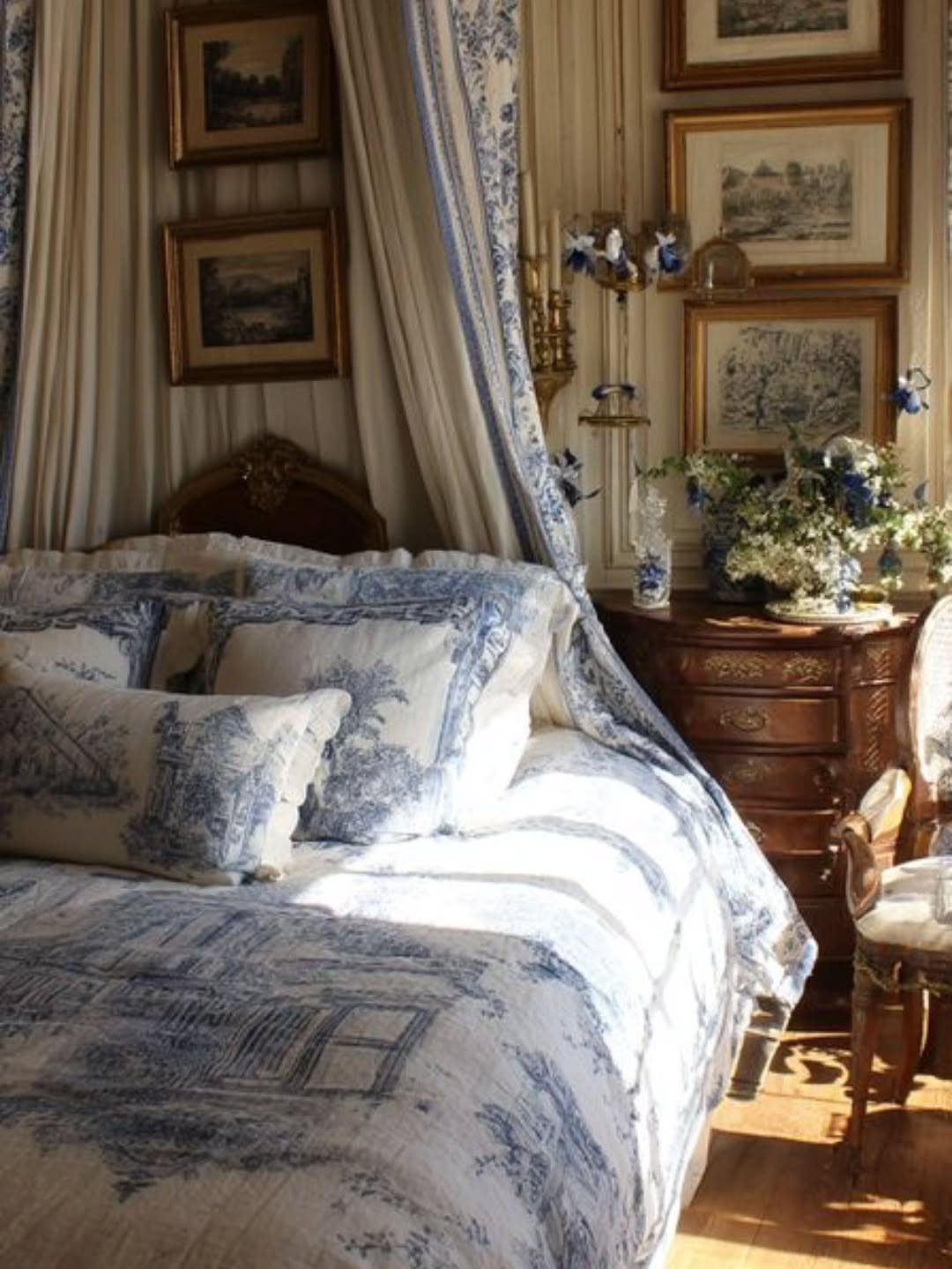
Toile is the most formal pattern in a blue and white room, and a canopy cut from the same fabric makes the bed the clear center of the space. Scenic blue and white prints feel traditional, almost heirloom.
Matching bedding and canopy fabric is the confident move, and I would then let the furniture stay plain.
Mixing in a second busy pattern would crowd it. Choose solid white for any extra pillows.
13. Blue Reading Corner
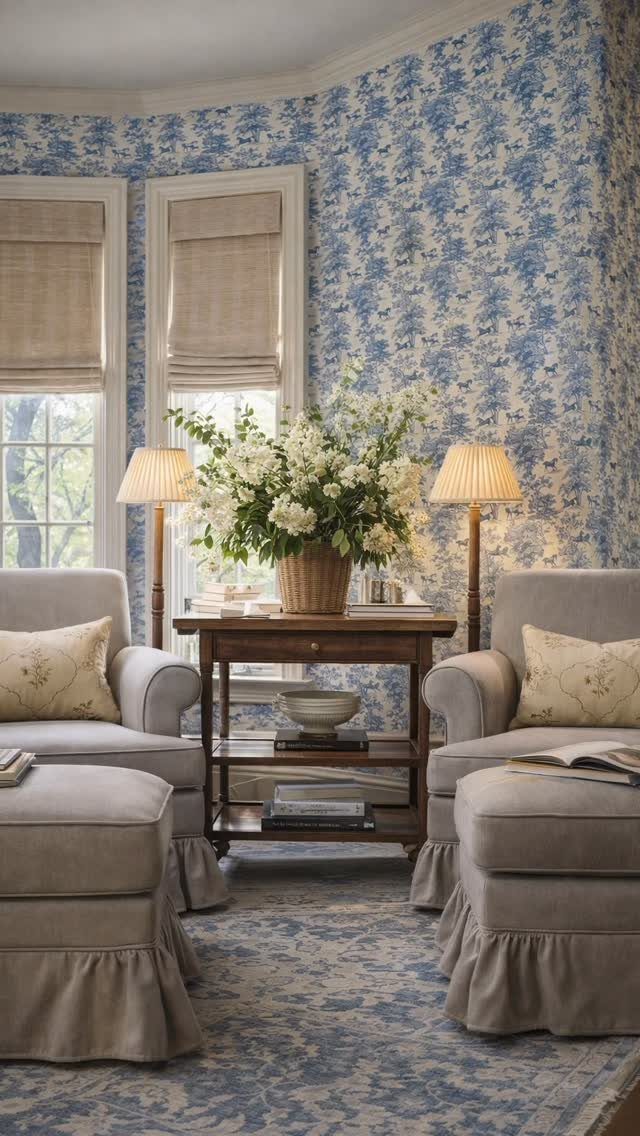
A pair of armchairs with ottomans, a small wooden side table and a window turn a corner of the bedroom into a place to sit with a book.
Blue and white patterned wallpaper and a matching rug wrap the nook in color, so the grey chairs can stay quiet.
I would keep the furniture neutral when the walls and floor carry the pattern. A wooden side table adds warmth, and fresh flowers on it finish the corner.
14. Light Blue Trim and Doors
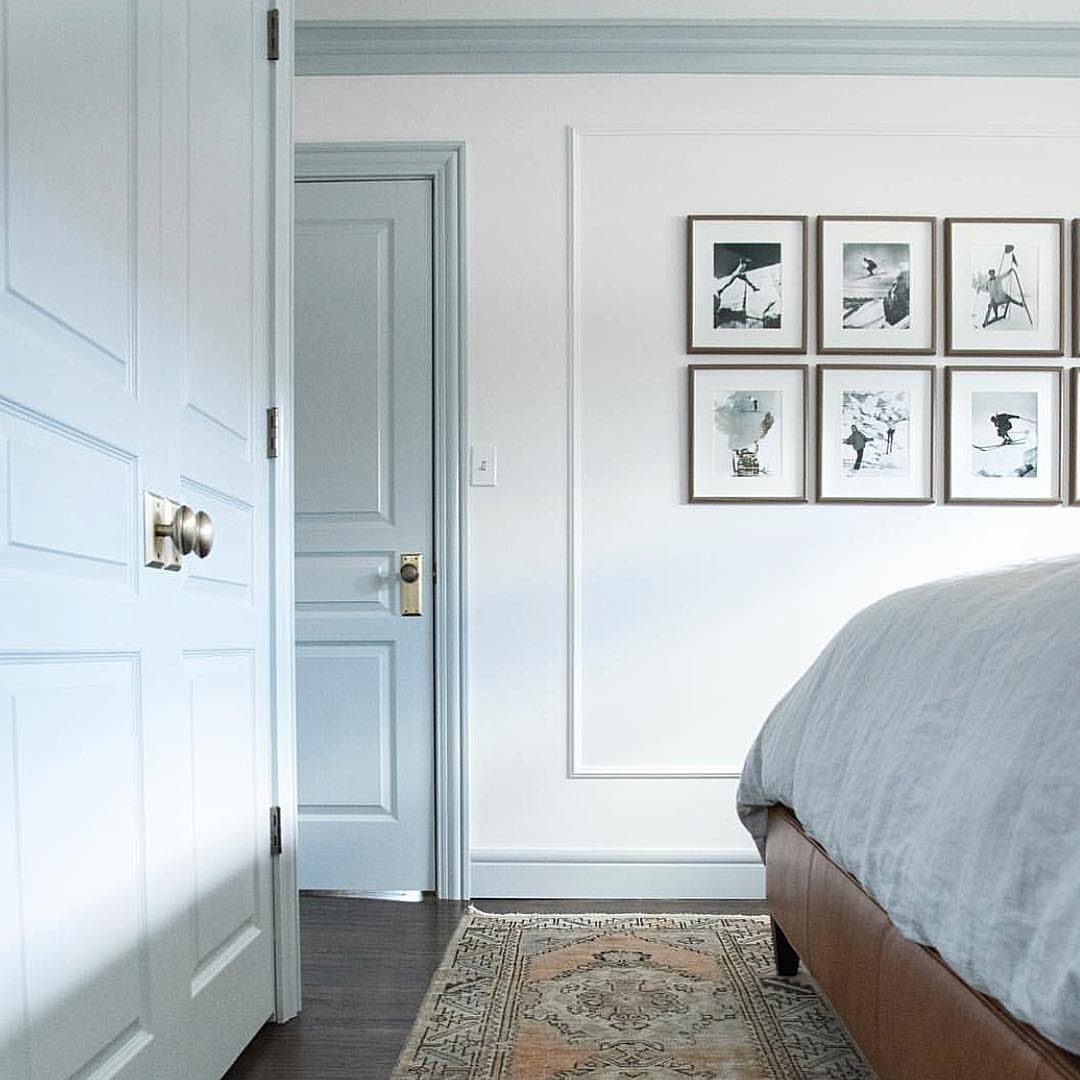
Painting the doors, baseboards and trim light blue colors the room without touching the walls. Against white walls, the blue reads as an outline, and soft blue bedding repeats it across the bed.
Because trim is a small area, this suits a weekend and a small budget. I would pick one light blue and use it on every painted detail so the room reads as planned.
A gallery wall and a patterned rug add interest without competing.
15. Blue and White Floral Wallpaper
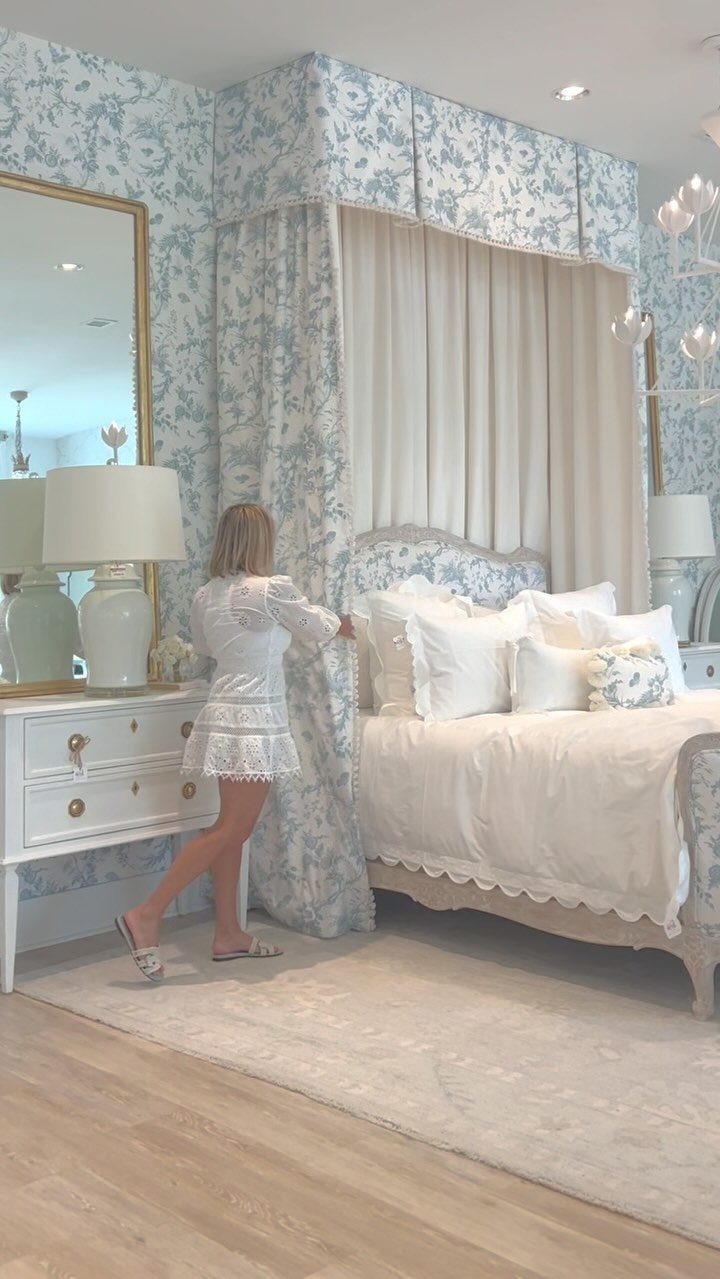
Wallpaper in a blue and white floral turns the room into the pattern, and canopy curtains in the same print make the bed part of it. A white bed with a scalloped frame gives the eye somewhere to rest.
I would go all in or not at all: matching wall and canopy is the confident choice. Keep the furniture white and plain so the flowers do the talking.
Wallpaper costs more than paint, so a single wall is the cheaper way to test it.
16. Blue LED Headboard Lighting

A strip of blue LED light glowing behind the headboard gives a white bedroom a cool, modern night mood. It pairs well with white furniture and a white shag rug, since the light has clean surfaces to wash across.
I would choose a dimmable strip so the blue can drop low at bedtime. Mount it behind the headboard where the glow shows but the bulbs don’t.
Grey faux-fur bedding keeps the whole look soft rather than showroom-cold.
17. Light Blue Nightstands
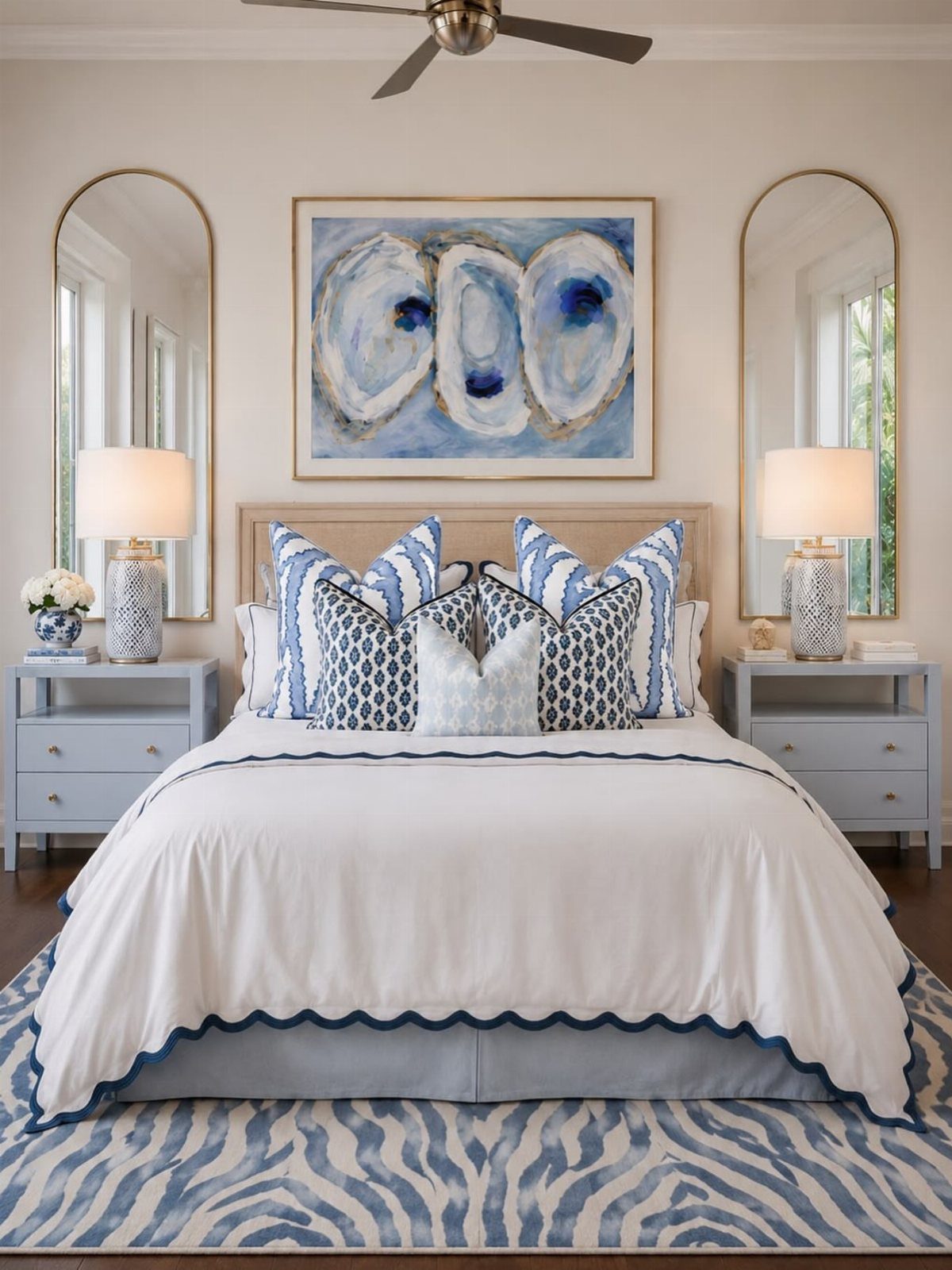
Light blue nightstands bring color to the bedside while the bed stays in white linens. Painted pieces like these are a calm way to add blue, and a matched pair keeps the arrangement balanced.
I would let patterned blue pillows echo the nightstand shade, then hang a blue abstract painting above the headboard to tie the colors together. Arched mirrors on each side repeat the softness.
An old pair of nightstands in a fresh coat of paint is the budget route.
18. Coastal Blue and White Artwork
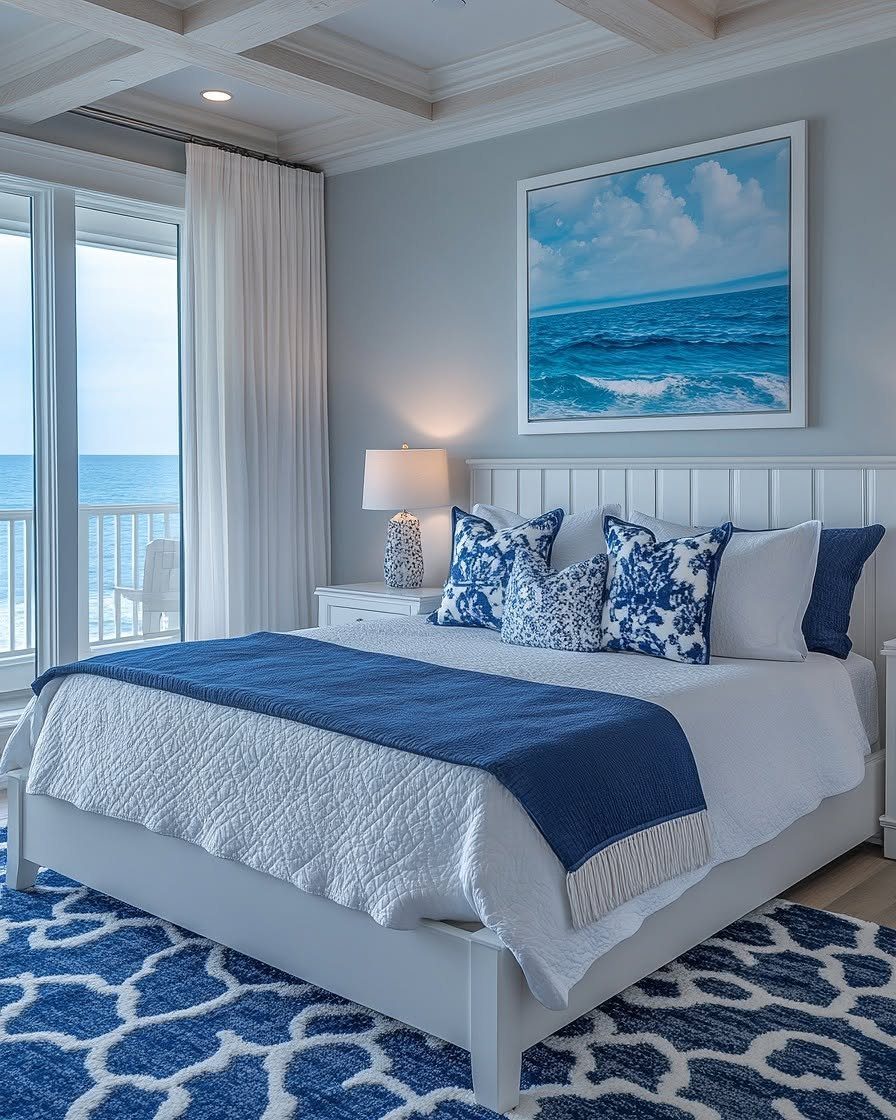
An ocean painting in deep blue gives a pale blue wall a focal point and says coastal without a single shell.
Place the art on the wall you face when lying down, or over the headboard, so it’s the first thing you see each morning.
I would keep the bed white and let patterned pillows and a blue throw repeat the painting’s colors. Pick art with a tone you can find in the textiles, so the room looks matched rather than collected.
A window with a sea view is a bonus, not a requirement.
Choosing the Right Shade of Blue
Soft, muted blues that echo nature, like a dusty or mid-tone shade, make the best main color for sleep.
Navy and other deep blues turn heavy when you give them the whole room, and pale blues wash out in dim light. Bright, saturated blues are stimulating, so leave them out of a room meant for rest.
Powder blue holds up better than most when you take it wall to wall. Keep deep navy for a single wall or a piece of furniture.
Light matters too. A room with little daylight looks bigger in light blue, while a room that gets too much light during sleeping hours can handle a darker shade like navy.
Blues from the same family can be layered for a monochrome look, so don’t worry about matching every one exactly.
Adding Warmth to Blue and White
Blue and white runs cool, and the fix is a warm neutral, not a third color.
Brass hardware warms the room faster than any other metal.
Try drawer pulls, a table lamp or a framed mirror, and stop at 3 or 4 touches, because more starts to look like a theme. It helps most in rooms with cool northern light.
Check your bulbs, too. Switching from cool white bulbs to 2700K changes the temperature more than most finishes will.
Pick one wood tone and repeat it, such as an oak nightstand. One wood finish in the right places warms the space immediately.
Mixing Patterns
Scale is what makes mixed patterns work: one large, one medium, one small.
Pair organic patterns, like florals, with geometric ones, like stripes or plaid. Then add solid shapes, such as wood furniture and white bedding, so the eye has somewhere to rest.
Frequently Asked Questions
Is blue a good bedroom color?
Yes, and the dusty or mid-tone versions, the ones with a little gray in them, are the ones I’d pick for a room built around sleep.
Blue is linked with calm and rest, while bright, saturated blues are stimulating and belong elsewhere. Powder blue holds up well on every wall, and deep navy works better on one wall or a single piece of furniture.
How do I decorate a bedroom with deep blue colors?
Put navy on one wall, usually the one behind the bed, and keep everything else pale. Deep navy walls need extra coats to cover evenly, so prime first and give the job a whole weekend.
How do I style blue and white decor?
Pick one blue as the lead, let white carry the rest, and mix patterns by scale: one large, one medium, one small. Warm it with brass or one repeated wood tone.
What colors go with blue and white bedding?
Warm neutrals work best: natural wood, warm beige and brass. Leafy green plants sit well against blue and need no extra planning.





