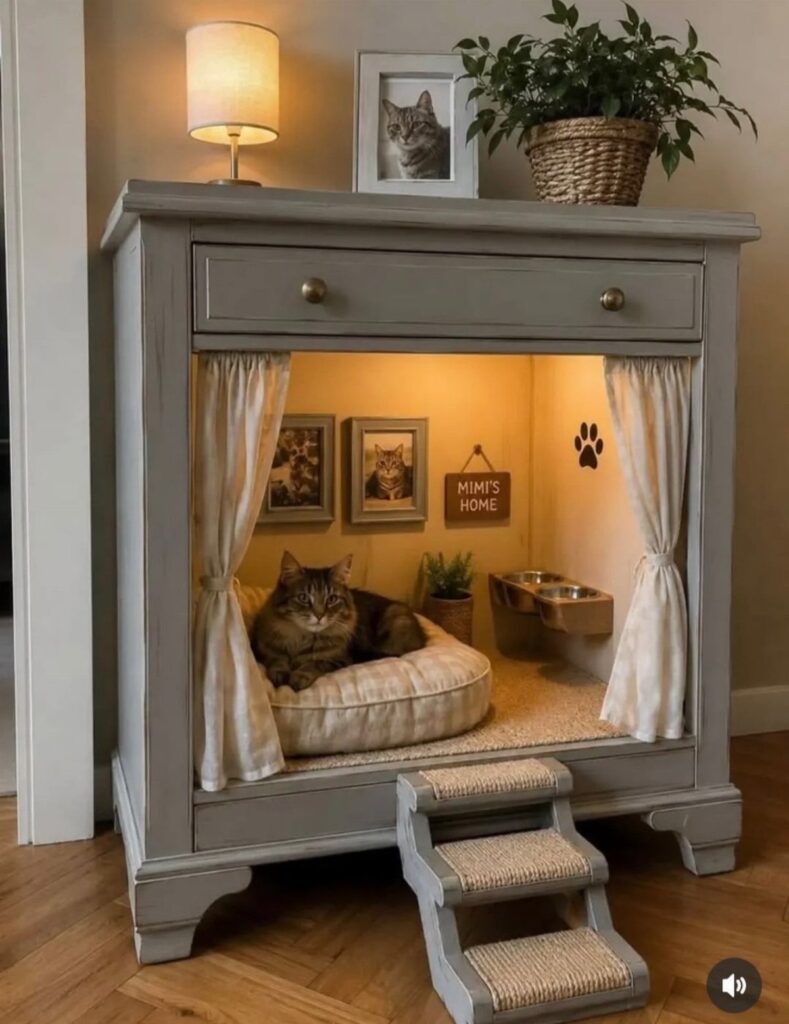
A spare room can become a cat den in a secondhand cabinet, a guest bed with washable sheets, or a wall bed with a desk built in, and the cost climbs from a gallon of paint to custom furniture.
What picks the idea is how often the room changes jobs: if it serves one purpose for years, commit to that purpose and buy for it, but if it keeps switching roles, choose pieces light enough to move and skip built-ins that suit only one use.
Floor area and ceiling height matter too, since a home gym with a power rack needs both, and a cramped room may not have either.
1. Pet Room
A pet room doesn’t have to be a whole room.
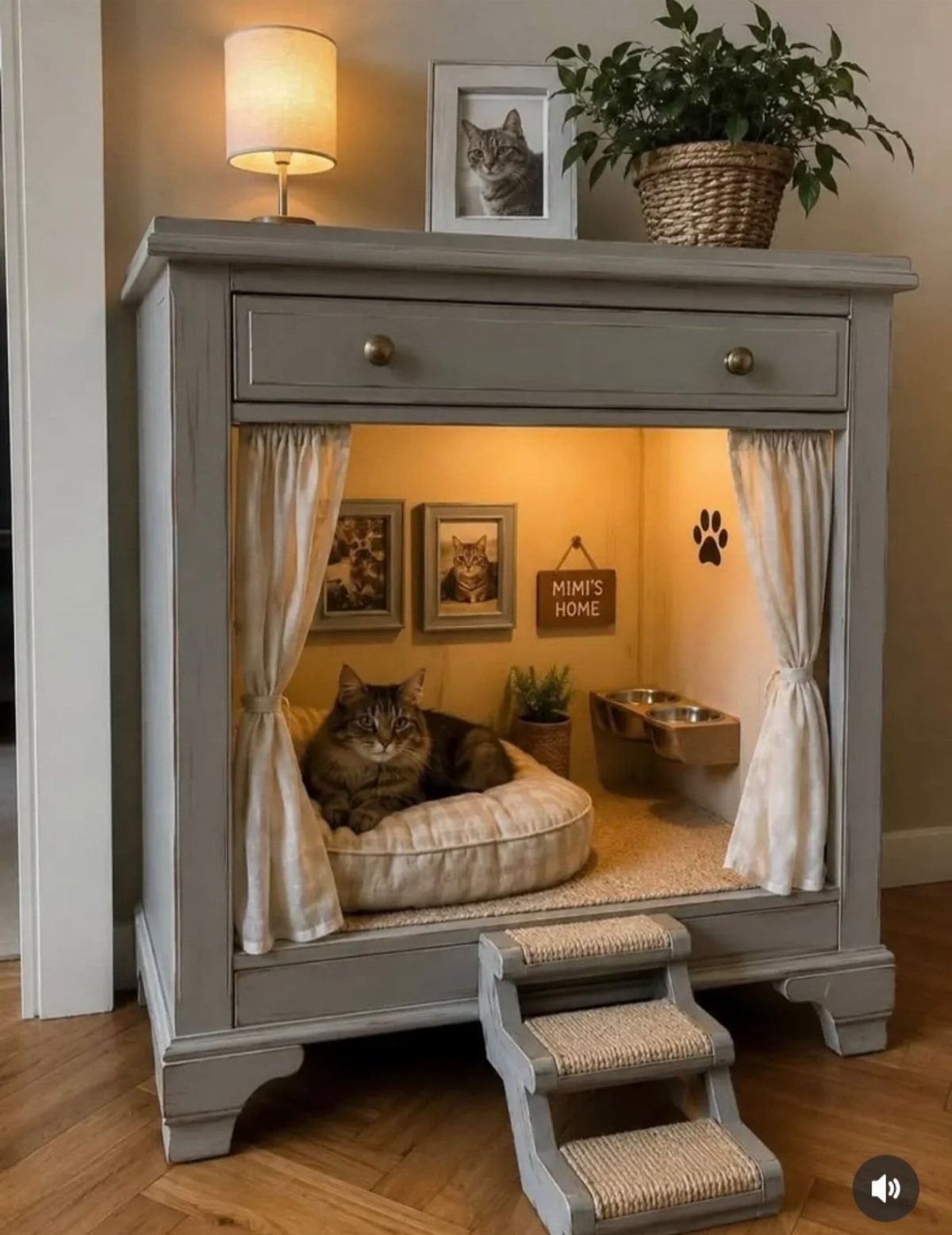
A grey cabinet fitted with curtains, stairs and a small bed gives a cat its own den, and a sign with the pet’s name makes it feel like part of the house.
For a spare room on a small budget, I’d start with a secondhand wooden cabinet, since it already has walls and a roof.
Curtains give a cat the hiding spot it wants, and you can swap the fabric whenever you like.
Put the bowls close by so the corner works as one station.
2. Home Office
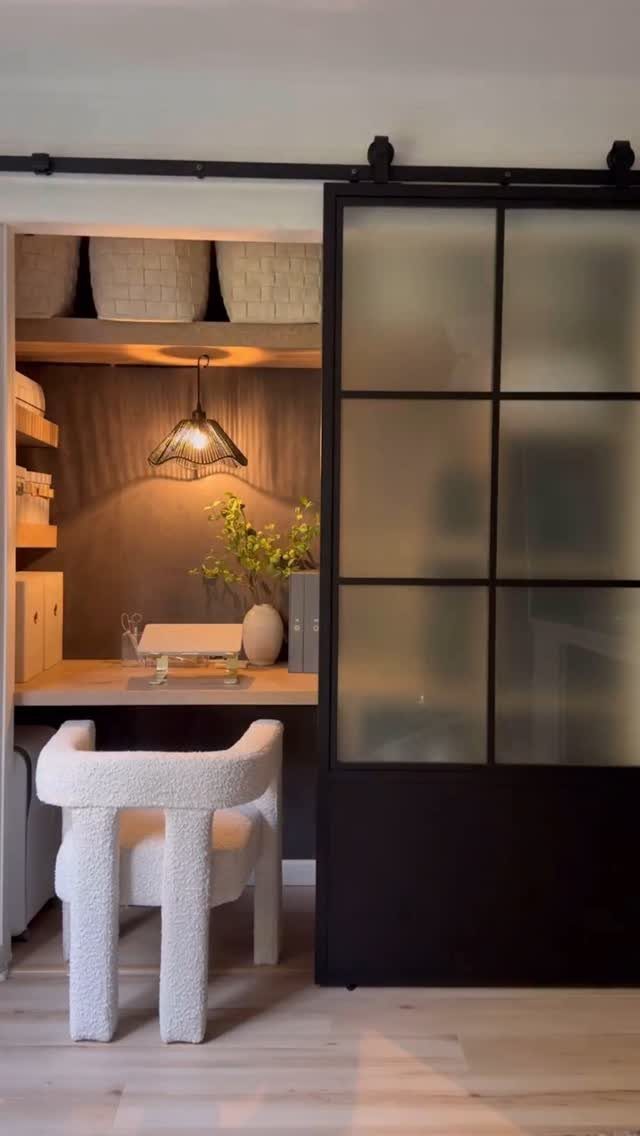
Black-framed glass closes off the desk when the workday ends, yet the room still gets light.
A spare room this size needs only a desk, a comfortable chair and shelving above it, and I’d keep it to those three.
A barn-style door also saves the swing space a hinged door would take, which matters in a small room. Choose the glass version if you want the nook to feel open.
3. Playroom
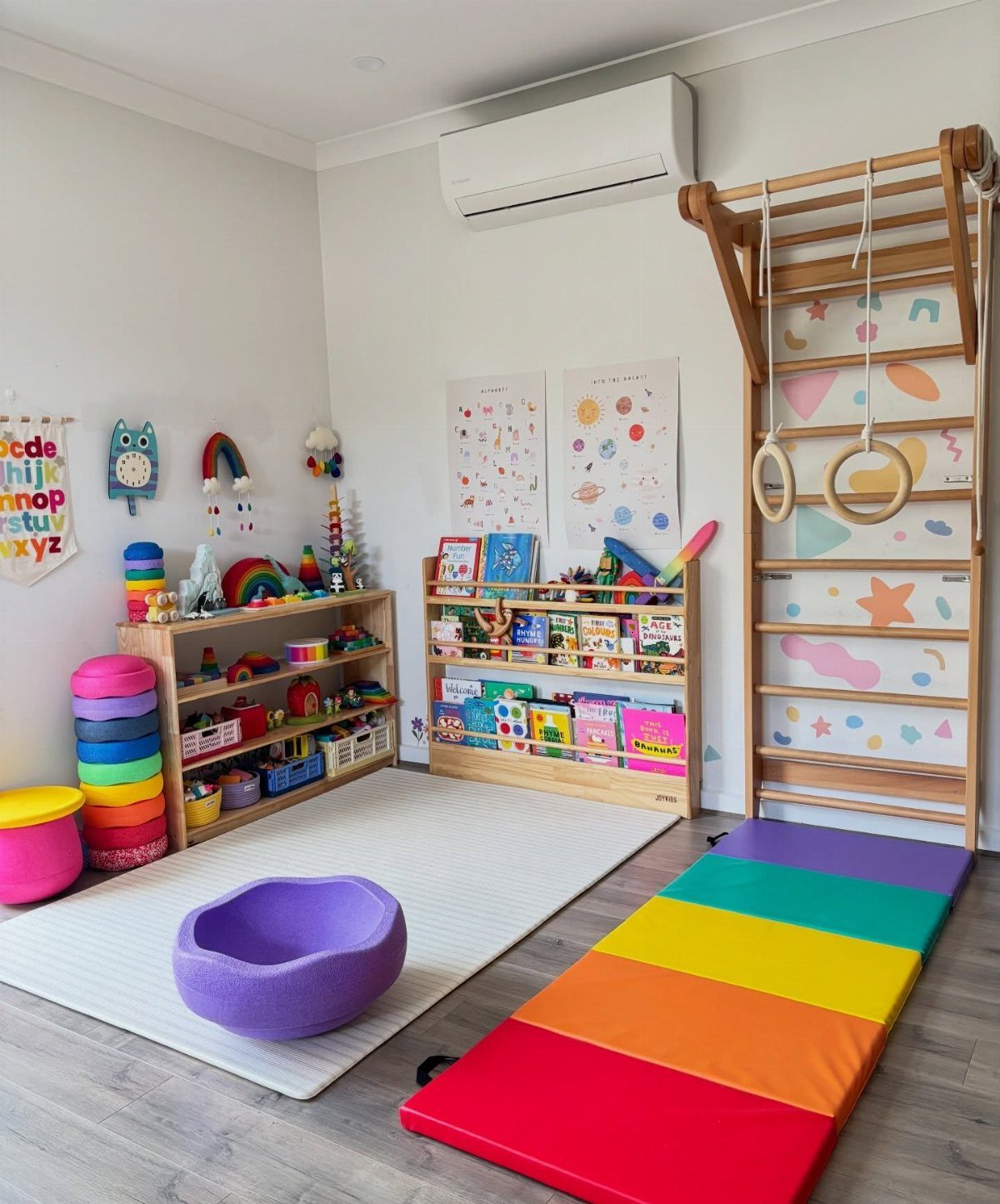
Low, open storage is what keeps a playroom usable. Wooden toy shelves at kid height let children pull things out and put them back on their own, and that habit saves you a lot of tidying.
I like a soft rainbow gym mat in the middle, because the floor is where most play happens. A washable rug and a beanbag give kids a soft place to land without adding another piece of furniture.
Keep the walls plain white and let the toys supply the color. Add a climbing frame only if the ceiling and floor space allow it.
4. Home Gym
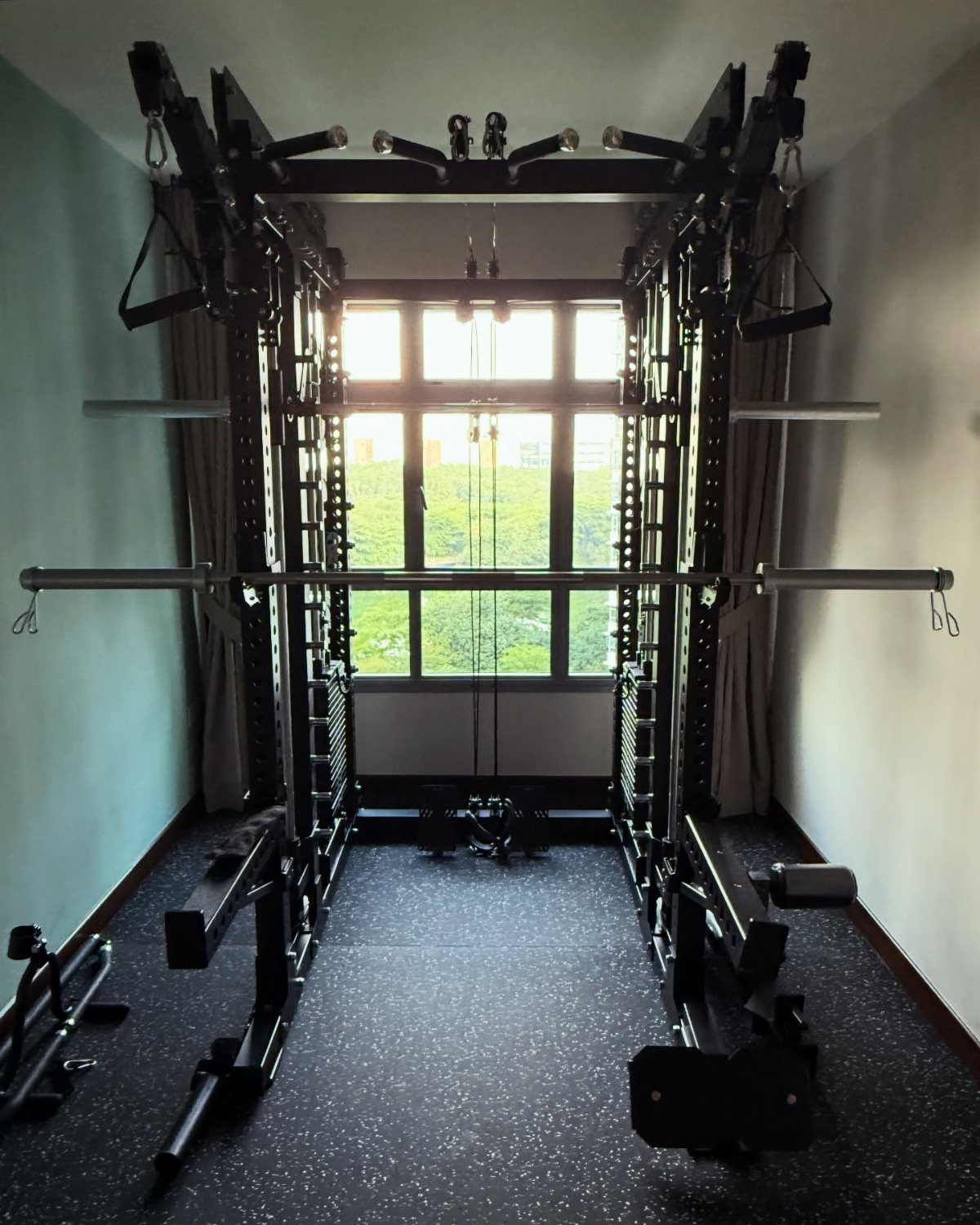
A power rack is the one piece worth building a home gym around. It holds the barbell and supports squats, presses and pull-ups in a single footprint, so you can skip a pile of separate machines.
Add a weight bench and keep the rest simple. Grey flooring suits the room, and a window helps in a space where you’ll be breathing hard.
Cost depends on the gear you choose, so buy the rack first and add weights as your budget allows. Measure the room before ordering, since racks are tall and bulky.
5. Game Room
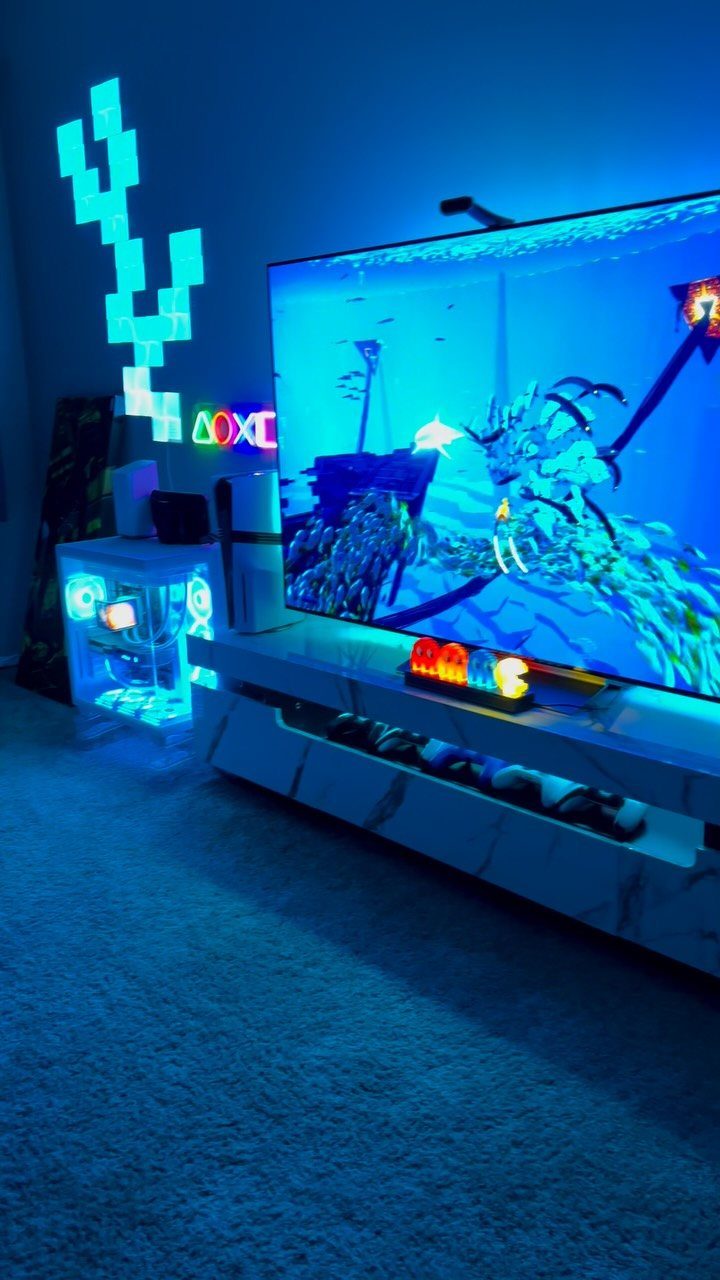
Lighting does more than the TV to make a game room feel like one. A blue neon wall light beside a big screen sets the mood in minutes, and it costs far less than building anything.
Set the console table under the screen and keep a small side table within reach for drinks and controllers. I’d skip extra clutter so the screen stays the focus.
If your group prefers board games, clear the middle of the room for a table. The same neon glow works for either.
6. Indoor Greenhouse
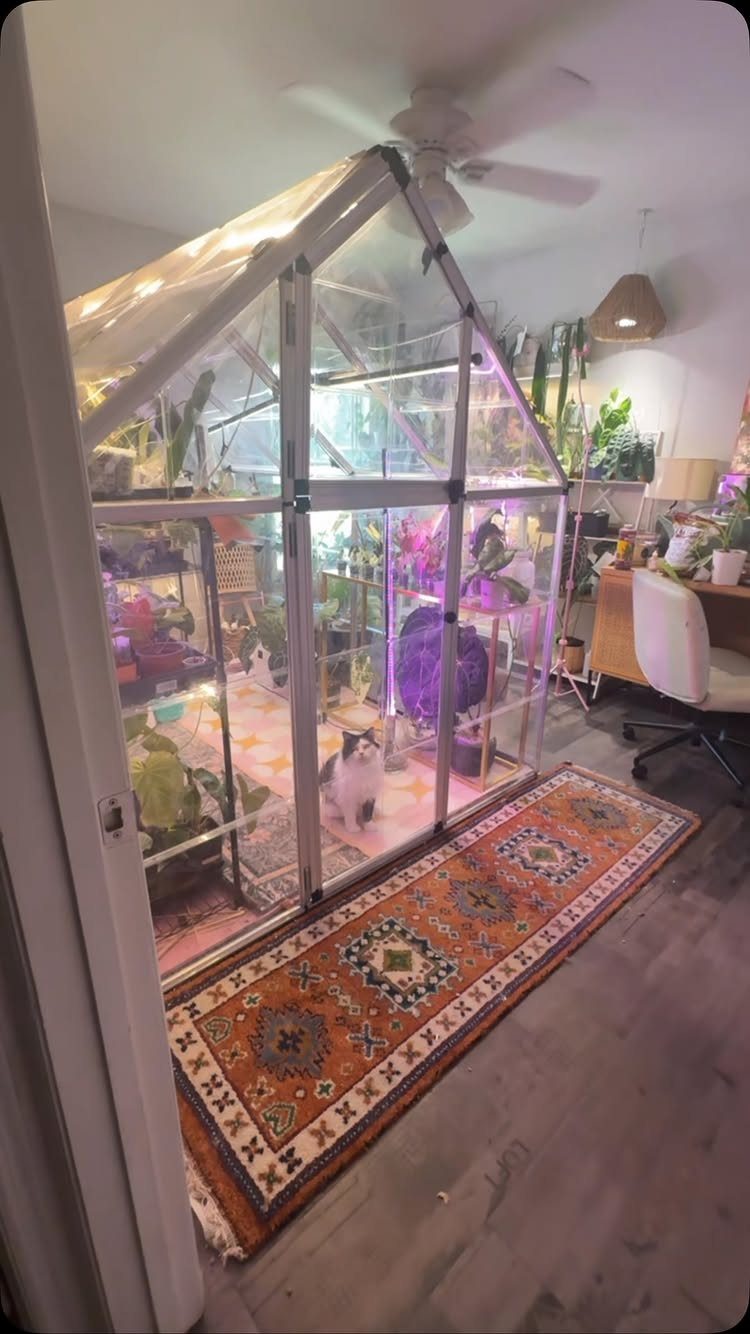
Glass changes what a plant collection can be. A small greenhouse cabinet holds humidity and light in one spot, so tender plants have a home of their own in a room that otherwise stays dry.
Purple grow lights let you place it anywhere in the room, with no window needed. Set it near a desk to enjoy it while you work.
Collecting takes years, as the maker of this one says of an 11-year collection. Start small, with a few plants, and let the glass fill slowly.
7. Hobby Room
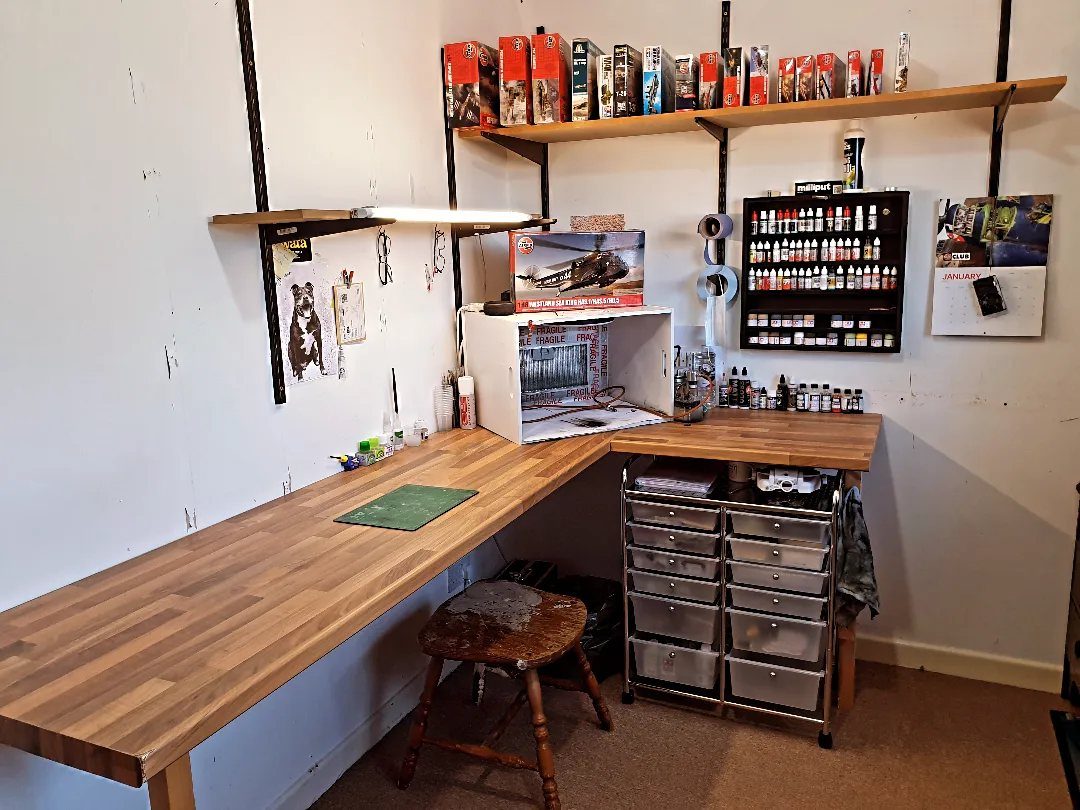
An L-shaped workbench gives a hobby room two zones: one arm for the messy work, the other for kits waiting their turn.
Keep paint bottles on a rack within reach and unbuilt kits on the wall shelves, so the bench itself stays clear.
A metal drawer unit holds small tools and spare parts, and a stool you can tuck under the bench saves floor space. I’d keep the walls white, since paint colors read truest against a plain background.
Add a bright desk lamp if the room is dim.
8. Walk-In Closet
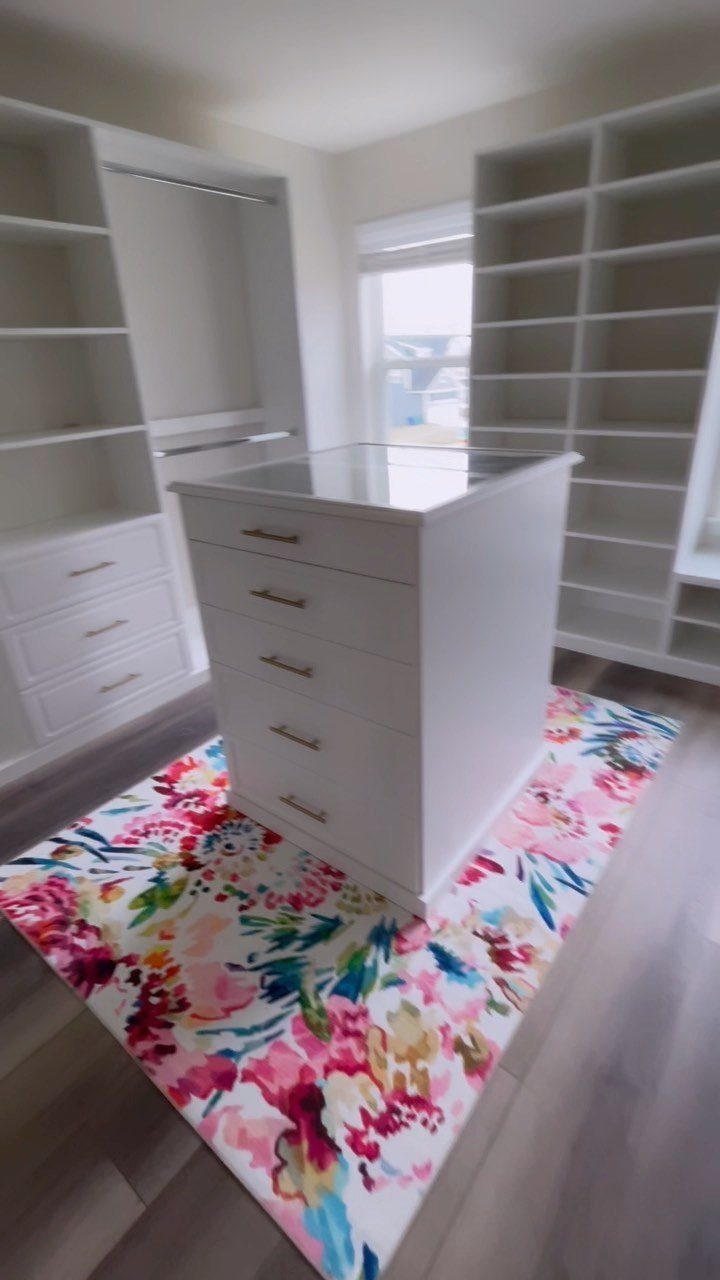
Built-in shelving is what makes a spare room read as a walk-in closet, and a central island with a glass top turns the middle into a display for jewelry and watches.
Fill the island’s drawers with the small things that usually get lost.
Sort the shelves by type, with folded pieces on one side and shoes on another, so you can see everything at once.
A bold floral rug adds color to an otherwise white room, and it’s the cheapest part to swap later.
Measure the walls first so the shelving fits the run without gaps or returns.
9. Home Cinema with a Projector
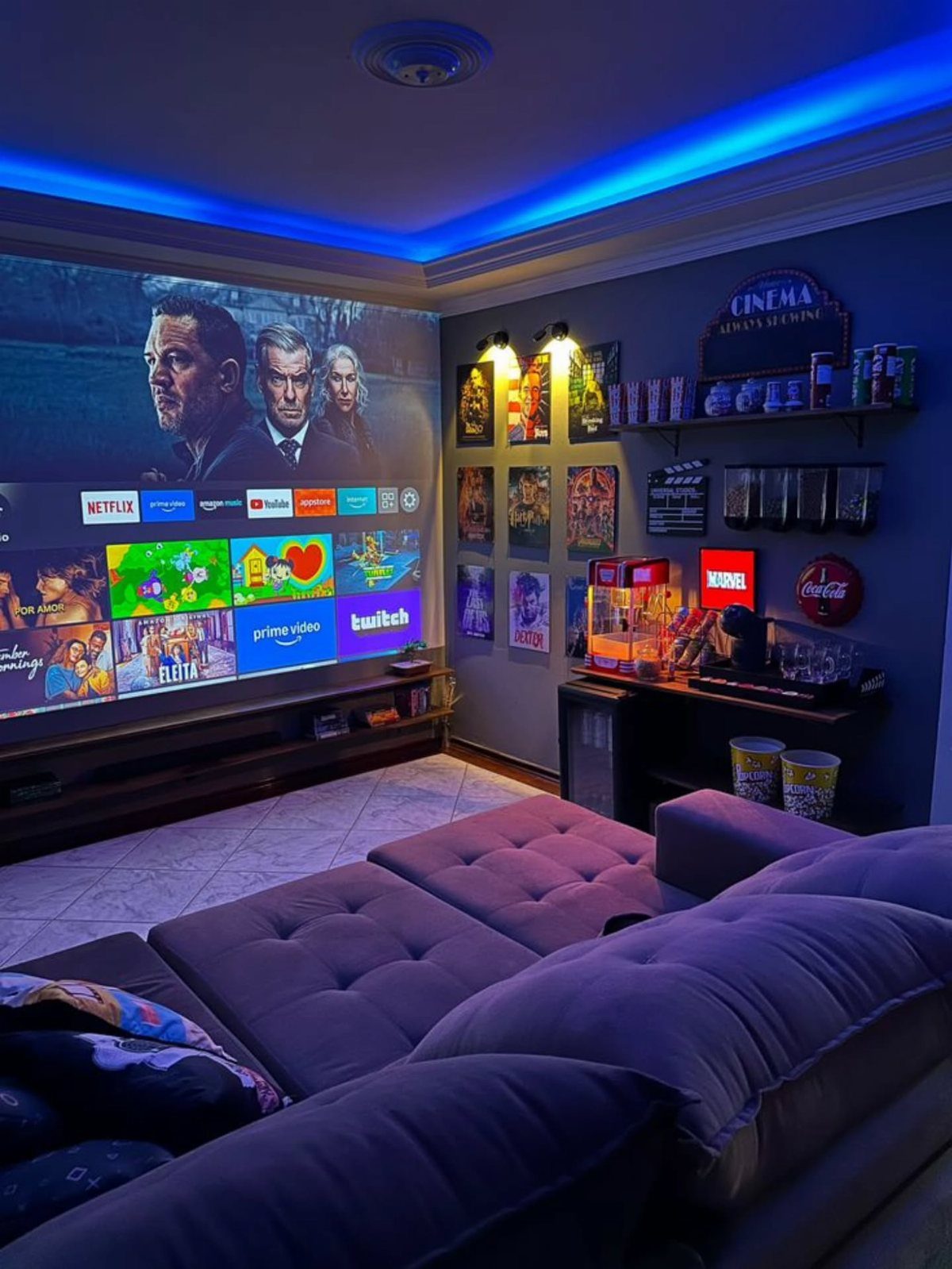
A projector and a pulled-down screen give a spare room real cinema scale, and a widescreen TV mounted on the wall works too if you’d rather skip the setup.
Seating matters as much as the screen. A modular sectional lets everyone stretch out and can be rearranged when the room is tight.
Blue LED strips along the ceiling add glow without light spilling onto the screen. A "CINEMA" sign and a few posters finish the look cheaply.
10. Guest Room
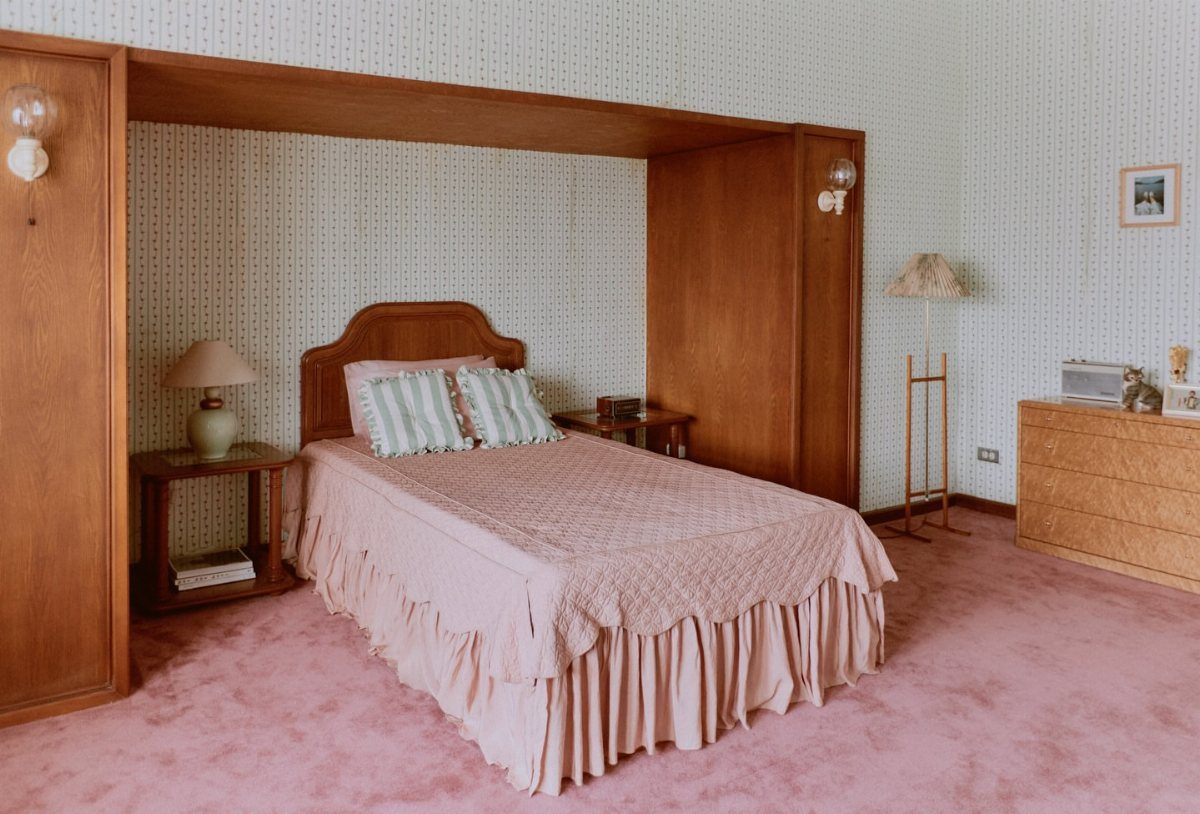
Guests care most about a bed that’s comfortable and a spot to set things down. A single bed with a nightstand and a lamp covers both, and a dresser gives them somewhere to unpack.
Ruffled bedding adds a softer, welcoming touch, and a color you love is fine here since the room is used rarely. I’d choose washable sheets and a spare blanket, so a quick change takes minutes.
Keep the room uncluttered so visitors feel they have space of their own.
11. Bookshelves and a Comfortable Chair
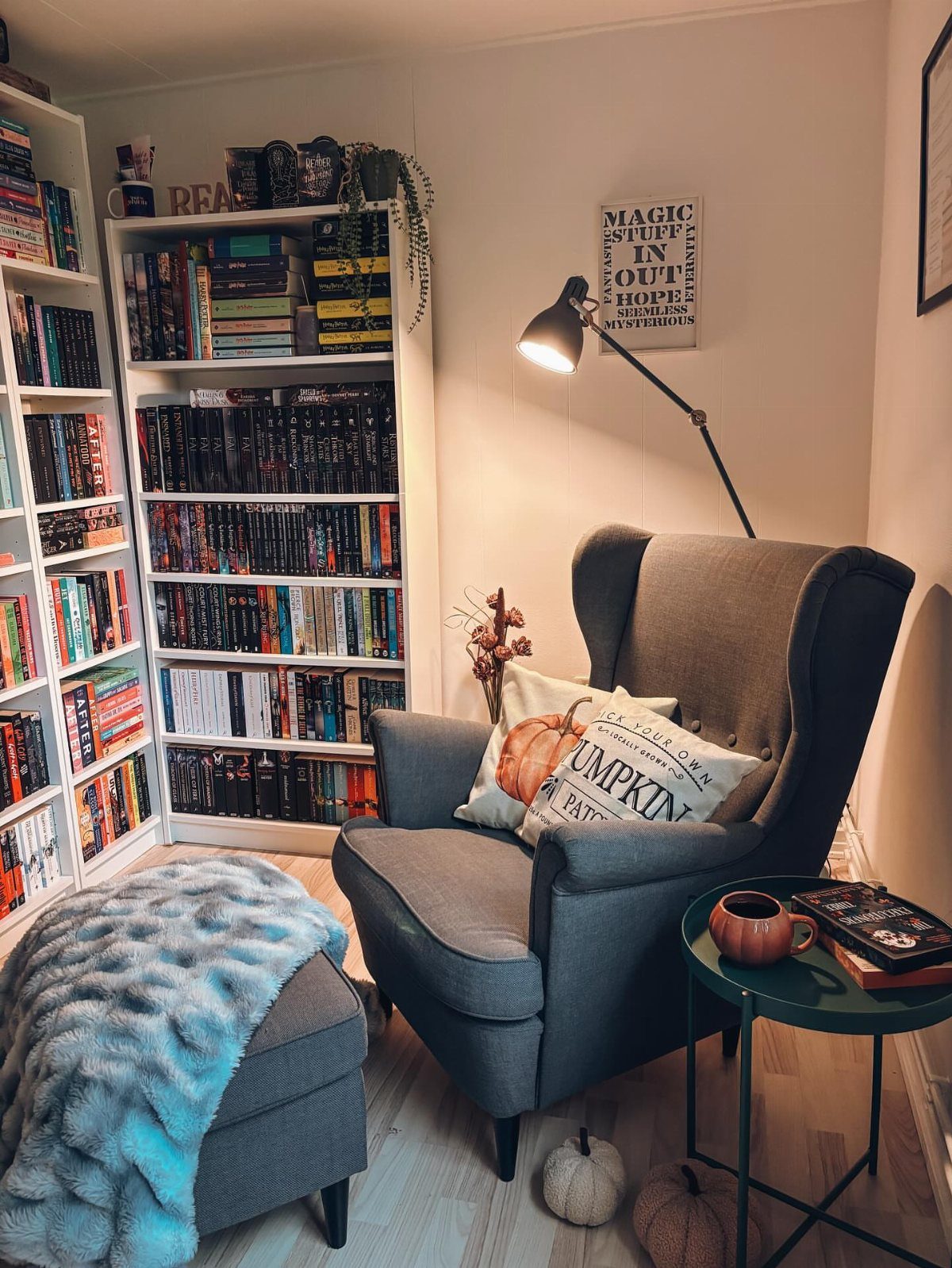
A wingback chair beside floor-to-ceiling white bookshelves creates a reading corner without taking much floor. Add a matching ottoman so your feet have a place, and a small side table for a mug and a lamp.
Leave a few shelf gaps for objects so the books don’t look like a wall of spines. I’d pick a grey chair, since it blends with most bedding and lets a throw or pumpkin pillow supply the color.
Swap the pillow and throw by season for almost no cost.
12. Recording or Podcast Studio
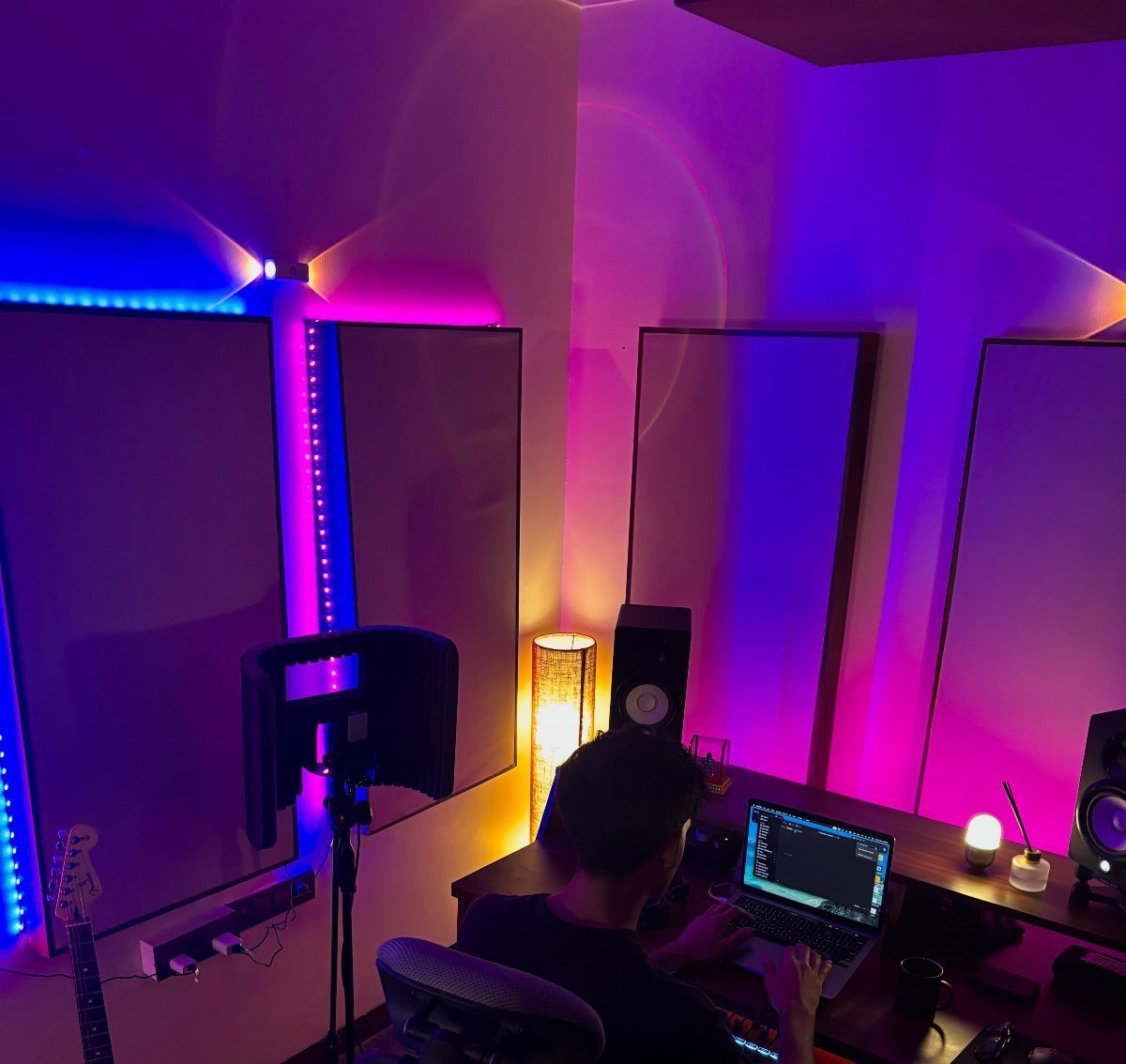
Acoustic panels do the real work in a recording room, because they tame the echo that bare walls give back to a microphone. Mount them behind the desk and on the walls closest to where you’ll speak or play.
Studio monitors beside the laptop let you hear the mix accurately, and a mic stand keeps the microphone steady and off the desk. I’d add LED lighting last, since it sets the mood but does nothing for sound.
The same setup serves streaming as well as podcasting.
Maximizing Small Spaces
Pale, neutral paint is the cheapest first move for a spare room with limited square footage, because light walls bounce back whatever daylight the window lets in. A gallon of paint and a weekend is all it takes.
A mirror placed across from the window catches the daylight and throws it back into the room, which makes the space feel about twice as bright. Mirrors come in many shapes, so pick one that suits the wall you have.
Pull furniture a few inches off the walls. That gap creates depth, and the room reads as larger than it is.
Go vertical for storage: tall bookcases or wall-mounted units use height instead of floor. Hidden storage, like a bed with drawers or a lidded ottoman, keeps clutter out of sight.
For overnight guests, a convertible piece such as a bean bag chair that turns into a bed lets the room serve 2 purposes without a permanent bed.
Designing for Flexibility
Rooms change jobs more often than people expect.
A room set up as a reading nook today might need to be a nursery next year, a workspace for a side business after that, or a bed for grandparents who are visiting.
Plan so the switch means rearranging furniture and swapping a few fixtures, not renovating. Keep the big pieces light enough to move, and avoid built-ins that only suit one use.
A wall bed that folds up to reveal floor space is the strongest version of this idea.
The bed folds away during the day, leaving a workspace or art table, and it comes down at night as a queen-size sleeping area.
It costs more than a standard bed, so I’d weigh that against how often the room really changes roles. If it changes every year, the money is well spent.
Creating a Cozy Atmosphere
Soft lighting does the most for coziness. Use lamps with warm bulbs at different heights instead of one overhead fixture, and the room feels calmer at night.
Comfortable seating comes next.
A chair with an ottoman or a chaise gives a guest or a reader a place to stretch out. Add pillows and blankets within reach.
Plants and candles bring in life and scent; keep candles on a stable surface and never leave them burning in an empty room.
Throw pillows and a piece of art in a bolder color give the eye something to land on, and they keep a neutral room from going flat. These are the easiest pieces to change when your taste shifts.
Personal touches finish it: a few framed photos or objects you love make the space feel lived in.
Frequently Asked Questions
What are some good ideas for a spare room?
A home office, a guest room, a playroom and a home gym are the four I’d look at first.
An office needs only a desk, a chair and a shelf run above it, while a guest room works with a twin bed, a nightstand and a lamp.
For a playroom, low open shelves let kids reach their own toys, and a home gym can start with a power rack, since one footprint handles squats, presses and pull-ups.
What to do with a 2nd bedroom?
Match it to what your household lacks: a hobby room, a reading corner or a walk-in closet all work well. If the room changes jobs often, a wall bed with a built-in desk switches between sleeping and working.
How to style a spare bedroom?
Start with pale, neutral paint, because light walls bounce back whatever daylight the window gives. A mirror on the wall facing the window adds depth, and so does sliding the furniture 3–4 inches away from the walls.
Warm-bulb lamps at different heights make it cozy, and pillows, a throw or a bolder piece of art supply color you can swap cheaply when your taste shifts.





