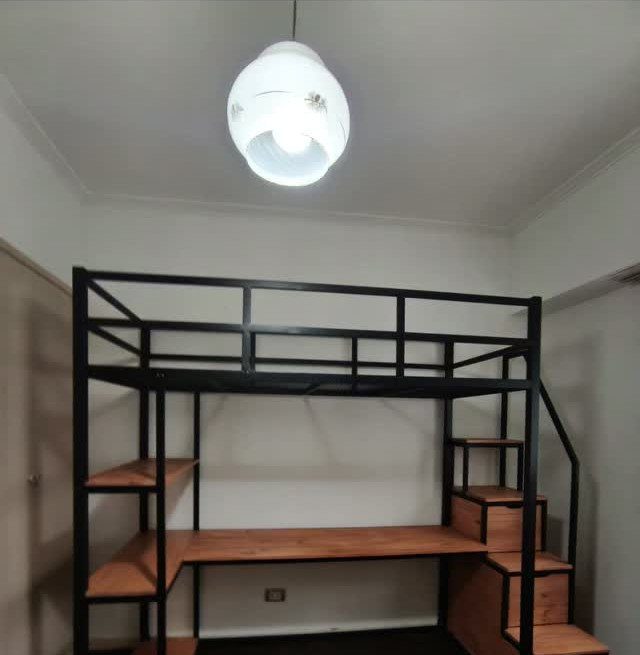
Before you settle on a use for the space below, measure the wall and the ceiling, since those 2 numbers decide which loft bed fits and what can go under it.
At the simple end is a curtained nook with sheer white curtains and fairy lights, which needs little more than a rod; at the other is a full studio kitchen under dark grey cabinetry, which needs ventilation because the mattress sits so close overhead.
1. Dressers, Shelving Units
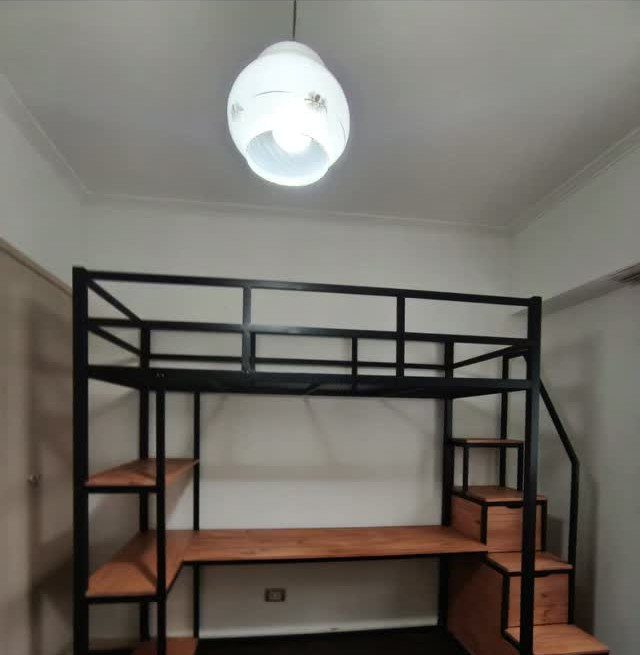
A desk and open wooden shelves can share one footprint under a loft bed frame, so storage and a work surface fit without taking more floor.
I like this pairing better than a stand-alone dresser, because open shelves stay easy to reach and don’t crowd the floor.
Put the desk where the light is best, near a window if the layout allows, and run the shelves along the wall side.
Closed bins on the lower shelves hide clutter, while the top shelf is good for books and a lamp.
2. Play Area
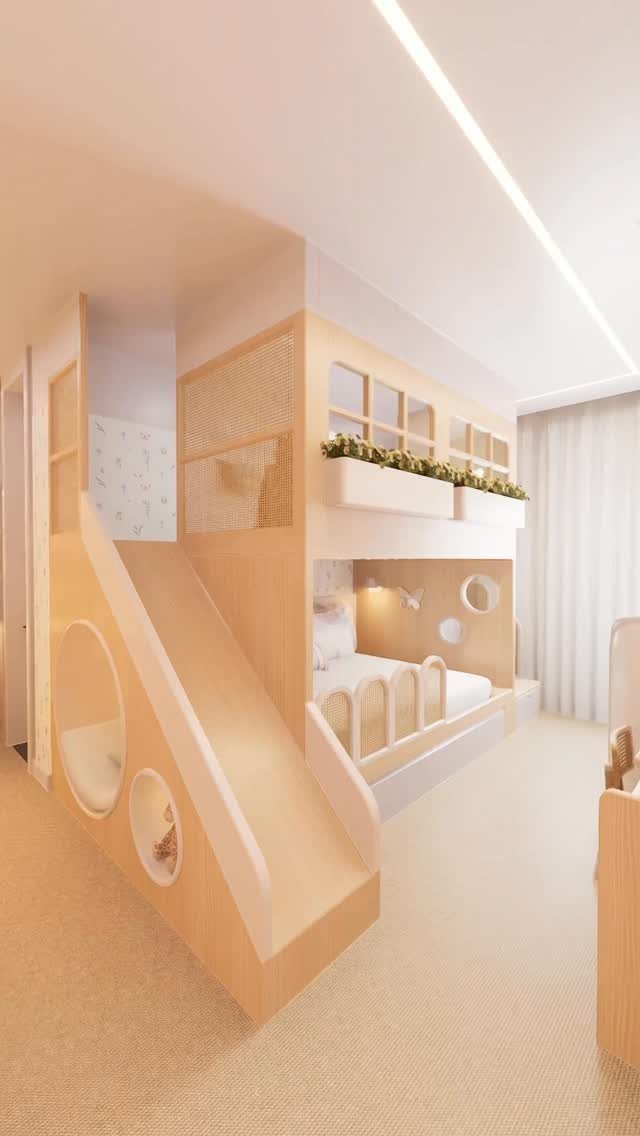
For a kid’s room, this wins over a plain play rug because the bed itself becomes part of the game.
Keep the floor clear and soft so kids can land and crawl without bumping into anything. Shelves with plants, like the ones built in here, work best when they sit high, out of reach of small hands.
3. Lounge Area
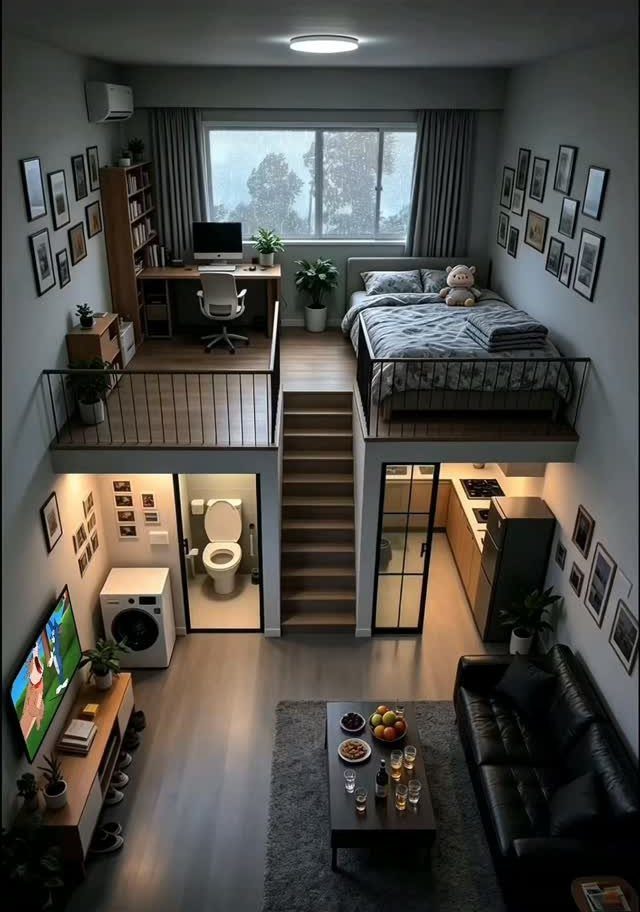
Choose a low-profile sofa so your head has clearance when you sit, and a wall-mounted TV so the floor stays open.
Dark leather hides wear well, though it looks heavy in a small space. A light throw or a rug softens it, and a floor lamp gives the corner a calm glow after dark.
4. Home Office
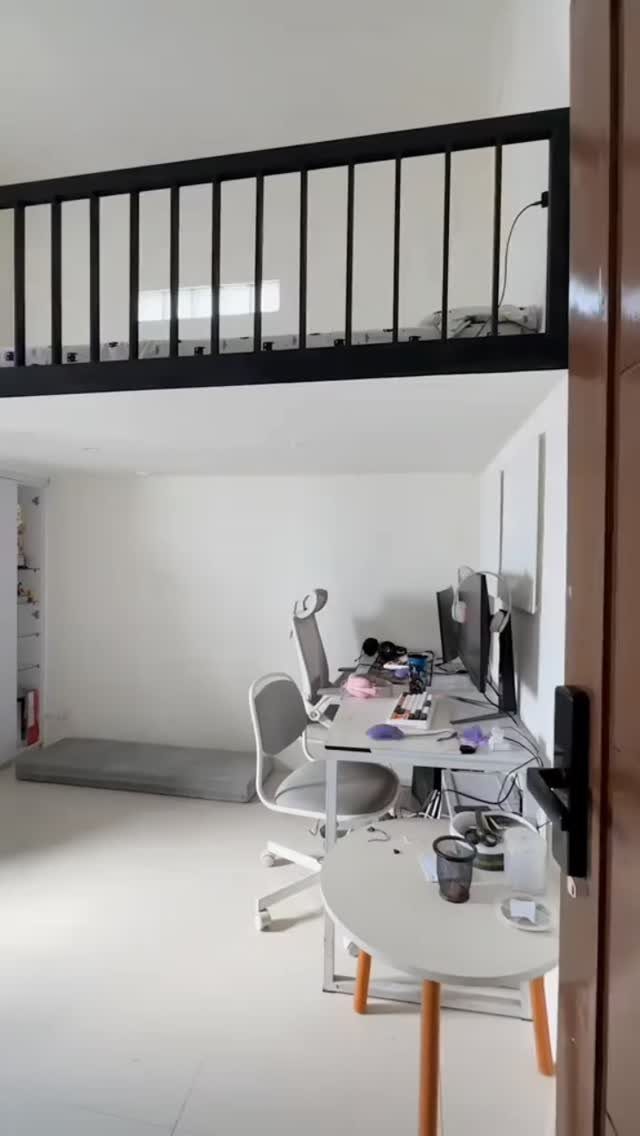
Teens and adults get the most from a desk under the bed, because it separates work from sleep without needing another room. A white desk and chair keep the corner bright beneath a dark metal frame.
Place the desk so a window or lamp lights the screen. Add a small side table for notes or a drink, and tuck the chair in when you finish so the space reads as part of the bedroom again.
5. Mini Cinema or Gaming Setup
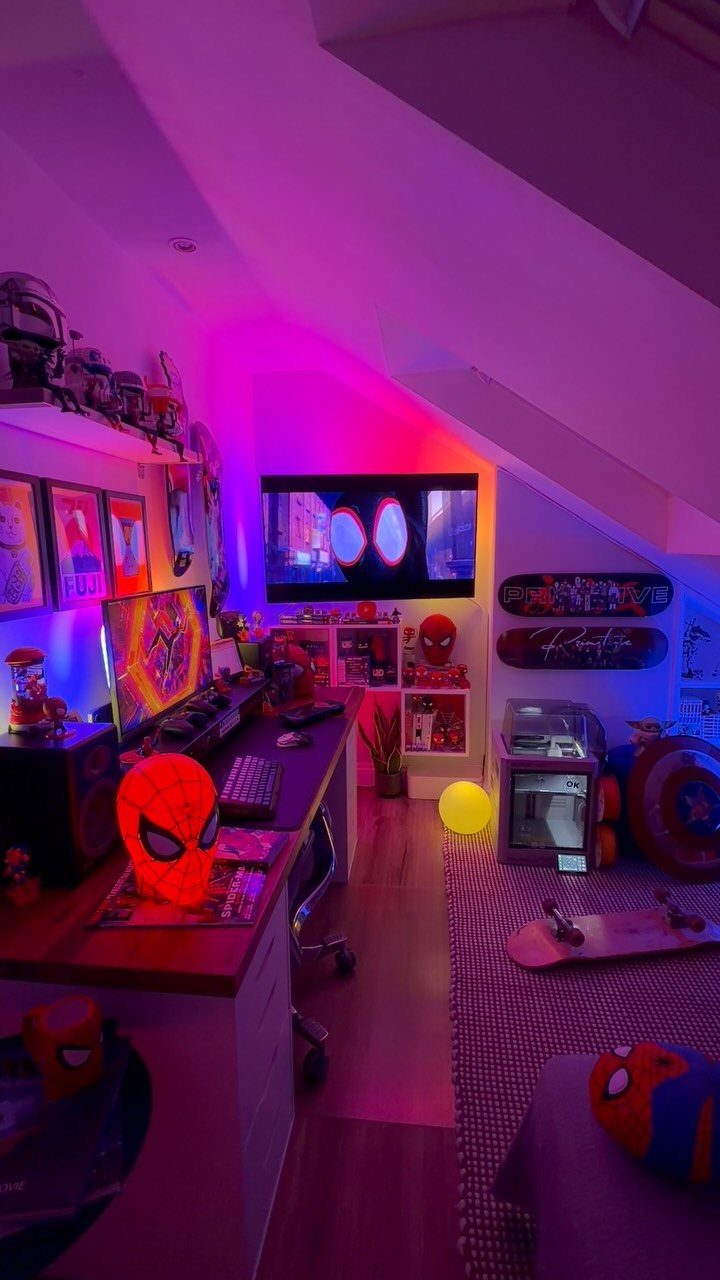
Purple LED strips, a desk with monitors, and a TV make the underside of a loft bed feel like a dark little arcade.
I’d pick this for a teen who games for hours, since the enclosed feel helps the screens stand out.
Run the lights along the back edge so the glare stays out of your eyes. A rug underfoot cuts noise, and a few wall decorations make the corner feel personal.
6. Kitchen and Dining Space
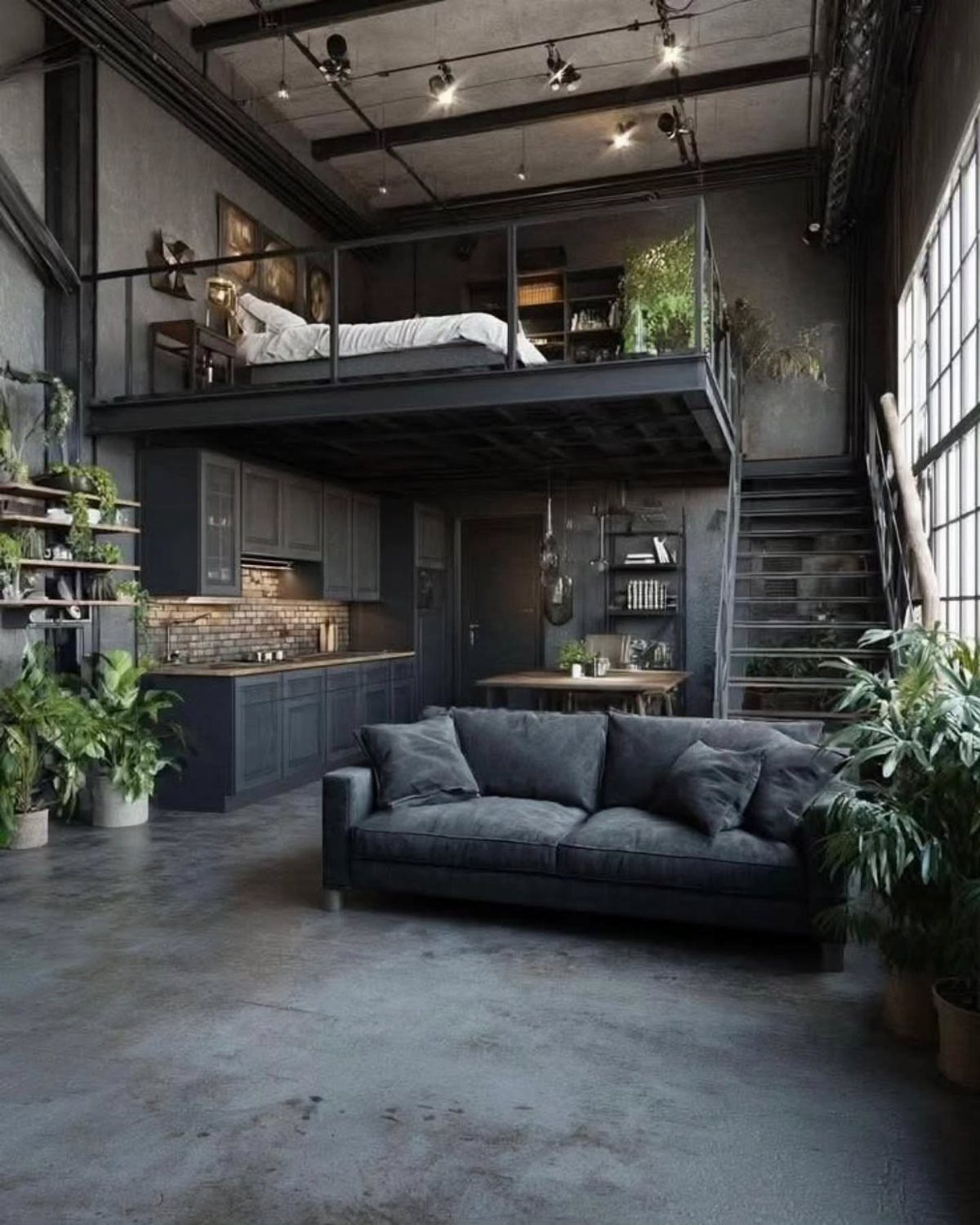
In a studio, this layout keeps cooking and sleeping apart, which I find the most livable way to split one room.
Dark grey cabinetry pairs well with a black bed frame and keeps the look unified. Choose a slim table and compact appliances, and make sure the cooking area has good ventilation, since the bed sits close overhead.
7. Curtained Nook with Fairy Lights
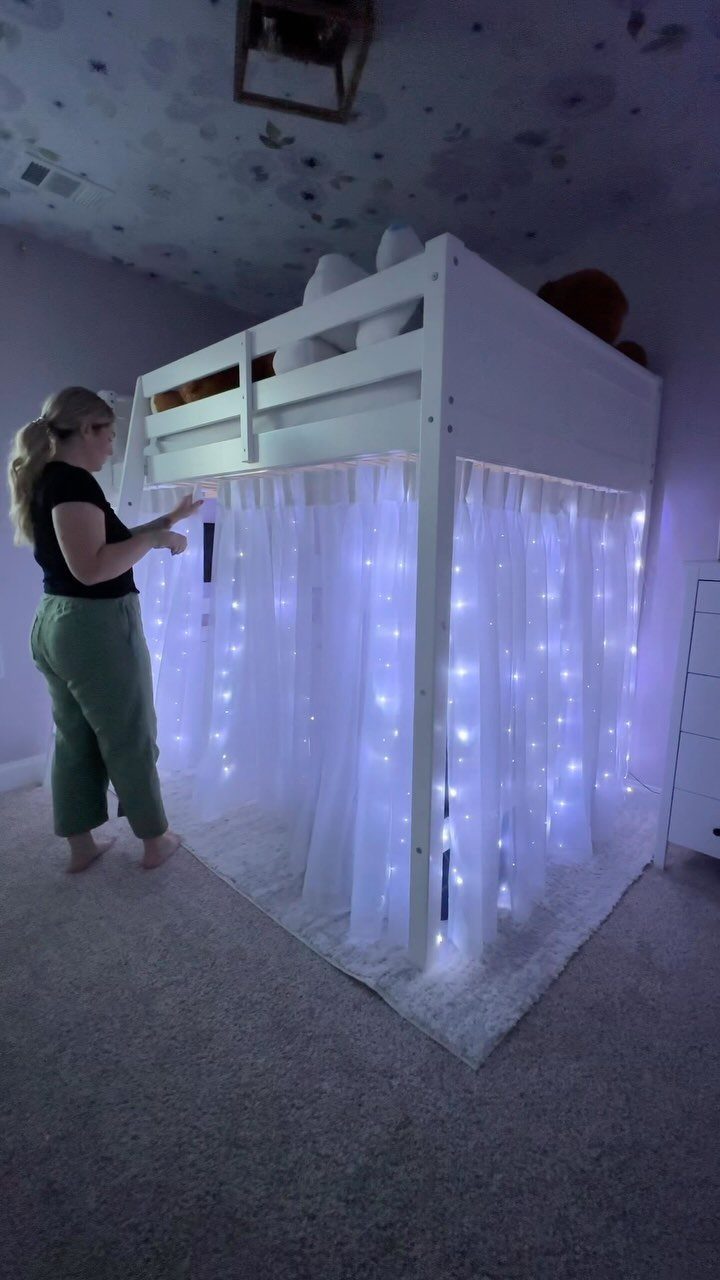
Sheer white curtains turn the space under a loft bed into a small hideaway, and fairy lights inside make it glow after dark.
A teen or a shared-room kid gets a private corner this way without losing any floor to a wall.
Hang the curtains from a rod or hooks along the bed frame’s edge, so they drop to the floor and can be pulled open or closed.
Sheer fabric lets the lights read as a soft haze from outside, which I prefer over heavy panels that make the nook feel shut in.
Choosing the Right Loft Bed
Start with the ceiling height and the room’s footprint, since they decide which type of loft bed even fits.
A low loft suits younger kids and rooms with lower ceilings, and it keeps the sleeping surface closer to the floor while still freeing up space for storage below.
A high loft opens up more room underneath for a play corner, a study spot, or extra storage.
Beds with built-in drawers or shelves earn their place in rooms that lack closet space, and some low models come with an integrated desk, which suits a small kids’ room.
Before buying, measure the wall where the bed will sit and compare it to the listed dimensions. Pick built-in features for the jobs you need done, not for the longest feature list.
Safety Considerations
Check the mattress foundation first. It should sit steady and firm, with no wobble and no large gaps anyone could slip through, and a guardrail keeps a sleeper from rolling off.
Check that nothing ever blocks the ladder, the guardrails, or the walk from the bed to the door; a beanbag or toy bin parked at the base of the ladder is the usual culprit.
Use freestanding or wall-mounted lighting, and route cords away from the spots where people climb up and down.
Attach only accessories the bed’s manufacturer approves for that model, and follow its assembly, mattress, age, and weight instructions.
For anything underneath, do a seated-headroom check before you finish setting it up. Sit in the spot, then add a few inches of margin if you can.
Decorating Tips
In a small room, pale walls paired with a pale frame push the visual edges outward, and the bed stops reading as a big dark block.
Pastel or neutral shades work best, and you can add color through bedding, curtains, or pillows without crowding the space.
White millwork and bedding leave room for one bold move, like patterned wallpaper on the ceiling, which sits right above the bed and draws the eye up.
Then pull accent colors from the pattern into the bedding so everything reads as one scheme.
If wallpaper feels like too much work, wall decals add personality and come off more easily. Multi-colored bedding does the same job with no commitment.
Frequently Asked Questions
What to do with the space under a loft bed?
A desk with open shelves beside it is the pairing I like most, because storage and a work surface share one footprint and the floor stays open.
Other good fits are a play area for kids, a lounge with a low-profile sofa, a home office, or a curtained nook with fairy lights.
Pick the use that matches who sleeps there: a desk for teens and adults, soft floor space for younger kids.
Can you put a bed under a loft bed?
The sources I checked don’t cover a second bed underneath, so I can’t give a verified answer.
What they do back up is a bookshelf, a desk, or a lounge corner under the frame. Whatever goes below, sit in the spot first and leave a few inches of headroom beyond your seated height.





