Your housing contract decides which of these lights you can use: if it bans adhesive strips, nails or certain lights, the list shrinks fast, and a skipped rule is a poor reason to lose a deposit.
The ideas run from plug-in fairy lights and desk lamps to a 12–16 feet LED strip along the ceiling line, plus a projector, letter signs and floor lamps that need no hardware at all.
Read the contract first, then pick from whatever it allows.
1. LED Strip Lighting
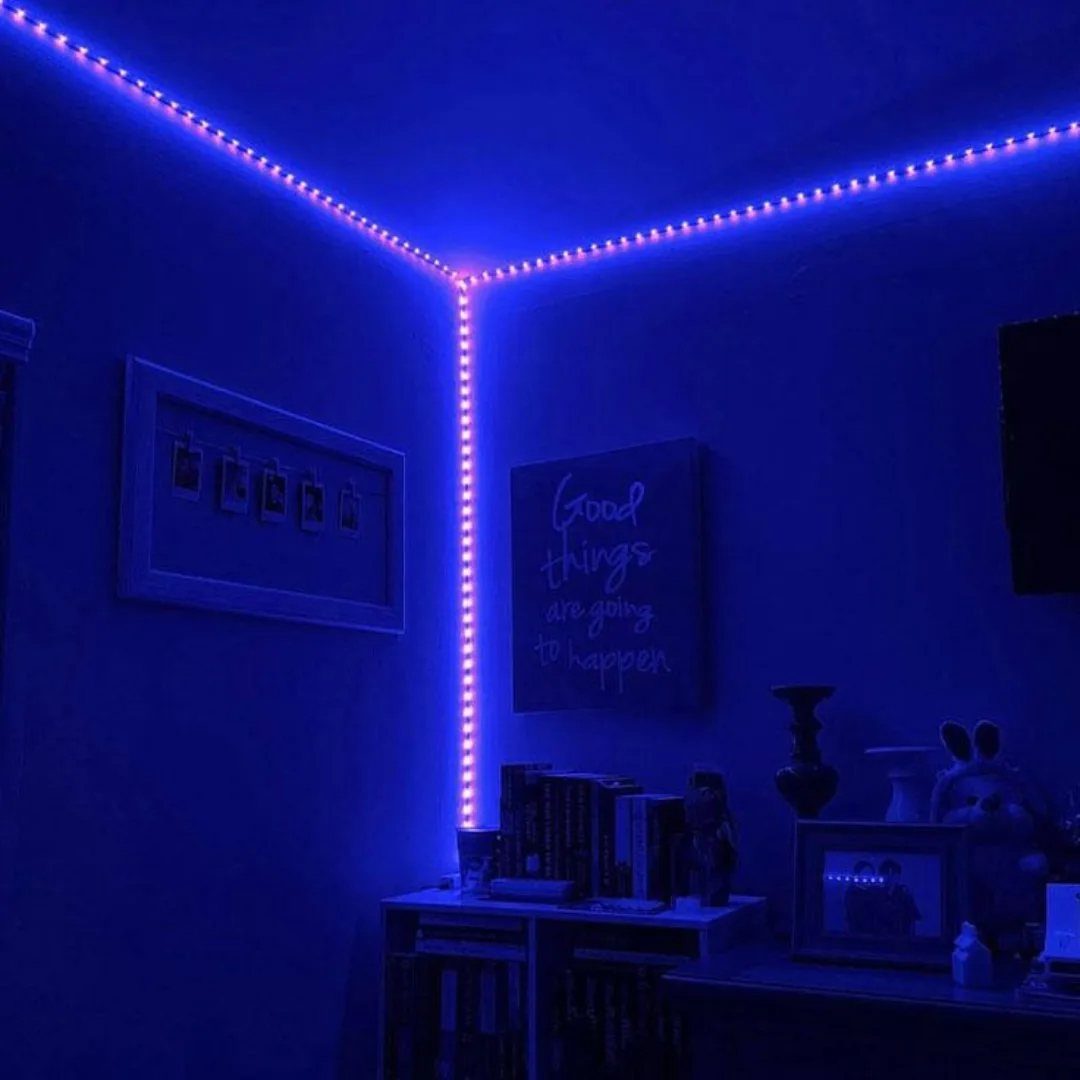
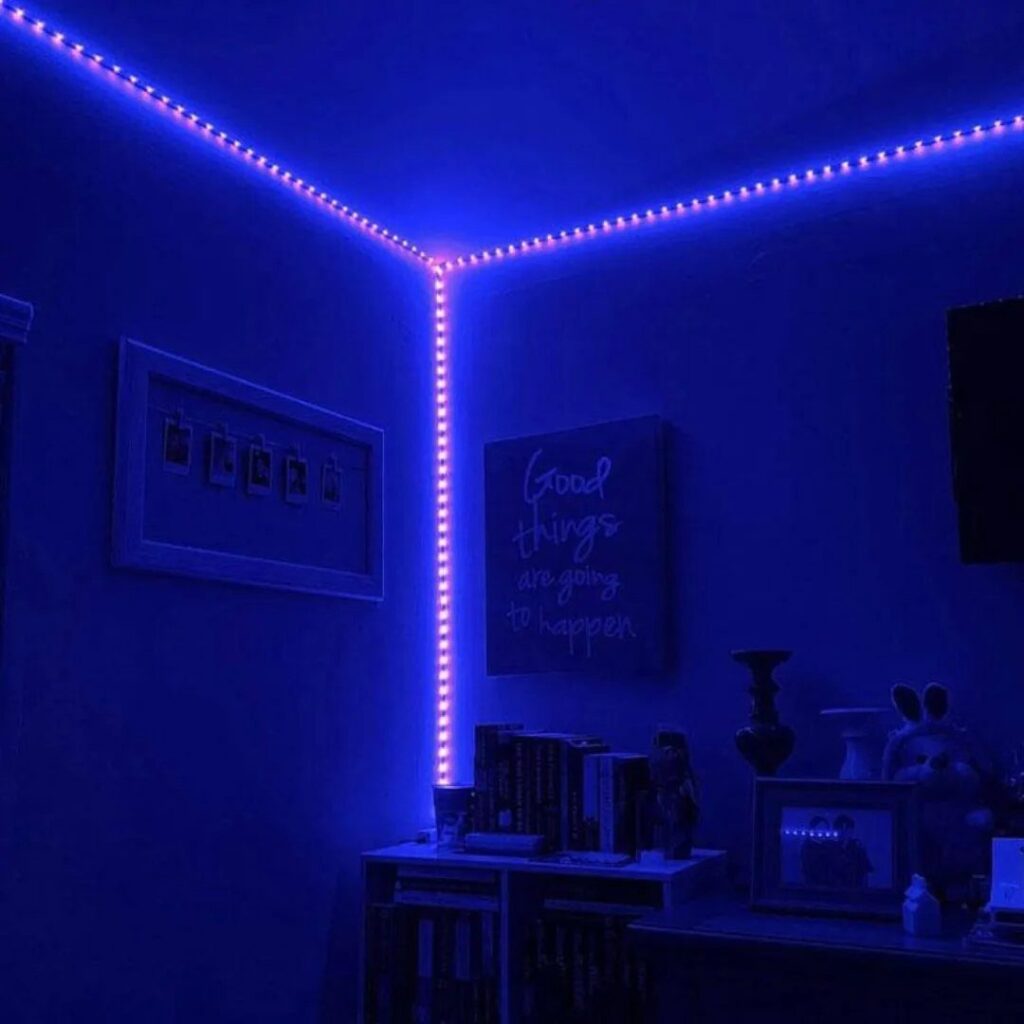
Blue strips along the ceiling line and down a wall corner make a room feel wider, because the light traces the edges and pulls the eye outward. That’s a good use of a dorm’s boxy shape.
Color is where you make it yours. Warm white or amber tones work better for late study sessions, while a color-changing strip lets you switch moods when friends come over.
Run the strip where the wall meets the ceiling and keep the corners tidy, so the glow looks planned.
2. Accent Wall Lighting
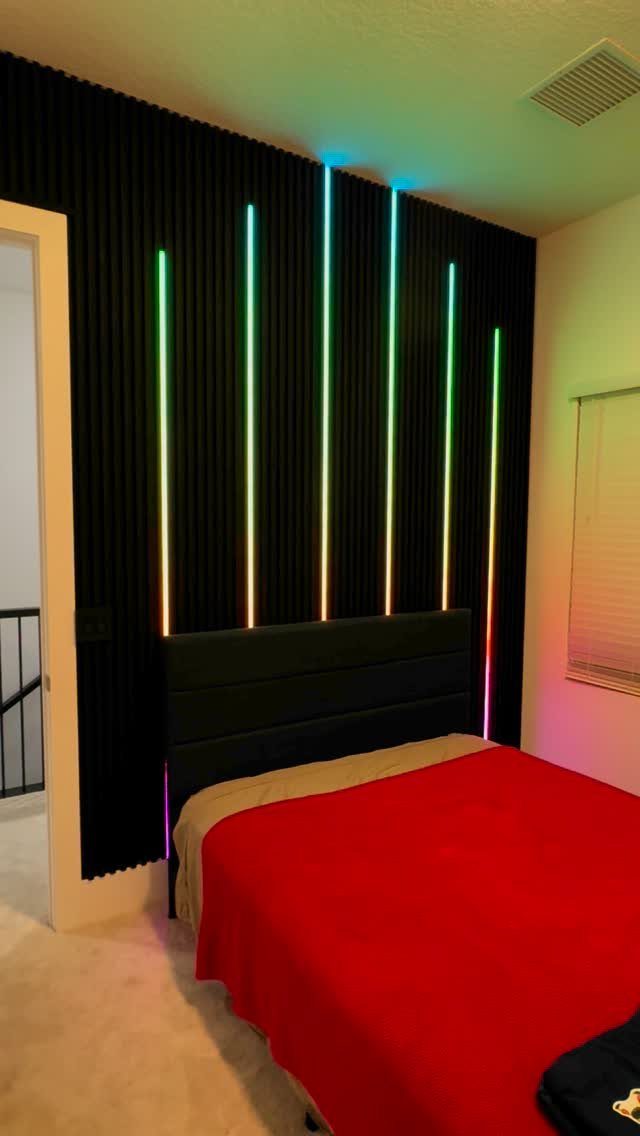
Vertical RGB strips tucked behind a black slatted panel make the bed’s backdrop the room’s main event. The light spills through the gaps between slats, so the glow looks layered instead of flat.
I like this best with a dark headboard, since the colors stand out against black.
Choose an RGB strip so you can change the color to suit the night. Mount the strips behind the slats, not on the face, so you see the glow and never the bare strip.
3. LED Signs and Letter Lights
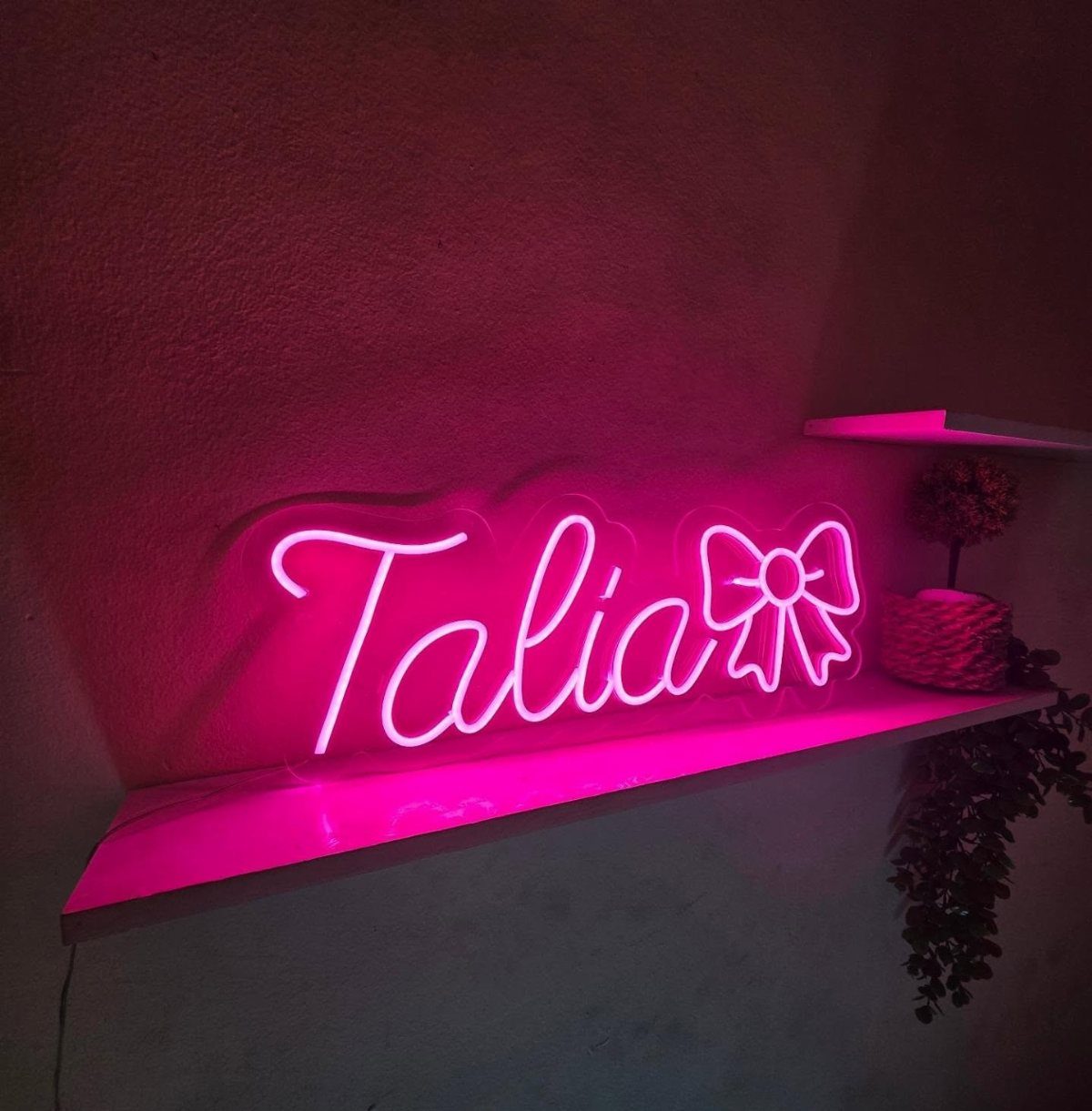
A name in pink neon, bow included, tells everyone whose room this is before they read a door tag.
An LED version gives that look without real neon glass, which matters in a space you’ll pack into a box in May.
A shelf is the easiest home for one: no drilling, no wall damage, just an outlet nearby.
Pair it with a small plant, as here, and the sign feels like decor instead of a dorm-room billboard. Initials or a short word also work if your name is long.
4. Galaxy Star Projector
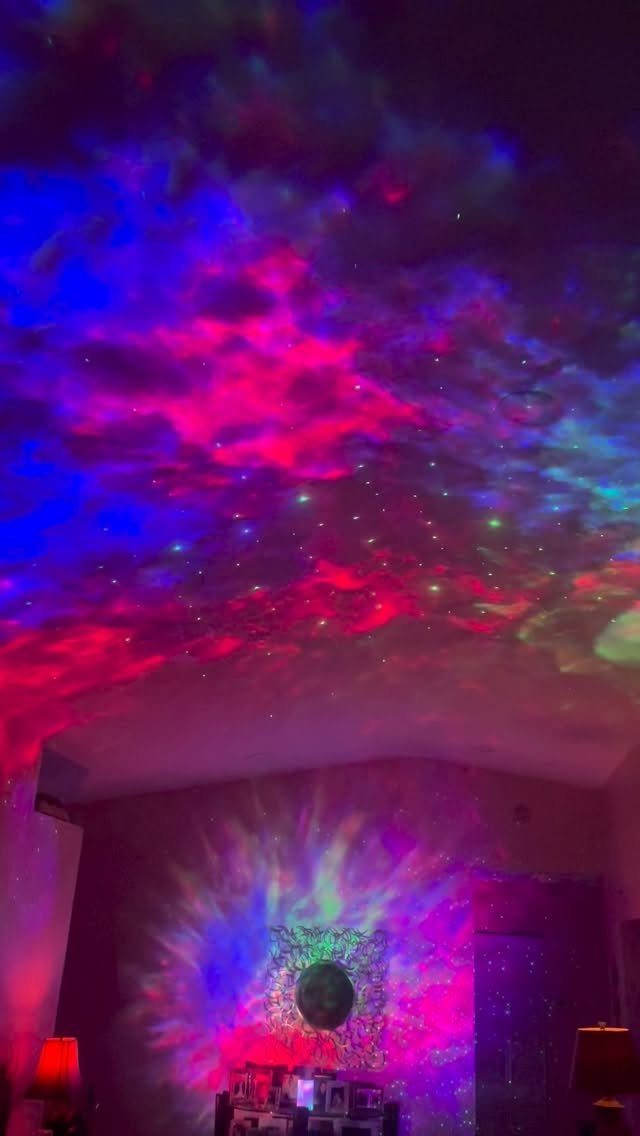
Pink, blue and purple nebula clouds drifting across the ceiling and walls give a plain dorm room a whole different mood after dark. An LED projector does all of it from one small unit.
Point it at a light-colored ceiling or wall for the clearest image, and set it where nobody will bump it.
It works best as the only light on, so turn off other lamps. I’d use it for winding down, not studying, since the moving colors pull your attention.
5. Fairy Lights
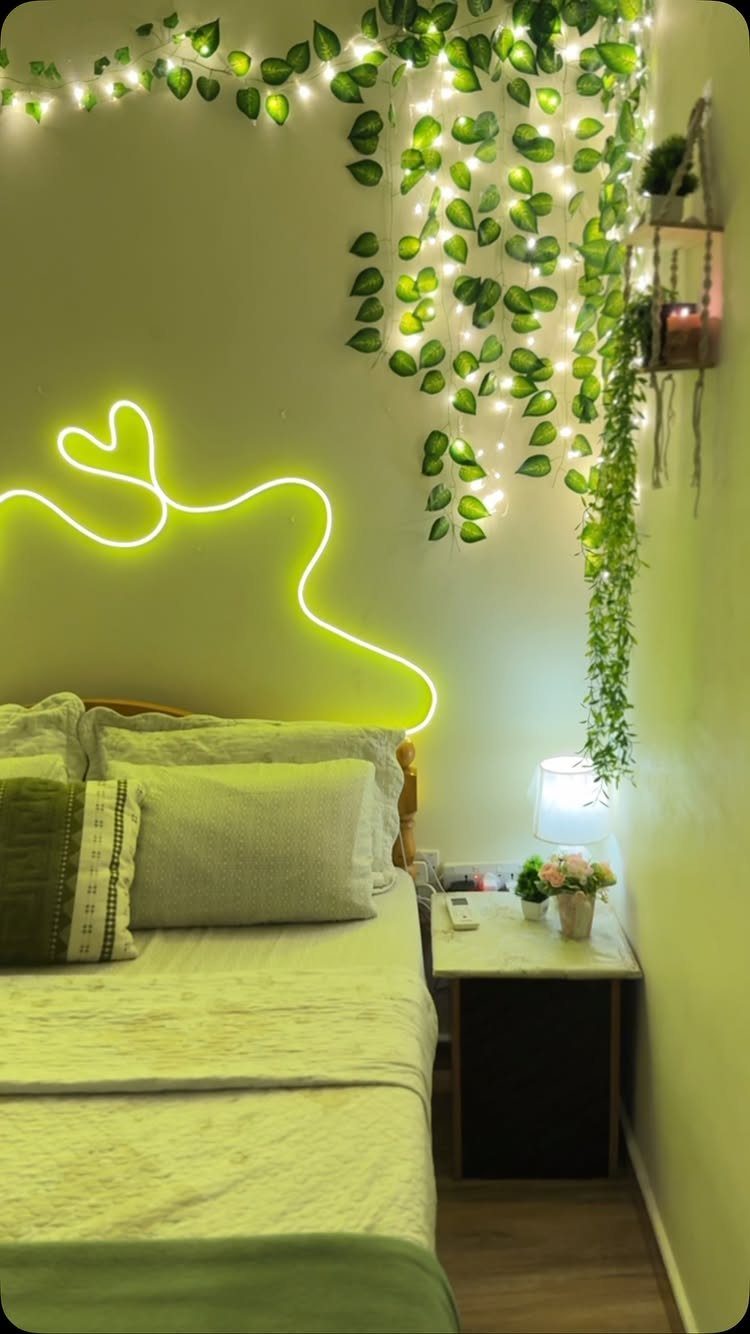
White fairy lights woven through green vines over a bed give a room a soft, garden-like glow. The tiny bulbs cast gentle light, so they set a mood without blasting the whole room.
Drape them in loose swags instead of pulling them tight, and let the vines hang unevenly for a natural look.
Pair them with a bedside lamp for reading, because fairy lights alone won’t be enough. Plain wall hooks keep the setup easy to remove.
6. Desk Lamps
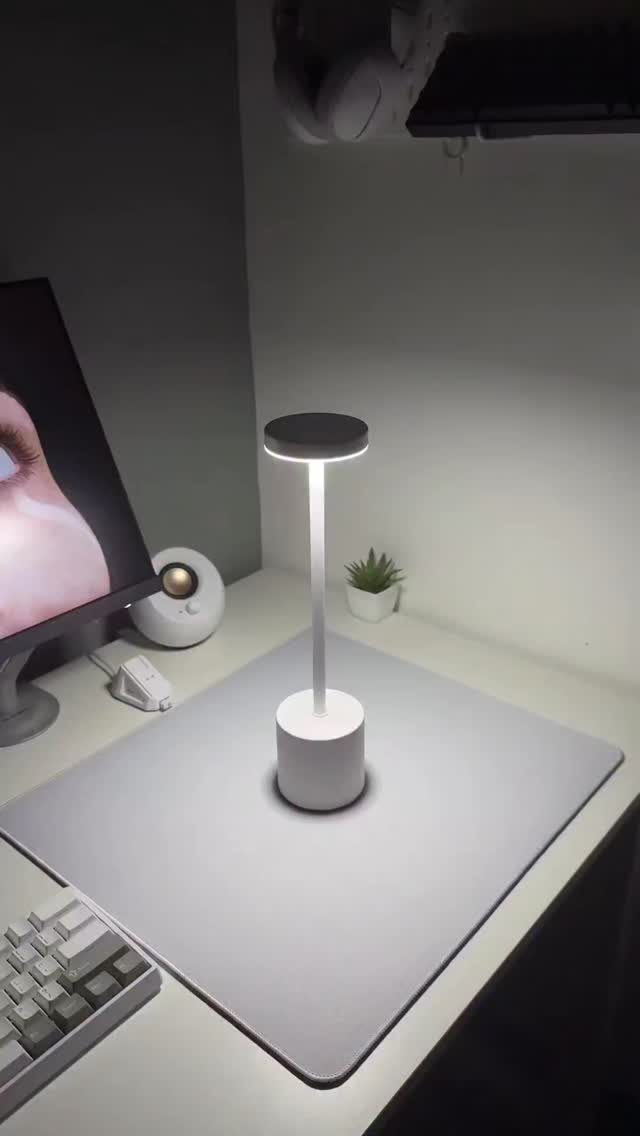
A slim cylindrical lamp with a small footprint keeps a workspace bright without eating desk space, and a white finish stays clean-looking against a grey or neutral desk mat.
That small footprint matters when your monitor, speaker and notes already crowd the surface.
For studying, pick an LED lamp with adjustable brightness, so late-night reading doesn’t glare.
Place it on the side opposite your writing hand to avoid shadows on the page. It’s the one light on this list I’d call a must-have.
Coming in hot in four shades, you can choose between black, chrome, rose gold, and white for your dorm desk. It has 10,000(!) five-star reviews, with Wayfair shoppers loving how cute it is and how good value for money it is too.
7. Floor Lamps
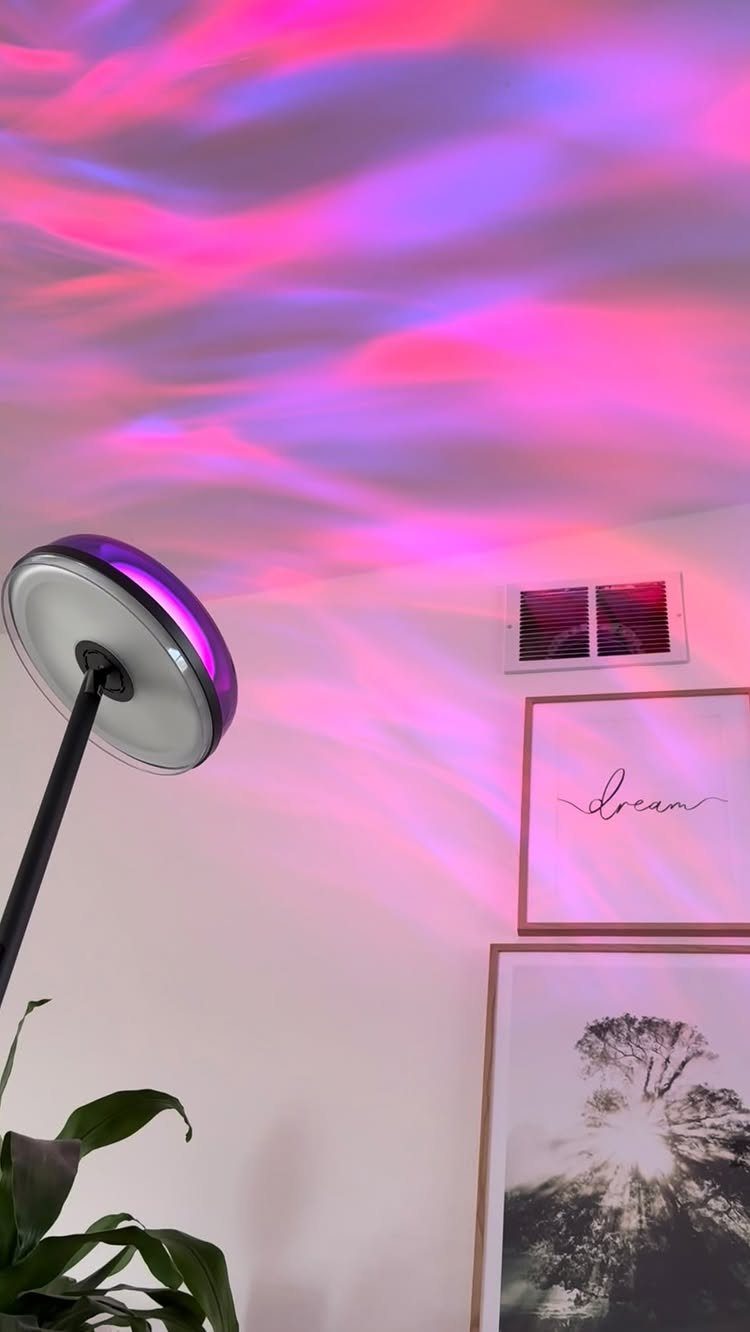
A floor lamp that throws pink and purple waves across a white ceiling adds light without touching the overhead fixture, which in most dorms you can’t change anyway.
The color lands on the ceiling and wall, so it fills the room instead of lighting one corner.
Stand it in a corner beside the bed or desk, where it takes only a few inches of floor. White surfaces show the color best, so keep that wall clear of posters.
I’d treat it as mood lighting and keep a desk lamp for homework, since colored light is hard to read by.
Good Lighting Tips
Plan for layers instead of one bright source.
A floor lamp, a desk lamp and a string of fairy lights each do a different job, and together they let you light the room as brightly or as softly as the hour calls for.
Bring all three before move-in, since a dorm’s overhead fixture is usually the only light provided and it’s rarely flattering. Put each on its own switch or plug so you can turn them on one at a time.
Other spots worth lighting: the space under a lofted bed or bunk, the inside of a closet, and a short strip beside the bed for a reading nook. Each one makes the room easier to use, not just prettier.
LED Light Installation
Your housing contract may already ban adhesive strips, nails, or certain lights, so check it first and save yourself a returned box and a possible damage fee.
Whether LED lights are allowed depends on your dorm and your college, and a rule you skipped is a poor reason to lose a deposit.
Choose self-adhesive strips so nothing needs screws or nails. They stick to walls, headboards and desks, and they come off far more easily than hardware does.
For most dorm rooms, a strip of 12–16 feet is enough.
A remote and a dimmer are worth a few extra dollars, since they let you switch colors and brightness without leaving your bed. Warm white through full rainbow is a normal range, and 64 color options is plenty.
Dorm Room Decor
A strip of LEDs costs less than most wall art or a new lamp, and it shifts the mood of a dorm room without taking up any floor or shelf space.
A room with one harsh overhead fixture feels like an institution; the same room with warm, low light feels lived in.
LED strips are also energy-saving, so you can leave them on through an evening without worrying about the power bill.
Pick colors that match what you already own, like bedding or a rug, so the light looks like part of one plan.
A small decorative light, like a crystal snowflake, adds personality for very little money.
Frequently Asked Questions
Is LED light good for studying?
Yes, when the lamp has a dimmer so you can dial down the glare during late sessions.
Position it opposite your dominant hand so shadows stay off what you’re writing. Strips and projectors set a mood but make terrible task lighting, since tinted light strains your eyes on text.
Are LED lights allowed in dorm rooms?
Read your housing contract first, since some schools restrict what you can install. Skip that step and you might lose your deposit or pay a damage charge when you move out.
What type of lighting is best for a dorm room?
Multiple sources beat one ceiling fixture: floor lamp for ambient light, desk lamp for work, fairy lights for atmosphere.
Together they let you light the room brightly or softly depending on the hour. Plan to bring your own, since most dorms only give you one overhead bulb and it casts harsh shadows.





