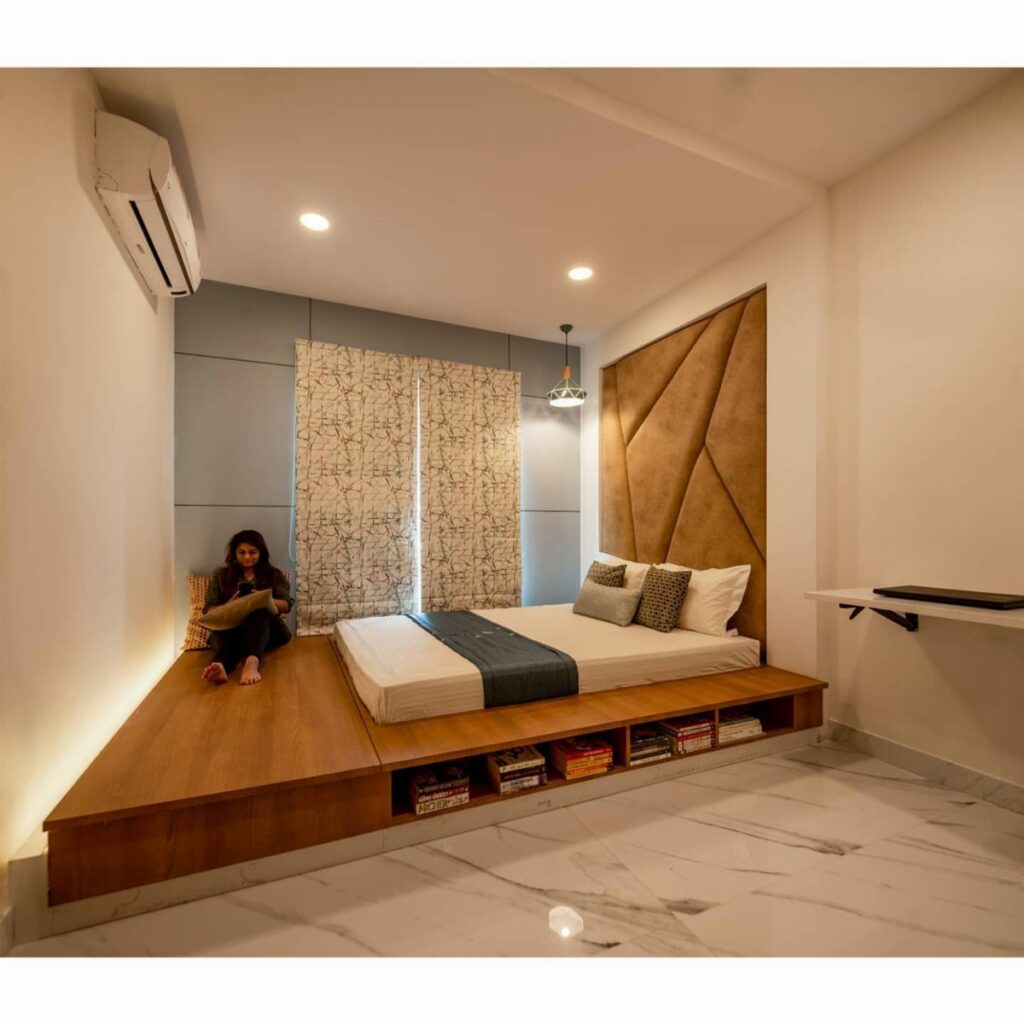
Whether you rent or own decides which of these master bed ideas is yours: a feature wall color or layered lighting needs no permission, while built-in wardrobes or a recessed bed niche means framing and a landlord who isn’t involved.
Pick the one your lease and your tools allow, then spend on the bed and headboard first.
1. Seating Area
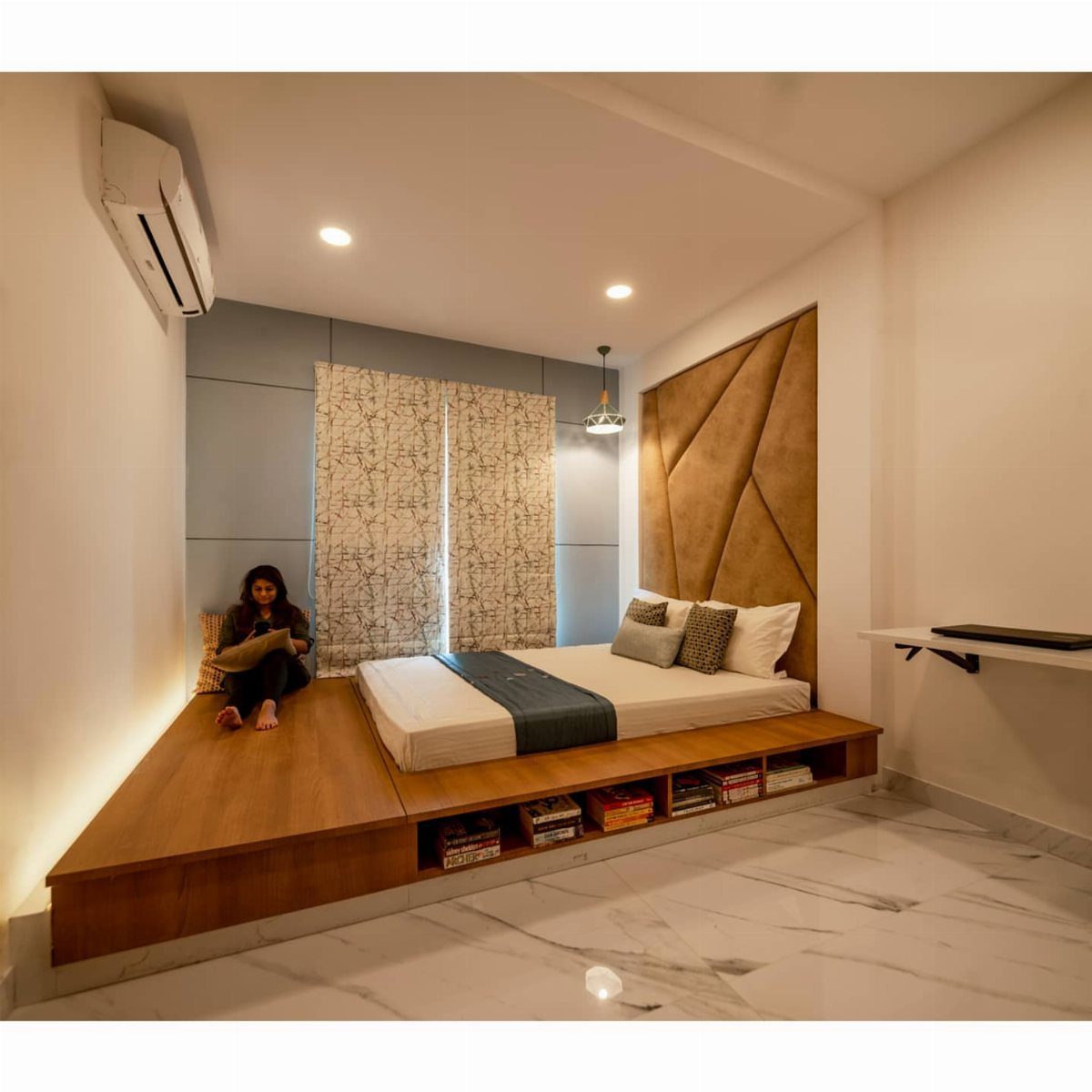
A bed that extends into a built-in wooden seat gives you a reading spot without spending floor space on a separate chair. A seating nook takes floor space, so size it carefully if the room is tight.
Build the extension at the same height as the mattress top so it reads as one piece.
A plain plywood box frame with a cushion on top fits a weekend and a modest budget. Keep the wood tone matching the bed frame, and add a couple of firm pillows behind the bench so sitting there stays comfortable.
2. Layered Lighting Design
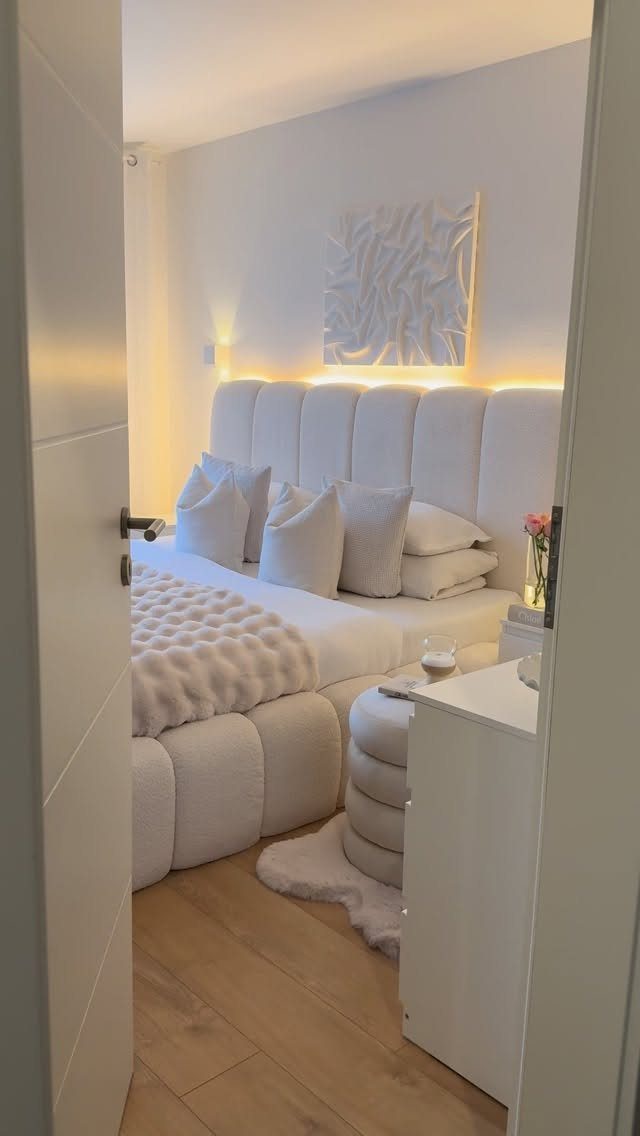
Warm light placed behind the headboard and wall art does more for a bedroom than any single fixture overhead. Layering means more than one source, each on its own switch.
Start with a concealed LED strip behind the panel, then add a bedside lamp for reading and a dimmable overhead for cleaning.
Choose a warm white bulb so white bedding does not look cold at night. Plug-in strips keep this renter-friendly, since nothing needs rewiring.
Whether you’re designing a primary bedroom or a guest bedroom, a maximalist space or a minimalist one, bedroom lighting ideas are key to consider. This bedroom by Yond Interiors wonderfully exemplifies how wall sconces can complete a space.
3. Custom Upholstery Headboard
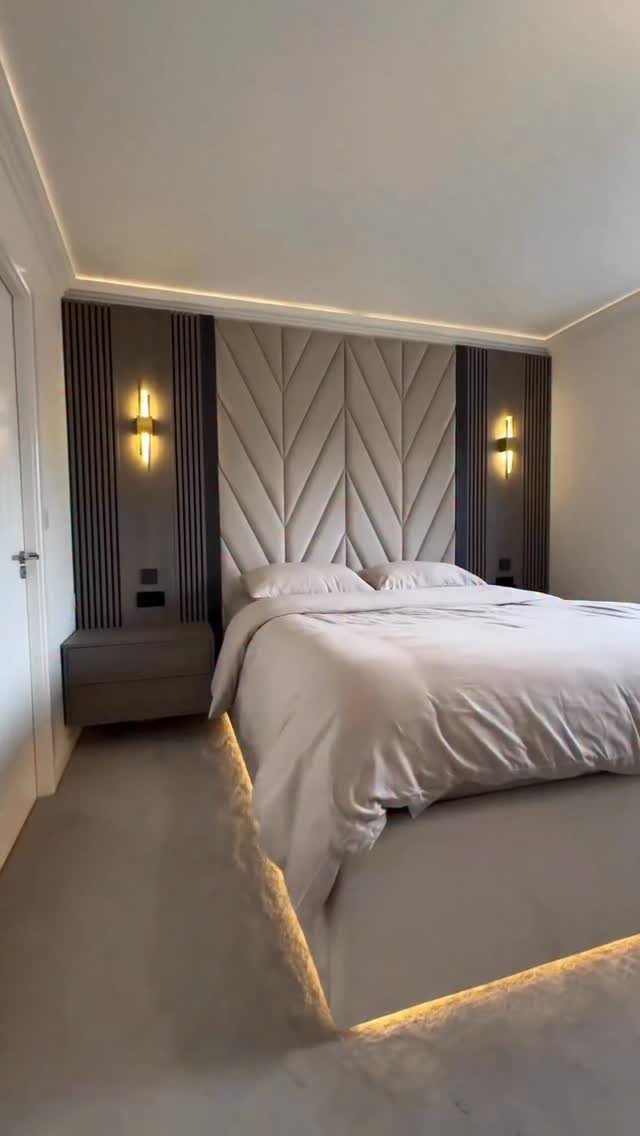
A chevron pattern turns the headboard into the room’s one loud piece, so I would keep everything around it quiet. Beige upholstery and neutral wood let the geometry carry the design.
Custom work costs more than a store-bought headboard, but a DIY version is within a weekend’s reach: cut plywood to size, add foam, wrap in fabric, and staple the back.
Stitching or tufting lines in a chevron takes patience, so mark them with chalk first.
4. Wood and Natural Textures
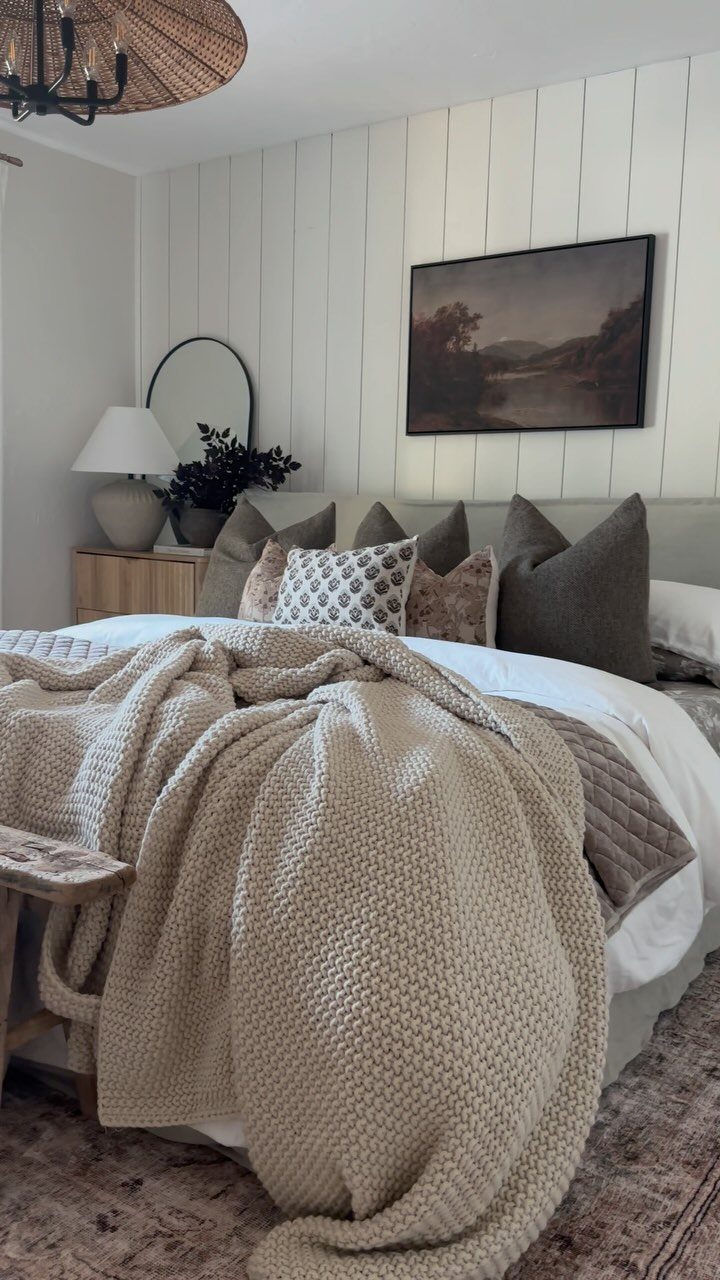
Texture does the work here, and color barely has to. A chunky knit throw, a woven pendant and a wooden nightstand all sit in one soft, earthy range.
Aim for 3 natural materials rather than 6, so the room feels calm instead of themed.
The throw and a woven shade are the cheapest swaps, and both can change in an afternoon. Wood is the one to buy slowly, since a good nightstand costs the most.
5. Minimalist Design with Clean Lines
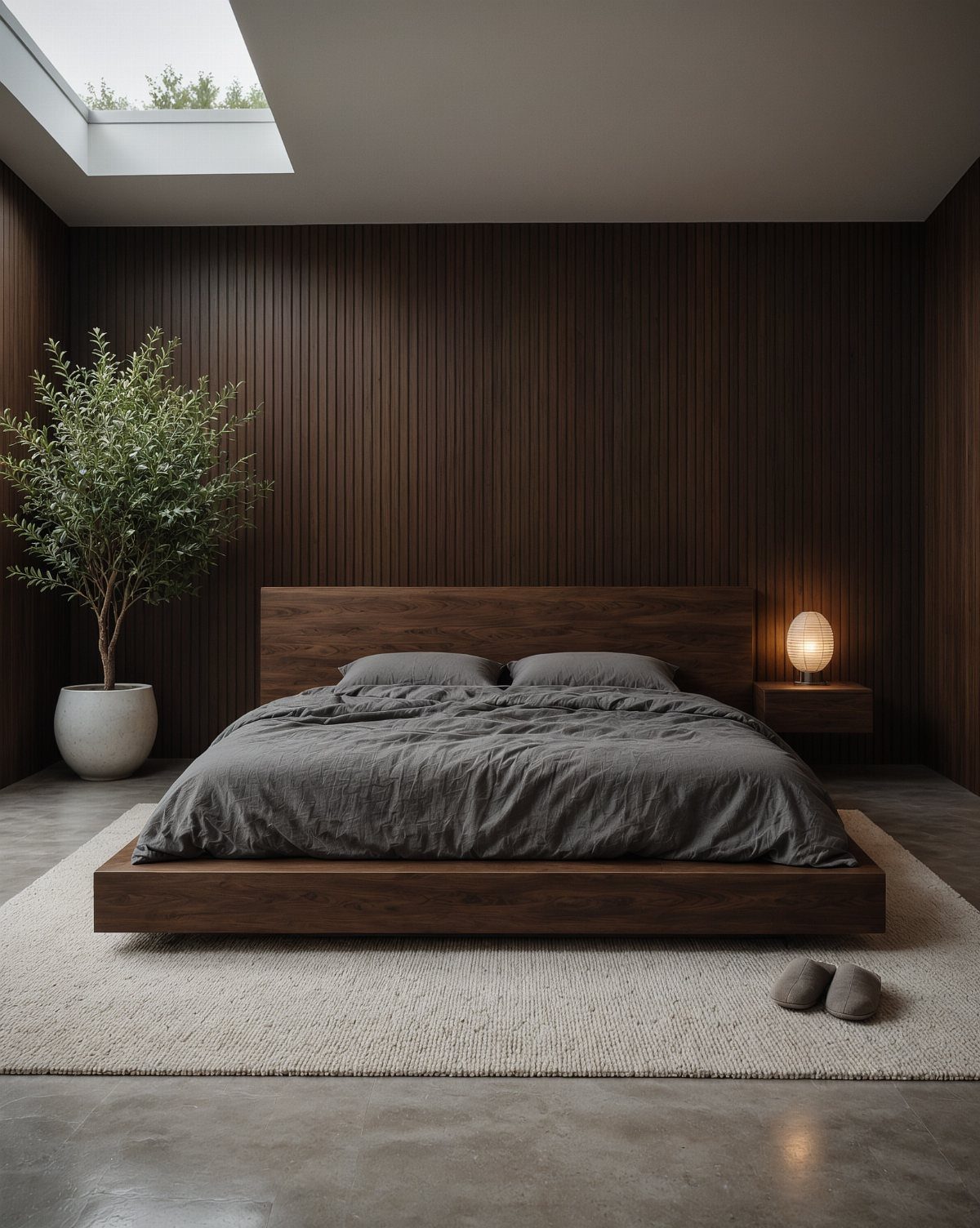
Dark wood on the walls and a low-profile bed turn a bedroom into a retreat, and I think that beats the all-white version for sleep. Fewer objects means each one has to be good.
Keep the bedding to one color, grey here, and limit the nightstand to a lamp. A single plant adds life without clutter.
6. Feature Wall Color
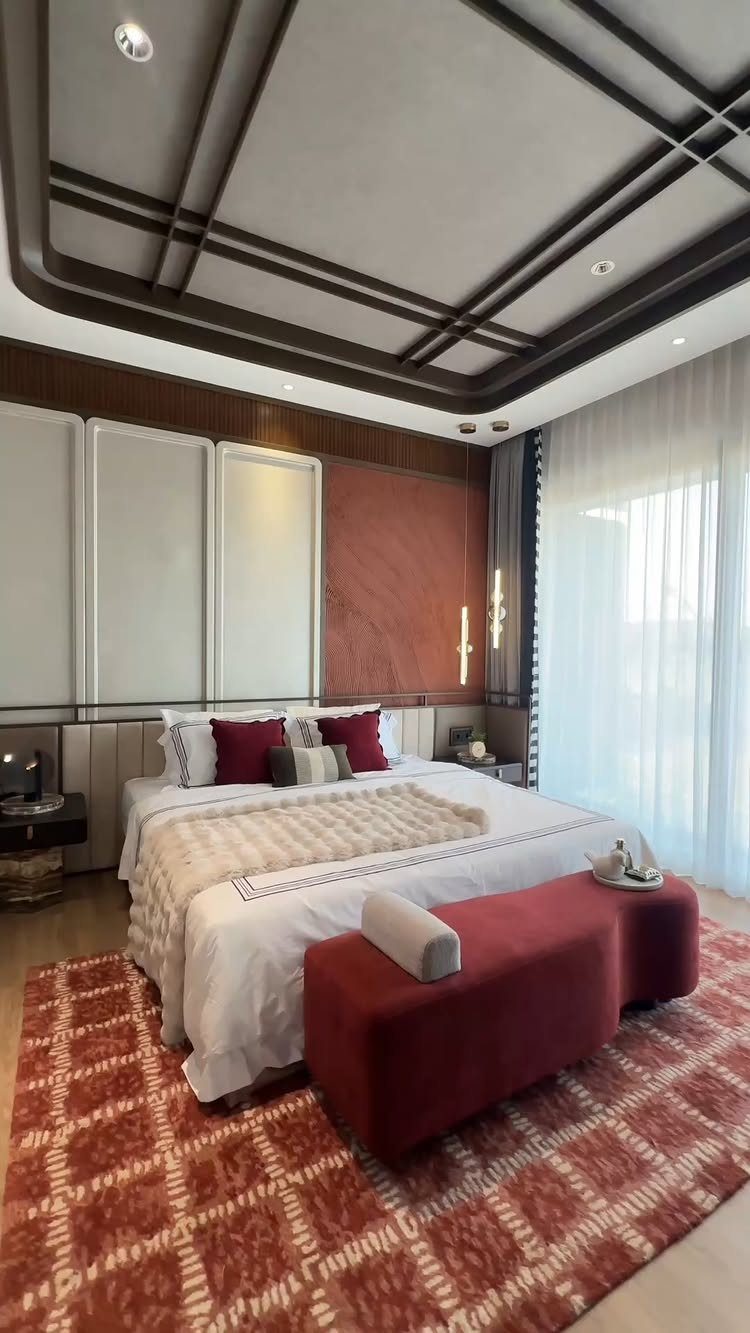
Committing to one bold color on a single wall costs the least of any move that gives a bedroom a point of view. Red is the loudest choice, and it works best when the bed stays white.
Paint one wall only, then repeat the color in 2 or 3 smaller pieces, such as pillows, a bench and a rug.
Sample a quart on the wall and look at it morning and night before buying gallons. If red feels like too much, a deep rust sits calmer.
7. Large Murals
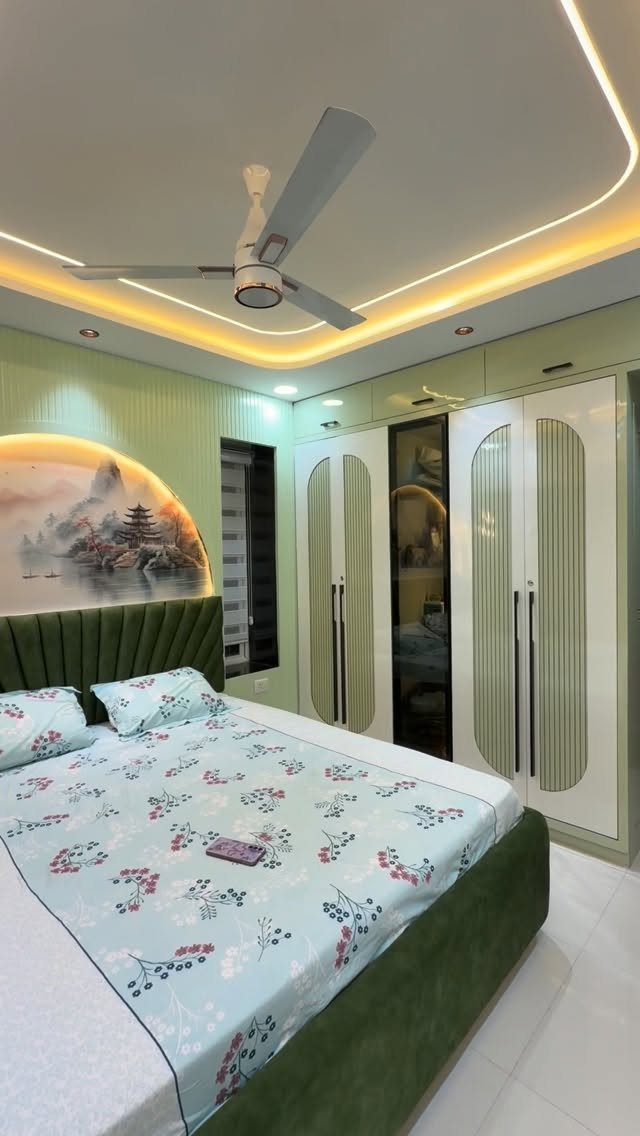
A circular landscape mural gives a green velvet bed something to talk to, and I like that the shape breaks up all the straight lines of a wardrobe and ceiling fan.
Keep the mural’s greens close to the bed’s green so the two read as one plan.
Hang it centered over the headboard.
8. Symmetrical Layout
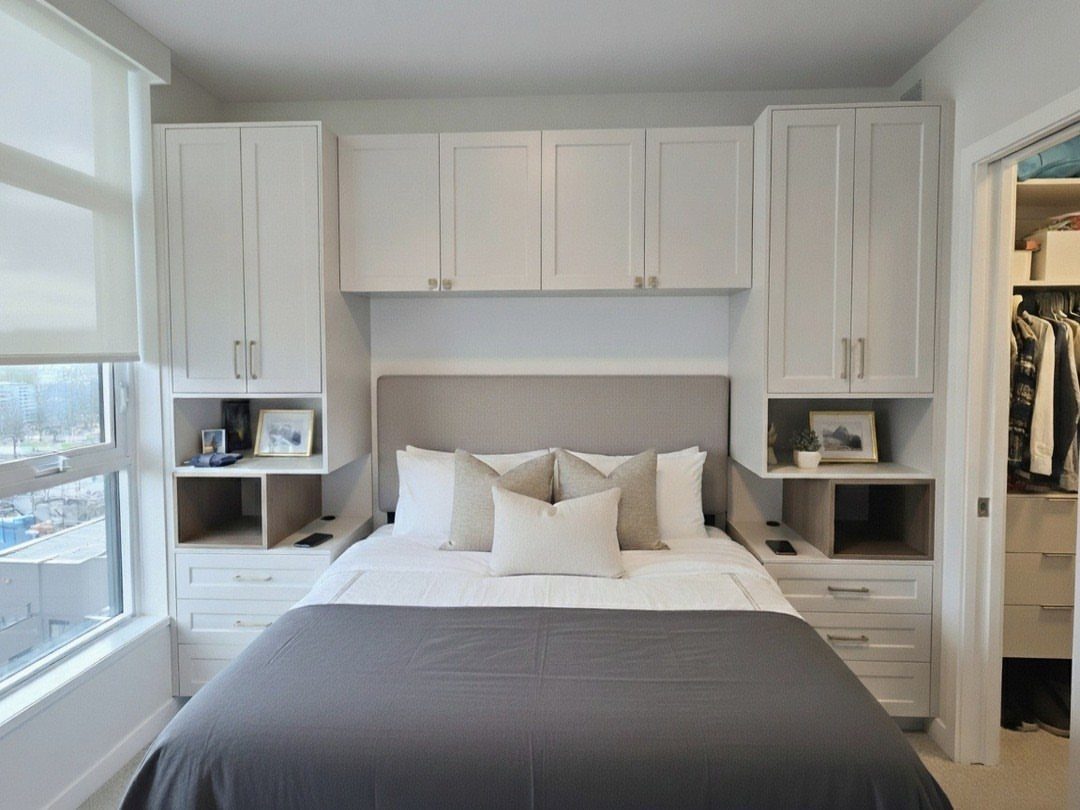
Identical storage left and right means the eye settles on the bed instead of hunting for a focal point.
Measure so the bed sits dead center between the units, and keep the bedding to a single tone, as grey does here.
Symmetry only works when both sides match in height and depth, so a mismatched pair of stock cabinets will show.
9. Upholstered Platform Bed
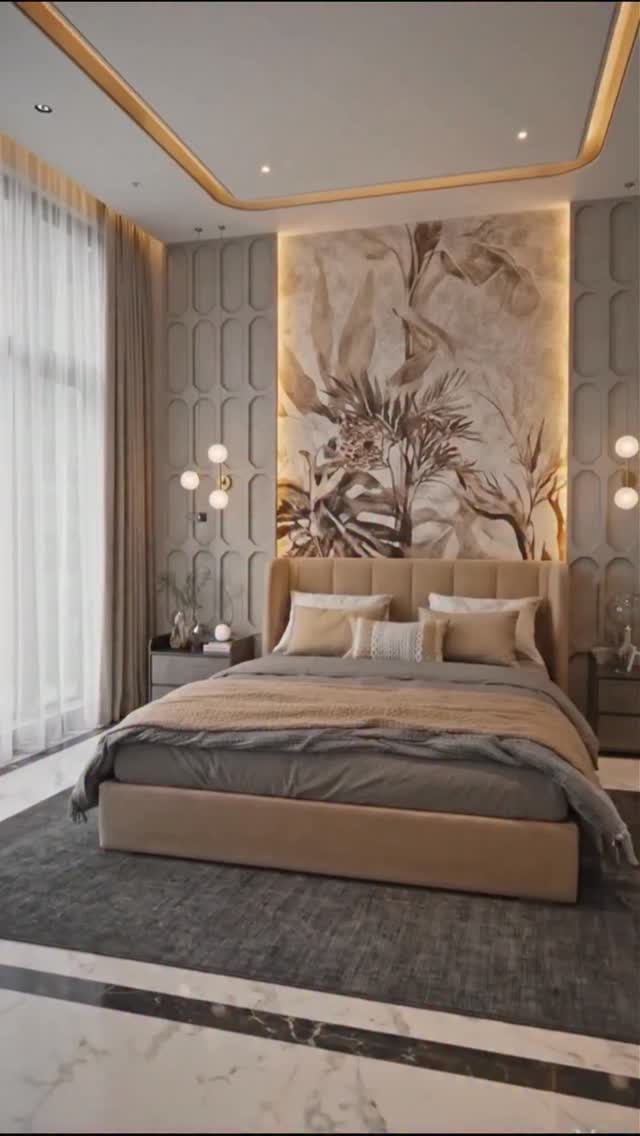
A platform bed with a tall upholstered headboard gives you a finished look without a separate frame, box spring or headboard purchase.
Choose a fabric that wipes clean, since a headboard that tall gets touched and leaned on daily. Pair it with a mural or one large piece of art, and let the other walls stay quiet.
10. Built-in Wardrobes
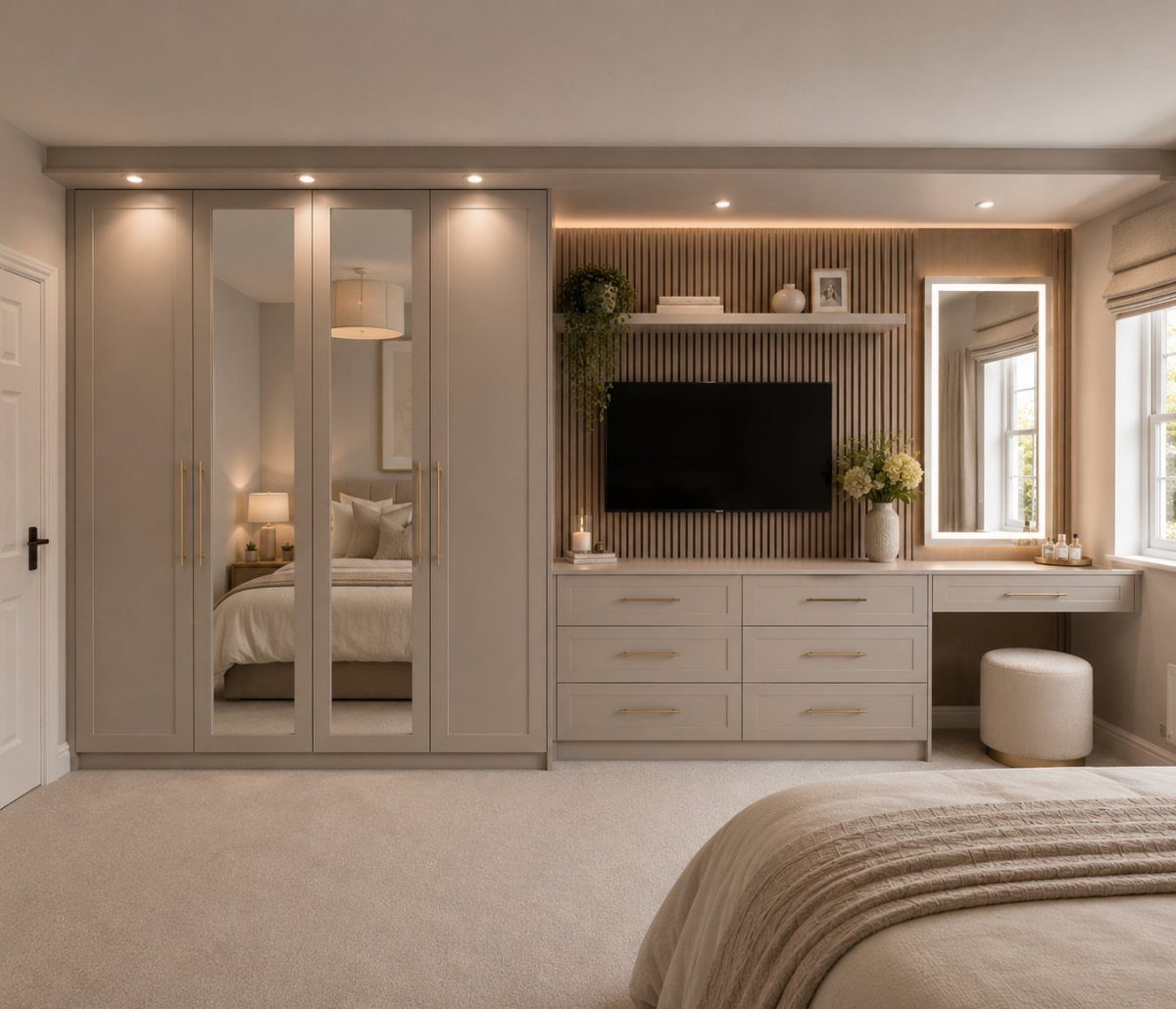
Mirrored wardrobe doors do 2 jobs at once: they hide clothes and make a bedroom read larger. Running the wardrobe in the same taupe as the dresser and vanity makes the whole wall look like one planned piece.
Built-ins cost more than freestanding units, so a good compromise is stock wardrobe carcasses with trim added to close the gaps to ceiling and wall. Mirrors across from a window bounce the most light.
11. Built-In Fireplace and TV Wall
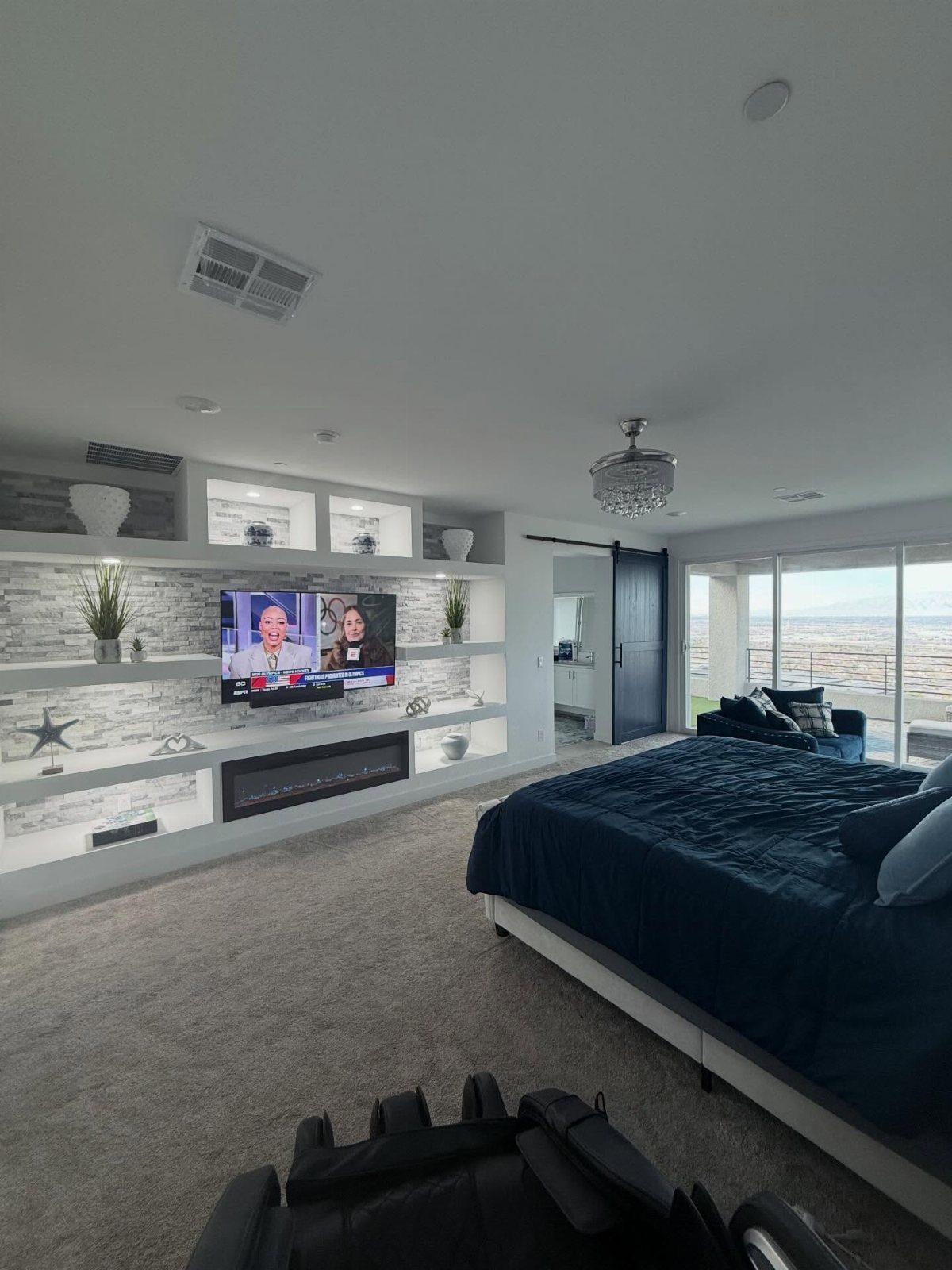
An electric fireplace set into a white wall unit with the TV above it gives the wall facing the bed a purpose beyond storage. I would choose electric: no venting, and the heat and flame can be switched off separately.
Keep the unit white so it blends with the wall and does not crowd the room. Run the TV cable inside the unit so no cords show from the bed.
12. Recessed Bed Niche with Cabinetry
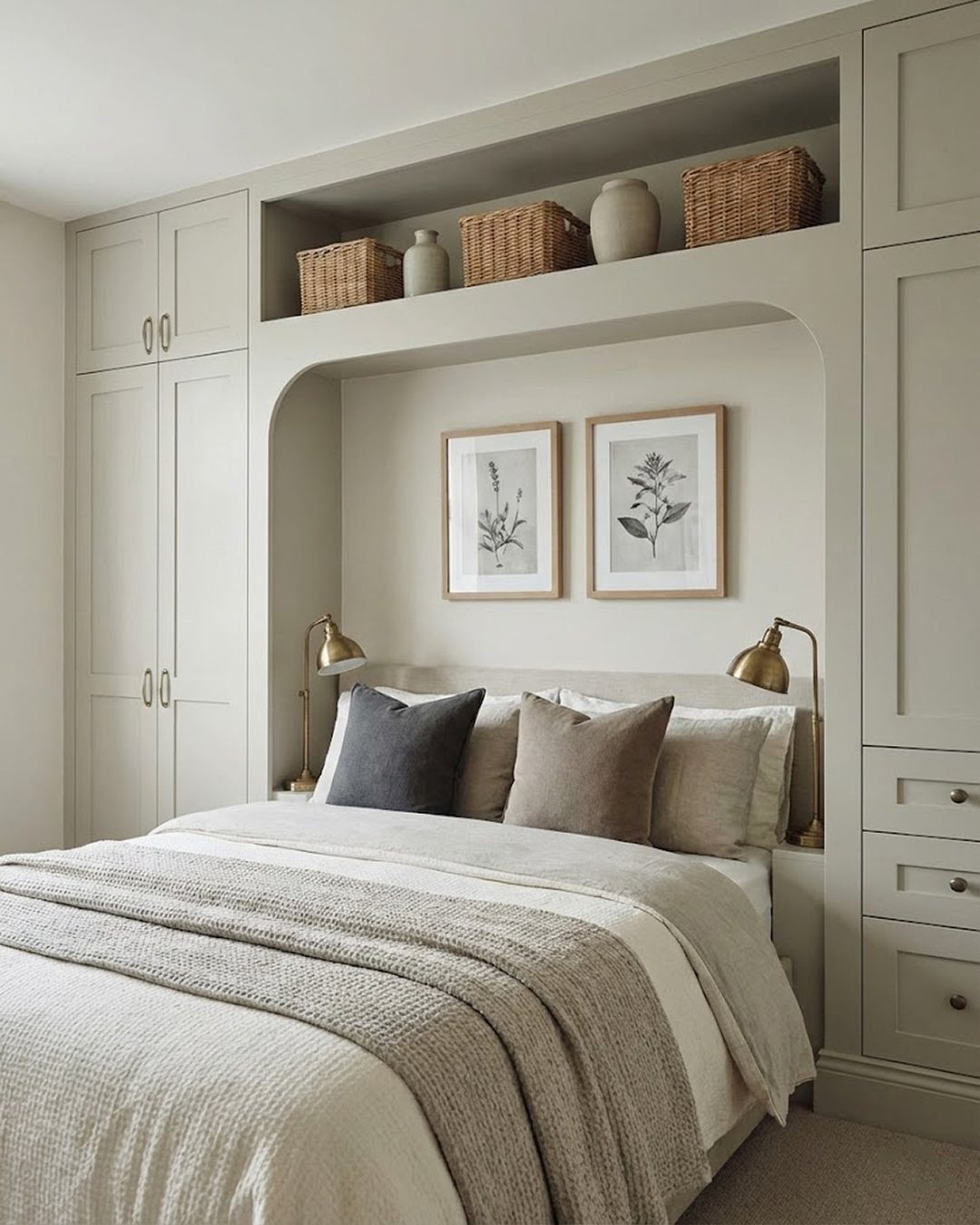
An arched alcove hugs the bed on 3 sides, and the cabinets on each flank mean nightstands are optional. I like that the overhead shelf holds baskets, which hide clutter better than open books and jars.
This is a build-it-in project, so plan for a carpenter or a confident weekend of framing. Renters can get a similar feel with tall freestanding cabinets on either side and a shelf above the headboard.
13. Bed with End Bench Setup
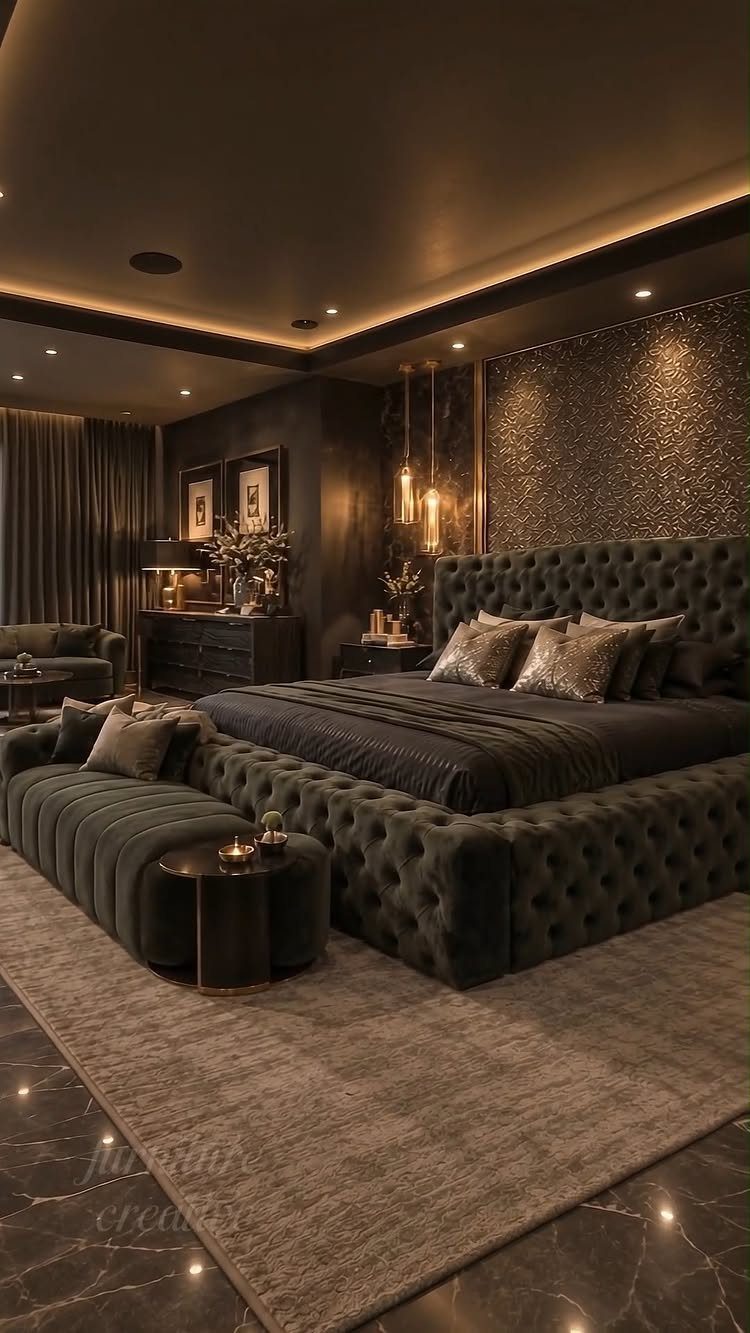
A tufted bench at the foot of a tufted bed works best when the two match in fabric and color, so the pair reads as one set.
I would pick the bench to run slightly narrower than the mattress, which keeps the bed as the main piece.
Set a large area rug under the lower two-thirds of the bed and bench together, so both sit on the same surface.
Dark velvet shows lint and dust, so keep a lint roller nearby. Warm bulbs in the lamps keep a dark grey room moody instead of gloomy.
14. Curtained Built-In Bed Nook
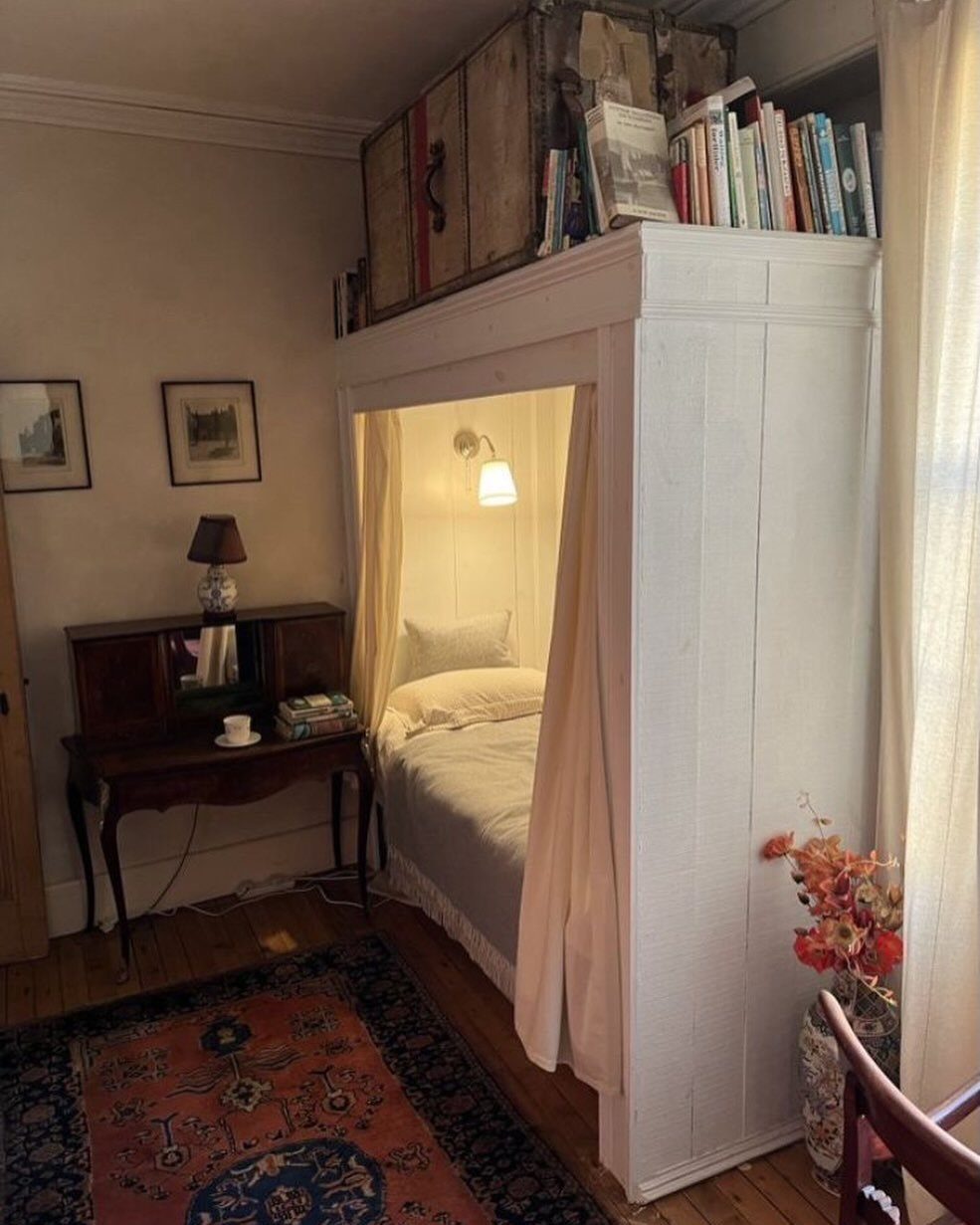
An enclosed bed with curtains on the front turns a corner of a bedroom into a private room of its own.
Cream curtains keep it soft against white wood, and a clip-on reading light means you can read without waking anyone.
The top of the structure is free storage, so use it for books and a trunk, and keep heavy items near the sides. Curtains on a tension or ceiling-mounted rod are the cheapest part to add or swap.
A white finish keeps a built-in this size from feeling like a heavy box.
Choosing the Right Color Scheme
Room size and light decide a color scheme before taste does. Lighter hues keep a compact bedroom from closing in, while a north- or east-facing room that stays dim usually looks better in warmer tones.
Those are rules of thumb, and dark colors can break them.
A deep shade can make a poorly lit bedroom feel cocooning instead of gloomy, especially when it’s paired with off-white linen for contrast. Down Pipe from Farrow & Ball is a good example: it never turns too cold or overwhelming.
East-facing rooms get strong morning light and cooler afternoons. Soft aquas, which are blue-green shades, suit that shift and rarely feel icy.
Paint or fabric samples cost a few dollars, so tape them up in your own room and watch them for a couple of days before committing. The same paint looks different in every house.
Furniture Arrangement Tips
Place the bed first, then build everything else around it. Pick a spot where you can walk freely around both sides, and aim for about 3 feet between the bed and the wall.
Next I add nightstands, one per side when the floor space allows it. After that, fill in with side furniture and decor.
Spend on the staples before the extras.
A good bed and mattress will do more for the room than a crowd of pretty pieces that don’t work together. A smart layout beats a full shopping cart, and it costs nothing to try on paper first.
Importance of Lighting
A single overhead fixture washes everything in the same flat glare, whether you’re getting dressed, reading, or winding down for the night. Split the job among ambient, task and accent light instead.
Decide on the feel first: calm and pared-back, warm and cozy, or something more opulent. Then build the lighting around it.
Fabric shades soften a bulb better than glass, so save clear glass for the lamp you actually read by. For readers, a directional wall light works better than a lamp with a shade, though it gives less warm ambient glow.
Matching wall lamps on both sides of the bed give a hotel feel and free up the nightstand. 2 hanging pendants are another option.
Frequently Asked Questions
How can I make my bedroom look nice?
Start with layout, lighting and color, in that order.
Put the bed in first with about 3 feet of walking room beside it, then layer light from a few sources, such as an LED strip behind the headboard, a bedside lamp and a dimmable overhead.
Pick a color scheme by room size and light: lighter hues for a compact room, warmer tones for a dim north- or east-facing one. Spend on a good bed and mattress before small extras.
What is the new bedroom trend?
Natural materials and clean, minimalist lines are the trends I’d back.
A low-profile bed with one bedding color and a bare nightstand does the same job with fewer objects. Personal touches matter too, since a bedroom should reflect the person sleeping in it.
How do I style a master bedroom bed?
Let the headboard be the one statement and keep everything around it quiet. A tall upholstered headboard in a wipe-clean fabric works well, paired with one large piece of art or a mural over it.
Bedding in a single tone, such as grey, keeps the eye on the bed. A bench that matches the upholstery and sits an inch or two narrower than the bed gives you a finished frame.
What are some popular interior design styles for bedrooms?
Minimalist and natural, earthy styles are the easiest to pull off on a real budget. Minimalist means clean lines, one bedding color and few objects, so each piece has to be good.
The natural look relies on wood and woven textures instead of color. Bold feature-wall rooms, such as one red wall with white bedding, suit people who want more personality.





