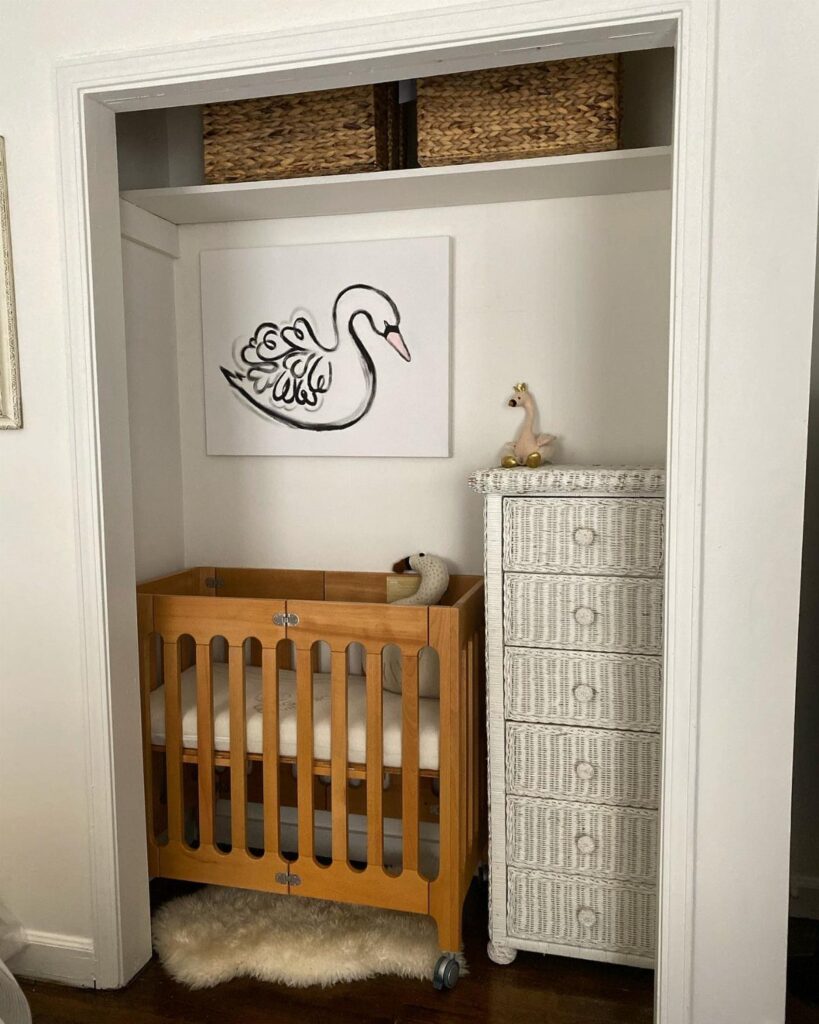
The ideas here run from a curtain hung in a rental closet to a mini crib tucked into a corner or beside the bed, and the fact that picks between them is how long you plan to stay in the home.
A short stay points to the cheap, removable fixes: peel-and-stick wallpaper, a sheer curtain, tulle over the frame.
1. Create a Closet Nursery
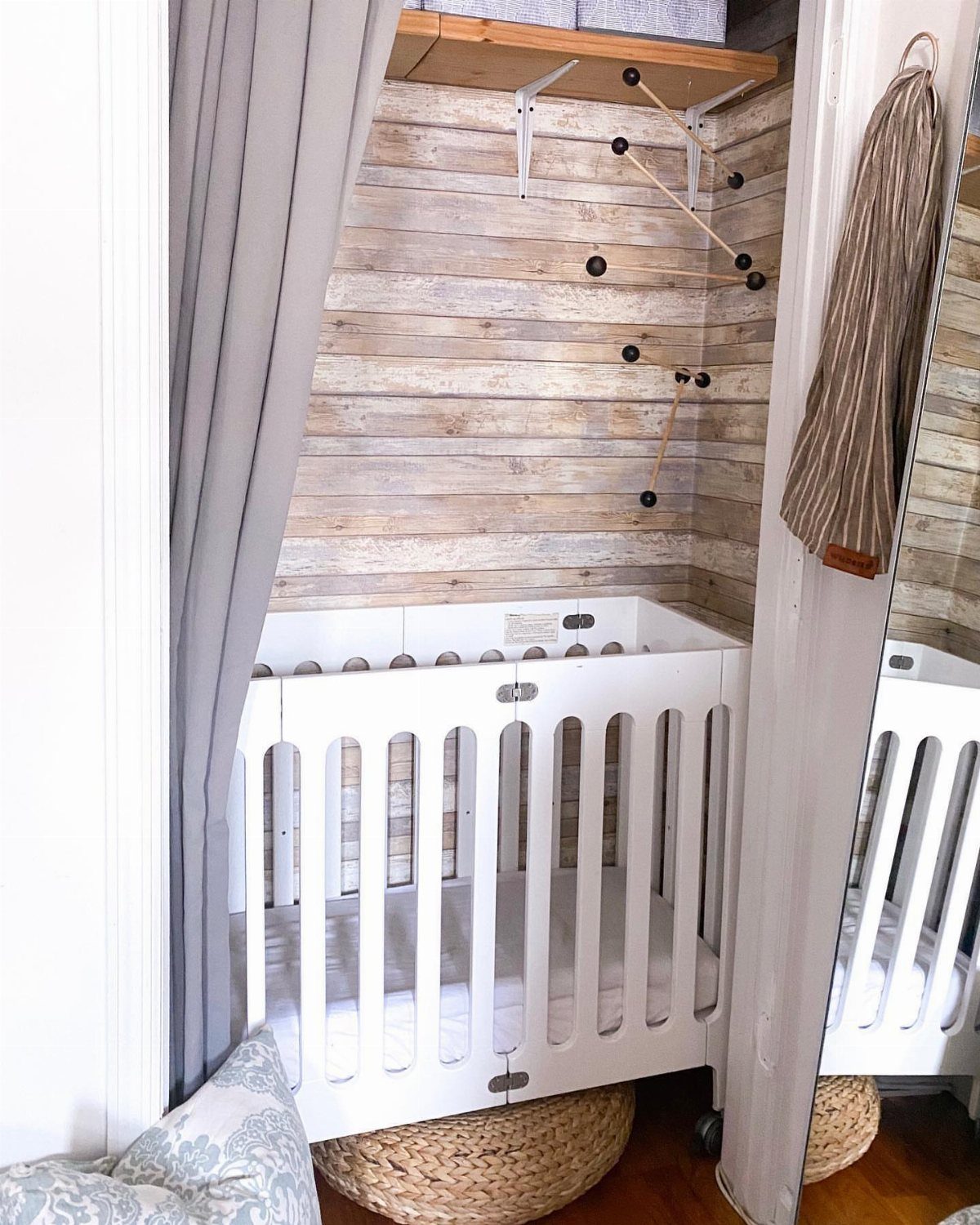
A closet works as a nursery because a mini crib needs so little floor.
Pull out the rod and any shelves the nursery won’t use, and the walls become the room: wood paneling, a single shelf above the crib and a basket at its foot hold the essentials.
A curtain across the opening, in a soft color like grey, hides the crib when you want it out of sight and softens the look of the closet.
I’d hang it on a tension rod so nothing gets drilled into a rental.
2. Remove Closet Doors
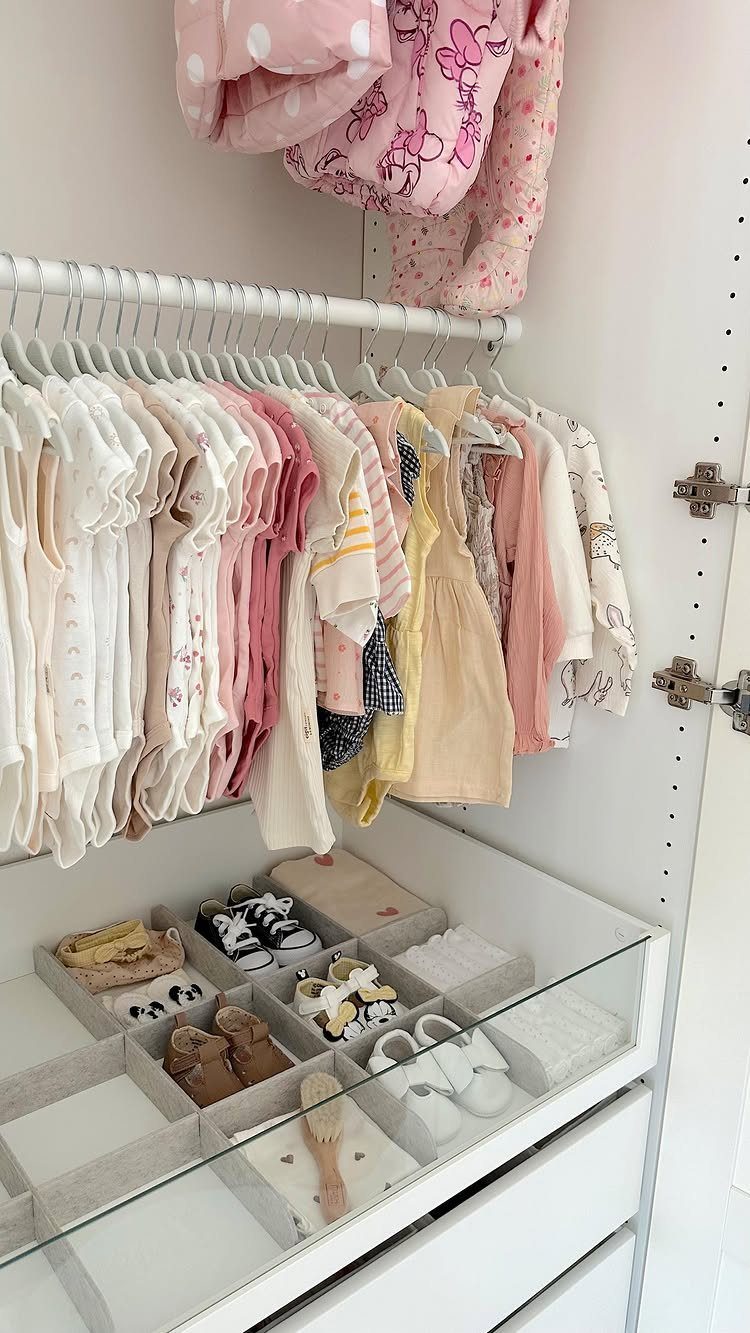
Taking the doors off a closet gives you back the swing space they steal, and it turns the closet into a shelf you can see into.
For a baby, that’s a win: reaching for a outfit with one hand takes seconds.
Keep the inside tidy, because everything is on display.
3. Mini Crib
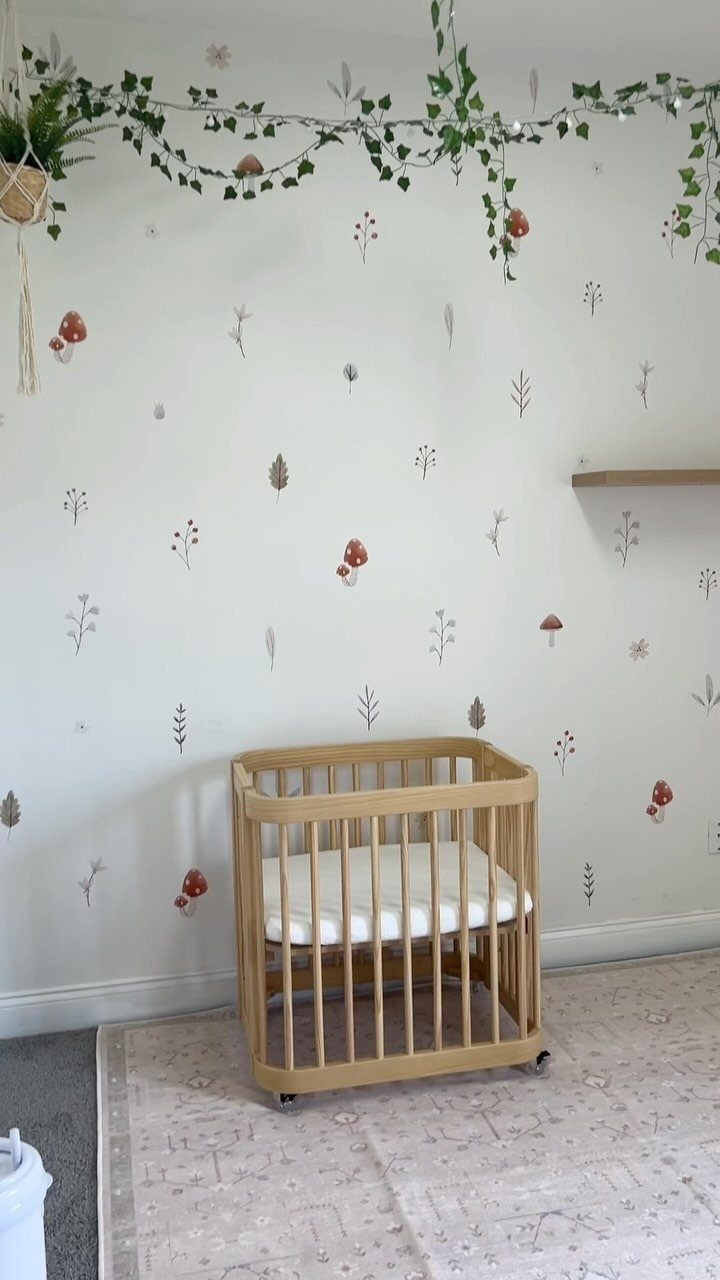
Wheels are the feature I’d look for first in a mini crib. A crib that rolls can slide against a wall at night and out of the way for floor space during the day, which matters in a small room.
Keep the bedding plain and white so the wall can carry the decoration, whether that’s decals or a leafy garland. A patterned rug underneath adds softness without taking up any space.
4. Dresser with a Changing Pad
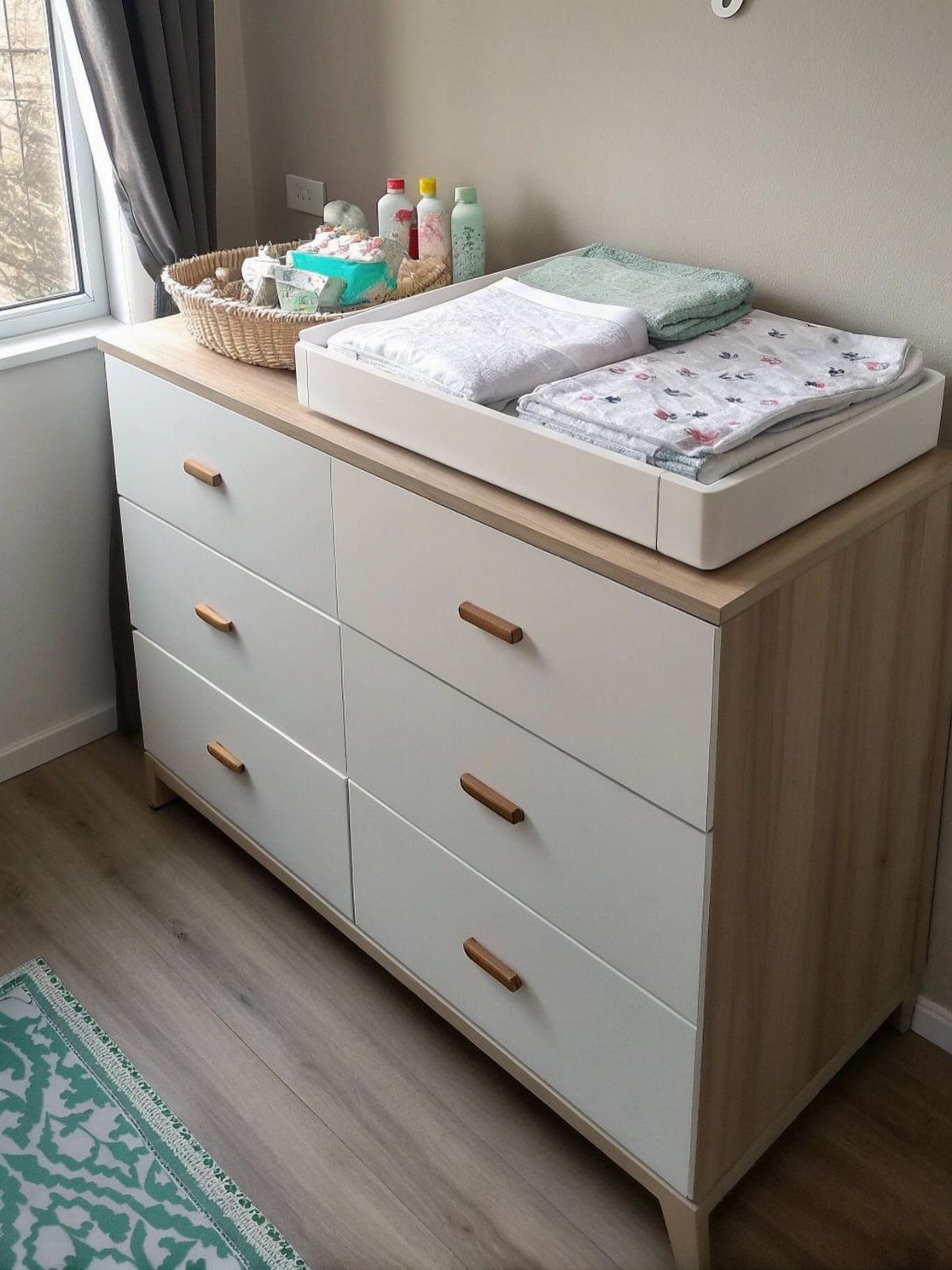
Set a changing pad on a dresser and you get a changing table that later turns back into a plain dresser. I like this far more than a dedicated table, because the furniture stays useful after diapers are gone.
Keep folded blankets and a small basket of supplies within arm’s reach on top of the dresser, so one hand can stay on the baby during a change.
A light wood and white finish keeps a small room bright, especially beside a window.
5. Curtain to Define Space
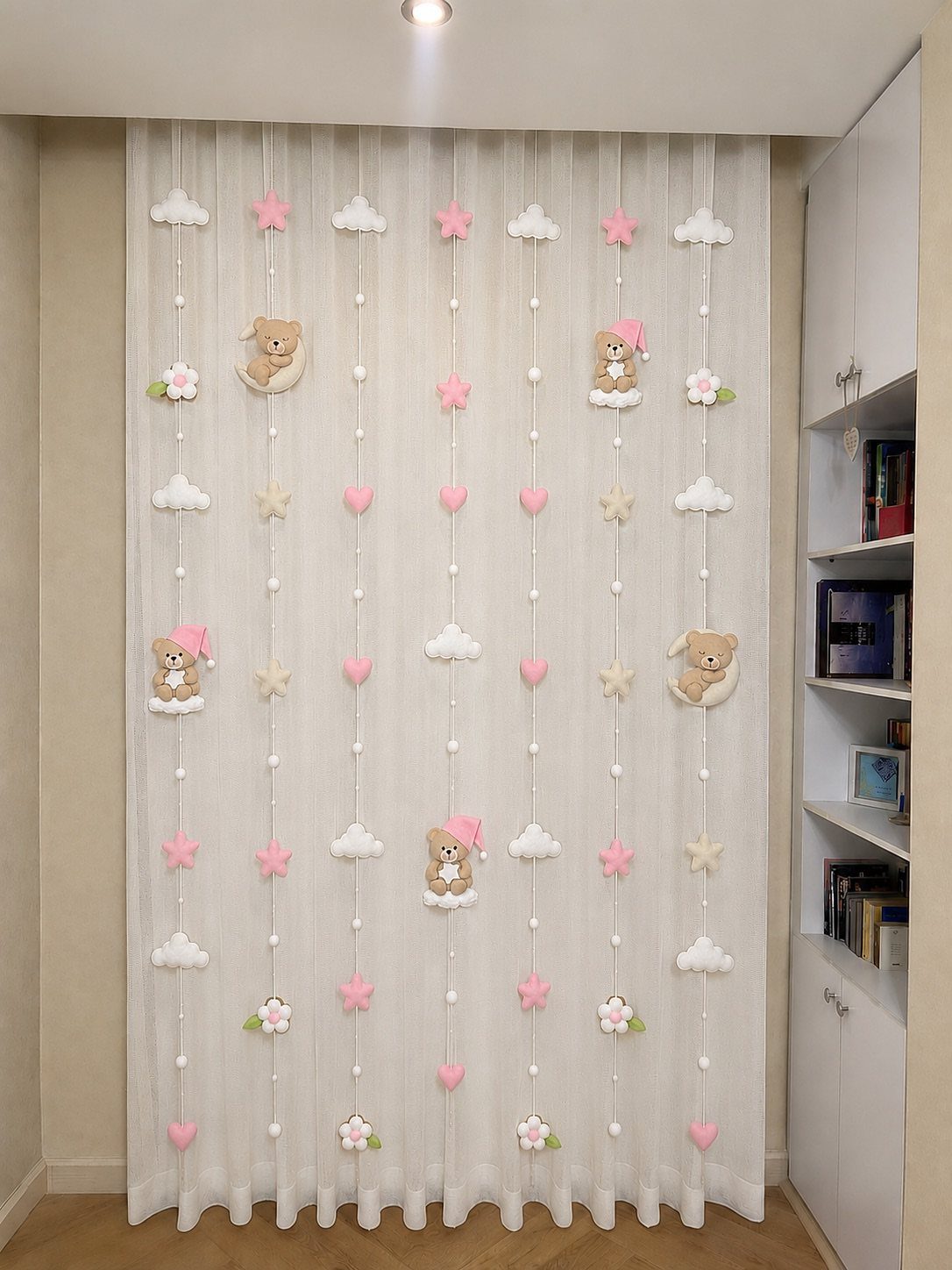
A sheer curtain draws a line in a room without building a wall, which helps when a nursery shares space with something else.
Hang it from the ceiling or a rod so it falls between the crib area and the rest of the room.
Sheer fabric lets light pass through, so the space doesn’t feel closed in. Plush bears, clouds and stars clipped to it add personality, and you can swap them as the baby grows.
6. Storage Underneath the Crib
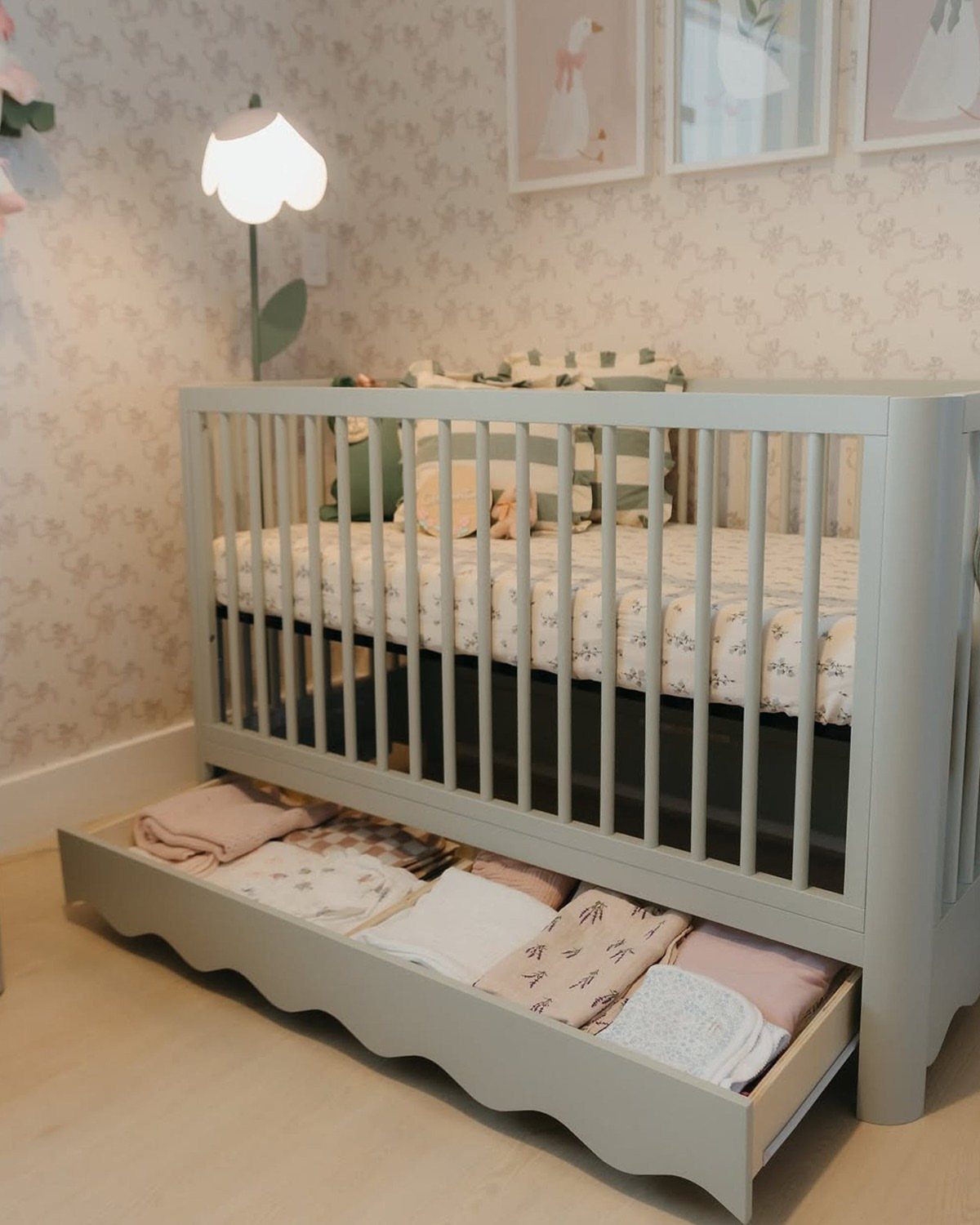
The floor under a crib is prime storage that most people waste. A drawer under the crib can hold linens and folded baby clothes, so the dresser has less to carry.
If your crib lacks a built-in drawer, shallow bins that slide beneath it do the same job. Keep the height low so they clear the frame, and store only light, soft items you reach for often.
7. Vertical Stripes on the Wall
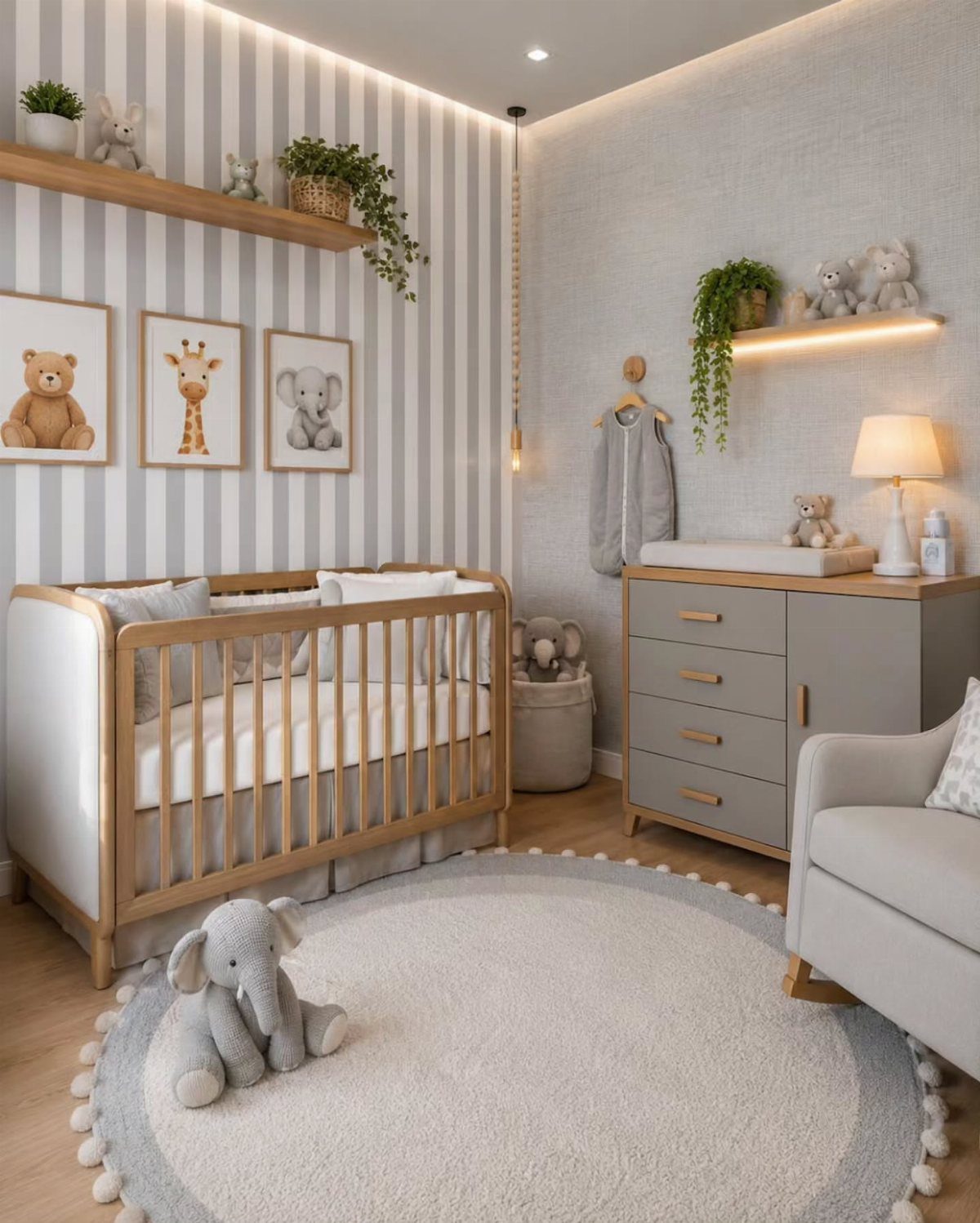
Painted or papered in grey and white, vertical stripes pull the eye up, so a low-ceilinged nursery reads taller than it is.
Stripes of equal width look calm and tidy, which suits a room where the crib, dresser and rug already fill the floor.
I’d keep the stripe colors close in tone, since high contrast gets busy fast in a small space. Hang shelves and animal art over the stripes sparingly, and let the furniture stay simple.
8. Mini Crib in Corners
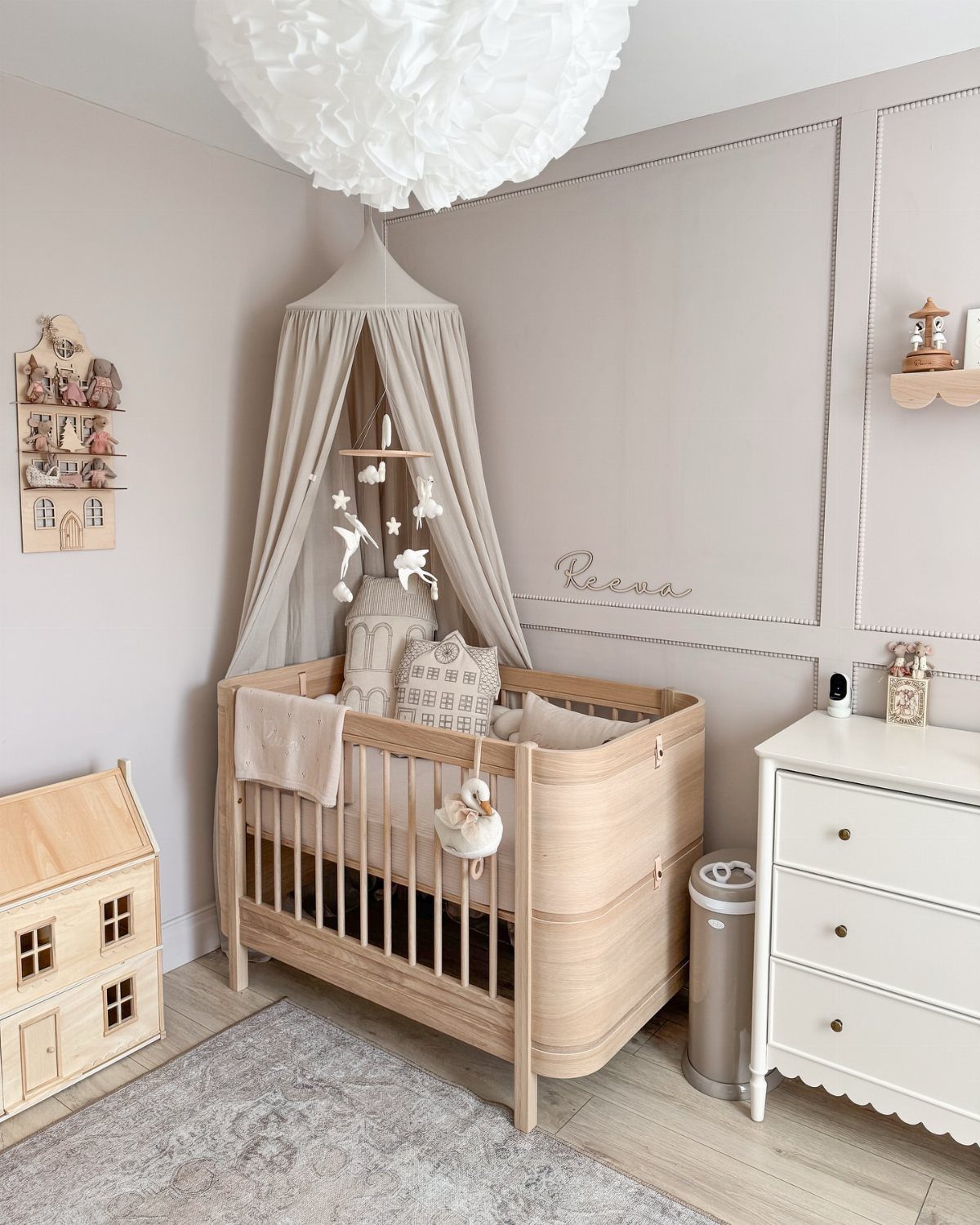
A corner gives a mini crib 2 walls to lean on and leaves the rest of the floor open.
Tuck the crib in, then put the dresser along the adjoining wall so the pieces form an L instead of crowding the middle.
I like a canopy over a corner crib, because the draped fabric makes the nook feel planned. Keep the colors neutral, and let one piece of wall art carry the personality.
9. Mini Crib Nursery Nook
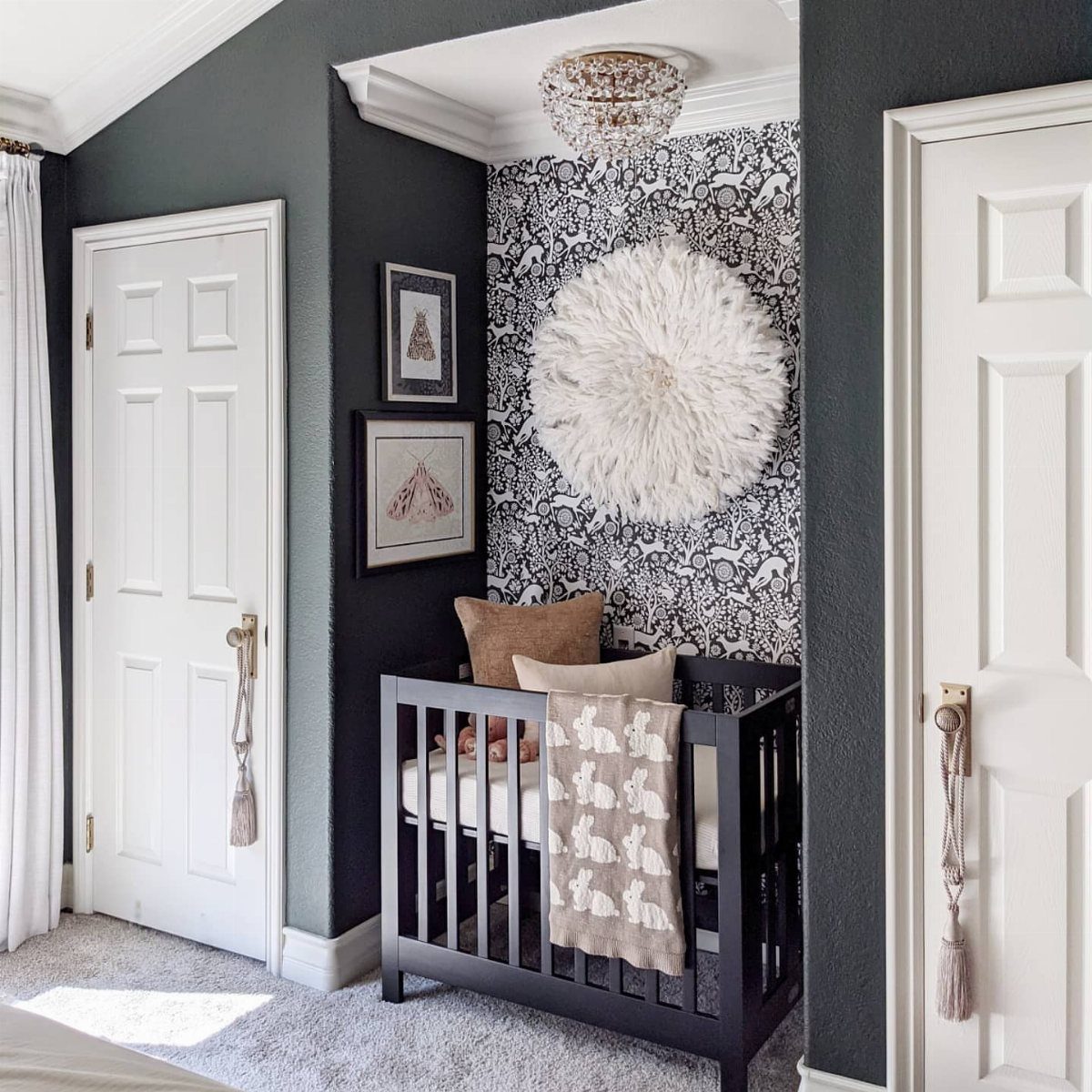
Dark grey walls sound risky for a nursery, but a nook is the place to try them. A black mini crib against patterned wallpaper looks deliberate, and the dark backdrop makes a white fluffy wall piece stand out.
Wallpaper on a single nook wall costs far less than papering a room, and peel-and-stick versions suit renters. Hang a small chandelier or light fixture overhead to finish the corner.
10. Bedside Mini Crib Setup
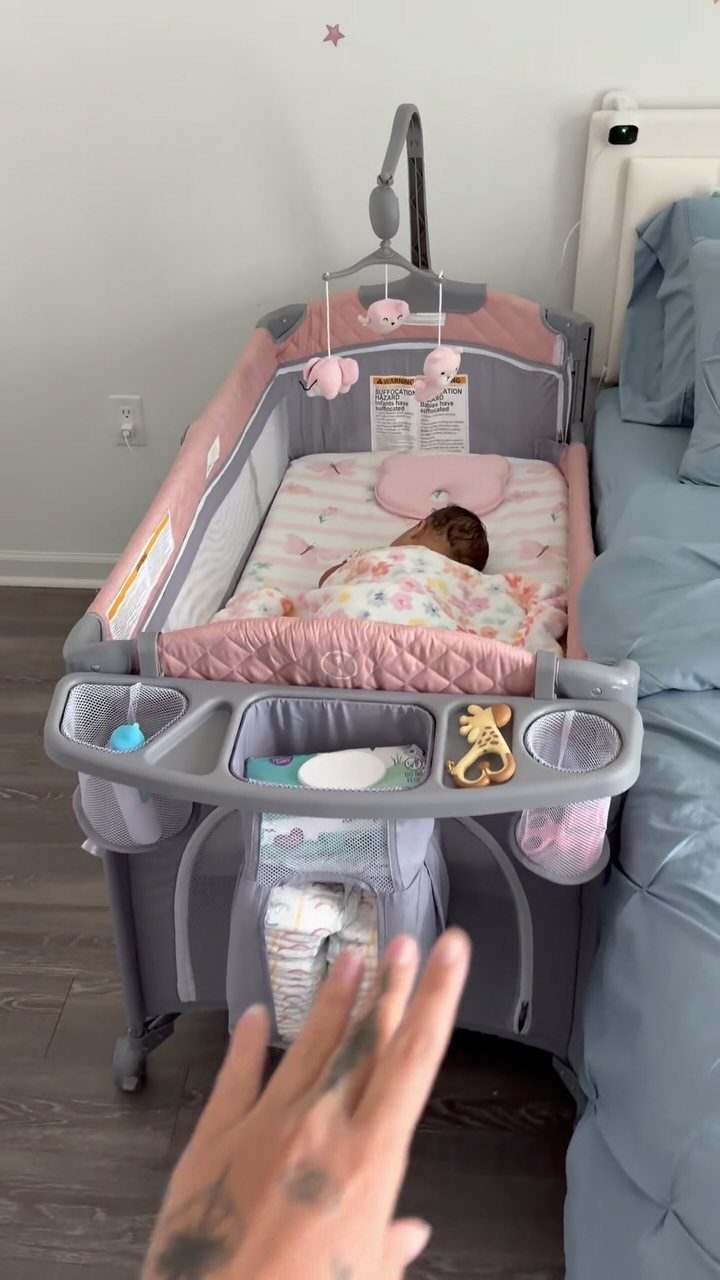
A mini crib set right beside the bed keeps the baby within arm’s reach at night, and its small footprint is what makes that possible in a bedroom.
Pick a crib whose colors echo your bedding, like the pink and grey here, so it blends in.
A storage tray on the crib holds wipes and diapers for middle-of-the-night changes. Add a mobile overhead, and the corner of the bedroom becomes a complete sleeping spot.
Easily converts to a mini toddler bed, daybed, and twin-size bed (mini toddler kit and twin-size kit sold separately).
11. Canopy Over Mini Crib
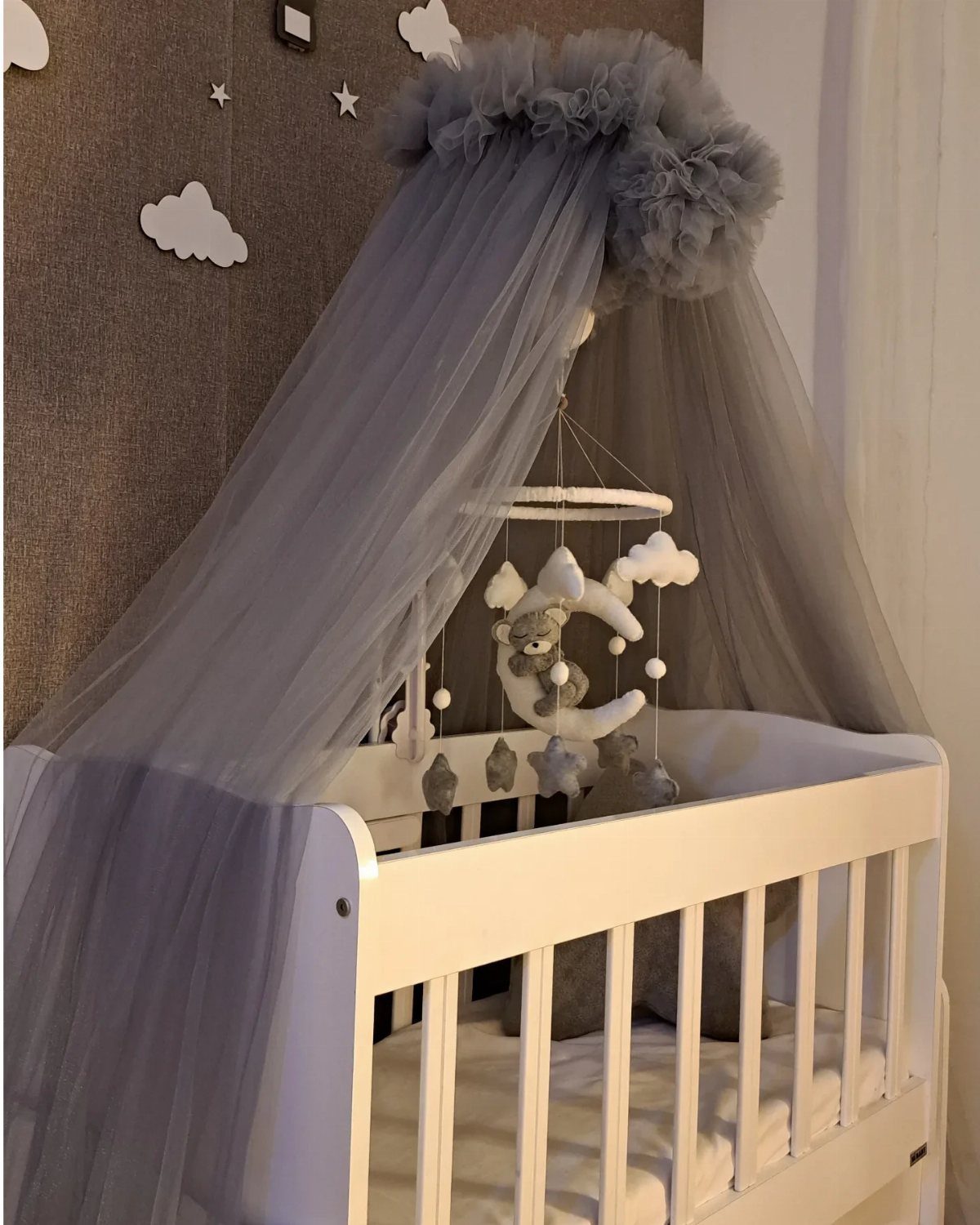
Drape tulle over a white mini crib and the frame gets a soft ceiling without any extra furniture. Grey tulle is my pick, since it adds mood without competing with the white crib.
Pair it with a moon-and-cloud mobile and cloud decals on the wall so the theme repeats. Hang the canopy from a ceiling hook, and keep the fabric well above the mattress.
Choosing the Right Crib
Footprint decides everything in a small room, so start with the tape measure. A standard crib is 28×52 inches, and a mini crib is noticeably smaller, which is the whole reason it fits in a corner of a small room.
That difference sounds small until you try to fit a dresser and a chair around it.
A mini crib can often last until a baby is 18 months to 2 years old, so plan on buying a bigger bed sooner than you would with a standard crib.
A convertible mini crib stretches the budget across years: toddler bed first, then twin or full headboard depending on the model.
I’d pick that route when the room is small but the home is long-term, since it grows with the child. Even with the larger footprint, it can be the better investment.
Built-in storage under the mattress is worth weighing too. Whatever you choose, check that the crib meets current safety standards before you buy.
Storage Solutions
Walls give you the square footage the floor can’t. Wall-mounted shelves, a tension rod for hanging clothes, and stacked baskets claim vertical space and leave the floor open.
Choose pieces that look good, so the storage doubles as decor. I mount a pegboard above the changing pad, add a few floating shelves, and use hooks for fabric bins so everything stays in reach without opening a drawer.
Safety matters more than style here.
Find the studs with a stud finder before you hang anything heavy, floating shelves especially, and anchor each one securely. In a rental, use the stud locations to pick a few strong mounting points rather than many small ones.
Decorating Small Nurseries
White, cream, and pale gray push the walls back visually, which matters when the room is already tight. Furniture in a light finish blends with the walls instead of chopping the room into separate blocks.
A mirror reflects light and adds depth. Place one where it catches window light.
Curtains can add width. Hang the rod 6–12 inches wider than the window frame and let the curtains fall on either side so daylight comes through unblocked.
Keep as much of the floor visible as you can. A patterned wall with plain furniture keeps the eye moving without clutter, and 3 good pieces read cleaner than a shelf packed end to end.
Frequently Asked Questions
What are the best mini cribs for small spaces?
Gelato 4-in-1 and Origami Mini Crib are two popular picks. Casters come first on my checklist: a crib that rolls can sit flush to the wall overnight and then glide out of the walkway once morning starts.
A convertible model stretches the budget by turning into a toddler bed and later a twin or full headboard, though it has a larger footprint.
How can I maximize space in a small nursery?
Choose furniture that does double duty and put storage on the walls instead of the floor.
A dresser topped with a changing pad becomes a plain dresser again after diapers, and shelves, a pegboard and hooks for fabric bins keep supplies in reach.
Light colors and a visible floor make the room feel bigger, and decor should stay minimal.
How big is a mini crib compared to a standard crib?
A standard crib is 28×52 inches, and a mini crib is smaller, so check the exact footprint of the model you like before you measure the room.
The difference sounds small, but it decides whether a dresser and a chair fit around the crib in a tight room.
Plan on 18–24 months of use at most, because after that most toddlers have outgrown the mattress and the short rails.
Can a closet be turned into a nursery?
Yes, because a mini crib needs so little floor. For a rental, hang a curtain from a tension rod to cover the crib; it goes up with no drilling and leaves the walls untouched.





