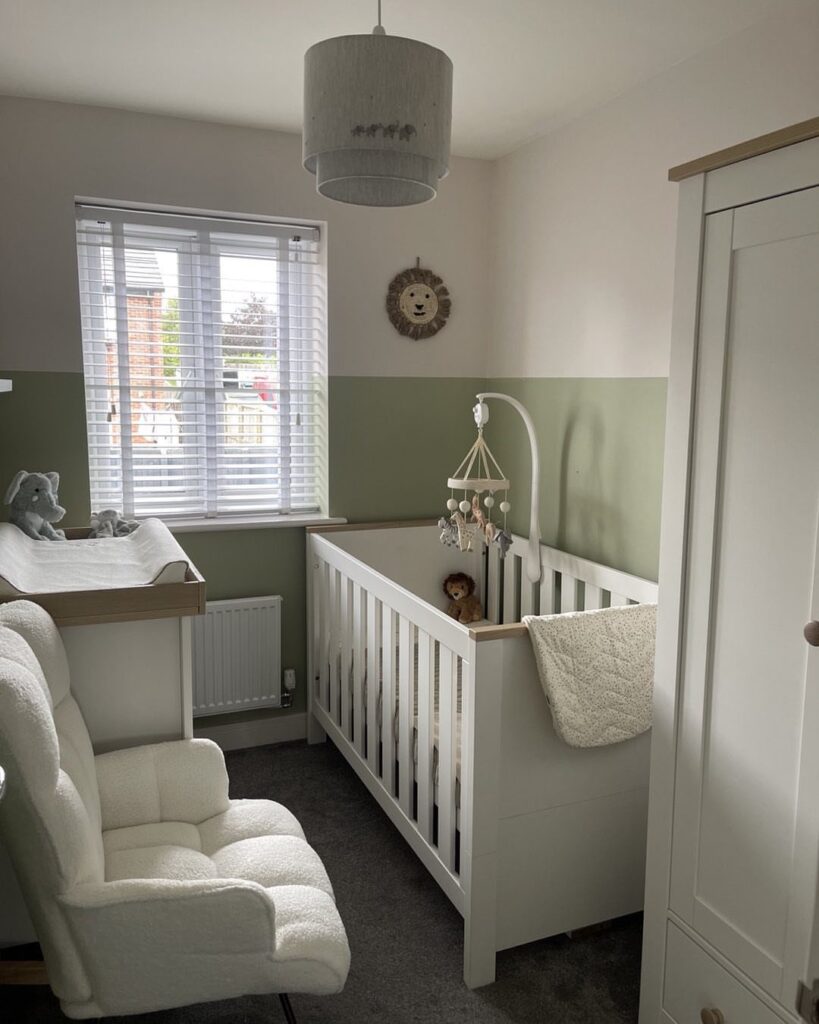
Where the baby sleeps decides most of this list: a Bedside Nursery Corner, a Closet Nursery or a Mini Crib each suits a different answer, whether that’s your own bedroom or a room of its own.
Most of this list works in a rental, since an Over-the-door Organizer needs no tools, a leaned mirror needs no drilled holes, and a Crib with Built-in Storage puts drawers right in the base.
1. Mini Crib
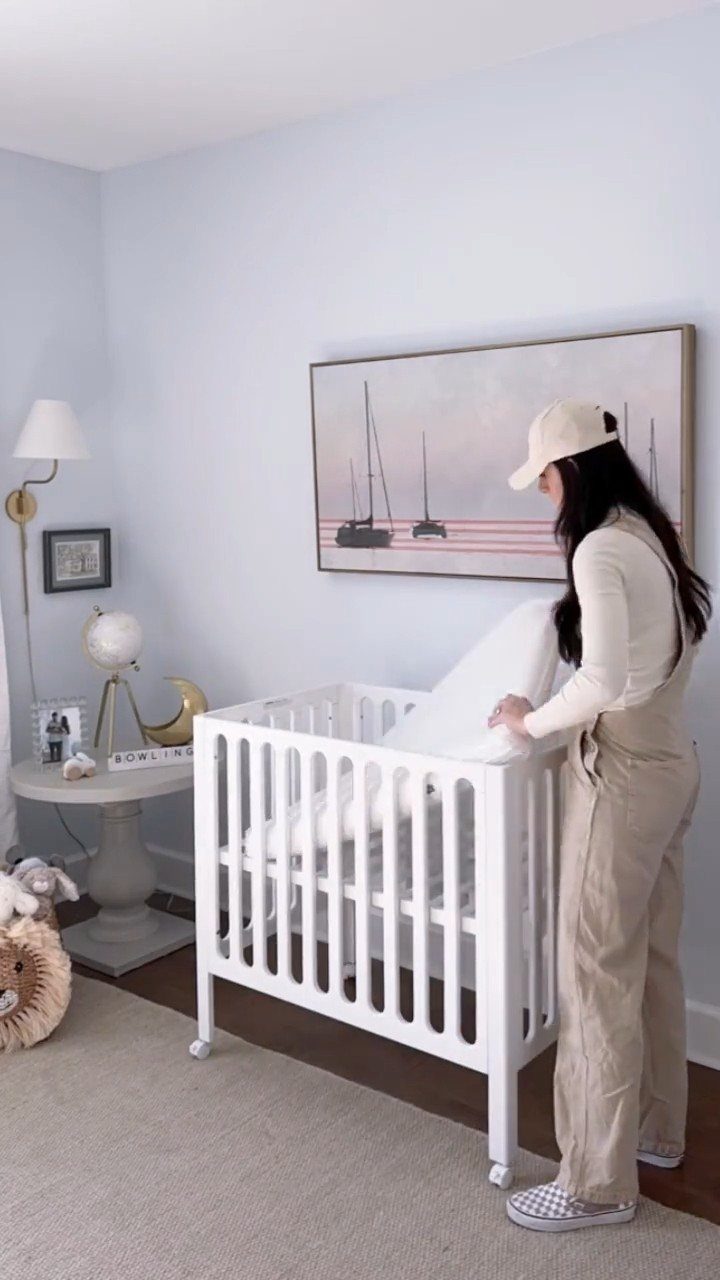
A mini crib gives up floor space without giving up the baby’s own sleeping spot, and in a room this size that trade is worth making.
Against a wall, with one side table and a rug beside it, the room still has space to walk.
Pick a white or light finish so the crib recedes into the wall color. Keep the bedding to a fitted sheet and little else, which also keeps the crib looking calm.
I’d measure the room before ordering, then tape the crib’s footprint on the floor for a day to see how it feels.
2. Vertical Storage
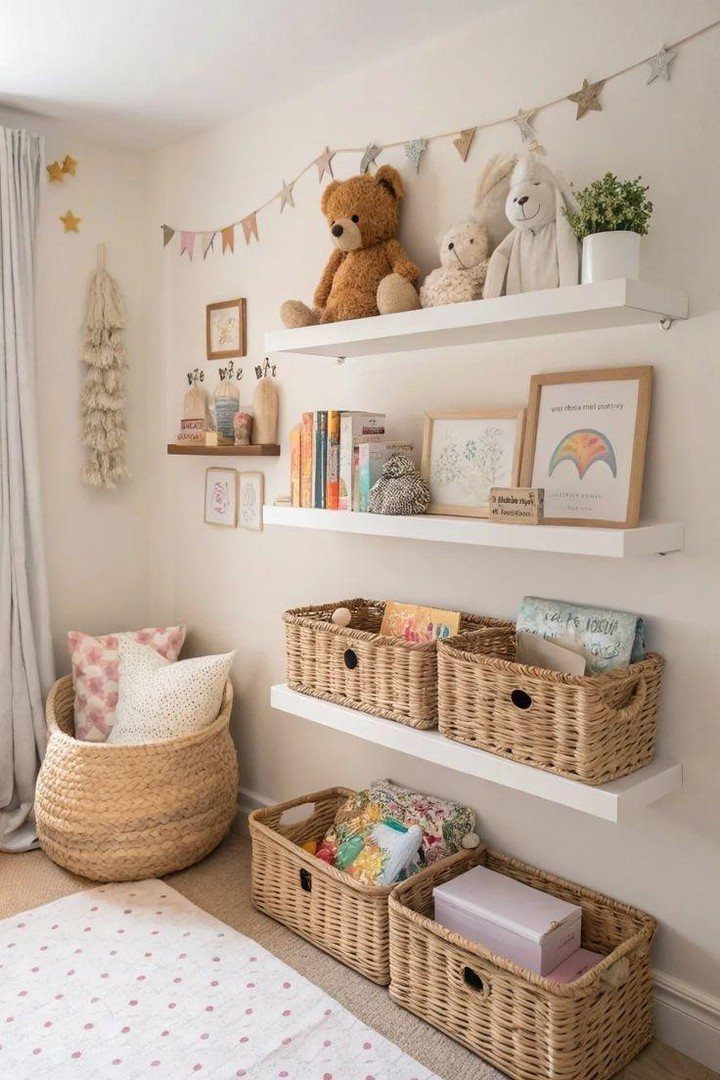
Floating shelves turn an empty stretch of wall into the nursery’s storage, and the floor stays clear for a rug and a basket.
Put the baskets on the shelves for small, messy items and let books face outward so they read as decor. Keep the heaviest things on the lowest shelf.
Anchor the shelves into studs or use proper wall anchors, since a nursery shelf has to hold up to curious hands later.
Instead of assembling a smattering of small furnishings (they would have made the nursery feel cluttered), the couple built a floating wall unit complete with a changing table and mini closet.
— Domino
3. Closet Nursery
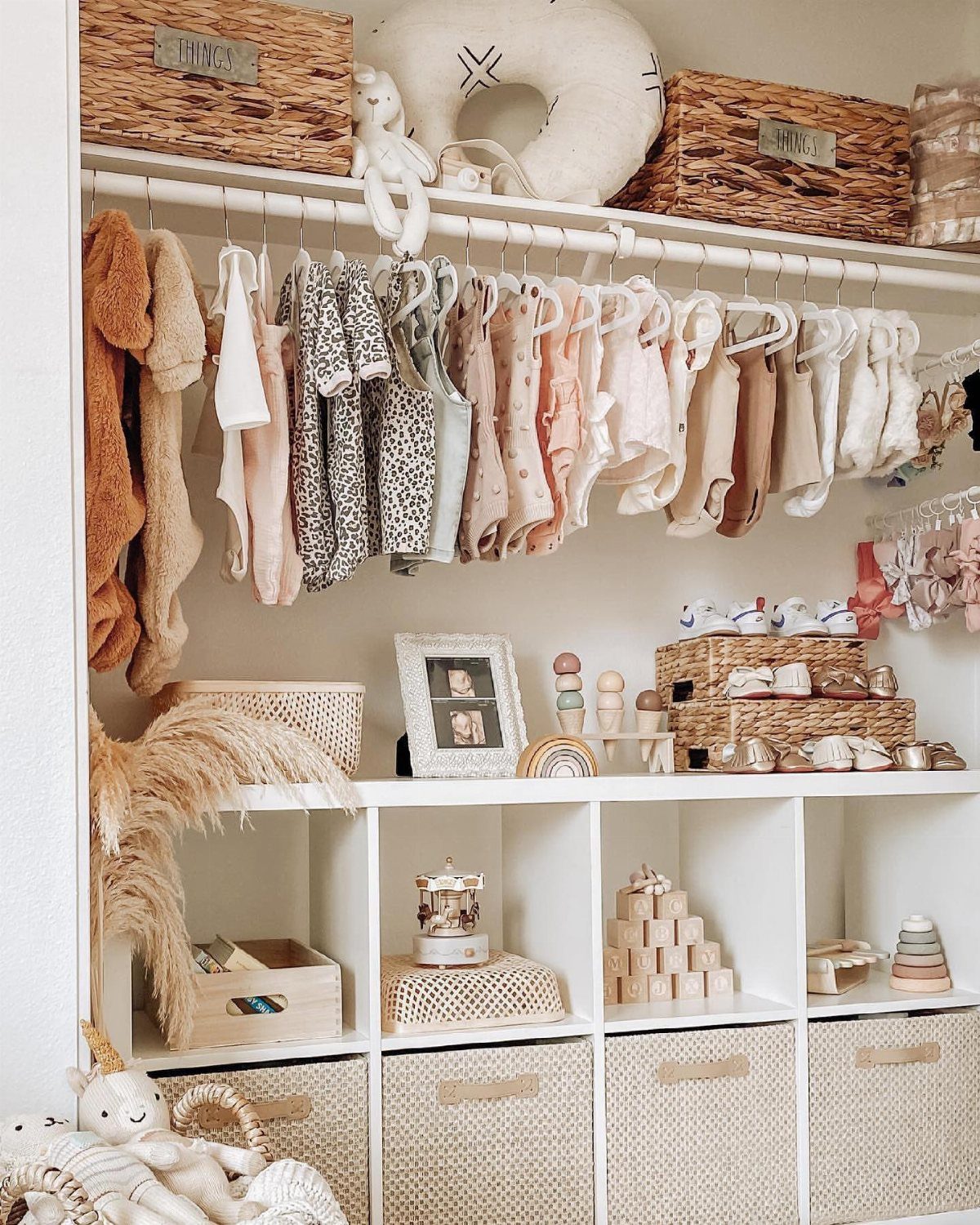
Closets are an underused nursery asset: hanging rods, shelves and a door that hides the clutter. Baby clothes are short, so one rod can hold two rows if you add a second one lower down.
Fill cubbies with woven baskets and label each one, because in the middle of the night you will not remember what’s in the third basket. Shoes and small toys fit on the open shelving.
I like this setup best when the bedroom has no spare corner at all. Take the doors off if you want more room to move.
4. Dressers That Double as Changing Tables
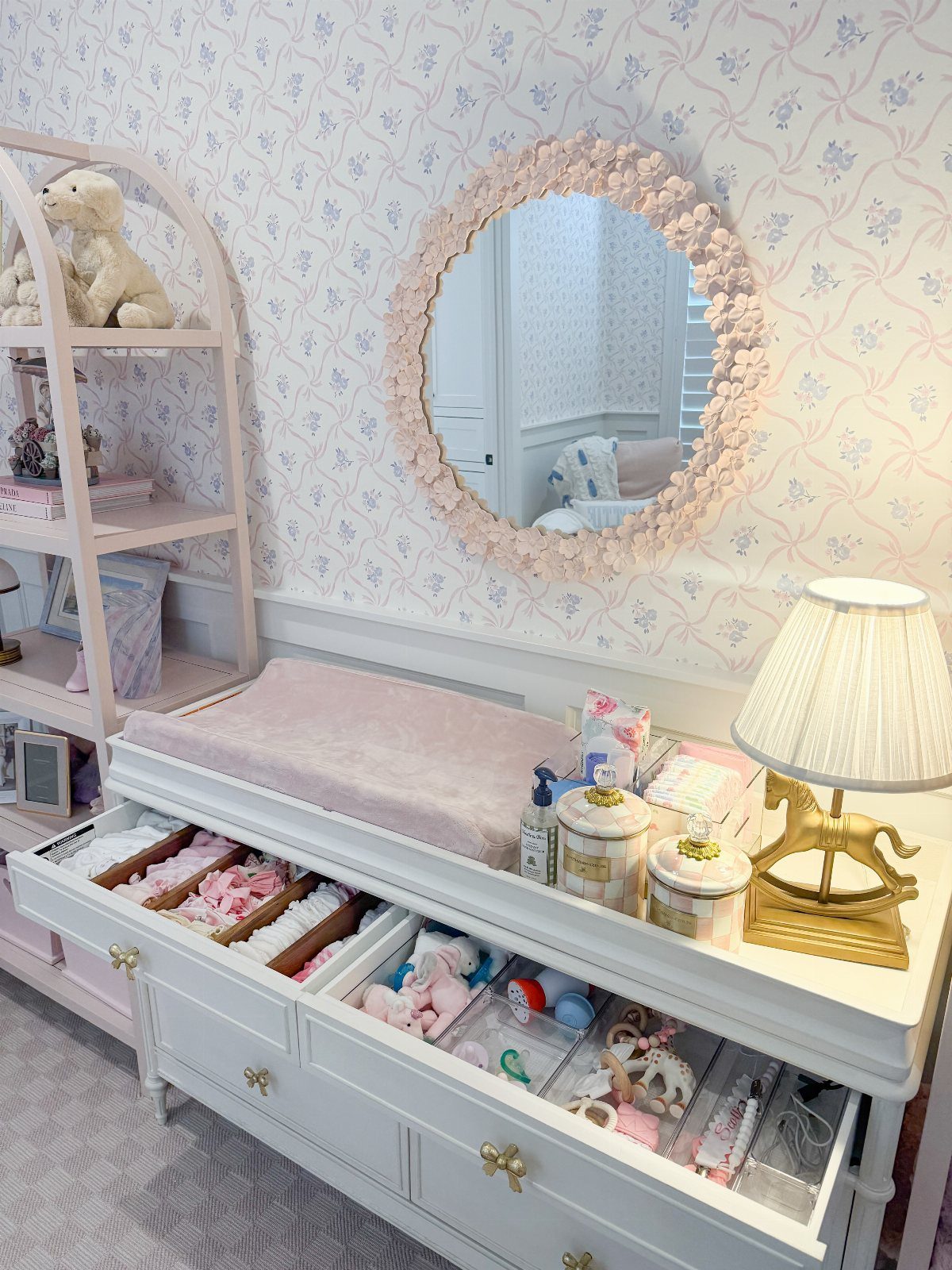
Buy one dresser and skip the separate changing table. A changing pad strapped to the top gives you a station, and the drawers below hold diapers, wipes and clothes within arm’s reach.
Choose a dresser at a comfortable standing height for you, and a top deep enough for the pad to sit flat. Keep the pad’s edges clear of lamps and mirrors so nothing can be knocked into the baby’s reach.
A round mirror and a small lamp on top make the dresser read as furniture, not equipment. Later the pad comes off and it’s a regular dresser, which is the real savings.
5. Mobile Changing Station
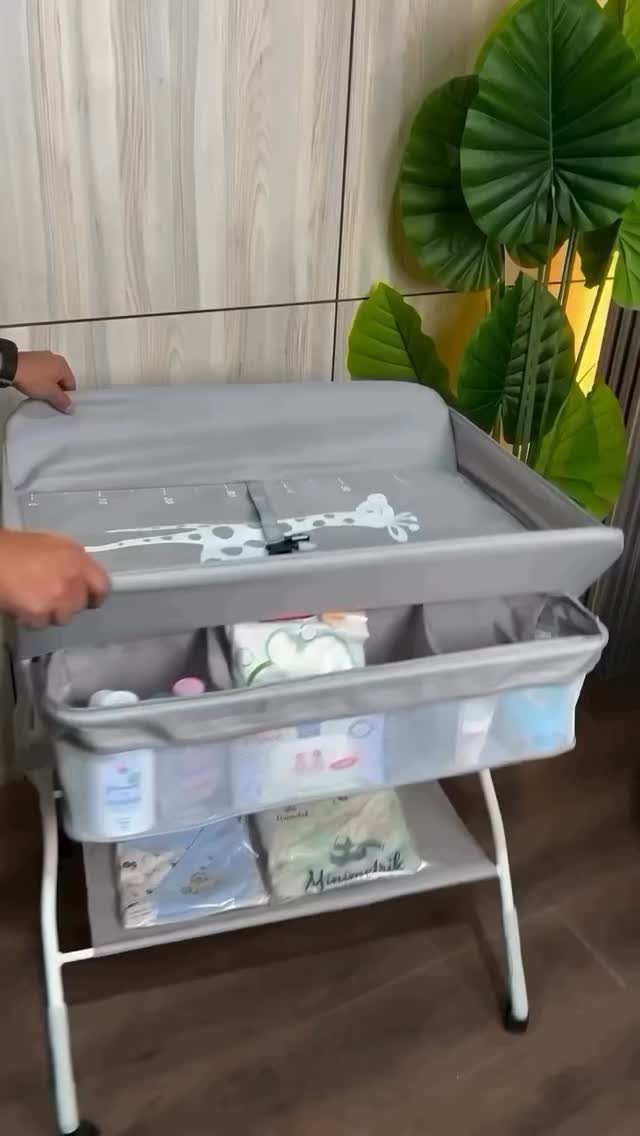
Wheels make a changing station a thing you move to the baby, not the other way around.
A wheeled frame with storage bins can sit in the nursery by day and roll to the living room when you need it there.
Look for locking casters, and sort the bins by use: diapers in one, creams and wipes in another, spare outfits in a third. Keep it fully stocked so you aren’t walking away mid-change.
This suits a tight apartment well. A rolling cart is lighter than a dresser and tips more easily, so never leave the baby unattended on it.
6. Soft Pastels
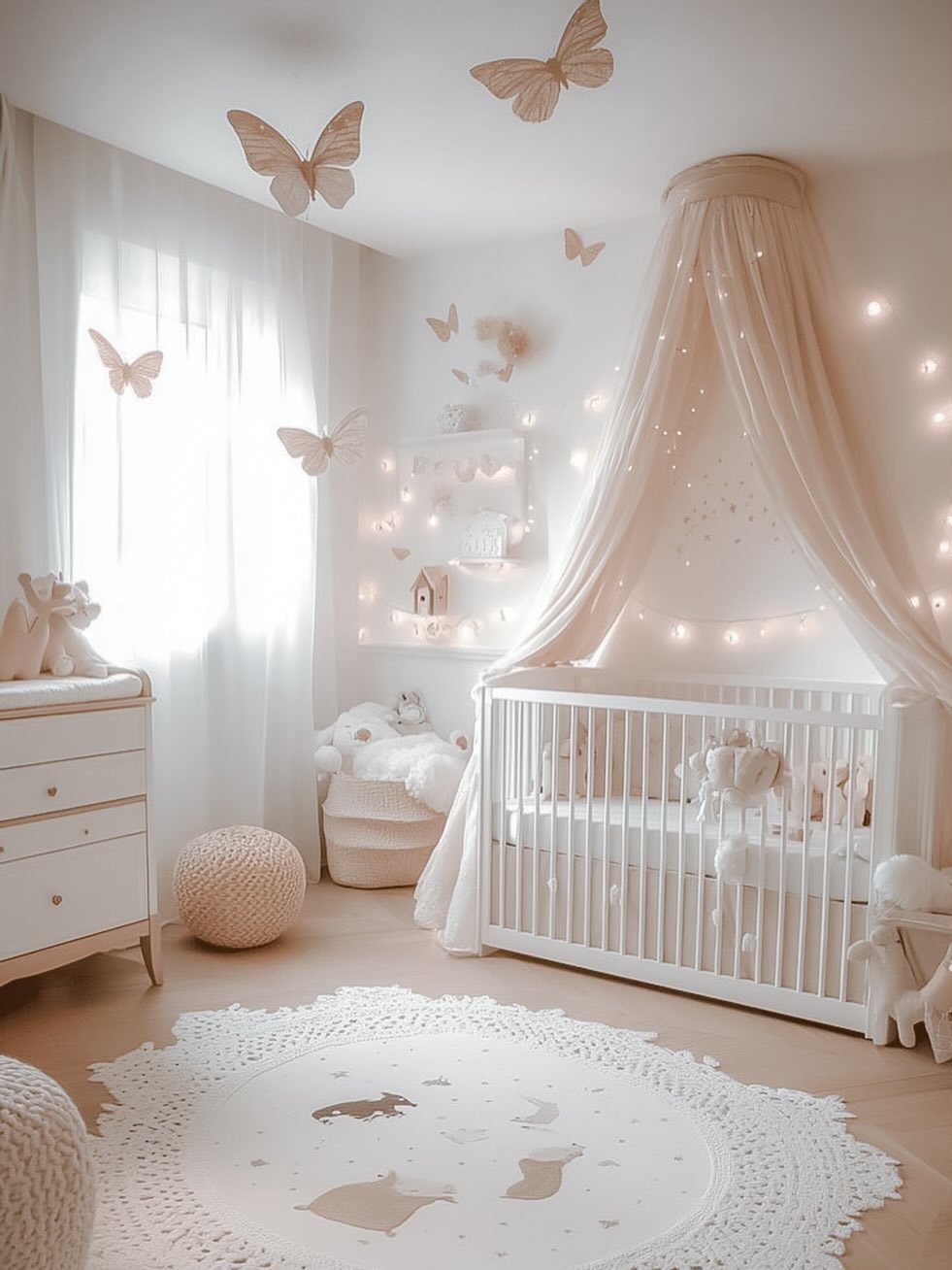
Soft pastels keep a small nursery from feeling cramped, because pale, low-contrast tones let the walls fall back. Beige and cream with white furniture reads as one calm surface.
I’d paint the walls one pale shade and let the accents carry the interest: wall decals, string lights, a round rug. Decals are the budget move here, and they peel off, which matters in a rental.
Keep the palette to 2 or 3 shades so the room stays quiet. Test paint swatches on the wall and look at them in morning and evening light.
7. Cribs with Clean Lines
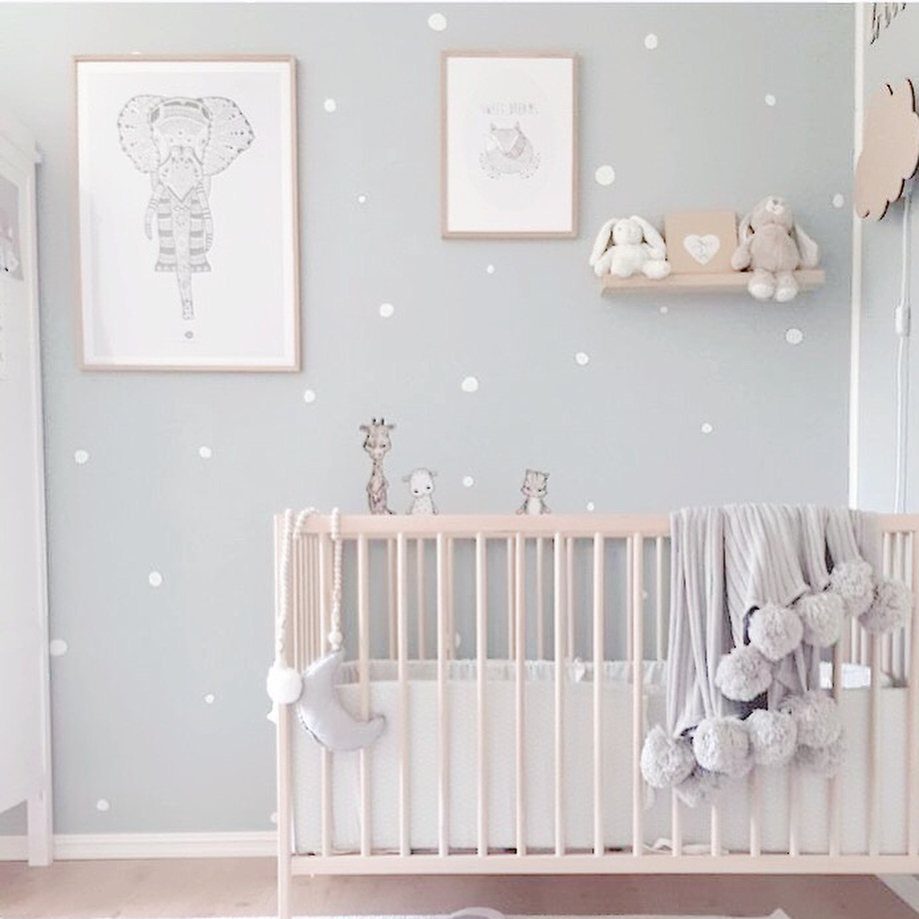
A crib with clean lines has straight rails and no scrolls or carved posts, so it looks like furniture and takes up less visual space in a small room.
A light wood finish does the same job as white: it blends into the wall instead of dominating it.
Against a patterned wall, a crib with plain white or natural wood rails and no carved details keeps the corner from getting busy.
Busy walls and a busy crib compete, and a simple frame lets the art and shelf carry the personality.
Pick a finish that matches your floors or trim, so the room reads as one set of tones.
8. Use Mirrors
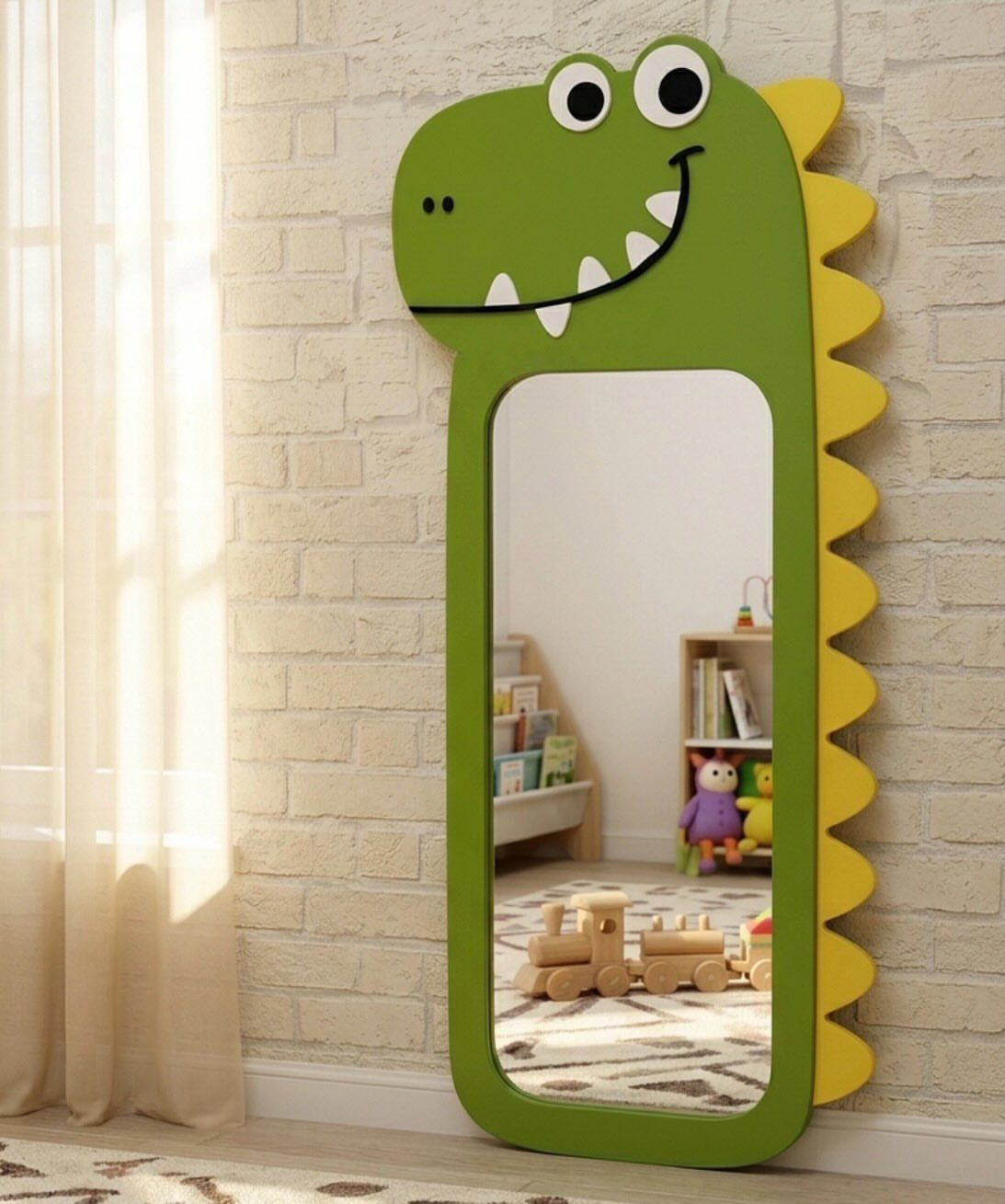
Mirrors bounce light around, and a small nursery needs that. A full-length mirror leaned against a wall also doubles as a piece of decor, with no hanging required.
A mirror that stays off the wall is the renter’s move: no drilled holes, and you can slide it somewhere else later. Place it across from a window so daylight travels deeper into the room.
A shaped mirror, such as a dinosaur or a cloud, adds character along with the light, and a lightweight acrylic or wood-framed one hung well out of reach is safest in a nursery.
If you go with a tall one, I’d make sure it can’t tip, since kids will climb on anything leaning. A wall strap or anchor solves that.
9. Over-the-door Organizer
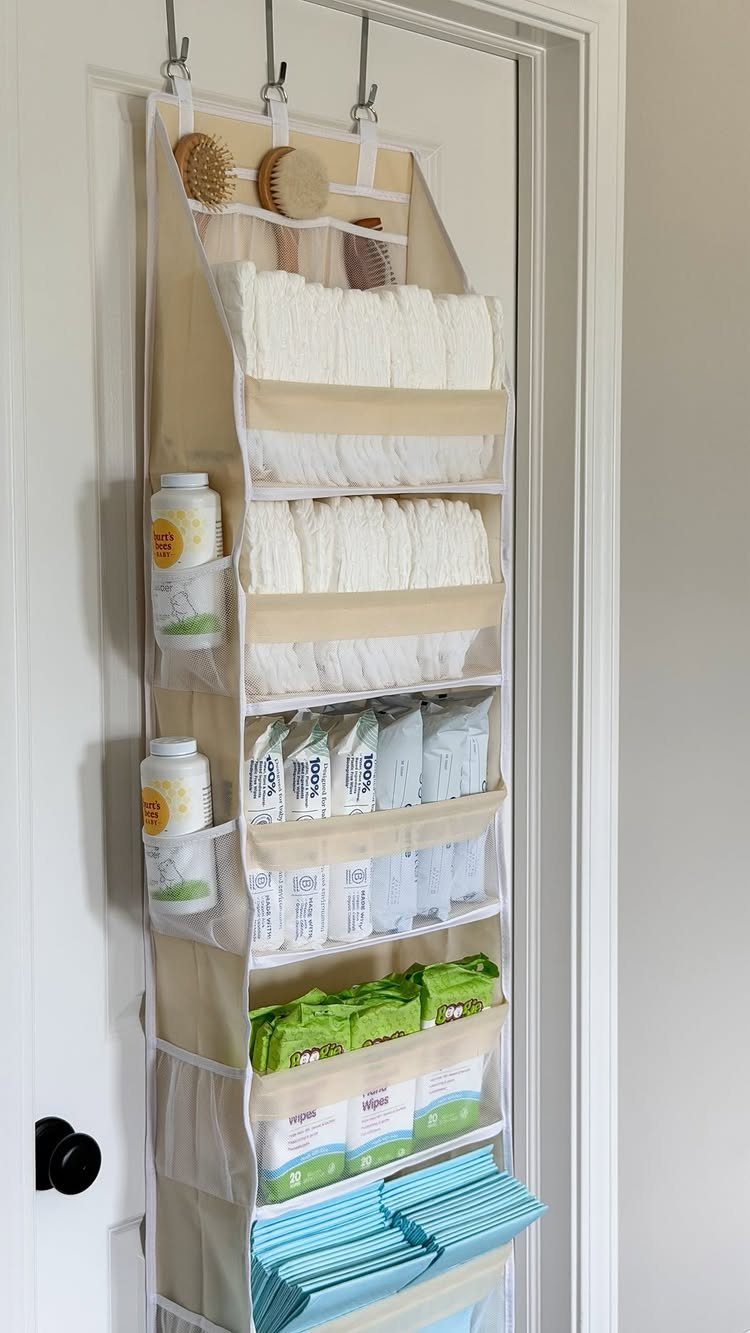
An over-the-door organizer turns the back of a door into storage with zero floor space used. Clear or fabric pockets hold diapers, wipes, brushes and powder where you can see them at a glance.
I’d sort by size: diapers in the big bottom pockets, small grooming items up top. Keep the things you grab most at hand height.
It costs very little and needs no tools, so it suits a rental. Check that the door still closes with the organizer hanging, since a thick one can catch on the frame.
10. Crib with Built-in Storage
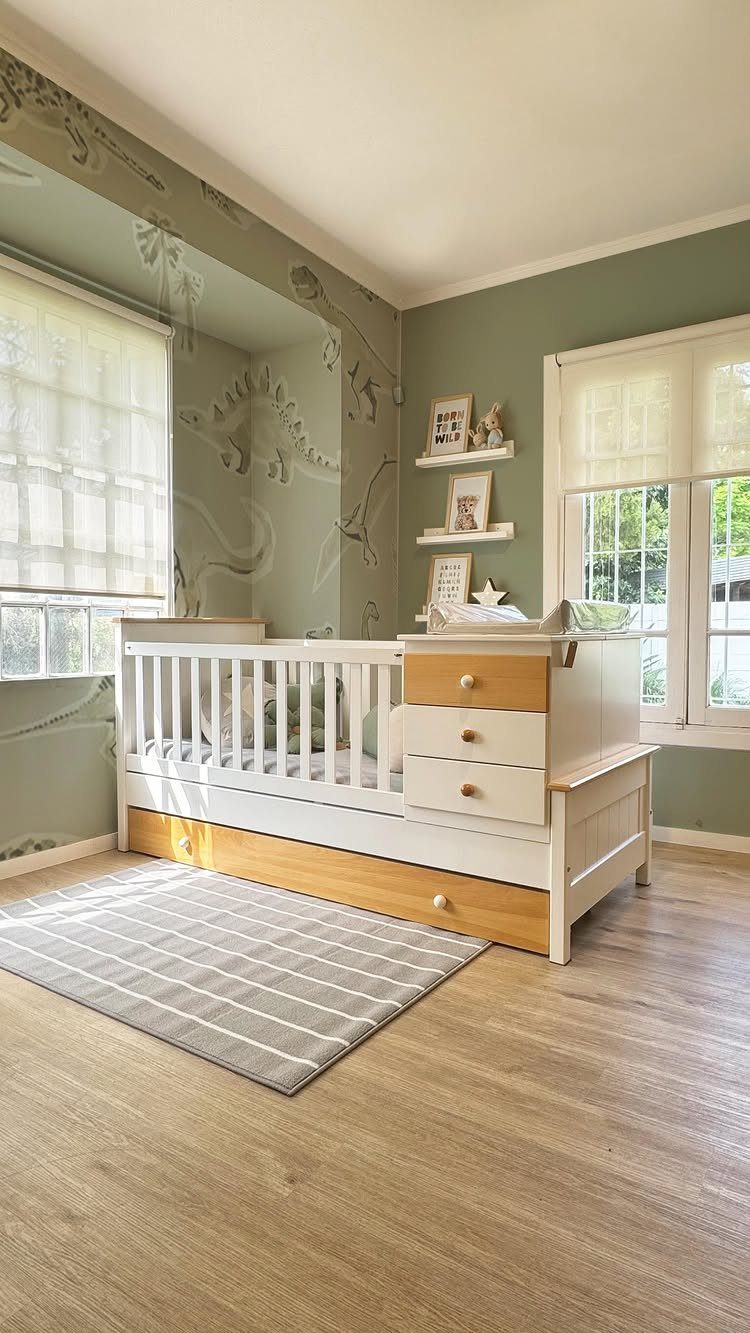
Drawers built into the base of the crib use the dead space under the mattress, so one piece of furniture does two jobs. In a small room, that can mean skipping a dresser altogether.
Fill the drawers with items you need often but not urgently: spare sheets, seasonal clothes, extra blankets. Keep diapers somewhere closer to the changing spot.
A white finish keeps a crib with built-in storage from looking bulky against a colored wall like sage green, since the drawers and shelves then read as part of the room instead of one big block.
Check that the drawers slide out without hitting the wall or rug.
11. Bedside Nursery Corner
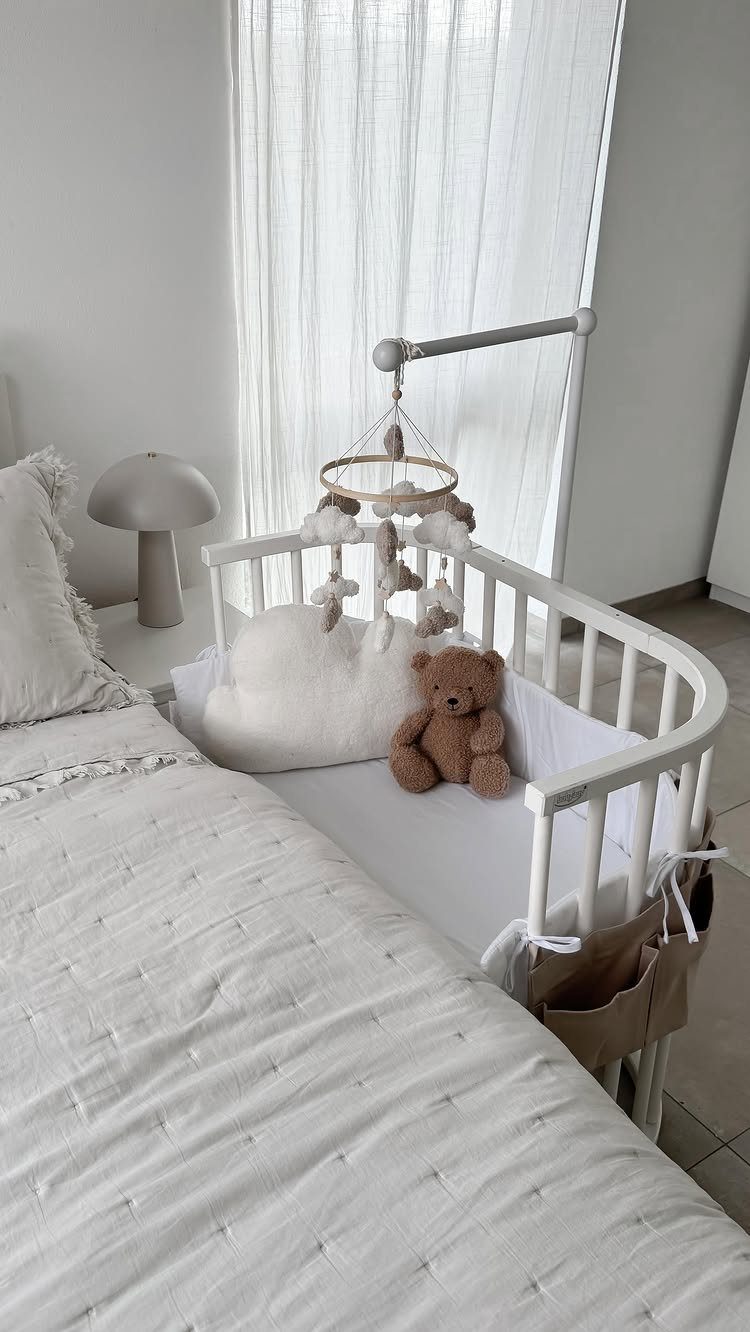
Putting the crib right beside your own bed keeps the baby within reach for night feedings, and it uses the bedroom you already have instead of a second room.
Measure first. You need enough floor on the crib’s other sides to walk, and a bedside table may have to move.
I’d pick a crib in white or a pale tone so it reads as part of the bedroom rather than a second bed jammed in.
Keep the crib’s side clear of curtain cords and anything hanging nearby. Mobiles belong out of the baby’s reach.
12. Oval Crib
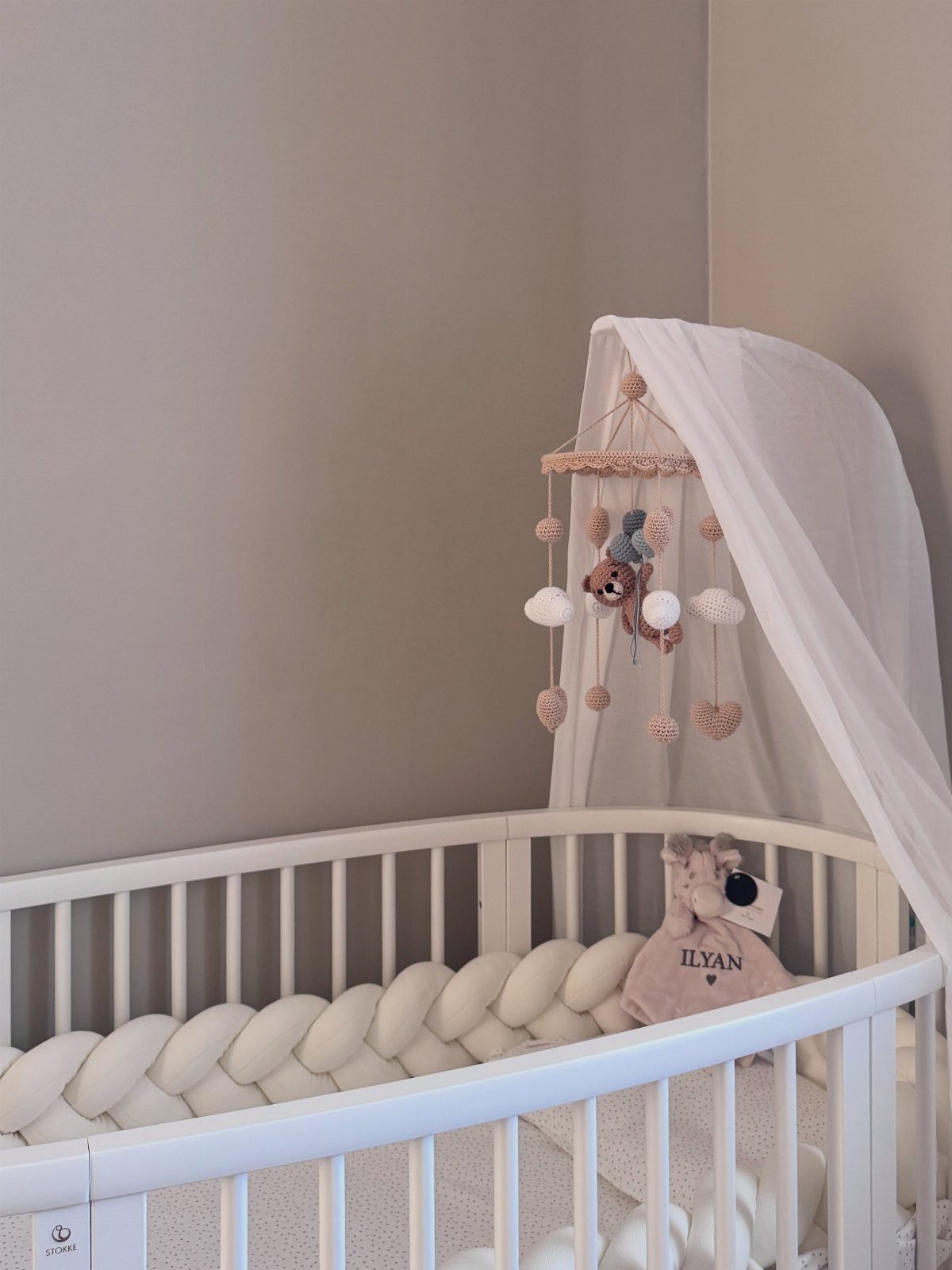
An oval crib has no corners, so it tucks into a tight spot and is gentler on shins and elbows when you squeeze past it. The curve also softens the look of a small room.
A canopy adds height and a soft focal point, which helps a compact nursery feel finished. Hang it from a ceiling hook placed well above the crib so the fabric stays far from the baby.
Oval cribs usually need special mattresses and sheets, so check what fits before you buy, and budget for it.
Creating a Cozy Atmosphere
Soft rugs, a mobile and a few personal pieces do most of the work in making a small nursery feel lived in.
Pick one rug large enough to sit on comfortably, since a patch of softness on the floor is where you’ll spend a lot of time with the baby.
Treat the ceiling as extra wall. A mobile or ceiling-mounted decoration pulls attention upward and makes a low room feel taller than it measures.
Pick pieces that work twice: bins that stack and still look finished, or a side table with a drawer. A decal or framed print gives the room character without claiming any of the footprint.
Rattan furniture is a good fit here too. It’s lightweight and has a natural look that keeps the room calm.
Lighting Considerations
Use several light sources instead of one overhead fixture. Spreading light around the room evenly makes it look larger, and it lets you dim things down for night feedings.
Get lighting off the floor. Plug-in wall sconces need no wiring, so they suit renters, and they free the corner a floor lamp would take up.
Let daylight do the rest. Keep window treatments light and easy to pull back, so the room is brightest during the day.
Frequently Asked Questions
How to make a small room into a nursery?
Start with a mini crib against one wall, then add a dresser with a changing pad strapped on top so one piece covers storage and changing.
Floating shelves, a mirror leaned across from the window and pale wall colors keep the floor clear and the room looking bigger.
Before buying a crib, mark its footprint on the floor with painter’s tape and leave it there for a day, so you know whether you can still walk around it.
What are some hacks for a small apartment with a baby?
A dresser with a changing pad on top does 2 jobs, and so does a crib with drawers in the base; both save floor space a small room can’t spare.
Go vertical with floating shelves anchored into studs, and hang an over-the-door organizer for diapers and wipes, which takes no floor space and no tools.
How to start a small plant nursery at home?
A baby nursery and a plant nursery are different projects, and I can’t help with growing or selling plants here; this advice is about a baby’s room.





