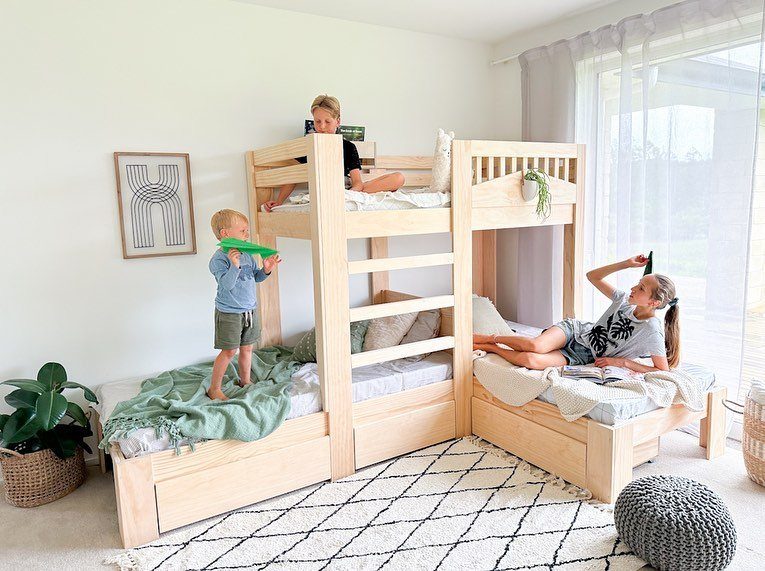
Ceiling height and the number of sleepers decide which of these small space bunk beds is yours, and the ideas run from a simple loft bed to custom built-in systems that stay put when you move.
A loft bed needs clearance to sit up on the mattress and on the sofa below, while a trundle needs clear floor to roll out.
A renter can skip the Murphy bunk that needs studs, and a family with three kids in one corner is looking at an L-shaped triple.
1. Loft Beds
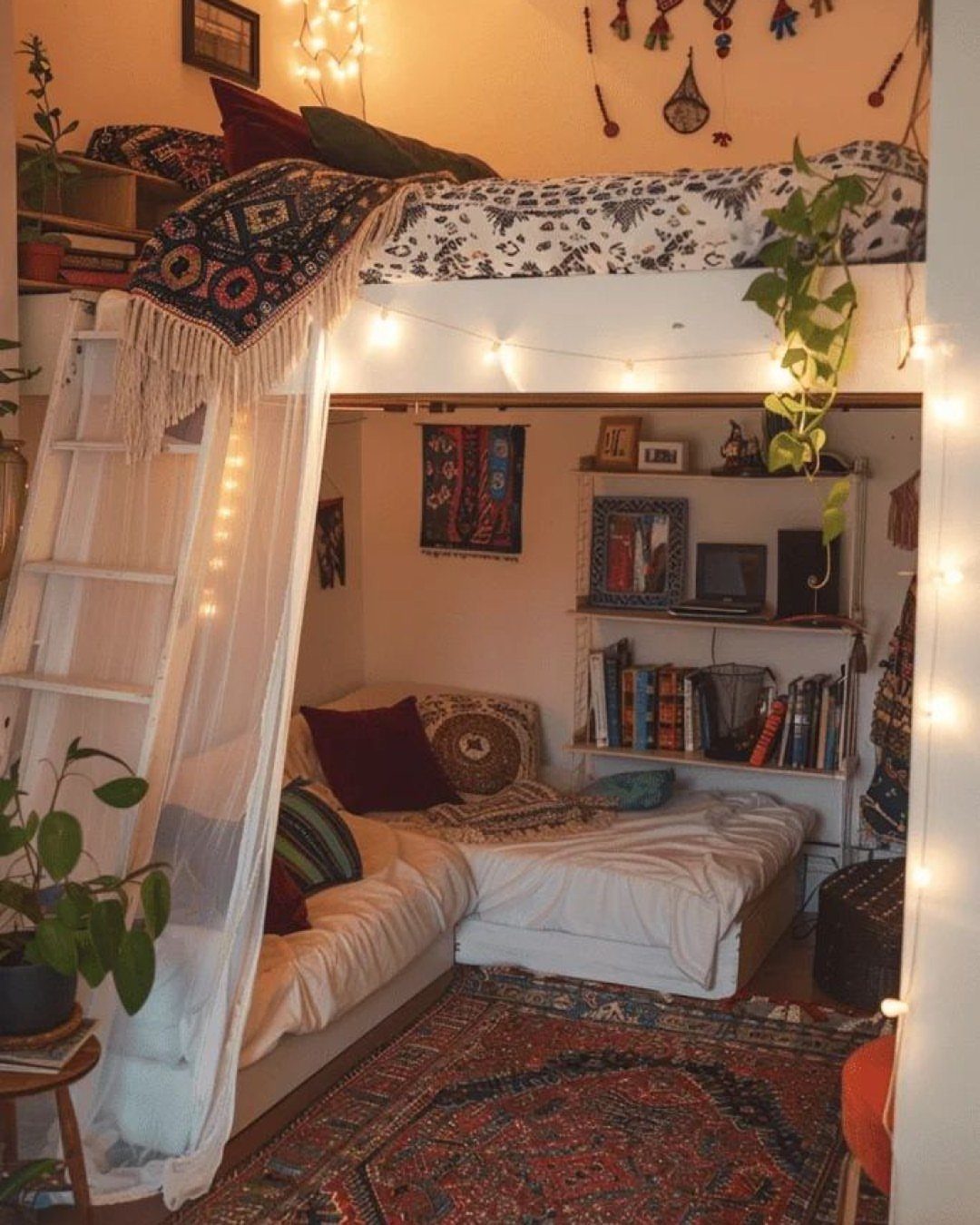
Because the floor underneath turns into usable space, a loft bed wins in a room this size. A sofa, a rug and a shelf fit there, and the room gains a second zone without gaining a square foot.
Before buying, check the ceiling height. You need enough clearance to sit up in bed without hitting the ceiling, and enough below for adults to sit comfortably on the sofa.
I’d pick a loft with a sturdy ladder and keep the lounge furniture low, so the sleeping platform doesn’t feel like it’s pressing down on the seating.
2. Bunk Beds with Straight Ladders
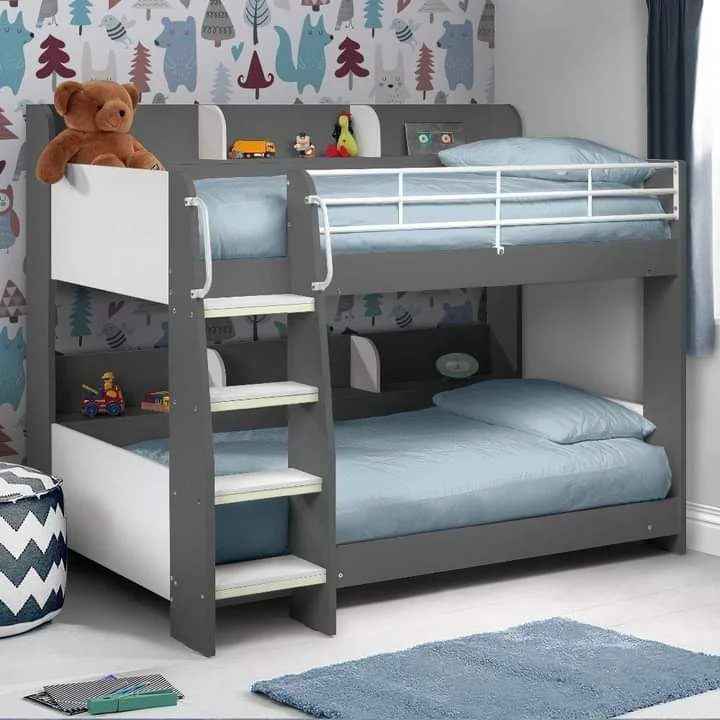
Straight ladders are the simplest way to reach a top bunk, and they take the least floor space of any access option. A ladder flat against the frame adds almost nothing to the footprint, which matters in a narrow room.
The trade-off is climbing. A vertical ladder is harder for younger kids than angled steps, so I’d save this style for older children.
Grey and white frames like this one are easy to live with, because the bedding can change with the child’s taste while the bed stays put.
3. Bunk Bed Curtains
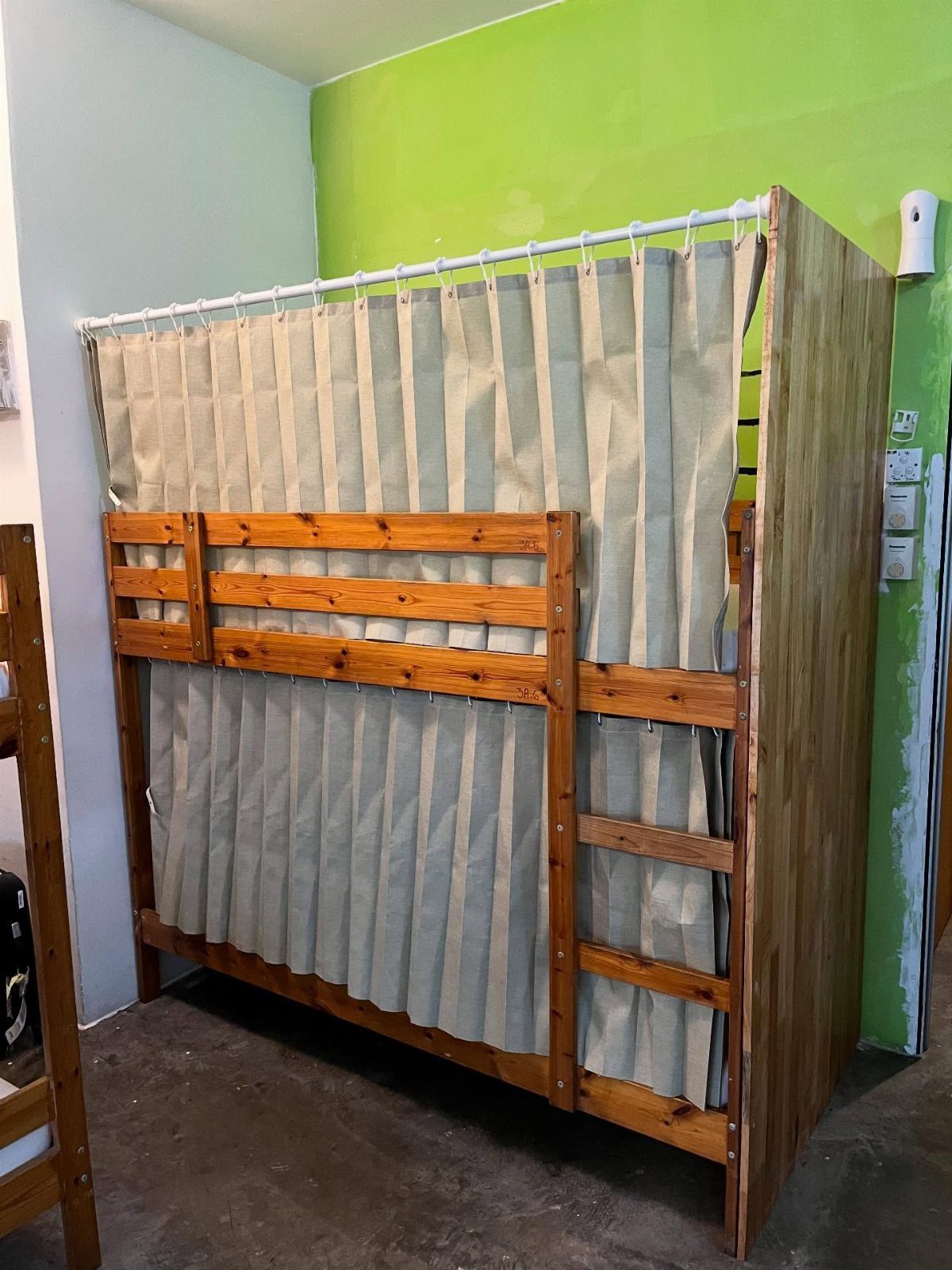
Curtains turn a bunk into a private nook, which helps when 2 kids share a room or a guest needs a little separation. A rod fixed along the bed’s edge is enough to hold them.
Choose a light or medium fabric in a neutral shade, as beige does against a bold wall.
Heavy drapes turn a bunk into a cave and collect dust fast. Curtains are also cheaper and quicker to change than repainting or replacing a frame, so they make a good weekend project.
4. Bunk Beds with Storage Stairs
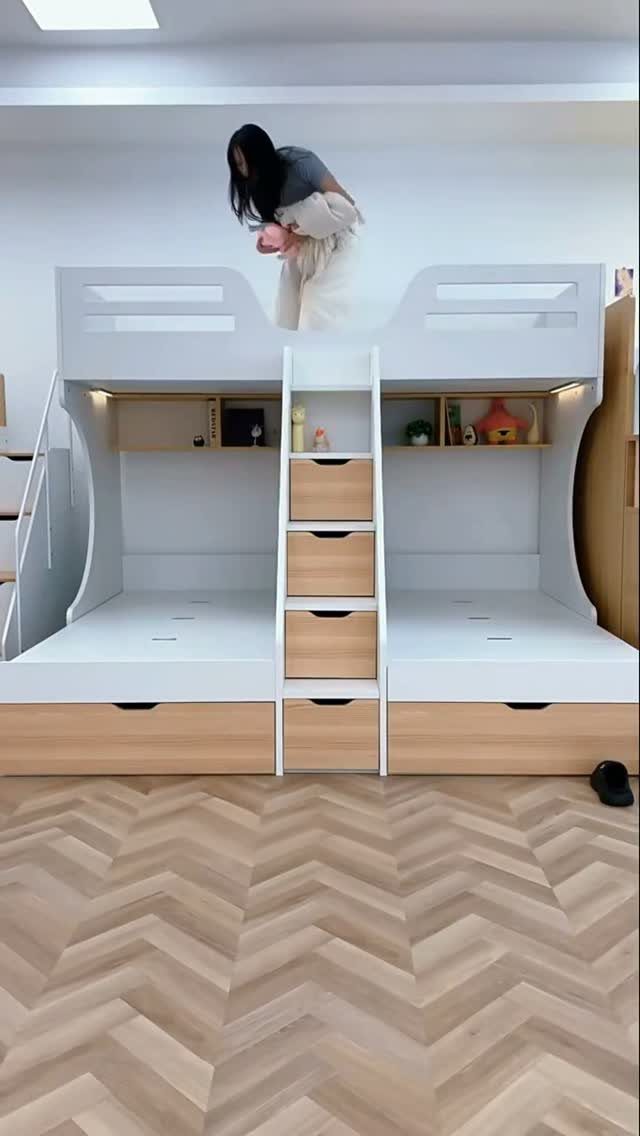
Storage stairs replace the ladder with steps that double as drawers, so the access itself holds clothes and toys. In a room with no closet space, that is real capacity you would otherwise have to buy as a separate dresser.
Stairs take more floor than a ladder, so measure the room before choosing.
They are also easier and safer for small kids to climb. I’d pick this version for a kids room where storage is the bigger problem than floor area.
5. Trundle Bunk Beds
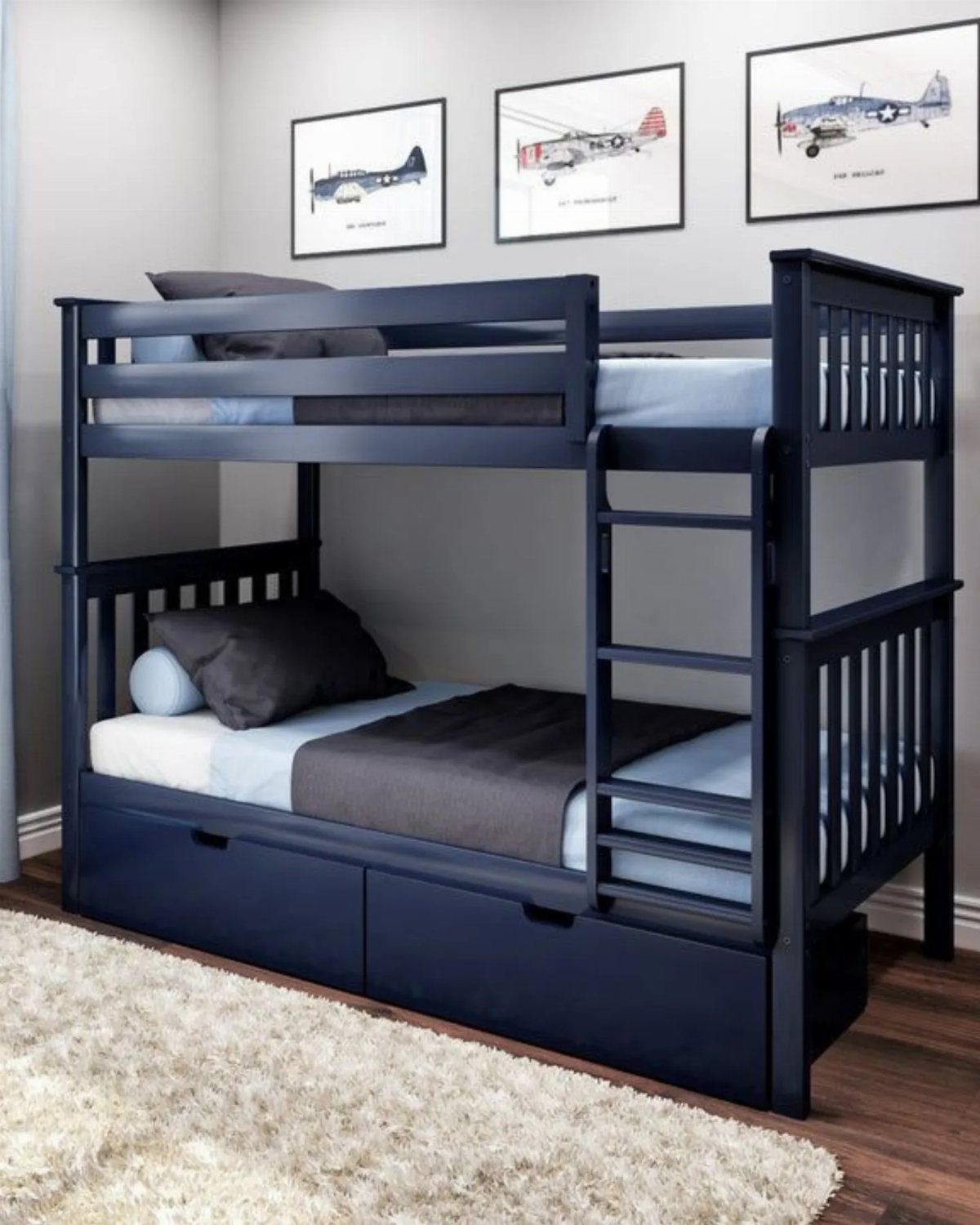
A trundle slides out from under the bottom bunk, which gives you a third sleeping spot without adding a third frame. Slumber parties and visiting cousins are the obvious use, and the bed disappears when nobody needs it.
Leave clear floor in front of the bed, since the trundle needs room to roll out.
A dark frame like navy hides scuffs well, and a light rug balances it. For a guest room that sleeps more than it looks like it should, this is my first pick.
6. Under-Bed Storage Drawers
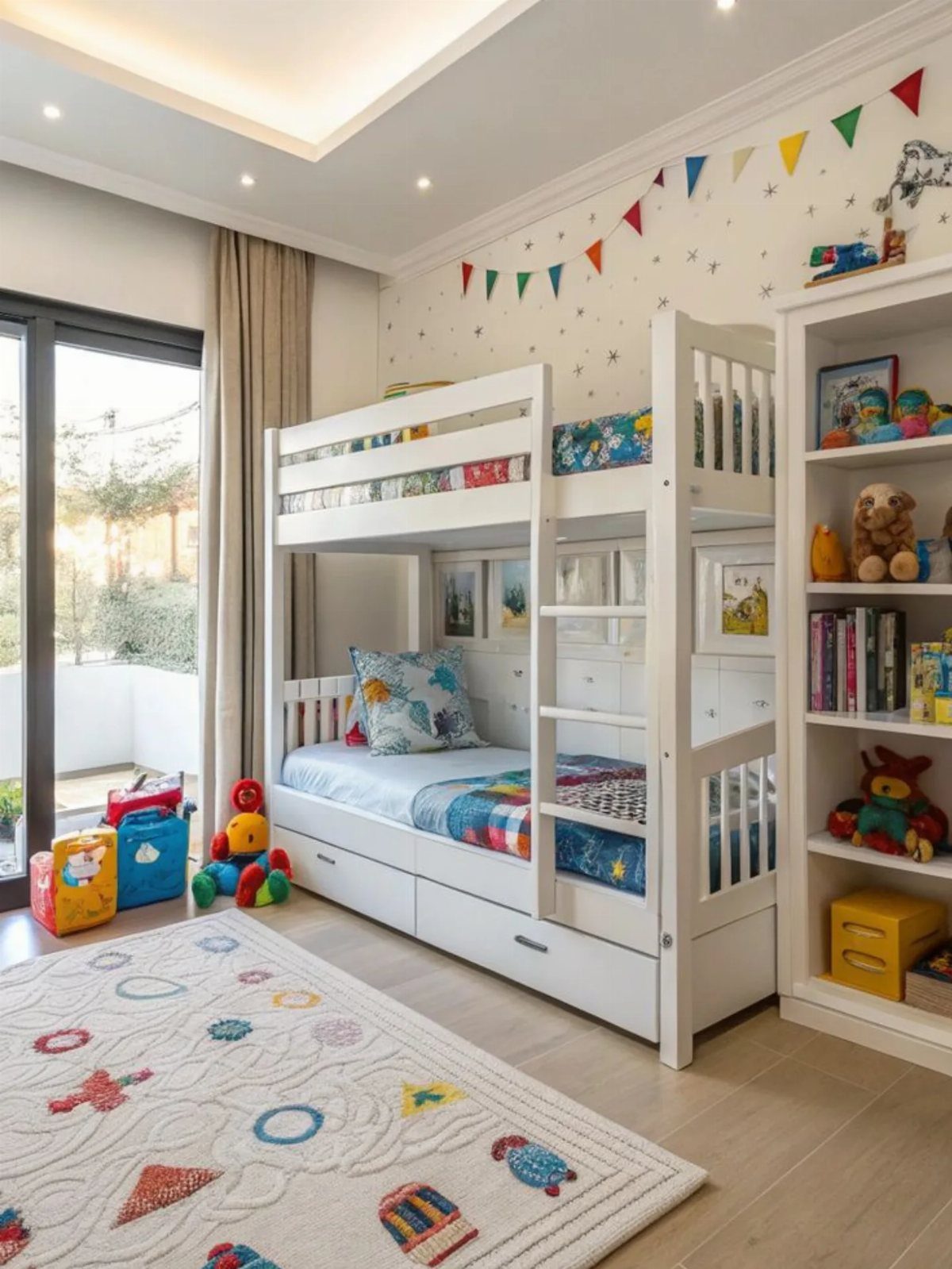
Drawers built into the base of a bunk bed use the one space nobody sees: the strip of floor under the bottom mattress. Pull-out drawers there can hold bedding, off-season clothes and toys, and the room needs one less dresser.
White wood keeps the bed light in a room already busy with color and toys.
Keep the floor in front of the drawers clear so they open fully, and don’t overload them, because heavy drawers get hard for kids to pull.
Bunk beds are designed to maximize vertical space, allowing you to accommodate two or more sleeping areas without taking up extra floor space. Many models also include built-in storage options like drawers or shelves, making them even more practical for compact rooms.
— Costco
7. Folding Murphy Bunk Beds
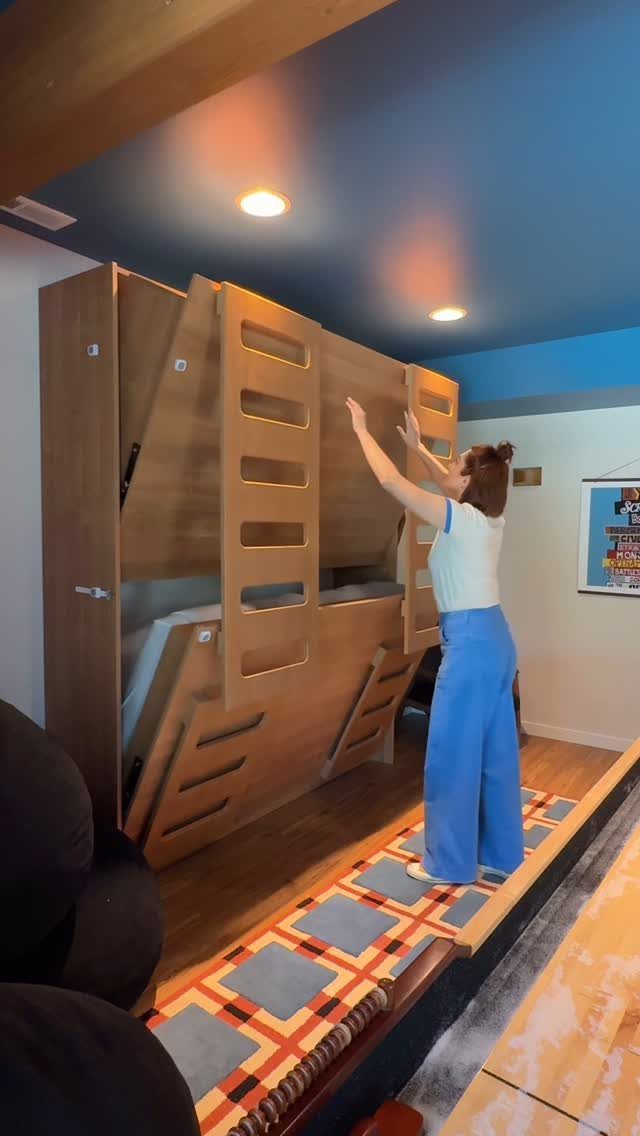
A folding bunk mounts to the wall and lifts out of the way, so the floor stays open for play or a desk during the day.
Reclaimed floor space is the entire appeal of a Murphy bunk, especially in a room that barely fits a dresser.
Light wood keeps the system from looking heavy, and it pairs well with a bold wall color.
Anchor it into studs, never drywall alone. Renters should check the lease first, since this idea means drilling.
The cost is effort: beds have to be folded up and made again each time.
8. Bunk Bed with Attached Desk
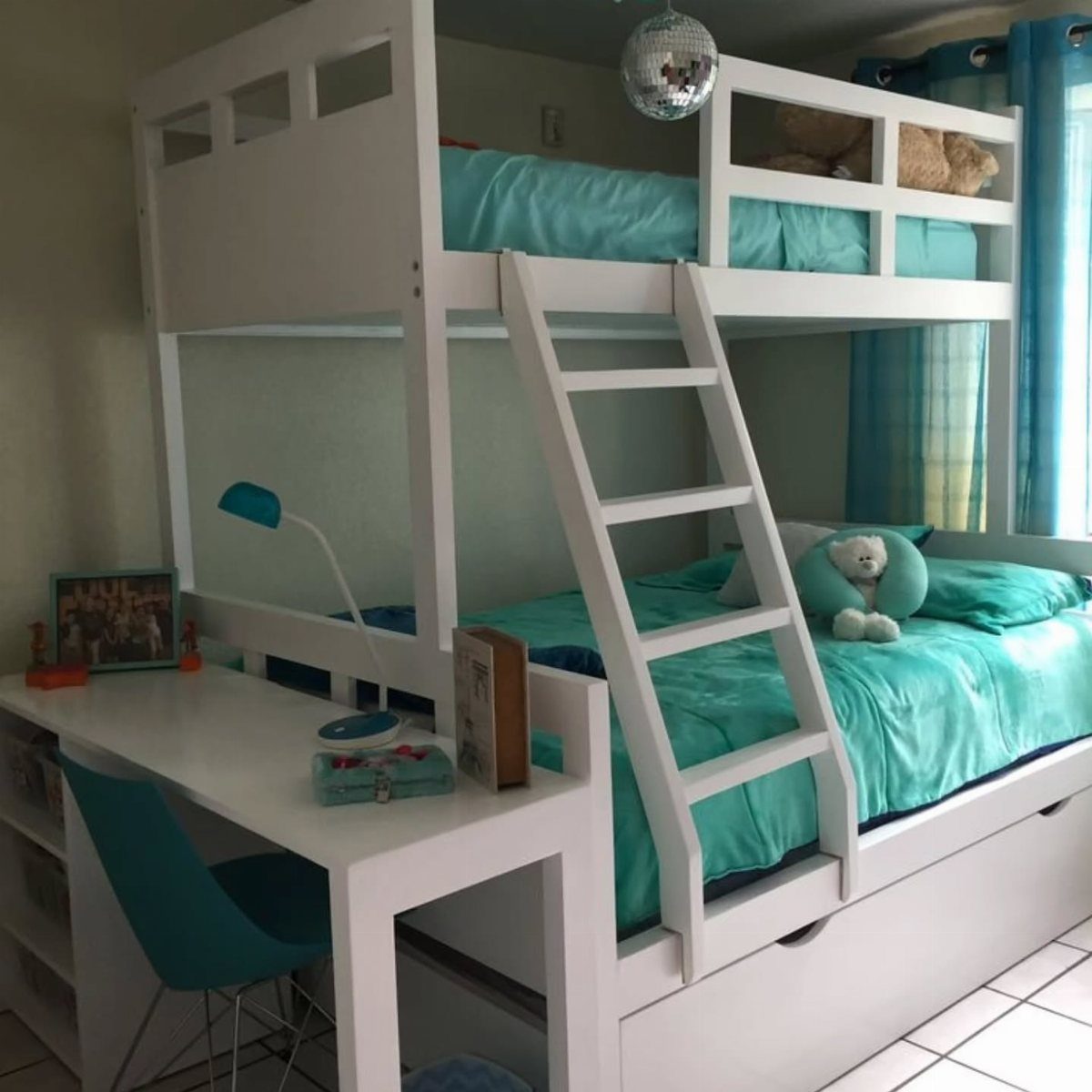
White frames with a desk built into the bunk give a kid a study corner without a separate piece of furniture. The workspace sits beside the lower bed, so the whole setup stays within one footprint.
Pick a desk chair that tucks fully under the surface, and keep the colors tied together; teal bedding and a matching chair make a white frame feel planned. A clip-on lamp frees up desktop space.
I’d choose this for school-age kids. A toddler gets little from a desk.
9. Custom Built-In Bunk Systems
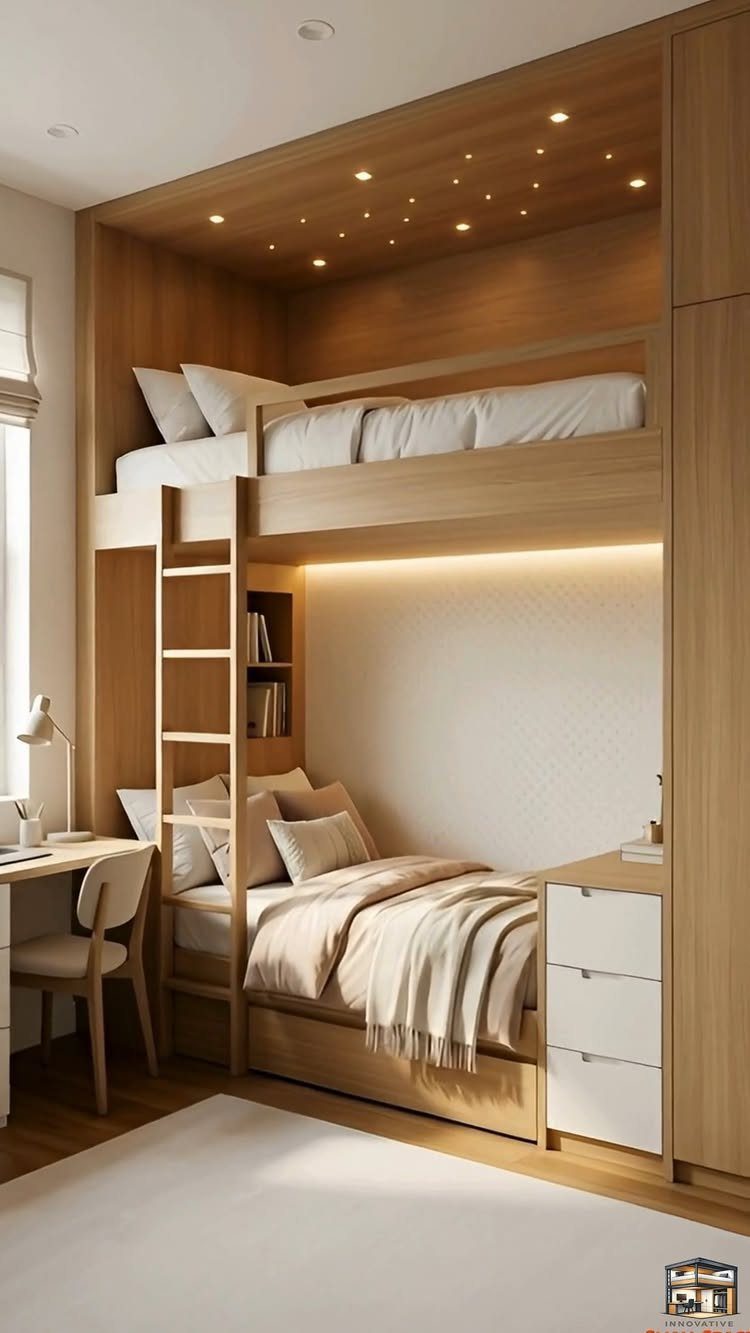
Built-ins turn a wall alcove into a sleeping zone, with the bunks framed in wood and lights set right into the structure. Nothing sticks out, and every inch of the alcove works.
Reading lights built in mean no cords and no lamps eating up space, and a chest of drawers beside the lower bed adds storage. Measure the alcove twice before ordering anything.
This is the priciest route on the list, and it stays put when you move.
For a long-term home, I think the custom fit is worth it. For a rental, skip it.
10. L-Shaped Triple Bunk Beds
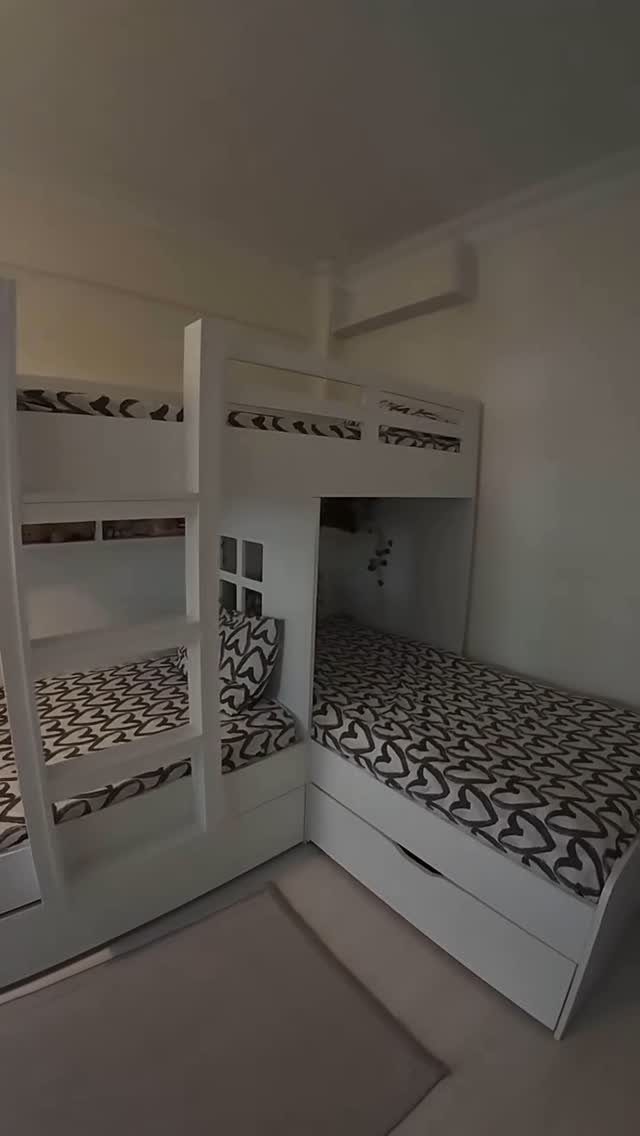
An L-shaped triple puts one bed up high and two below, meeting at a right angle, so three kids sleep in one corner. The layout uses the corner that other furniture usually wastes.
Keep the bedding in a tight palette; black and white patterns on a white frame look calm even with 3 beds in view. Measure both walls, since the L needs room along each.
If the room is very small, I’d pick a standard bunk with a trundle instead. The L takes more floor than it first looks.
Choosing the Right Size
Measure the room first, then choose a bunk sized for the people sleeping in it, not the largest frame the floor can hold. A bed that fits with room to walk around it protects both your space and your sleep.
For a loft bed holding one person, a twin or full is usually enough. Queen, king and California king suit couples, so they make sense mainly in a loft or bunk built for 2 adults.
Bunks come in more sizes than most people expect.
Twin-over-twin suits most kids, and it also works for two adult guests who would rather not share a mattress; a full-size bottom bunk adds width but eats about 6 more inches of floor on each side.
Queen and king bunks suit multiple couples or co-sleepers in one room.
Mixed-size bunks are worth a look when the sleepers differ. A twin over a full, for example, can handle one person and a couple in the same footprint.
Materials and Styles
Styles run from sleek and minimalist to farmhouse and traditional, and finishes range from painted white to dark stained wood or black metal.
Wood and metal are the two materials you’ll see most, so pick the one that matches the other furniture in the room.
In a tight bedroom that needs some attitude, a modern bunk with straight, clean lines is my pick, and a black metal frame gives it the most punch.
Add a sleek light fixture overhead and everything in there looks like it was planned together.
A traditional frame suits a room with warmer, older pieces. Match the finish to your existing wood tones, or go in the opposite direction on purpose, so the bed doesn’t look like an accident.
Frequently Asked Questions
What are the best bunk beds for small spaces?
A loft bed wins when one person sleeps in the room, because the floor underneath becomes space for a sofa, rug and shelf.
For two or more sleepers, a bunk with a straight ladder takes the least floor, and a bunk with built-in storage stairs or drawers replaces a dresser.
Pick the style by what the room lacks most: floor area, closet space or sleeping spots.
Do bunk beds make a room look smaller?
Not if you choose well. Stacking beds clears the floor, and the open square footage usually makes the space feel bigger than it was with 2 separate frames.
Light or white frames keep the bed from looking heavy, and clear floor in front of drawers or a trundle keeps the room from feeling crowded.





