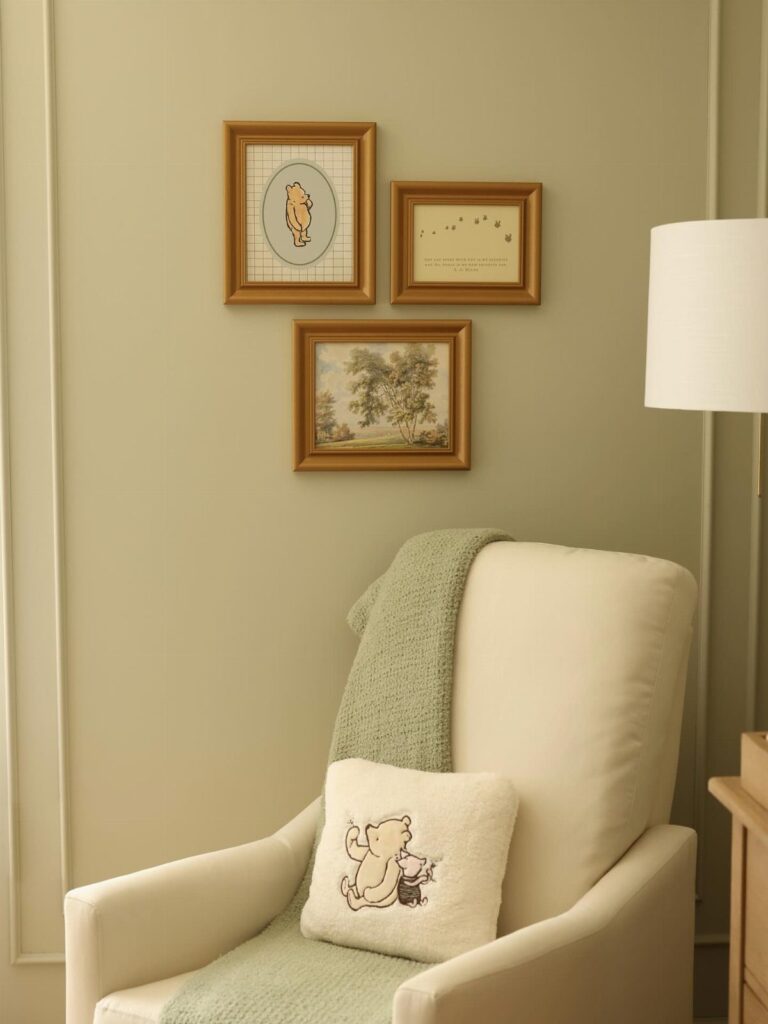
Whether you rent or own decides most of this list: decals, framed prints and a hunny pot side table leave the walls untouched, while a mural or wallpaper on one wall asks for a landlord’s blessing or your own paint.
The ideas range from a single mobile over the crib to a full storybook mural, and most keep to a palette of 3 or 4 colors, so honey, cream and natural wood do the unifying.
Safety sits above all of it, since every shelf and dresser gets anchored to the wall.
1. Storybook Wall Mural
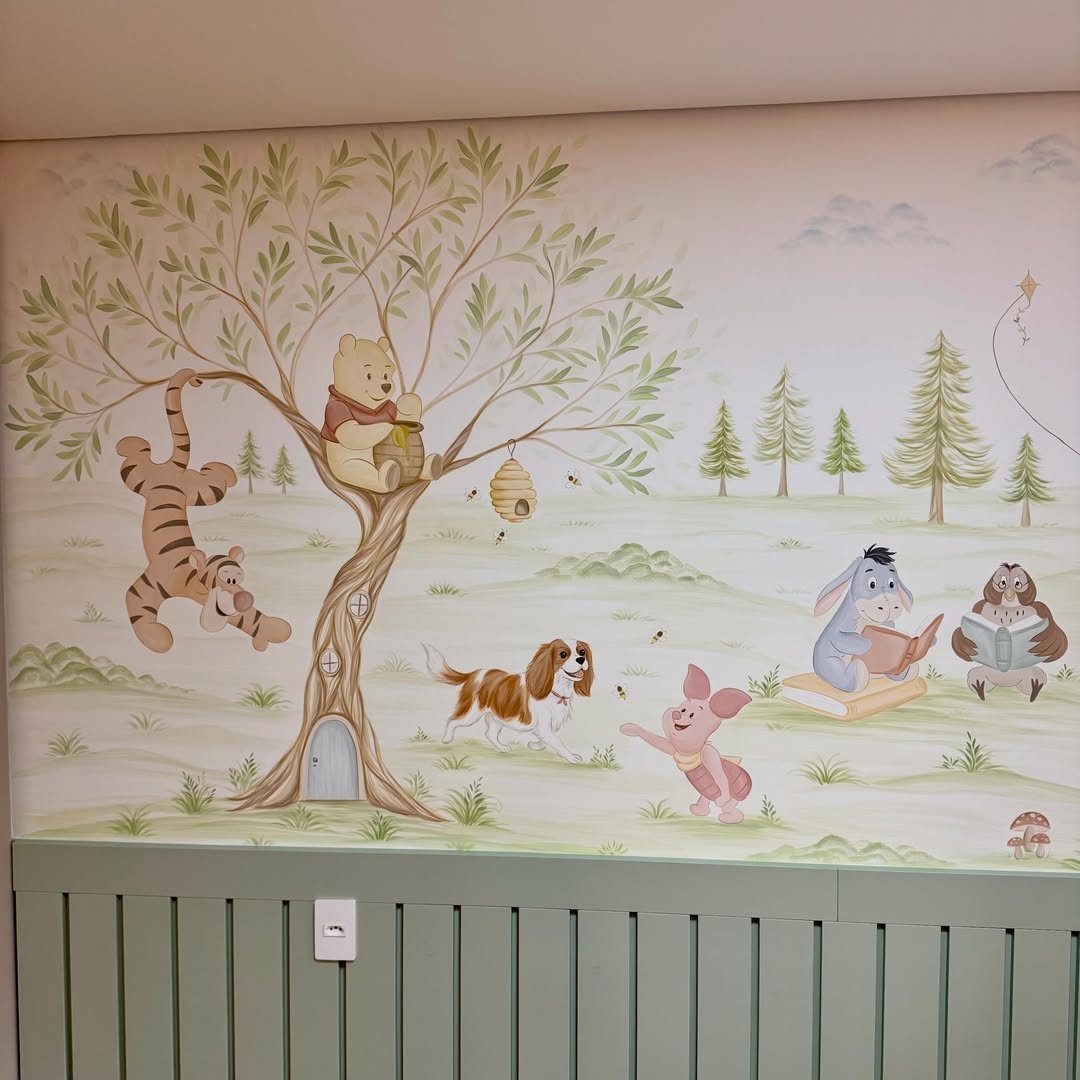
A mural gives a nursery one wall that does all the talking, and green wainscoting below it makes a natural base.
Keep every other wall quiet. Cream or pale paint beside the mural lets the characters stay the focus, and a single wall costs a fraction of what a fully papered room does, which suits a real budget.
2. Winnie the Pooh Mobile
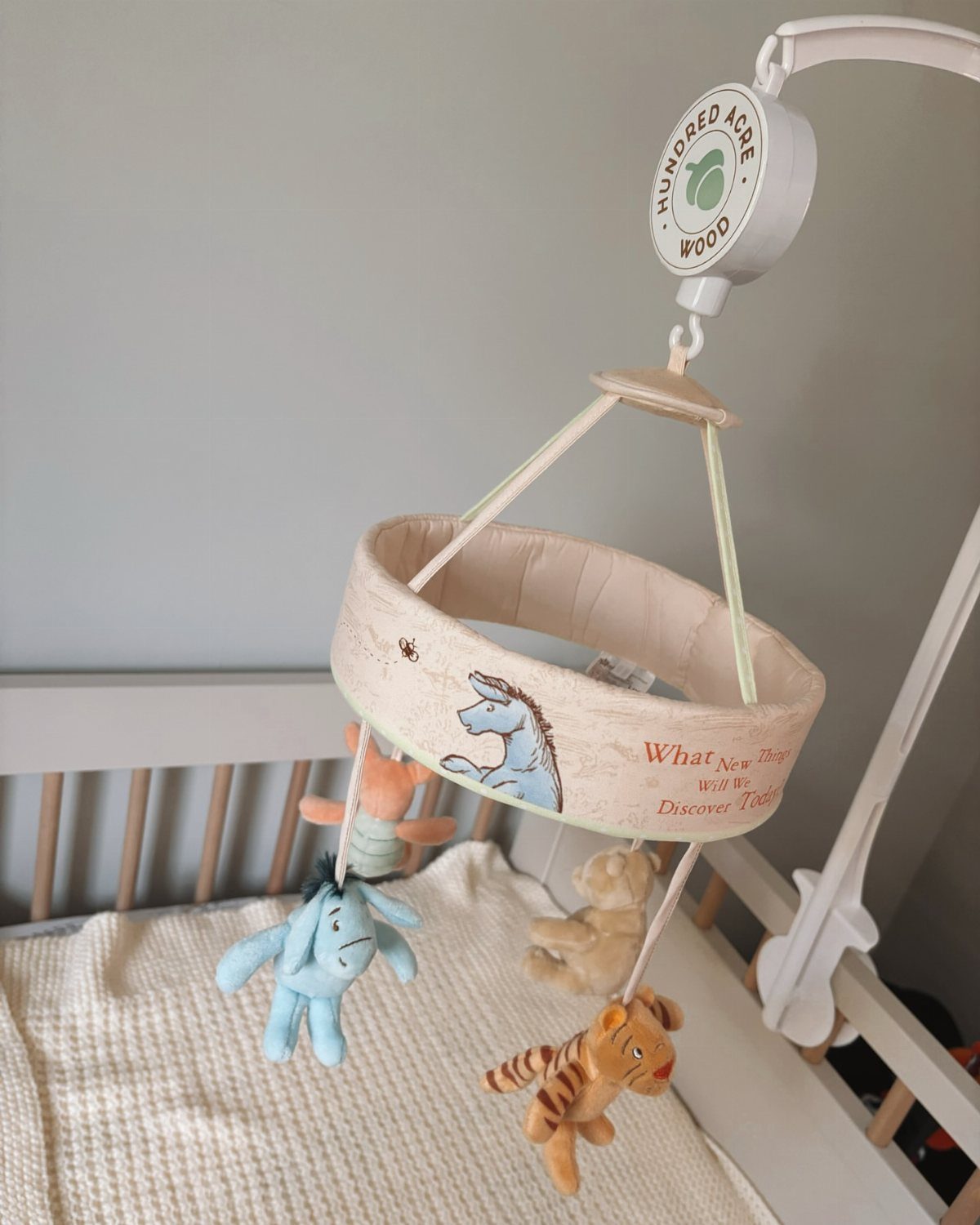
Hung over a white crib, a Pooh mobile with plush characters is the easiest way to add the theme without touching a wall. The lettering and the question about new things give it a storybook feel on its own.
I’d pick one with soft, lightweight characters. Mount it to the crib rail or a ceiling hook so it stays centered over the mattress and well out of reach as the baby grows.
3. Framed Winnie the Pooh Quotes
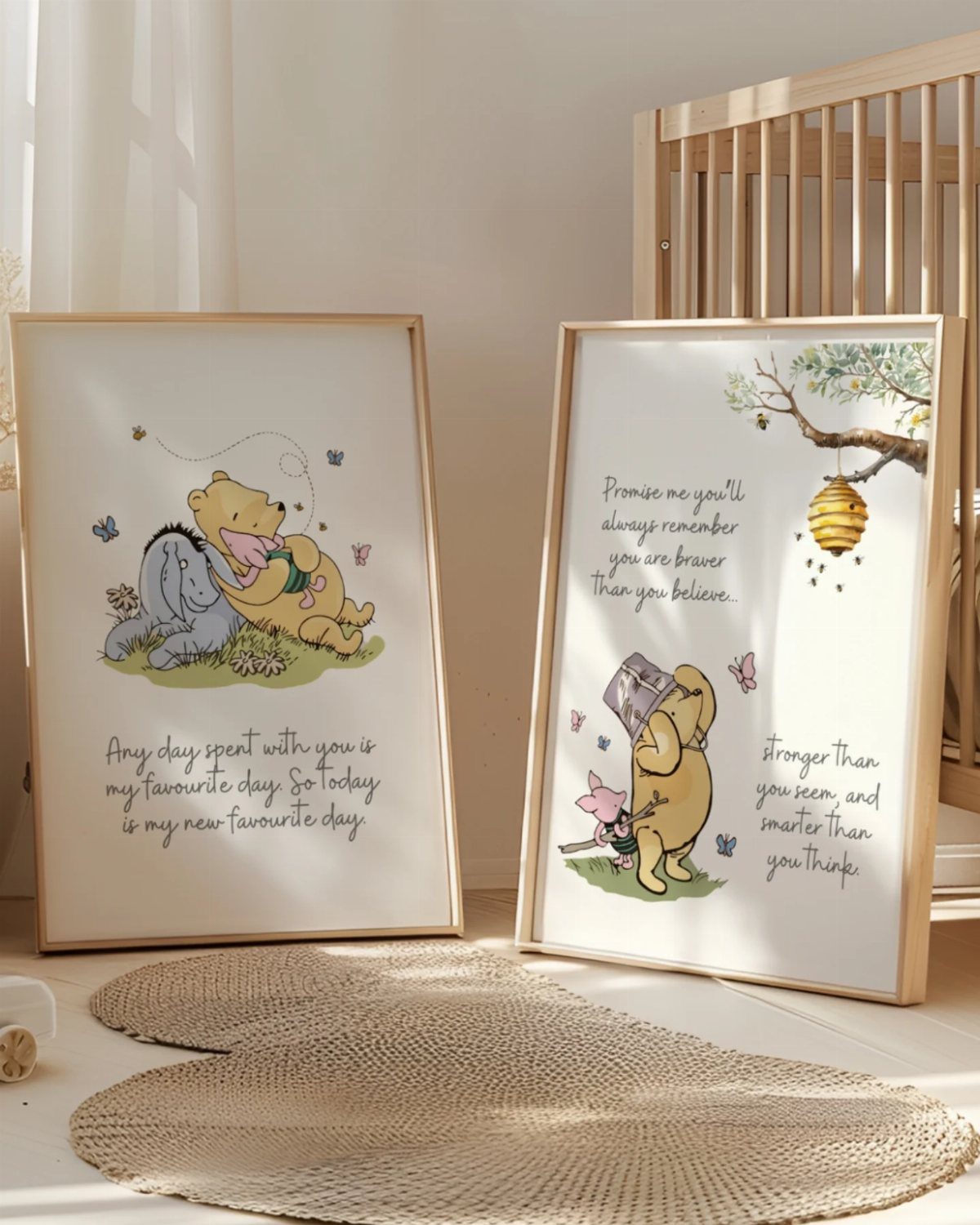
Leaning framed prints on the wall beats hanging them, and it’s the version I’d start with.
2 illustrations with short quotes can sit on a dresser or a shelf near the crib, and you can swap or rearrange them in seconds with no drill and no holes, which matters in a rental.
Pick quotes you would actually want to read aloud during a middle-of-the-night feeding. A matching pair of frames in light wood keeps the look calm beside a woven rug.
4. Winnie the Pooh Bedding
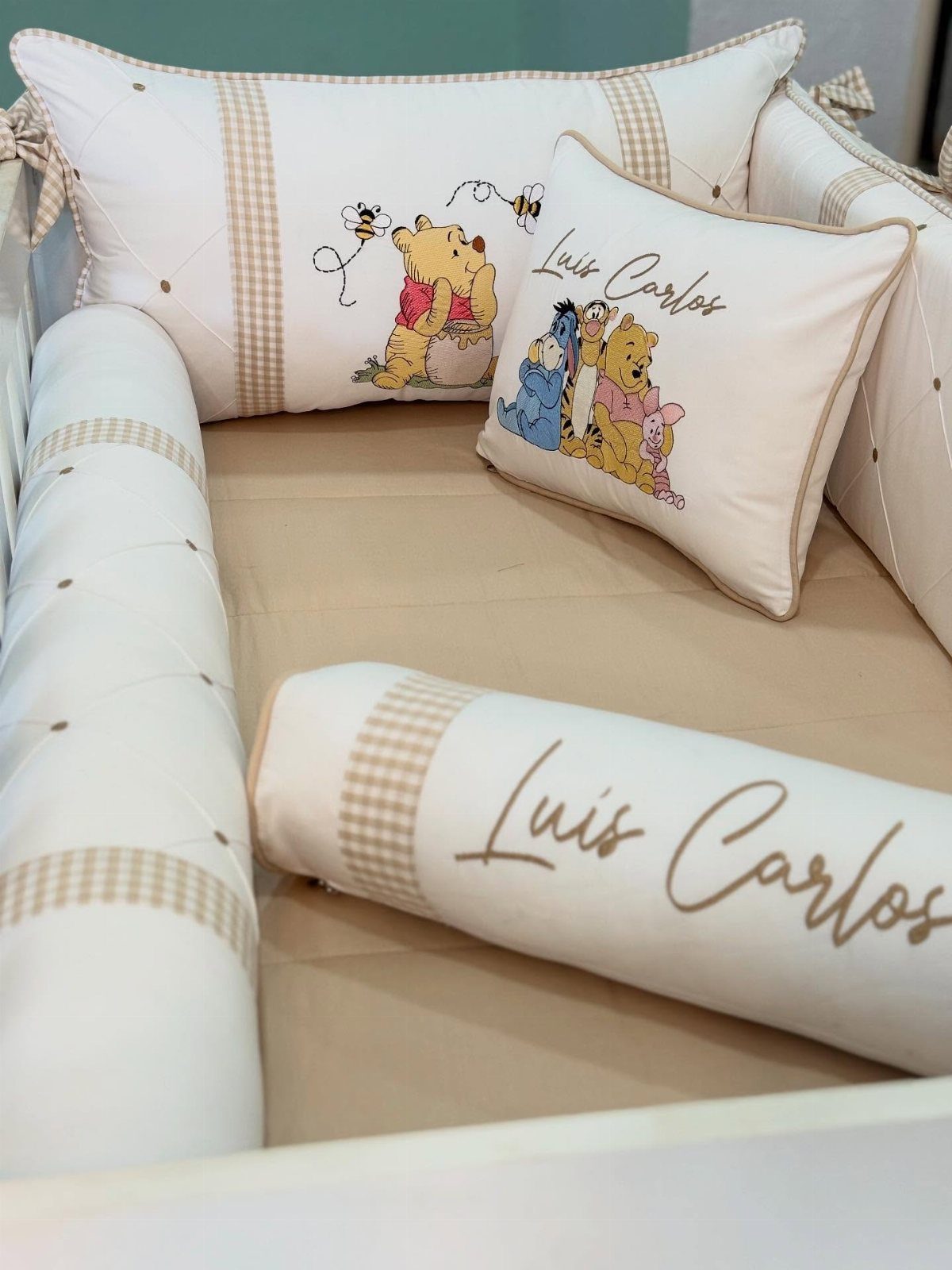
Embroidered names make Pooh bedding feel made for one baby rather than bought off a rack. White and beige keeps the characters gentle, and a name embroidered on the sheet or blanket turns the crib into the room’s anchor.
Personalizing costs extra and takes a little lead time, so order early. If the budget is tight, buy plain neutral bedding and add the name piece alone.
5. Classic Pooh Vintage Nursery
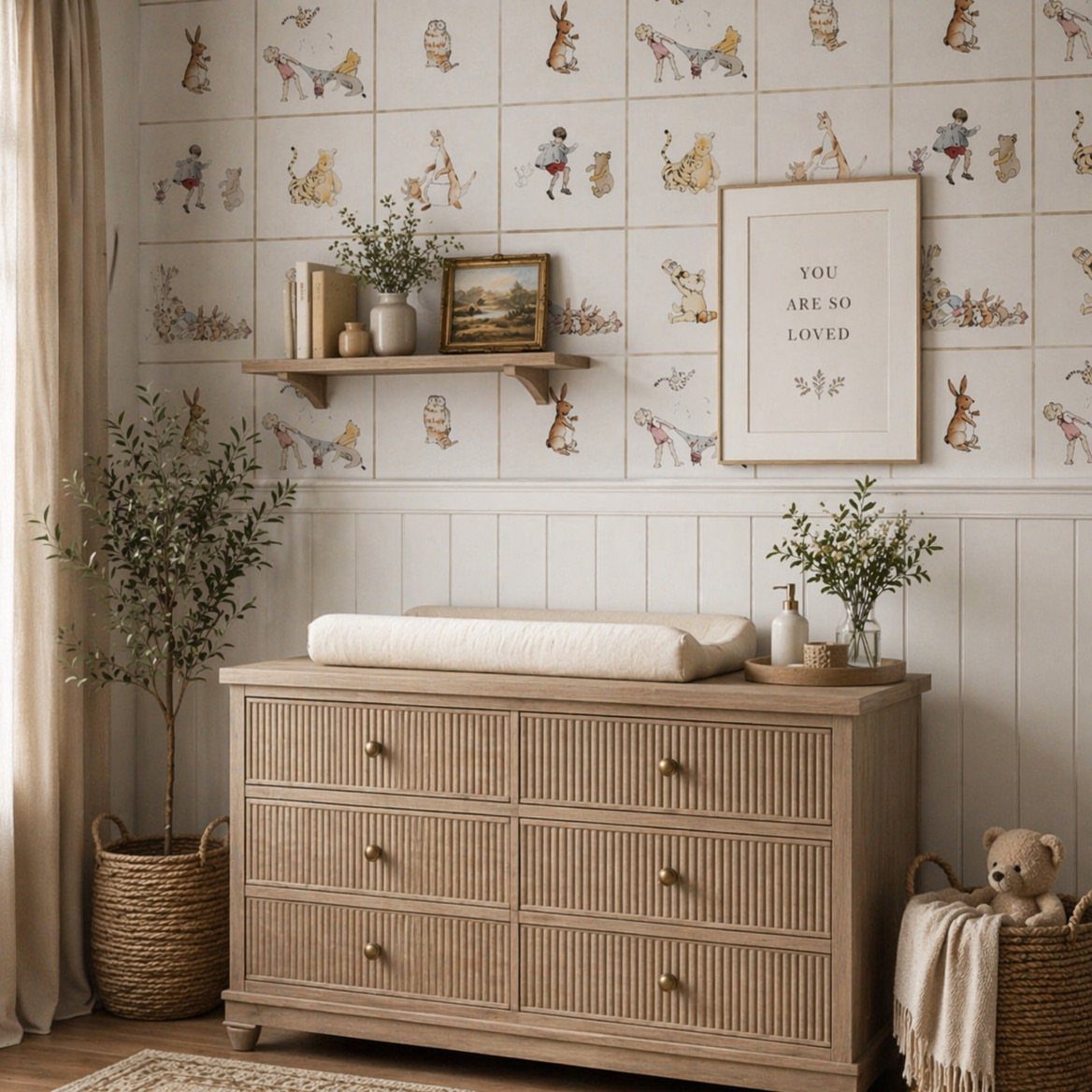
Classic Pooh wallpaper is the heart of a vintage nursery, and a wooden dresser topped with a changing pad keeps the room practical. The old-style illustrations already carry the nostalgia, so the rest can stay simple.
I’d stop at a few extras: a framed "YOU ARE SO LOVED" sign, a teddy bear, a couple of potted plants.
Wallpaper on one wall rather than all of them holds the cost down and keeps the room from feeling busy.
6. Boho Pooh-Inspired Nursery
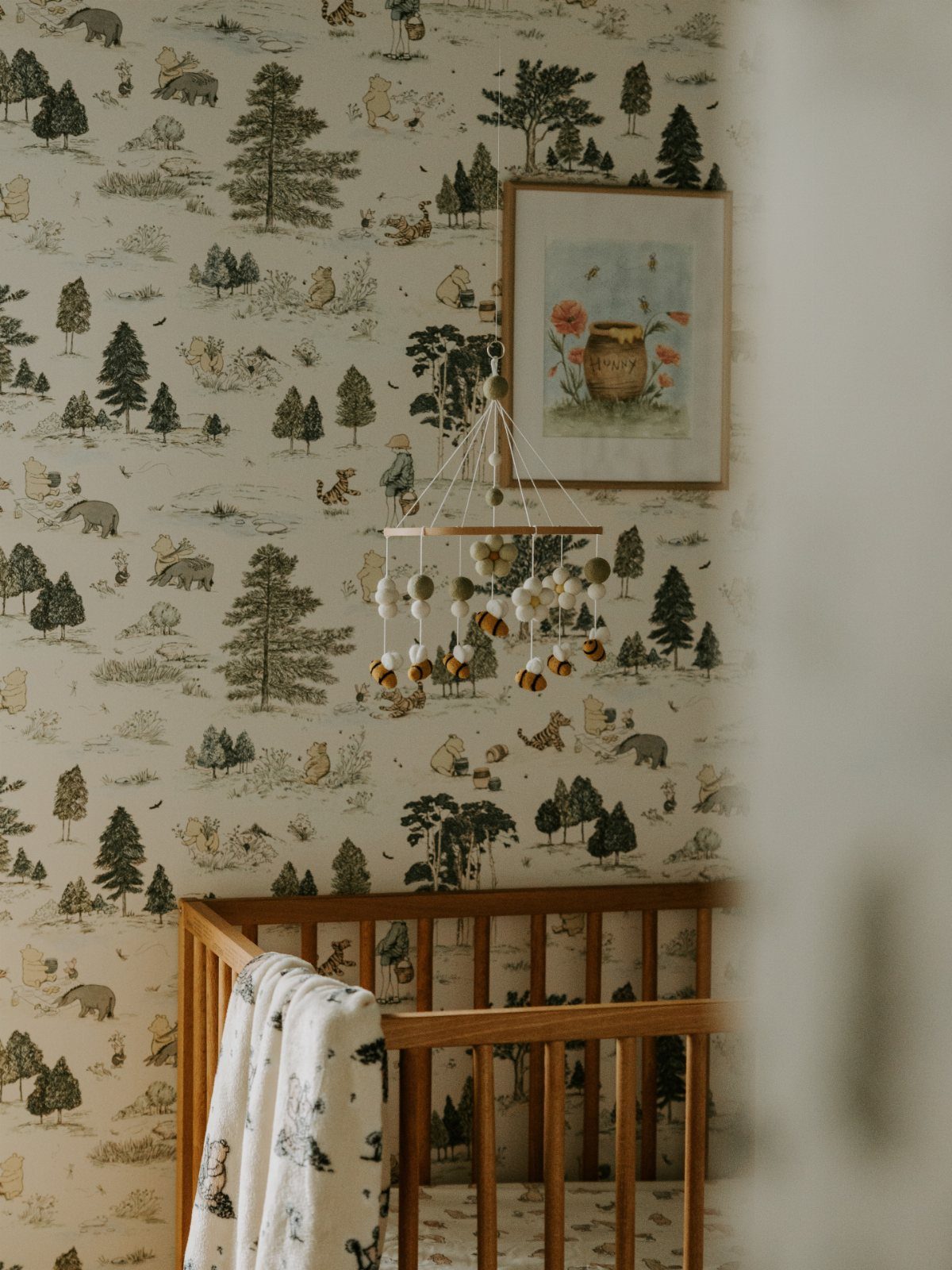
Boho and Pooh get along because both lean on soft, earthy warmth. A wooden crib, a plain white blanket and a honey pot mobile give the room texture while the themed wallpaper supplies the story.
Keep the palette to honey, cream and natural wood.
For more boho, add one woven or fringed piece, such as a basket or a wall hanging, rather than several. Too many textures start to fight the wallpaper.
7. Hunny Pot Side Table
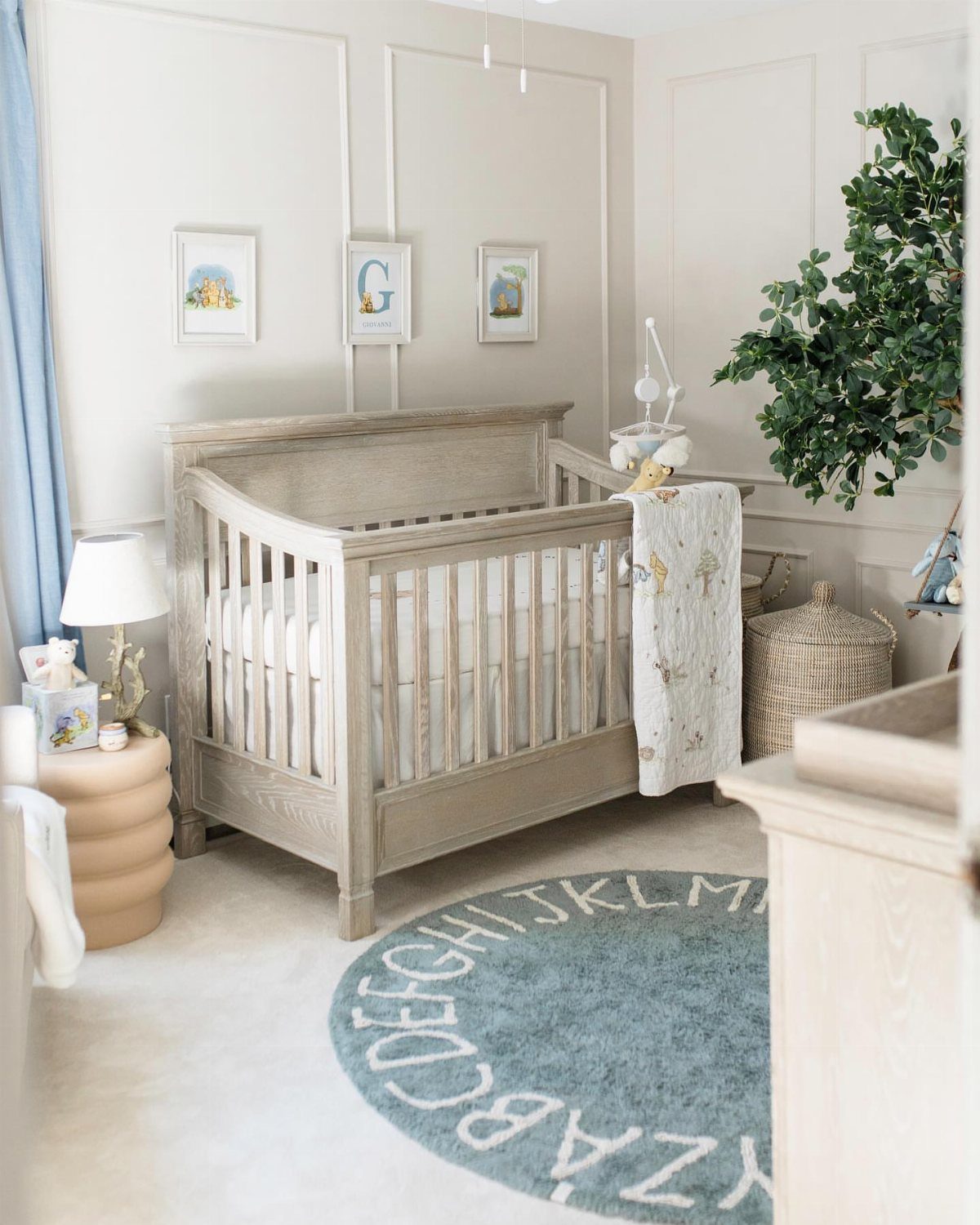
A honey-pot side table puts the theme at crib height without a single character on it. Beside a wooden crib, the rounded shape reads as a piece of furniture first and a Pooh reference second.
I’d keep it as the one themed object near the crib and let the blue alphabet rug and a plant do the rest. Use it for a lamp base, a burp cloth or a water cup during night feedings.
8. Plushie Display and Storage Corner
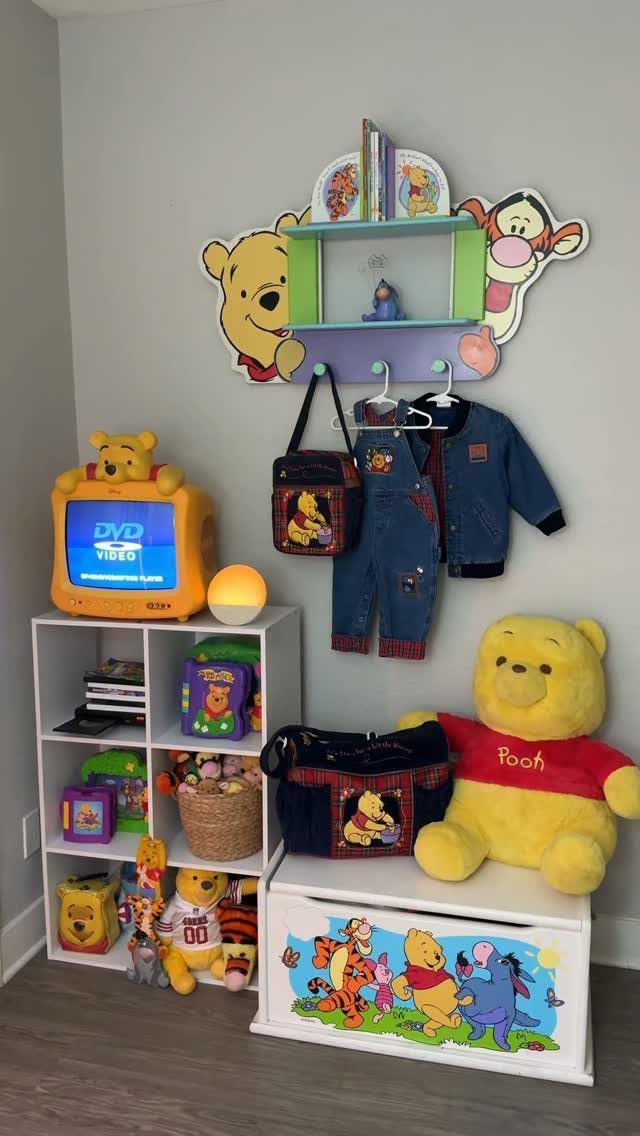
Give the plushies one corner, and they stop taking over every surface. A white cube shelf holds the soft toys at eye level, a wall shelf lifts a favorite Pooh off the floor, and a toy chest swallows everything else.
I like a chest for the clutter and shelves for the few plushies worth showing. Rotate them now and then so the display stays fresh without buying anything new.
9. Framed Character Art Prints
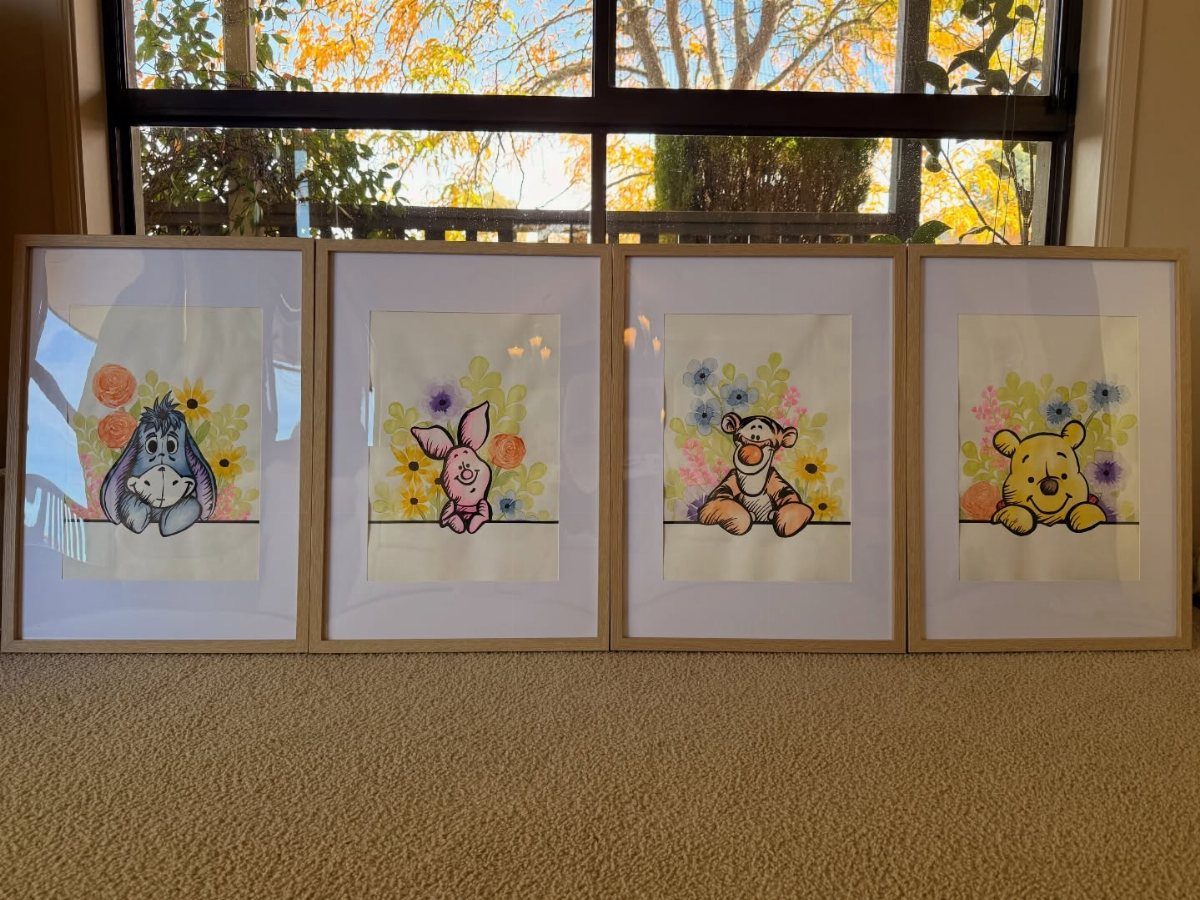
Watercolor prints suit a nursery because the soft edges and muted colors stay calm in a room meant for sleep. A set of 4 in matching frames looks planned, even when the prints come from different sources.
Lean them on a shelf or dresser first, as in entry 3, and move them around until the spacing feels right. Hang them only once you’re sure of the spacing, and watercolor prints like these bring softness without competing for attention.
10. Tree Branch Bookcase
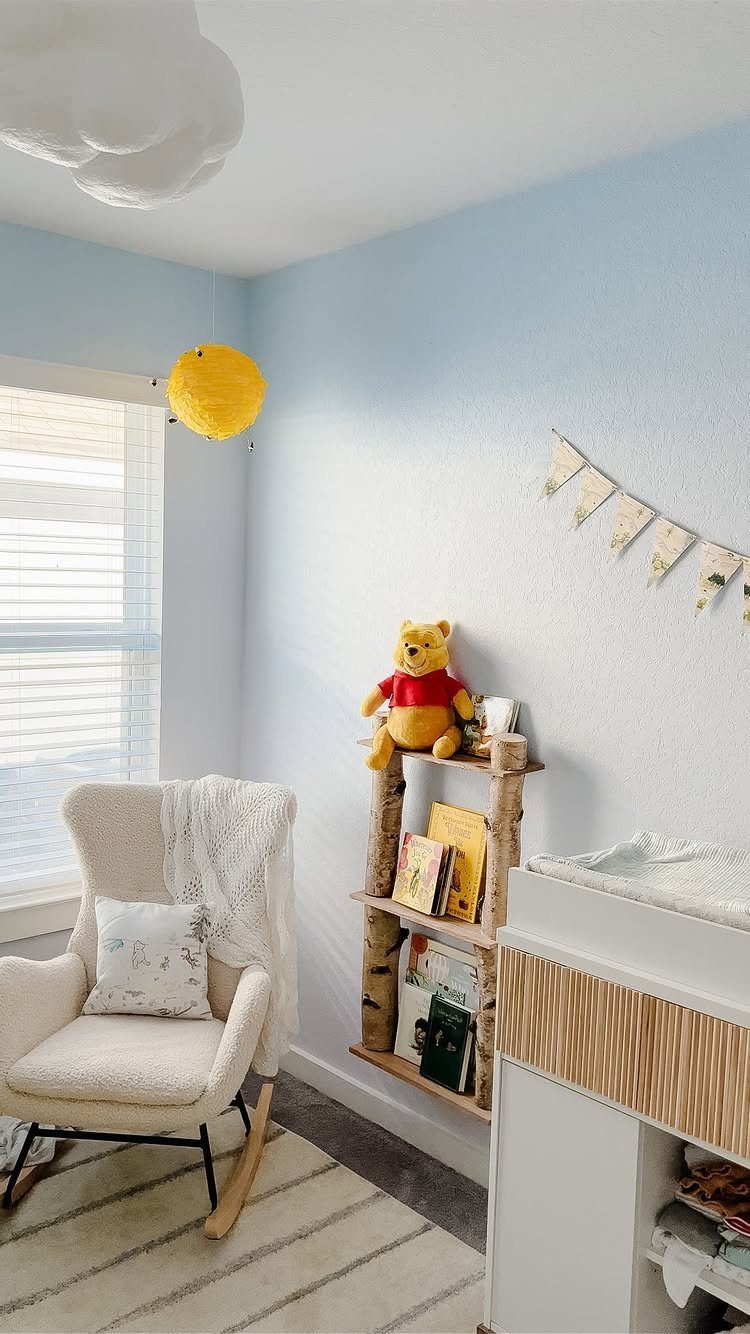
A branch-shaped bookcase makes reading the main event in the room. Rustic wood against light blue walls feels like those storybook woods, and the angled shelves hold picture books face out, so a toddler can pick a cover.
Place it beside the glider, where one hand can reach a book. Leave a spot near the top for a Pooh plush, and keep heavier books low.
11. Character Wall Decals
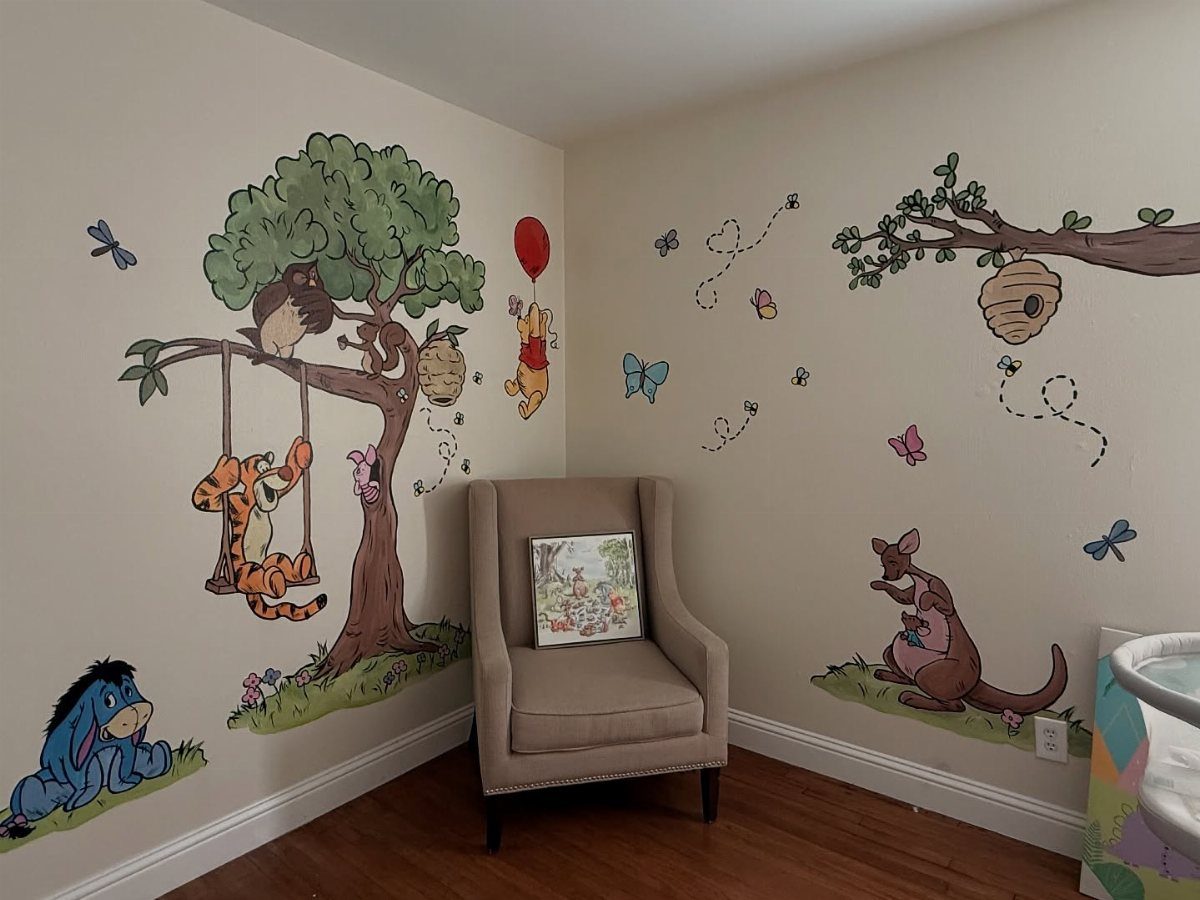
Large character decals give a neutral wall a story for less than a mural costs. They peel off, which is the reason I’d choose them in a rental.
Place them low enough for a child to see, and group them beside the glider so the corner feels finished.
Press each one flat from the center outward to push out air bubbles. Keep the furniture neutral so the characters stand out.
12. Character Wallpaper and Name Art
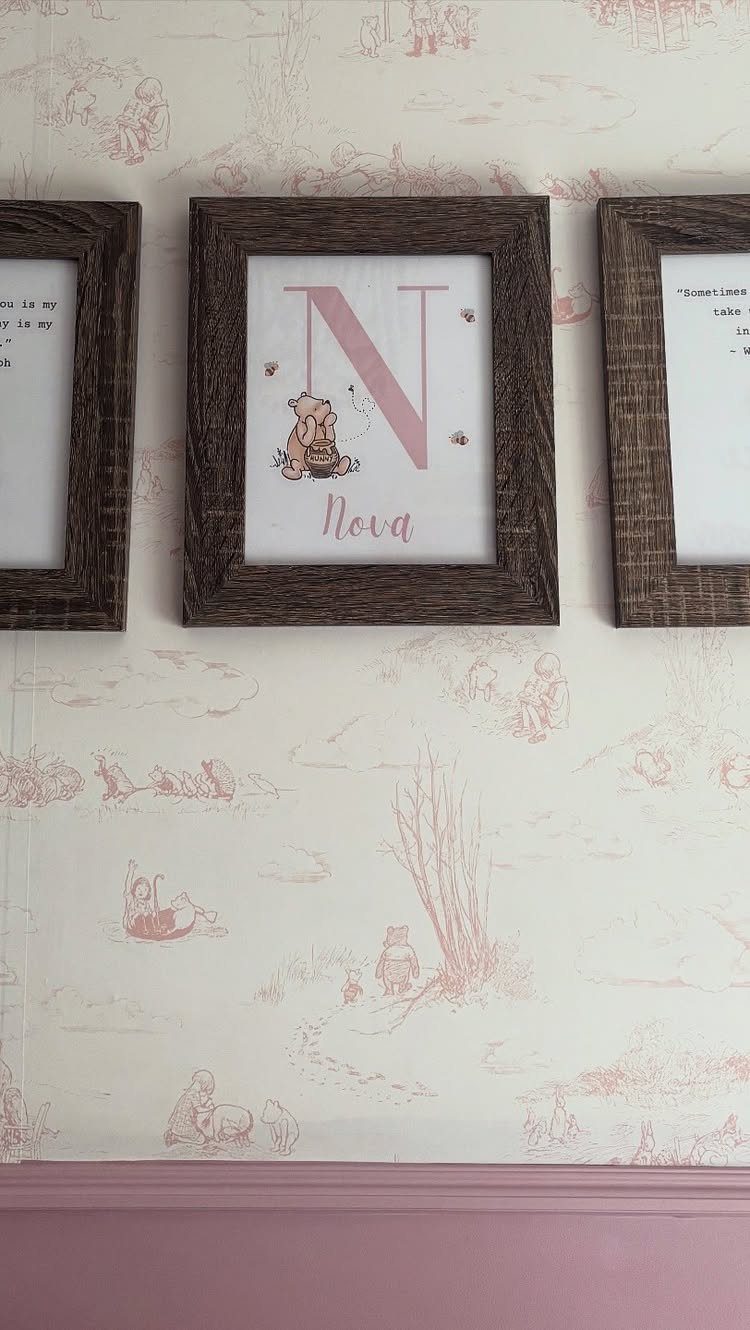
Name art over character wallpaper personalizes the room in one move. A large initial, a small Pooh illustration and the baby’s name in a single frame turn busy pink wallpaper into a deliberate wall.
Hang 3 frames in dark wood, with the name piece in the center, so the wallpaper has a border to push against. Order the personalized piece early; simple side frames hold the price down.
13. Lighting
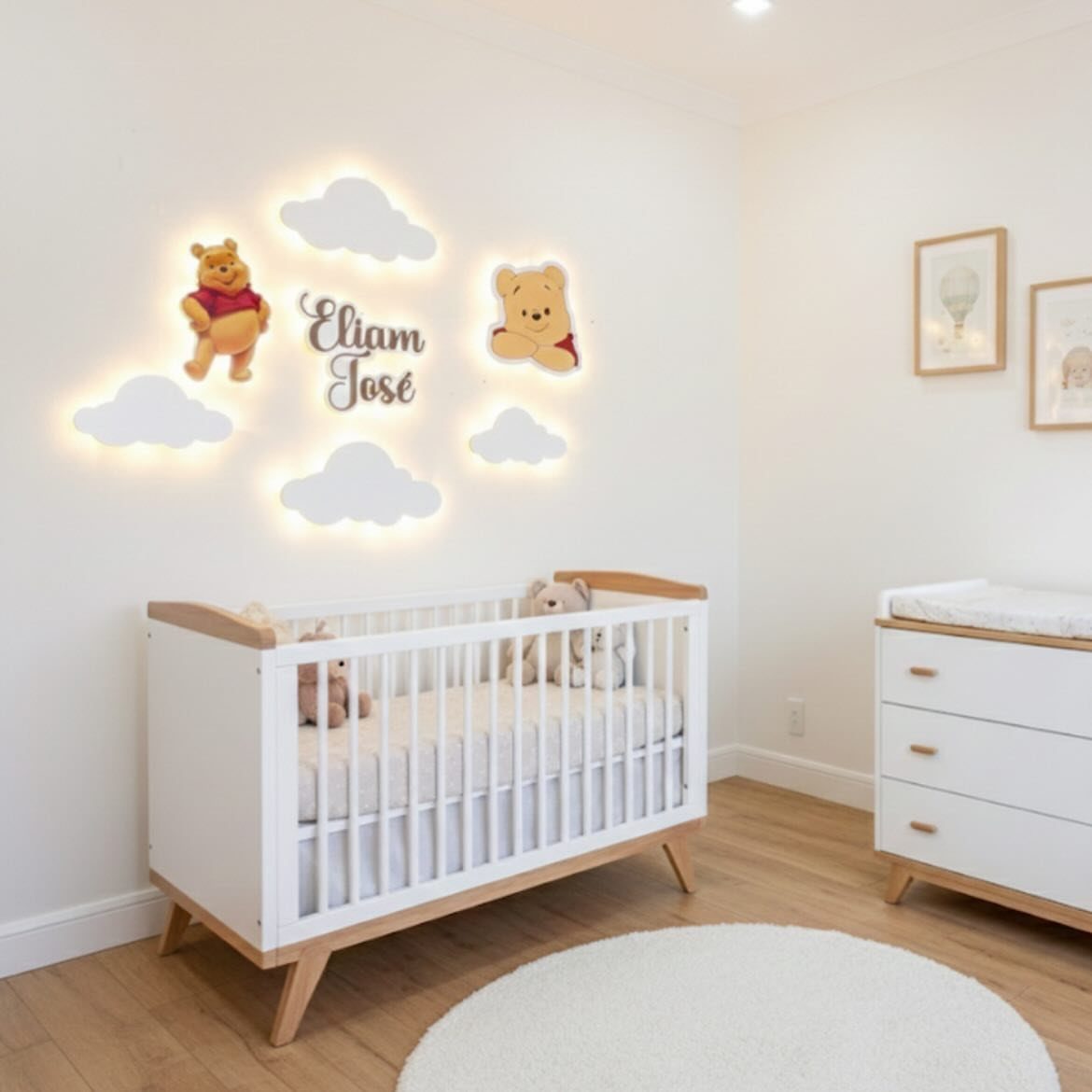
Backlit cloud lights on the nursery wall create a soft, glowing sky around the Pooh figures and the baby’s name. A white room lets that glow be the one bright feature.
I’d put the clouds on a dimmer or a warm, low setting. A nursery light should settle the room for a night feeding, not wake everyone up, and a gentle glow does that.
Keep the dresser and rug plain white so the light has clean surfaces to bounce off. Add a lamp only if the clouds can’t reach the changing area.
Creating a Cohesive Design
Pick 3 or 4 colors before buying anything, and write them down or save paint chips in your phone. Every purchase after that gets held against the chips, which stops a stray bright blanket or a mismatched lamp from sneaking in.
Texture is where the room gets depth. A knit blanket, a wood dresser and a cotton curtain can sit side by side because they share a palette, so the variety reads as intentional instead of messy.
Mix patterns by scale: one large pattern, one small, and the rest solid. If two things compete for attention, one of them goes.
Functional Nursery Elements
Think past the first 6 months. A convertible crib and a changing area that can later hold clothes or books will outlast the newborn stage, so spend there before you spend on decor.
A dresser with a changing pad on top does double duty and saves floor space. Put a rocking chair or glider near an outlet-free wall, away from window cords.
Safety comes before looks. Anchor every shelf and dresser to the wall, skip corded blinds, and choose non-toxic paint.
Personal touches work best in small doses. A monogrammed blanket, a quilt passed down, or a small framed initial on the wall all carry weight without filling the room.
Using Colors Effectively
Warm colors suit this theme: yellow, gold and beige as the base, with small pops of red or green for play.
Keep the pops small, such as a pillow, a blanket edge or a single frame, so they accent the room instead of taking it over.
Choose one main color for the largest surfaces, one supporting tone, and let red or green show up only twice or three times. That repetition is what makes bright accents feel planned.
Test paint on the wall first and look at it morning and evening. Yellow in particular shifts with the light, and a shade that looks soft in the store can turn loud in a small room.





