Which of these hacks fits depends on one fact: how much ceiling height and floor space the room has, because a loft frees the floor underneath, a triple stack needs real clearance above the top mattress, and a flat-footprint idea like curtains or a book rack works in almost any room.
The projects run from a few dollars of fabric for the curtain cave to plywood for the house roof and the climbing wall, which needs solid anchoring.
1. Rock Climbing Wall Bunk Bed
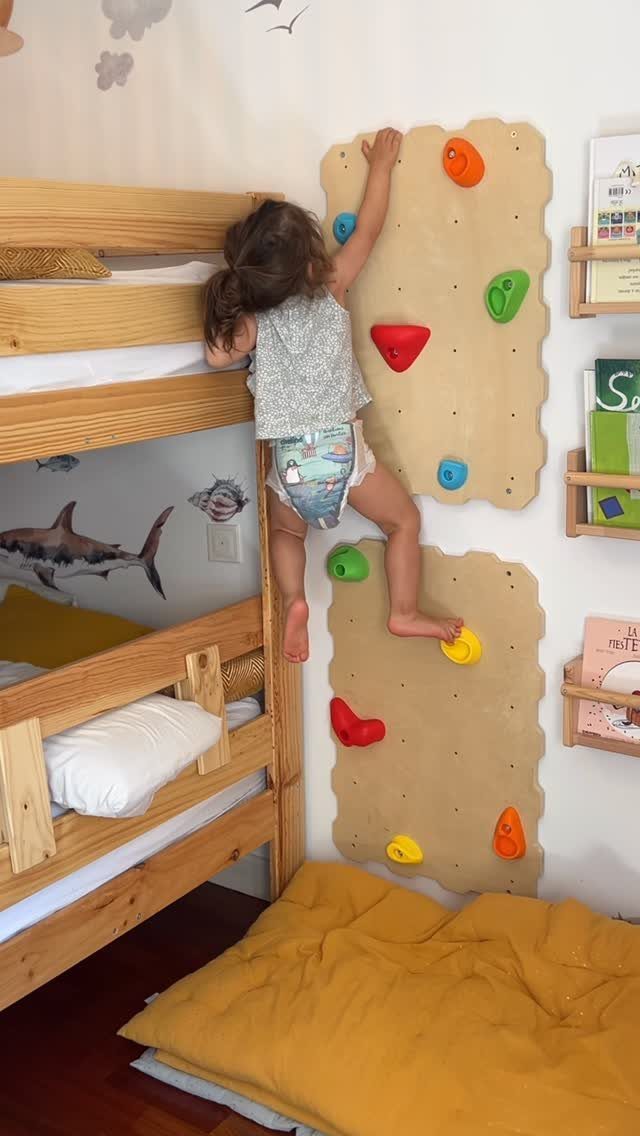
A climbing wall turns the side of a bunk bed into the part of the room kids actually want to use.
Mounting holds on a wood panel beside the frame gives them a way up that beats a ladder for fun, and the colorful holds double as decor.
Anchor the panel into wall studs, never drywall alone.
A climbing child puts far more load on it than a sleeper ever would. Add a thick rug or mat below, since falls will happen.
2. Bookcase Bunk Bed
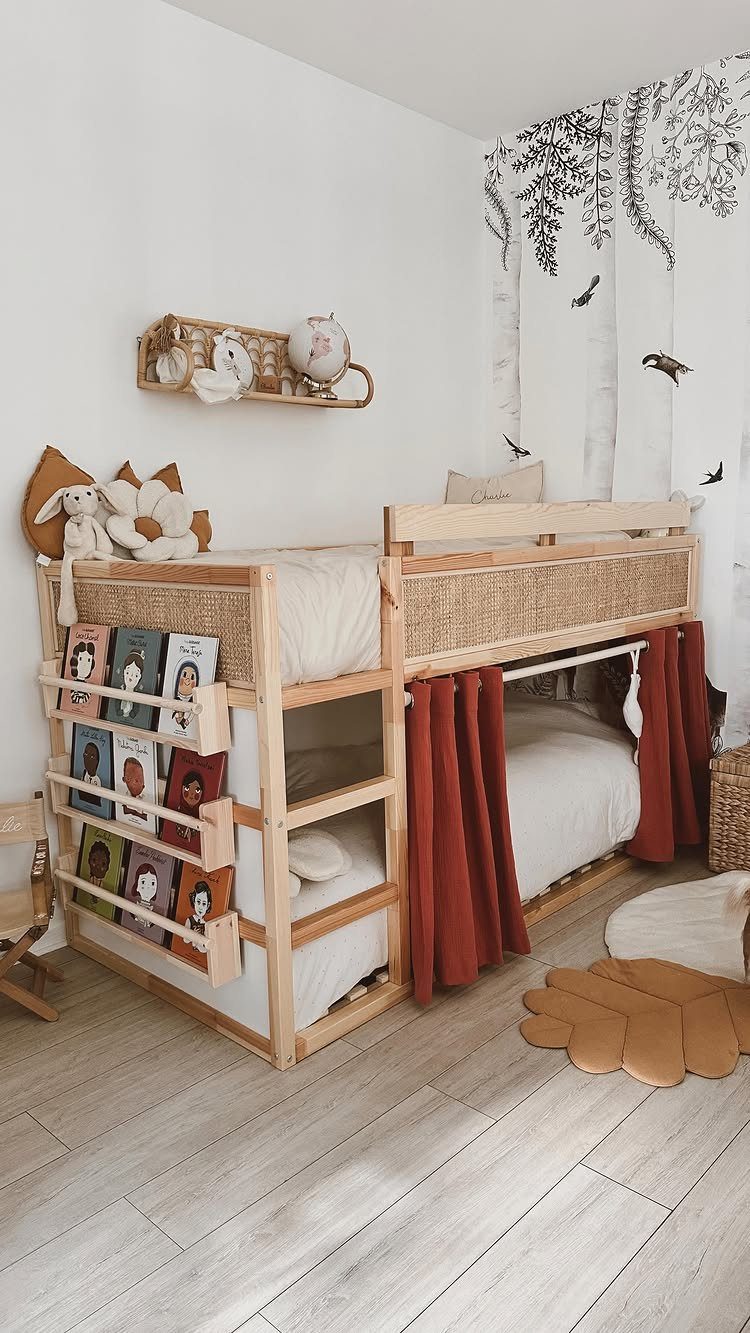
Tucking a book rack into the side of a bunk makes the bed double as a reading nook. Bedtime stories get easier when the next book sits within arm’s reach of the pillow.
Curtains turn the lower bunk into a hideaway, so hang a tension rod or a ceiling track along the open side and let the fabric do the work.
Keep heavy hardcovers on the lowest shelf and picture books higher, so the rack never feels top-heavy. Fasten it to the frame or the wall so it can’t tip.
3. Toddler Bunk
Toddlers and tall bunk beds are a tricky mix, so a small hack that makes a Kura bunk safer is worth more than any paint color.
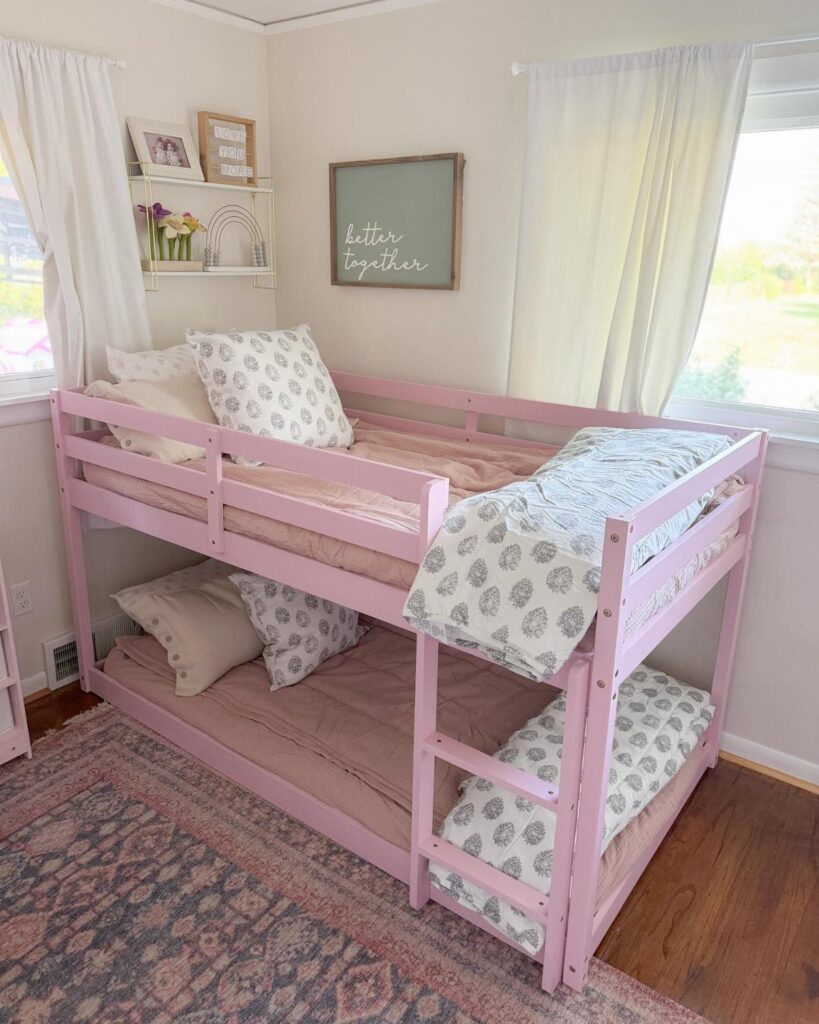
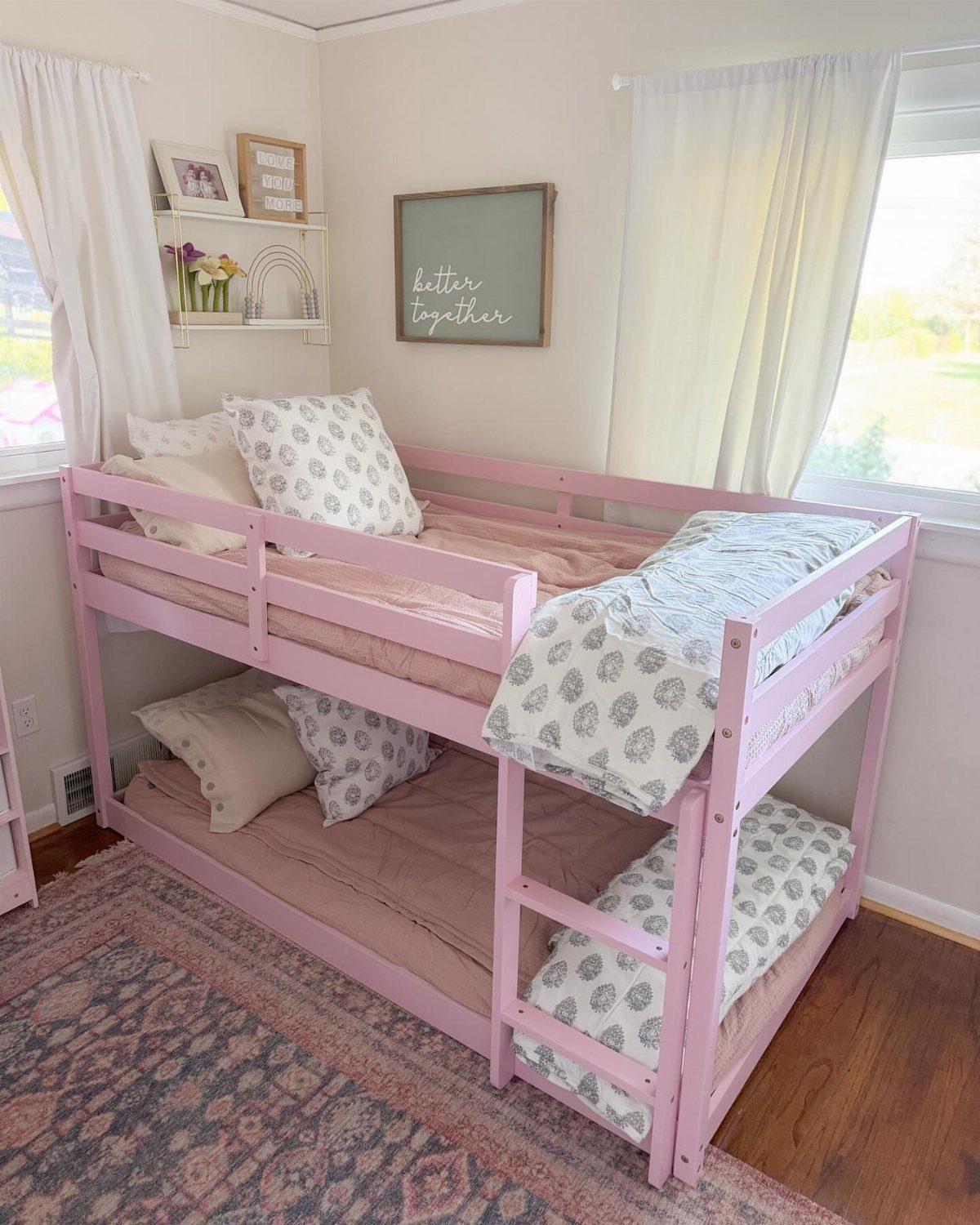
Pink paint is the easy part: a weekend and one can cover a standard twin frame, and a coat of primer first keeps the color from looking patchy.
Focus your effort on the guardrail and ladder side, and test everything by shaking it hard before bedtime. A sign like "better together" is a cheap finishing touch.
4. Curtains for Bunk Bed Cozy Cave
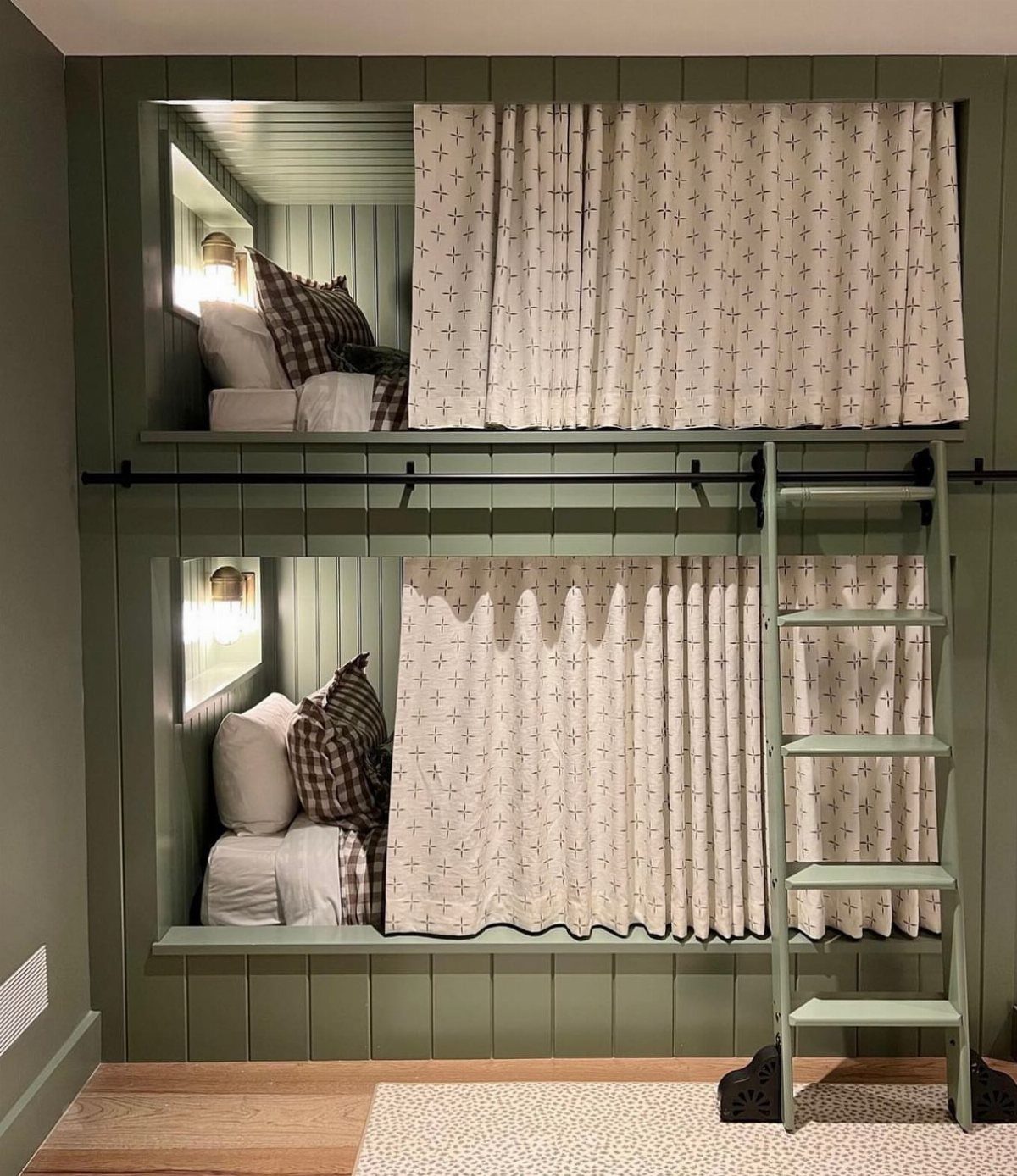
Hanging fabric panels around a bunk turns each bed into a private cave. Patterned curtains soften a hard wooden frame, and they cost much less than building walls.
Run a tension rod or a ceiling-mounted rail along the front edge, and pick washable cotton so dust doesn’t win.
Light patterns, such as a white print, keep the enclosed space from feeling dark. Leave a gap near the ladder so kids can climb without tugging the fabric.
5. Play Area Bunk Bed
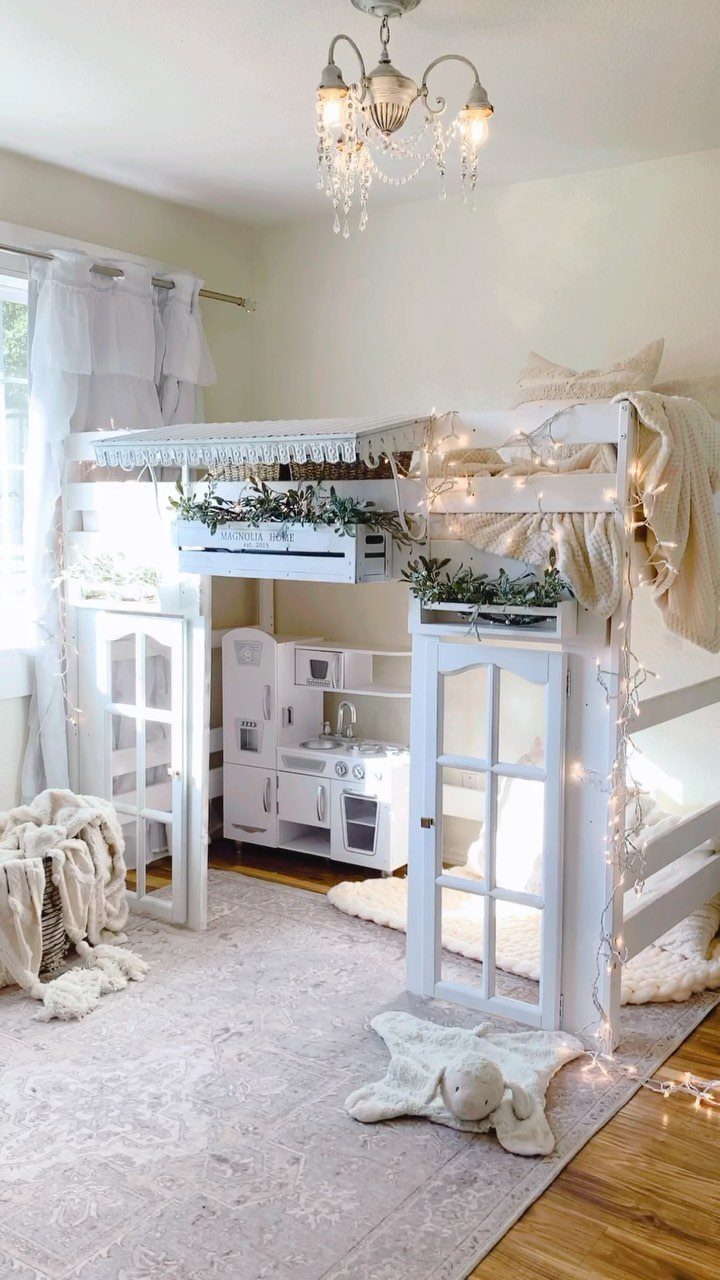
Clearing the space under a raised bed gives a compact bedroom a second floor of play. A toy kitchen with cabinets tucked beneath the bed is the clearest example, and it works because the footprint stays the same.
Use a rug to define the zone, and keep plush toys in a basket so it tidies in a minute.
Check the headroom first: a child needs to stand or crouch comfortably down there. I would skip hanging fixtures unless they’re securely mounted.
6. House Roof Bunk Bed
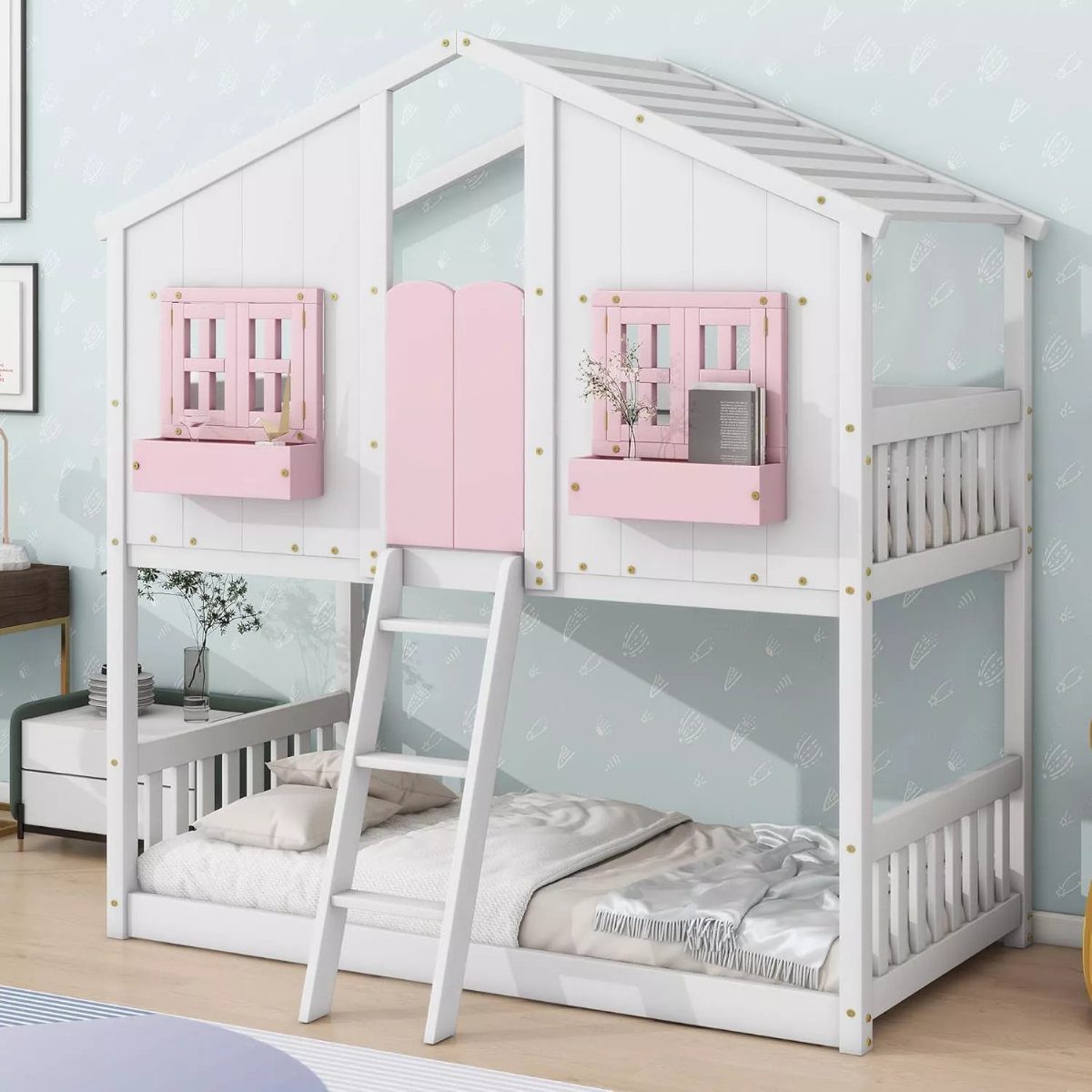
A pitched roof on the frame makes a plain bunk read as a tiny house. White framing with a contrasting accent color, such as pink shutters, keeps the house playful without looking childish for long.
Cut the roof panels from lightweight plywood or MDF, and screw them to the posts.
Paint is the cheap way to add shutters or a door. A canopy of fabric over the same frame is the simpler option if carpentry feels like too much.
7. Upholstered Bunk Bed
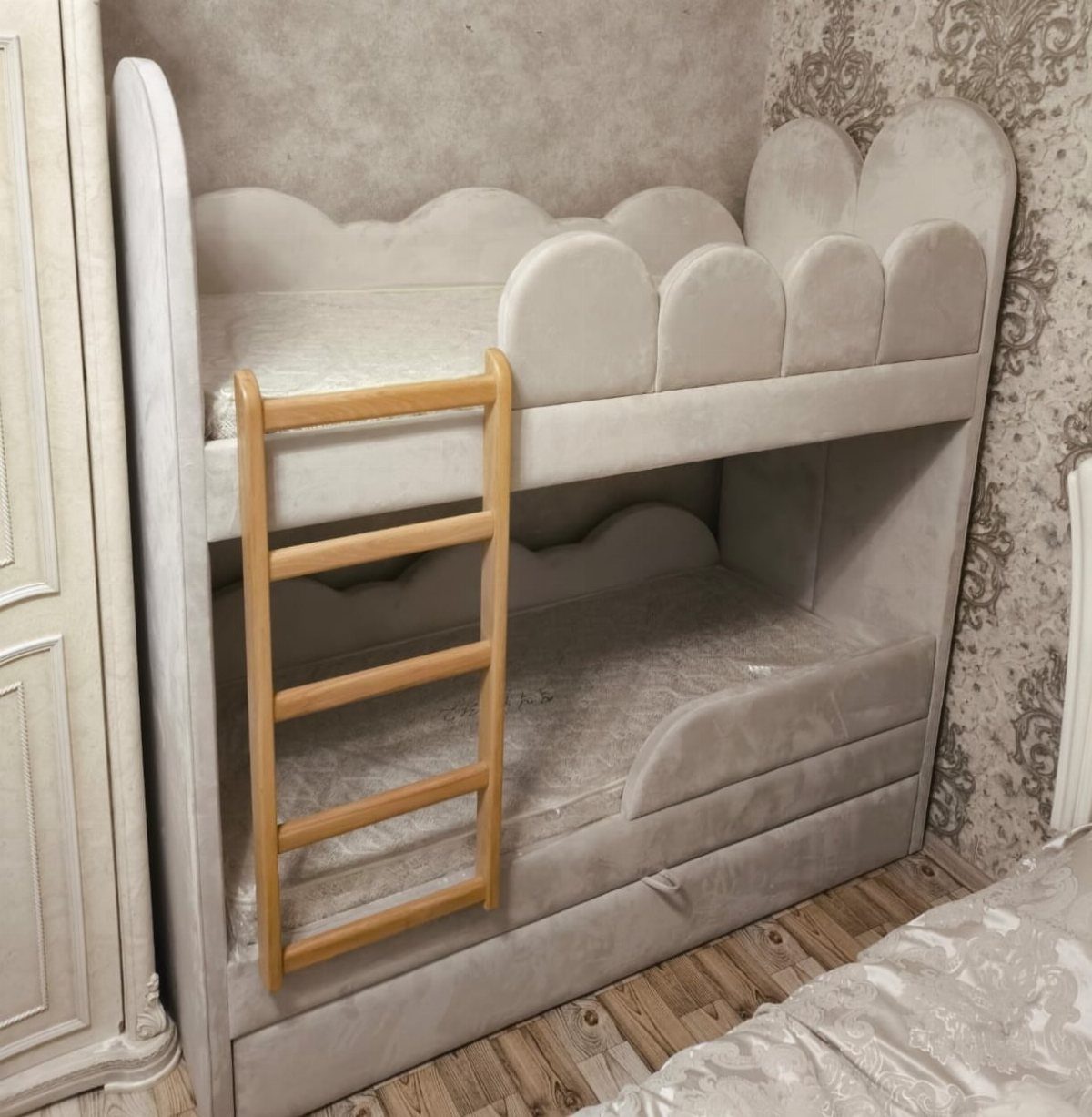
Scalloped edges and a soft grey upholstered frame make a bunk bed look more like furniture than a piece of gear. Against patterned wallpaper, a light, quiet color keeps the room from getting busy.
A wooden ladder balances the fabric nicely and holds up to small hands better than padding would.
On a plain IKEA bunk, a removable fabric cover is the easiest budget upholstery, and stapled batting under upholstery fabric costs about the same if you want a custom fit.
Pick a wipeable fabric, since kids will find every sticky spot.
8. Triple-decker Bunk Bed
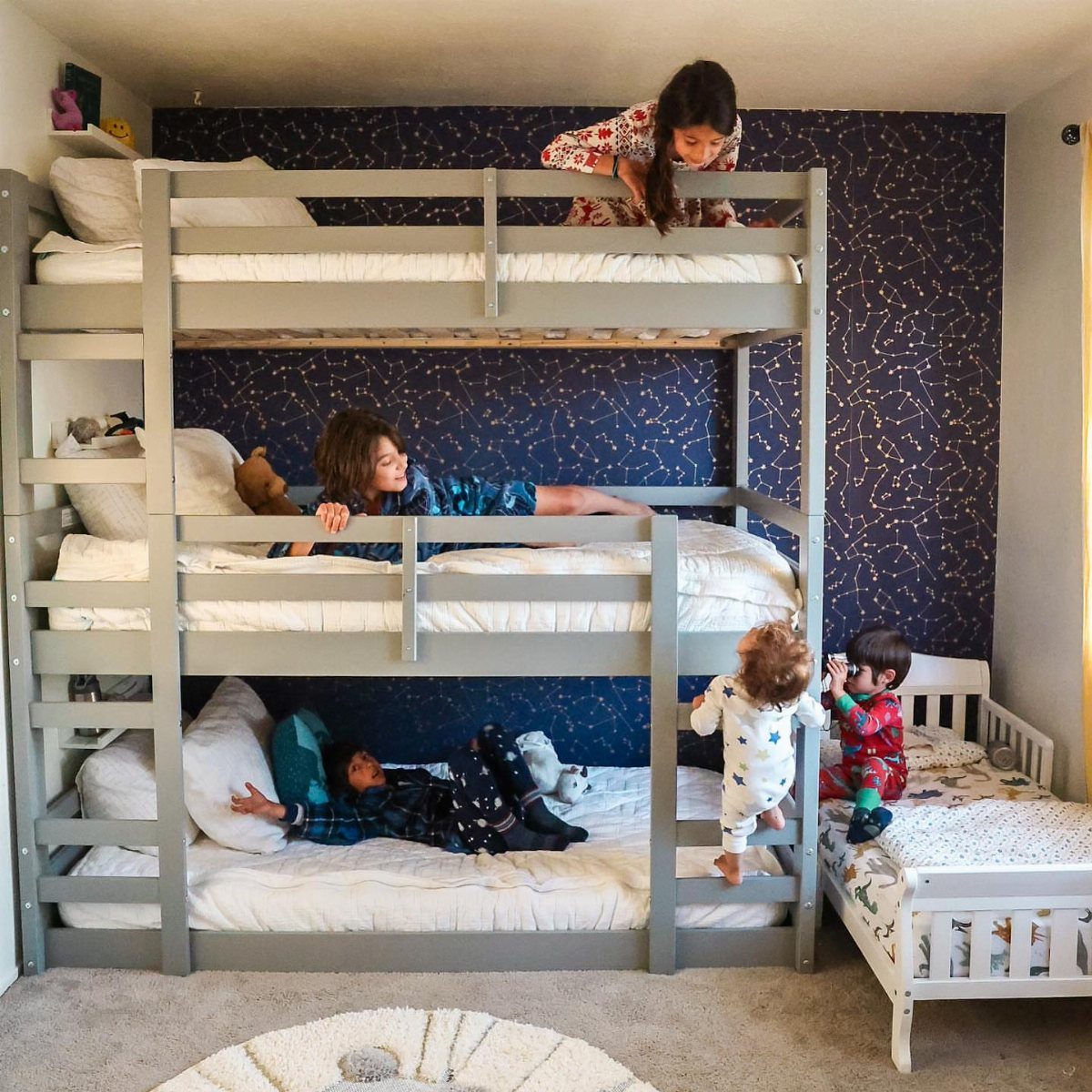
Stacking 3 beds in one column suits a room with a lot of kids and not much floor. Dark grey frames hide scuffs, and starry wallpaper on the wall behind keeps a tall bunk from looking heavy.
Measure ceiling height before you commit, because a third level needs real clearance above the top mattress.
A small toddler bed on the floor beside the stack gives the youngest a safe place to sleep without climbing. Put the oldest child on top.
9. Gamer Setup Loft Bed
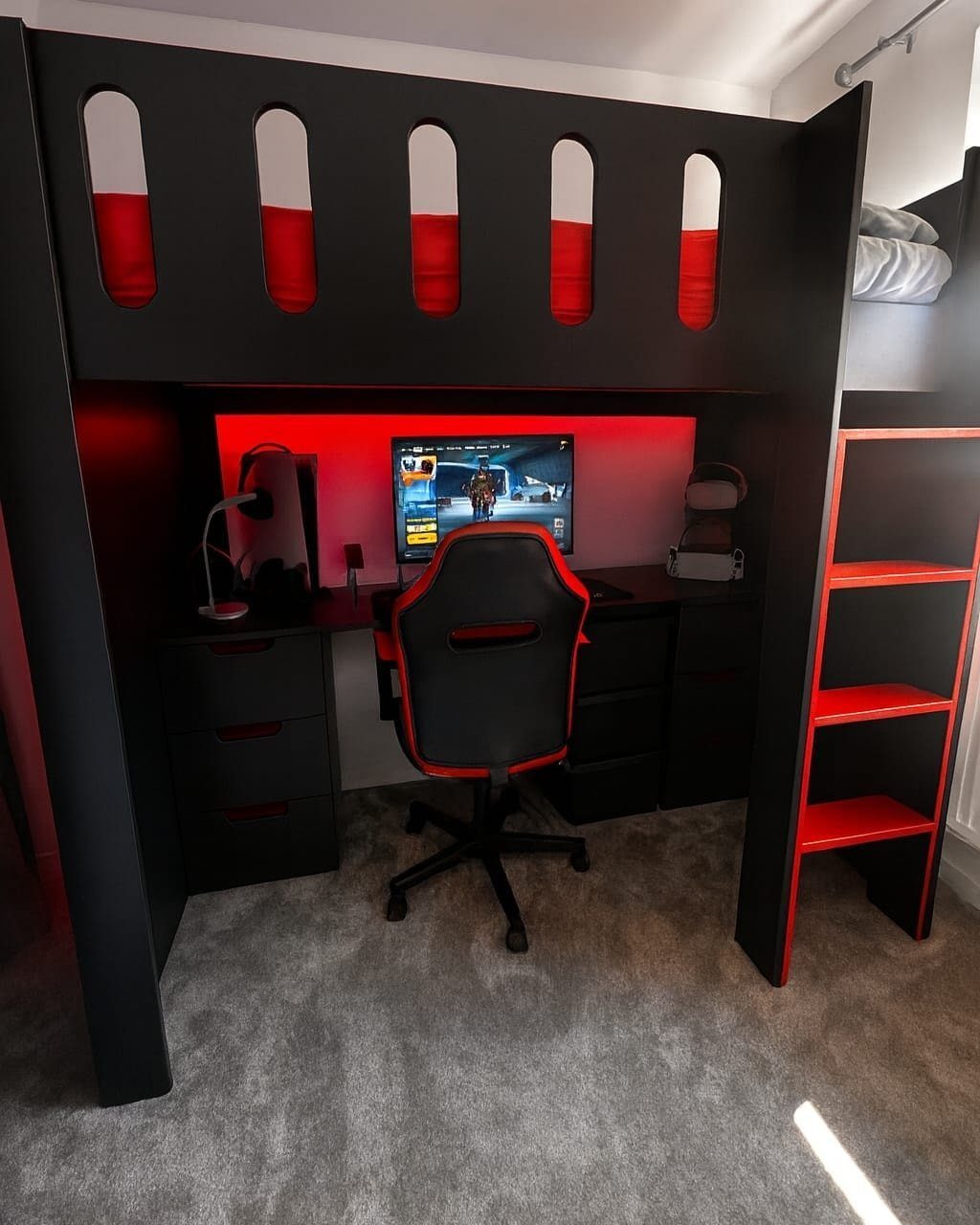
Raising the bed on a loft frame frees the floor underneath for a full gaming station: desk, monitor and chair. Black with red accents gives the setup a clear theme, and red LED lighting ties it together.
Keep cords tidy with clips or a power strip fastened to a frame leg, so nothing dangles near the bed.
LED strips are the cheap part of this idea. Add a shelving unit beside the desk for controllers and headsets.
10. Loft Bed with Built-in Desk
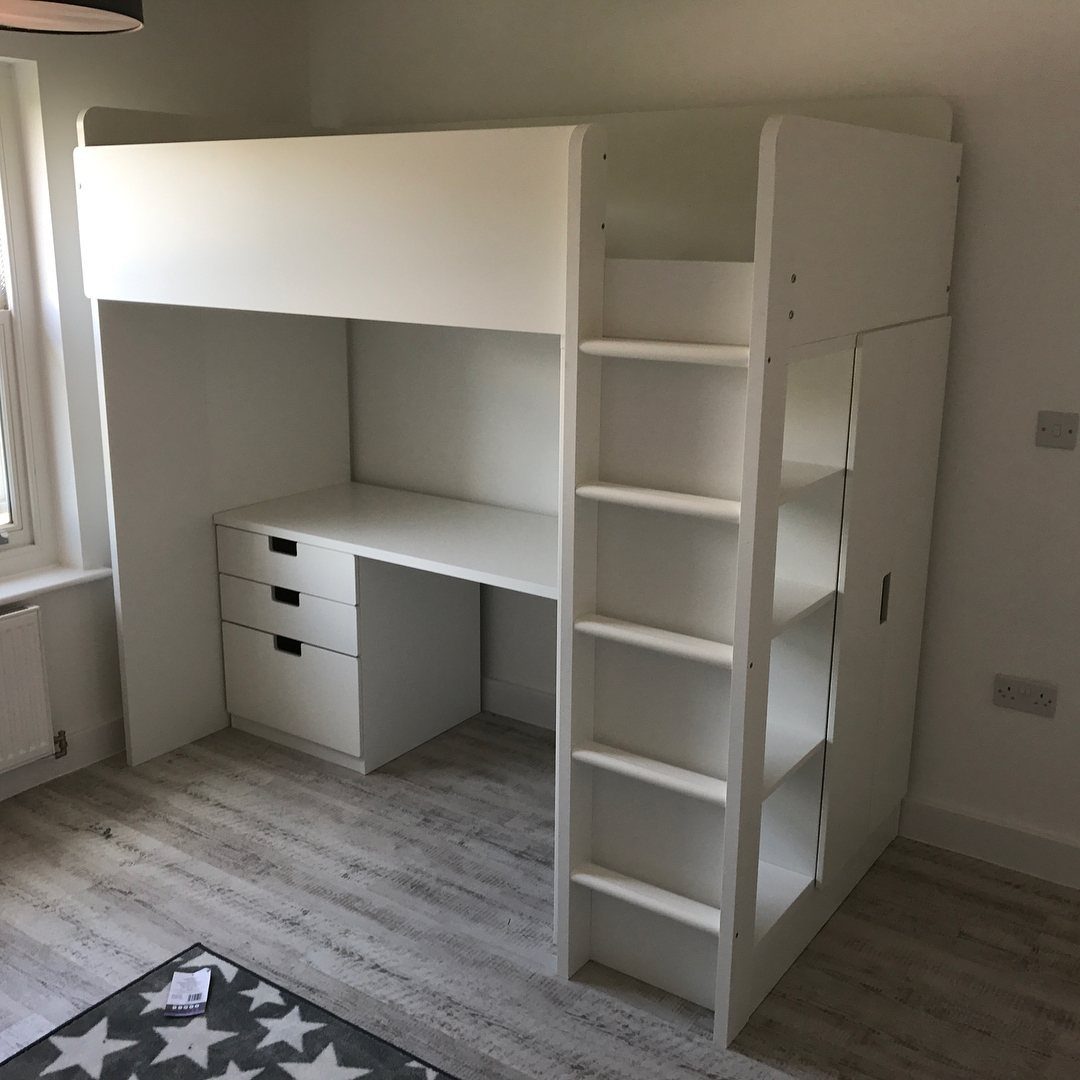
A loft bed with the desk, drawers and shelves built in underneath turns one footprint into a bedroom and a study corner.
I like this better than a separate desk and dresser because nothing competes for floor space.
Put the desk where it gets the most daylight, and use the drawers for school supplies and clothes. A rug underneath marks the study zone.
11. Helicopter Themed Bunk Bed
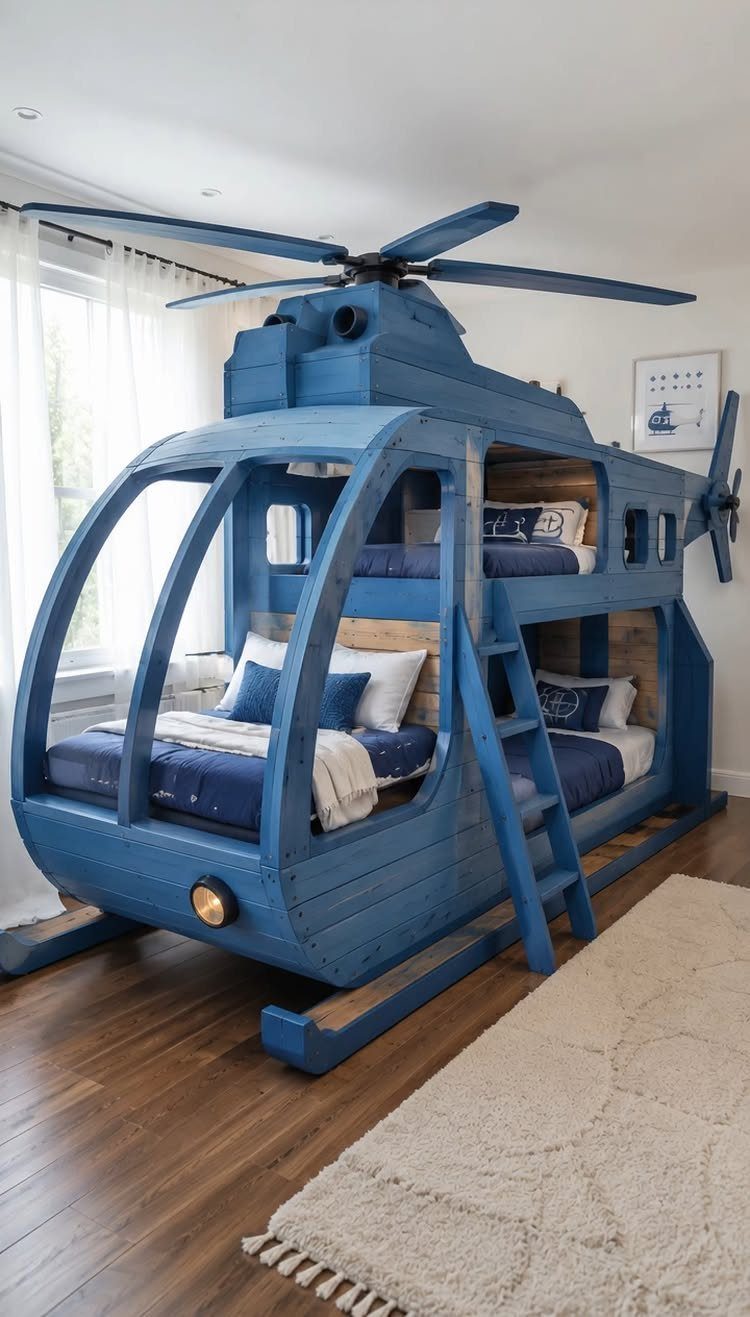
Rotor blades mounted overhead make a plain blue bunk read as a helicopter, and kids will climb in without being asked.
The shape does the theme work, so keep everything else simple: a plain hardwood floor and a white rug are plenty.
Fasten them firmly to the frame and keep them out of reach of the top bunk’s sleeper.
Safety Considerations for Bunk Beds
On a top bunk, I want the rails standing at least 5 inches above the mattress on all sides, with the opening for the ladder kept as narrow as the design allows.
Measure from the top of the mattress you actually use, since a thicker mattress eats into that height.
Check every gap in the rails and between the rails and the frame.
If you build a hack from furniture like a shelving unit, solid wood is a stronger base than particleboard or fiberboard. Work out how much weight it can carry before anything gets attached.
Sit down with your kids and explain why the top bunk is for sleeping, not for playing. A rule they understand holds up better than one they only hear.
Age Recommendations for KURA Bed
The Kura works as a low floor bed from about age 2. Left at the lower height, the KURA works for a toddler, and a parent can still sit on the edge for a bedtime story.
The KURA bed’s railing is sturdy, and you can add fall-out protection for extra security if your child is a restless sleeper.
Mattress thickness matters when you flip the bed up.
Packaging caps mattress thickness at 5 1/8 inches, and plenty of standard mattresses run thicker than that. Grab a tape measure first, and plan on looking past the usual big-box aisles to find a slim mattress.
Materials and Tools for Hacks
Plywood, fabric and paint cover most of what these projects need. Plywood gives you panels that hold screws, fabric softens and covers, and paint finishes the job for a few dollars.
A circular saw and a drill handle nearly every cut and fastener involved. Add a tape measure, a level and a stud finder, because most of the work depends on straight lines and solid anchoring.
Buy a little extra plywood to allow for cutting mistakes. Sand every cut edge before painting, so small hands don’t meet splinters.
Wear safety glasses while cutting, and clamp the board down instead of holding it. Do the sawing and painting in a garage or outdoors if you can, so dust and fumes stay out of the bedroom.
Frequently Asked Questions
What age is the IKEA KURA suitable for?
For a toddler around age 2, the KURA can be set up low to the floor.
Set that low, the mattress sits a short step from the ground, yet there’s still room for a parent to perch on the edge and read. Flipped up into a bunk, IKEA recommends it for kids age 6 and older.
How can I make my bunk bed safer?
Top-bunk rails get my first look: 5 inches of height above the mattress is the minimum on all sides, with only the ladder opening breaking that barrier.
Run a hand along every opening, both in the rails and where they meet the frame, because a gap that fits a head or limb is a trap.
Kids also need a plain rule they understand: the top bunk is for sleeping only, and a reason they can repeat will hold up better than a command.
What mattress thickness works for the KURA bed?
Packaging caps the mattress at 5 1/8 inches, and many standard mattresses run thicker.
Hold a tape measure to any mattress first, and expect to shop beyond the usual big-box stores to find one slim enough. It matters most when the bed is flipped up into a bunk.





