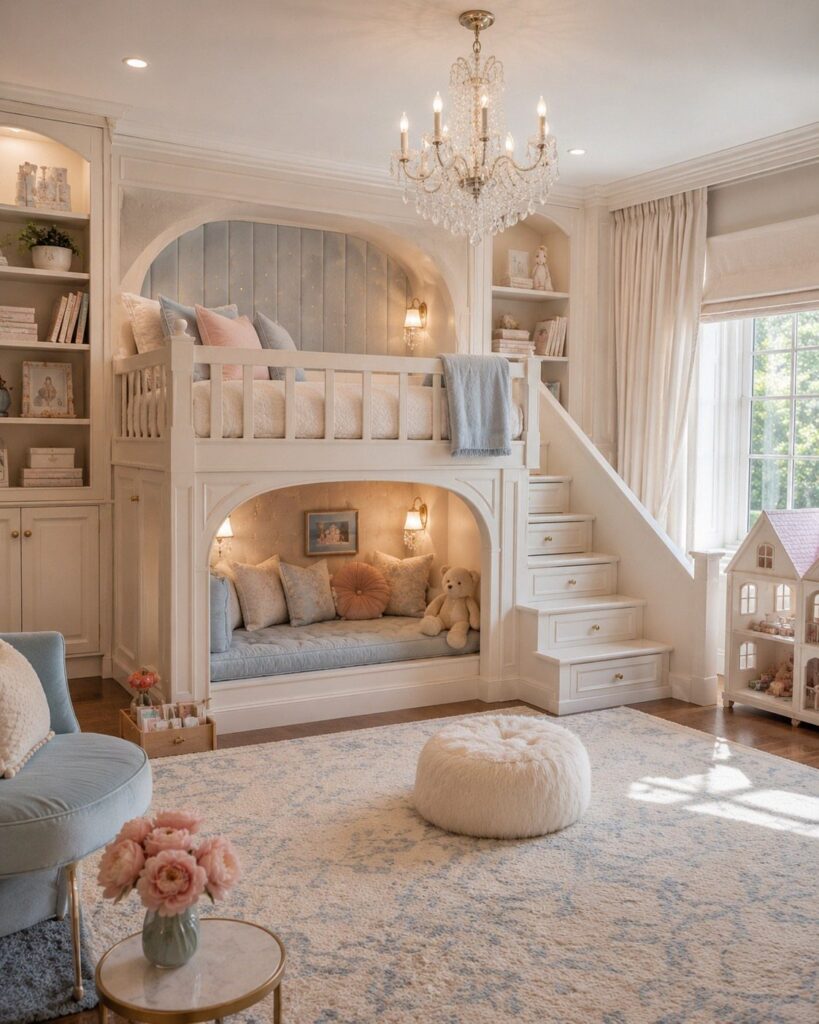
Options in this list range from string lights and a textured accent wall, which a renter can take down, to a built-in arched nook, which is carpenter work.
Which one fits depends on whether you can alter the frame or have to leave it untouched.
Most of the list works either way: LED strips with adhesive backing, curtains on a rod, and loose floor cushions all leave the bed itself alone.
1. Loft Bed with Full Reading Nook
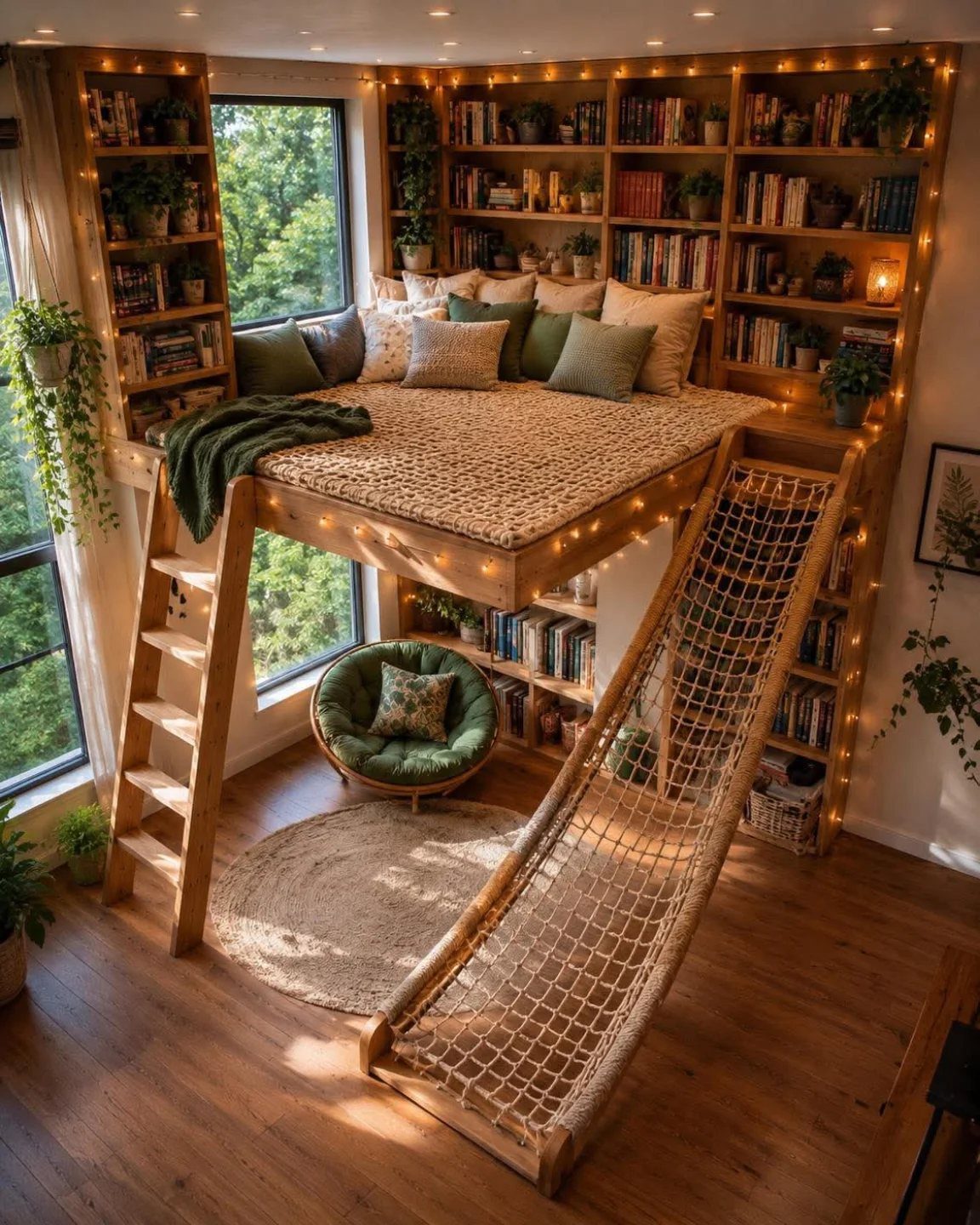
Floor space is the thing a loft bed hands back, and a papasan chair is a good way to spend it.
The round bowl seat fits snugly under the platform, and a loose cushion makes it comfortable for a long chapter.
Shelving built right beside the chair keeps books within arm’s reach, so nobody has to climb down the rope ladder and back up for a second one.
Plants soften all that wood, though I’d keep them to trailing, low-fuss types that forgive missed waterings.
Check the clearance before buying the chair: a child sitting upright needs head room under the frame.
2. Curtained Reading Cave
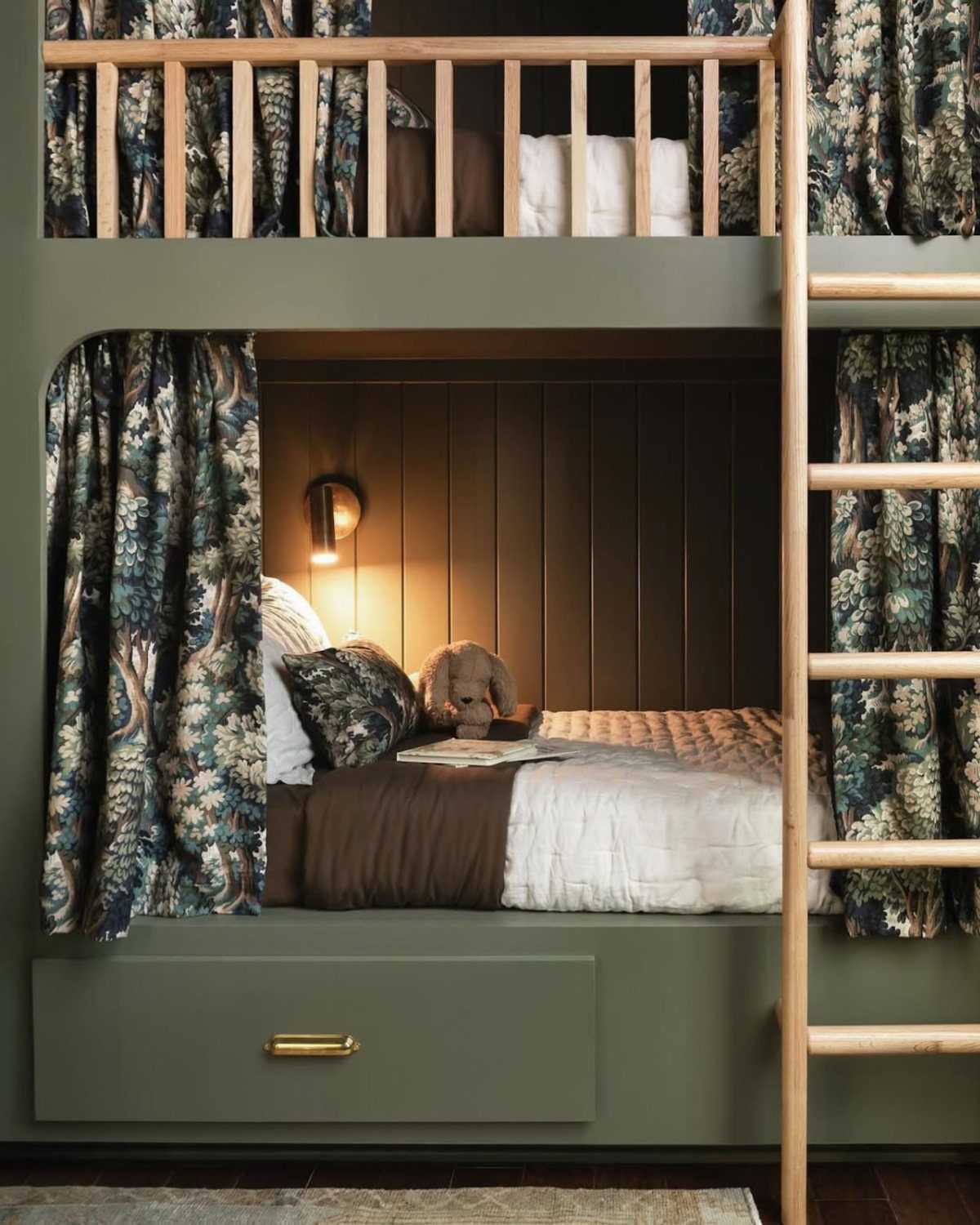
Curtains turn a lower bunk into a room of its own. Hang them on a rod along the frame’s front edge, and a child can close the world out with one pull.
Choose a patterned fabric that hides small stains, since the bottom bunk gets the most handling. A small clip-on reading lamp, a stuffed animal and a book stack are enough to make it a destination.
I prefer curtains that stop just above the floor, so they never get stepped on or snagged under the ladder. Leave one side tied back by day so the space doesn’t read as shut away.
3. Bunk Bed with Slide and Under-Bed Reading Alcove
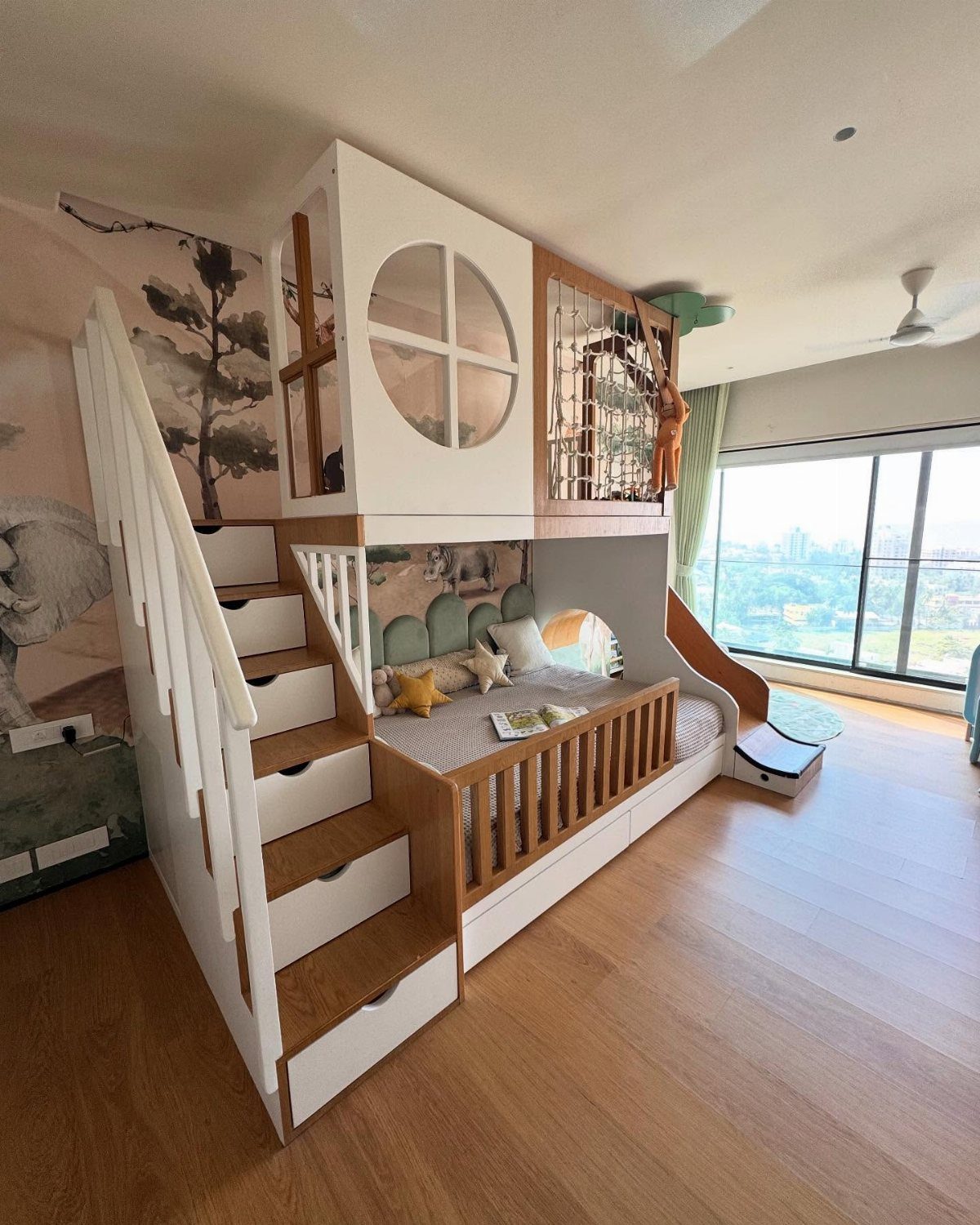
A slide off the upper bunk and a reading alcove underneath make one bed do two jobs, and kids tend to love both.
Calm and loud live in the same footprint, so keep the cushions on the alcove side, away from the slide’s landing zone.
Stairs with drawers are the detail I’d copy first. They hold books, blankets and toys that otherwise crowd the nook, and they replace a ladder little legs find awkward.
Floor pillows inside the alcove are easy to swap as a child grows, which beats buying a fixed seat.
4. Loft Beds with Desks
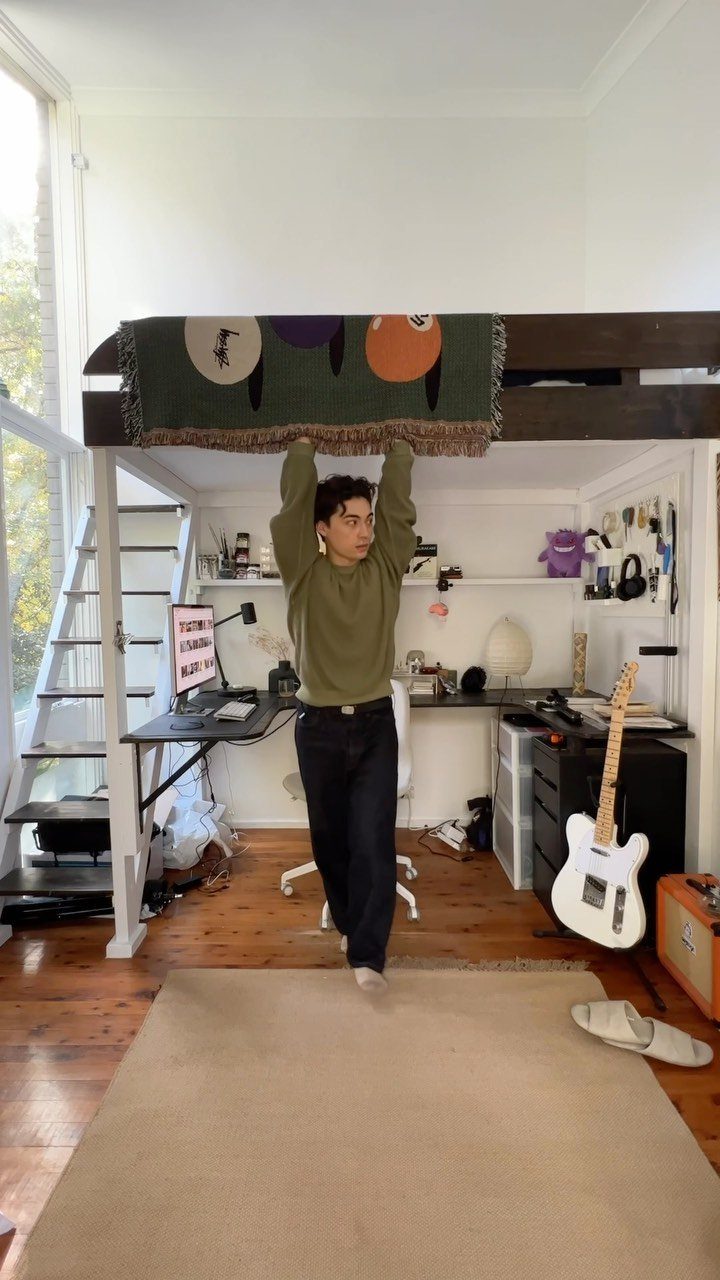
A desk beneath a loft bed suits older kids and teens better than any reading corner I know.
The bed takes the sleeping space overhead, and the floor below becomes a work zone with room for a computer, a guitar and a chair.
A rug in a neutral tone, like the tan one here, marks the area off from the rest of the room.
Add a good task lamp, because the bed overhead blocks most ceiling light.
5. Personalizing the Nook
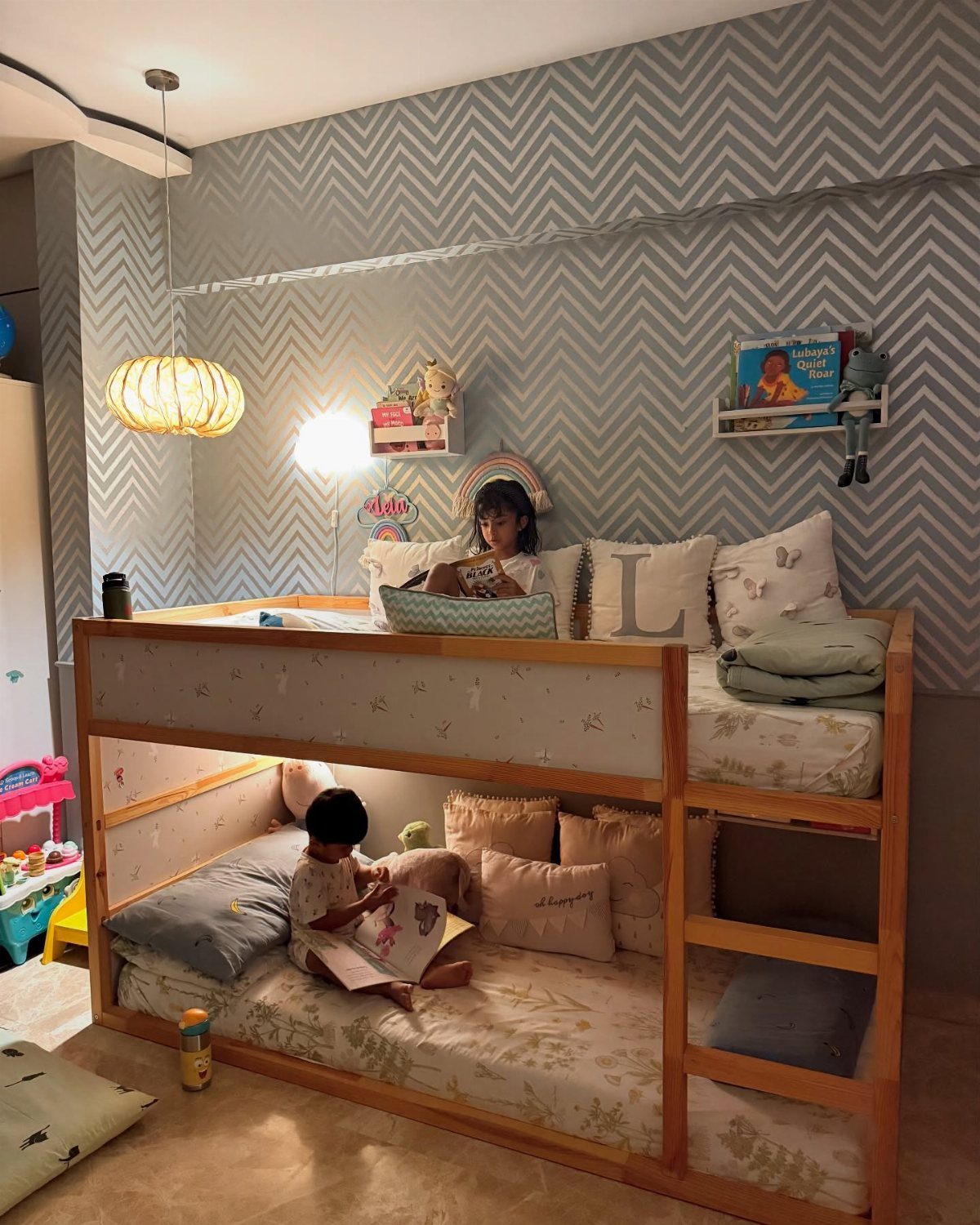
Let the child choose. A nook feels like theirs once it carries their own favorites: a sign in colors they love, wallpaper with a bold pattern, and a shelf stocked with the books they ask for again and again.
Soft pillows matter more than anything else here, since comfort decides whether a kid stays put and actually reads. Keep a few of the most-loved titles facing outward so the covers invite a pick.
Peel-and-stick wallpaper is my pick for renters, because a bold chevron pattern can come off later without a fight.
6. Integrated LED Under-Bunk Lighting
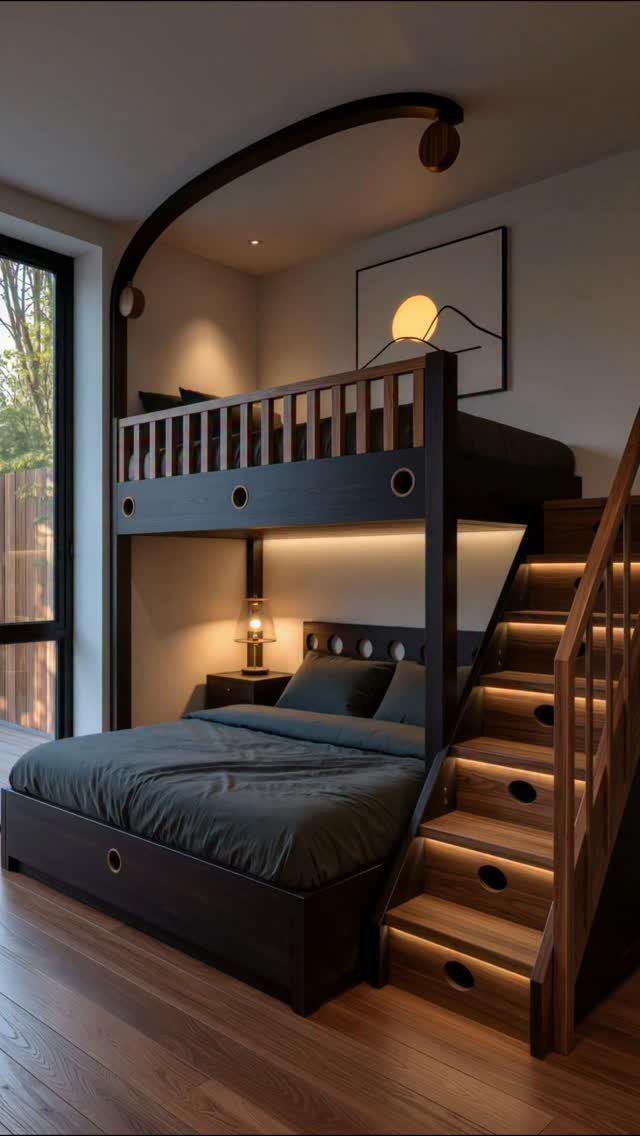
Warm LED strips fixed to the underside of the upper bunk give the lower bunk a built-in reading light, with no cord to trip over and no lamp to knock down.
Choose a warm white tone rather than a cool one, which feels harsh at bedtime.
Run the strip along the underside edge, pointing down onto the pillow area, and add another along the stairs for safe steps after dark. Many strips come with an adhesive backing and a dimmer, which suits a rental.
Hide the wiring along the frame so small hands can’t pull it loose.
7. Built-In Arched Reading Nook
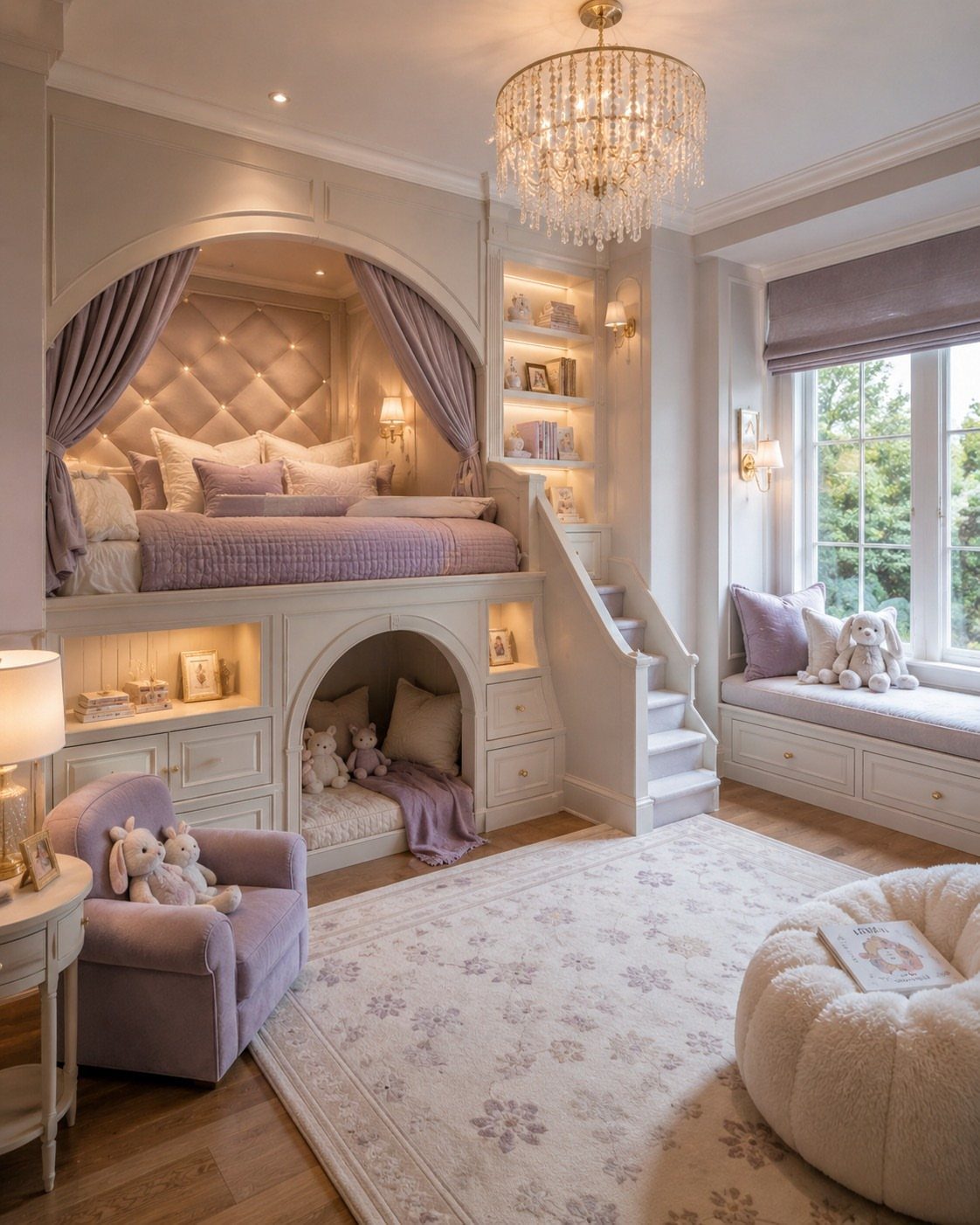
An arch cut into the base of a raised bed gives the nook below a doorway of its own, and that one curve makes a hollow under a bed feel like a small room.
Pillows and plush toys fill it well because the rounded opening frames them like a picture.
Because the alcove is built in, the work belongs to a carpenter or a confident woodworker; for a rental, I’d borrow the idea with a freestanding arched panel or a painted arch on the wall instead.
Keep the pillows loose and washable, so the nook can be refreshed in one trip to the laundry room.
8. String Lights and Plush Toys
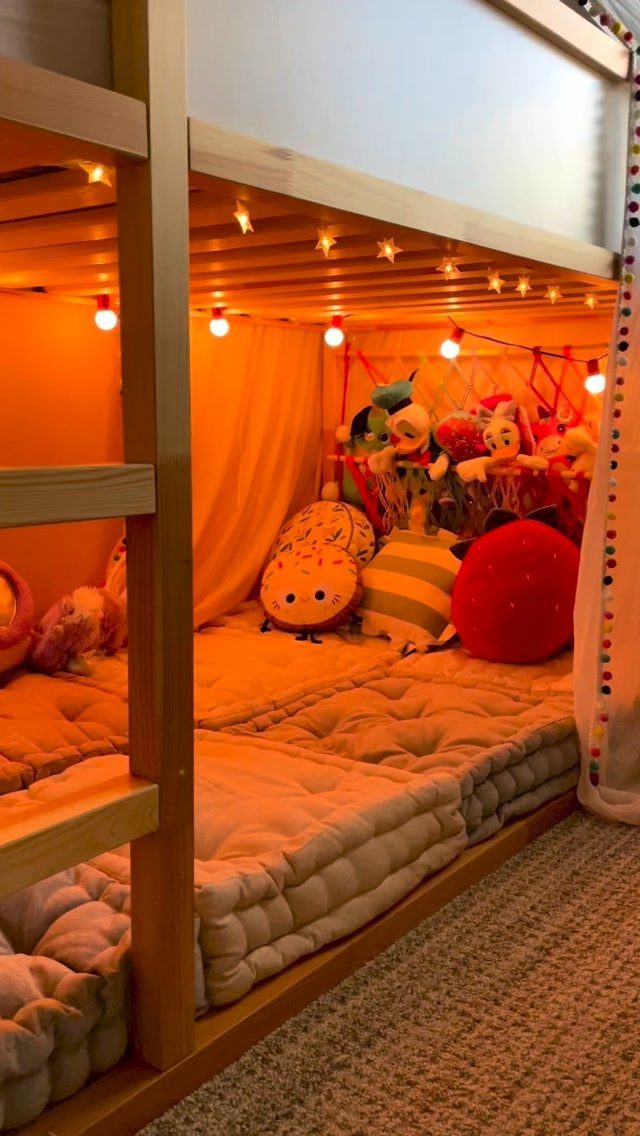
Warm string lights draped along the underside of a wooden bunk do more for a reading nook than almost any other cheap add-on.
Pair them with a tufted floor cushion and a pile of plush toys, and the space under the bed reads as a place to settle in.
I’d pick a warm white strand over a multicolor one, since it keeps the glow gentle at bedtime.
A curtain at the side softens the light further and lets a child shut the nook off when it’s time to wind down.
A floor cushion also slides out when the space is needed for something else.
9. Cane Panel Bunk Reading Area
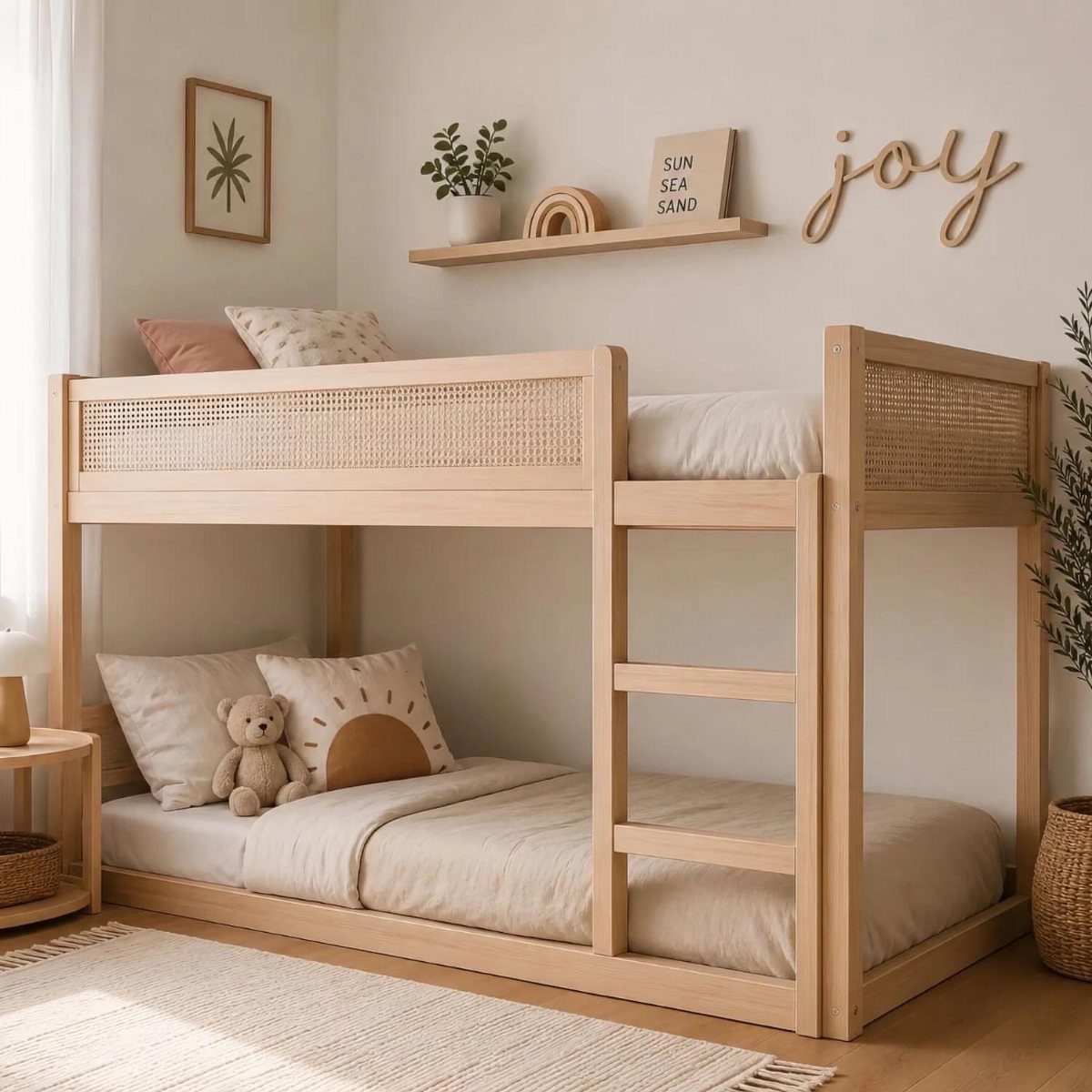
Cane panels set into a light wood bunk add texture without adding weight, so the frame stays airy even in a small bedroom.
The lower bunk then works as a reading spot when it’s stacked with pillows and a teddy bear.
A shelf of books within reach of the pillows keeps the habit going, and a simple wall sign like the "joy" one here adds personality for almost nothing.
Peel-and-stick decals or a framed print would do the same job for a renter.
I’d keep the bedding in soft neutrals, so the cane stays the pattern that stands out.
10. Textured Accent Wall Nook
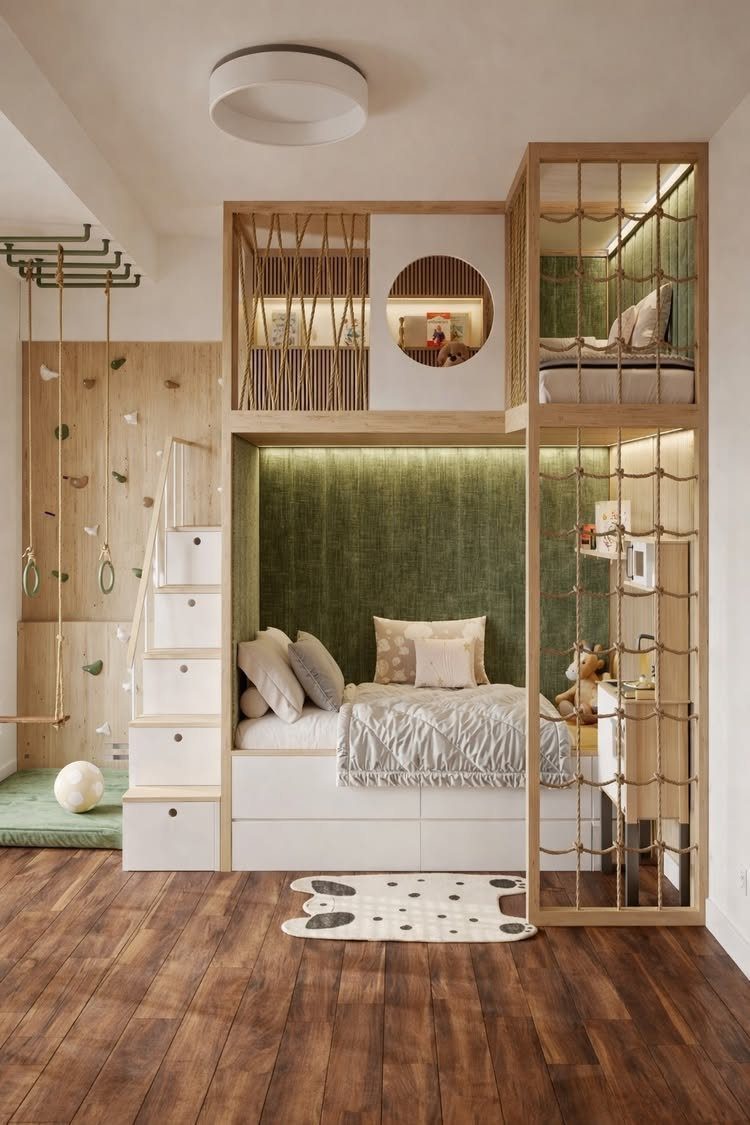
A textured green wall behind the lower bunk gives the nook depth and makes it feel like a cozy corner rather than a bed. Green is a calm color for reading, and wood tones sit well against it.
Built-in storage stairs earn their spot here too, because they hold books and blankets within reach of the lower bed. As entry 3 says, stairs with drawers beat a ladder for small legs.
To copy the look on a rental budget, I’d use a textured peel-and-stick wallpaper in a muted green on the single wall behind the bed, and leave the rest of the room plain.
Choosing the Ideal Loft Bed
Start with the room, not the bed. Write down the ceiling height, the floor footprint, and how wide your door and hallway are, then compare them to the bed’s spec sheet before you order.
Material comes next. Solid wood and metal frames hold up to years of climbing and bumping better than thin composite boards, and a frame that wobbles in the store will wobble worse at home.
An open frame design keeps a small room feeling airy, which matters when the sleeping platform sits overhead. A solid, boxy one can make a modest bedroom feel closed in.
Safety features belong on the shortlist from the start, not as an afterthought. Look for sturdy guardrails and a secure way up before you compare colors and finishes.
Safety Features
Guardrails come first. Full-length rails on top matter most at night when someone rolls over half asleep.
Then decide between a ladder and stairs.
If space rules out stairs, pick a slanted ladder over a straight one.
A slanted ladder is easier to climb and more stable, so feet slip less. A straight ladder saves floor space, but it asks for more care on every trip up and down.
Before assembly day ends, give every rail and rung a firm shake and tighten anything that moves.
Maintaining the Nook
A nook that lasts is one you can rearrange without buying everything again. Modular shelving is the clearest example: add a unit as the book collection grows, or remove one when it shrinks.
Seating works the same way. Choose pieces with removable covers, so a new cover can match changing tastes for a fraction of the cost of new furniture.
Every few months, pull out the books that have been outgrown and bring forward the ones being read now. Small resets like that keep the space in use.
Frequently Asked Questions
How to make a reading nook in a bedroom?
Use the space under a loft bed or the lower bunk, and give it 3 things: soft seating, a light, and books within reach.
A papasan chair with a loose cushion, a pile of floor pillows, or a curtained lower bunk all work.
Warm LED strips or a clip-on lamp supply the reading light, and a shelf beside the seat keeps a second book from meaning a trip up the ladder.
What is the bunk bed rule?
The usual rule is that children under 6 should not sleep on the upper bunk.
Beyond age, the bed itself matters: full-length guardrails on top, a secure way up such as stairs or a slanted ladder, and a firm shake of every rail and rung after assembly to tighten anything loose.
Can a 7 year old sleep on the top bunk?
Yes, as long as the child can climb up and down safely and understands the safety rules.





