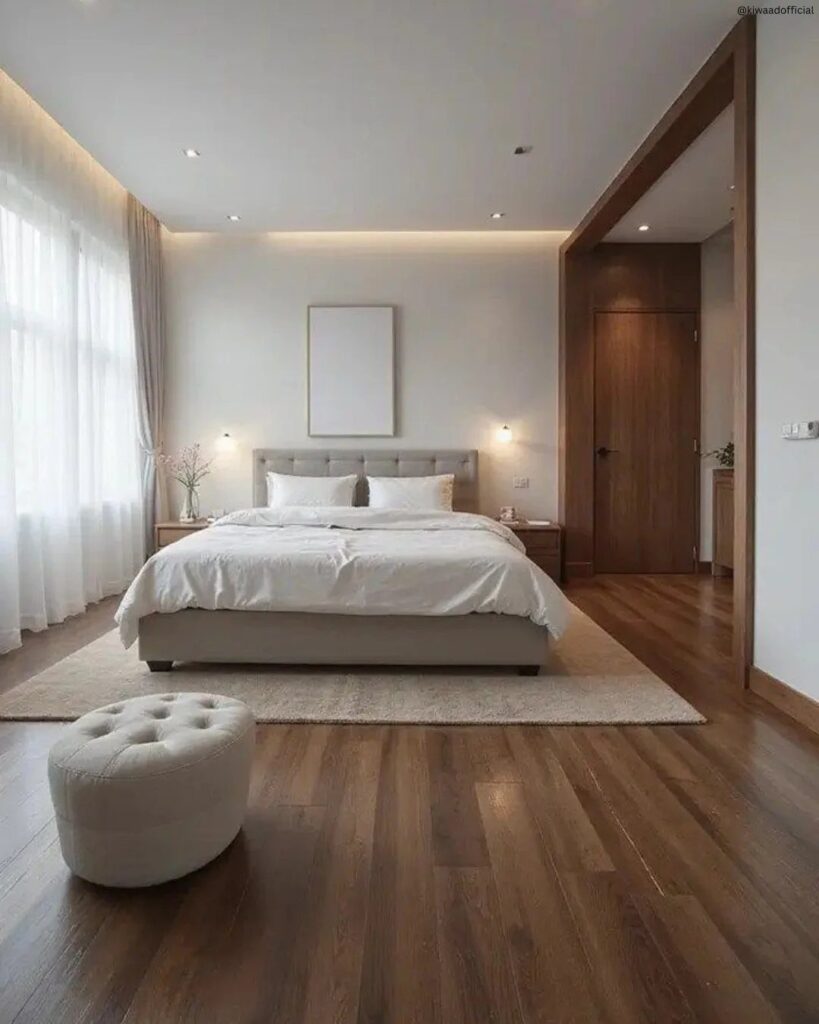
Wood floors in a bedroom range from light boards that stay quiet to dark wooden planks, with medium brown planks in between, and from straight lengths to chevron and herringbone patterns that cost more in labor.
The rule that picks one is the tone you already have in the room: whatever the floor is, keep the large surfaces around it, like walls and bedding, in the opposite shade so the contrast looks planned.
1. Light Wood Flooring
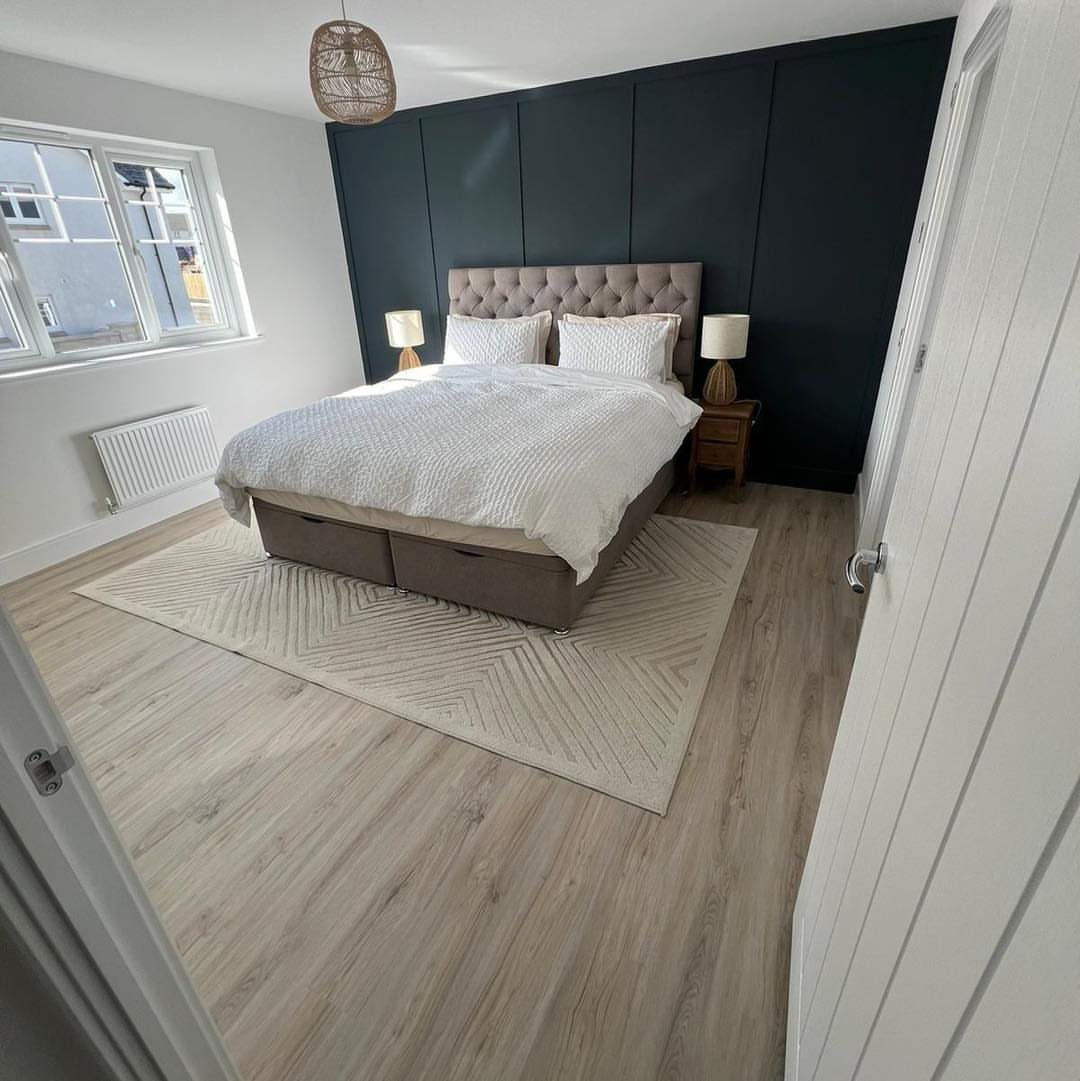
Pale boards make a bedroom read as modern, mostly because they keep the floor from competing with everything else.
That’s why a dark accent wall works so well against them: the color gets to be the drama while the floor stays quiet.
I’d pair light wood with white bedding and one deep wall, then add a single textured piece like a tufted headboard. Keep the other surfaces calm, or the room starts to feel busy.
2. Reclaimed Wood Flooring
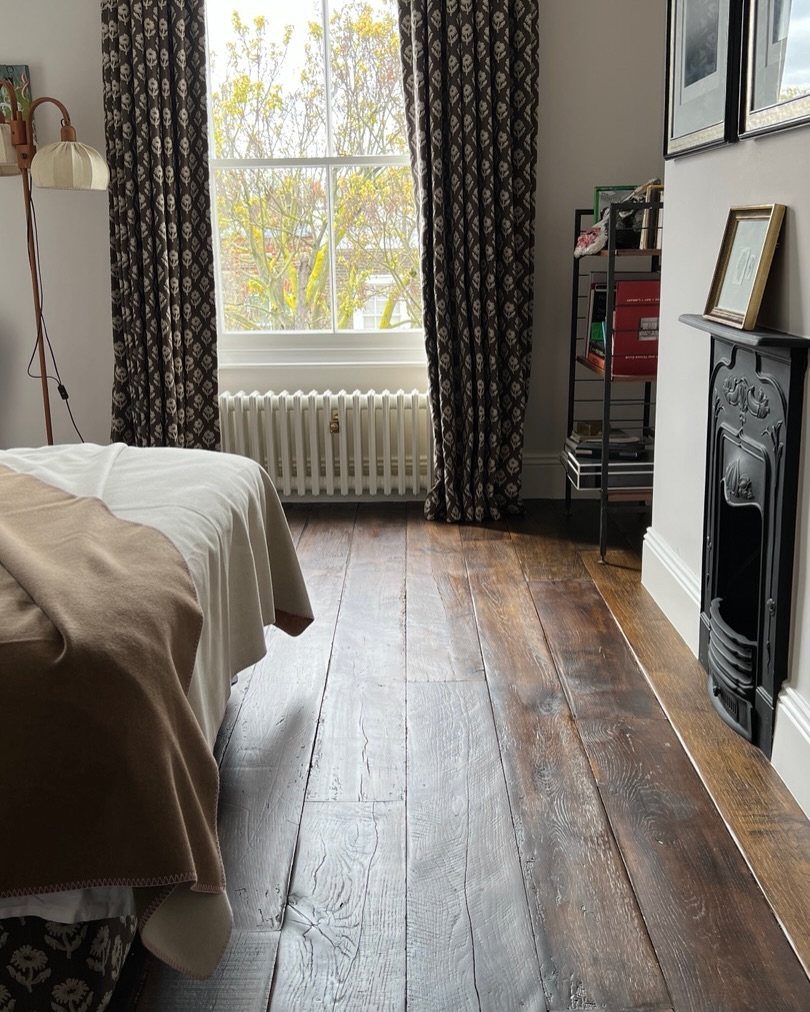
Reclaimed boards bring rustic charm because every plank carries its own marks, and a dark finish makes those differences look deliberate. In a room with a black fireplace, the floor and the hearth echo each other without matching.
Keep the rest of the bedroom simple so the floor leads. A brown throw and patterned curtains are plenty.
Reclaimed wood usually costs more than new planks, so if the budget is tight, I’d use it in the one room where you want character most.
3. Area Rugs with Hardwood Floors
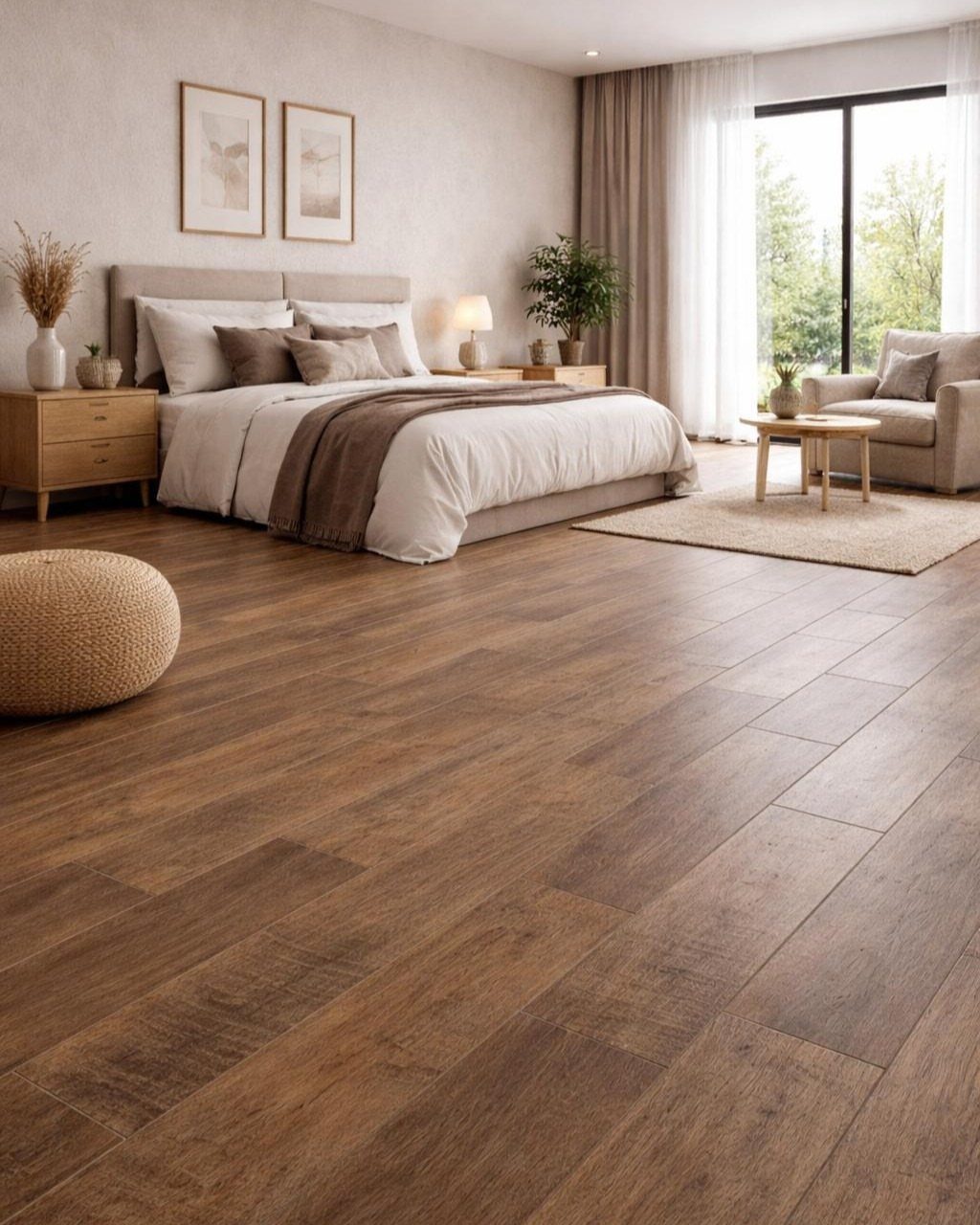
A small rug does 2 jobs on a wood floor: it adds softness underfoot and it marks out a spot, like a reading corner with a chair.
Beige is a safe pick over brown planks because it stays light enough to show the wood around it.
Choose a rug that leaves a wide border of bare floor, so the boards still read as the main event. Texture matters more than pattern here; a woven or shaggy surface gives the contrast a smooth floor lacks.
4. Dark Wooden Flooring
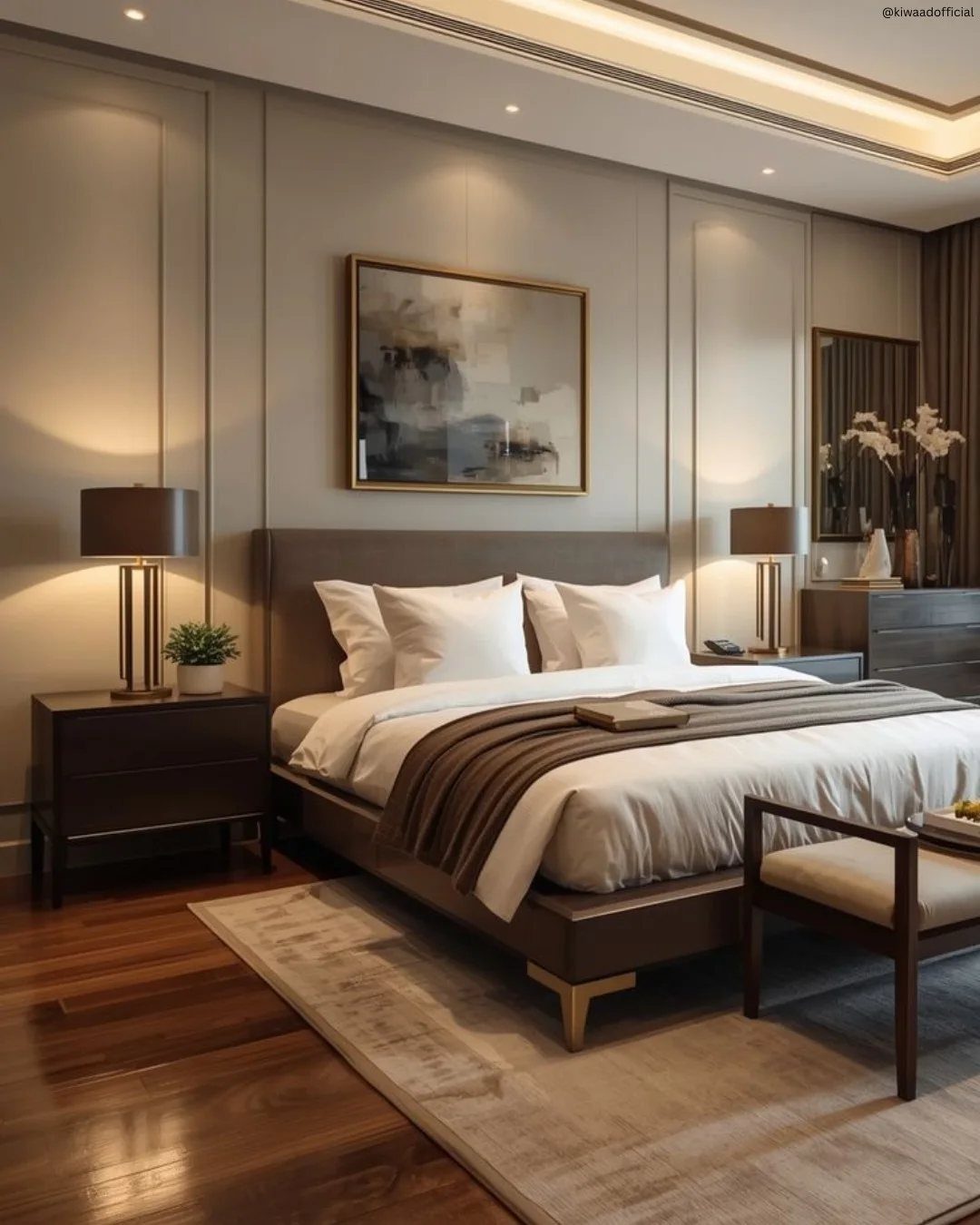
Polished dark planks look best when everything above them stays pale. White linens and neutral walls give the floor a clear edge, and the space reads as calm instead of heavy.
Add a pair of bedside lamps and one large piece of abstract art over the headboard, and you have enough going on. I’d skip extra dark furniture, since it blends into the floor and flattens the contrast.
A polished finish shows its shine, so plan on regular sweeping.
5. Chevron Pattern Wooden Flooring
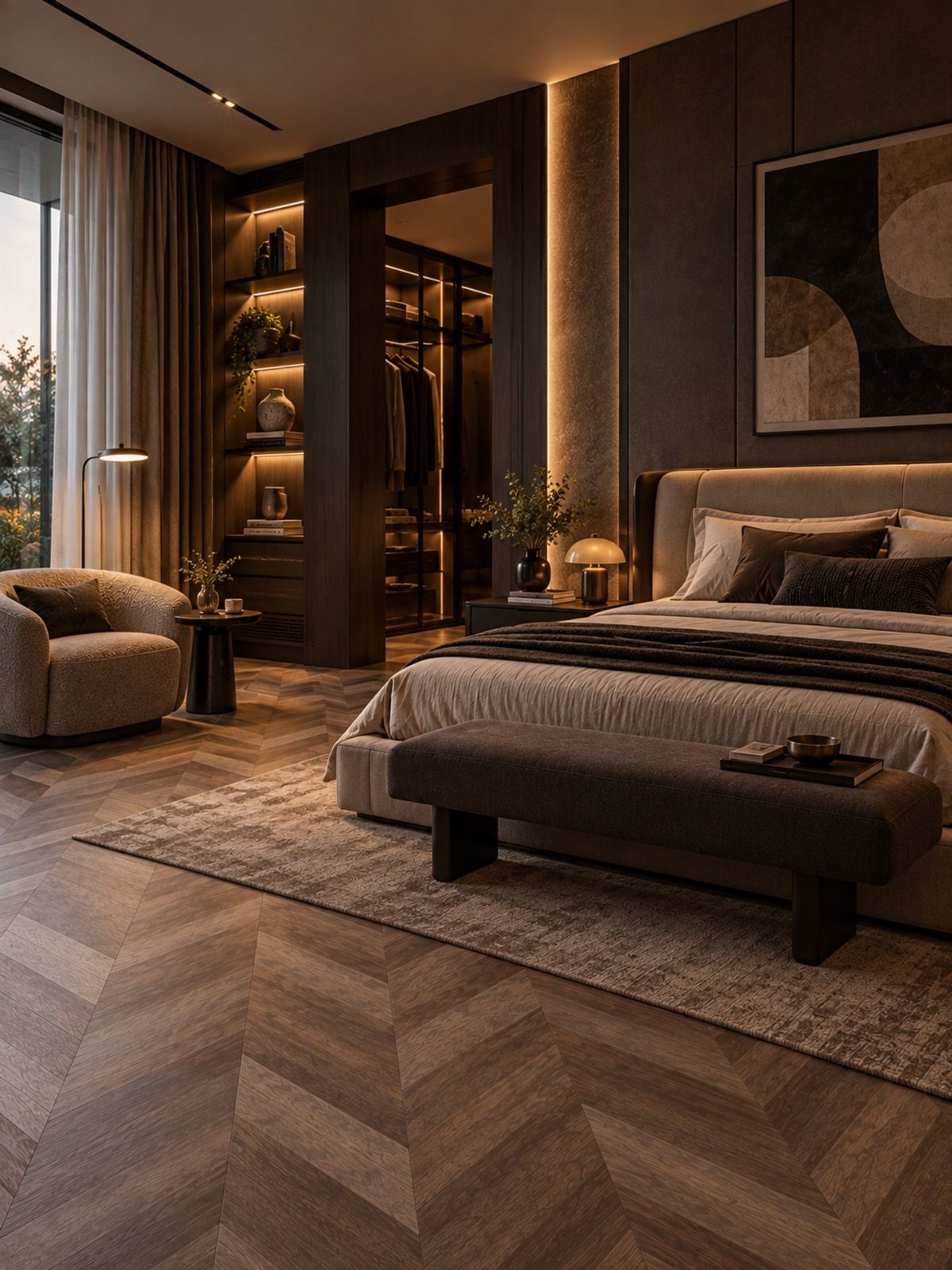
Chevron means planks cut at an angle and joined into clean V shapes, so the floor points in one direction like a row of arrows.
In a moody bedroom with dark wood walls, that pattern gives the eye something to follow without needing any extra decor.
I’d let the floor be the statement and keep furniture simple: a bench, a lounge chair, little else. The pattern is the detail that makes a plain room feel designed, but it does take more skilled installation than straight planks.
6. Herringbone Wooden Flooring
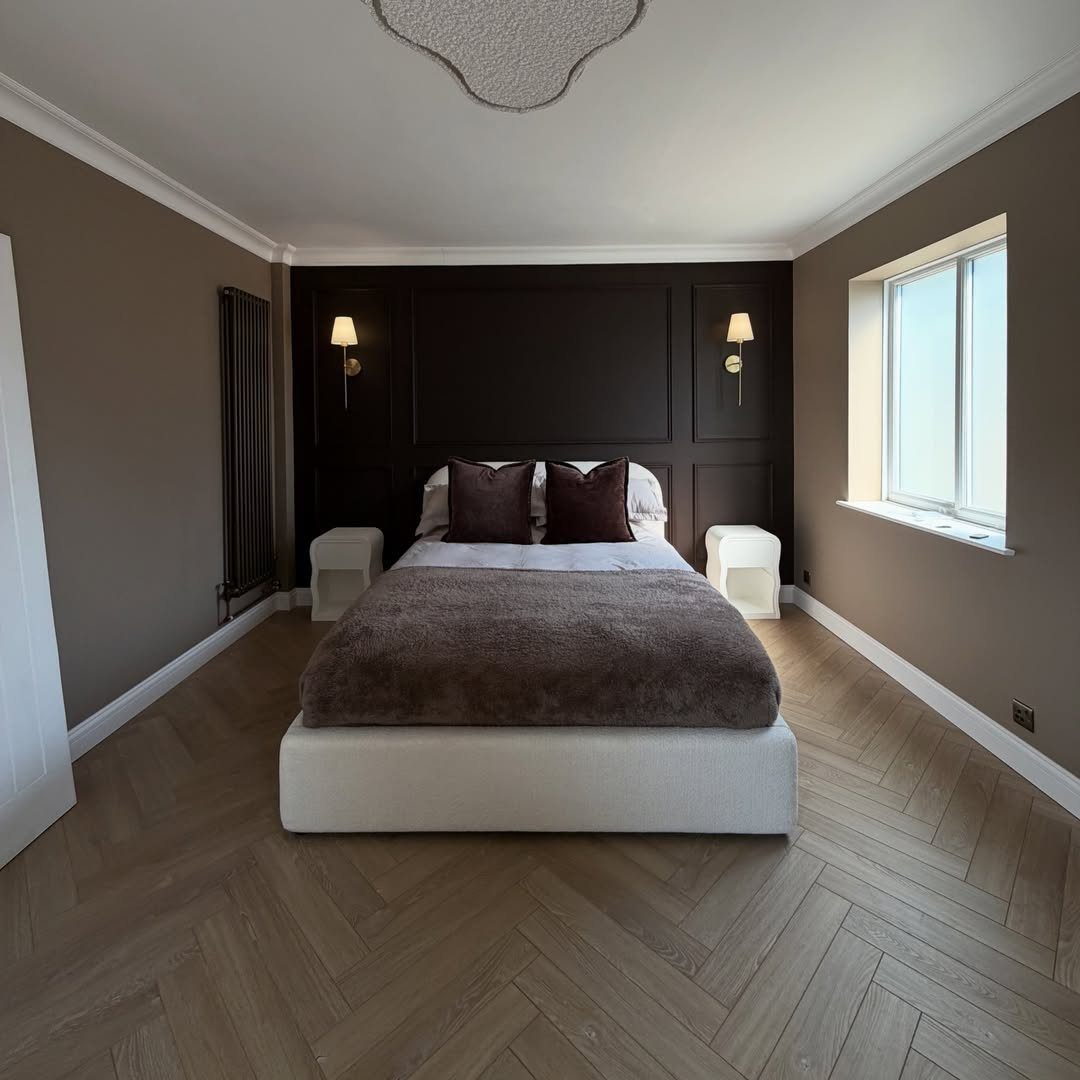
Herringbone sets rectangular boards in a zigzag, with each piece meeting the next at a right angle, and in a light brown tone it adds interest without turning loud.
Against a dark paneled wall, the warm floor keeps the room from feeling closed in.
I like it with plain bedding, since the floor already supplies the pattern. A brown throw on a white bed picks up the wood color nicely.
Expect the layout to cost more in labor than straight planks, because every board has to line up.
7. Medium Brown Plank Flooring
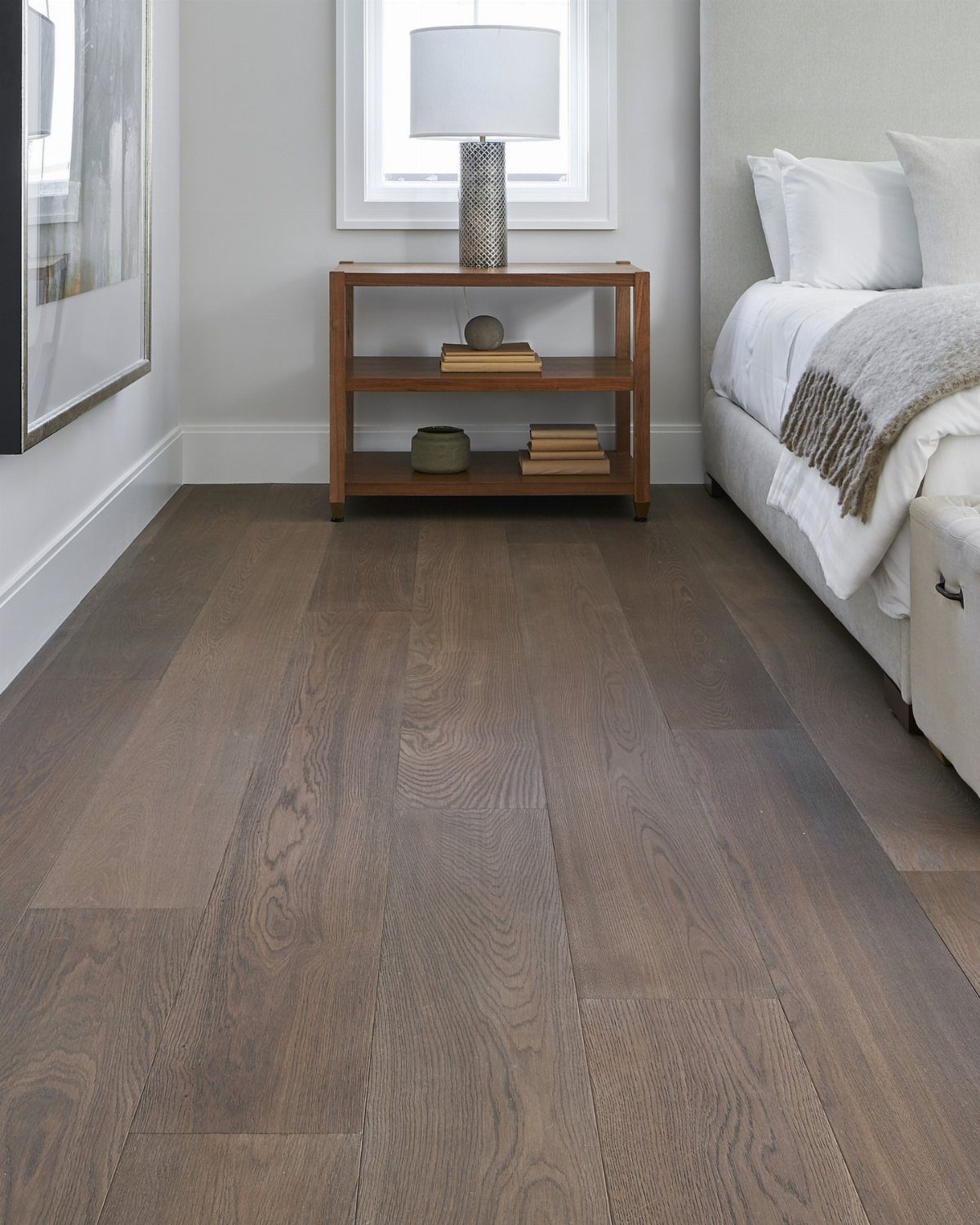
Mid-tone brown planks are the easy middle of wood flooring: not as stark as dark boards, not as washed out as pale ones.
Running them lengthwise down the room draws the eye toward the far wall, and a white bed and nightstand sit against them cleanly.
A grey throw is a good partner, since cool grey calms the warmth of the brown.
I’d add one wooden side table close to the floor’s tone rather than matching it exactly, and let the lamp and a few books do the rest.
Because this shade sits in the middle, it works with most bedding colors if you ever want to swap them. Keep the walls light and you won’t need much else.
Design Aesthetics
Wood suits almost any style because you choose from light or dark tones, wide or narrow planks, and different finishes.
Modern, rustic and traditional styles all work on the same wood floor, so choose a plank width and finish that suit the furniture already in the room.
Deep espresso-brown boards settle into the background when the bedding is cream and the walls are a soft beige. A big window helps, because daylight keeps a dark floor from weighing the space down.
Wood also works in an attic or other small space you’re turning into a primary bedroom. It gives the room a finished, comfortable feel right away.
Health Benefits of Hardwood
If anyone in the house has allergies, a hard floor is a practical choice for a bedroom. Wood doesn’t trap dust, allergens or pet hair the way carpet does, so what lands on it can be swept or mopped away.
A quick pass with a dry mop or broom keeps wood clean, which takes far less time than vacuuming carpet.
Carpet stains and wears with age, while a wood floor can last for many years, even where people walk a lot.
For a pet owner or an allergy sufferer, that low upkeep is often the deciding point.
Choosing the Right Color
Choose the floor tone first, then build the walls and furniture around it.
Wood tone, wall color and furniture need to agree, so hold a paint chip and a fabric swatch against the boards first, ideally in the room’s own light, and only then spend money.
Texture gives you a second way to tie the room together. Rugs and throw blankets add depth, and I’d rely on them before adding more color.
Light and dark can also share a room. If the floor is dark, keep other large surfaces lighter, and the contrast looks planned instead of accidental.
If you want a custom look, test a few wood tones and stains side by side in the room’s own light.
Frequently Asked Questions
Which direction should wood flooring run in a bedroom?
Laying boards parallel to the longest wall makes a bedroom look longer, because the lines lead the eye straight to the far end.
Mid-tone brown boards laid that way pair well with a white bed and nightstand. Patterned layouts like chevron and herringbone have their own built-in direction, so they need less thought.
What is the easiest flooring to install in a bedroom?
Luxury vinyl tile is the easiest of these to put in: the planks click together or peel and stick, and a damp mop handles cleanup.
Straight wood planks are simpler than chevron or herringbone. Herringbone and chevron layouts take a more experienced hand and run higher on labor, because each board must be cut and matched to its neighbor.
How much do hardwood floors cost for a bedroom?
2 things set the bill: the species of wood you pick and how many square feet the room has. Solid hardwood costs more, while engineered hardwood and bamboo give a wood look for less.
Engineered boards pair a top layer of real hardwood with a plywood or fiberboard core underneath, which keeps the cost lower than solid planks. Reclaimed boards usually run higher than new planks, and patterned layouts add labor.
How long do hardwood floors last in bedrooms?
Looked after properly, a hardwood floor can stay in good shape for decades.
Solid hardwood lasts longer than the cheaper options, and refinishing brings the surface back when wear shows through. Carpet is the one that shows its age first, matting down and picking up stains, so wood has the longer life.
Can I use hardwood floors with heated floors in my bedroom?
Some can. Engineered wood is the type I’d pick for a heated floor, since its layered core handles temperature swings well.
Ask the flooring maker or seller whether the specific product is rated for radiant heat first, since not every wood floor is.





