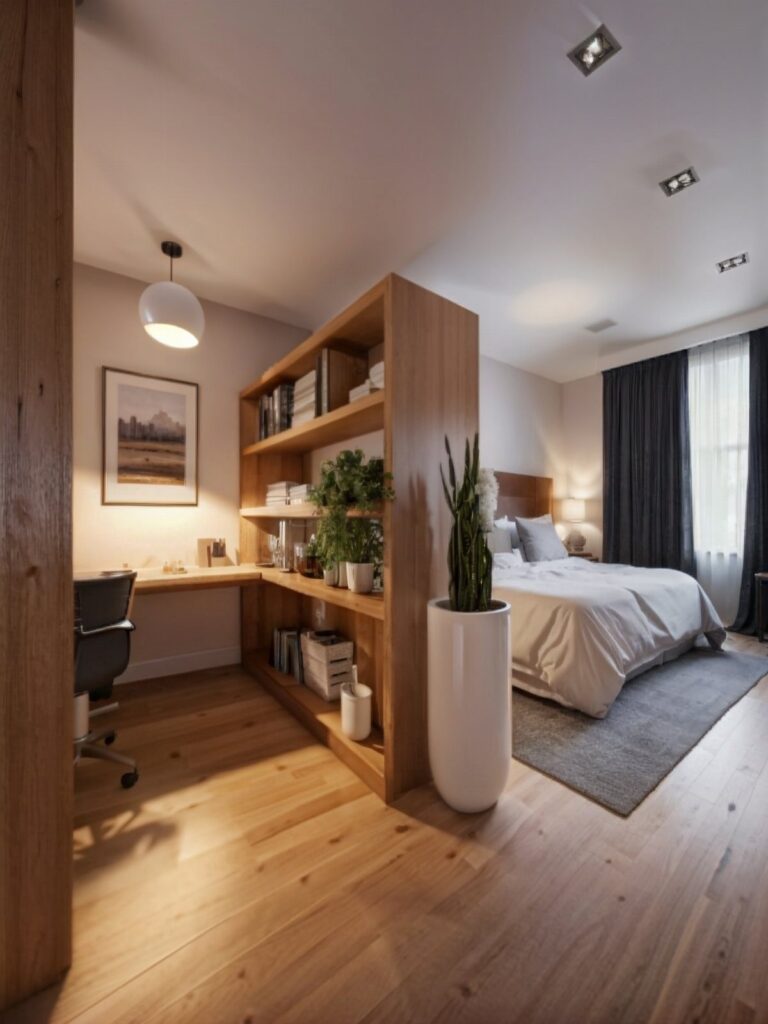
The options range from a plain desk beside a window to a Murphy bed, a fold-down wall panel or a built-in wardrobe unit with custom carpentry, so cost and effort climb quickly from one end to the other.
What picks one for you is how much floor and wall the bedroom can spare: a room with no free wall suits a mobile overbed rolling desk, while a tight room with open floor points to a floating desk mounted into wall studs.
Whichever you choose, it has to let the room switch from work to sleep, and a fold-down wall desk or a Murphy bed does that by folding away when the workday ends.
1. Desk Near a Window
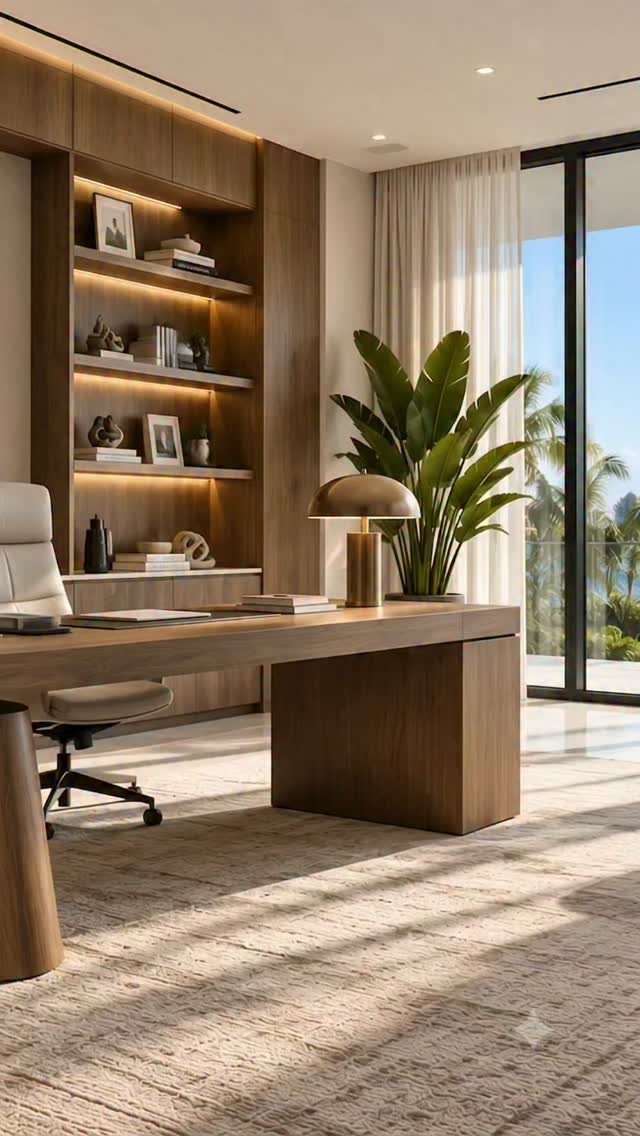
A desk beside a big window gives you daylight for free, and that does more for a workspace than any lamp.
Set the desk so the glass sits to your side instead of in front or behind you; that cuts screen glare and keeps your own shadow off the page.
A tall plant on the sill end softens the light and keeps the corner from feeling like an office. Still, keep a desk lamp handy for evenings.
2. Floating Desk Options
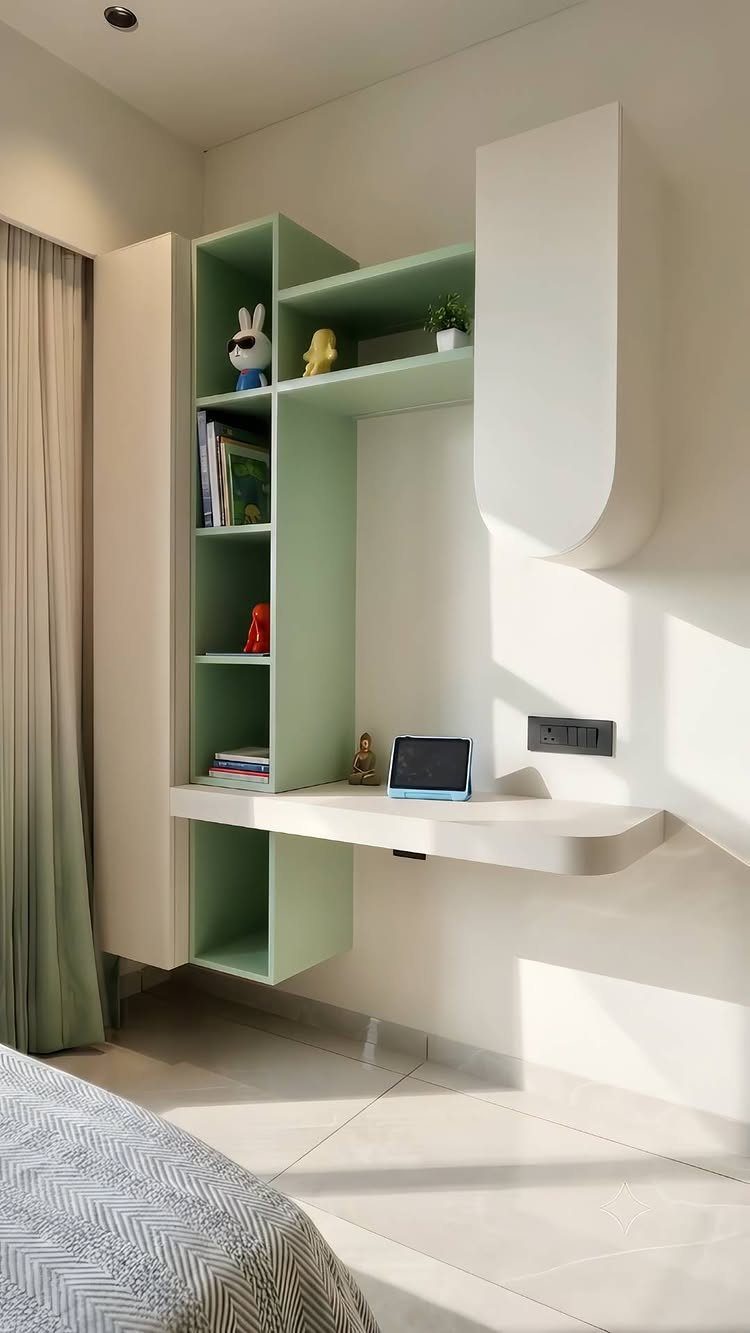
Floating desks win in tight bedrooms because the floor stays open underneath, so the room reads bigger and a chair or small bin can tuck away.
Mount the desk into wall studs, not drywall alone, since a laptop, books and your forearms add up to real load.
Pair it with a shallow shelf above, painted close to the wall color so the whole thing stays light. The trade-off: no drawers, so a small basket nearby earns its place.
3. Use a Murphy Bed
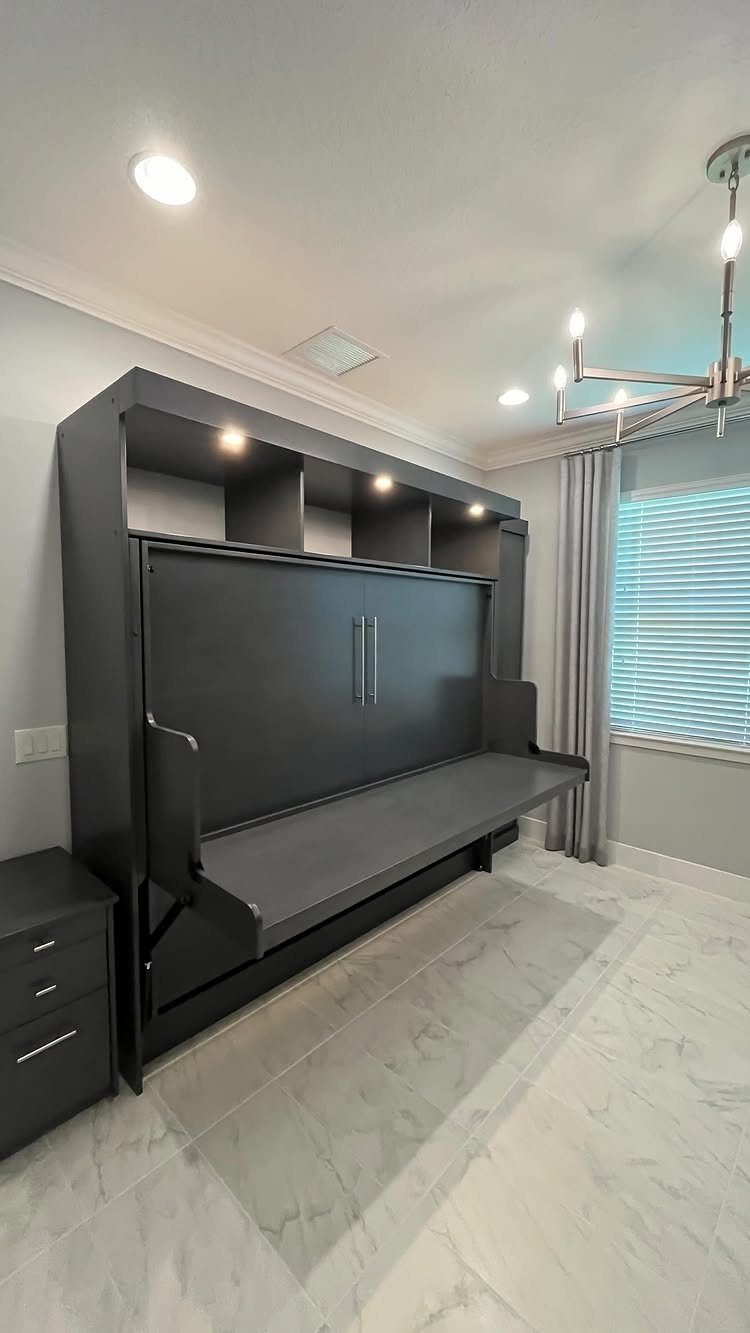
A Murphy bed turns the bedroom into an office by day: fold the bed up, and the floor is yours.
My preference is a model with the desk built into the frame, so nothing has to be moved or stored when the bed comes down.
Expect a real cost, though.
Wall-mounted frames need solid installation, and a deep cabinet takes room from the space you’re trying to save. Keep bedding light enough to leave in place or store it nearby.
4. Adjustable Standing Desk
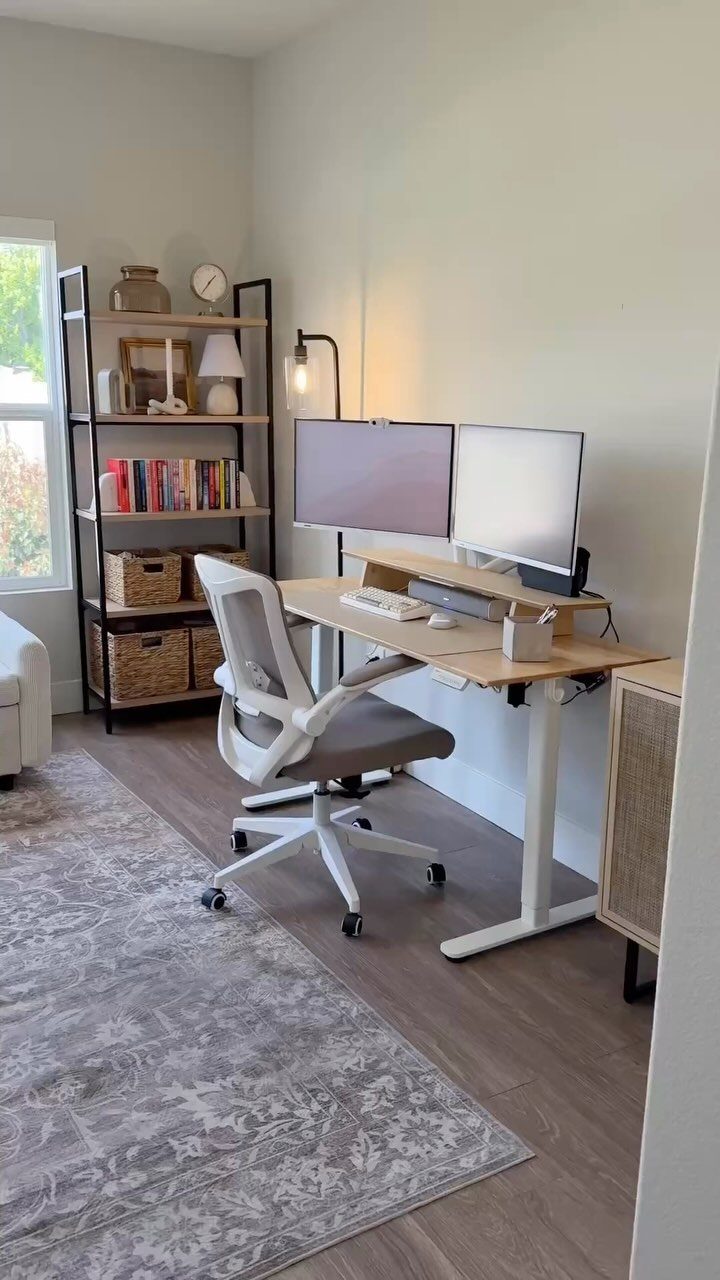
A standing desk lets you change position through the day, which is the main reason to pay more than for a fixed one.
The maker of this setup says they spend 99% of their time in the room, and that is the case for adjustable height: if you sit that long, variety matters.
Pick a model with a sturdy frame that doesn’t wobble at full height, especially with 2 monitors. A rug underfoot adds cushion when you stand.
5. Minimalist Bedroom Office
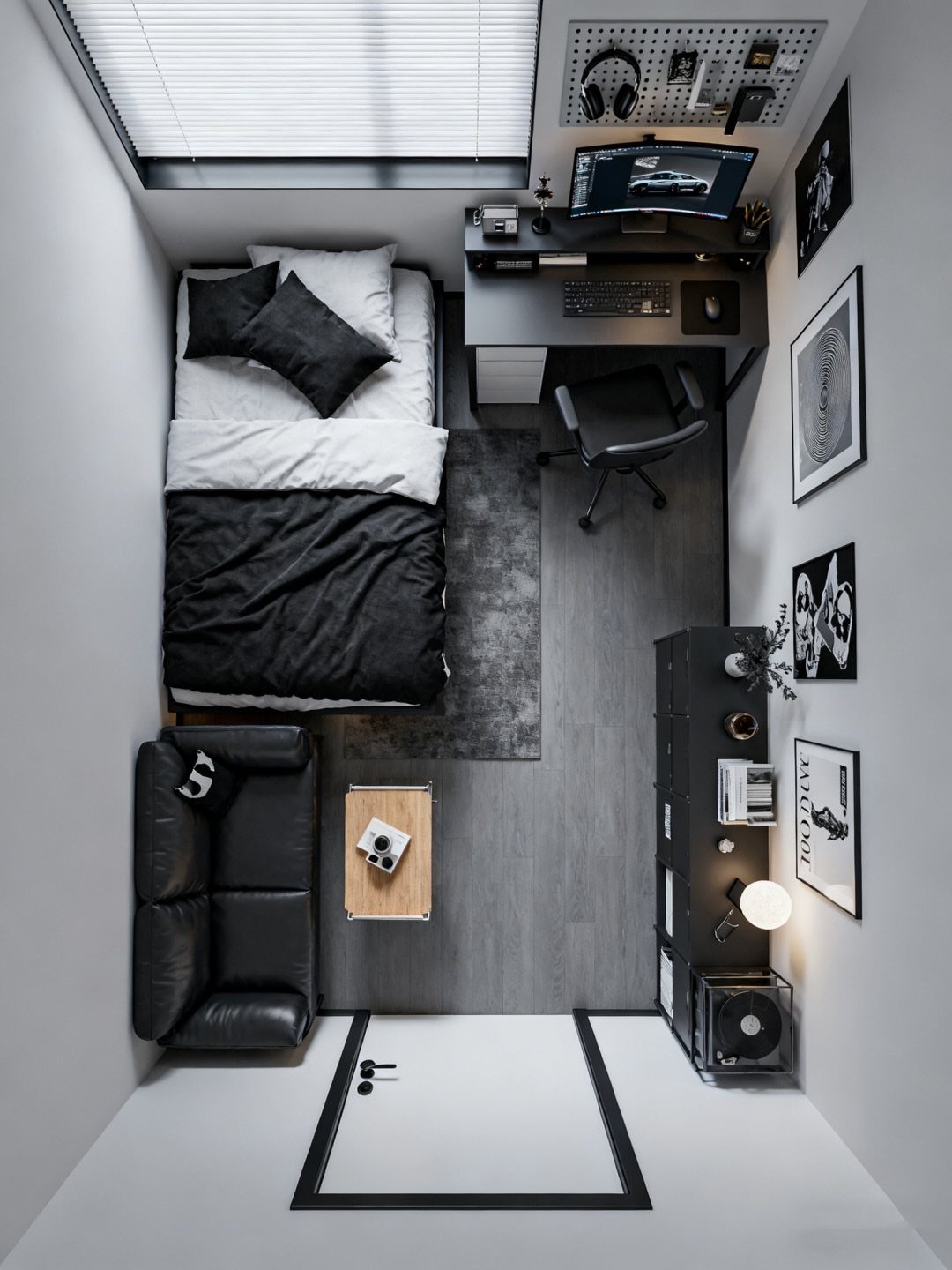
Minimalism works in a bedroom office because the room has to switch from work to sleep, and fewer objects make that switch easier.
Keep one desk, one chair and clear surfaces, and let a single color family, like black furniture against pale walls, hold it together.
Hide cables and paperwork in a drawer or dresser so the desk doesn’t stare at you from bed. The cost is discipline: clutter shows immediately.
6. Small Home Office in Your Bedroom
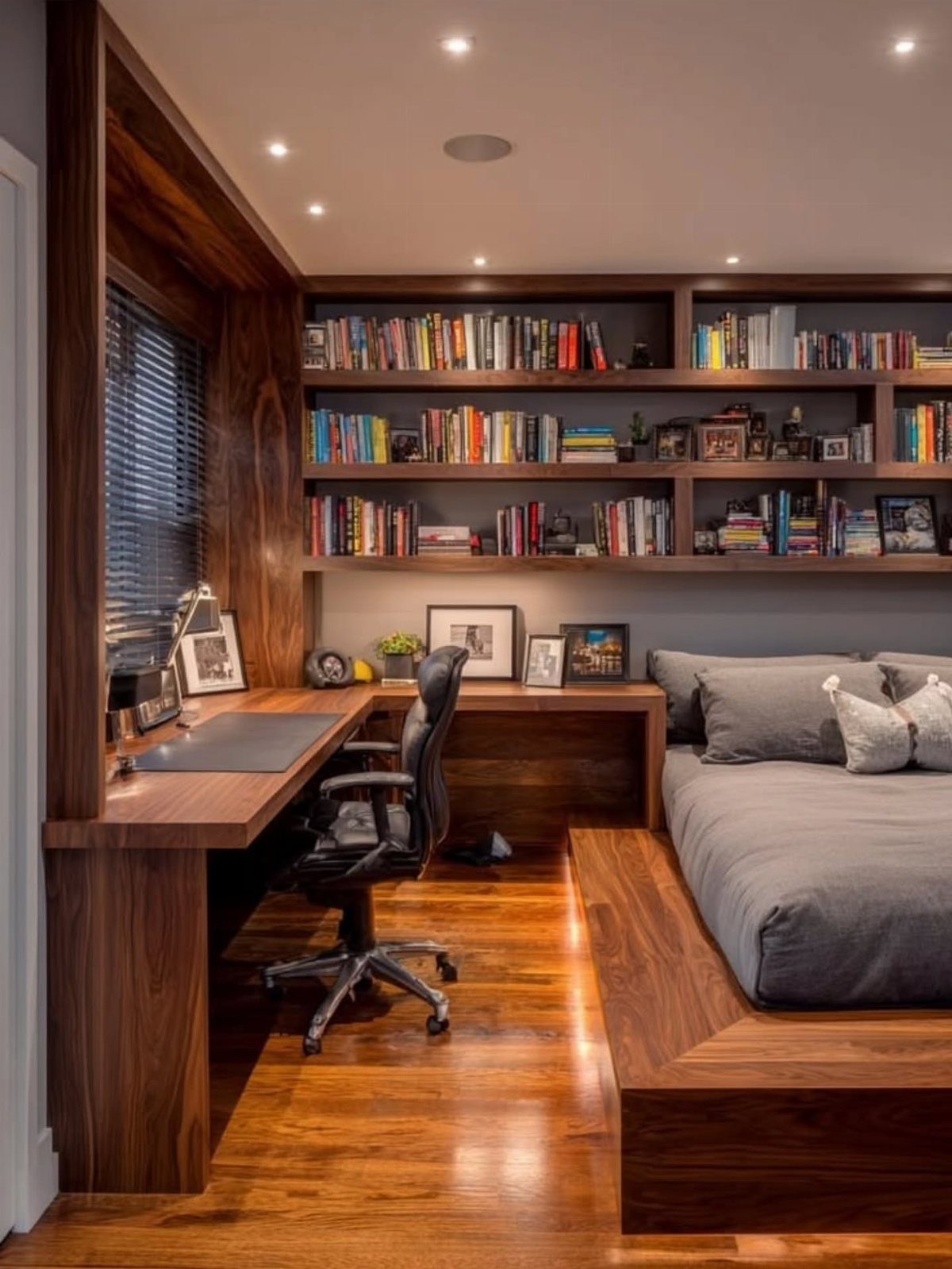
Built-in walnut gives a bedroom office the look of a finished room instead of a desk wedged into a corner.
Custom carpentry is the pricey route; on a budget, I’d approximate it with a standard desk and stock shelves in one wood tone. Keep the work side lit separately from the bed side so the room can wind down.
There are tons of nooks, crannies, and unused surfaces that can be transformed into productive work spaces, especially in your bedroom.
7. Fold-Down Wall Desk
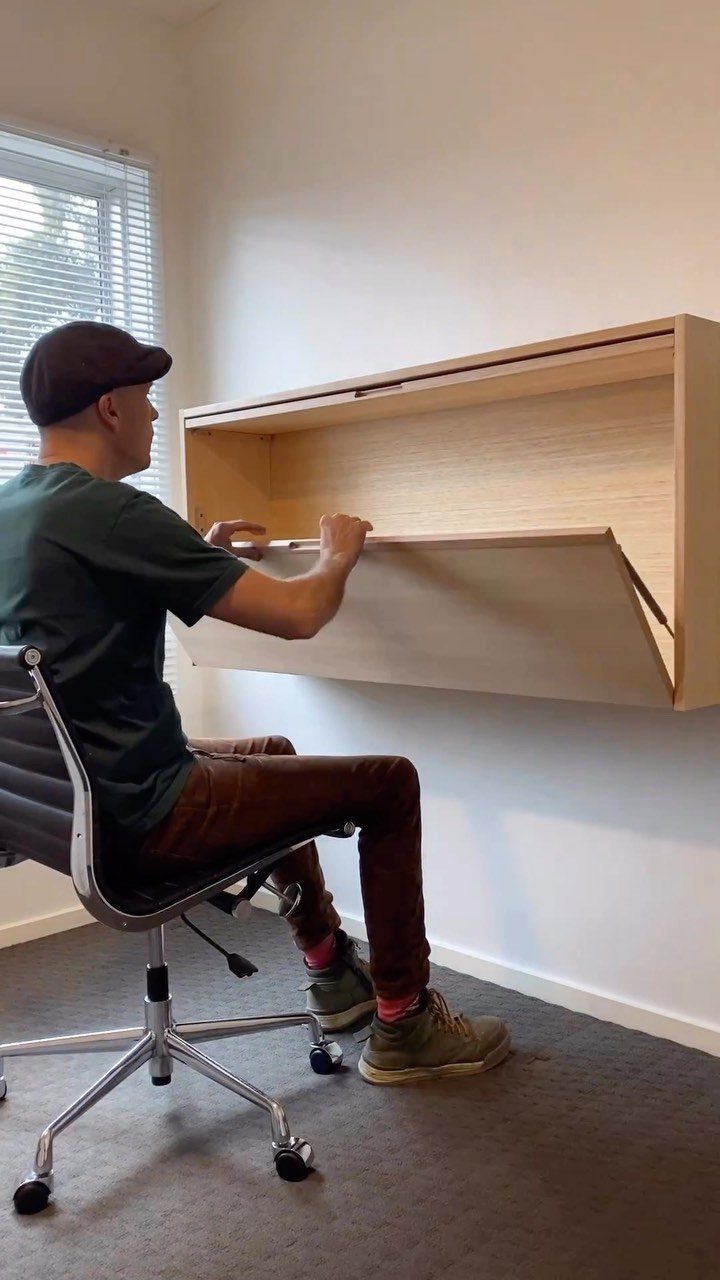
Close the panel and the wall is flat again.
Light wood keeps it calm against white walls.
Pick a depth that clears the bed’s edge when it’s open, and keep a chair that slides fully under or folds away.
8. Gallery Wall Above the Desk
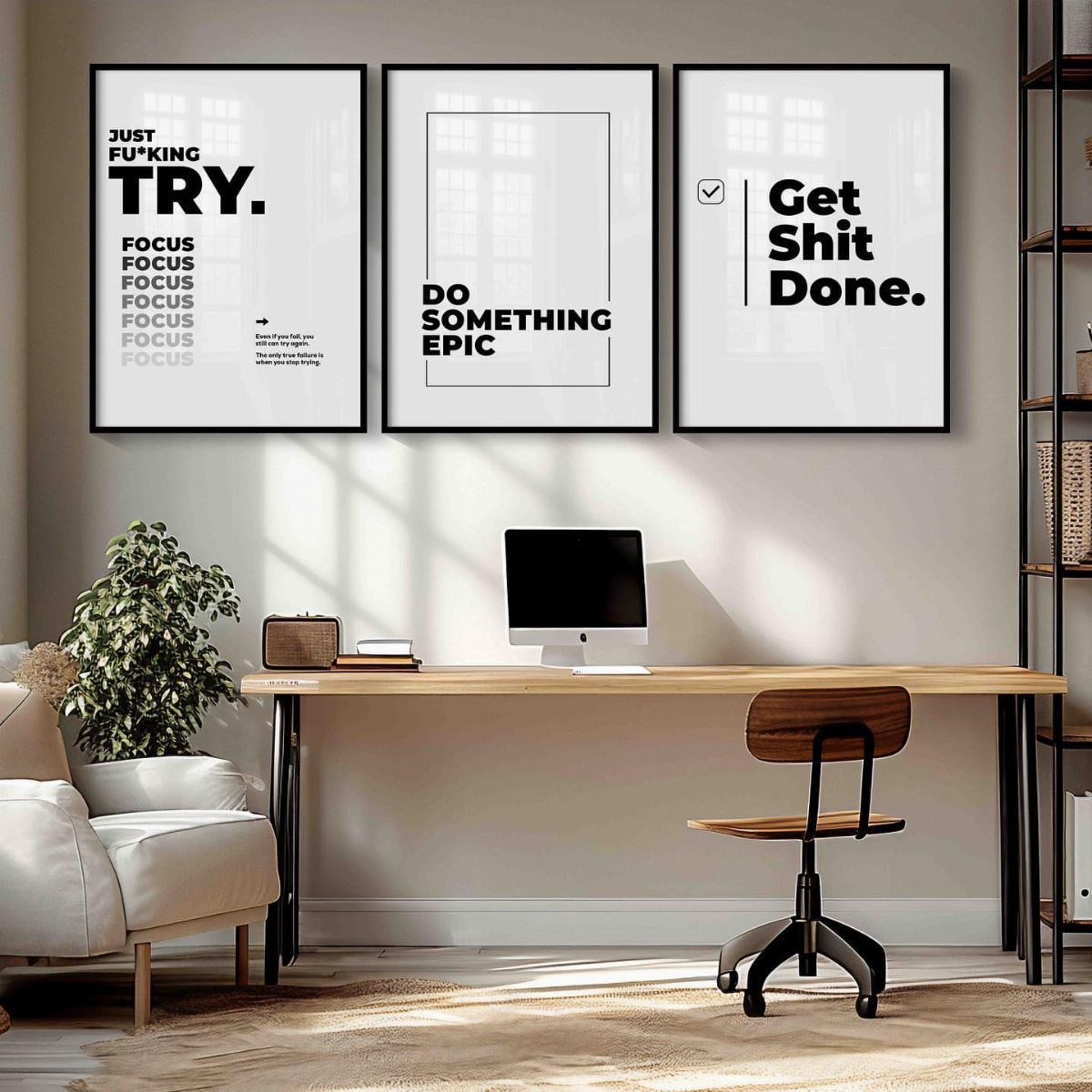
A row of 3 framed prints above the desk gives a work corner a point of focus without using any desk space. Black frames in one size keep a mixed set of messages looking planned.
Hang the frames with even gaps between them, and center the group over the desk instead of the wall.
I’d pick words you actually want to read at 3 p.m., since you’ll stare at them all day. Pale walls let the black frames stand out.
9. Built-In Desk and Wardrobe Unit
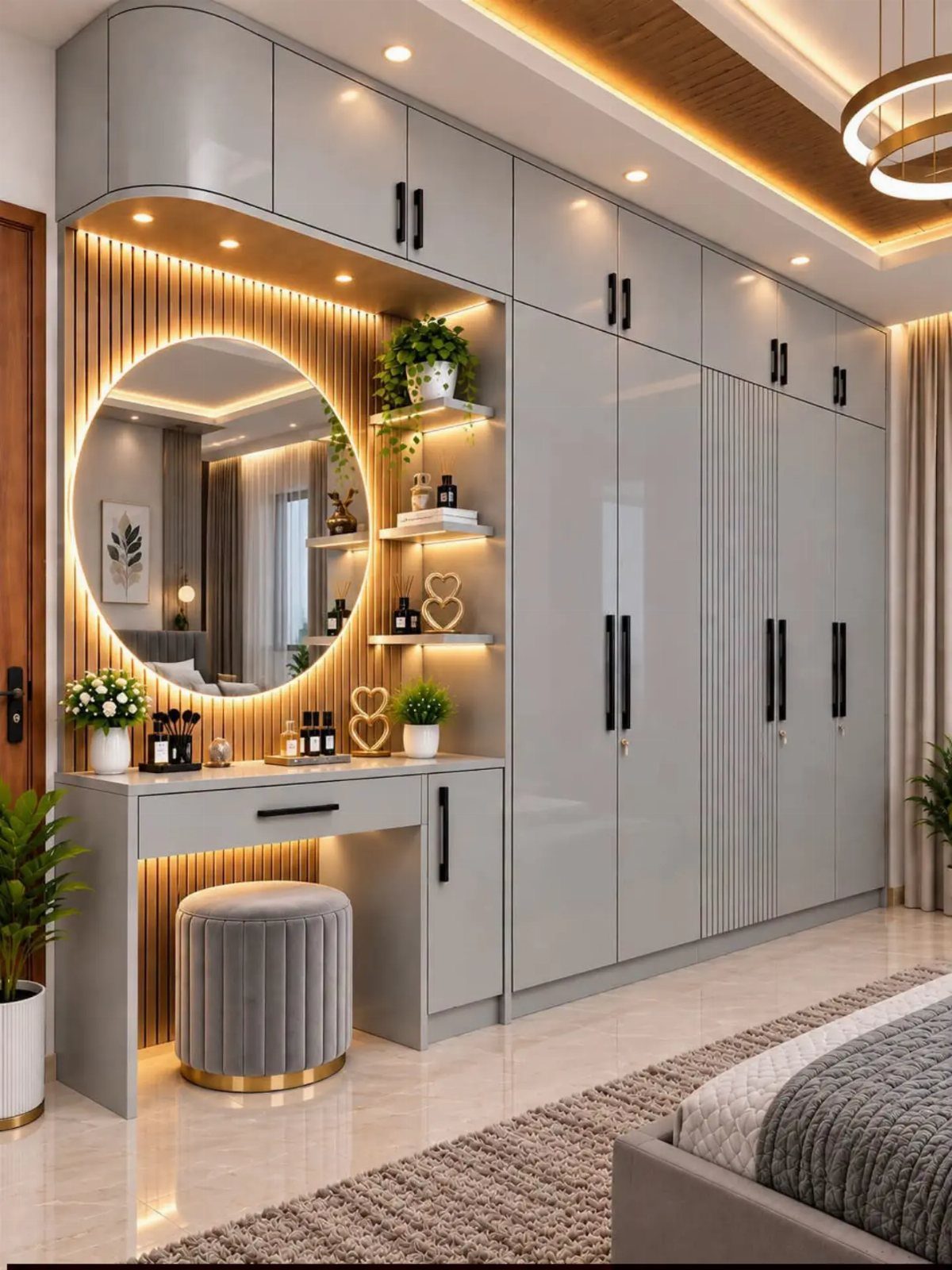
A built-in wardrobe with a desk set into it puts clothes, work and a vanity behind one matching front. Grey panels with open shelving beside the desk keep daily items in reach and the rest closed away.
A round backlit mirror doubles as task lighting, which saves buying a separate lamp. I like it for shared rooms because one wall handles everything.
Expect custom or modular pricing to run well past a freestanding desk. Measure the wall first, and leave knee room under the desktop.
10. Mobile Overbed Rolling Desk
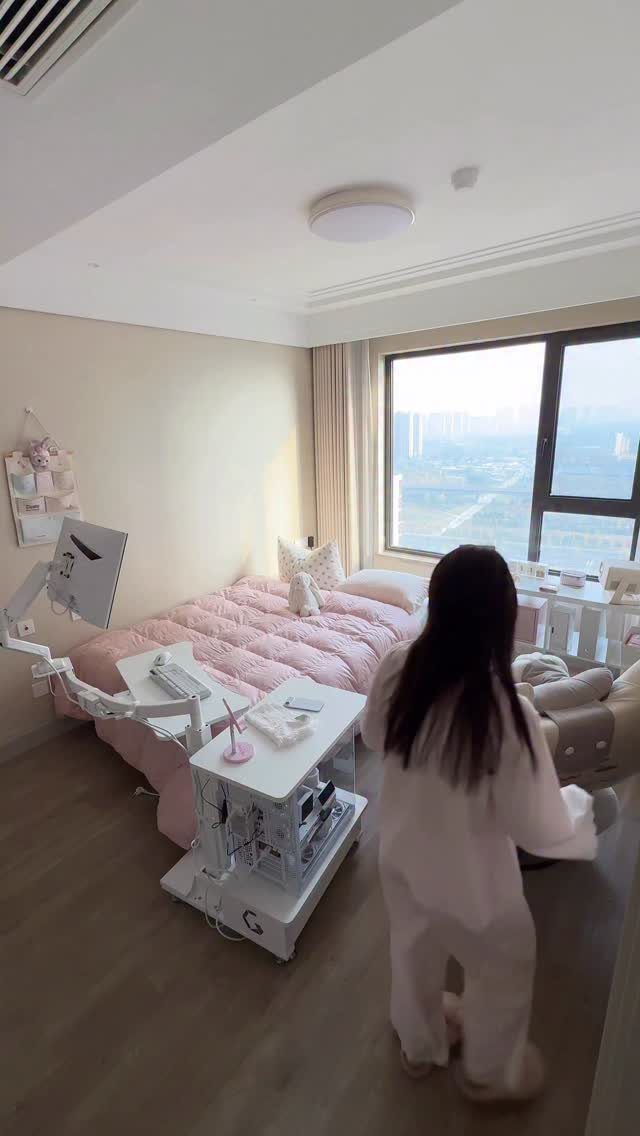
A desk on wheels can park beside the bed by day and roll out of the way at night.
That makes it a good fit for a room with no spare wall, since the desk goes where the space is free.
Choose one with locking casters, so a monitor and keyboard don’t drift when you type. A white finish stays quiet against colorful bedding.
Check that the base slides under or alongside the bed without catching the frame. Keep cables short and tidy so rolling it doesn’t tug anything loose.
Importance of Ergonomics
A dining chair and a console table are the usual stand-ins, and they are also the usual source of a sore neck by Thursday.
A real desk chair paired with a desk made for the job will be easier on your body, even when the bedroom is tight on space.
Check 3 things before you settle in: the chair is at a height where your feet rest flat, the desk sits where you can reach everything without twisting, and the top of your monitor is at a comfortable eye level.
Prop a laptop on a stack of books if you need to, and use a separate keyboard.
Maintaining Work-Life Balance
Where the desk sits in relation to the bed decides how easily you can stop working. Face it away from the bed so your cozy pillows aren’t in your line of sight all day.
In a small room, a few layouts work: wedge the desk between a dresser and the wall, use it in place of a nightstand on one side of the bed, or center it on the wall opposite the bed if you don’t need a dresser.
Give work its own cue to end.
Turn off the desk lamp at lunch, or blow out a couple of candles on a tray, and step away for a real break. That small ritual marks the line between work and rest.
Lighting Considerations
Daylight is worth planning around.
It can lift mood and productivity, ease eyestrain, and make a bedroom office feel more open. If the window can’t hold your desk, set it as close as the layout allows.
Where natural light runs short, a desk lamp covers the gap. A curtain or shade on the window lets you filter bright sun so the glare doesn’t wash out your screen.
Think of the lamp as the part you control: on for focused work, off when the day is done.
Frequently Asked Questions
Should your home office be in your bedroom?
Yes, it works if you set it up so work and sleep stay separate.
Turn the desk so your back faces the bed, which keeps the pillows out of sight during the workday, and end each session with a set signal such as clicking off the desk lamp.
A narrow desk tucked into the gap between a dresser and the wall, or one that does the job of a nightstand, takes up very little floor.
How do I make an office in my bedroom?
Pick one zone and plan around light and where the bed sits in your view.
A desk beside a window, with the glass to your side, gives free daylight and less screen glare. You can also mark the work area with a different wall color or rug, and keep a lamp and outlets close by.
How do you decorate a home office guest bedroom?
Use furniture that does 2 jobs so the room still welcomes guests. A daybed or sleeper sofa takes the place of a standard bed and gives you the floor space for a desk and chair.
When the bed has to stay put, pick a slim writing desk and mount a couple of floating shelves for supplies, since both use very little floor.
What are some good ideas for decorating an office room?
Start with wall art, plants and a few personal touches. Layer a small rug under the chair for warmth, then set a lidded basket nearby to swallow cords, pens and other clutter.





