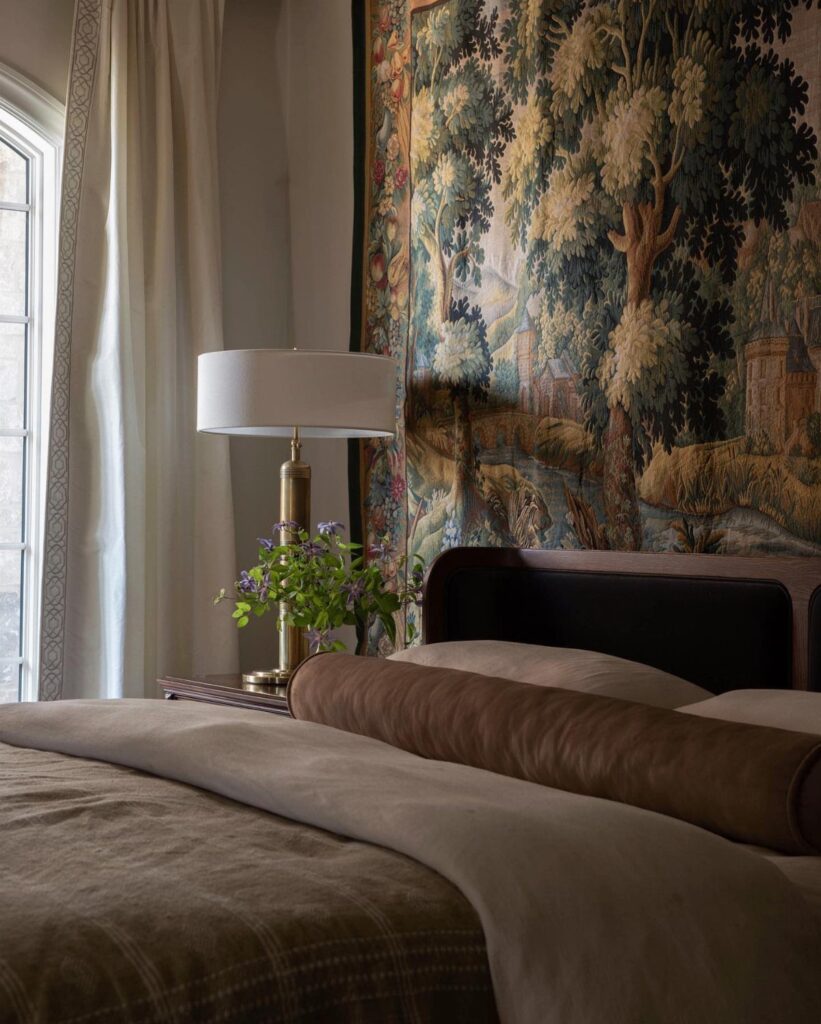
Your bed decides this more than your taste does: a rental points you to a tapestry on removable hooks or a painted semi-circle, while a bed you own can carry a wall-mounted wood or door headboard.
The ideas run from a quart of paint and painter’s tape to an upholstered build with 3/4-inch plywood, foam and a staple gun, and the cost section lays out how the full range lands between $30 and $200.
1. Hanging Tapestry
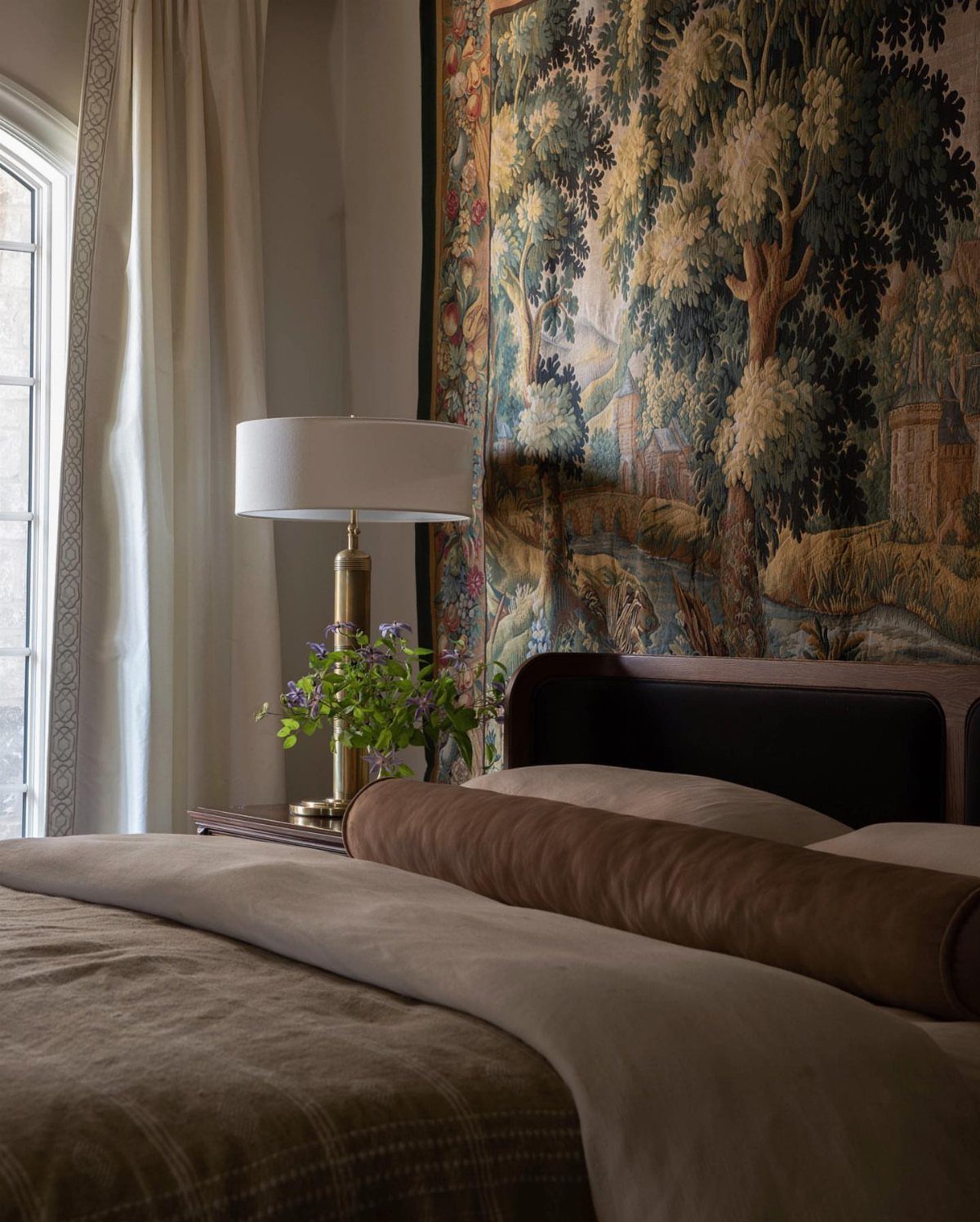
A tapestry is the fastest headboard I know, and it asks for almost no skill.
Hang it wider than the bed so the scene frames both nightstands, and mount it on a wooden dowel or a curtain rod so the top edge stays straight.
A landscape pattern like this one works best behind a dark headboard or plain bedding, because the picture supplies all the color. Pick fabric you can wash or vacuum, since it sits right where pillows rub.
Hang it with removable hooks if you rent, and you can swap it for another piece in minutes.
2. Painted Headboard
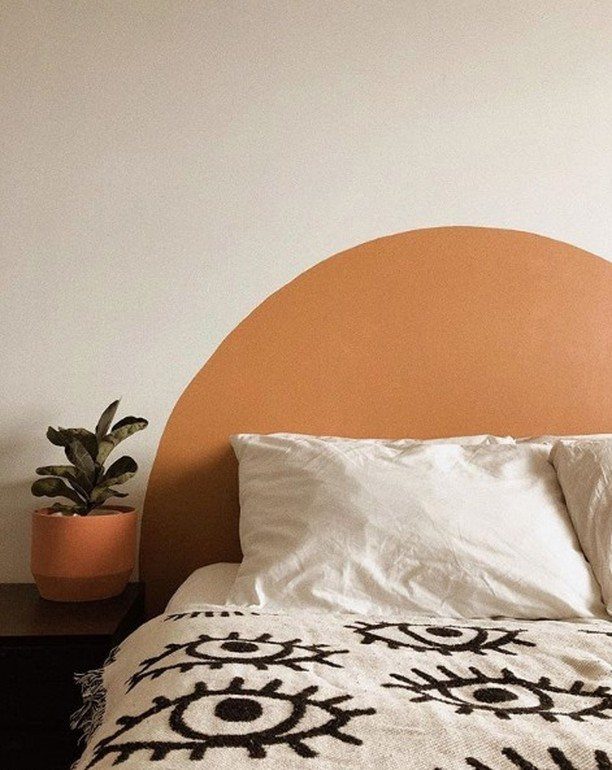
Paint can stand in for a headboard entirely, and a semi-circle is the shape I’d start with.
Trace a curve from a string and pencil pinned at the center point, then paint right up to the pencil line by hand, or use flexible masking tape, since standard painter’s tape puckers on a curve.
Terracotta against white walls reads warm without any furniture cost. Sample the color first and look at it in morning and evening light.
The cost is a quart of paint, a brush, and tape, and a weekend covers it. Rental owners should check the lease, since you may need to repaint white before moving out.
3. Upholstered Headboard
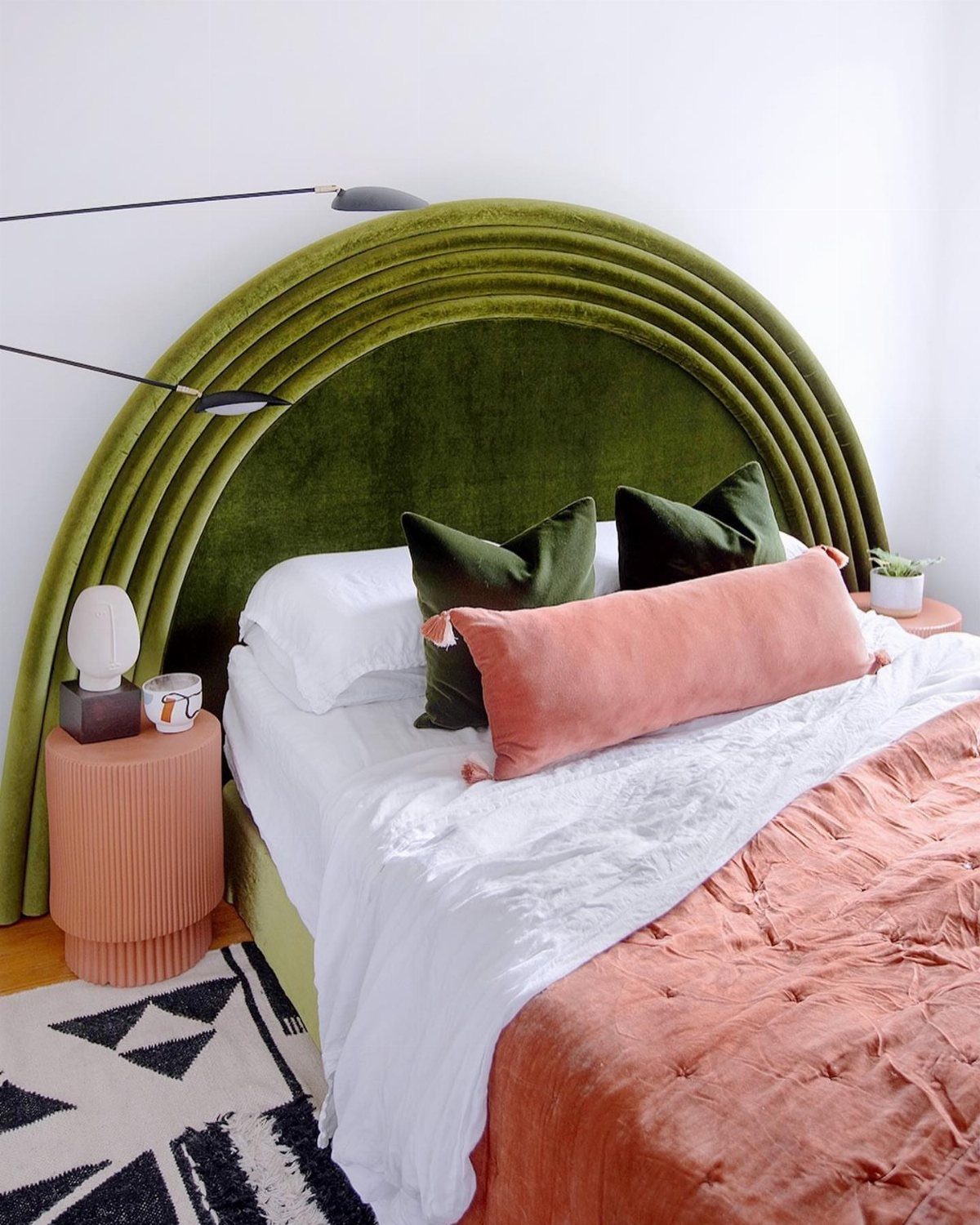
Fabric turns a headboard into the softest thing in the room, and an arched shape with concentric ridges makes it look custom.
Velvet in a deep olive hides wear better than pale colors, and it pairs well with white and terracotta bedding.
The ridges are the hard part. Cut stacked arches from plywood, add foam, and wrap tightly with a staple gun, pulling the fabric taut as you go.
For a first attempt, I’d skip the ridges and make a single arch. It’s far more forgiving, and you can still get that sculpted look with good fabric.
4. Wood Headboard
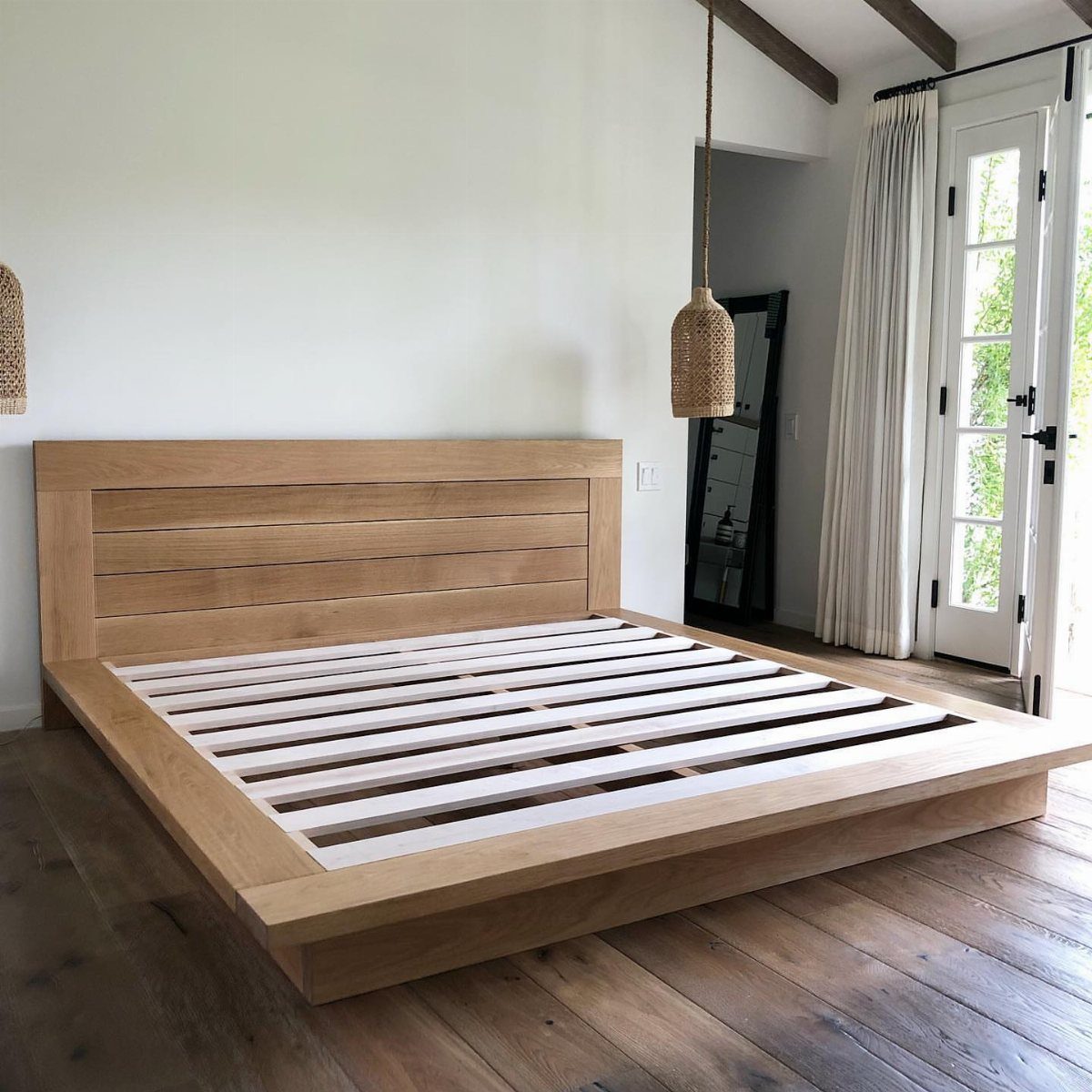
Plain planks make a headboard that never goes out of style. Run them horizontally, as in this light wood platform bed, and the room feels wider and calmer.
Sand every board smooth, finish with a clear coat to keep the pale tone, and screw them to a couple of vertical supports.
Buy boards from the home center and have them cut to your bed’s width in the store, which saves time and a saw.
Wood grain already does plenty of work, so keep bedding, walls and other furniture light and simple. Wood this clean needs little else around it.
5. Antique Screen Headboard
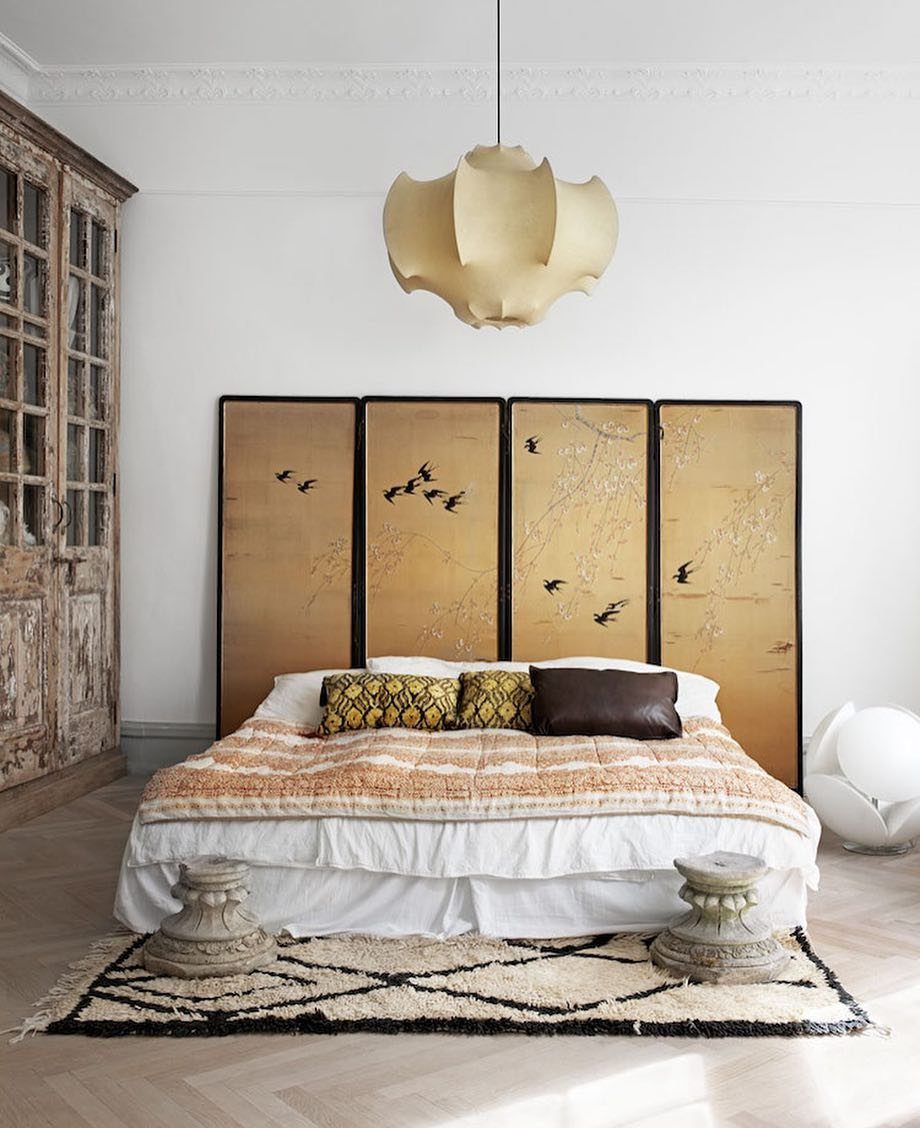
An old folding screen already has the height, width and artwork a headboard needs, so the work is mostly finding one.
A gold screen with bird illustrations adds glamour to a room with plain walls, and it stands on its own without any mounting hardware.
Open the panels in a slight zigzag so it stays upright, or screw it to the wall for stability. Check the hinges first, since loose ones make the whole thing wobble.
Thrift stores and estate sales are the first places I’d look for one, and the price should stay modest.
6. King Shiplap Headboard
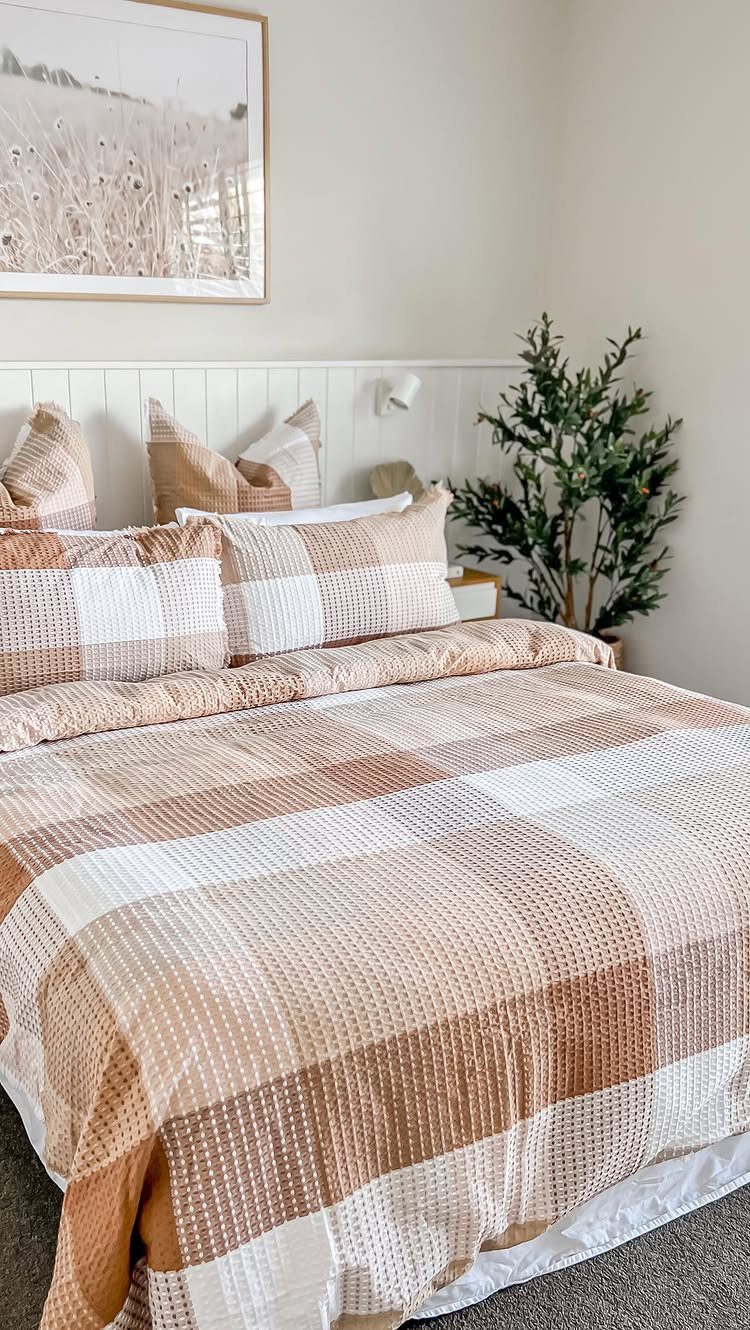
Shiplap brings in a farmhouse feel with nothing more than painted boards, and white keeps it bright. Behind a king bed, you need boards that span the full width of the mattress, so measure before you buy.
Nail them level, checking each board against the one below it so the gaps between boards stay even. 2 coats of white paint finish it.
I like it with checkered bedding, because the pattern plays against the clean lines.
7. Repurposed Door Headboard
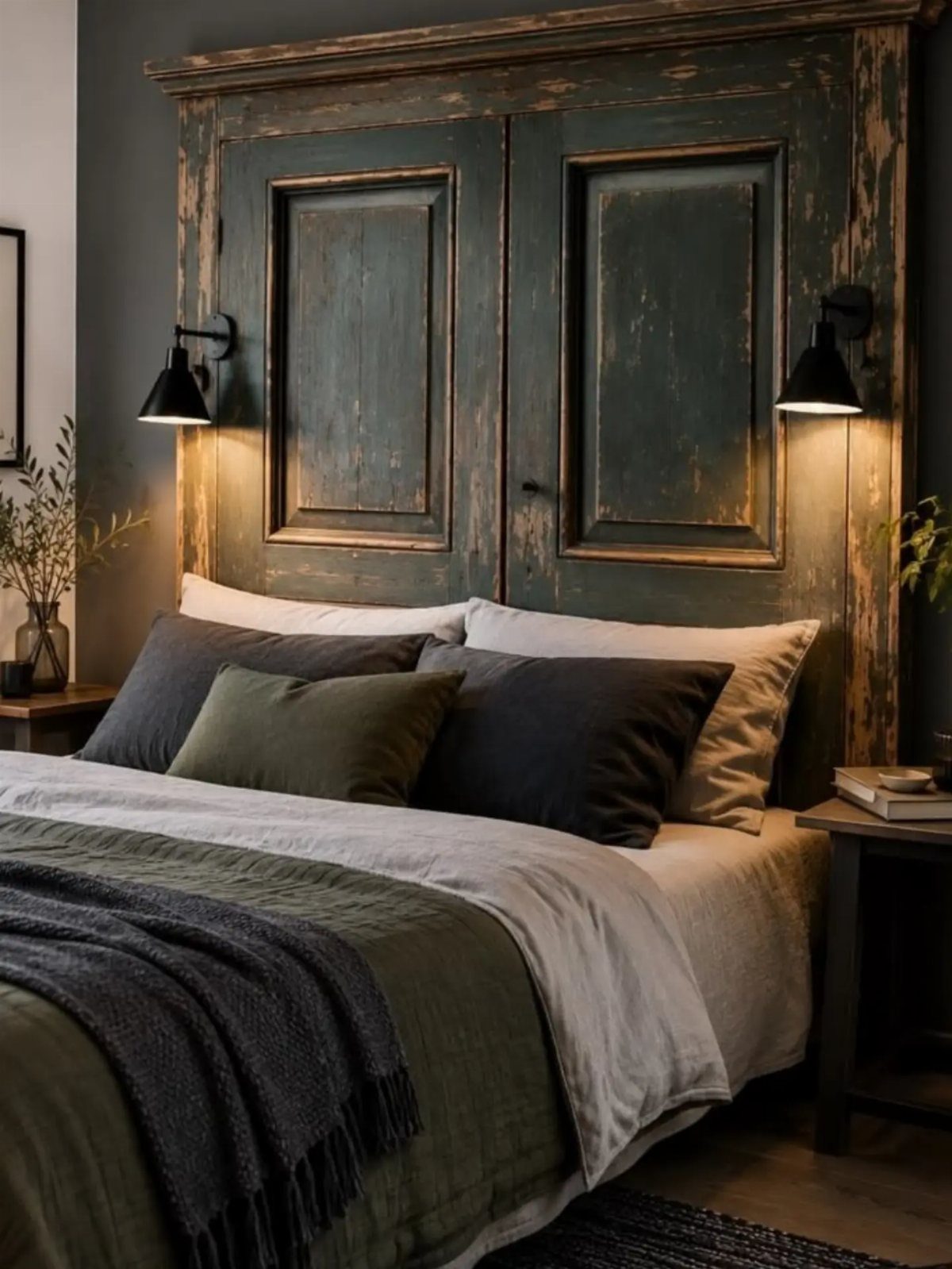
Salvage yards, architectural reclaim shops and curbside piles often turn up doors with the right height, raised panels and worn paint already in place, so most of the work is finding one.
A double door in faded green, like this one, covers a wide bed with a single piece and gives the wall real character.
Lean it against the wall or screw it to the studs, and I’d choose the screws if kids share the room. Wipe it down and seal any flaking paint before it sits near pillows.
Salvage yards and thrift stores are where I’d start looking, and measure your bed first so the door spans it.
The headboard in this Mississippi bedroom was custom-crafted to look like an old paneled door. If custom woodwork isn’t in your skill set or budget, head to an architectural salvage yard or your favorite antiques store to find a door that complements your space!
8. Framed Artwork Headboard
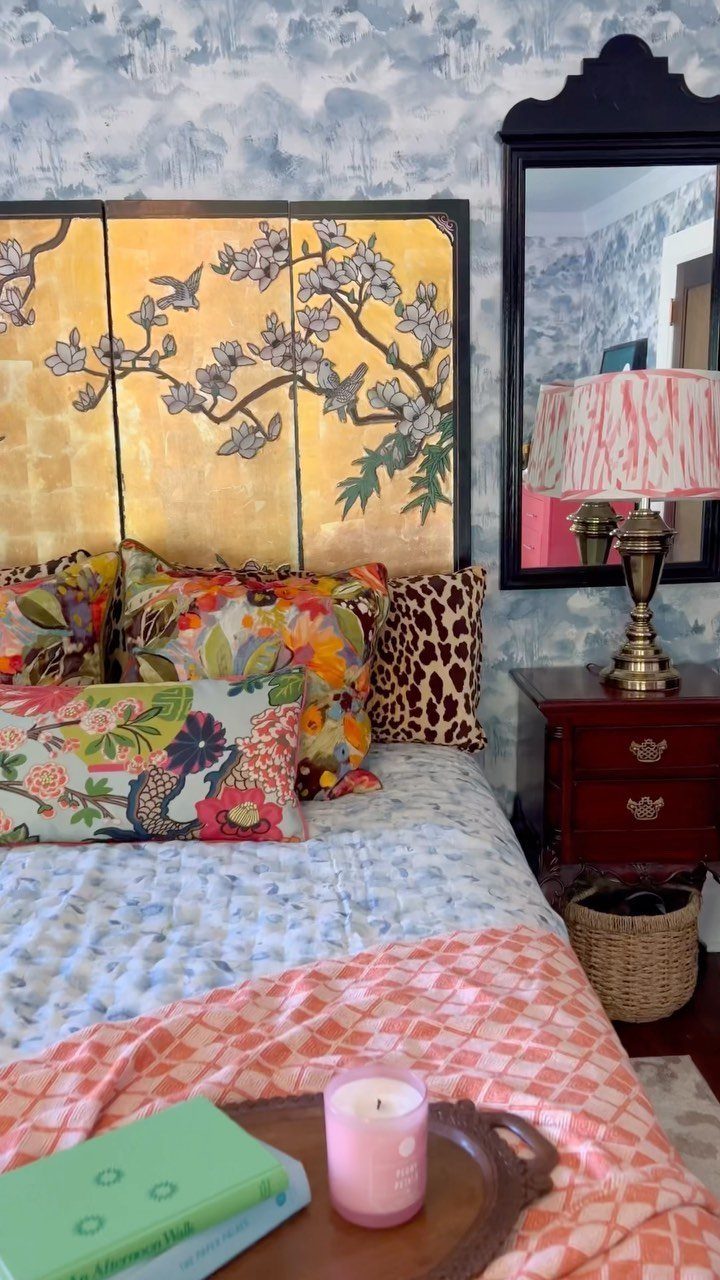
A triptych turns three canvases into one wide headboard, and the gaps between panels are part of the look. Hang them evenly spaced, keeping the group about as wide as the bed, so the art reads as a single piece.
Branches with blossoms, hung above the bed, add color without any sewing or woodworking. Pull one shade from the art into your pillows and the bed ties in.
Cut a paper template for each panel and tape the templates to the wall first. Move them around until the spacing looks right, then drive the hooks.
Tools and Materials Needed
A basic upholstered build needs 3/4-inch plywood, batting, fabric, screws, sandpaper and staples. Foam is optional, so skip it if you like a flatter look and a lower bill.
For tools, a jigsaw cuts the shape, a drill sets the screws, and a staple gun does the wrapping.
A manual stapler works if you don’t own an air compressor with a nailer, though your hand will feel it by the third side.
Add fabric scissors and a utility knife for trimming. A circular saw or table saw handles straight cuts on the plywood, and a steamer takes wrinkles out of the fabric before you staple.
Curtains work as upholstery fabric, so check your linen closet before buying yardage. Sand every plywood edge first, because rough corners snag the fabric.
Cost Considerations
Expect to spend somewhere between $30 and $200. Where you land depends on materials and how complicated the shape is.
The cheapest routes are painting a headboard or reupholstering an existing bed frame. A woven design using faux leather from a craft store came in under $100, which shows that a custom look doesn’t need a custom budget.
Foam is often the biggest line item in an upholstered build, so hunt for it secondhand or free before paying full price. A headboard cut to sit snug between the wall and mattress edge holds itself in place without brackets.
Measure your bed first. A king headboard usually runs around 80 inches wide, and buying materials for the wrong width is the easiest way to waste money.
Installation Tips
You have two mounting options, and the right one depends on your bed. I attach mine to the frame with 2-inch wood screws so the bed moves as one unit and nothing drops behind it.
The other option is the wall.
Find the studs with a stud finder, then drive long picture-hanging nails or wood screws into them and rest the frame on top. Check with a level before the headboard takes any weight.
Heavier headboards belong on a French cleat, which spreads the load across the wall instead of a couple of nails.
When you mount to the wall, the mattress pushes forward and keeps the headboard from shifting. For 2 pieces side by side, you can let them butt together at the seam without fastening them.





