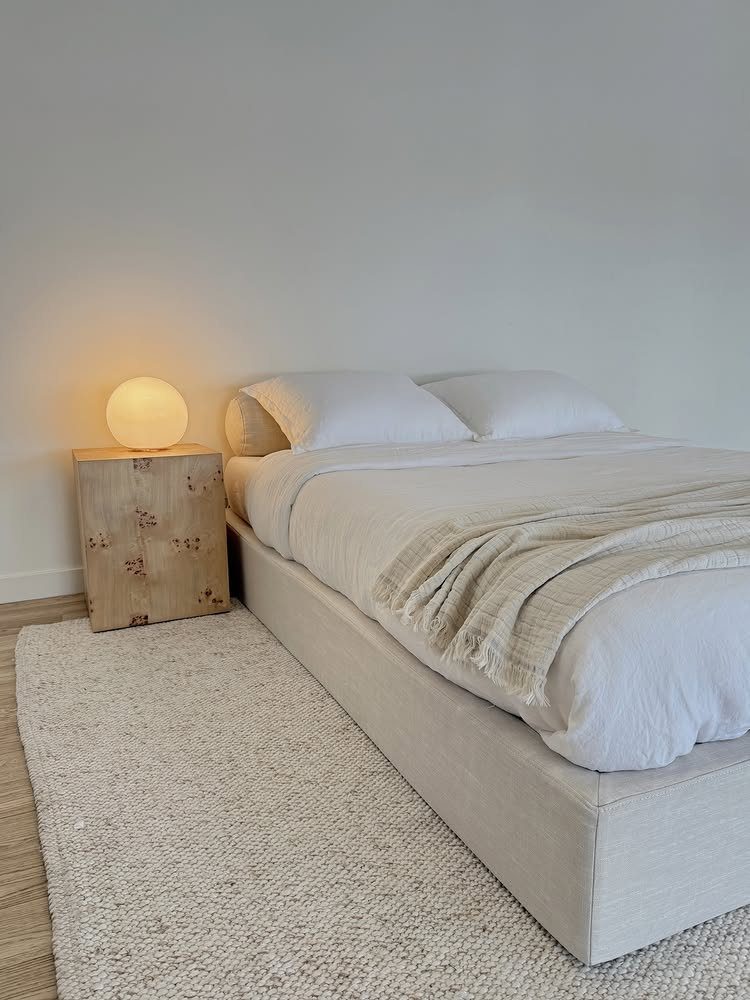
A renter can hang peel-and-stick wallpaper or plug in a wall sconce, while an owner can staple fabric panels to the wall or hardwire pendant lights.
The list runs from a low platform frame and a daybed at the foot, which cost little and need no tools, to a weekend of cutting foam and wrapping fabric for a tufted wall.
Anything hung over your pillow, like floating shelves, needs studs or rated wall anchors.
1. Statement Wall with Wallpaper
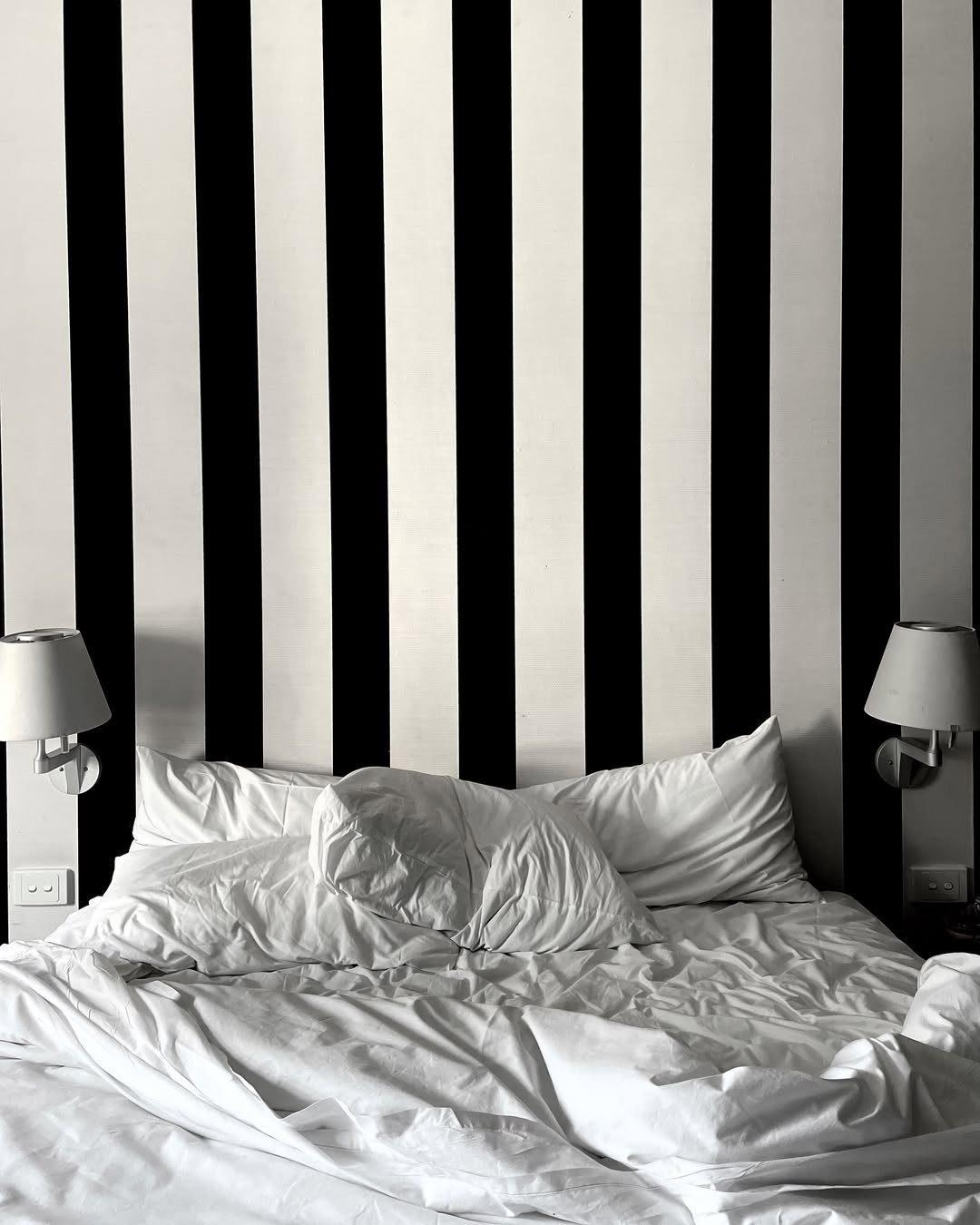
Black and white vertical stripes do 2 jobs behind a bed with no headboard: they give the eye something to land on, and they make the wall read as the frame.
Stripes also pull the gaze upward, which helps a bed that sits low.
Wallpaper or paint both work.
Peel-and-stick paper suits renters and takes a weekend at most; paint costs less but needs taped lines and patience. White or plain bedding lets the wall carry the room, and matching bedside lamps anchor each side.
I do the single wall at the head of the bed. Stripes on every wall make a bedroom feel busy.
2. Large Artwork Above the Bed
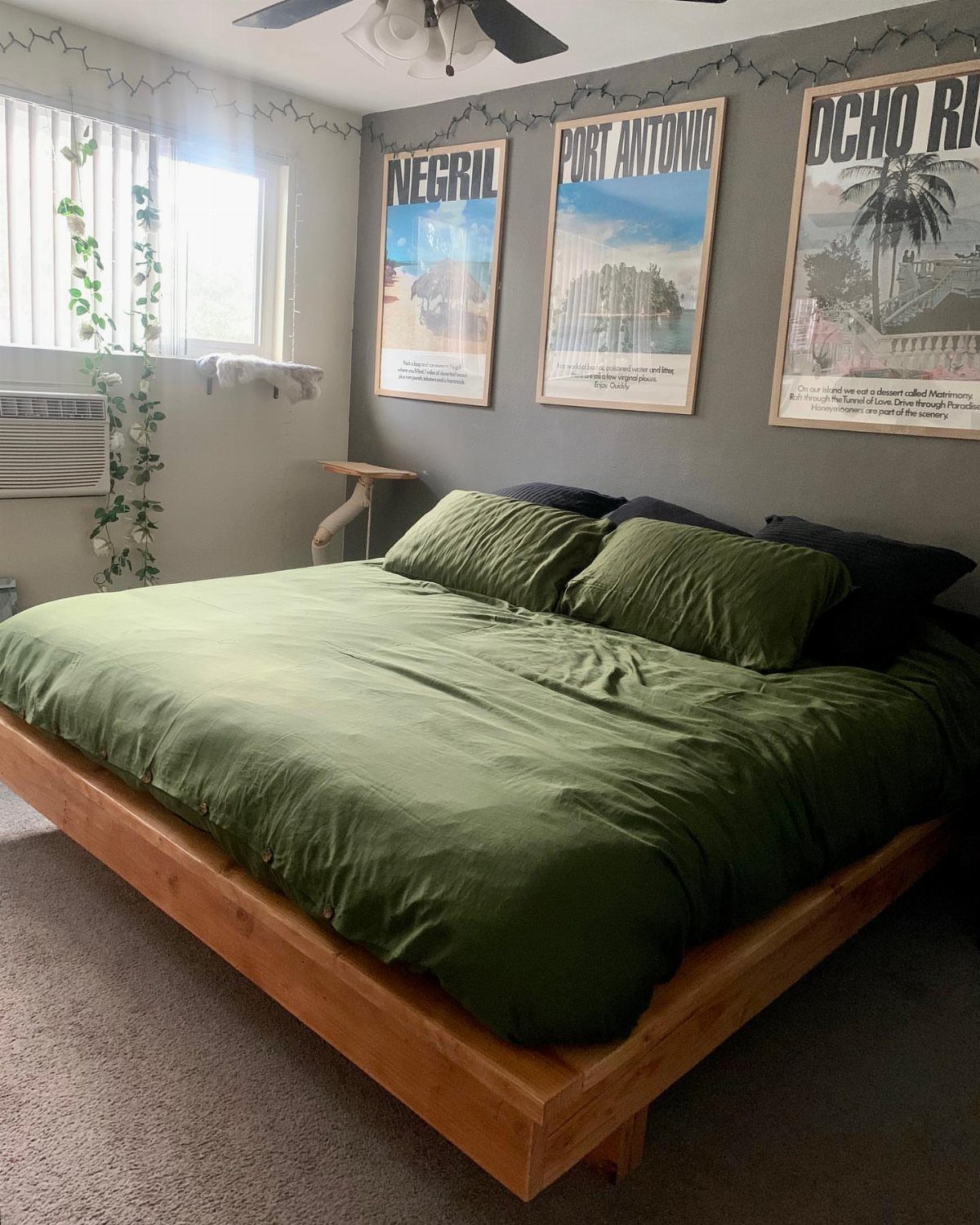
One oversized piece, or a row of three big ones, can stand in for a headboard better than a single small frame ever will.
Scale is what makes it work: art should span most of the bed’s width, or it looks lost on the wall.
Posters are the cheapest route to that size.
Matching frames in one finish tie a set together, and a grey wall lets saturated bedding and wood tones carry the color. Hang the row so the art and bed read as a single group.
Use a level, and mark spacing with paper templates before drilling.
3. DIY Tufted Wall with Padded Fabric
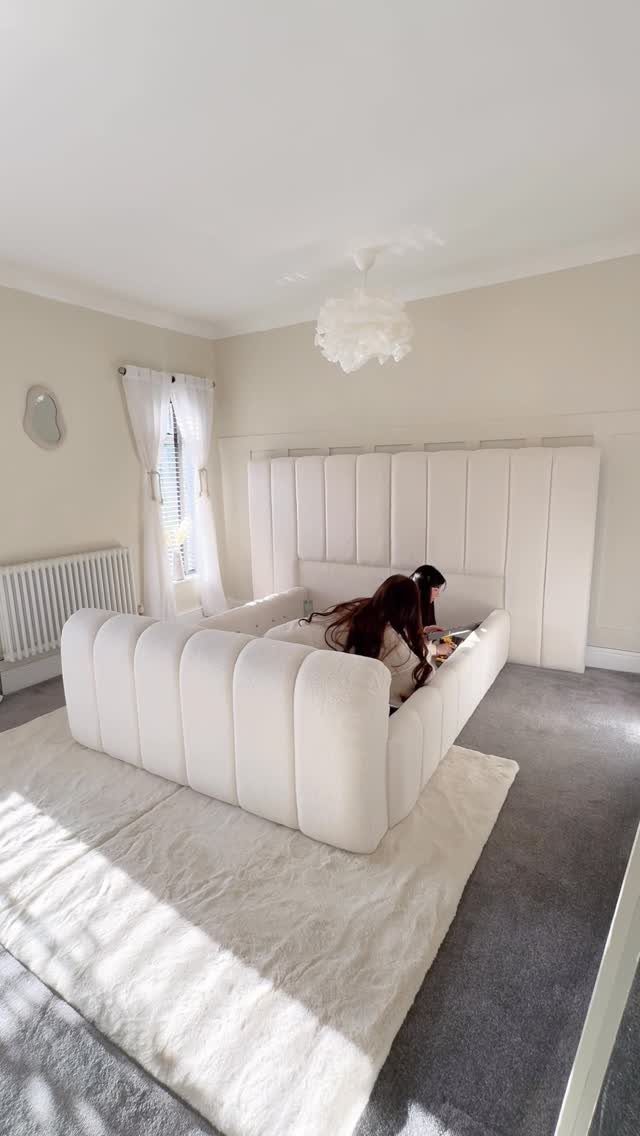
Upholstering a section of wall in padded fabric gives you a headboard that is really part of the room. Vertical channels, like the white ones here, make the wall feel taller and softer at once.
Foam or batting under fabric is the usual build: cut panels, wrap them, and fix them to the wall.
Making them yourself runs cheaper than ordering a custom upholstered headboard, and the weekend is mostly cutting and stapling. Choose a tightly woven fabric in a light color only if you accept that it will need cleaning near pillows.
Match the bed frame’s fabric to the wall for a continuous look.
4. Opt for a Low-Profile Frame
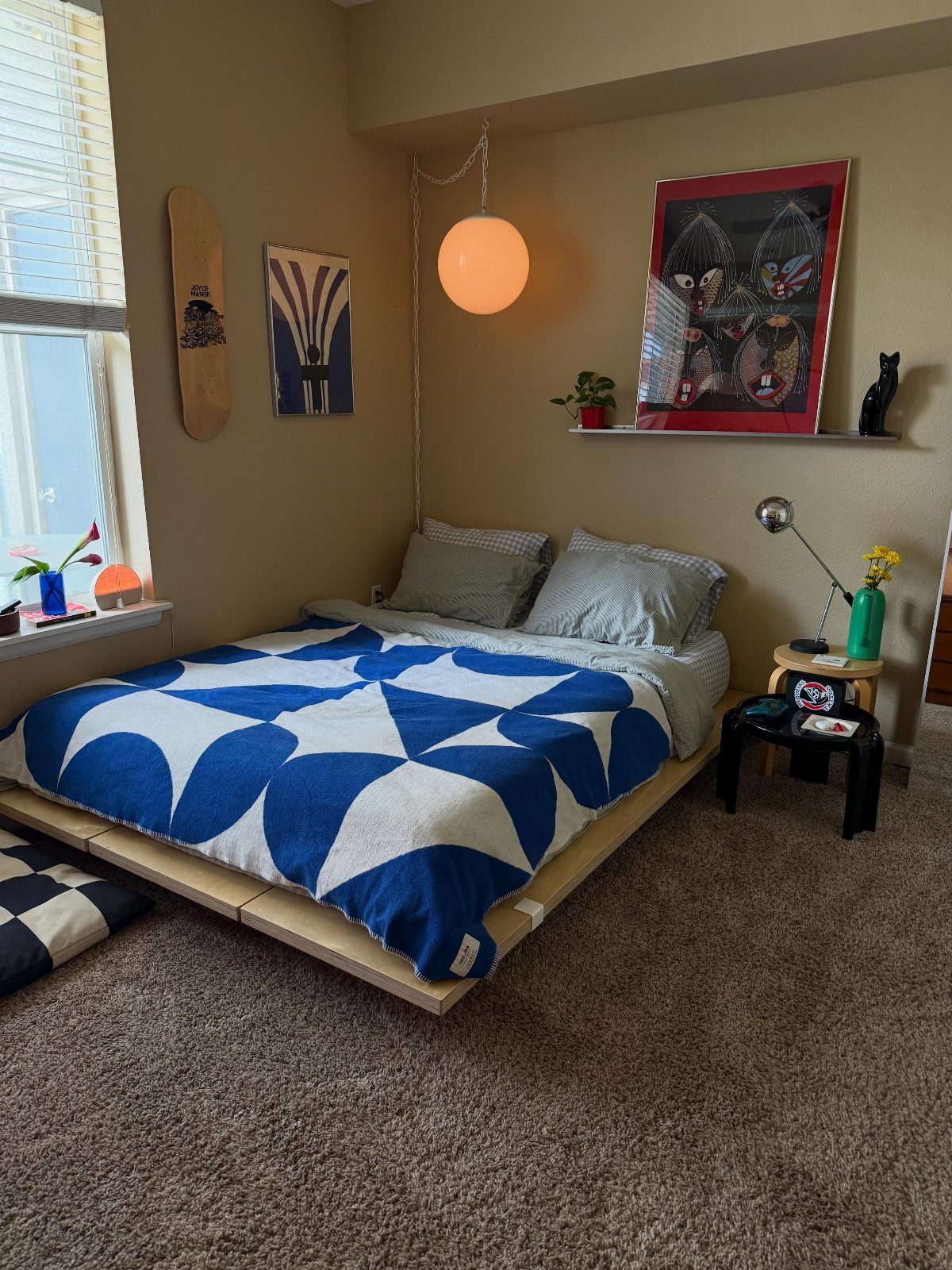
A bed that sits close to the floor removes the need for a headboard, because there is no tall gap behind it to fill.
Low wooden platform frames are the version I like most: the wood adds warmth, and the clean edge looks finished on its own.
It also frees up wall space, so a few pieces of art or a bedside table can take over the visual work. Pick a frame with a solid base rather than legs for a calmer shape.
The practical side: a low bed is harder to get out of and harder to sweep under.
5. Futuristic Minimalism
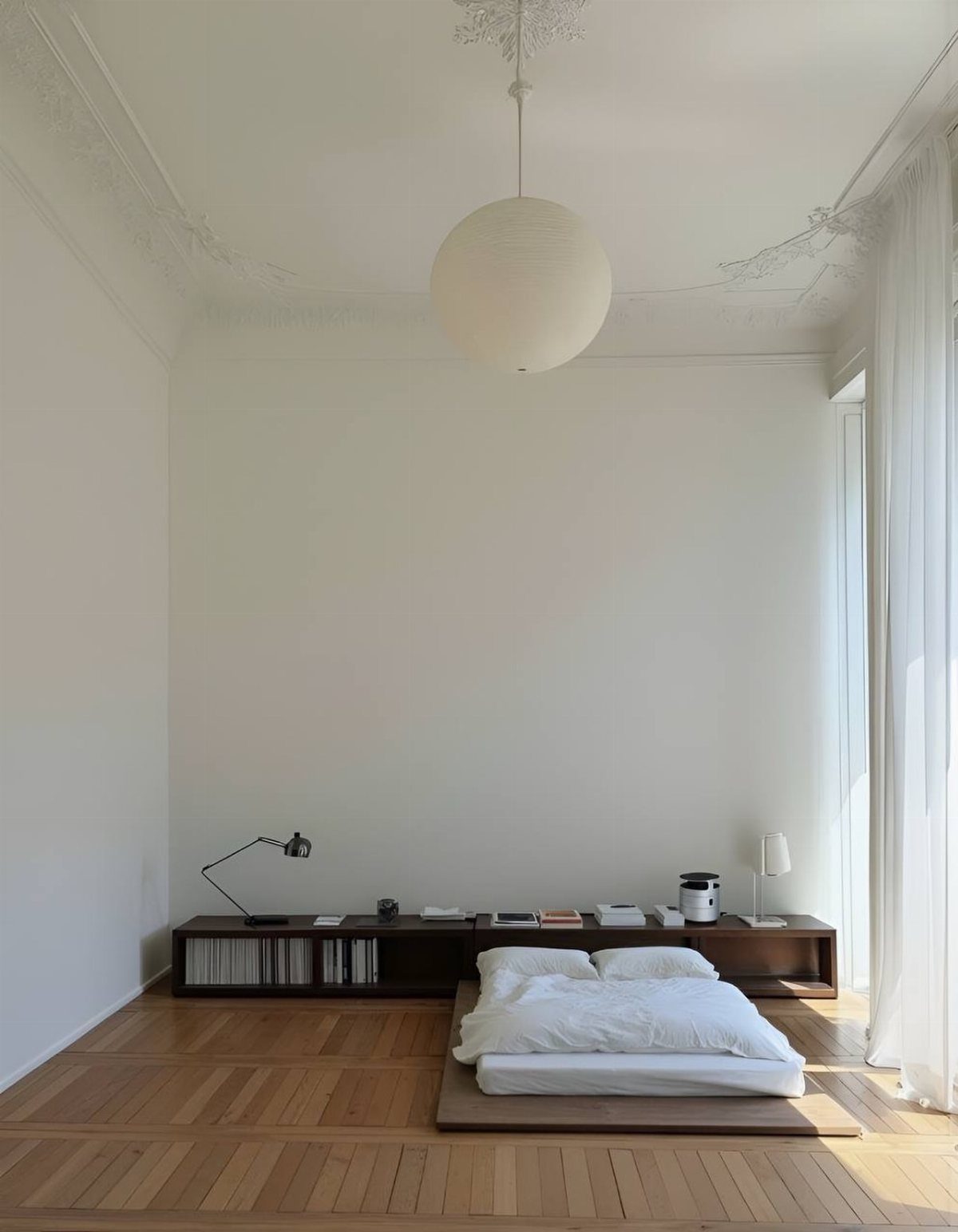
Sleek, spare rooms let a headboard-free bed look intentional, not unfinished. A low platform bed, one long shelf and a single round pendant are enough furniture for the whole look.
Restraint is the budget advantage. Buy fewer, plainer pieces, keep the palette to white and one wood tone, and leave the floor and walls open.
A large globe pendant adds the one bold shape; place it off to the side or over the bed, not in the center of the room.
If the room starts to feel cold, add a textured throw rather than more objects.
6. Floating Shelves Above the Bed
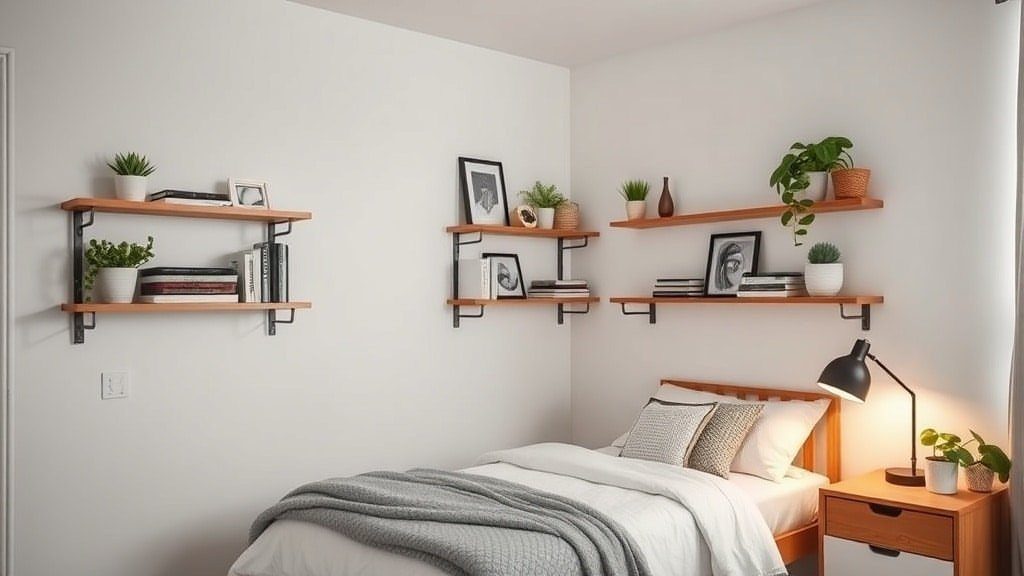
Shelves mounted over the bed turn the blank wall into a display, so the bed needs no headboard to look anchored.
Wood shelves in a few staggered sets, loaded with plants, books and framed photos, give the wall a layered look.
Anchor each shelf into studs or with rated wall anchors, since you will be sleeping beneath them. Keep heavy items low and to the sides, and put only light things directly over your pillow.
I prefer three smaller groups to one long shelf; they look collected and are easier to hang on a real weekend.
7. Install Sconces or Pendant Lights
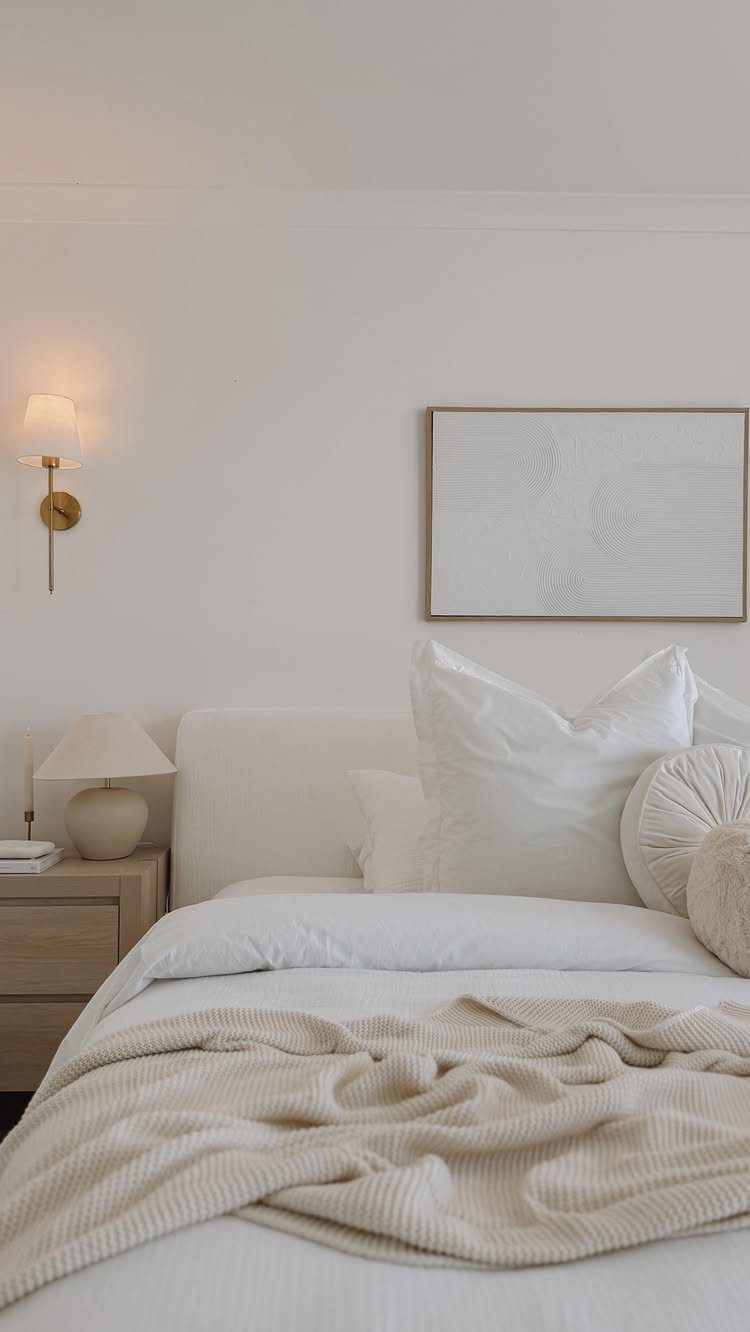
Swapping bedside lamps for wall-mounted lights clears the nightstand and puts the glow where a headboard would normally sit. A gold sconce against a white wall adds one warm metal accent and leaves room for art beside it.
Mount the fixture at a height you can reach from the pillow, and keep it off to the side of the bed instead of dead center.
A plug-in sconce with a cord cover suits renters, since it needs no wiring. Hardwired ones mean an electrician, so that is a bigger job.
Pendants hung low on each side do the same work.
8. Use a Bench or Daybed at the Foot
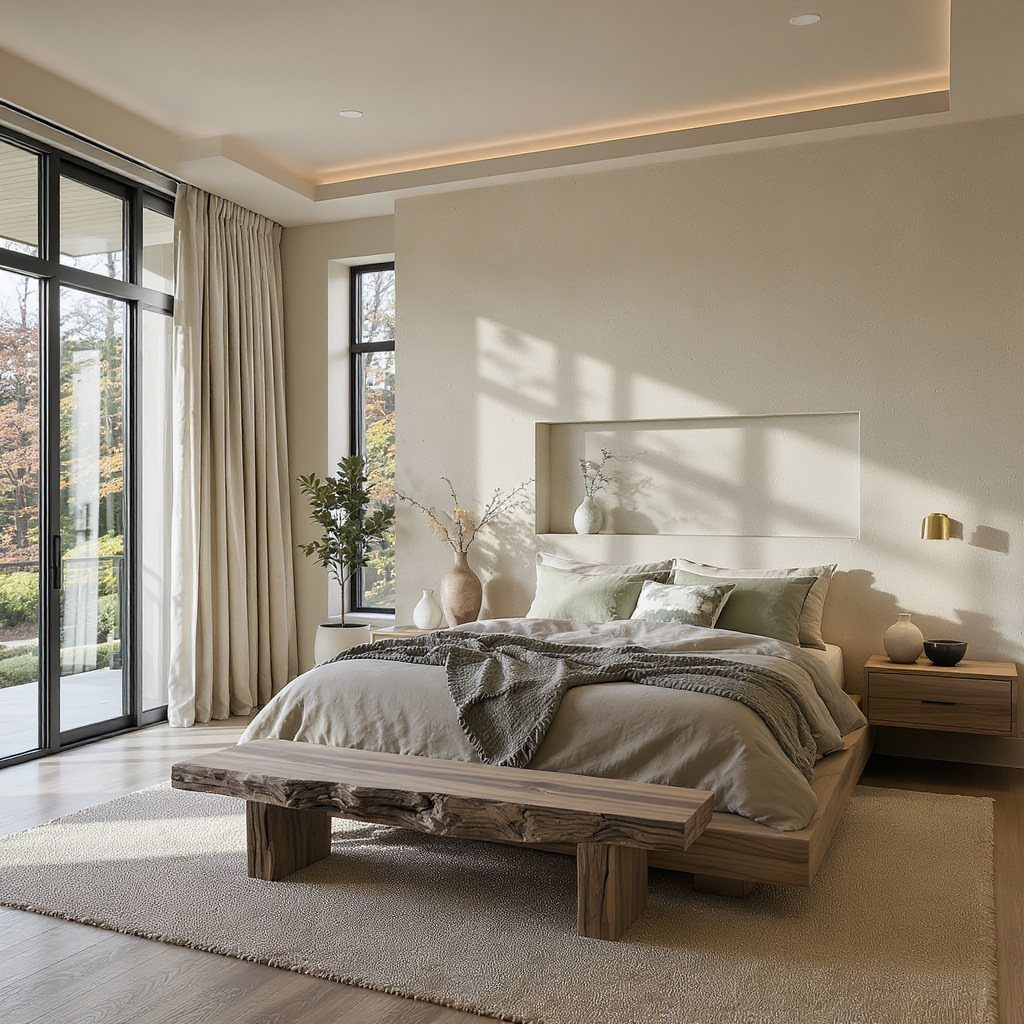
A bench at the foot creates a second anchor in a headboard-free room, so the eye lands at both ends.
It also does real work: a place to sit and pull on shoes, drop a folded blanket, or set a bag down.
Choose a bench a bit narrower than the bed so it reads as an accent, not a second mattress.
A daybed is the bigger version, and it only makes sense if the room has the floor space.
Skip to content Hot take: You don’t need a headboard. Yes, headboards dress up your bed nicely, but there are so many other ways to add visual intrigue to a bedroom than a standard headboard.
— Havenly
9. Tall Plants
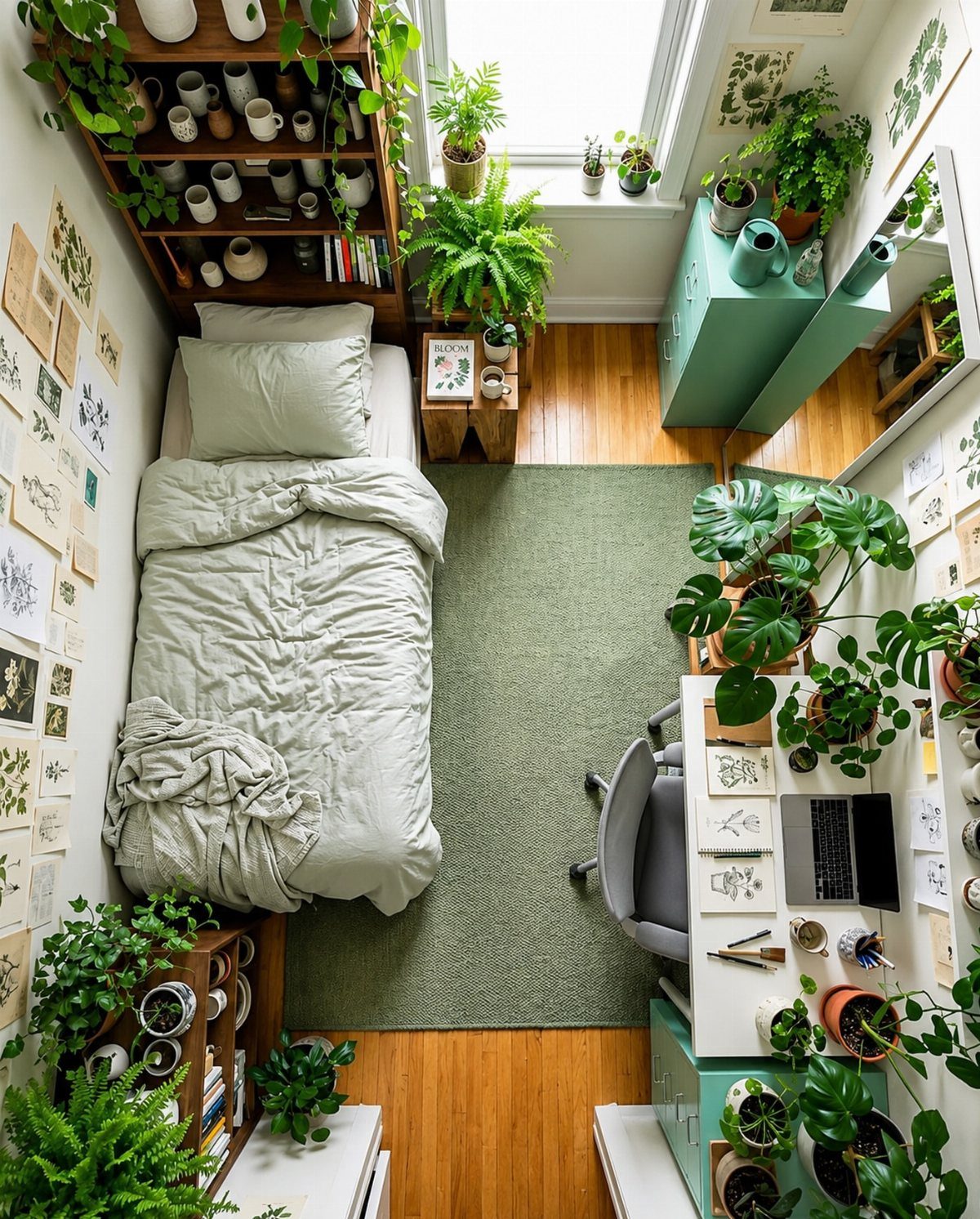
Plants can fill the empty wall space a headboard would have covered, and they cost far less than furniture.
Mixing sizes works best: tall ones on the floor, trailing ones up on a shelf, a few small pots on the desk.
Go for the tallest plant beside the bed, where the headboard’s height would have been.
Group pots in odd numbers so the room looks gathered, not scattered. Wood shelving with ceramics between the greenery keeps it from feeling like a nursery.
Check the light in the room before buying, since a dim corner will starve most plants.
10. Rustic Charm
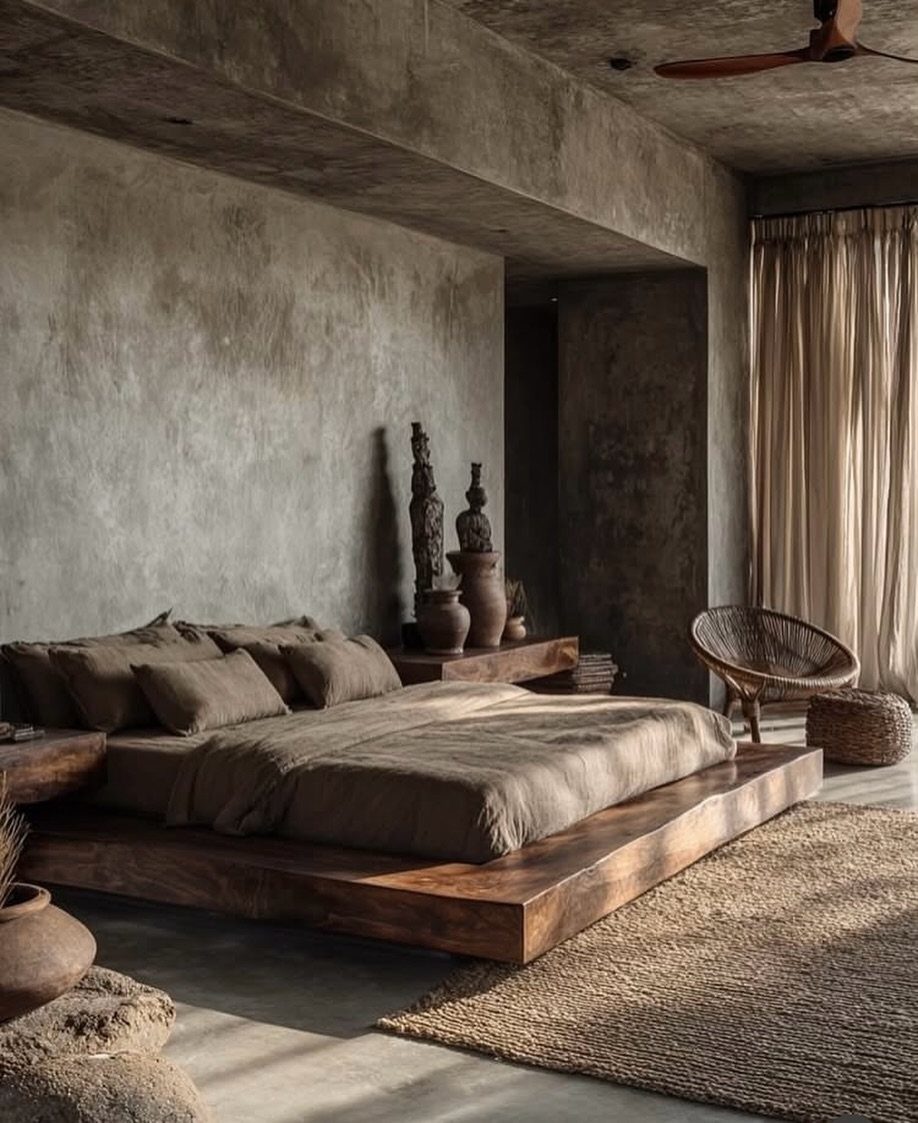
The concrete is cool, so the wood and fiber have to supply the warmth.
Brown linens are what I would pick for the bedding, because they sit in the same family as the wood and keep the bed from looking like a separate object.
Textured weaves help, since plain flat fabric looks thin next to concrete.
You can get this look without concrete walls. Any plain, muted wall lets the natural pieces do the talking.
11. Scandinavian Serenity
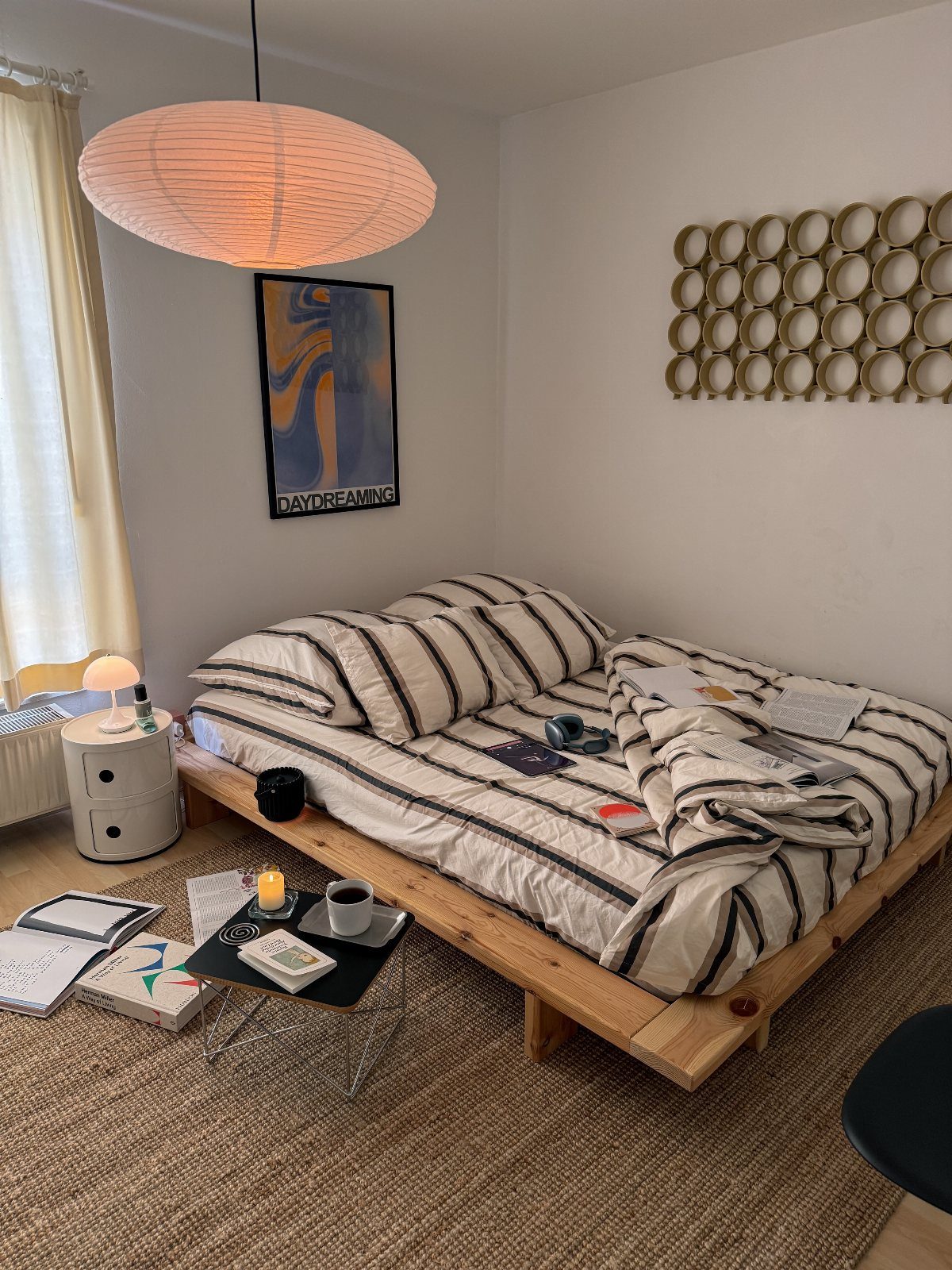
Light wood, white walls and almost nothing else: this is the cheapest bedroom look to pull off, because the room depends on what you leave out. A low wooden platform bed with striped bedding supplies the only pattern needed.
Keep the palette to white, pale wood and one accent, here the stripes.
A jute rug under the furniture adds texture so the room does not feel flat. One poster with a soft message on the wall stands in for a headboard and costs little.
Resist adding more art. Empty wall is what makes the room feel calm.
Benefits of Minimalist Design
A bed with no headboard takes up less room, both in actual inches and in how much the eye has to process. In a small bedroom or studio, that can make the whole space feel bigger and calmer.
Cleaning gets easier too. Fewer parts means fewer crevices where dust collects, so a quick sweep along the wall covers it.
The freedom is the other benefit. With nothing fixed behind the mattress, you can change the wall decor and textiles whenever you like, without working around a big piece of furniture.
Choosing the Right Frame
Start with a tape measure. Mark where the bed will sit on the floor and check that the frame, plus walking room on each side, fits before you buy anything.
Material comes next.
Metal holds up better and reads contemporary, wood ages well and suits more styles. Upholstered frames are a third route if you want softness, though they need more care.
Check the support before you check the style. Look for enough slats or a center beam under the mattress, since a good-looking frame that sags is a bad deal.
Then match the look to the room.
Cost-Effective Solutions
A frame with no headboard usually costs less, because it uses less material and is simpler to build. That is a real saving you can put toward bedding, a rug, or whatever fills the wall.
Simple construction also means fewer parts that can break, so a plain frame tends to last. A timeless shape won’t look dated in a few years either, which cuts down on replacing it.
Compare prices on a few frames in the same material before choosing. Check shipping costs as well, since a lower sticker price can shrink once delivery is added.
Frequently Asked Questions
Can you have a bed without a headboard?
Yes. A headboard is a nice-to-have, and a low platform frame, a wall treatment or big art can do its visual job.
How do I make a bed look finished without a headboard?
Anchor the wall above or beside the bed with one clear feature, such as large art, floating shelves or wall-mounted lights.
Balance the room with one clear anchor on the wall and matching fixtures on each side, then add texture through bedding or a floor piece only when the space needs it. Mounting lights on the wall also clears the nightstands.
How do I make a bed look attractive without spending much?
Spend on what you leave out. Posters in matching frames are the cheapest way to get a large wall piece.





