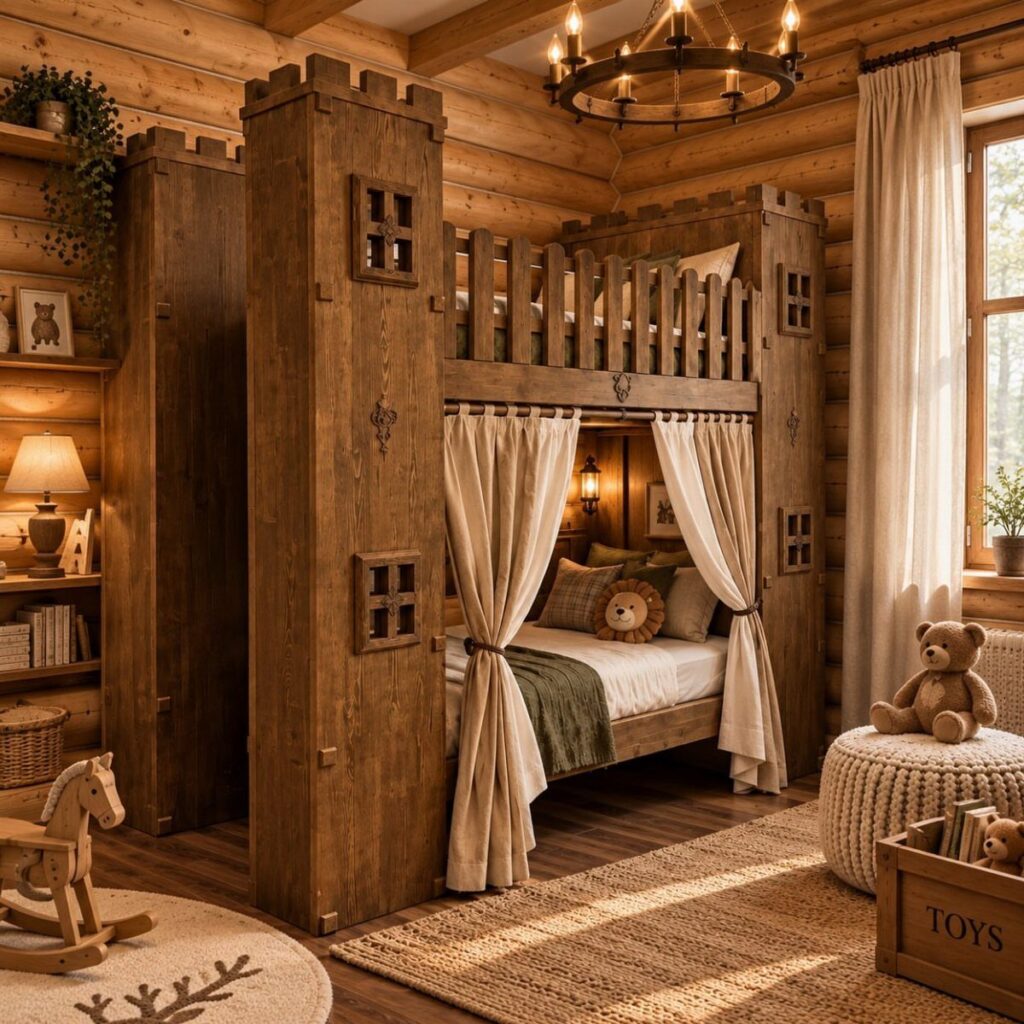
The ideas here range from curtain panels hung on tension rods to full wooden frames built into the bunk structure, with fabric tents, building blocks, and playhouse designs in between.
How long the bed stays in the room decides most of the approach: temporary setups rely on fabric, curtains, or blocks that remove without damage, while a bed that will stay for years can support a built wooden frame or playhouse structure.
Whatever you pick, the upper bunk’s guardrails and the ladder have to stay uncovered.
1. Cozy Bunk Bed Fort with Curtains
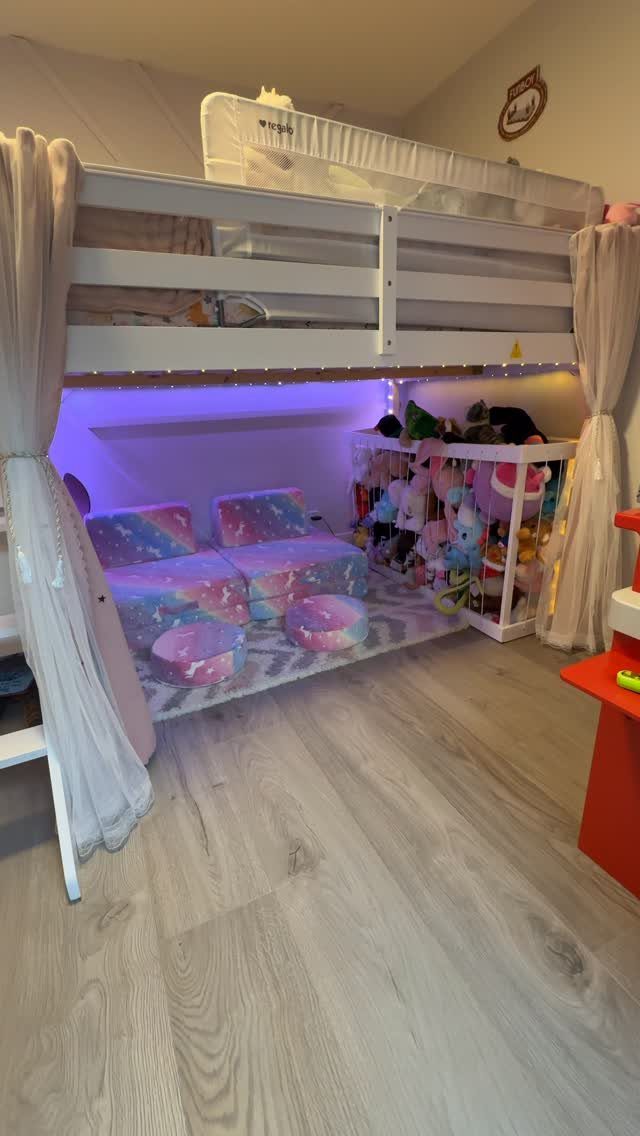
Sheer curtains on the open sides of a loft bed turn the space underneath into a hideaway, and they cost far less than building walls.
Purple LED strips are a good call here. They give the nook a glow at night without a lamp cord on the floor.
One maker said they added this fort under their daughter’s loft bed in stages, which suits a budget: curtains first, extras later.
2. Custom Wooden Bunk Bed Fort
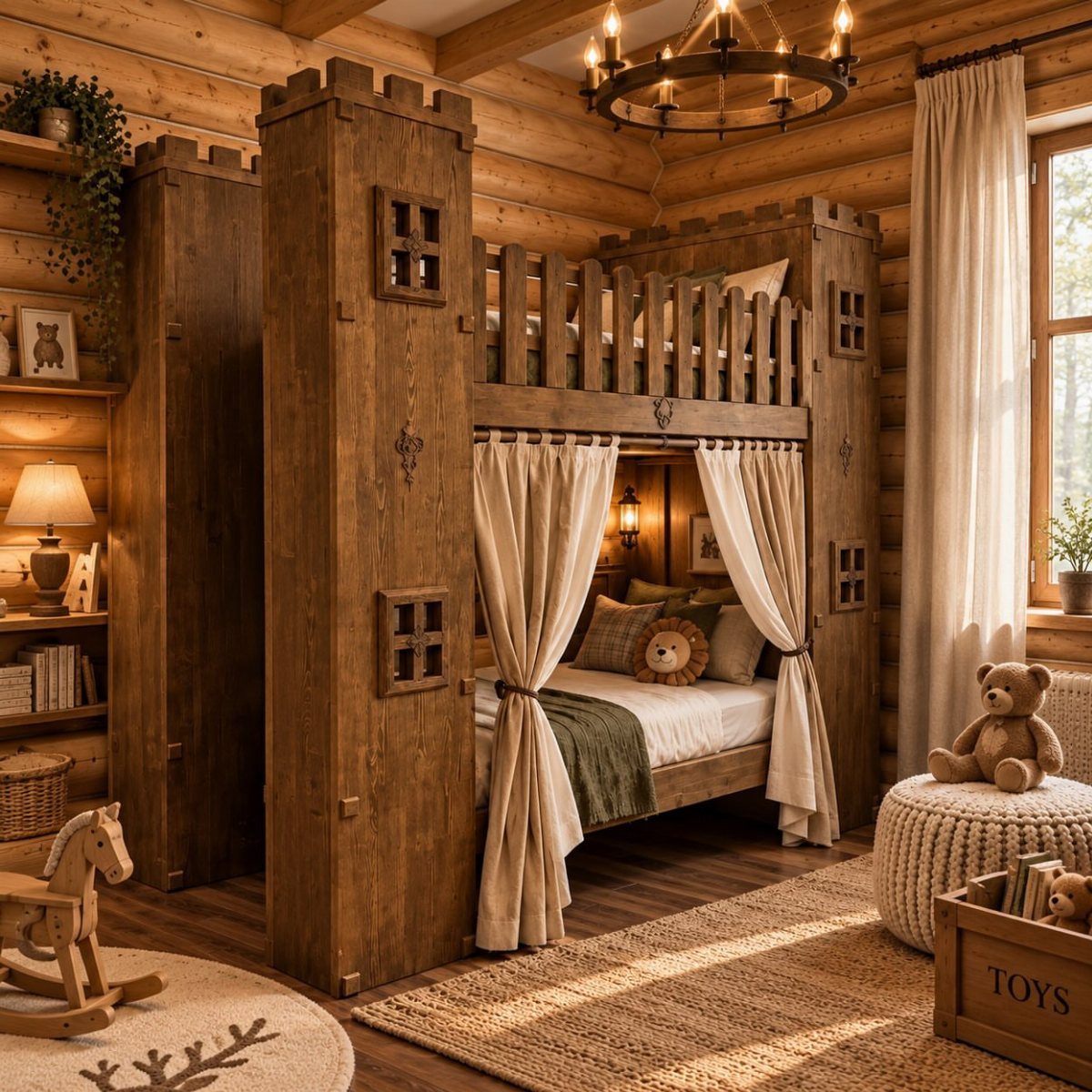
A castle-style wooden frame with turrets is the splurge option, and I’d only pick it if you plan to keep the bed for years.
Custom work means you choose the details: a curtain for a door, a spot for a toy box, a ledge for a stuffed knight.
A log cabin room suits the look because the wood tones match. In a plain white bedroom, the frame will stand out more, so keep the rest of the decor quiet.
3. Bunk Bed with Playhouse Design
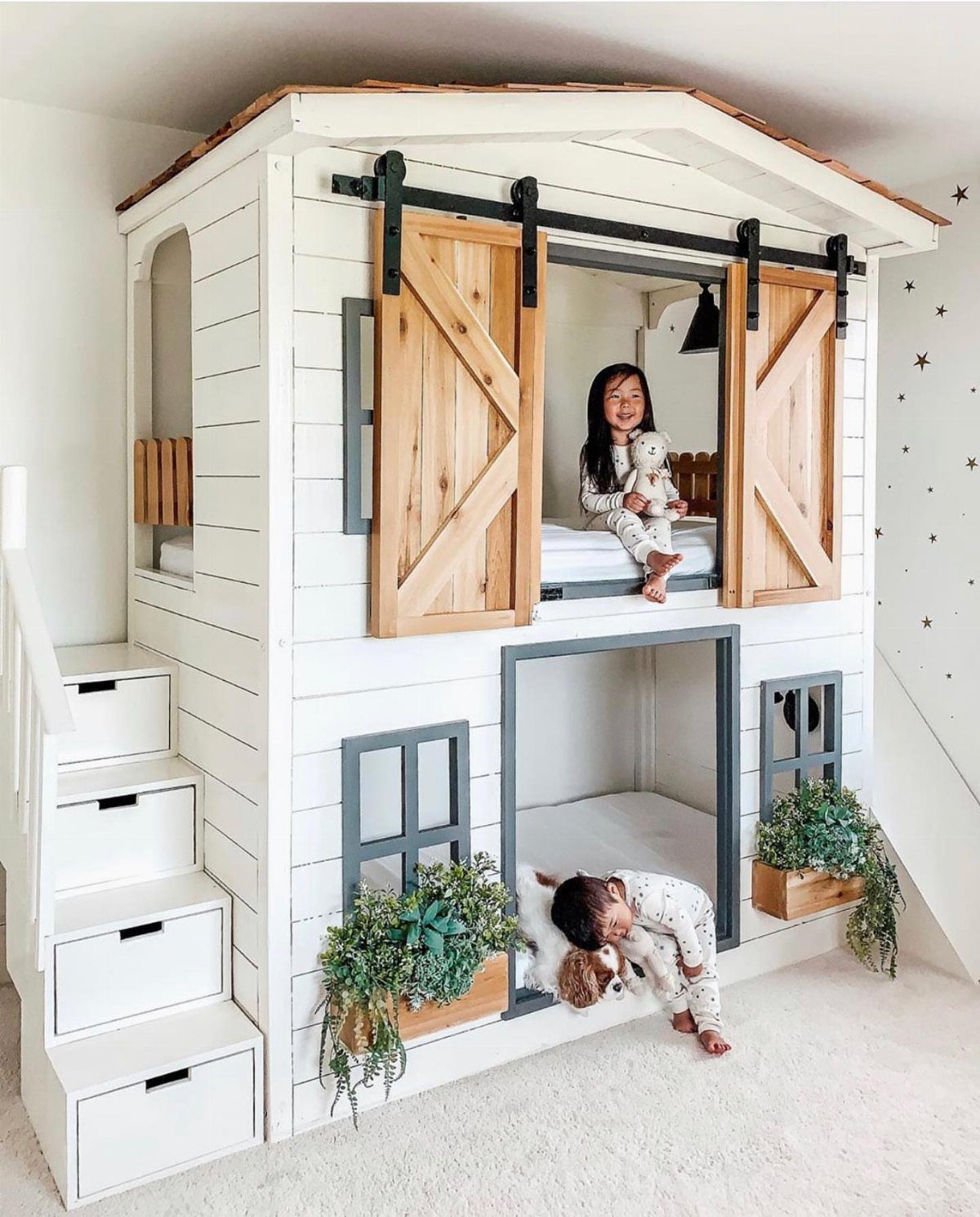
A bunk bed with a built-in playhouse design feels more like a real playhouse than curtains do, and the little doors don’t snag or get pulled down.
I like it for shared rooms because each child gets a defined space.
Expect it to cost more than a fabric fix. Carpet around the base keeps floor play comfortable.
4. Bunk Bed Fort with Slide
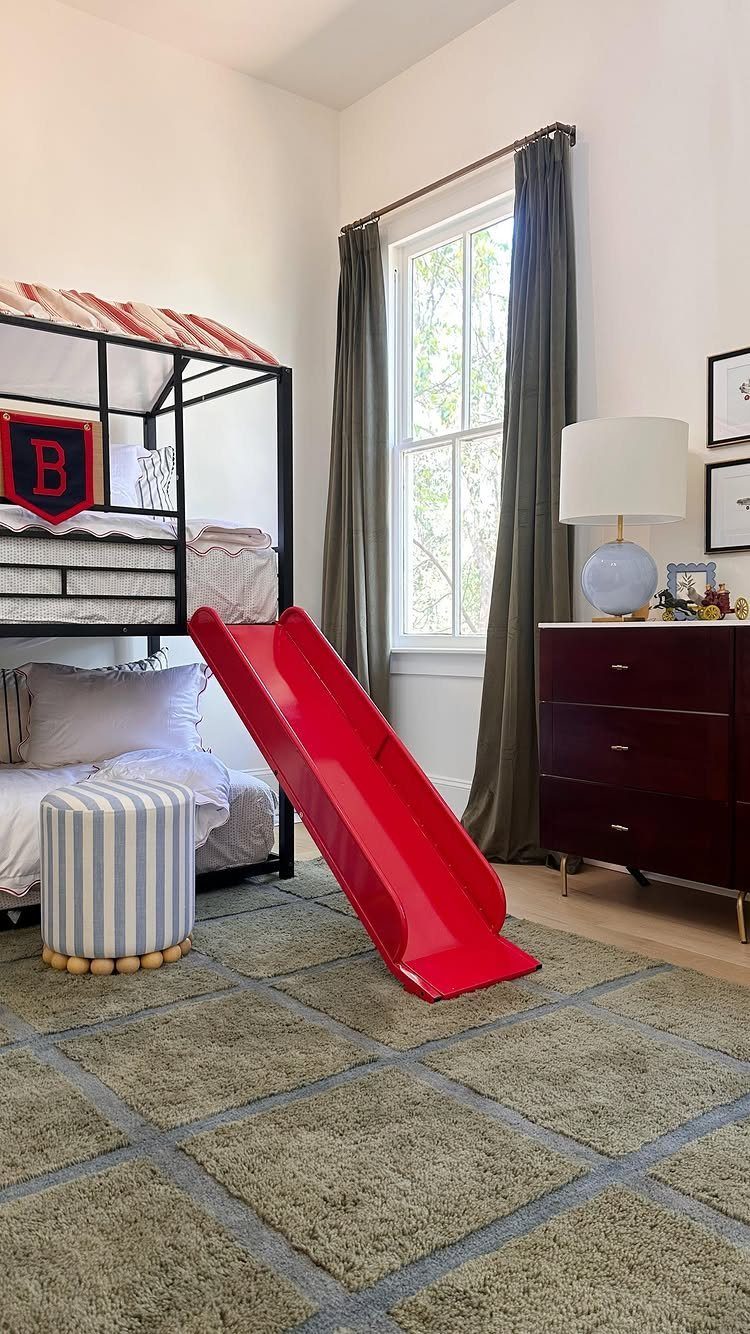
Black metal bunk frames are a sturdy base for a striped fabric roof, and a red slide adds the active play that most forts lack. Together they make a bed that doubles as a climbing spot.
A slide takes floor space, so measure the landing zone before buying.
A rug at the bottom softens exits. Keep the dresser clear of the slide’s path.
5. Building Block Bunk Fort
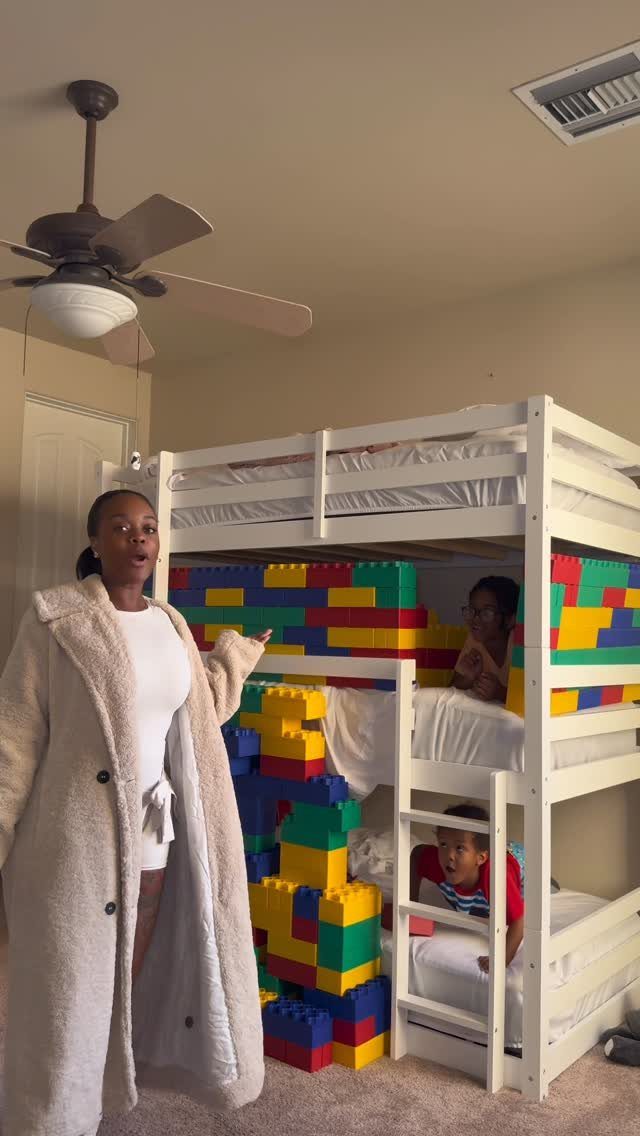
Giant interlocking plastic blocks can be stacked into a wall around the bottom bunk, and the best part is that kids can rebuild it any way they like. One week it’s a castle wall, the next a tunnel.
Bright primary colors look best against a white frame, which keeps the room from feeling busy.
Leave one gap as a doorway. This is the easiest idea here to change, and nothing gets screwed into the bed.
6. Fabric Tent Bunk Bed Enclosure
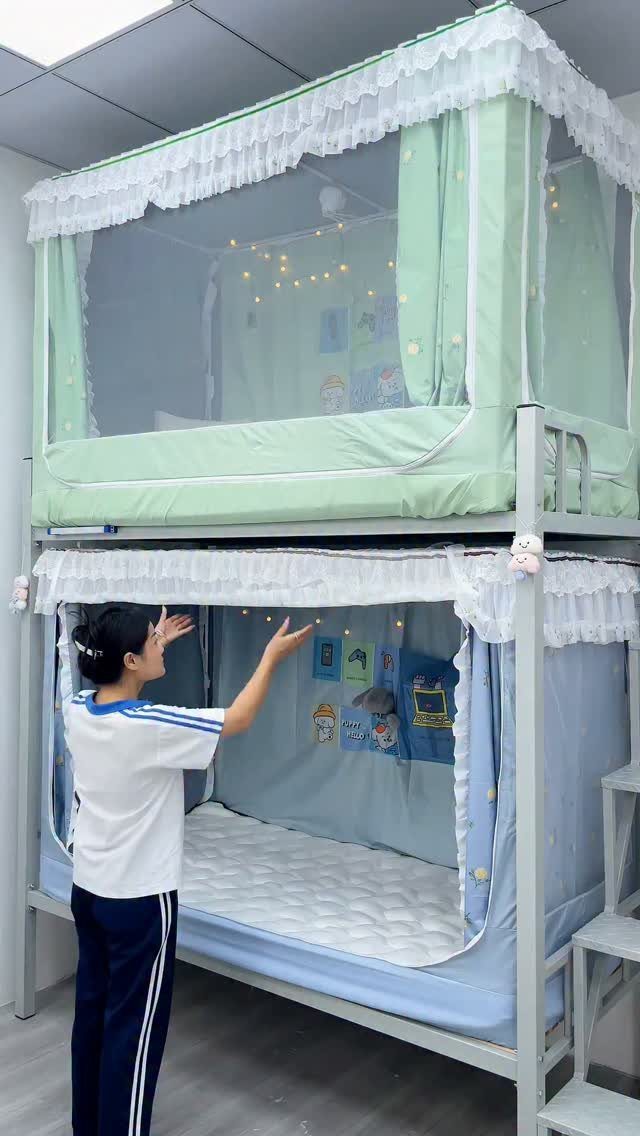
Full fabric tents on a metal bunk make each bed its own little cabin. Light green and blue panels with lace trim feel soft and a bit storybook, and fairy lights inside give a night-light glow.
Sew or clip the fabric to the frame so it can come down for washing.
Battery-powered lights are my pick over plug-ins, since cords and kids’ bedding don’t mix well. Choose a light, breathable fabric so the bed doesn’t feel stuffy.
7. Fairy Lights and Greenery Fort
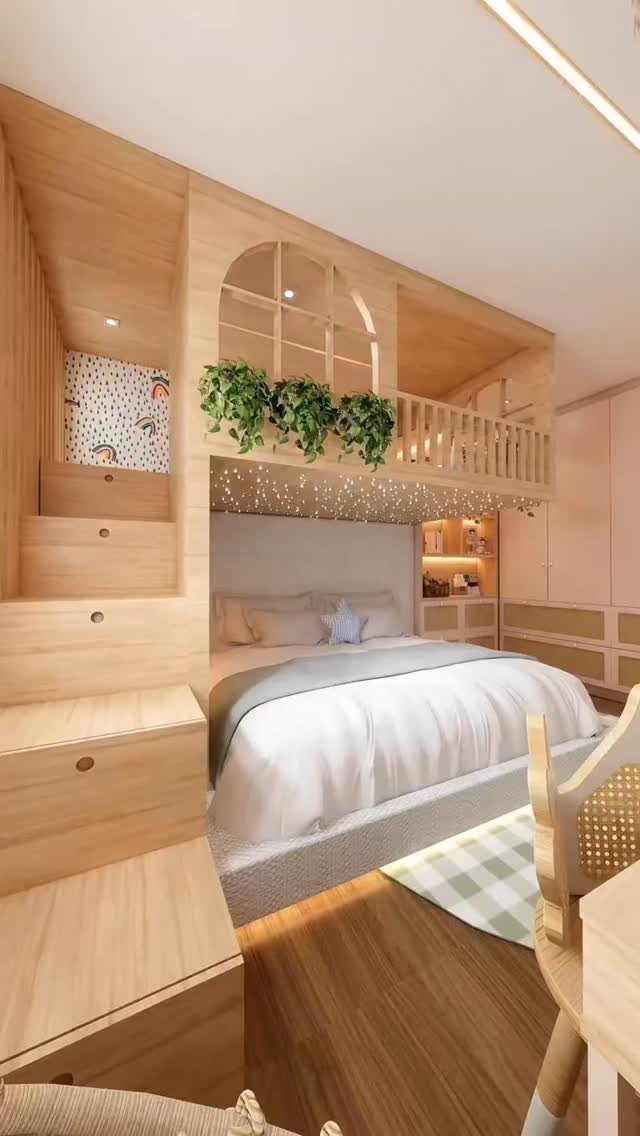
Faux plants draped from the upper bunk with warm fairy lights woven through them make the space above the lower bed feel like a leafy canopy.
Faux is the right call for a kid’s room, since nothing needs watering and nothing drops soil on the white linens below.
Run the greenery along the wall side or the ceiling above the top bunk so it sits clear of the mattress and leaves the guardrail bare, and keep the warm white bulbs low-key.
It’s an easy, cheap fort to build in an afternoon, and it works well on a wooden frame, where the wood tones and greenery sit together naturally.
Easy Setup Tips for Bunk Bed Forts
Tension rods and plain sheets make the fastest fort.
Tuck a few sheets or blankets under the top mattress, then drape them to the floor on all sides. No sewing, no tools, and it takes minutes.
For a roof over a floor-level tunnel, set two big pieces of furniture about 2–3 feet apart and stretch a sheet across the gap. Weigh down each side with heavy books so the roof stays put.
Toss pillows or cushions inside for a soft floor. Expect a snug space, since this style is much smaller than a built fort.
Tuck a sheet under the mattress on the top bunk, then pull it down toward the fort walls. Use clothespins or binder clips to secure the sheet to the edges of the cushions.
— WikiHow
Materials for Building Bunk Bed Forts
A short shopping list covers most forts: sheets, curtains, tension rods and clips. Washable fabric curtains hung from hooks or rods give the most privacy for the least money, and they come down easily for the laundry.
Pick colorful fabrics, because color is what makes a kid want to crawl inside. Solid bright sheets or a mix of two or three shades read as cheerful without much effort.
Keep a few spares on hand, as they tend to wander.
For floors, pillows and cushions do the job, and old bedding works fine.
Safety Considerations for Bunk Bed Forts
Check every addition against the bunk’s safety features before the fort goes up.
Guardrails on the upper bed must stay fully visible and at their full height, so never drape fabric over them in a way that hides them or tempts a child to climb.
Keep ladders clear too. A sheet hanging across the ladder can snag a foot on the way up or down.
Pick solid wood or sturdy frames as your base, and test any rod or clip by tugging it hard before a child uses it. Anything that pulls loose should be moved or replaced.
Leave floor space open so exits stay easy.
Frequently Asked Questions
How to turn a bunk bed into a fort?
Fabric is the quickest route.
I hang washable curtains from hooks or tension rods when the fort needs to stay up long-term, and I clip lightweight sheets to the frame for the kids who want to change the setup every weekend.
I attach fabric with clips or ties instead of anything permanent, and I make sure it clears the guardrails and ladder so no one trips climbing up or down.
Is it cheaper to build or buy a bunk bed?
Building can be cheaper, but it depends on the materials and the design. A fabric fort on a bunk you already own costs the least, since curtains, sheets, rods and clips cover most of it.
A built frame with turrets costs more than a standard bunk bed plus fabric panels, so I only recommend it when the bed will stay in use through multiple kids or several years.





