How it attaches decides which headboard works, because dorms often ban nails and adhesive hooks or charge when walls get damaged.
The ideas here run from a freestanding bookcase frame to tufted velvet and fabric panels, with lighted and charging-ledge styles in between.
1. Bookcase Headboard
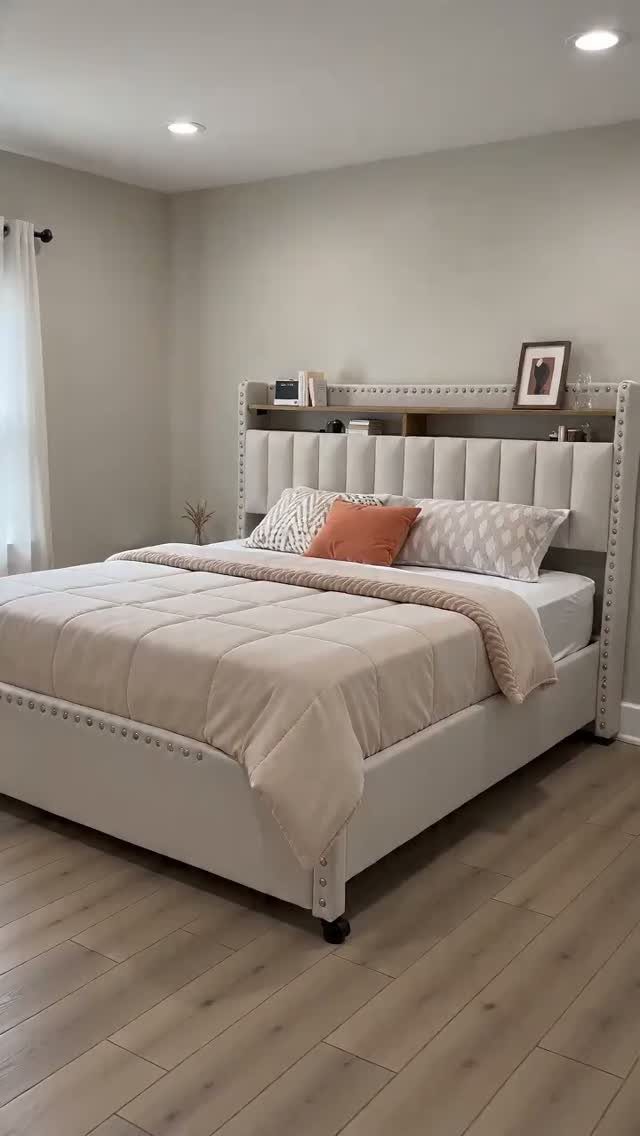
A bookcase headboard turns the wall behind your pillow into shelf space, which matters in a dorm where every surface is already claimed.
Books, a framed photo, and a small plant can live within arm’s reach, so you can skip a separate nightstand or bookshelf.
Keep the shelves loosely filled.
A few items with some empty space looks calm, while a packed shelf above your head feels heavy and drops things when you bump it. Check your school’s furniture rules before buying, since some dorm beds can’t take add-on frames.
Most college rooms come furnished with a bed and storage, but there are loads of reasons why a college headboard should be on your dorm packing list.
2. Velvet Tufted Headboard
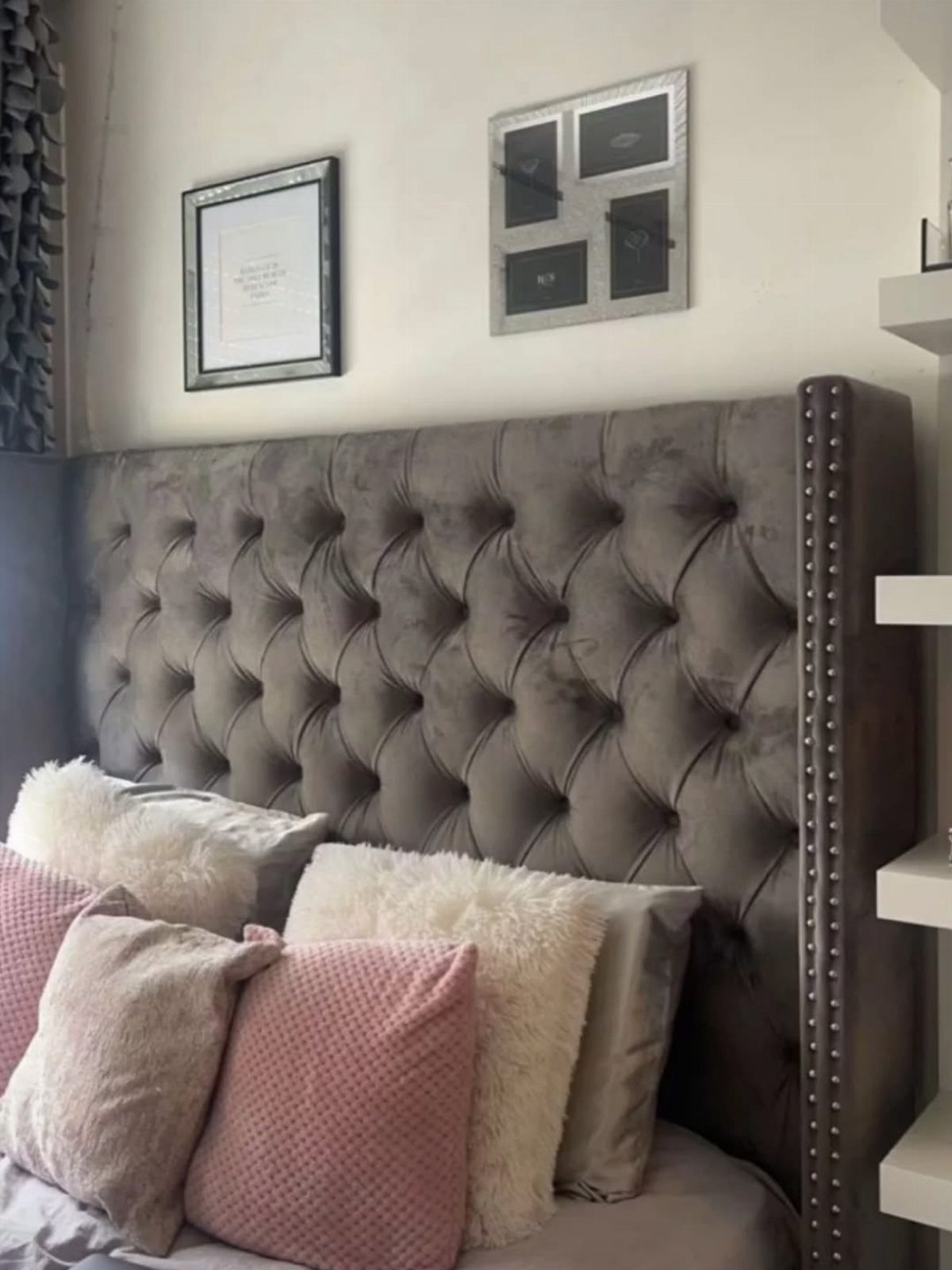
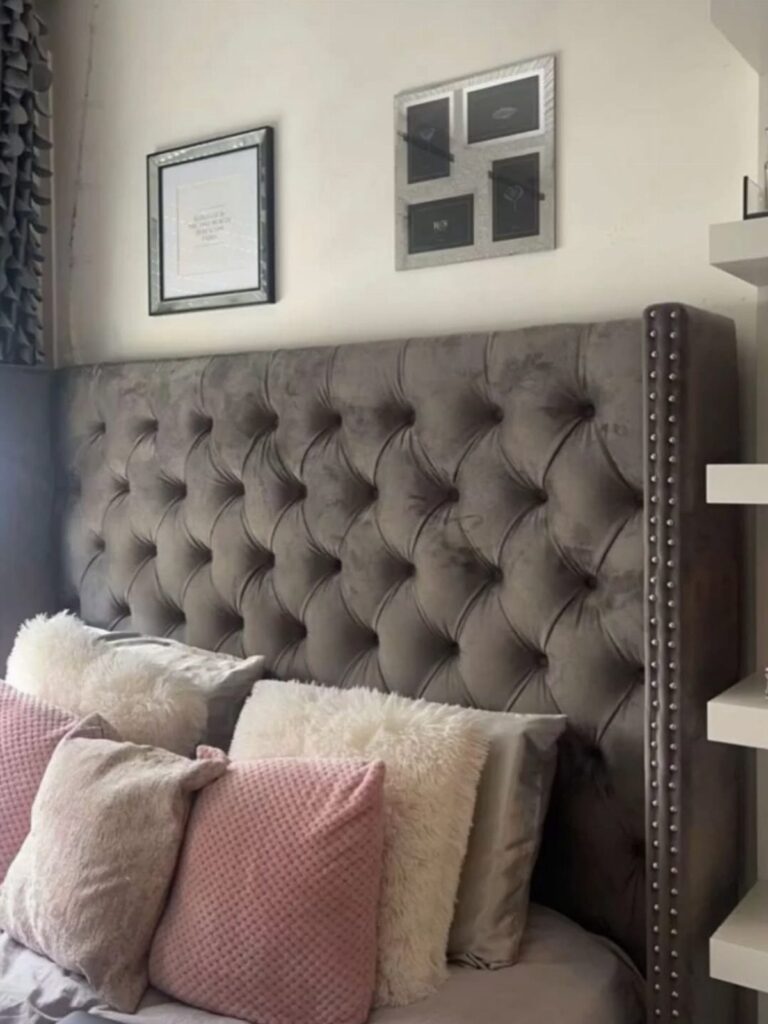
Grey velvet with nailhead trim gives a plain dorm bed the look of a hotel suite, and the tufting adds depth that a flat panel can’t.
I’d choose grey over a bold color, because it works with nearly any bedding you buy later.
Layer pillows in different sizes in front of it, and keep the wall art simple, like a pair of frames hung just above the top edge. Velvet shows lint and crumbs, so a small lint roller stays useful.
3. Upholstered Headboard
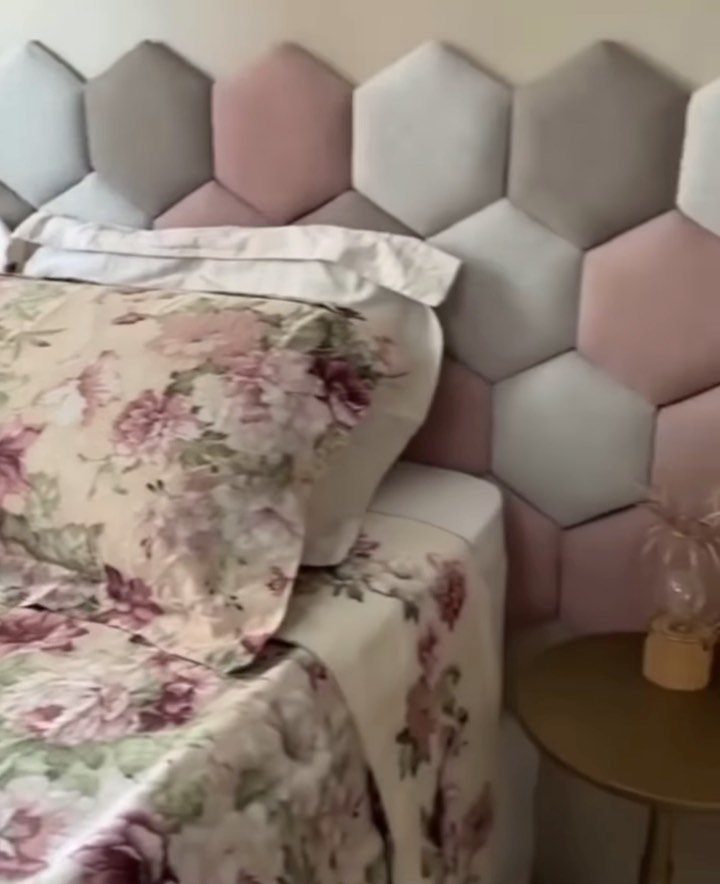
Upholstered headboards don’t have to be rectangles. A hexagon in pink and grey gives you a shape that feels designed, and it pairs well with busy floral sheets because the 2 soft colors let the pattern lead.
For a dorm, I’d pick a wall-mounted version over a freestanding one.
It keeps the footprint small and lets you take it down at move-out. Use removable mounting hardware, and read your housing rules first so you don’t lose your deposit.
4. Headboard with Lights
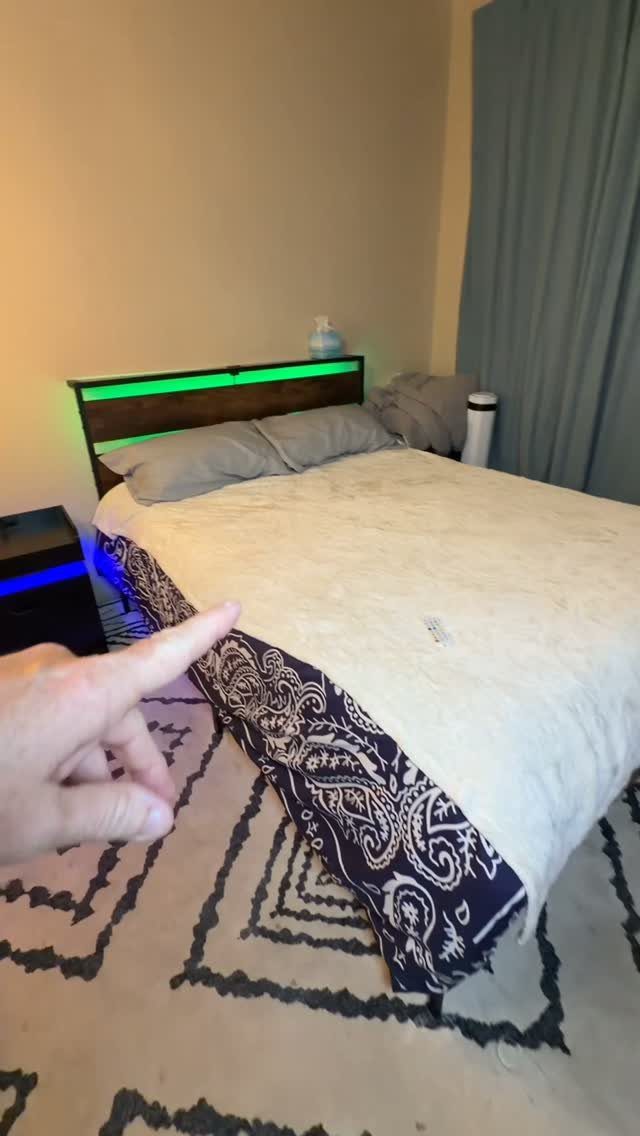
Built-in LED lighting turns a headboard into your reading lamp, mood light, and nightstand lamp at once. Green is a bold choice against dark wood, and a softer white or warm tone is easier to sleep next to.
Pick a model with a dimmer or a remote, since a fixed bright strip gets tiring late at night. A roommate will appreciate light that stays low and aims at your side of the room.
5. Monogrammed Twin Headboard
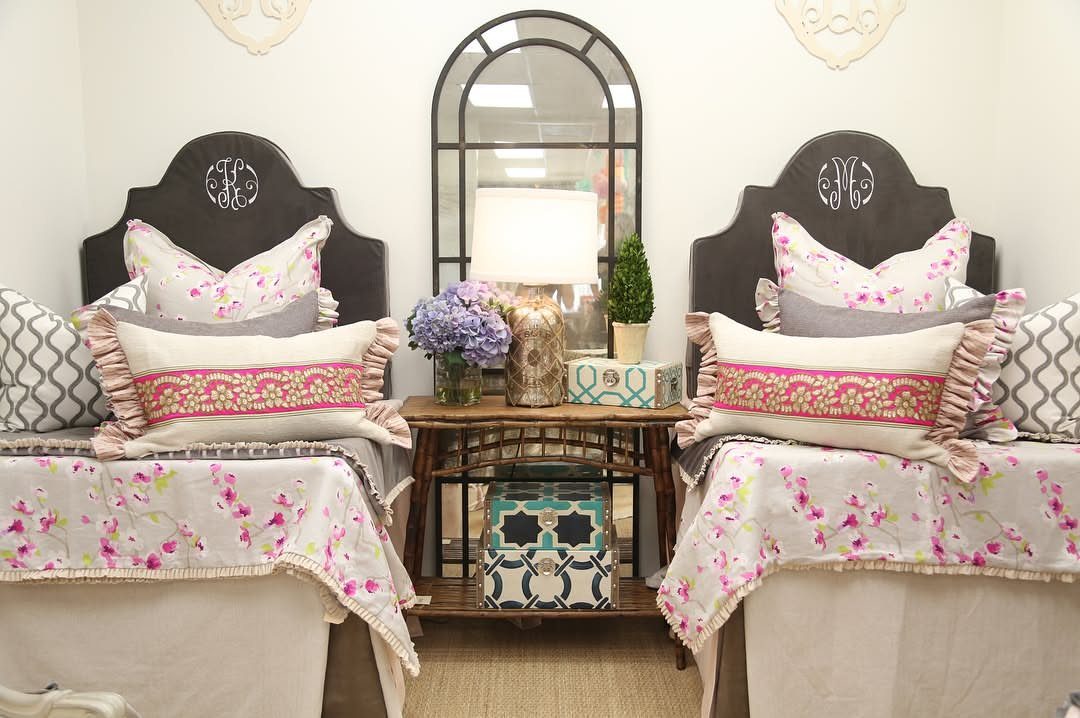
Matching dark curved headboards with white monograms make two twin beds read as a pair, which suits a shared dorm room better than two mismatched frames.
The dark wood anchors light floral bedding, and the white lettering keeps the look crisp.
Put a nightstand between the beds with a lamp, so you split one power outlet and one surface. Agree on the initials or design with your roommate before ordering, since custom work can’t be returned easily.
6. Headboard with Charging Ledge
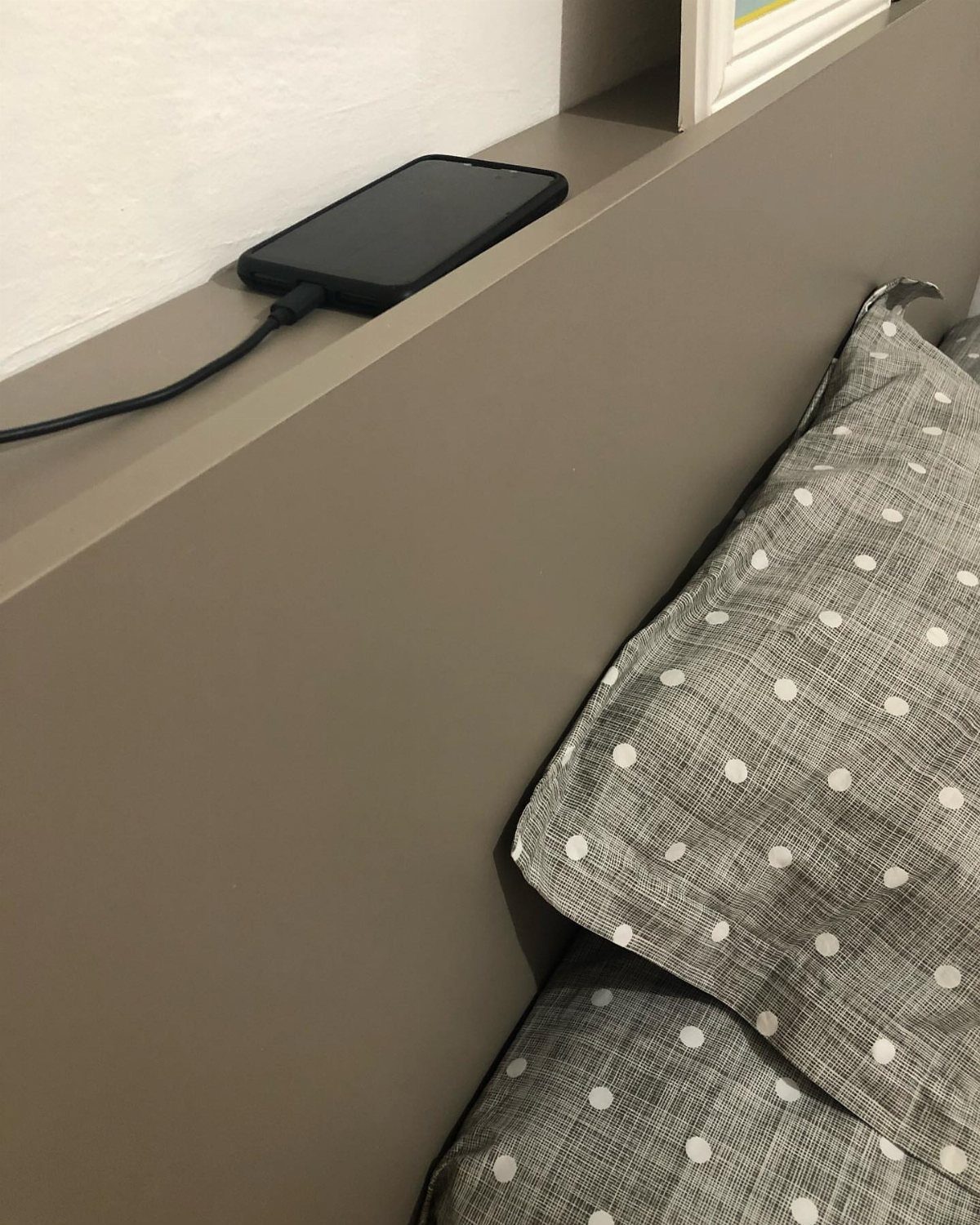
A flat top with a narrow ledge solves a small, daily problem: where your phone goes while it charges. It stays within reach, off the mattress, and the cord has a short, tidy run to the outlet.
Choose a ledge deep enough to hold your phone flat without it tipping.
Grey keeps it neutral, and polka-dot or solid pillows in front soften the hard edge. Skip heavy items up there, since a ledge this narrow suits only light things.
7. Patterned Fabric Headboard
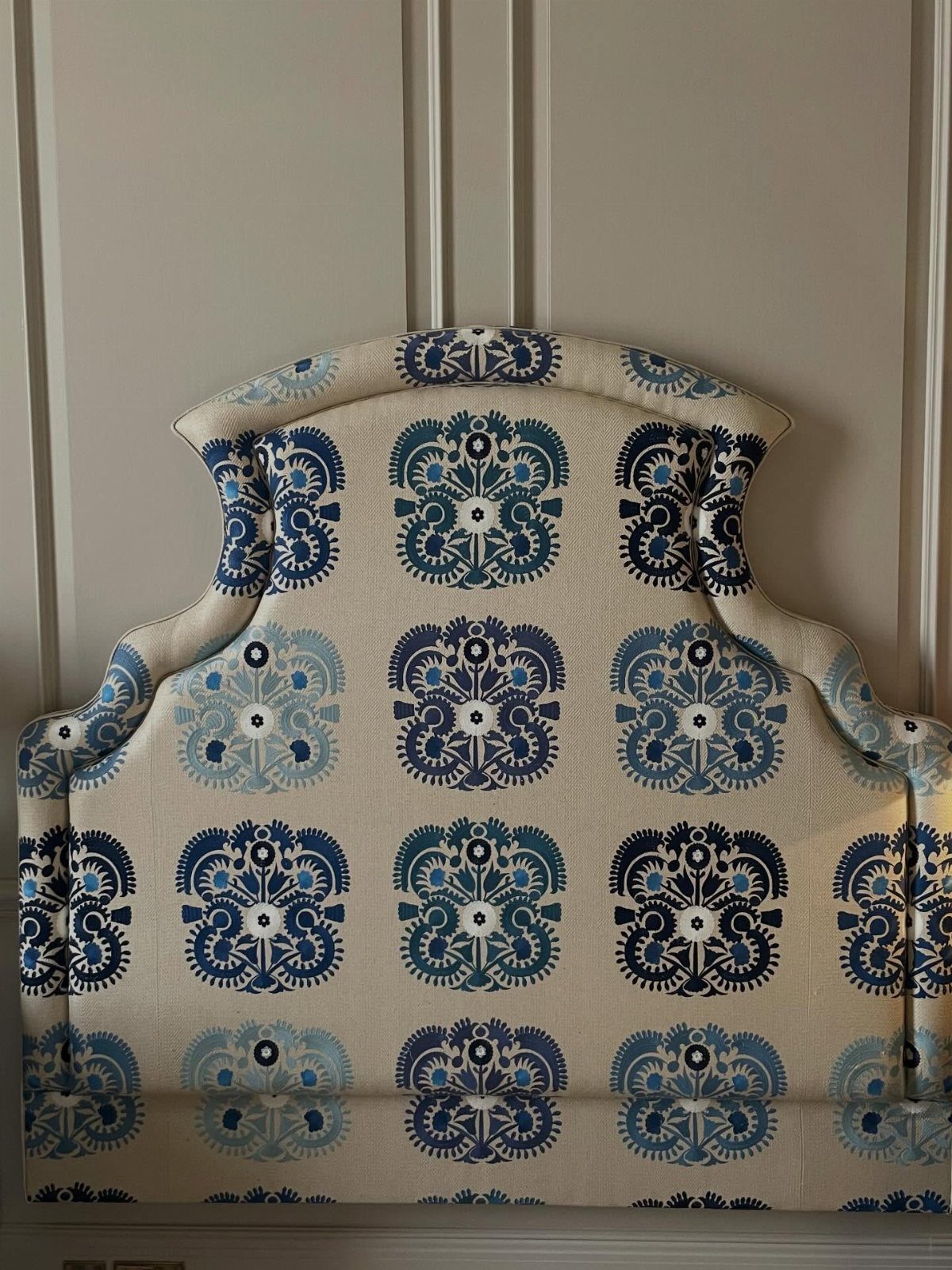
A curved headboard in blue and beige floral fabric lets the pattern do the decorating, so the wall behind it can stay plain. Against a light gray wall, the blue reads clearly and the beige keeps it soft.
Keep the bedding simple to match.
Solid white or a single blue from the print looks calmer than a second pattern fighting for attention. If you love mixing prints, choose a much smaller one, like a thin stripe.
A wall-mounted version suits a dorm best, since it comes down at move-out and leaves floor space free.
Benefits of Headboards
A dorm bed usually sits against a concrete block wall, and a headboard gives your head and pillows something softer than that. It also stops pillows from sliding off the back of the bed and onto the floor overnight.
Sitting up in bed is the other payoff. With padding behind you, leaning back to read or watch a show is far more comfortable than pressing against cold block.
You can’t spend every hour at your desk, so the bed ends up as your couch too. A headboard is a cheap way to make that spot feel like part of your room and not just a mattress.
A headboard is not a necessity, so skip it if your budget is tight.
Installation Tips
Check your housing rules first, then pick the simplest setup. Some headboards come with loops on the back that hang from adhesive hooks on the wall, which means no drilling and no tools.
Check your dorm or lease rules on adhesive and nail hooks first, since many buildings ban them and some charge for wall damage.
Even easier is propping the headboard behind the mattress and letting it rest on the wall’s baseboard line, with no hardware at all.
A slightly taller headboard can wedge between the wall and the mattress, so it stays snug without any hardware.
Whichever route you pick, give it a gentle shove after setup. If it shifts or sags, add support before you trust it behind your head.
Headboard Sizing
Match the headboard to the bed’s width, not its length. A Twin or Twin XL dorm bed takes a Twin headboard, and a Full or Full XL bed takes a Full.
XL beds run 5 inches longer, but the width stays the same, so the headboard fits either way. A Queen bed needs a Queen headboard.
Most online shops list one size by default, so check the size menu before you add to cart. A Twin headboard on a Full bed will leave gaps at the sides.
Weight matters too. A heavy headboard on removable adhesive hooks can fall within days, so choose a lighter one for hooks, or a thick cushioned style that rests on the bed itself.
Frequently Asked Questions
What size headboard for a dorm bed?
Go with a headboard that runs the full width of the mattress, not wider or narrower.
A Twin or Twin XL dorm bed takes a Twin headboard, and a Full or Full XL bed takes a Full. Check the size menu before adding to cart, since many shops default to a single size.
How much does a headboard for a bed typically cost?
Prices vary widely, but many options come in under $350. For a dorm, a lighter wall-mounted or cushioned style usually fits a tighter budget and the room’s rules better than a heavy frame.





