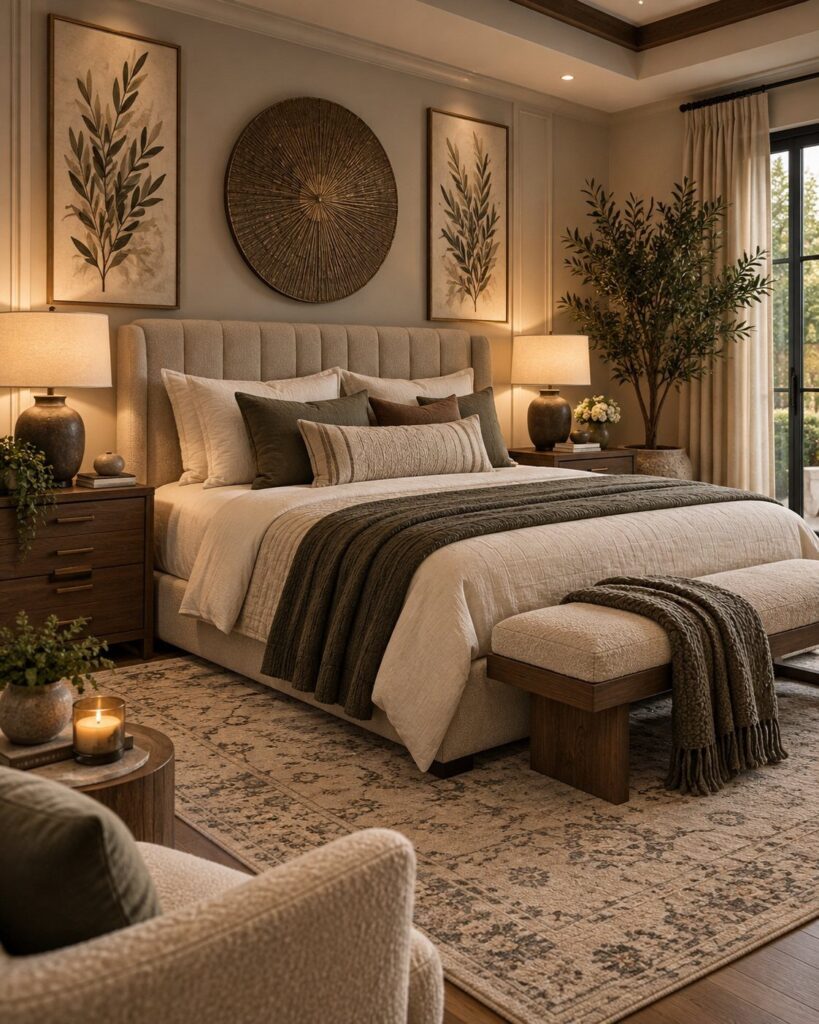
Between those extremes sit accent walls, two-tone splits, horizontal stripes and a painted ceiling, and they range from one gallon of dark paint behind the bed to taped stripes that reward patience.
1. Light, Warm Neutrals
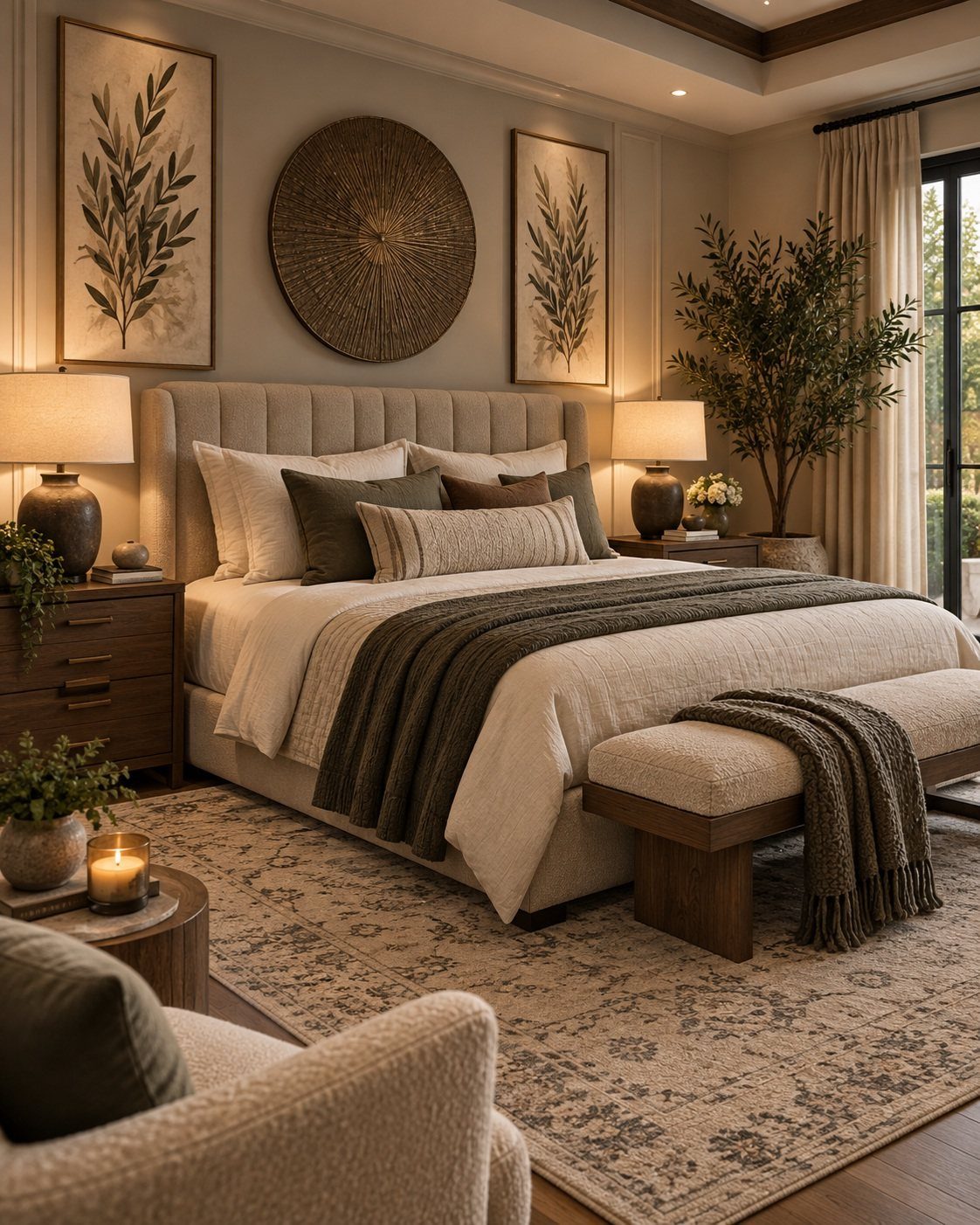
Warm beige walls do the quiet work here: they reflect light and soften corners, so the room reads wider than its square footage.
Pick a shade with a yellow or pink undertone rather than a gray one, since cool beiges can turn flat and a little cold at night under lamps.
Brush a test patch on the wall and watch it morning and evening before committing to gallons. Cream bedding and a few olive-green touches, like a plant, keep the palette from feeling bland.
2. Soft Pastel Colors
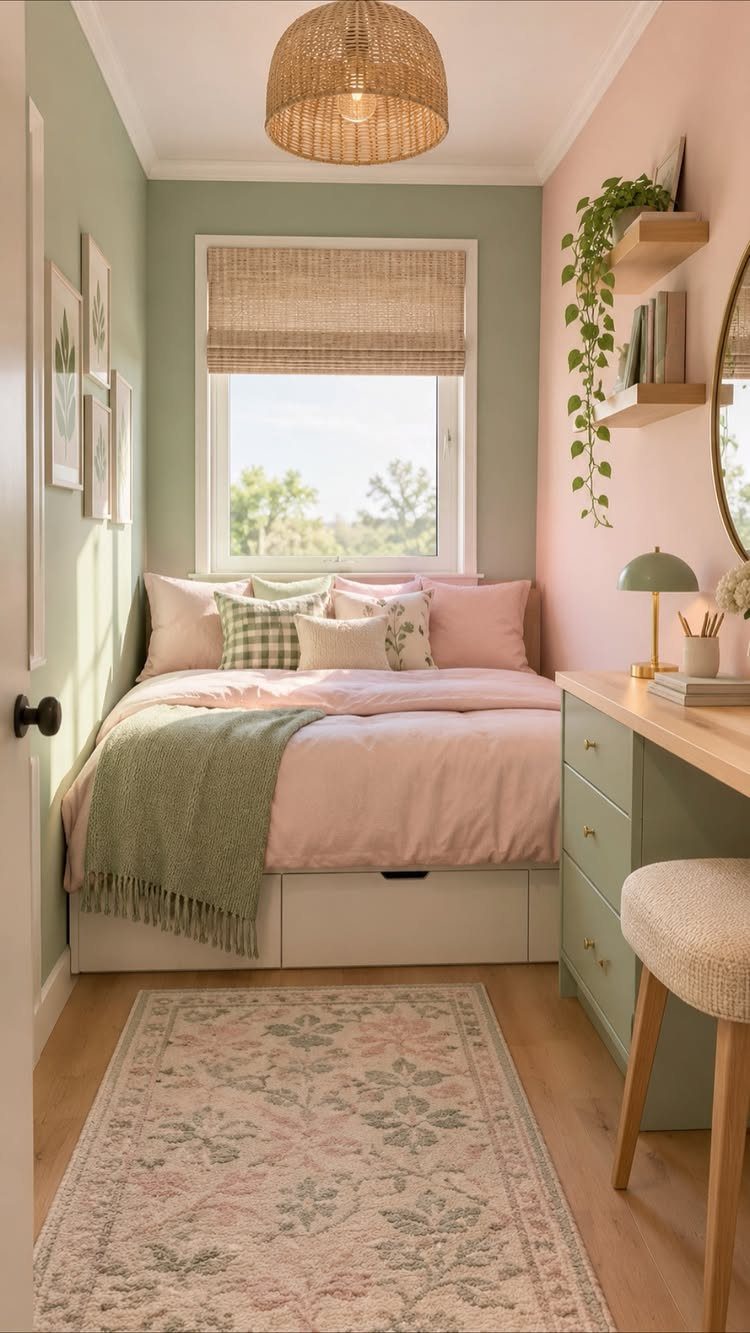
Pink and light green split a compact room into 2 gentle moods without a heavy edge anywhere.
I would paint the larger wall the paler shade and keep the second color to one wall or the desk area, so neither one crowds the space.
Pastels look best in a matte or eggshell finish, which hides wall flaws better than gloss.
3. Dark and Bold Options
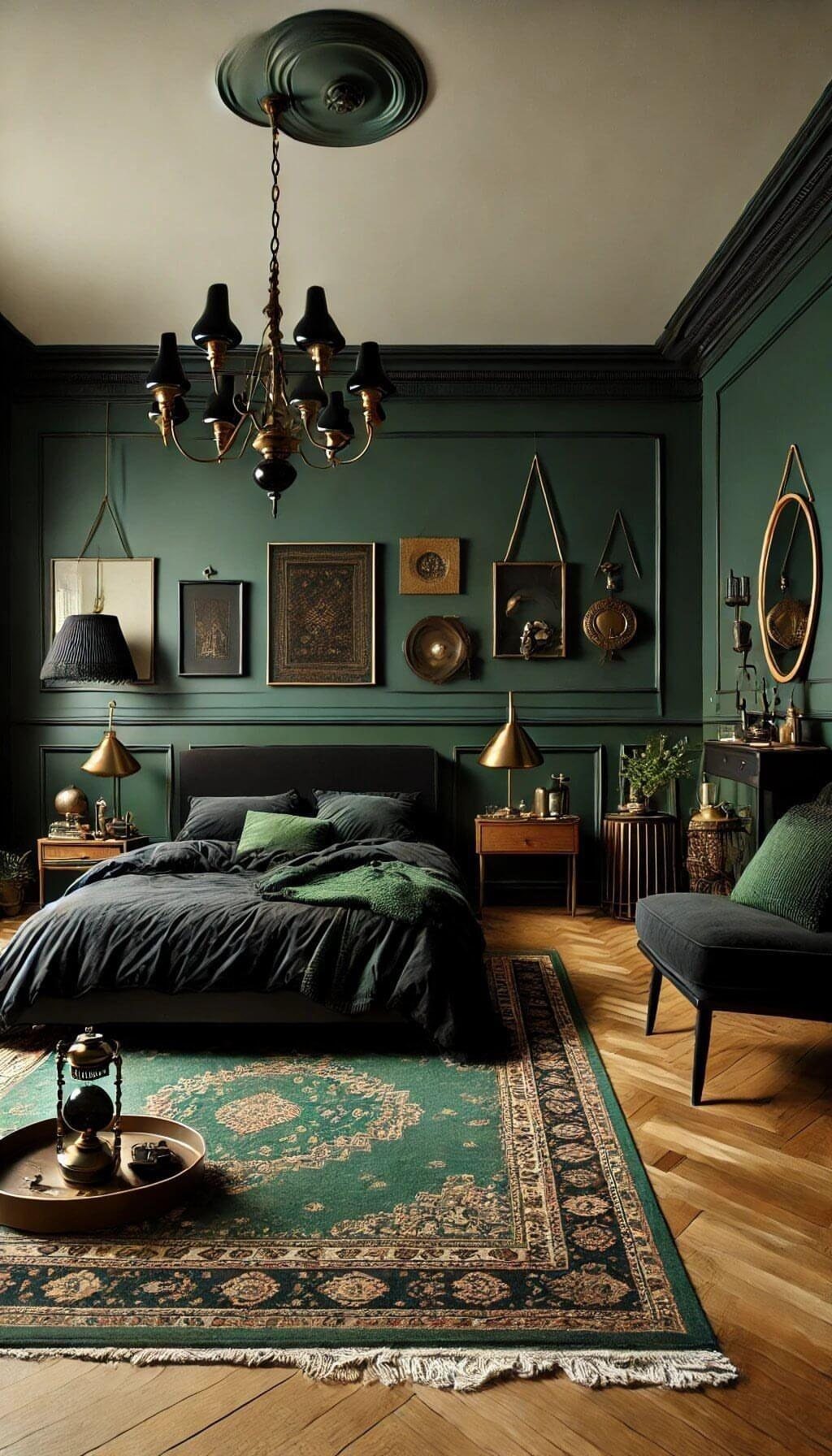
Deep forest green on every wall, trim included, makes a small bedroom feel like a snug, deliberate cocoon instead of a shrunken one.
Painting the trim the same dark tone blurs the edges where walls end, which is why the room stops reading as boxy.
Gold light fixtures and frames glow against it, and black bedding keeps the mood consistent.
Expect to need 2 coats, maybe 3, and plan on a primer if the old wall color is light. Dark paint shows brush marks, so roll carefully.
4. Accent Walls
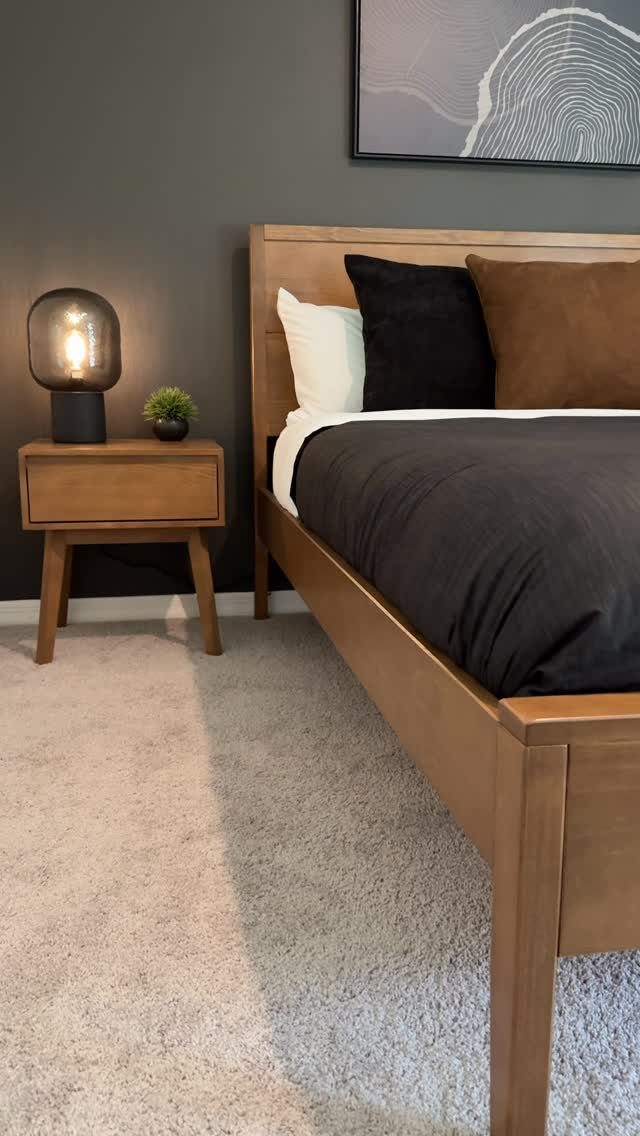
One dark gray wall behind the bed gives a plain room a focal point for the price of a single gallon. I prefer the headboard wall for the accent, because the bed and nightstand already pull the eye there.
Leave the other 3 walls light so the room keeps its brightness.
Warm wood furniture sits well against charcoal, and a lamp beside the bed adds a soft glow on the painted surface. Tape the corners and ceiling line with care; a sharp edge matters more here than anywhere.
5. Monochrome Shades for Walls
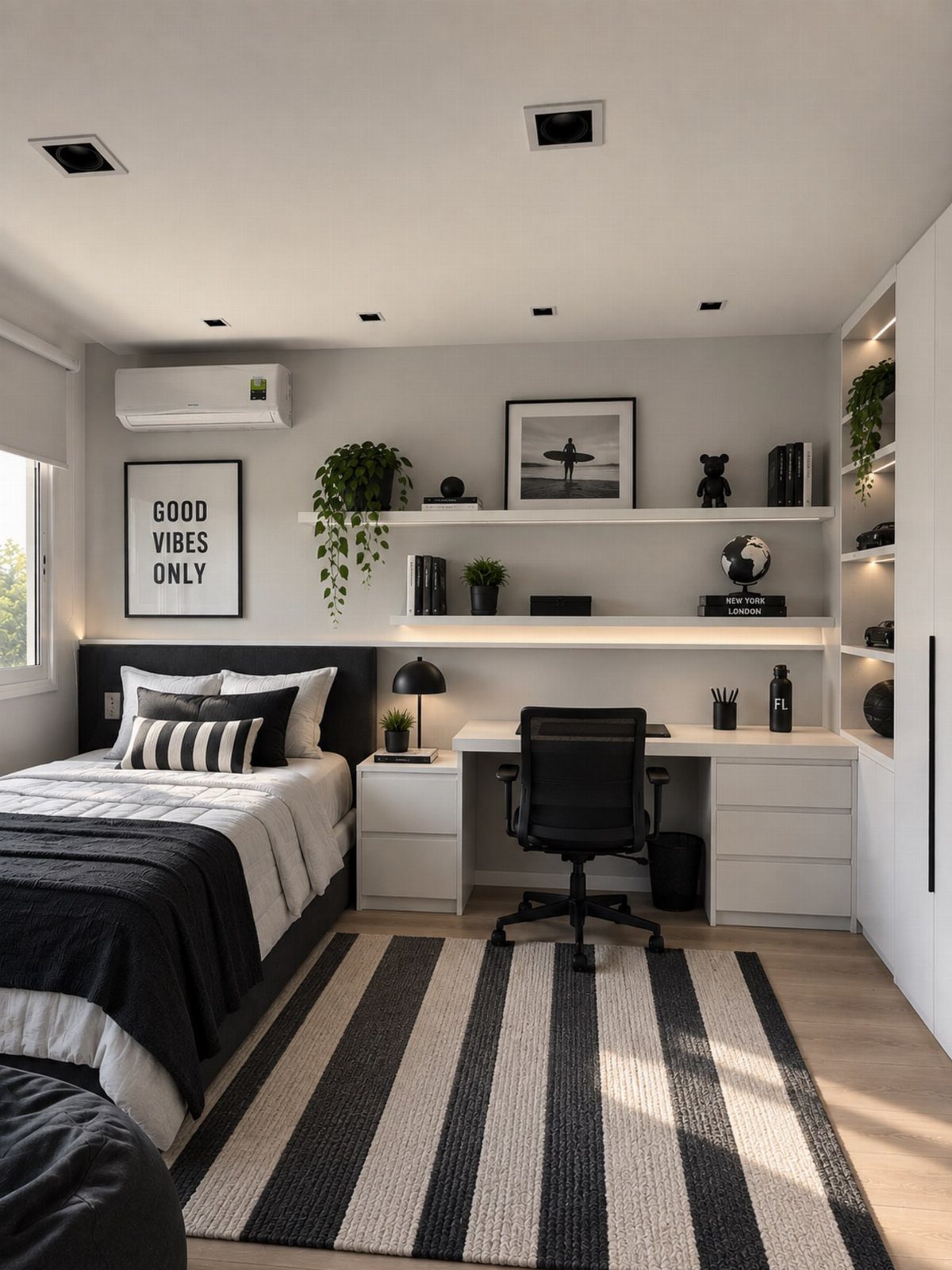
Stay in one color family, such as light gray, and the walls can hold quiet variety instead of a single flat tone.
Light gray walls with white furniture keep the room calm, and black-and-white bedding and a striped rug supply the contrast.
If you want more depth, paint the trim or one wall a shade or two darker than the rest. Gray can lean cold, so test it beside your white furniture first; a warmer gray stops the room from feeling clinical.
6. Two-Tone Walls
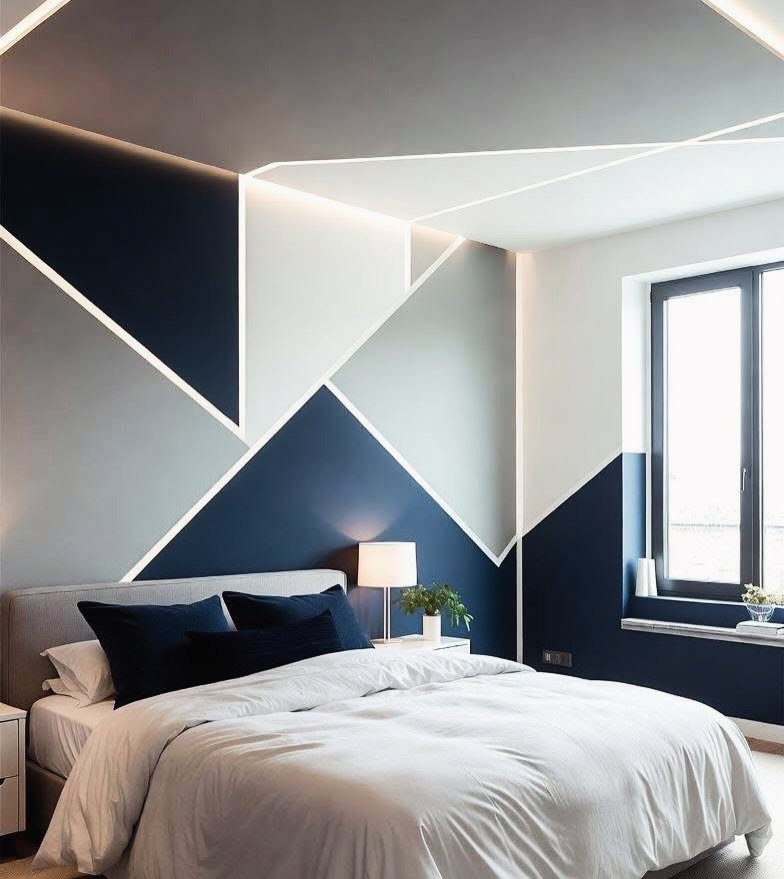
A navy and light gray split can mark out the sleeping zone, and geometric lines make the paint itself the decoration.
Navy sits behind and around the bed, with gray filling the rest, so the dark color frames where you sleep.
Painter’s tape is the real tool here. Press the edges down firmly, and pull the tape while the last coat is still slightly wet for cleaner lines.
Angled shapes take more patience than a straight half-wall, so I would begin with the simpler version if this is your first attempt.
7. Horizontal Striped Walls
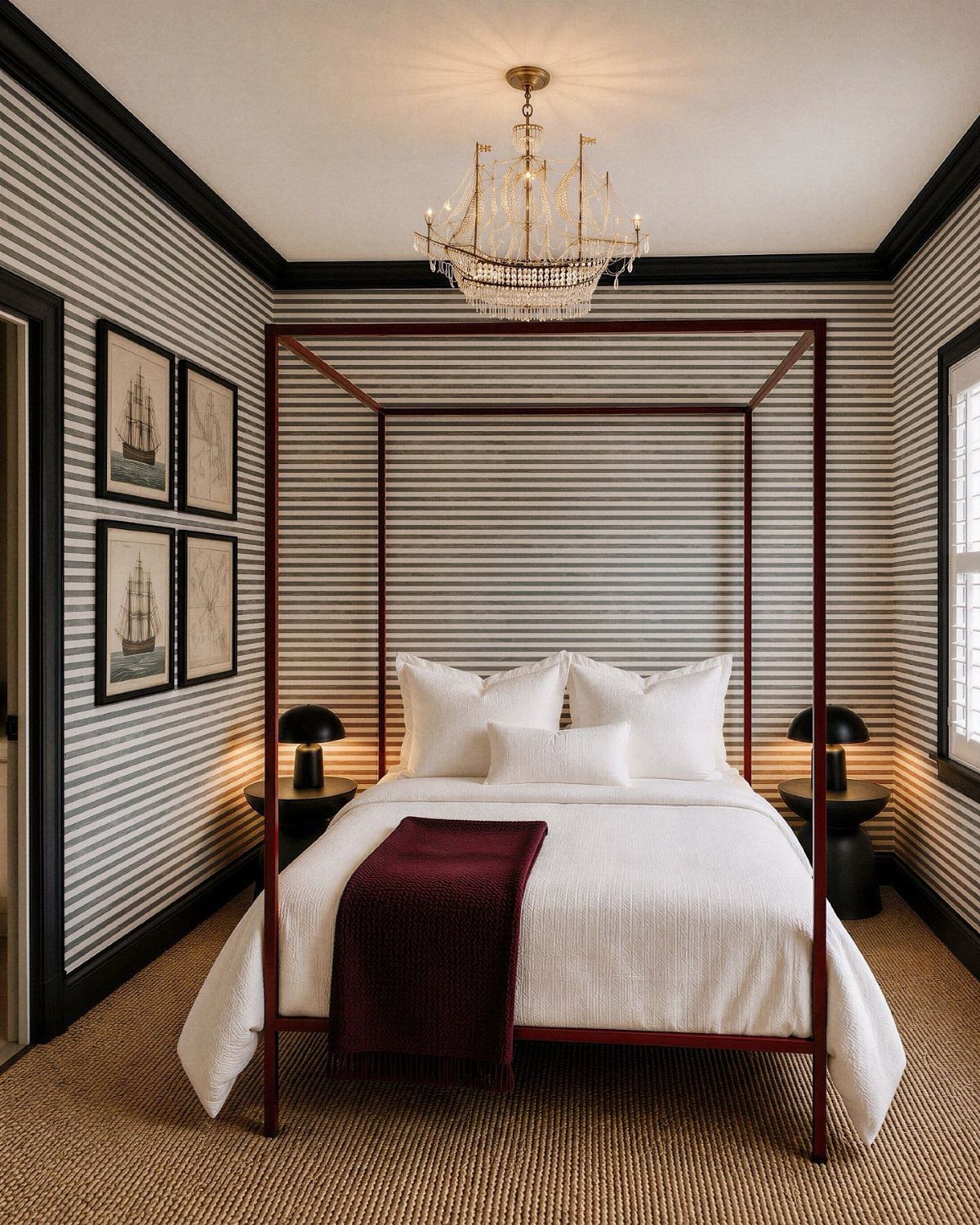
Black and white horizontal stripes make a compact bedroom feel bold, so I would use them only if you like a graphic, high-contrast look.
Black trim finishes the walls and gives the stripes a clean frame, and a red bed with white linens stands out against them.
Mark the stripes with a level and painter’s tape, then press the edges down firmly before rolling.
Paint the white first, let it dry, then tape over it for the black. Keep every stripe the same width, because uneven ones show right away.
8. Painted Ceiling Feature
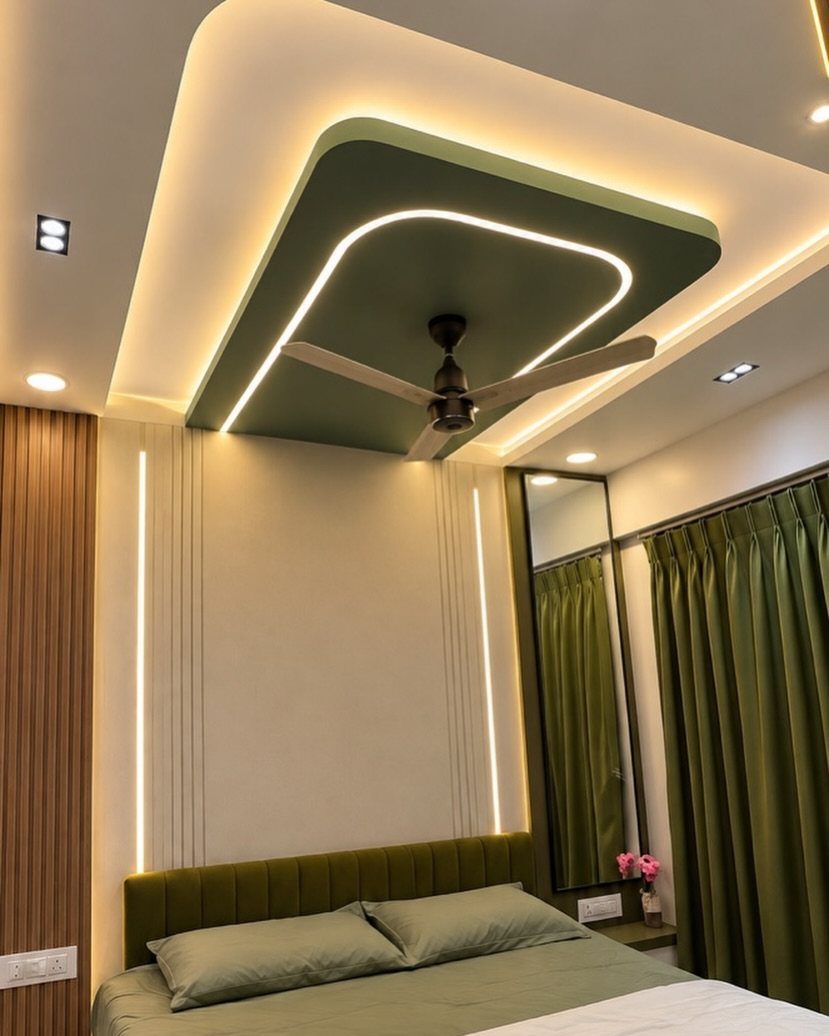
A painted ceiling puts color overhead, where it doesn’t crowd a tight bedroom. Green inside a recessed ceiling panel gives the space a focal point without touching the walls.
Matching the headboard and curtains to that green ties the room together, and a large mirror helps keep it from feeling closed in.
LED strip lighting along the recess makes the color glow at night, and I like that as an add-on once the paint is dry.
Use a roller with an extension pole, and cut in the edges of the recess with a brush first. Expect some neck strain, so work in short sessions.
Finishing Touches Matter
Sheen decides how much light a small bedroom bounces back, and matte is the finish that swallows it.
Satin or semi-gloss reflects light around the room and makes the space feel more open, so a satin or semi-gloss ceiling can add to the sense of height.
Matte walls with satin or semi-gloss trim in the same color is a combination I like.
The matched color holds the room together, and the sheen shift gives the trim enough contrast to register as intentional. Snowbound from Sherwin Williams is a good neutral for this.
Clutter works against all of that paint. Smart storage, such as bins under the bed or shelves that go up instead of out, keeps surfaces clear so the room stays spacious.
Furniture Placement
Furniture placement changes how big a small bedroom feels as much as paint does. Choose a bed with visible legs, because light that travels underneath the frame makes the floor look longer.
Push the largest pieces, like the dresser and wardrobe, against the walls. That leaves the center open for walking and keeps the lines of the room unbroken.
If your walls are warm neutrals, mix textures so the room doesn’t go flat: linen bedding, a woven rug, and a mix of matte and satin finishes. Spend extra on primer and a durable finish rather than on pricey paint.
Frequently Asked Questions
What are some good paint ideas for a small master bedroom?
Start with a warm beige on the walls and cream bedding; both bounce light around and blur the corners, so the room looks wider than it is.
If you want drama, paint just the wall behind the bed dark gray: one gallon covers it, and the bed gets a backdrop.
Check the undertone before you buy, because a beige that leans gray can go cold under lamplight, while yellow or pink undertones stay warm.
Is it a good idea to have an accent wall in a small bedroom?
Yes, as long as you keep it to one wall and leave the other three light. A single dark gallon gives the room a focal point without cutting into its brightness.
Should I paint the ceiling a different color in a small bedroom?
Yes, a painted ceiling can add interest overhead, where color won’t crowd the room. A satin or semi-gloss finish on the ceiling bounces back more light, which can make the room feel taller.





