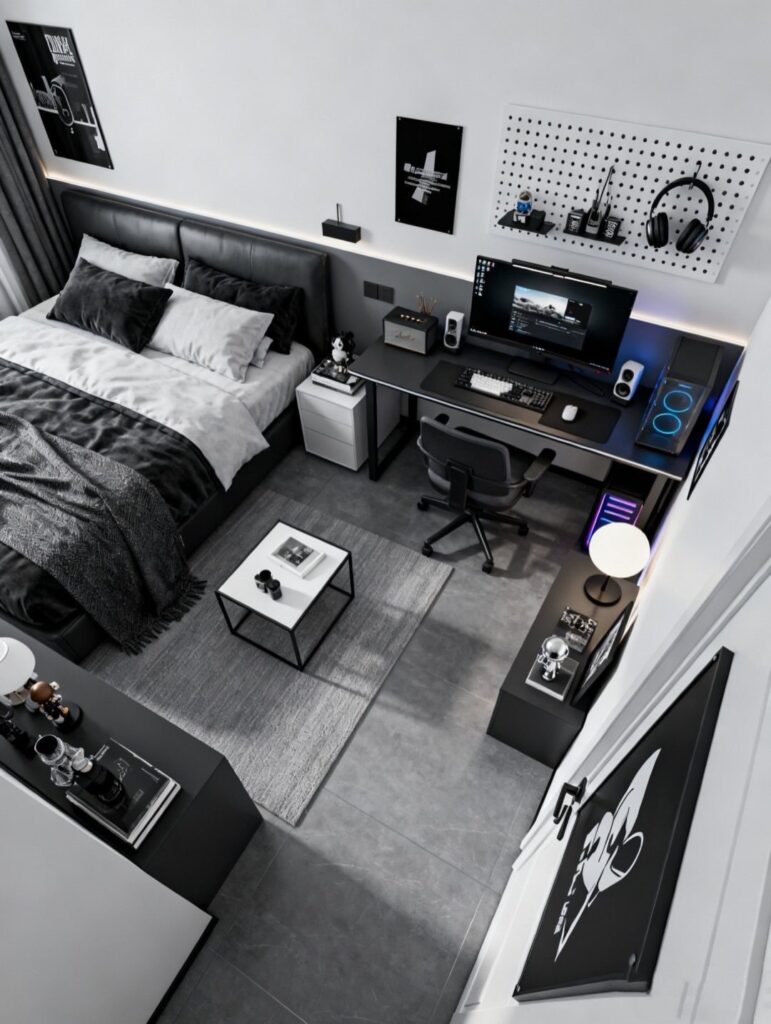
The ideas run from a slim desk by the door to a loft bed with a full workspace underneath and a floating desk that takes up no floor space at all.
What picks yours is how much floor the room has to give: with none to spare, a closet office or loft bed with under-desk goes vertical; with a corner or alcove, a compact desk or L-shaped setup fits there.
Lease terms and ceiling clearance decide how far you can go, since permanent installs need landlord approval and a loft bed needs at least 3 feet above the mattress.
1. Desk in an Alcove
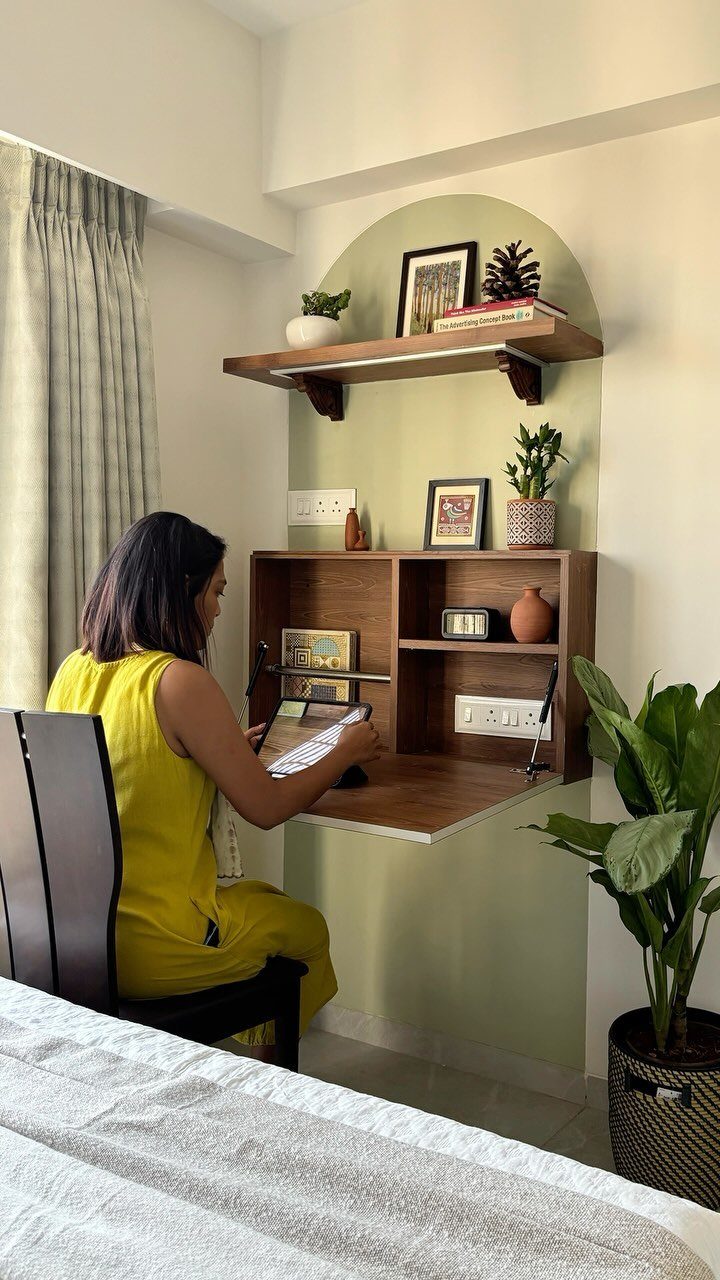
An alcove already has 3 walls, so a desk dropped into it needs almost no furniture beyond the top itself. A built-in desk with a shelf or two above it keeps papers and a plant off the work surface.
Paint the inside a different color from the rest of the room, as the green does here. The recess then reads as its own small zone, and the laptop can close at night without the work following you into bed.
I would keep the shelving shallow so your elbows have room.
2. Built-In Storage and Desk
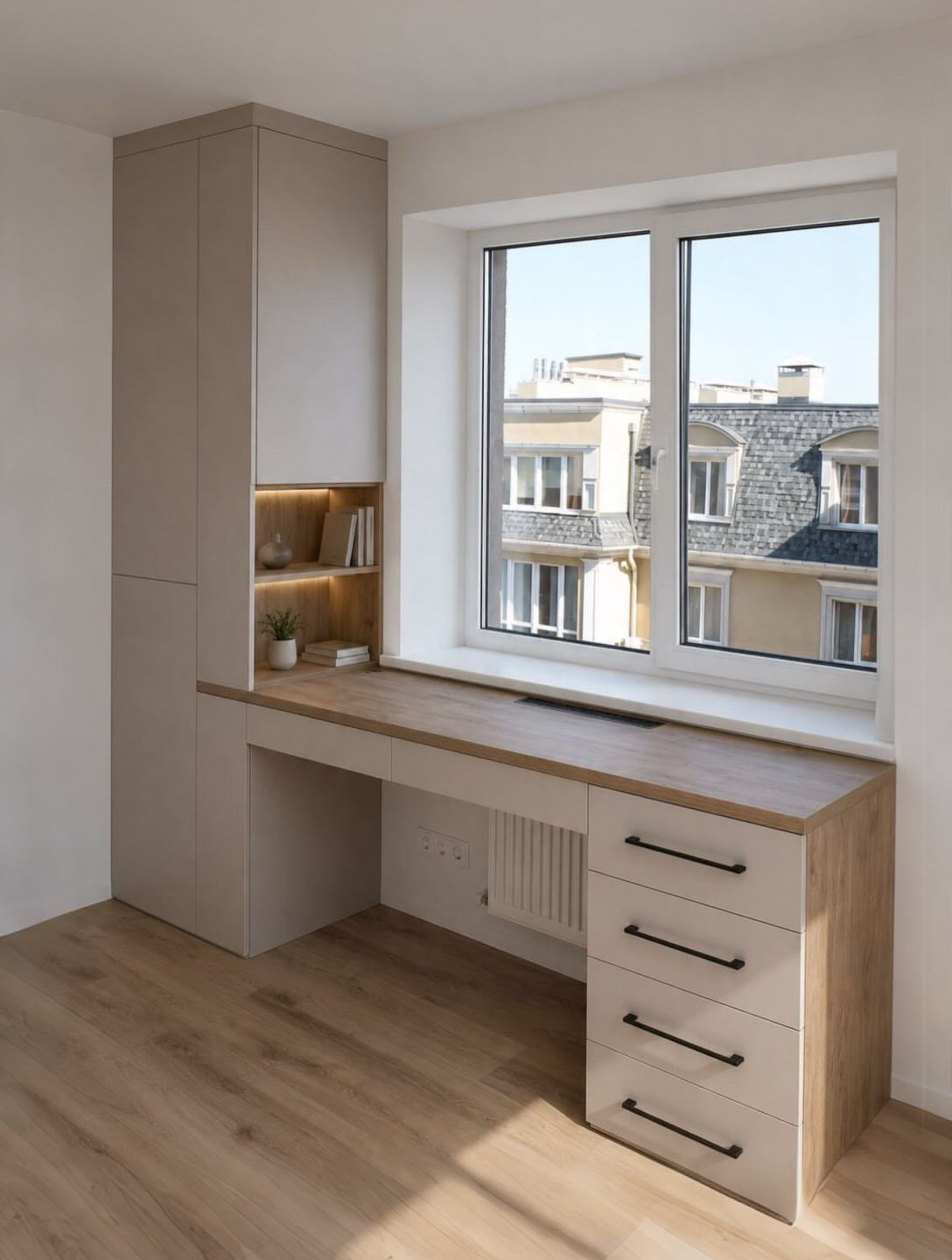
Drawers below and shelving above are what make a built-in desk earn its footprint in a bedroom. Cables, chargers and paperwork vanish into the drawers, so the room still reads as a bedroom once the workday ends.
Placing it under a window, as here, gives you daylight at the desk and keeps the walls free for the bed. A light finish keeps a tall unit from crowding tight quarters.
Built-ins cost more and take longer than loose furniture, so renters should check what a lease allows before committing.
3. Slim Desk
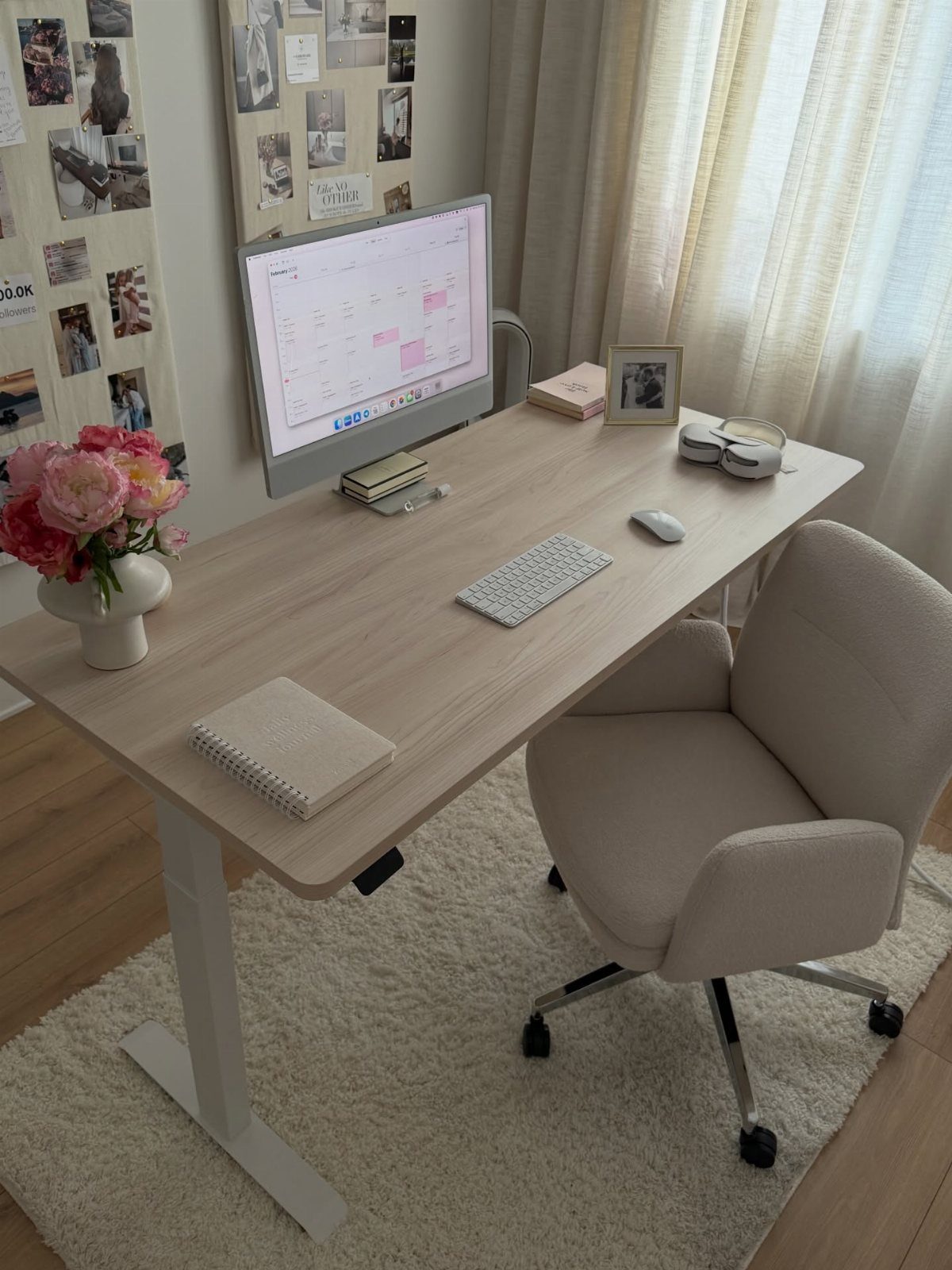
In a bedroom, that saved depth is the walkway you keep to the bed.
Light wood and a pale chair keep the piece visually quiet. I like a rug under the chair too: it marks the work zone and softens the floor.
A mood board above the desk adds personality without using any desktop space. Skip deep drawers; they defeat the purpose.
4. Floating Desk
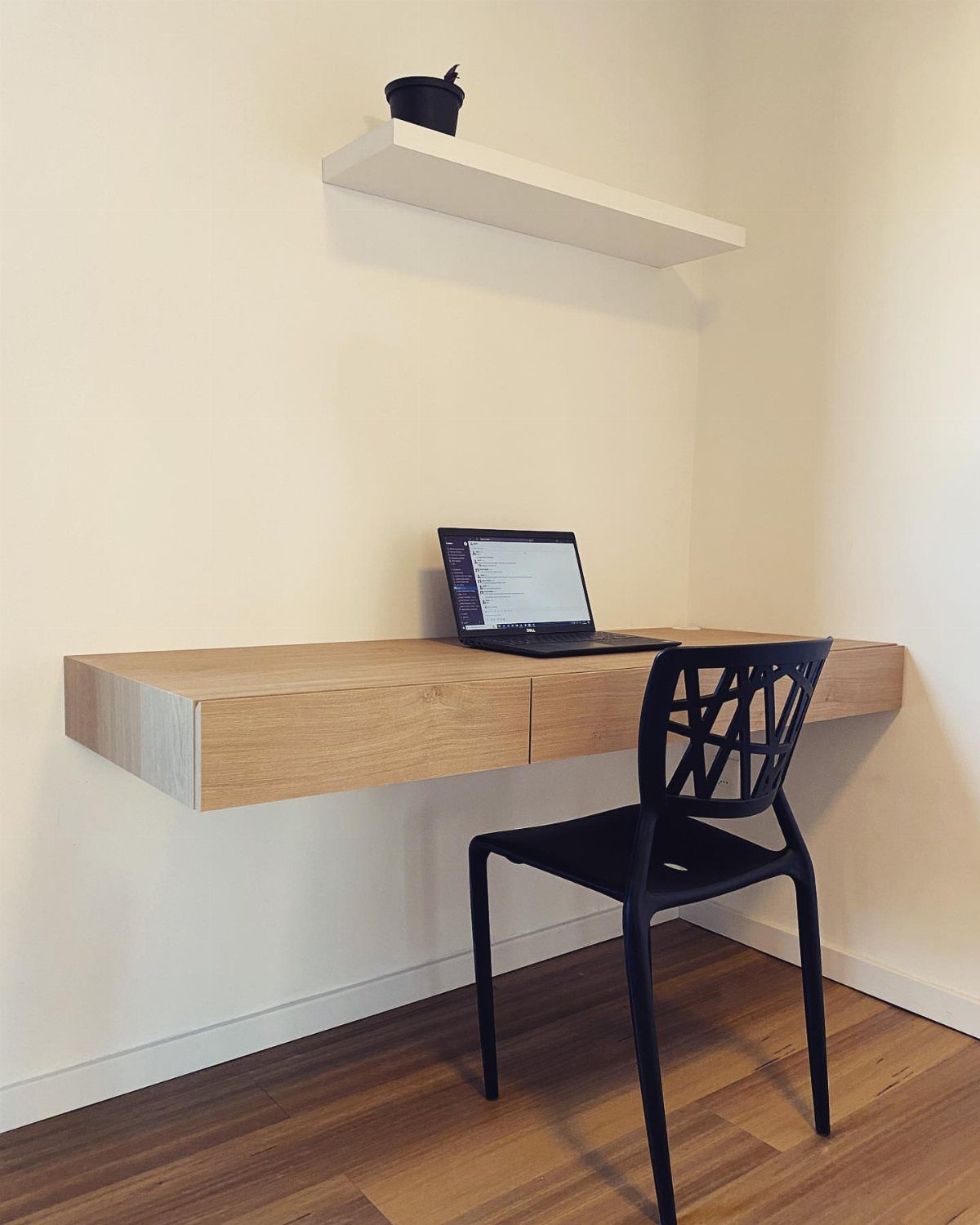
A floating desk is fastened to the wall with nothing beneath it, so the floor stays open and the chair tucks fully away. That visual gap makes the bedroom feel larger than a legged desk of the same size.
A single shallow drawer, as on this one, holds the daily basics. Add a floating shelf above for books and a lamp.
Mount it into studs, since a laptop, a person leaning on it and a mug add up. Hold a level against it before drilling.
5. Closet Office
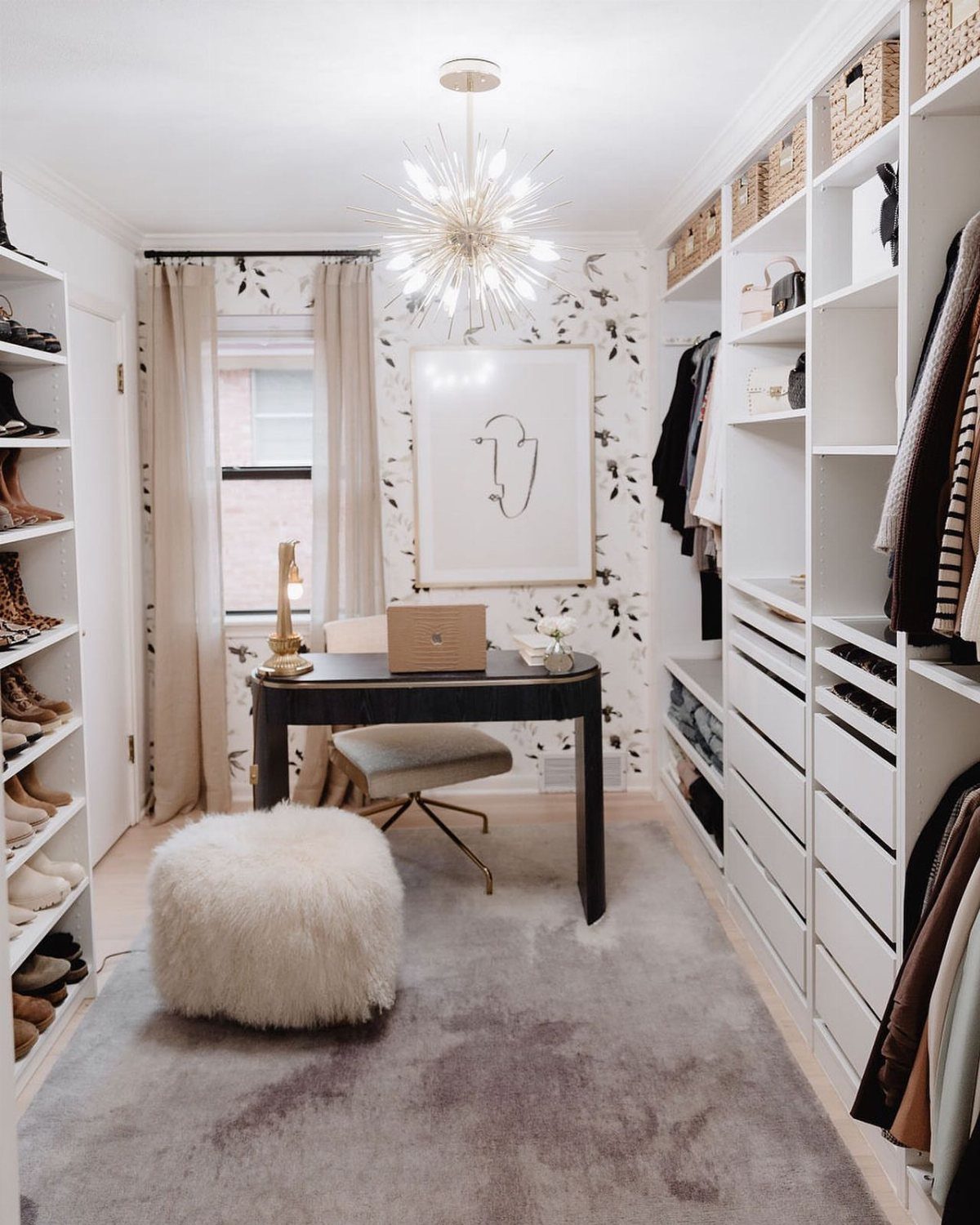
Walk-in closets often hold more floor than the clothes need, and a desk along one wall turns the spare section into an office with a door you can shut. Clothes stay on one side, work on the other.
Shelving above the desk takes supplies vertically. A rug and a small light fixture give the space its own identity instead of reading as storage.
I would pick a compact desk and a chair that slides fully under it. Closets run tight, and a rolling chair that blocks the door gets old fast.
6. Desk by the Door
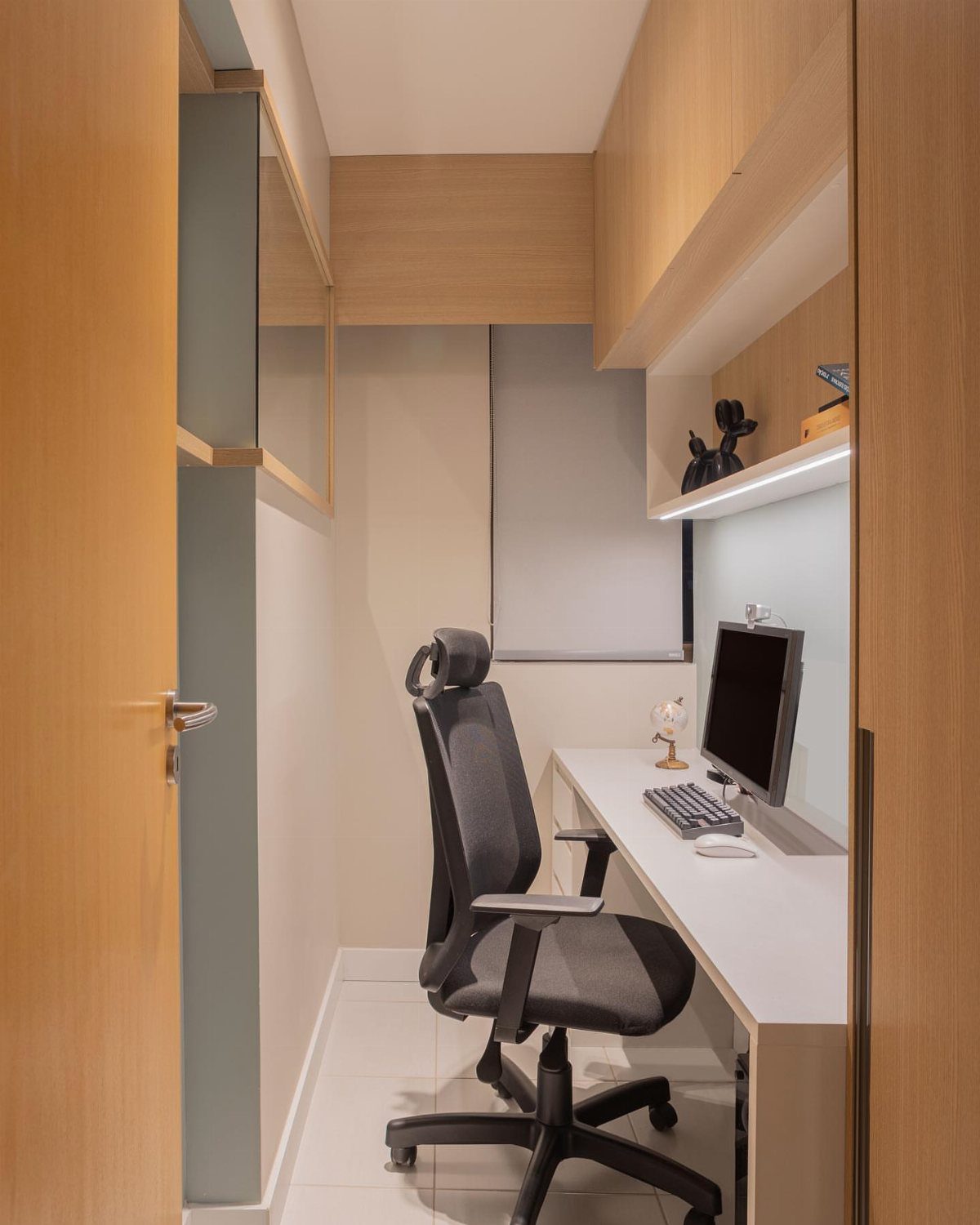
Wall space beside a door usually goes unused, which makes it a good home for a compact desk.
Slide a white desk into the gap between the door and the cabinetry, and the corner becomes an office without losing any bed or dresser wall.
Choose a desk that matches the surrounding color so it blends in rather than adding clutter. A chair that tucks fully under keeps the door swinging clear.
Check the door’s swing before buying; an open door should not hit the chair.
7. Minimalist Workspace
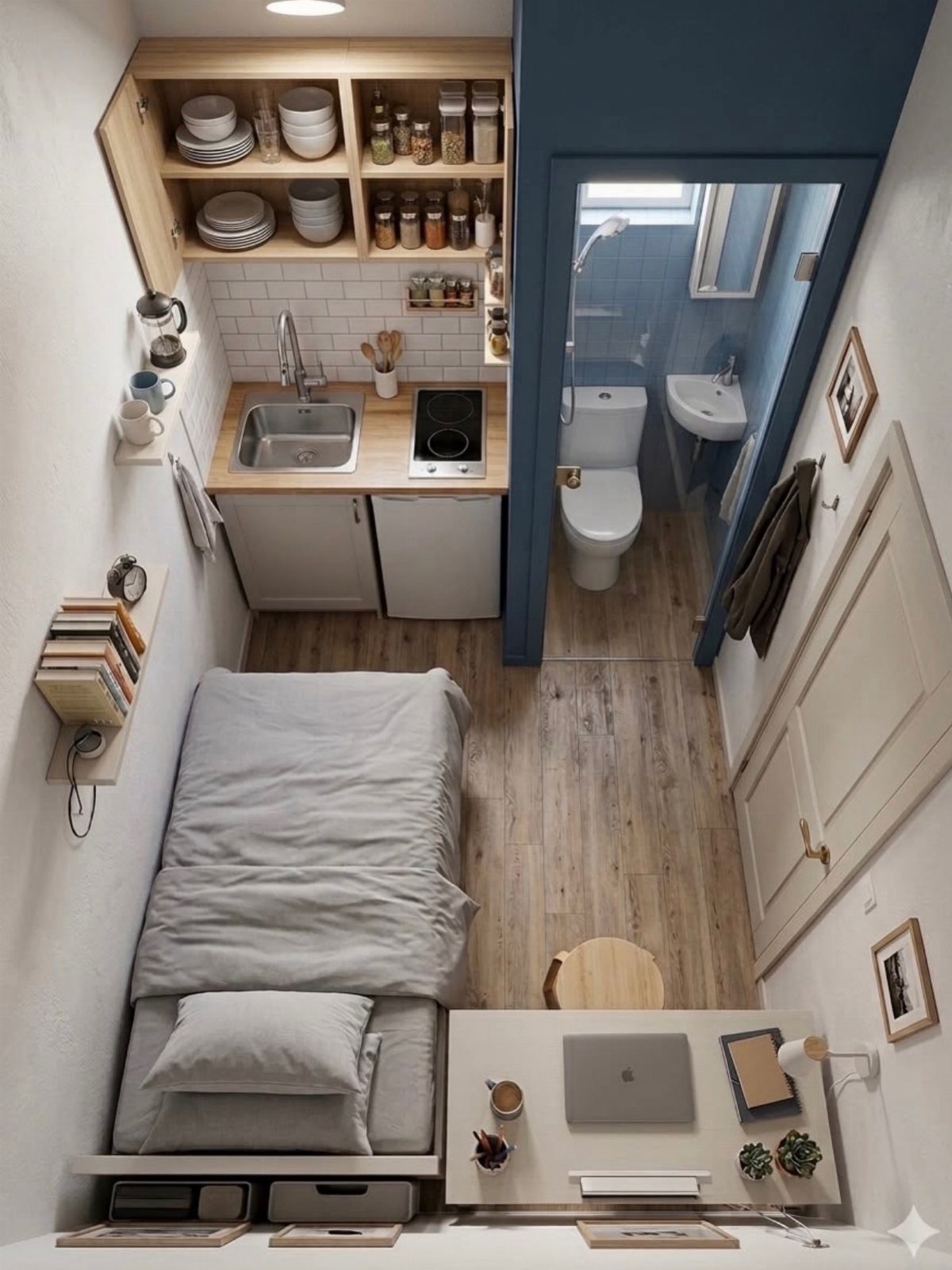
A small desk with nothing on it but a laptop is enough workspace for a studio, and it leaves the floor open for the bed and kitchenette. Fewer objects also mean fewer things competing with your sleep zone.
Keep the surface to the laptop and one small item. Everything else goes in a drawer or a basket out of sight.
I would clear the desk at the end of each day. It takes a minute, and the room stops feeling like an office after dark.
8. Create a Gallery Wall
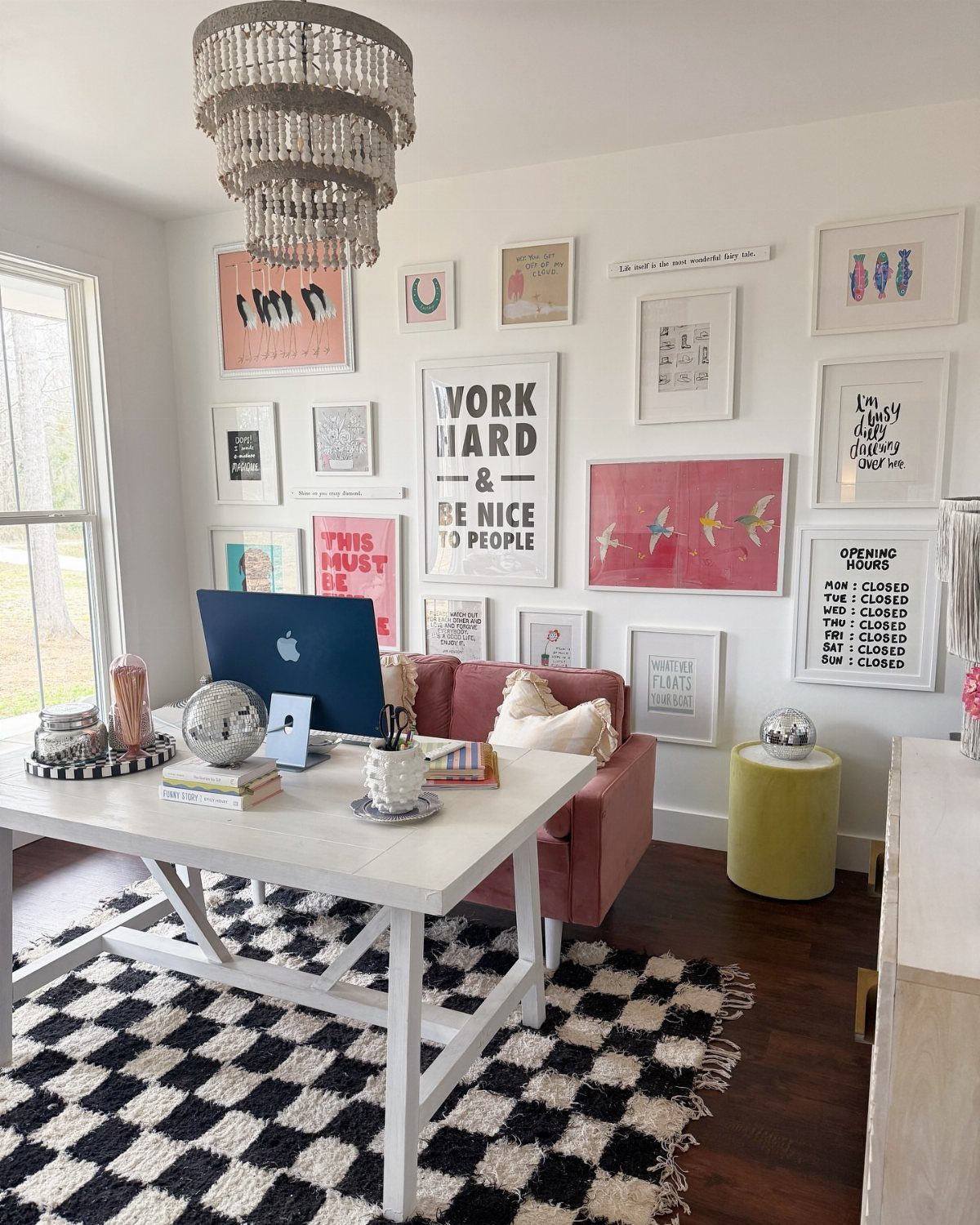
Framed prints and quotes stacked above a white desk give a work corner personality without taking a single inch of desktop. Because the wall does the decorating, the desk itself can stay clear for the computer.
Mix frame sizes but keep one color family so the cluster reads as a plan, not clutter. Lay the frames on the floor first and shuffle them until the spacing feels even.
Pick one line that motivates you, as the quote here does, and make it the anchor piece.
9. Desk Lamp
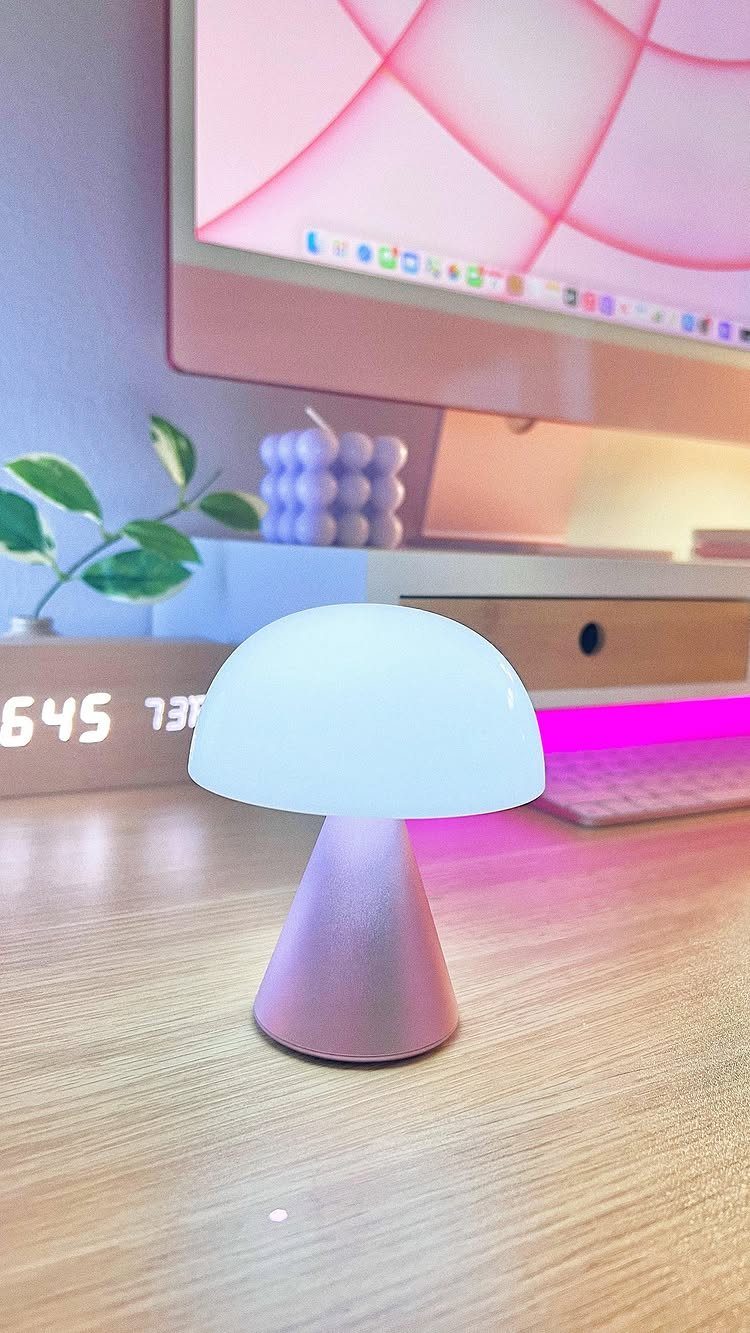
A small lamp beside the monitor adds a soft glow that a bright overhead light cannot, and it is the cheapest way to make a desk feel like part of a bedroom.
A rounded shape, like this mushroom one, looks friendly on light wood.
Choose a compact base so it does not eat desk space. A warm bulb is easier on the eyes in the evening.
I like a lamp that can be switched off with one touch when the workday ends.
10. Console Bed
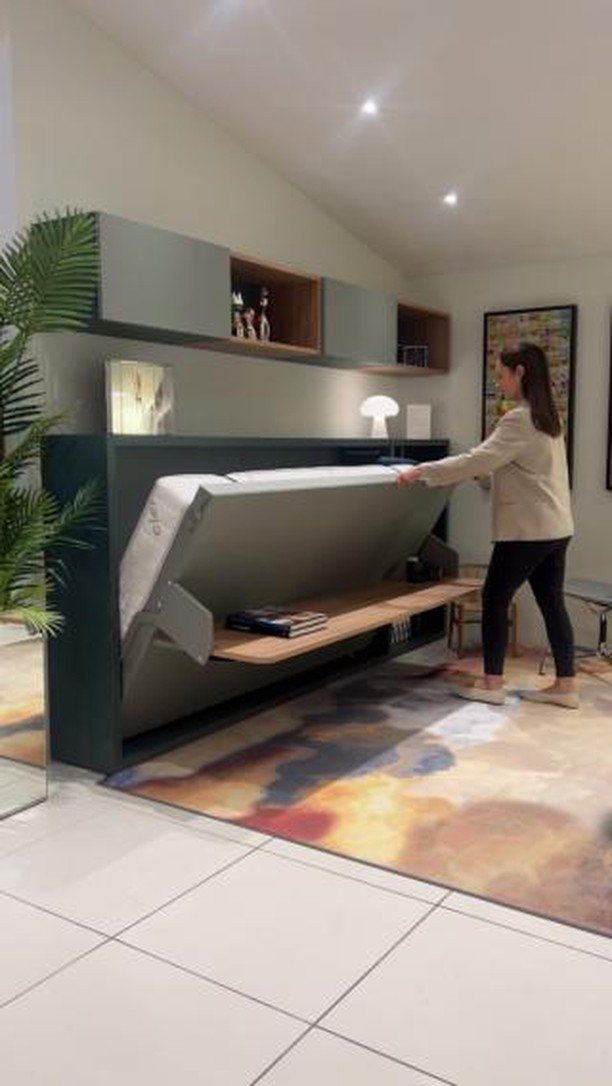
A console bed folds down from a unit that looks like furniture by day, so the floor stays free for work and the room can read as an office until bedtime.
That setup claims less floor than any other option here.
Leave clear floor in front of the unit for the mattress to lower. Check that the rug, plant and any shelving sit outside that swing.
Expect a bigger purchase than a standard bed, so measure twice before ordering.
11. Corner L-Shaped Desk
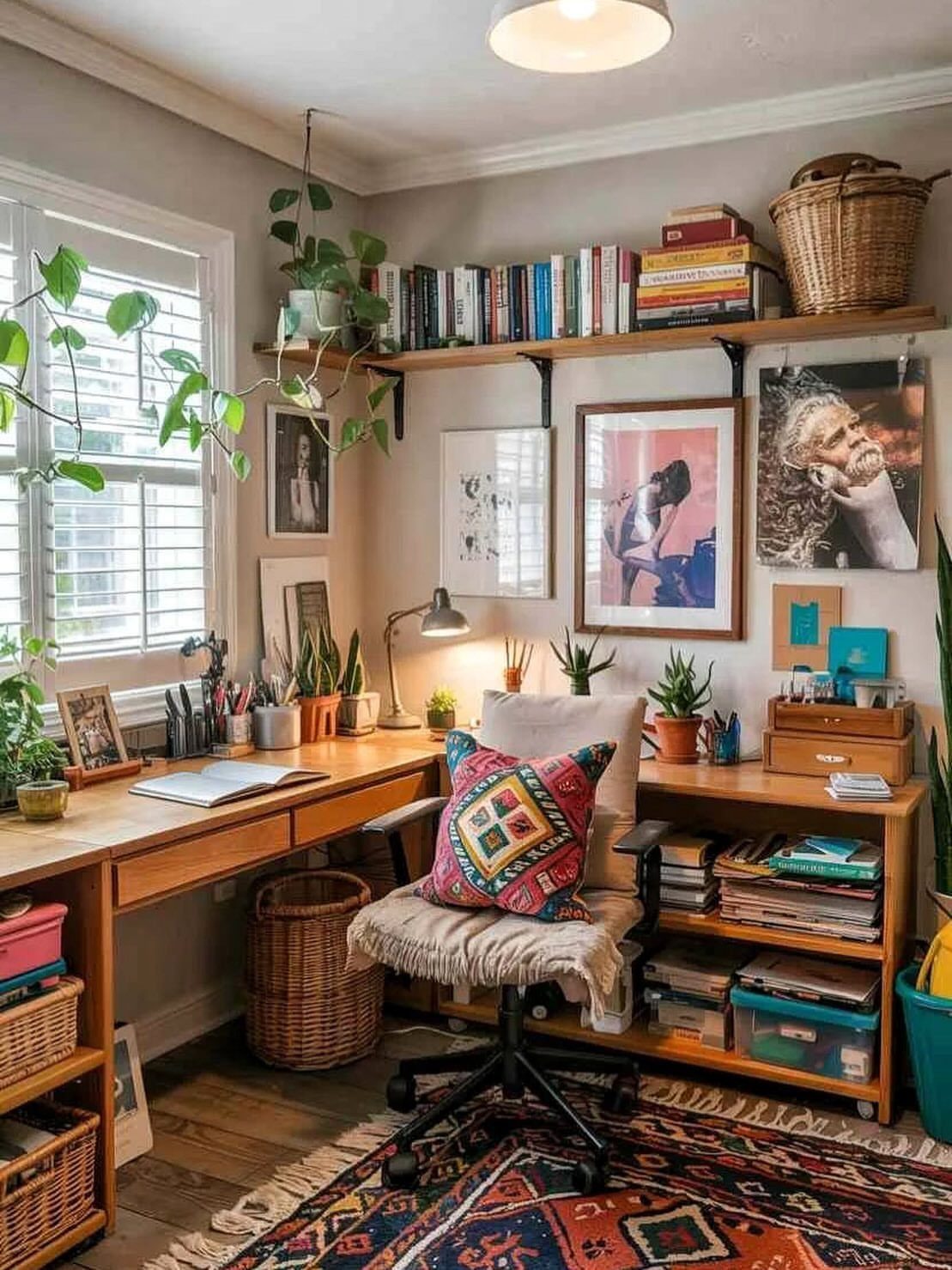
An L-shaped desk uses a corner that otherwise sits empty, giving you two work surfaces in the footprint of one tight spot. Put the laptop on one arm and papers or a printer on the other.
Wall-mounted shelving above the desk keeps books off the surface, and art and plants fill the wall above them.
Measure both walls first. An L desk that sticks out too far will crowd the bed.
12. Window-Side Desk Setup
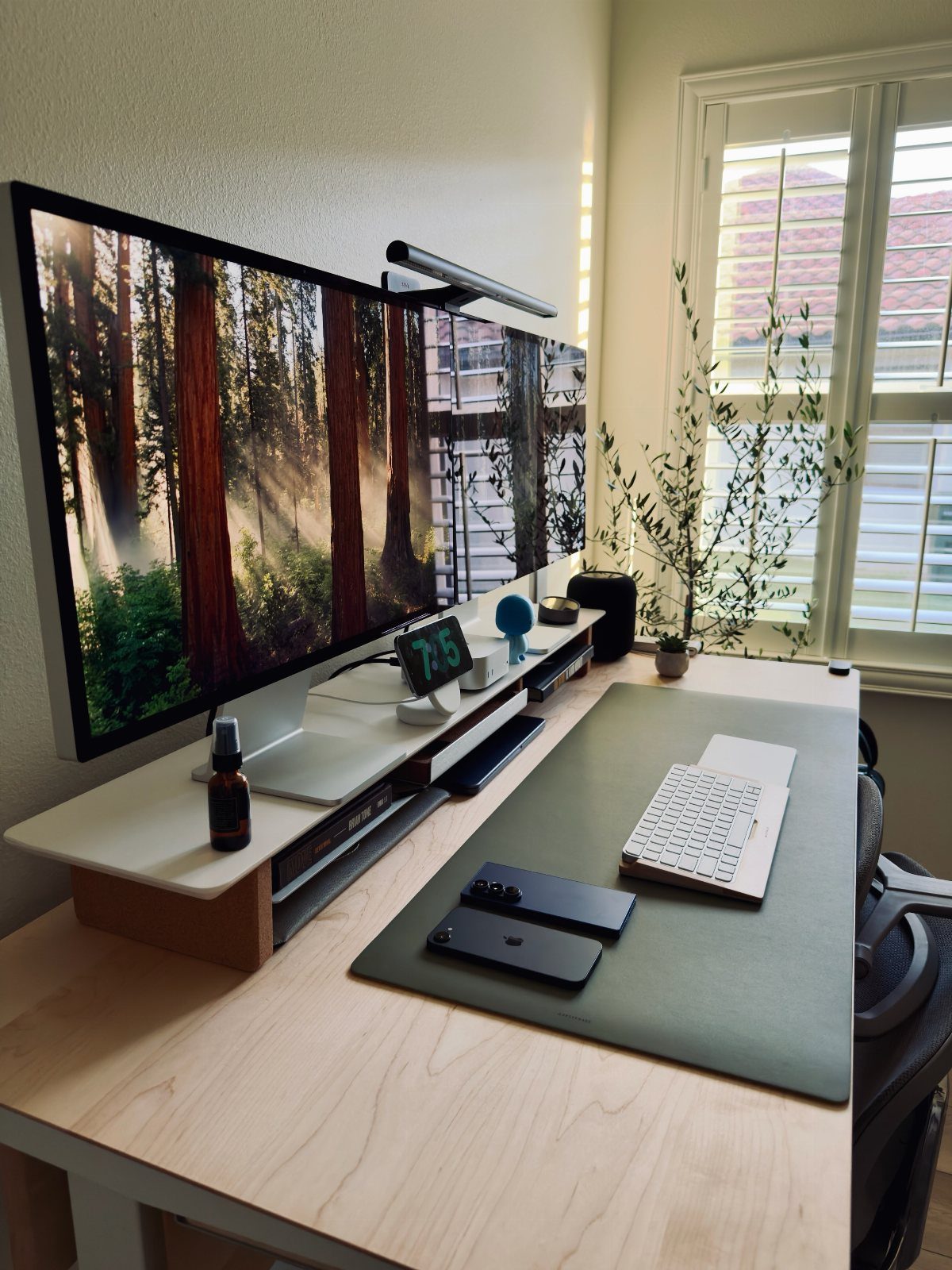
Setting a desk right against a window gives you daylight for free, so you can leave the overhead light off during the day. Shutters like these let you angle the slats to cut glare on a large monitor.
Place the screen so the window sits beside it, not behind it, to avoid reflections. A small plant on the desk suits the spot.
A light wood top keeps the corner bright. I would keep cords tidy, since the window wall is usually in view from the bed.
13. Lap Desk in Bed
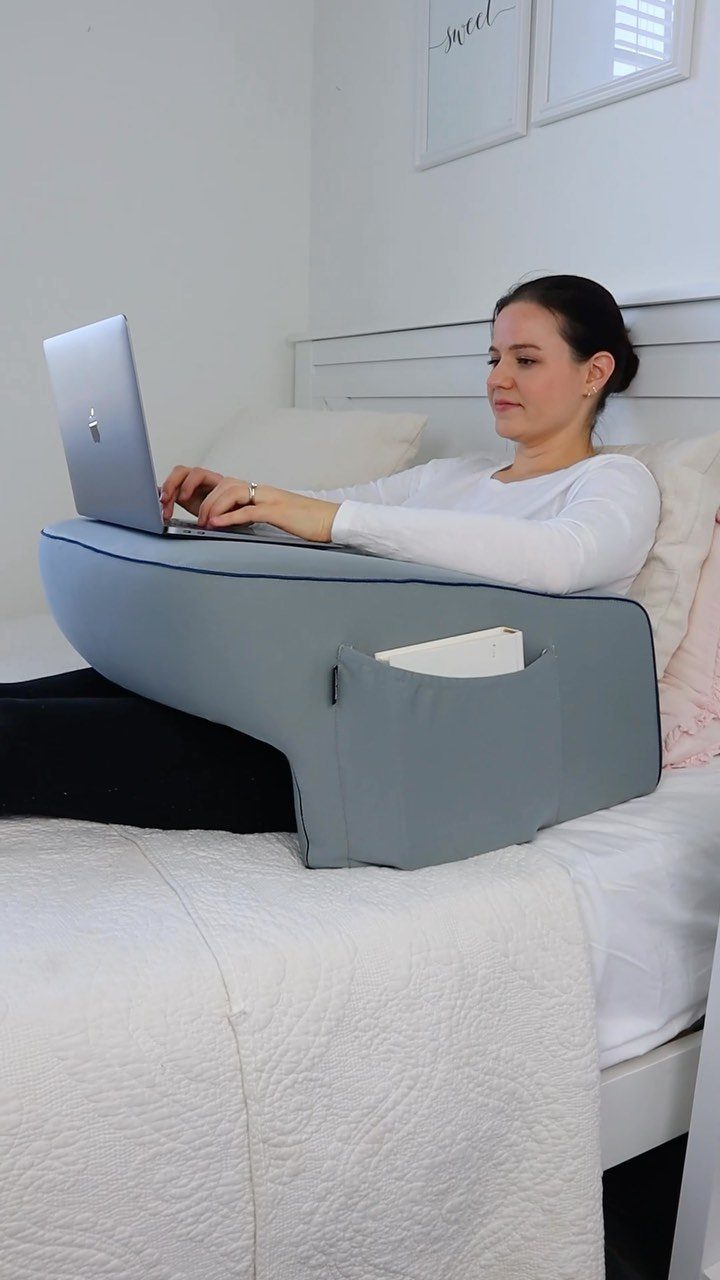
A fabric lap desk turns the bed into a workspace you can put away in seconds. Slide it off at night and the bed is just a bed again, with no desk taking up floor.
Pick one with a soft, cushioned underside so it sits steady on your legs. Prop a pillow behind your lower back, since bedding gives no support on its own.
I would keep it for short sessions, because a long workday from a mattress gets uncomfortable fast.
14. Studio Bedroom and Office Layout
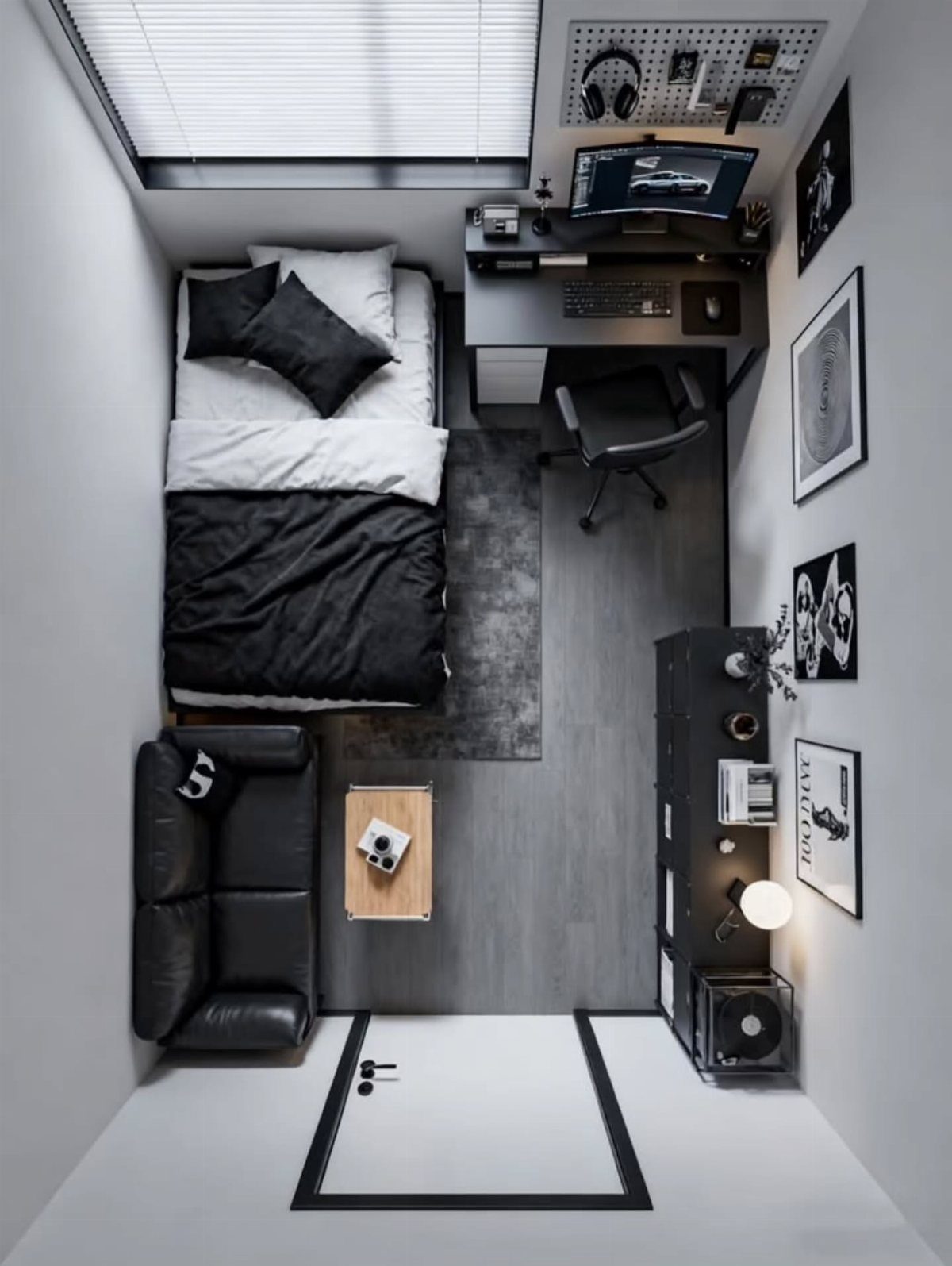
Zoning does the work in a studio: the bed gets one side, the sofa and coffee table form a sitting area, and the computer desk holds its own spot along a wall.
A black storage unit keeps the clutter closed away.
Keep the palette tight, so the black, wood and white read as one plan. Set the desk where you will not face the bed while you work.
A small sofa is worth the floor space, since it gives the room a place to sit that is not the mattress.
No matter how small your bedroom, establish zones for sleeping, reading, working, you name it. A striking wallpaper, paint color or decorative accent can make the smallest of spaces feel like a dedicated home office.
15. Loft Bed with Under-Desk
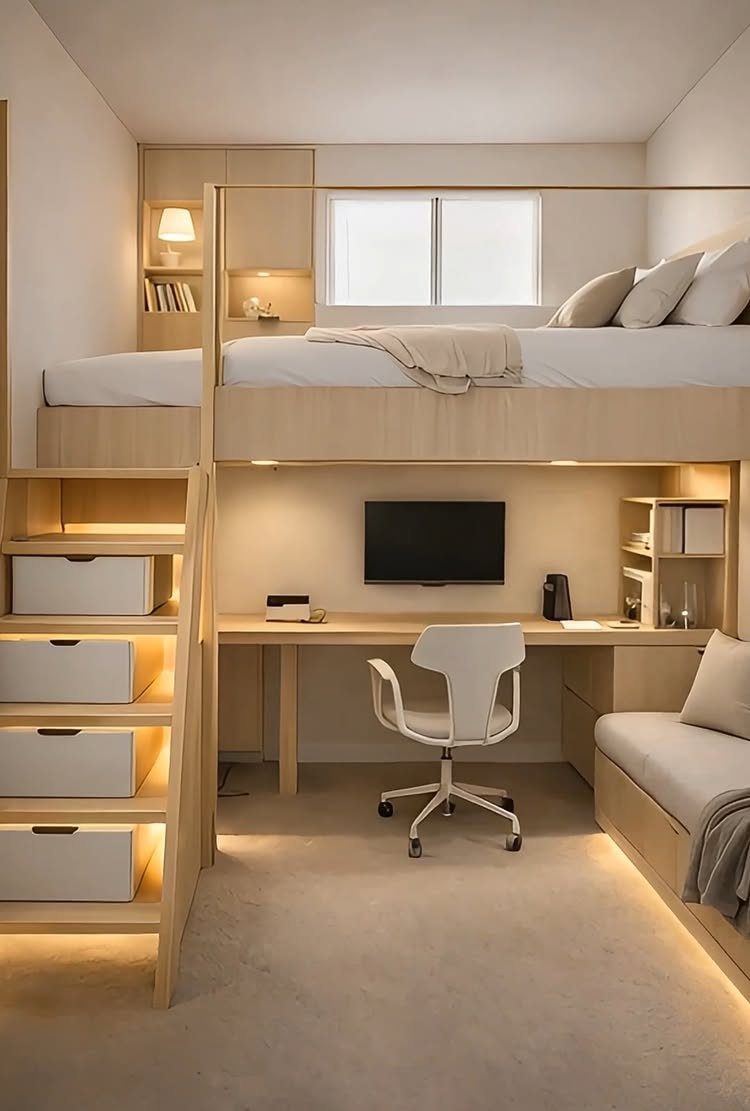
Raising the bed leaves the floor below free for a full desk, monitor and task chair, which is how you get a real office without adding a square foot. A small sofa fits under there too.
Add a lamp under the bed, because that zone gets little daylight.
Check ceiling height before buying, since you need clearance above the mattress as well as headroom at the desk. A loft also takes more work to assemble than a standard bed.
16. Bed and Desk with Bean Bag
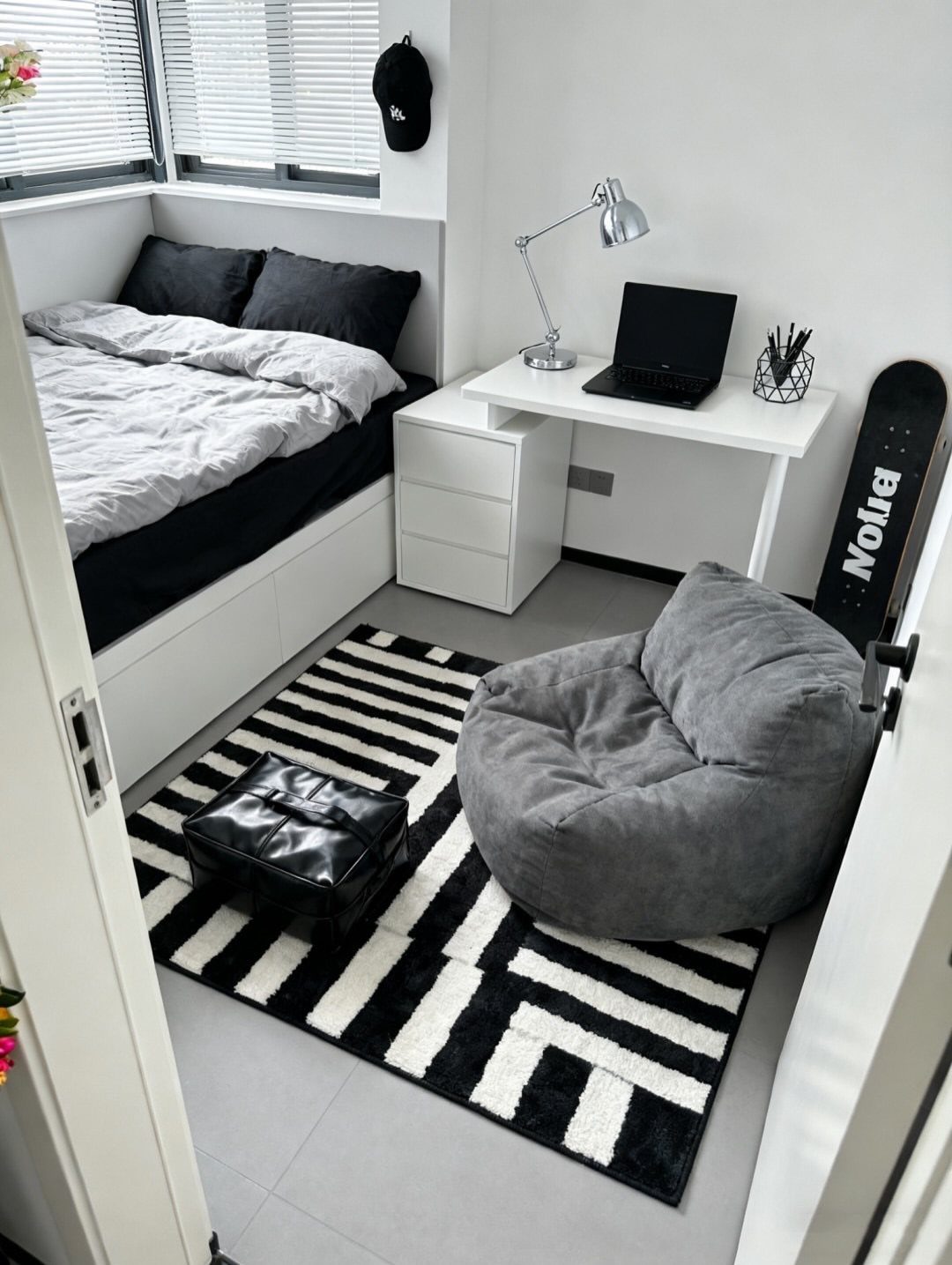
A bean bag gives a bedroom office a second place to sit that is not the desk chair or the bed.
It lets you read or take a call without sinking into the mattress, so the bed stays a sleep spot.
Choose a low one in a neutral tone so it blends with the bedding. A patterned rug underneath marks the lounge corner and keeps the bag from sliding.
I would pick a smaller bean bag in a tight room, so it never blocks the path to the desk.
Maximize Natural Light
Daylight does more than brighten a room. It can lift your mood, ease eyestrain and make a small space feel more open, so the window wall is the first place I’d look for a work spot.
Most bedrooms leave the area in front of the window empty.
A small desk and a comfortable chair there put that dead space to use, and you get something to look at when your eyes need a break from the screen.
If the window is wide, a double desk can seat two people side by side.
Maintain Work-Life Balance
A workspace used only for work keeps your focus where it belongs and cuts down on distractions. Keep laptop work, bills and hobbies at that spot, and leave the rest of the room for rest.
Set it up so your body doesn’t pay for it. A proper chair, a desk lamp that doesn’t cast screen glare, and a monitor positioned so your neck stays neutral all matter more than the desk itself.
Plain desks help the separation. The fewer extras and the less bulk, the easier it is to feel the workday end, which matters most in a smaller bedroom.
Add some storage and a planner so tasks and supplies have a place that isn’t your nightstand.
Choose Functional Decor
Every piece in a small bedroom office should do a job. Furniture with more than one use gives you room to change your mind later, whether the bedroom stays an office for years or goes back to a plain bedroom.
Functional decor suits a small office bedroom combo, and it feels warm rather than cluttered.
If you can fill a whole wall, vertical storage holds clothes, accessories and office supplies together.
Frequently Asked Questions
What are some practical desk ideas for small bedrooms?
A floating desk and a slim desk are the two I’d start with, because both keep floor space open for the walk to the bed.
A wall-mounted desk lets the chair slide under completely, and a narrow profile keeps the footprint small. Anchor it into wall studs, because the combined load of a laptop, arm pressure and a full coffee cup matters.
How do I set up an office guest room?
Choose a compact desk and furniture that moves or tucks away, so guests get floor space when they visit. A Murphy bed in a cabinet frame keeps the space office-first until you pull the mattress down for guests.





