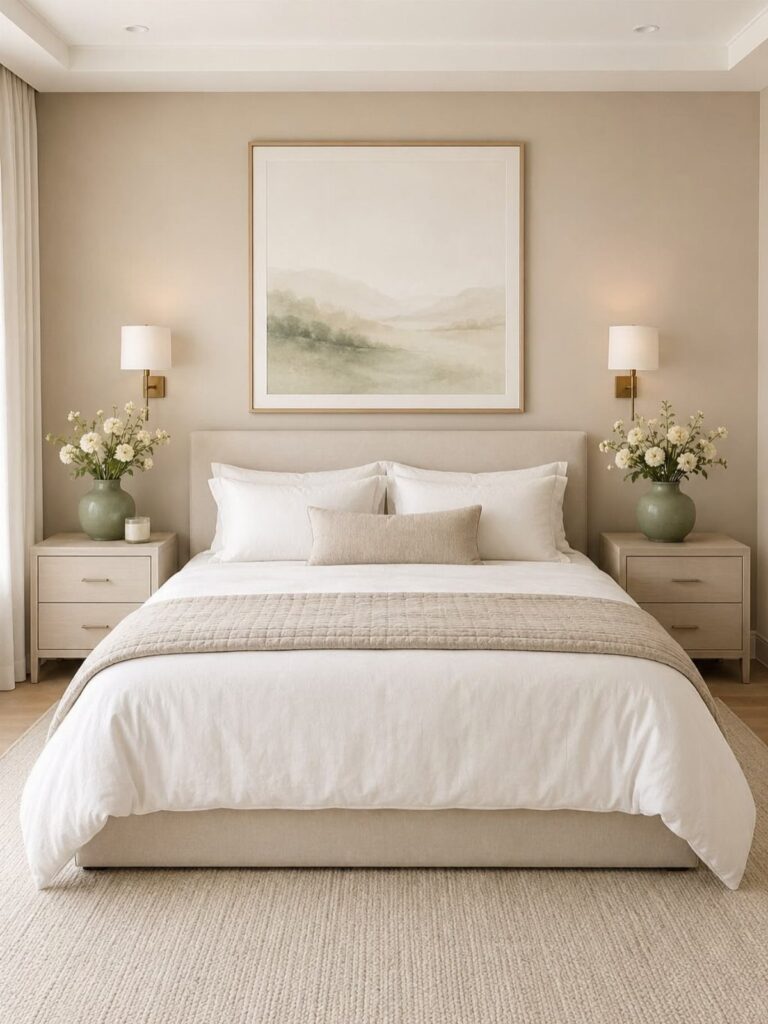
A single piece of framed wall art or a velvet ottoman sits at the low end of this list, while built-in wardrobes and intricate ceiling designs are construction work and cost the most.
Your room size and whether you rent should pick the idea: in a small bedroom, one bench or ottoman is plenty, and a renter is better off with plug-in lighting and peel-and-stick wallpaper than with built-ins or hardwired fixtures.
The cheaper version of most ideas here is the same trick, which is to put the money into one surface and keep everything else plain.
1. Luxury Lighting
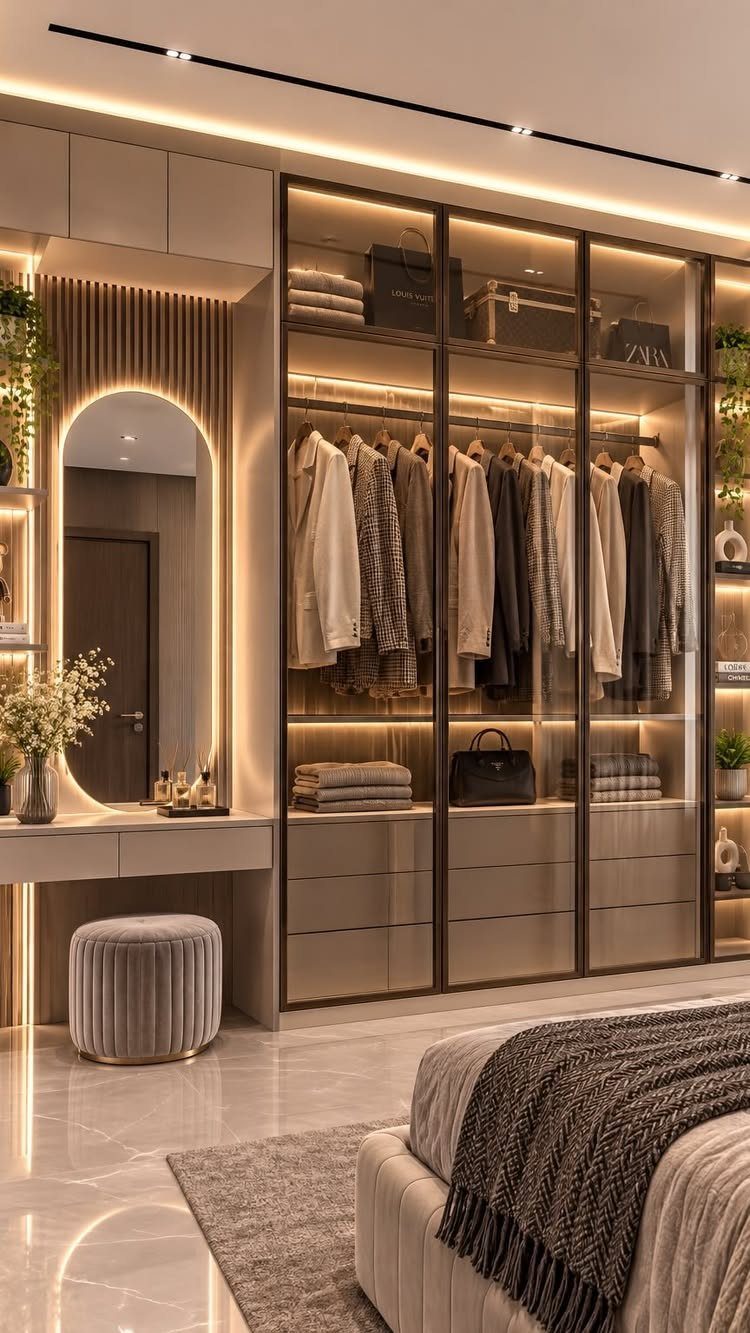
Light does more for a luxury bedroom than any single piece of furniture, and the cheapest way to get the look is LED strips tucked inside a wardrobe and behind a mirror.
Both give a soft glow with no visible fixture.
Warm white strips suit a bedroom best, since cool white turns a dressing corner clinical.
Put the strips on a dimmer so the same corner works early morning and at bedtime. Renters can use plug-in strips with adhesive backing.
Hardwiring is a job for an electrician.
2. Crisp White Neutral Bedding
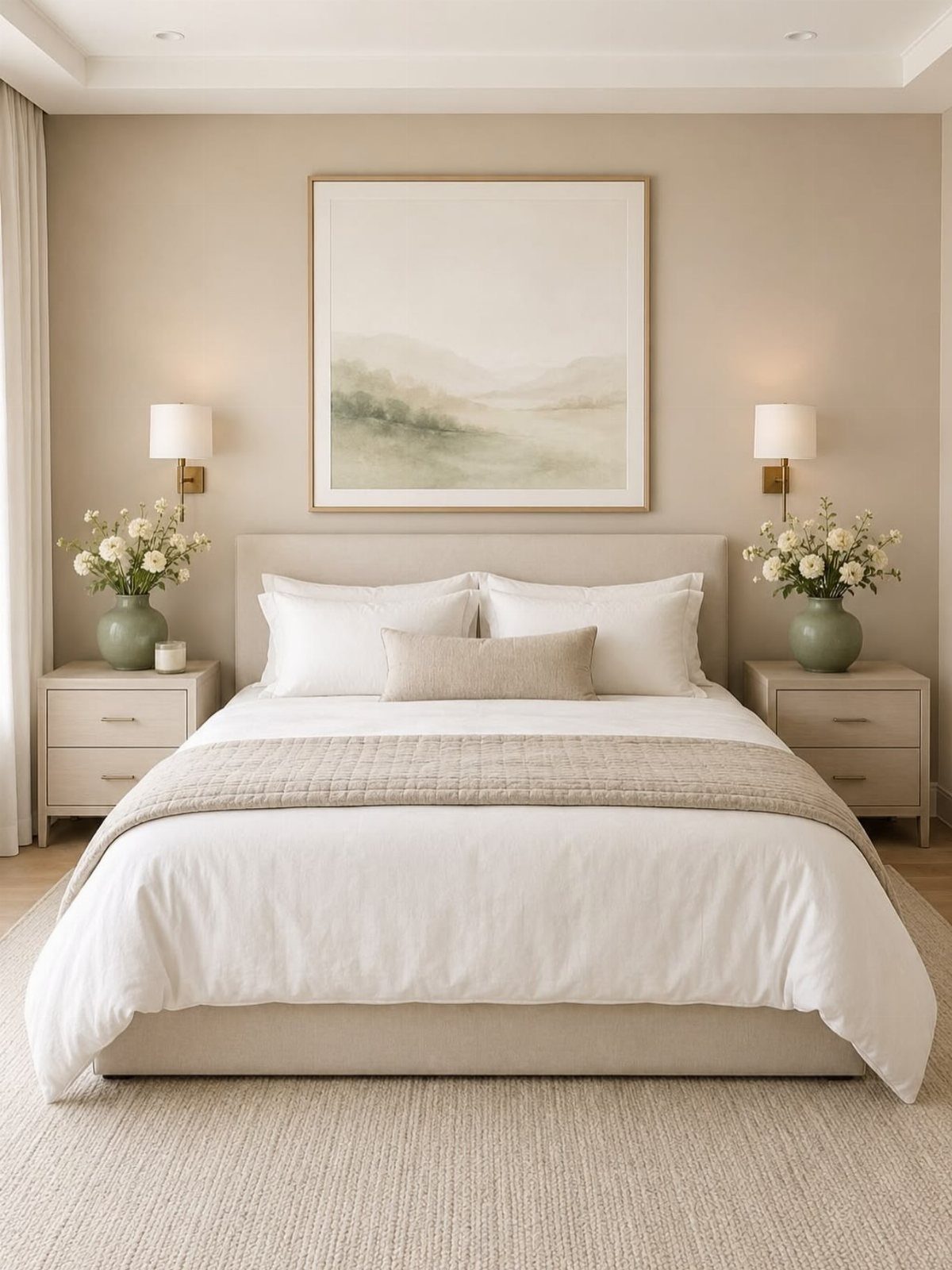
White bedding with beige layered in is the easiest luxury move here, because the palette does the work and the budget goes into fabric. I would pick one white and one beige and stop there; mixing three whites looks accidental.
Keep the texture varied: a smooth sheet set, a heavier duvet, a knit throw at the foot. Washing and ironing keep white looking crisp, so choose linens you will actually care for.
3. Tall Upholstered Headboard in Velvet
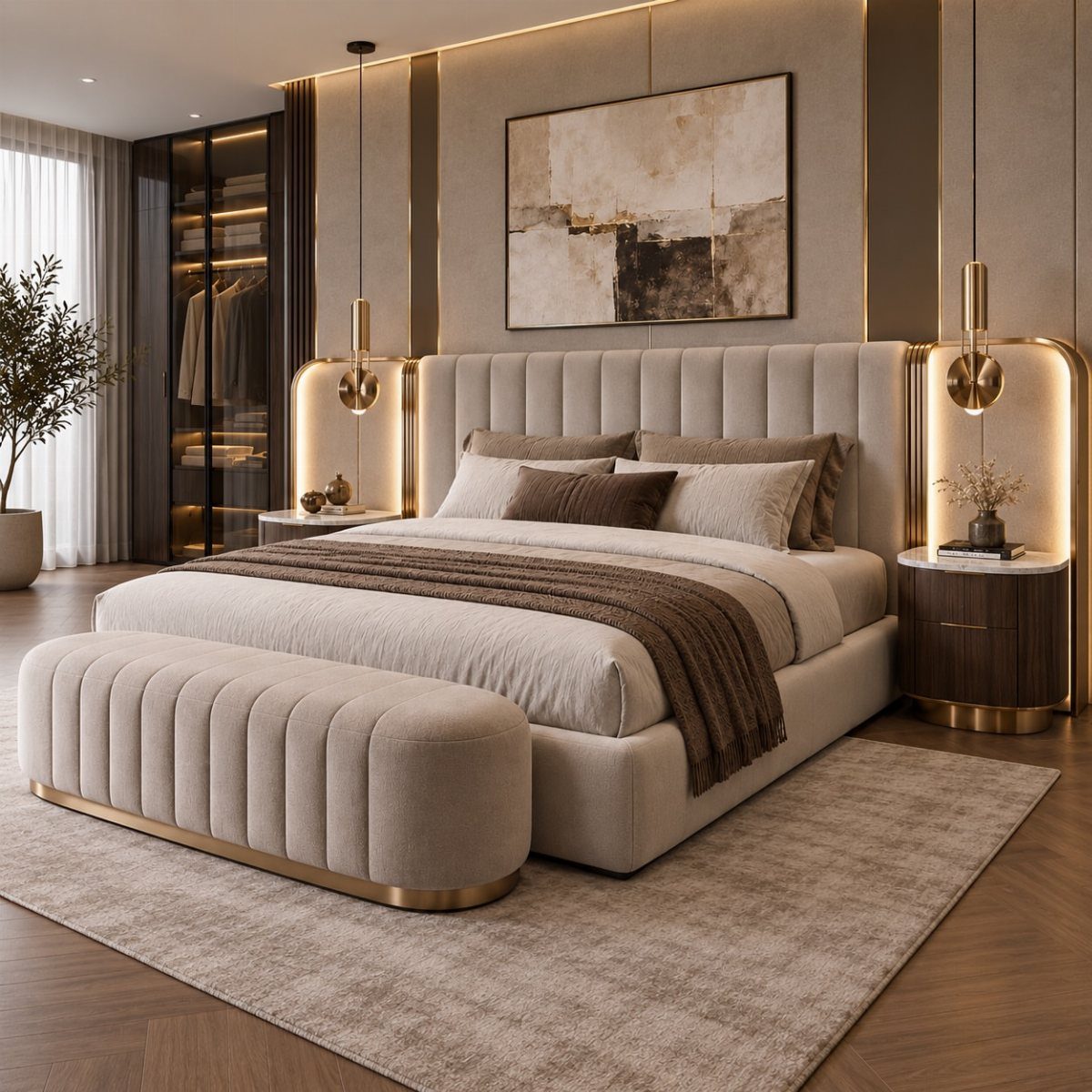
A headboard that runs tall, with vertical channels, makes the ceiling feel higher and the bed look like the point of the room. Velvet adds depth because the pile catches light differently as you move.
For a weekend build, a plywood panel, foam and velvet fabric will get you close at a fraction of a custom price.
A matching bench at the foot ties the set together, though it adds cost and takes floor space, so skip it in a small room.
4. Dressing Table Setup
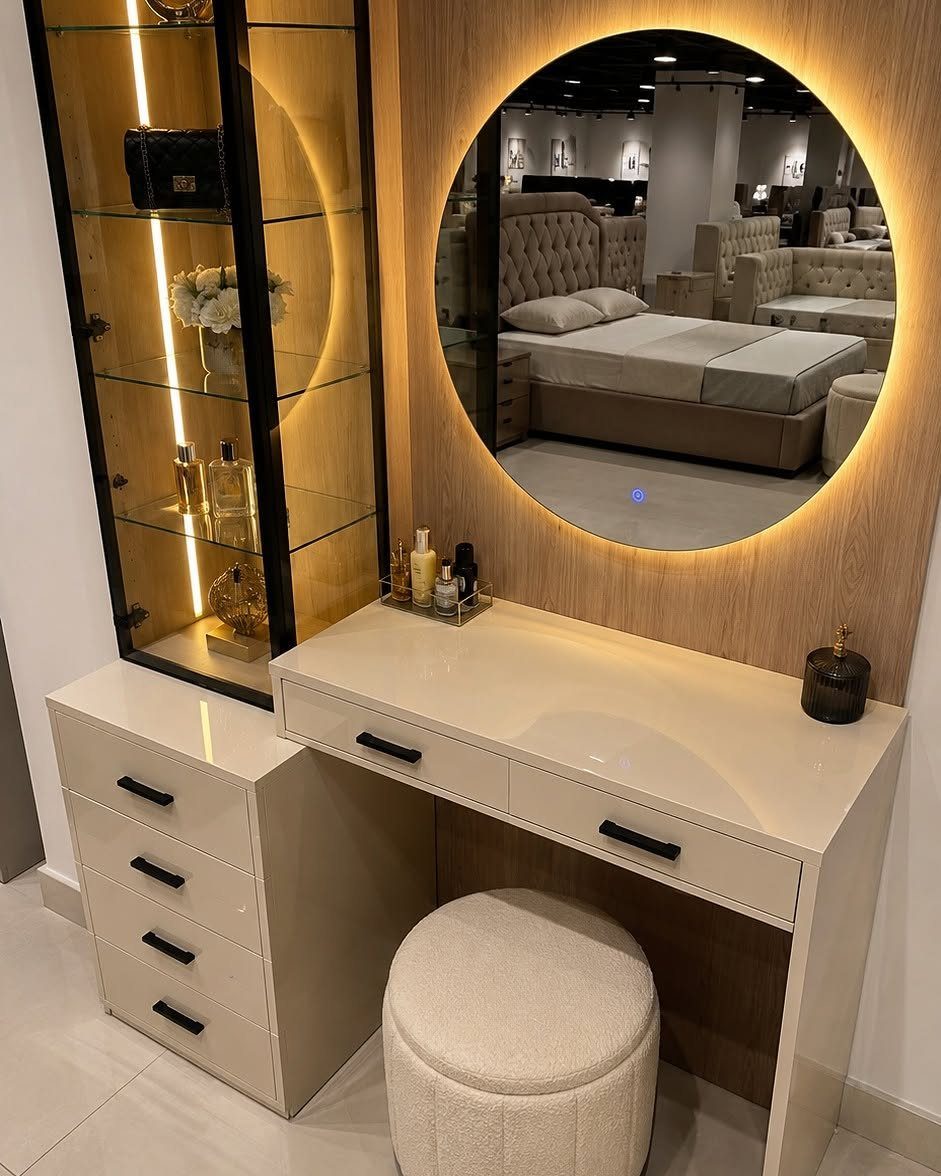
A dressing table with a round backlit mirror gives you a place to get ready and a piece that looks high-end even when the bedroom is modest. The glass cabinet beside it is a bonus for perfume and jewelry.
Pick a stool that matches the upholstery so the set feels planned.
Backlighting matters more than the table itself, since even light on your face beats a ceiling fixture overhead. A small footprint fits most bedroom corners.
5. Soft Muted Colors
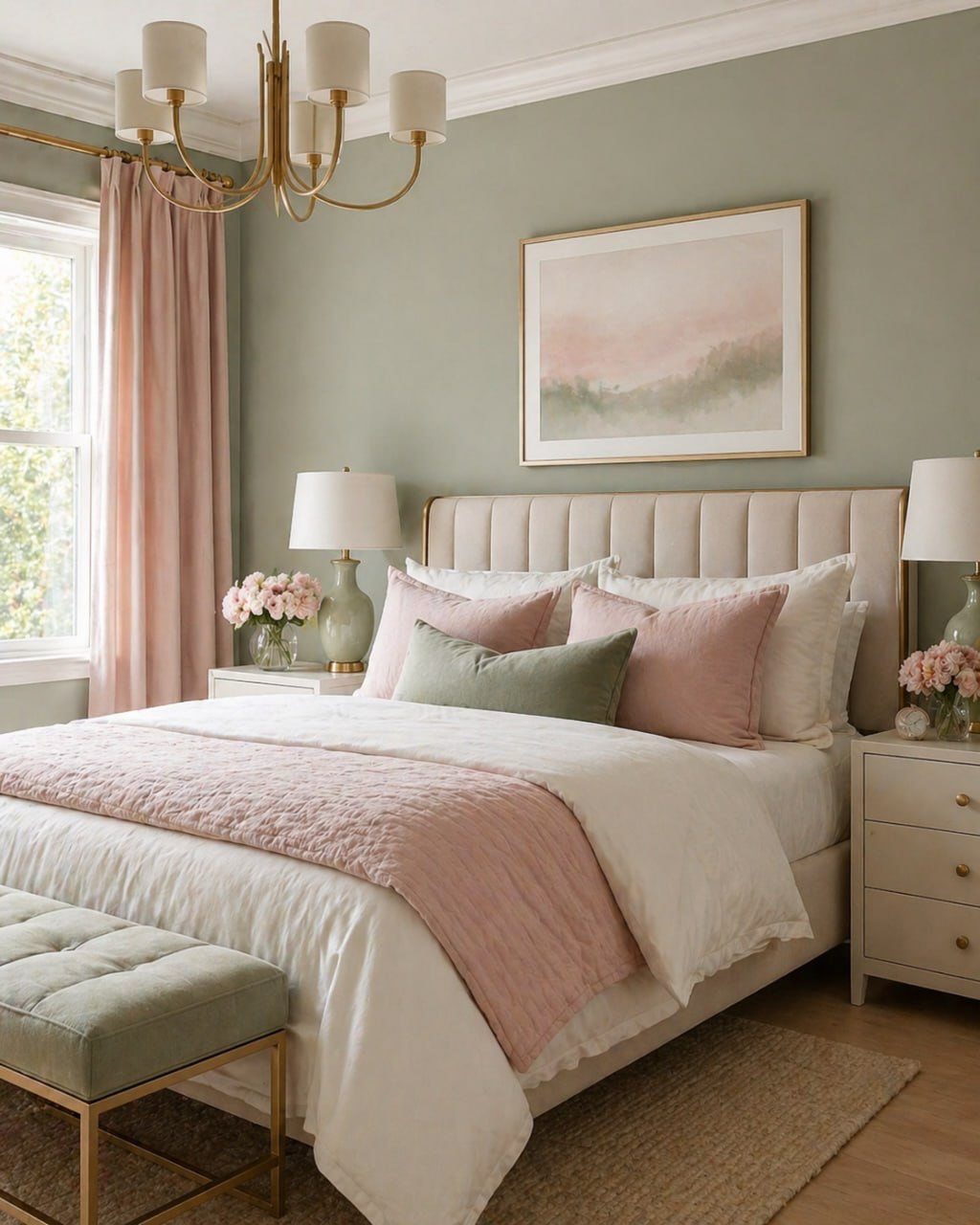
Muted tones read calm and expensive, and they let gold hardware or a chandelier stand out.
Test paint swatches on the wall and look at them morning and evening, because soft greens shift a lot with daylight.
Repeat the wall color once, like the bench at the foot of the bed, and keep everything else cream or pink. Paint is the cheapest piece of this look.
6. Built-in Wardrobes
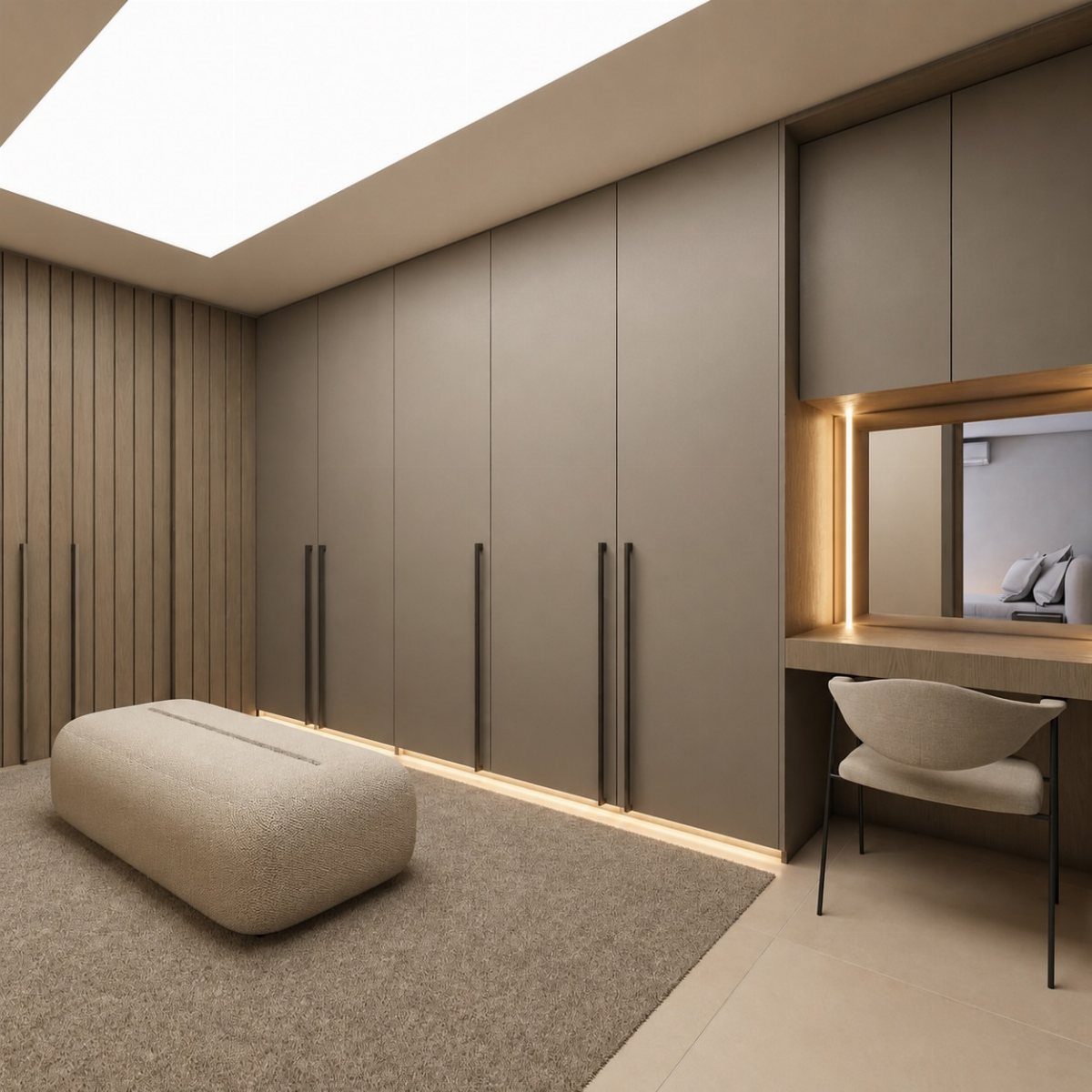
Floor-to-ceiling wardrobes in taupe turn a whole wall into clean paneling, and the matching vanity area makes the storage feel designed instead of bolted on.
Custom work costs the most.
A cheaper route is stock cabinet frames with trim added at the top and sides, painted one color so they look built in. I would choose taupe or another soft neutral over white, since it hides scuffs better.
7. Fresh Flowers
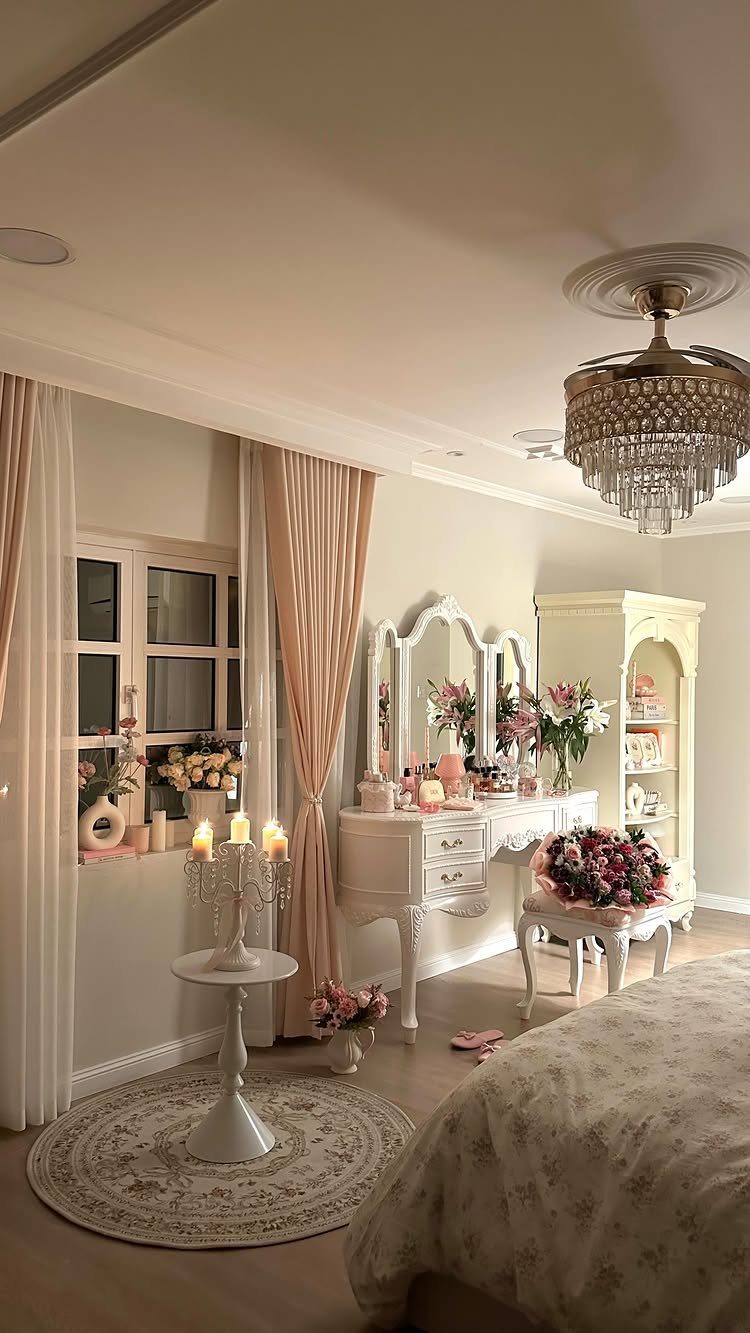
Fresh flowers in pink and white give a bedroom the softest kind of luxury, and they sit well beside a crystal chandelier because both catch the eye without crowding the room.
Group several bouquets on the vanity rather than spreading one stem everywhere.
Keep to the 2 colors so the arrangement matches the bedding. Fresh blooms need new water and replacing, so buy a small bunch weekly instead of one huge, costly arrangement.
8. Luxury Bedroom Wallpaper
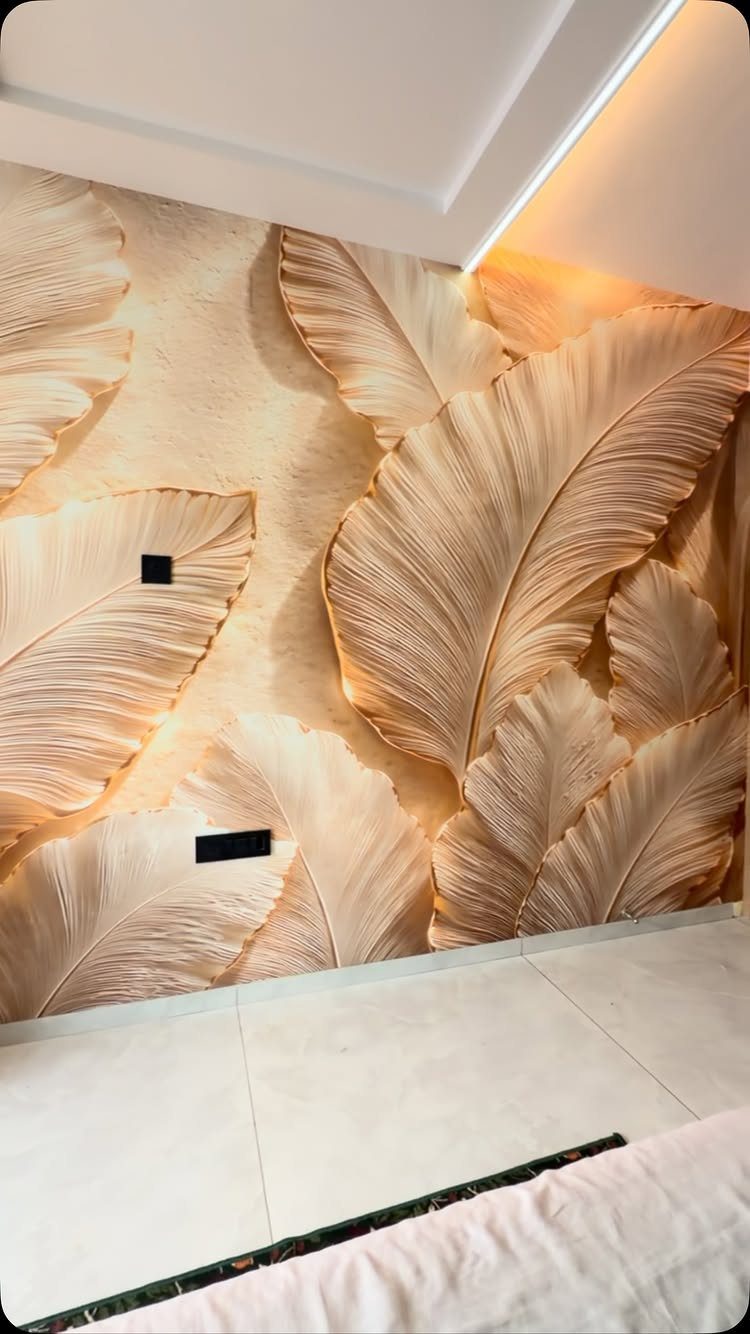
Large gold leaf shapes in a 3D pattern turn one wall into the feature of the bedroom, especially with lighting built in to throw shadows across the raised edges.
Use it on a single wall, ideally behind the bed, and keep the other walls plain white so the gold stays the star.
Warm light brings out the metallic tone; cool light flattens it. Textured wallpaper costs more than flat prints, so cover only the wall you will look at most.
9. Luxury Bedroom Nightstand
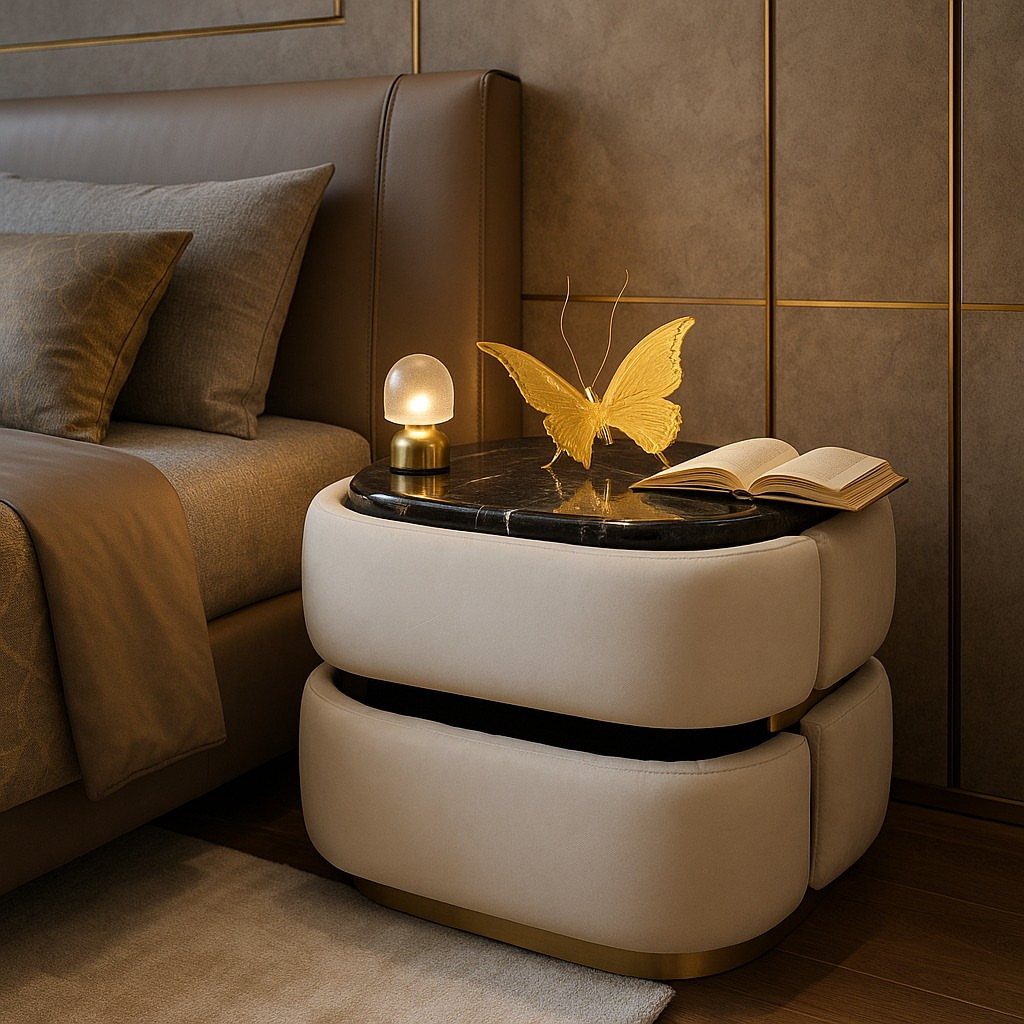
A round, cream upholstered nightstand with a black marble top gives you softness and weight in one small piece. The curved edges also mean fewer sharp corners beside the bed.
Keep the styling to three things: a small lamp, one gold accent like the butterfly, and the book you are reading.
More than that and the top looks cluttered. I would pick a round shape over a square one, since it looks more deliberate next to a leather bed.
10. Floor-to-Ceiling Curtains
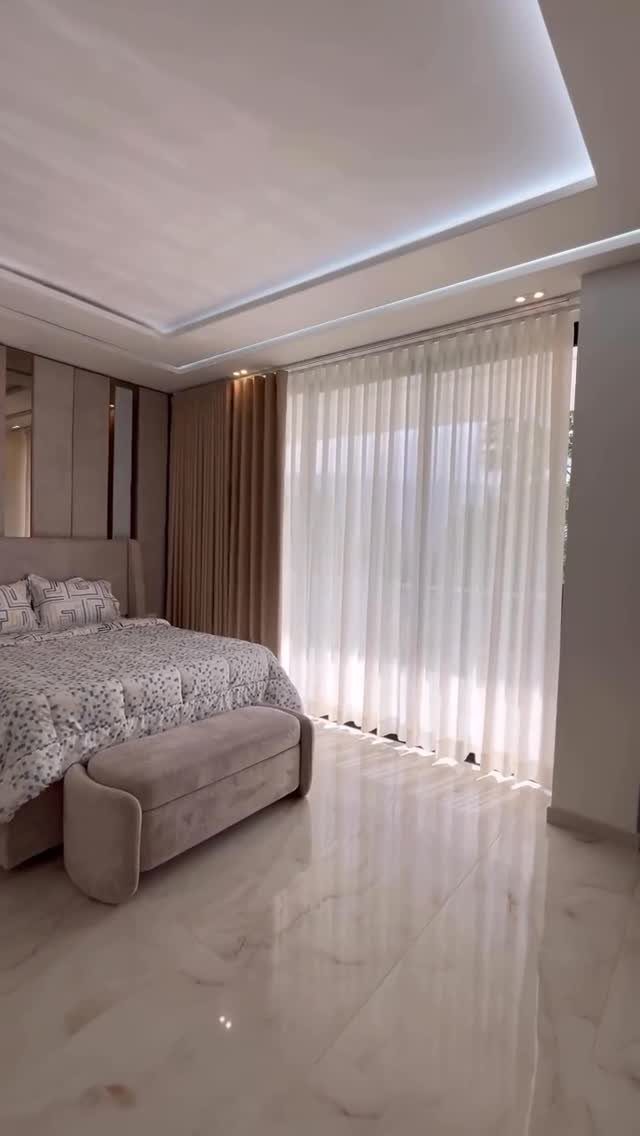
Curtains that run from ceiling to floor make a window look larger and give the wall a tall, tailored line. White and beige panels keep it light.
Mount the rod close to the ceiling, not just above the window frame, since that placement creates the height. Let the fabric just touch the floor.
Buy generous panel widths so the folds look full when closed. Thin fabric looks cheap, so choose a heavier weave.
11. Luxury Bedroom Bench
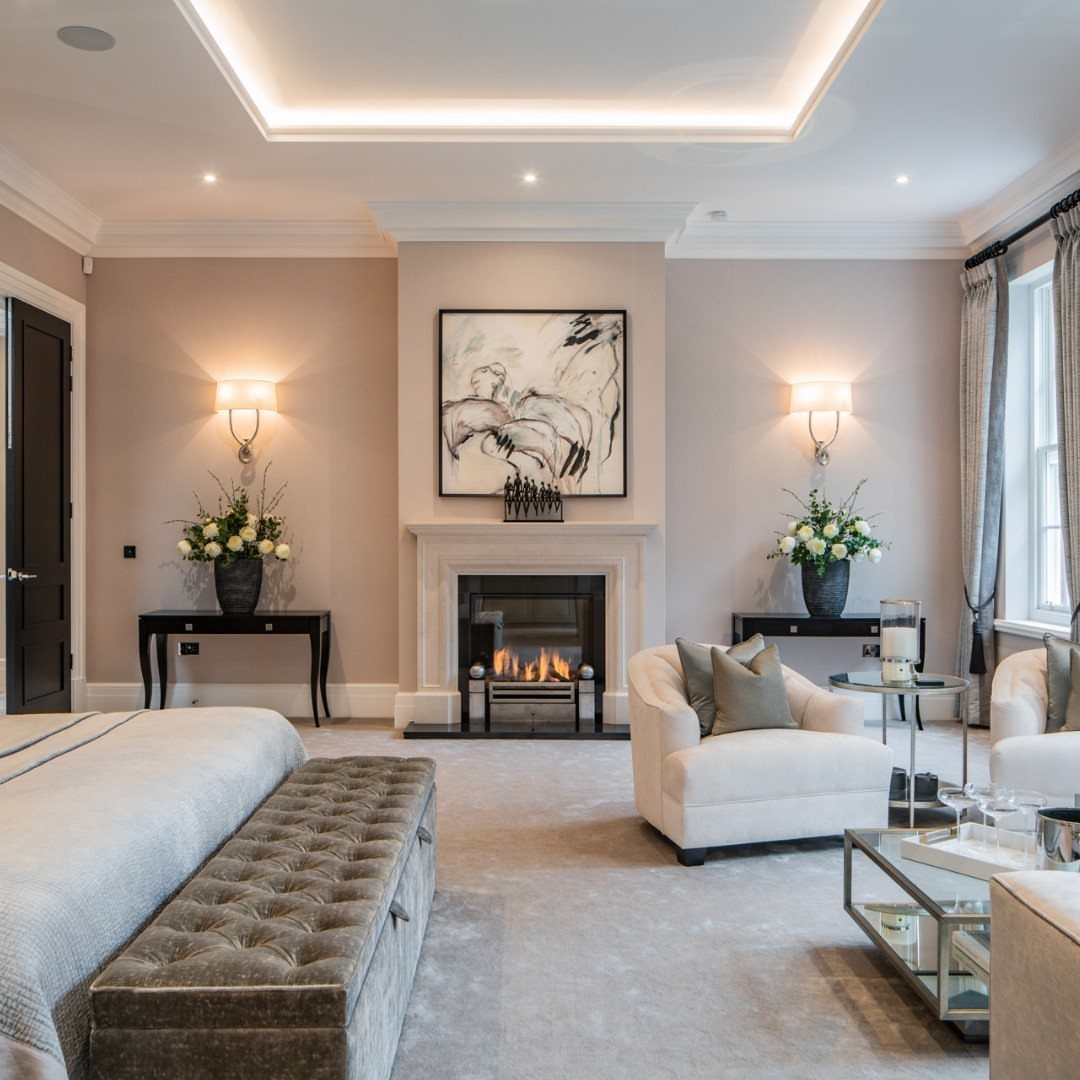
Match its width to the bed, or keep it slightly narrower, so it lines up cleanly.
Grey velvet works with neutral walls and doesn’t compete with armchairs nearby. Leave walking space around it; in a small room, a bench can crowd the bed, so I would skip it there.
12. Unique Wall Art
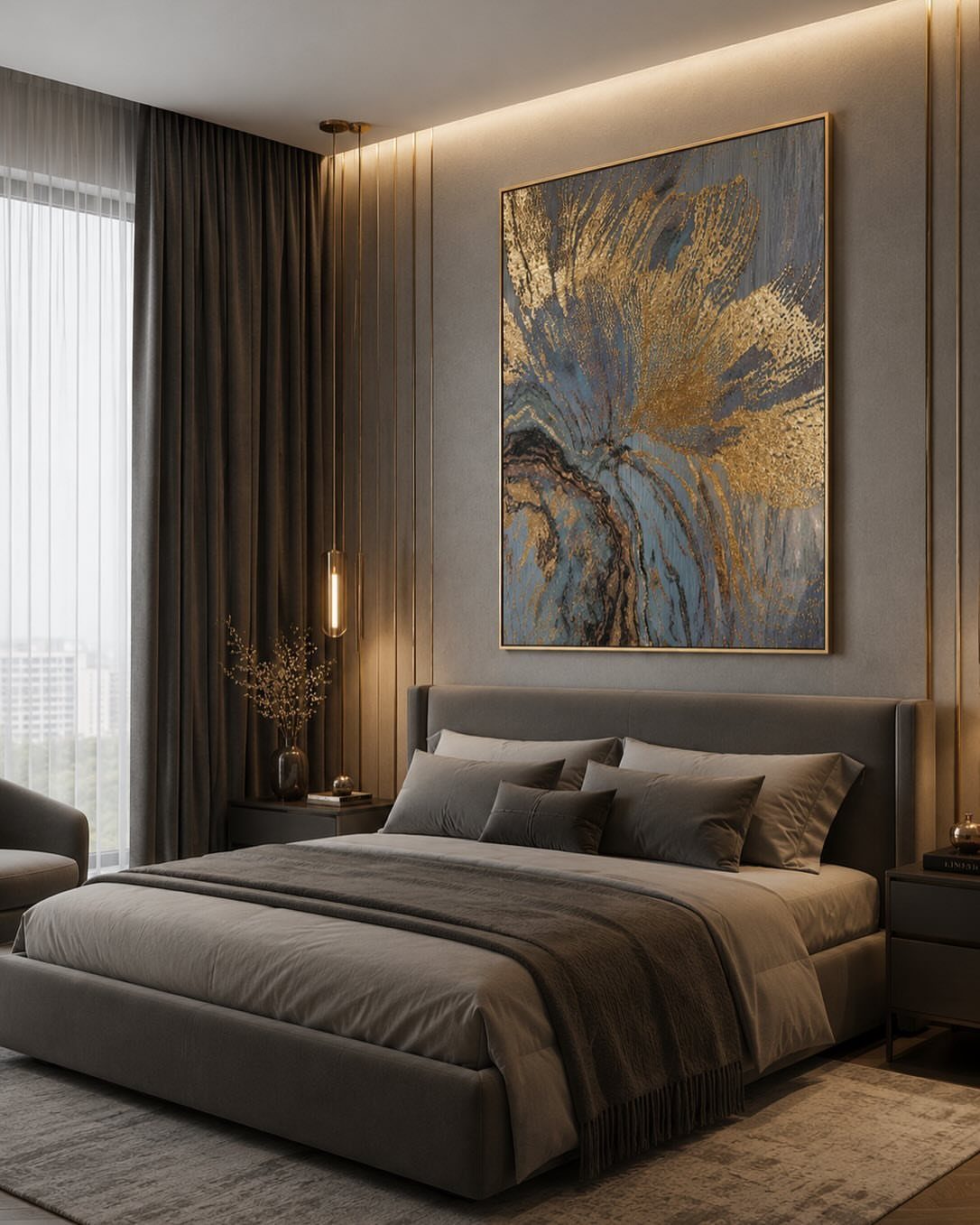
A single large piece of art over the headboard becomes the room’s focus without requiring side tables or floor space you may not have.
Metallic tones in the art catch lamplight and tie into hardware or fixtures, while a contrasting color breaks up a neutral palette.
Size matters most: choose a piece roughly two-thirds the width of the bed so it looks anchored, not floating.
Original art is costly, so a large print in a good frame gets close. Hang it low enough to relate to the headboard.
13. Soft Accent Wall with Textures
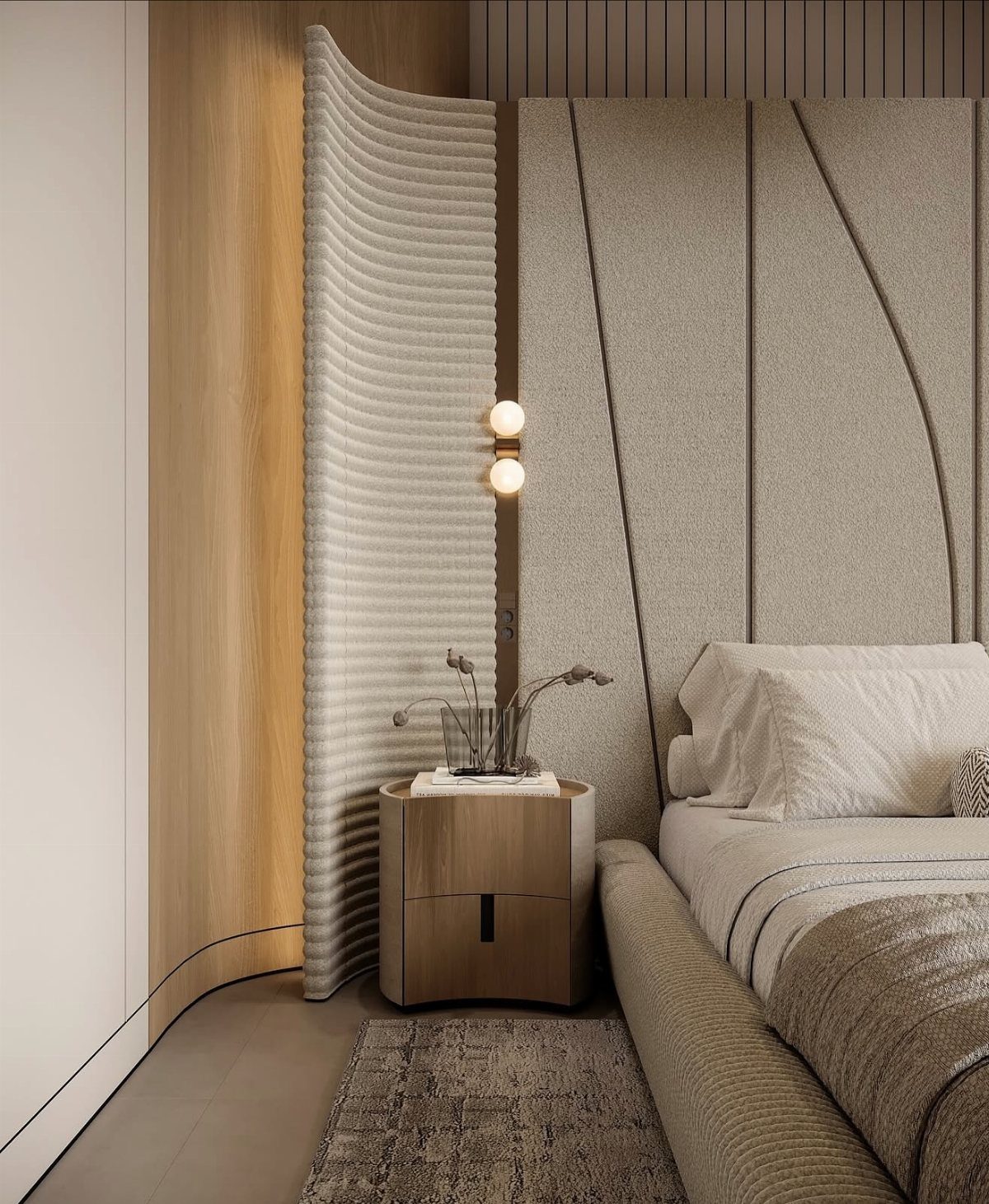
A curved wall of ribbed fabric panels gives the bed a soft backdrop that paint alone can’t match, because the vertical lines add shadow and depth in beige.
Keep the rest of the bedding neutral so the texture is the only statement.
I would limit the panels to the wall behind the bed; covering the whole room makes it heavy and costs far more. A padded headboard against it works well if the tones stay close.
A statement blanket is a great way to add visual pop to your bedroom without committing to a statement wall or other permanent fixture.
14. Modern Luxury Bedroom Minimalist Furniture
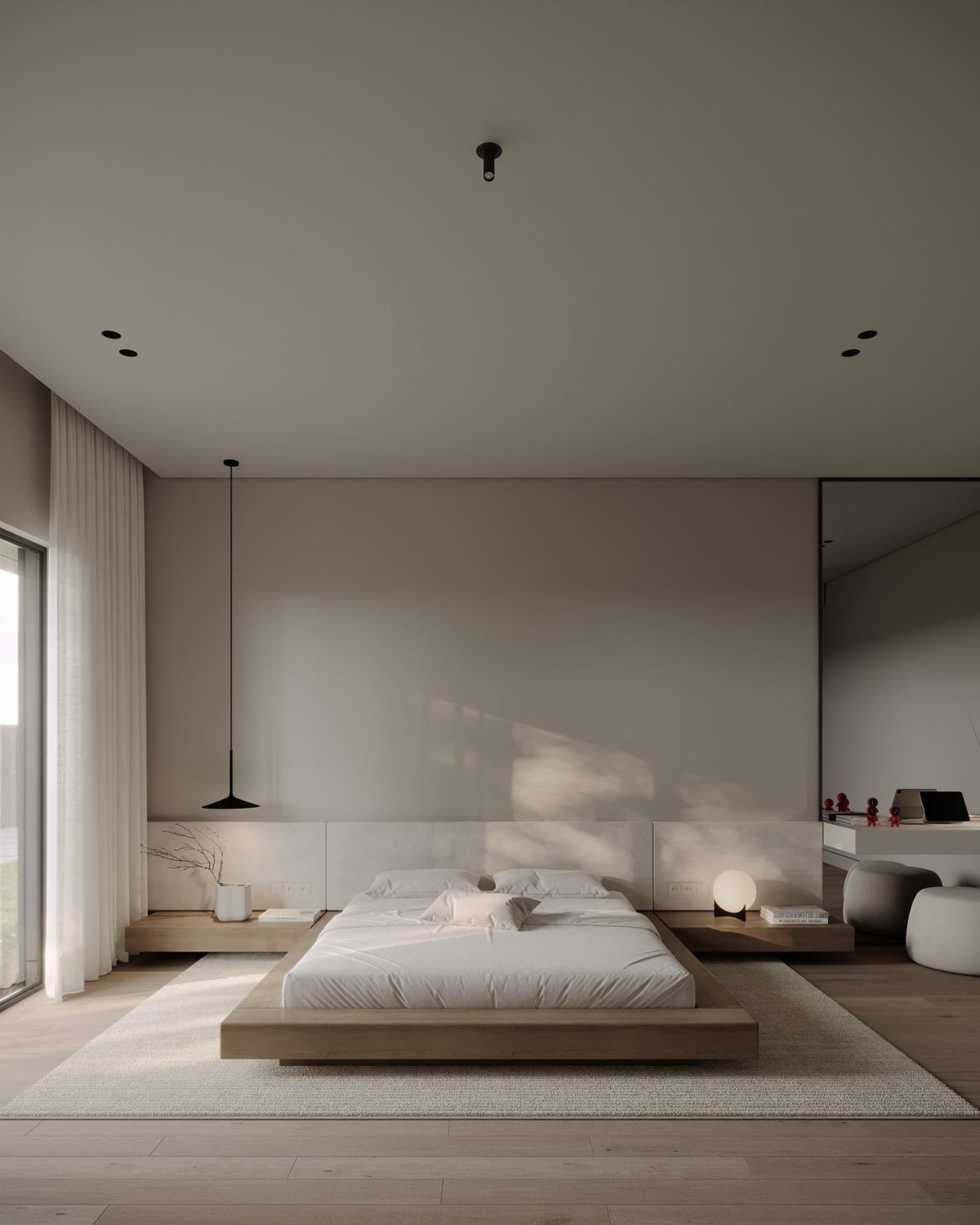
Minimalist does not have to mean flat.
A low platform bed keeps the floor visible and the sight lines clean, and you fill in the style with a large rug, pendant lighting and one or two statement pieces on the walls.
Keep the furniture list short and let the wood grain carry the warmth. I would choose one wood tone and repeat it nowhere else, so the bed stays the clear anchor.
15. Velvet Ottoman at the End
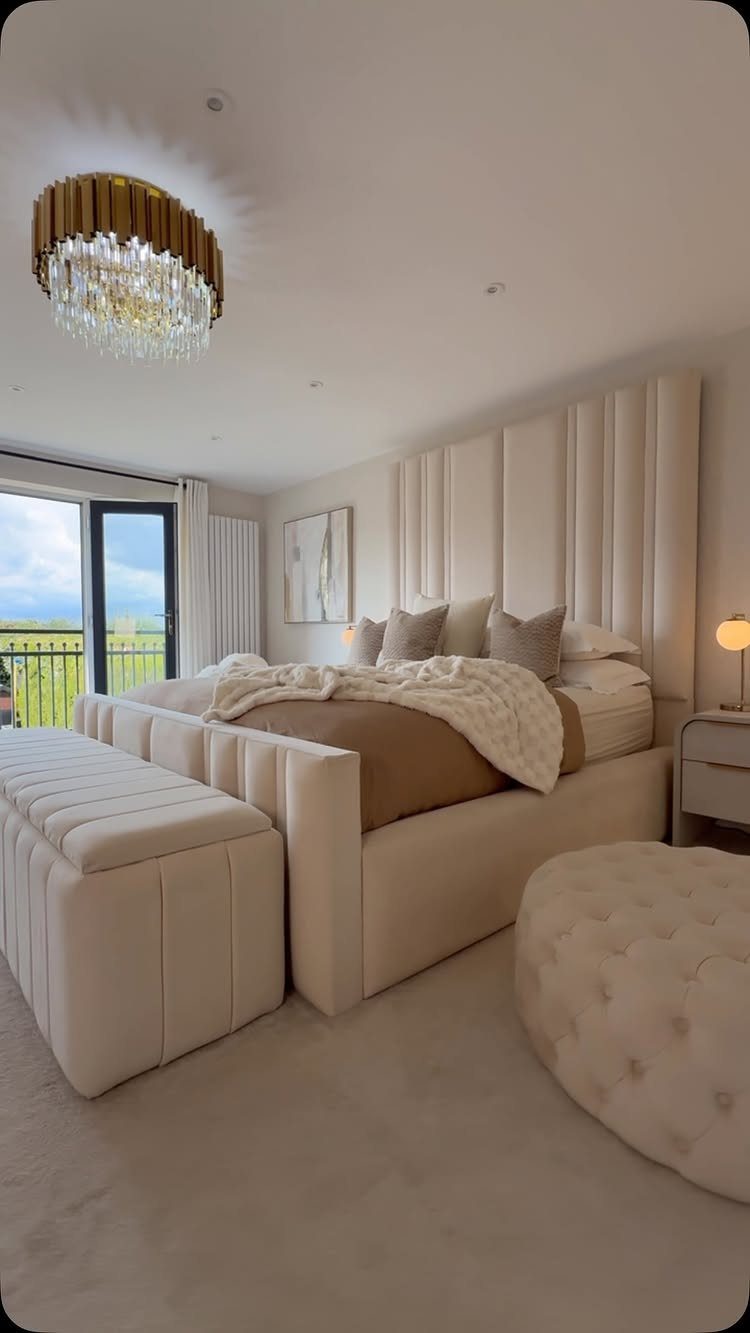
Cream velvet at the foot of the bed adds a second soft surface, and a tufted ottoman beside a bench gives you somewhere to sit and pull on shoes.
Match the cream to the headboard so the pieces read as one set.
Round and rectangular shapes together soften the room’s lines.
Leave clear floor space around them. In a small bedroom, I would pick just one piece, since two can crowd the bed.
16. Nature-Inspired Decor
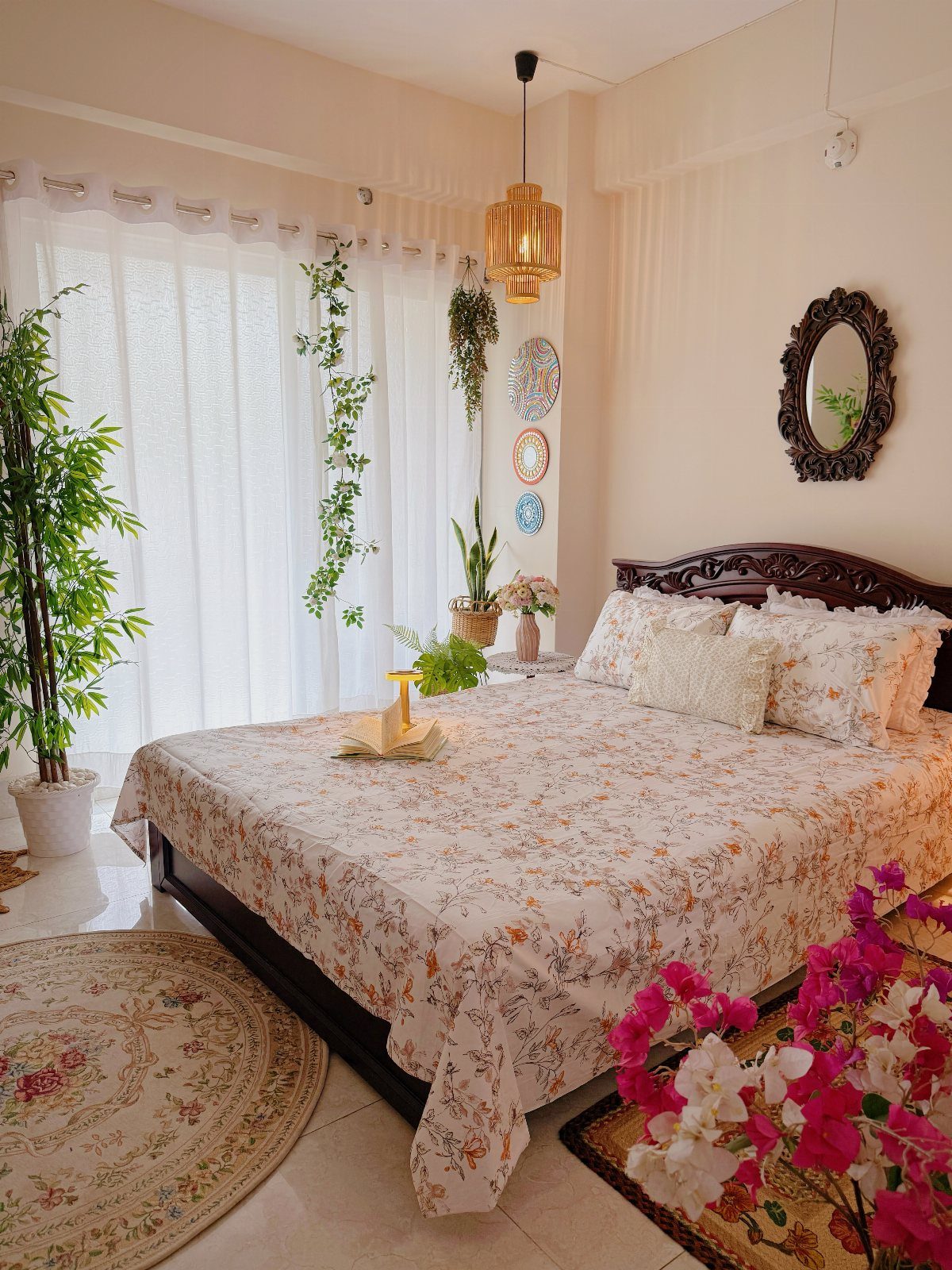
Plants and natural materials calm a bedroom faster than most purchases. Several houseplants, a bamboo pendant light and a dark wood bed make a layered, green setting.
Group plants at different heights instead of lining them up.
Floral bedding works best when the rug is also patterned but quieter, so the pattern doesn’t fight. Buy a few small plants first, and expand only after you see which ones thrive in your light.
17. Intricate Ceiling Designs
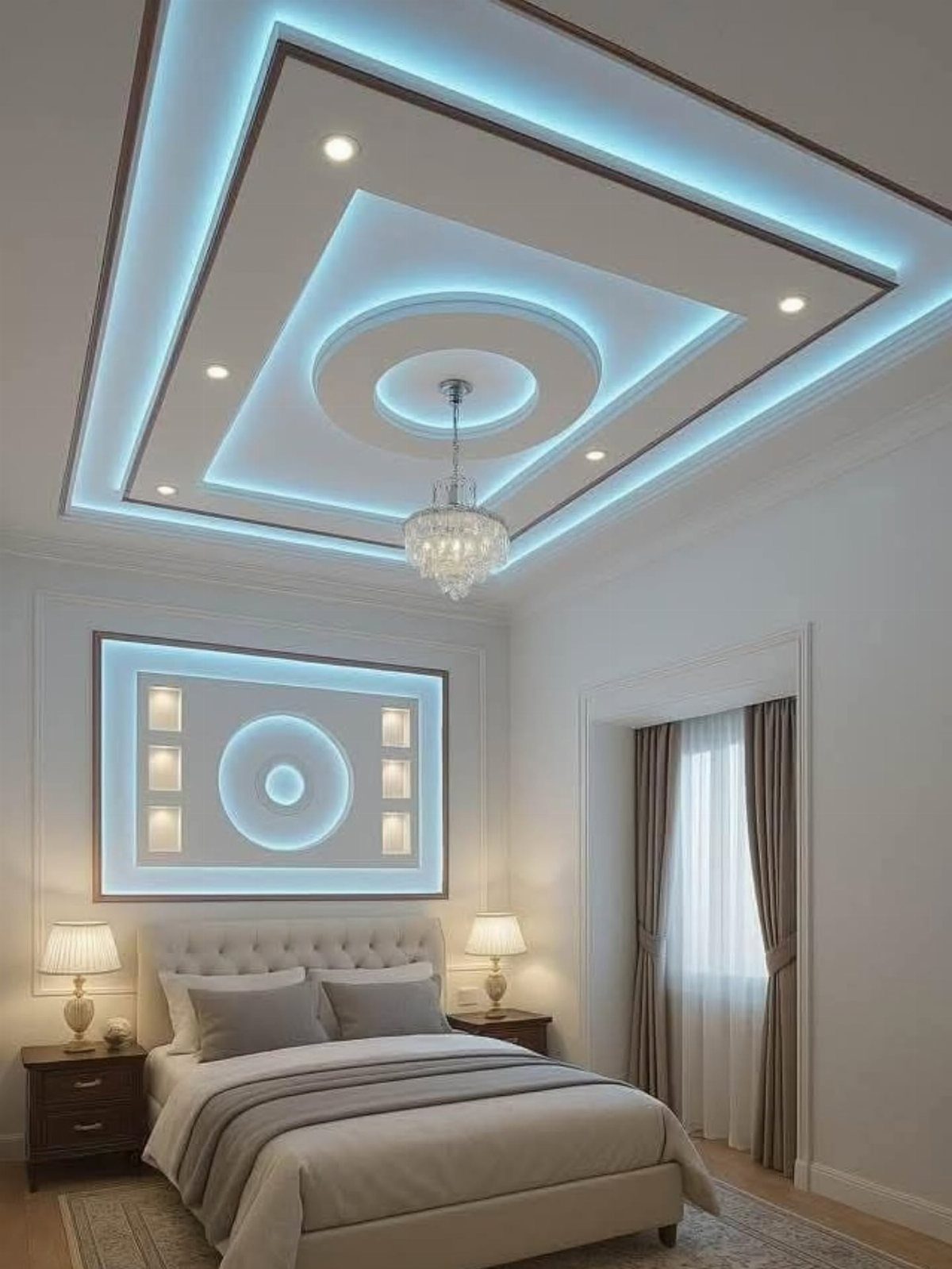
A tray ceiling with multiple layers draws attention upward, and you can wire recessed lighting into each step or hang a chandelier at the center to finish the look.
This is construction work, so it costs the most of any idea here.
A cheaper version is adding trim in layers and LED strips on a dimmer, like the setup in the lighting entry. I would choose warm white; blue looks dramatic but tires the eye at bedtime.
18. Soft Browns Terracotta Bedding
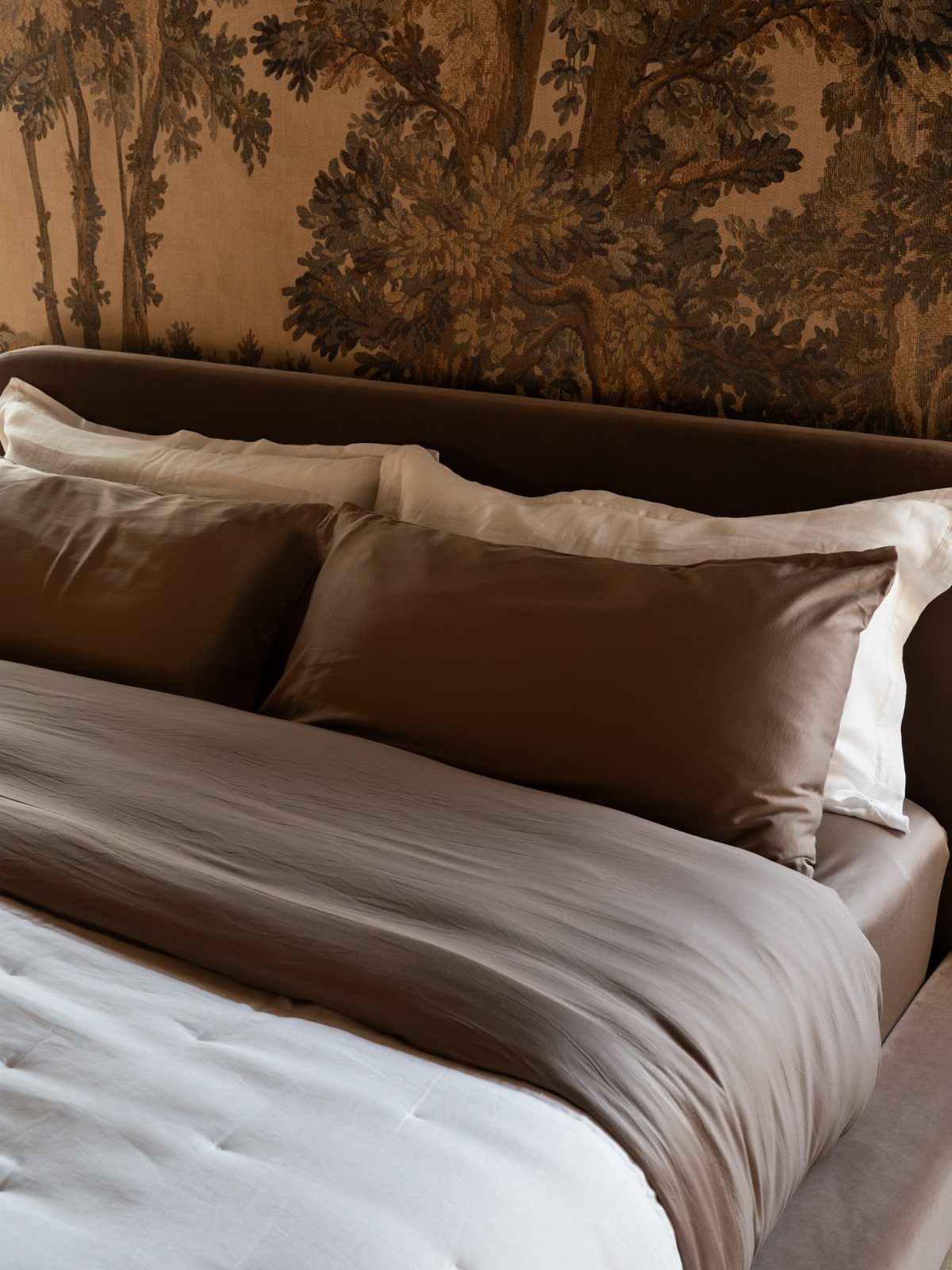
Brown and white pillows over a brown duvet make a bed that feels warm and grounded. Layer 2 or 3 shades of brown, then use white pillows to keep the pile from looking heavy.
Match the bedding to the wall rather than fighting it: a tree-patterned wall in brown calls for plain, solid linens. I would choose a matte or linen-like duvet over a shiny one, since it suits earthy tones better.
19. Dramatic Luxury with Dark Tones
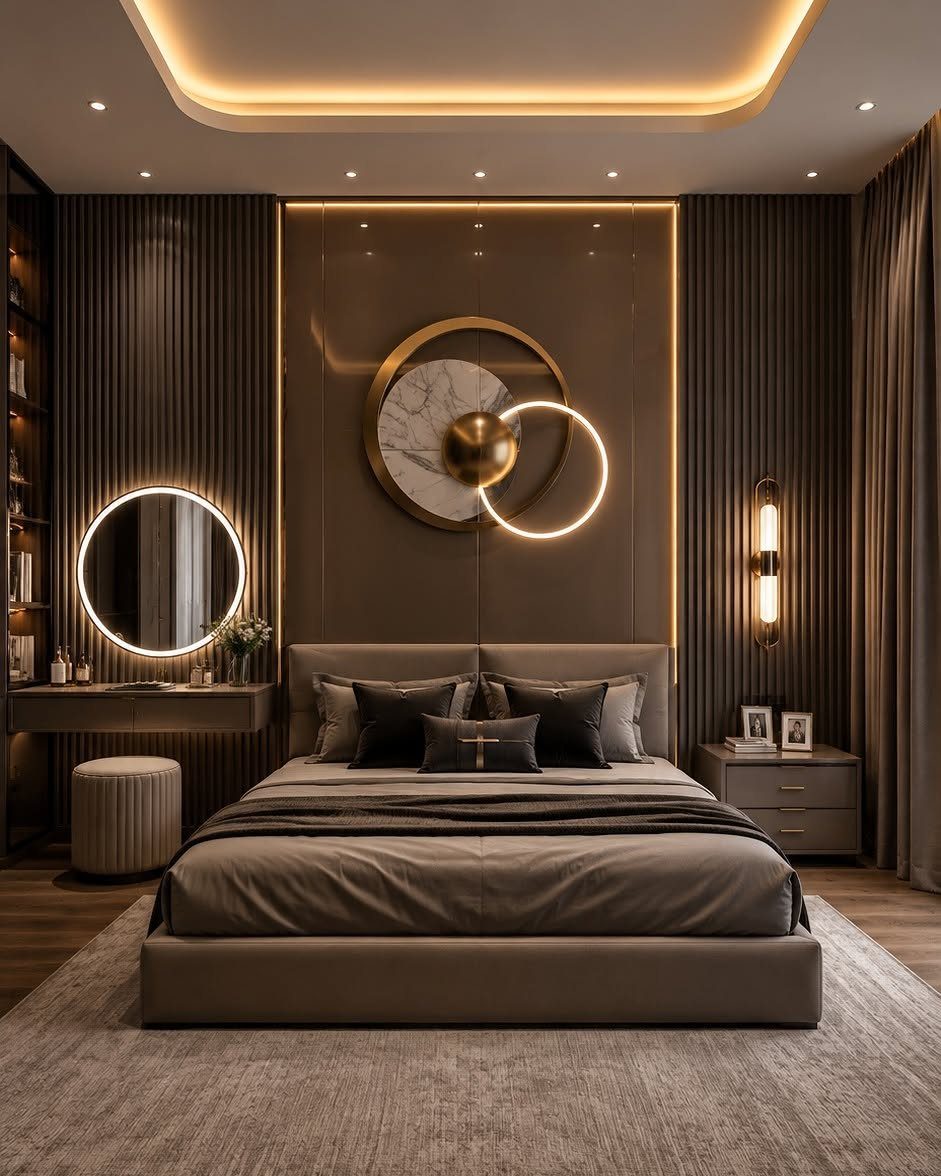
Dark brown slats running floor to ceiling turn a plain wall into built-in architecture, and they make metallic accents like gold art or a backlit mirror read sharper by contrast. Dark tones add depth that pale rooms can’t match.
Use the dark color on the wall behind the bed and keep the bedding grey, as here, so the bed separates from the wall. Warm lighting matters more in a dark room, because cool bulbs turn brown flat and heavy.
Slats cost more than paint, so a dark paint color is the cheaper way in.
Importance of Lighting
Plan lighting in 3 layers: ambient for general illumination, task for specific jobs like reading, and accent for artwork or wall texture. A ceiling fixture alone covers only the first layer, and the room feels flat at night.
Bedside lamps handle the task layer, so put one on each side and aim them at the page, not at your eyes.
Add a ceiling fixture for the ambient layer, then a small accent light on one thing you want noticed.
Keep every bulb warm-toned, because that is what makes a room feel cozy and inviting.
A smart lighting system lets you change brightness and color temperature from one place, which helps if you want bright light for dressing and a low glow for winding down.
Choosing Textures
The feel of the surfaces matters more than the paint color when a room is supposed to read as expensive. Velvet cushions, boucle throws, linen curtains and woven baskets add depth without adding visual noise.
Pick 3 materials and spread them around the room instead of piling them on the bed. Velvet on a pillow, linen at the window and boucle on a chair or throw is a balanced set.
Don’t forget the floor and walls. A soft area rug underfoot feels good first thing in the morning, and paneling or textured wallpaper gives a wall depth.
A chunky knit throw is a low-cost way to start, and one good piece makes the room feel richer even if it cost little.
Minimalist Decor Approach
More stuff rarely equals more luxury; it is usually the opposite. A room with six carefully placed objects looks more costly than one filled with dozens of small items.
Edit by removing everything from a shelf or surface, then return only the pieces you actually like. Leave space around each one so it can stand out and breathe.
Apply the same rule to furniture. Choose simple pieces with clean lines that suit the room, and the space stays stylish and clutter-free.
A finished room does not mean every surface is filled, and editing down tends to make a bedroom feel calmer as well as more upscale.
Frequently Asked Questions
What is in a luxury bedroom?
A luxury bedroom usually has a statement headboard (tall and velvet works well), crisp layered bedding in a tight palette, and warm lighting in several layers.
Add varied textures like velvet, linen and boucle, plus a few well-placed pieces instead of lots of small objects. Quality of fabric and a calm, edited look matter more than the number of items.
What are the best decor items for a bedroom?
A tall upholstered headboard, layered warm lighting and rich textures give the biggest lift. A headboard with vertical channels pulls the eye up, and I light the room in 3 layers so it still has shape after dark.
Velvet on the bed, linen at the window, boucle on a chair: the mix of textures is what gives a room weight.
How can I make my bedroom look nice?
Layer a few textures, use warm bulbs, and clear away clutter. Then remove everything from your surfaces and put back only the pieces you really like, leaving space around each.





