Which bunk bed saves space comes down to what the room is short on: wall length, floor area or ceiling height.
A triple stack puts 3 sleepers in one footprint but needs far more headroom than two bunks, while an L-shape trades wall run for a clear corner, and a Murphy-style fold-up frees the floor until bedtime.
1. L-Shaped Bunk Beds
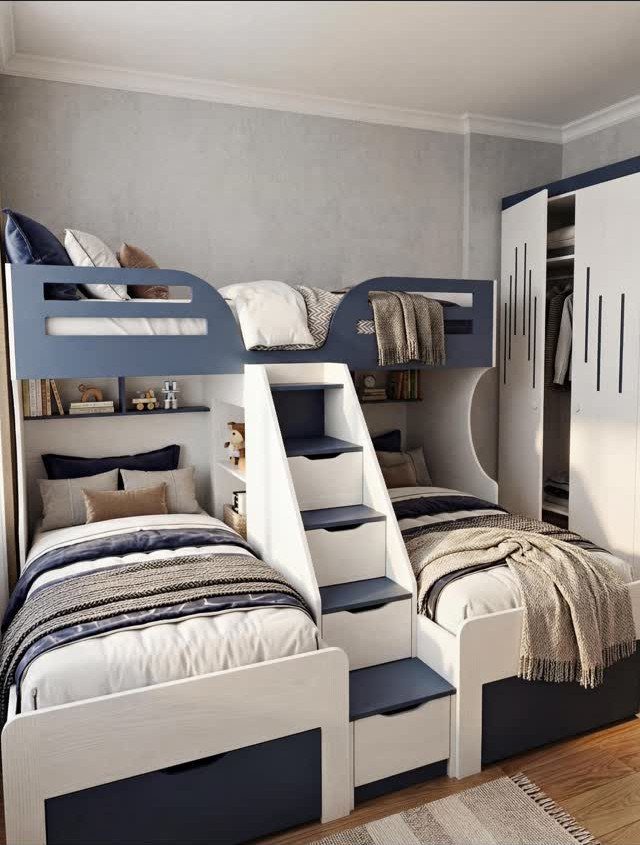
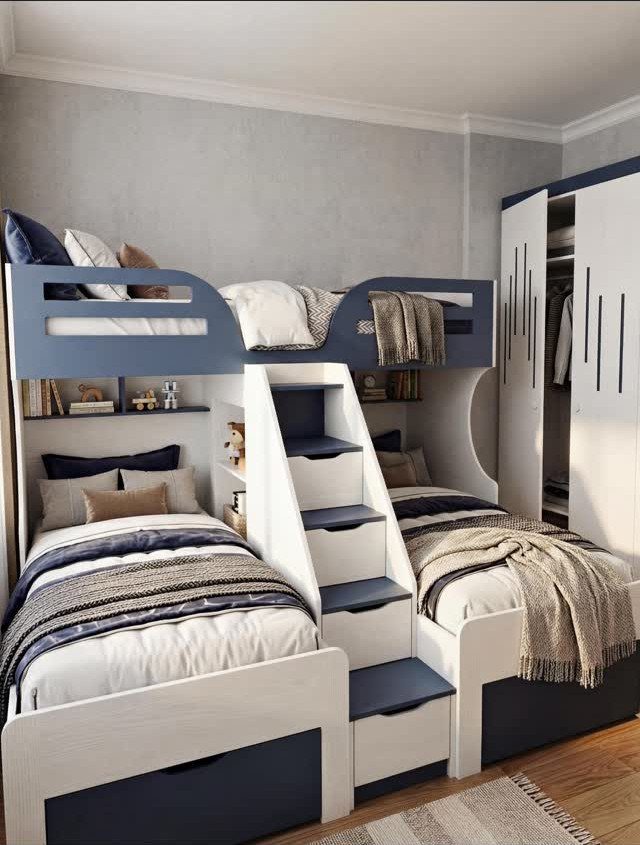
Two bunks set at a right angle share one corner of the room, so the bed doesn’t need a full wall run the way a standard stack does.
The visible build has stairs with storage built in, and I’d pick that over a ladder every time, since the steps hold what would otherwise spill onto the floor.
A matching wardrobe in the same white and navy keeps the whole corner reading as one piece. Measure the corner before you shop, because the L needs a clear stretch on both walls.
2. Loft Beds
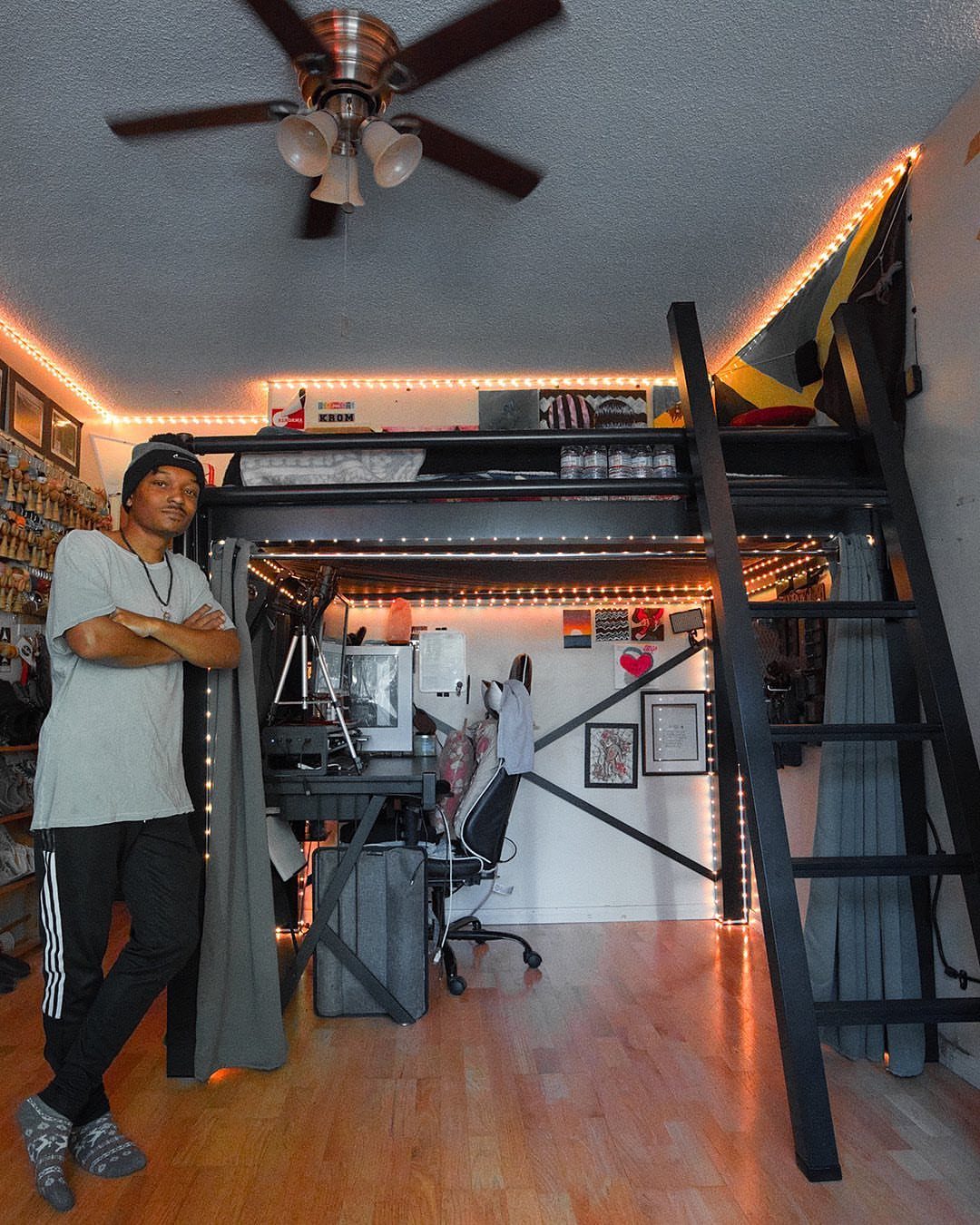
A loft bed lifts the mattress high and hands the floor below back to you.
In a small bedroom, that space can hold a desk, as it does under this black metal frame, and a workspace is a better use of it than a second bed in most rooms.
Check the ceiling before buying. A ceiling fan hangs close to a top bunk, so measure the gap between mattress and fan blades, and choose a frame height that leaves real clearance.
3. Triple Bunk Beds
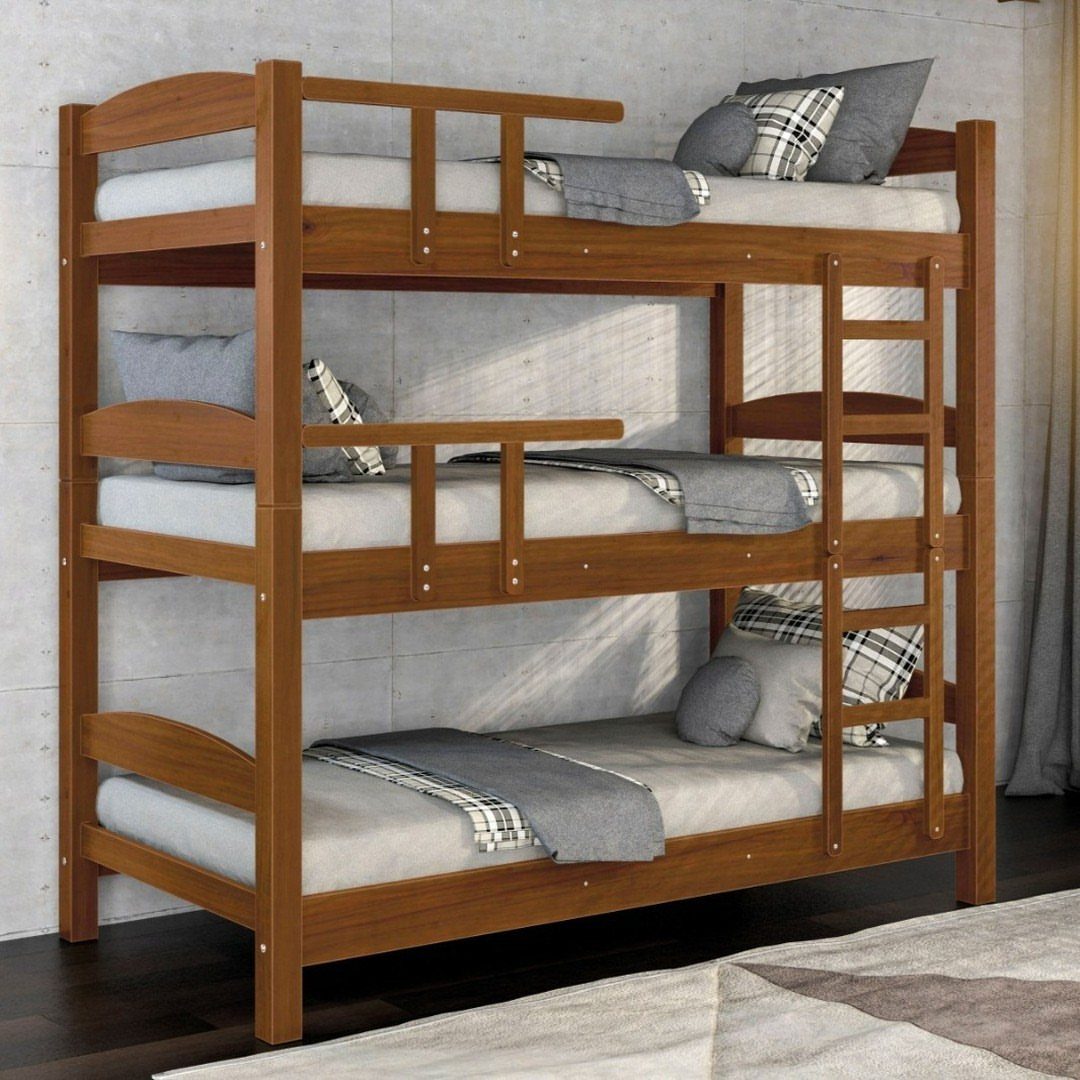
Three sleepers in one footprint is the strongest argument for a triple bunk, and a wooden frame with a built-in ladder keeps the whole stack in one piece.
It suits a shared room where floor area is the shortage and the ceiling isn’t.
Measure ceiling height first, since three levels need far more headroom than two. Keep the bedding light in tone, white and soft grey for example, so a tall stack of 3 bunks doesn’t loom over the floor.
4. Built-In Storage
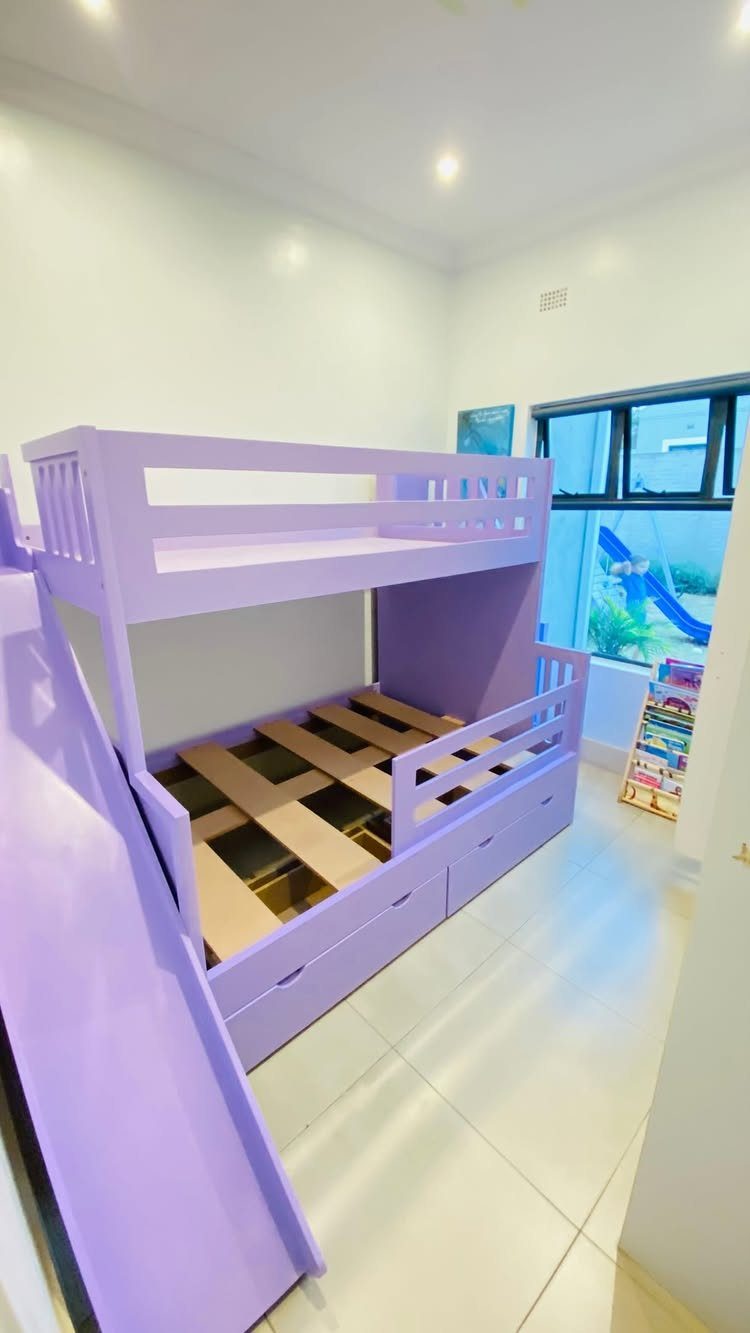
Drawers built into the base of a bunk save you from buying a separate dresser, which matters when every square foot is spoken for.
This purple frame puts storage drawers under the bed and adds a slide, so one piece handles sleeping, clothes and play.
Pick drawers over open shelves if the room is already busy, because closed fronts hide clutter. Leave enough floor in front of the bed that the drawers can open fully.
5. Bunk Beds with Trundle Beds
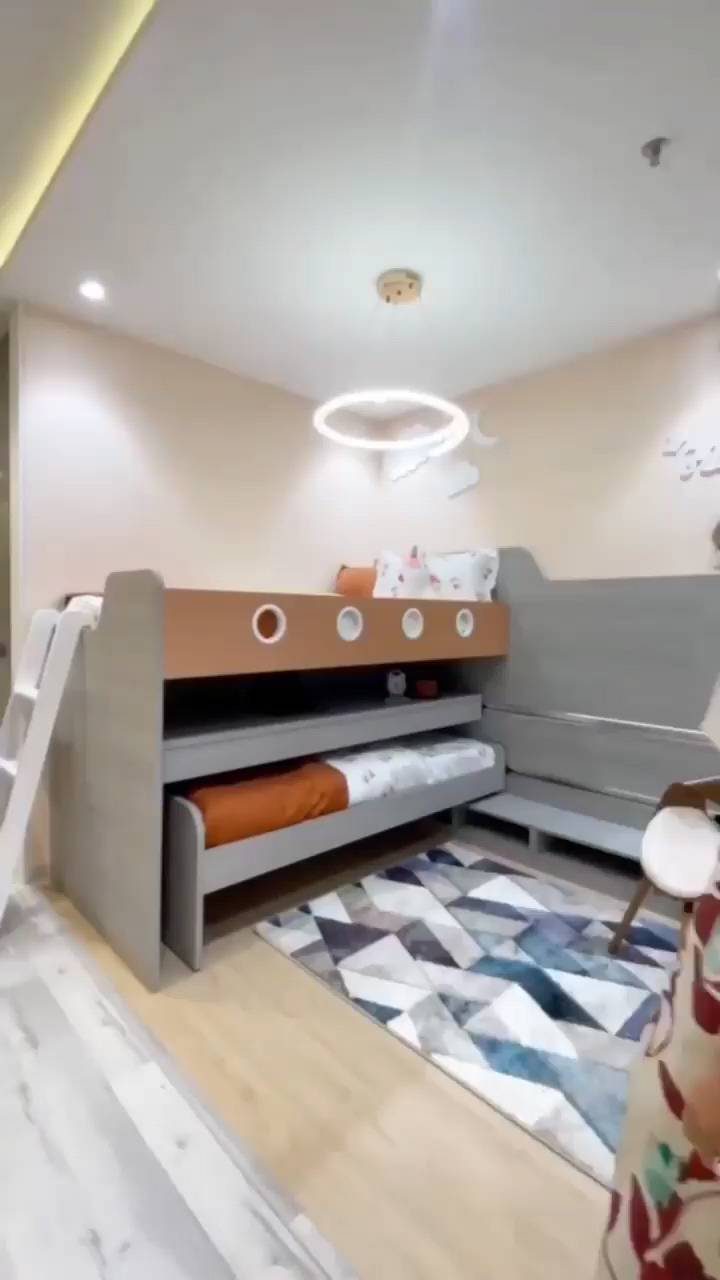
Slide-out sleeping space for a guest or a sleepover is what a trundle adds to a bunk, and it tucks away when nobody needs it. In a child’s room, that means the floor stays open for play during the day.
Choose a frame where the trundle rolls clear of the lower bunk, and keep the rug path flat. A geometric rug like this one works only if the trundle glides across it without catching.
6. Fold Up Murphy Bunk Beds
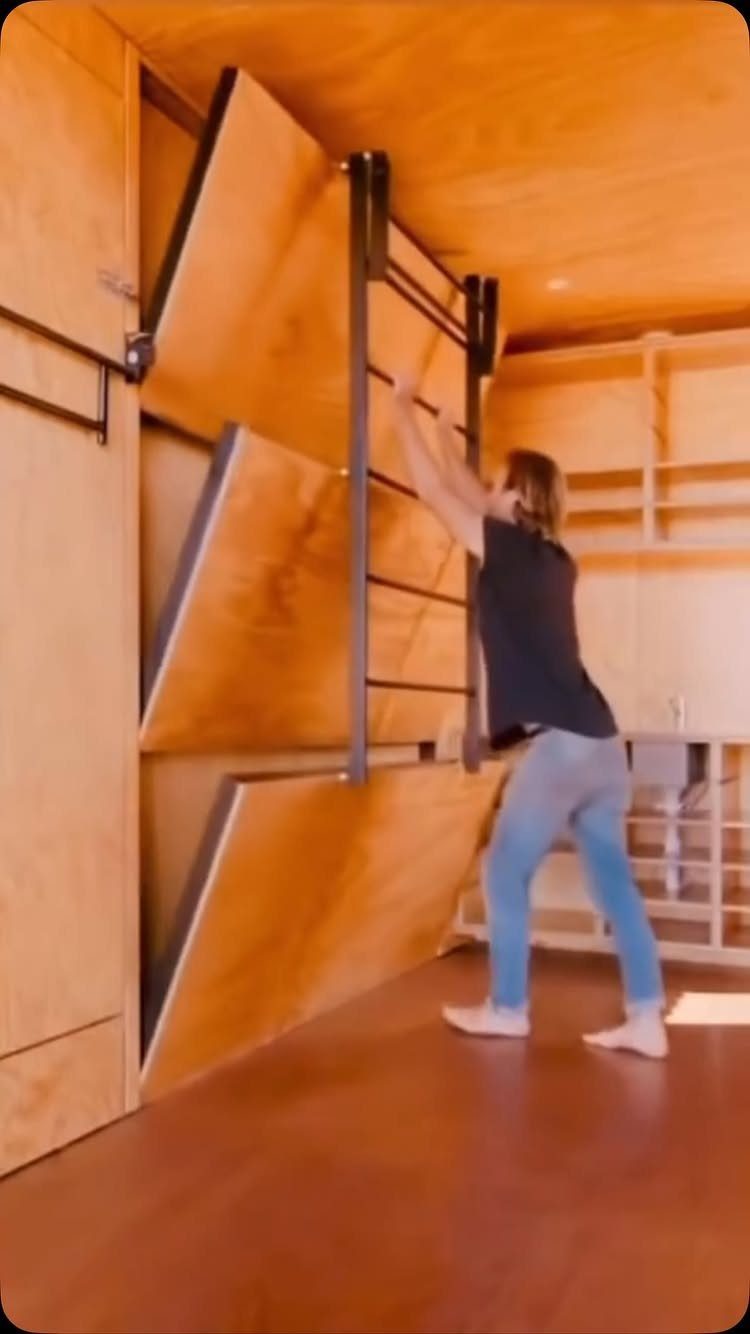
Beds that fold up flat to the wall let a bedroom work as a play space or office by day.
This wooden wall unit holds 3 bunks that tilt up, so the floor is free until bedtime, which suits a shared room or a cabin-style space.
Wall mounting means the unit has to be anchored properly, so find the studs and follow the maker’s instructions. Folding takes a few seconds each morning, and that routine is the real cost of the idea.
7. Twin Over Full Bunk Beds
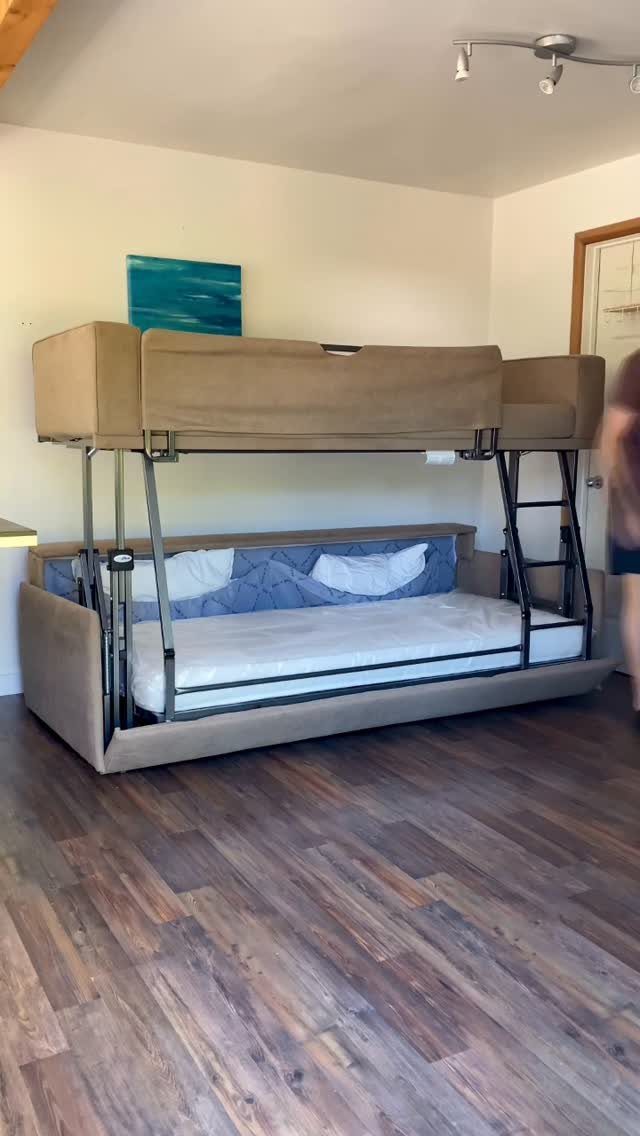
A twin over full stack puts a smaller bunk on top of a larger mattress below, so one bed can sleep an older kid or a parent who sits on the edge for bedtime stories.
The tan upholstered frame here reads calmer than painted metal or dark wood, since soft fabric keeps tight quarters from feeling busy.
Pick this over a twin over twin when the lower sleeper needs real room. Measure the wall length first, since the full mattress makes the base longer than a standard bunk.
8. Bunk Bed with Staircase Steps
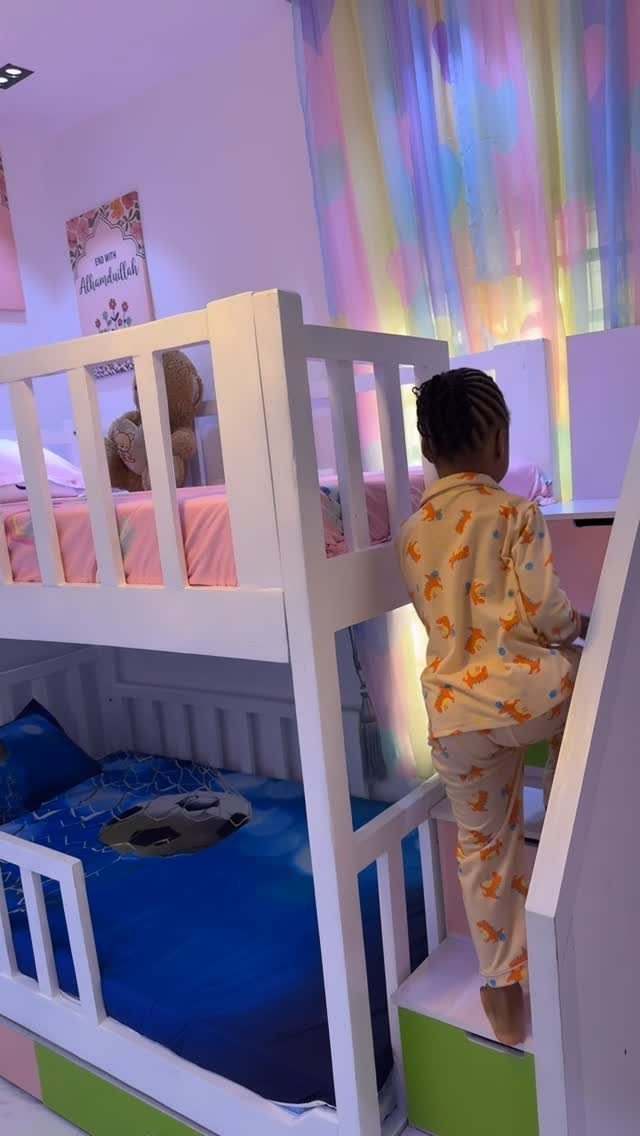
Built-in stairs make the climb to the top bunk easier than a ladder, and a white wooden frame keeps the whole thing looking light.
Wide steps give small feet a flat place to land, which is why I’d choose them for younger kids.
Check that the stairs sit firmly against the frame with no wobble before anyone climbs. Stairs take up more floor than a ladder, so leave a clear path at the bottom and plan the room around that.
9. Playful Bunk with Slide
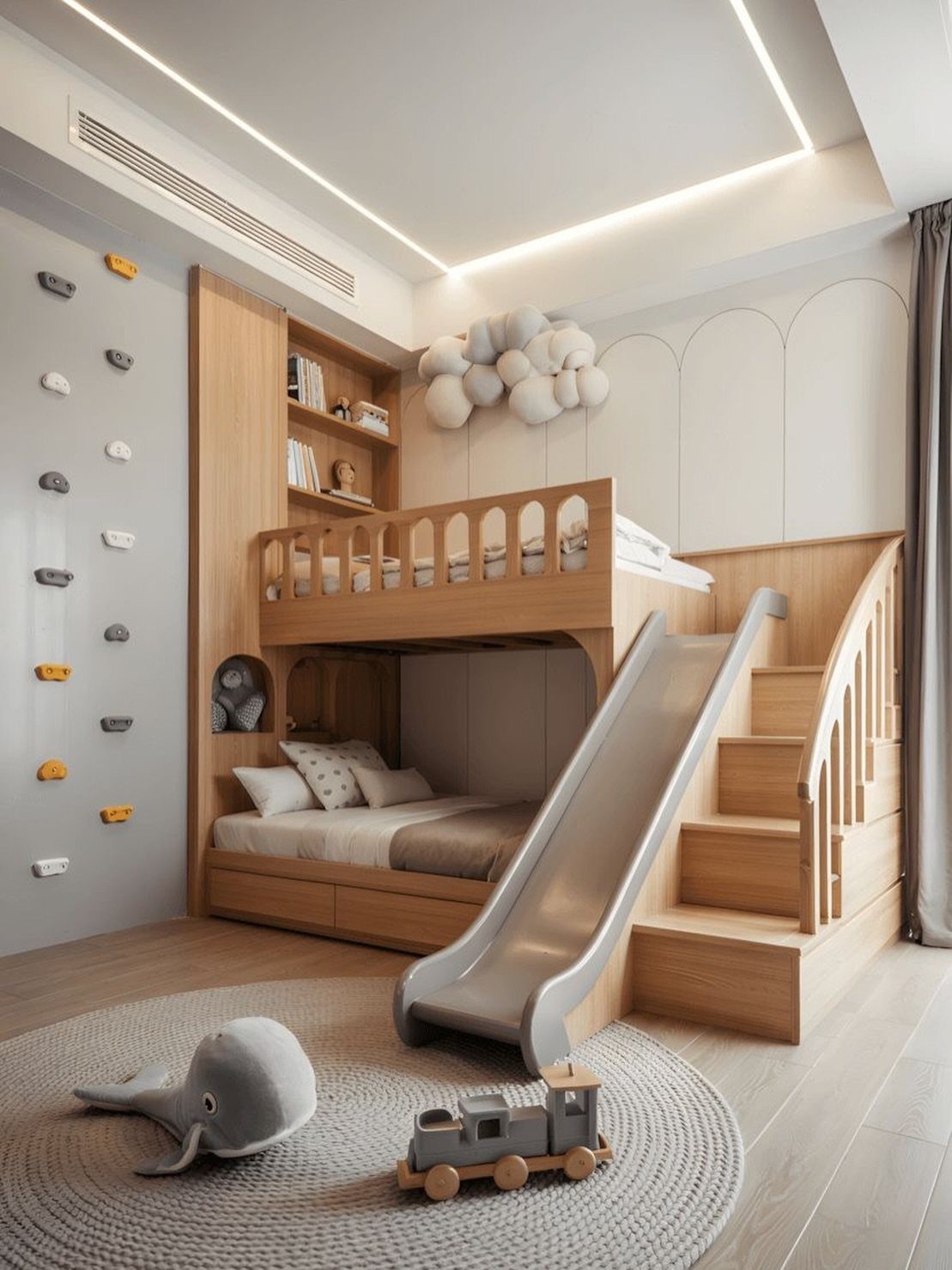
A slide turns the way down from the top bunk into the fun part of bedtime, and light wood keeps a bed this busy from feeling heavy.
Stairs, shelves and a climbing wall on one frame mean the bed doubles as play equipment, so I’d buy it only if the room has the space to spare.
Put a rug under the slide’s exit, and keep toys off that landing zone. Use the shelves for books and a few favorites so the bed doesn’t turn into clutter.
10. Compact Metal Bunk Bed
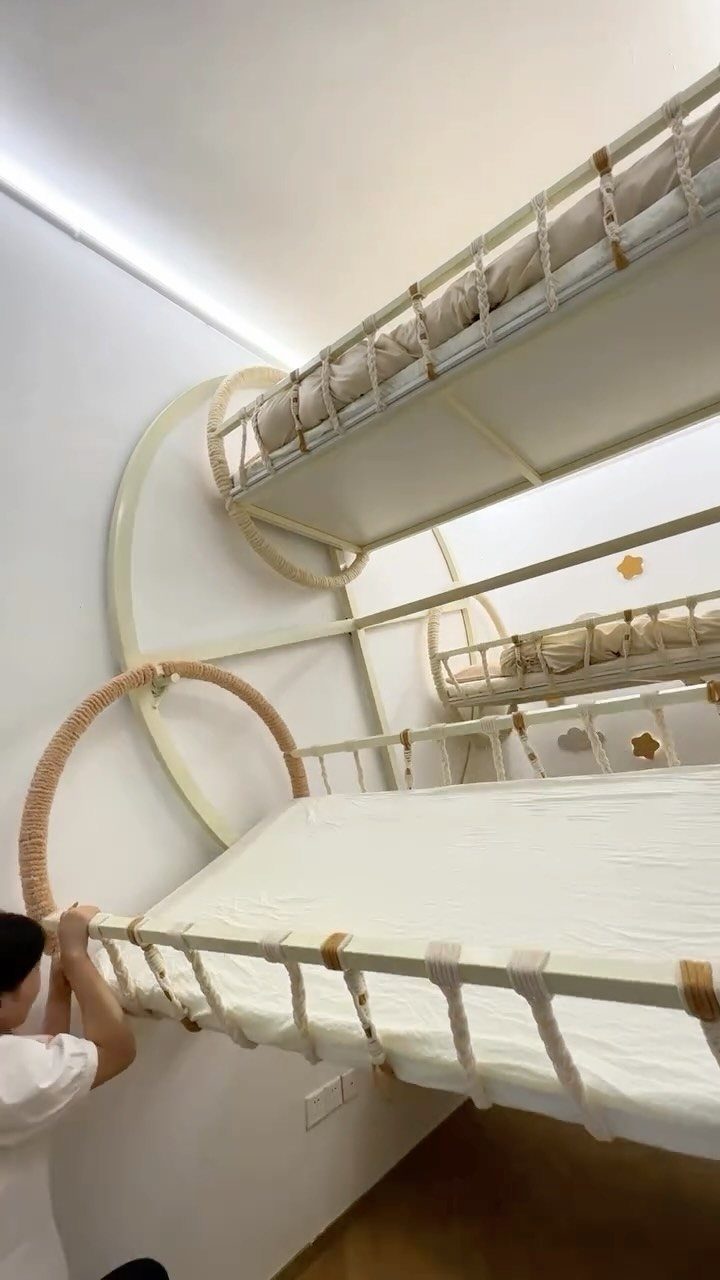
A slim white metal frame takes up less visual space than a chunky wooden stack, and the circular cutouts let light pass through instead of blocking it.
Rope railings give a nautical touch without adding bulk, which suits tight quarters where every piece has to stay light.
Metal is the budget-friendly pick, but check that the rope rails are tied off firmly. White bedding keeps the whole corner airy.
Choosing the Right Bunk Bed
Start with the room, not the bed.
Measure wall length, ceiling height and the swing of the door, then pick the frame that fits those numbers with room to spare. A bunk that technically fits but blocks a closet is a daily annoyance.
Next, decide what the bed has to store. If the room has no dresser, shelves or drawers built into the frame will save floor space, but a frame without them costs less.
Material comes after that. Solid wood or good plywood holds up longest and stays stable as kids climb and jump, while thin, flimsy parts loosen over time.
A bunk bed’s looks matter less than its guardrails on the top bunk and a ladder or stairs you can trust, so check those first.
Style comes last, because a frame that suits the room and the kids will look right once the bedding is on.
Safety Considerations
Guardrails come first on my checklist. Look for full-length rails on the top bunk, and if they detach, make sure they lock firmly back into place.
Next, test the way up. A built-in ladder or steps should feel solid when you push and pull on them, with no give where they meet the frame.
Mattress size matters too. Use the mattress type the frame was made for, since a thicker one can shrink the gap between the mattress and the top of the rail.
Many frames come apart into separate beds, which is handy as kids grow, but recheck every bolt after reassembly. Tighten hardware again every few months, because wood and metal joints work loose with daily use.
Maximizing Space
Stacking beds vertically hands floor back to you, and the real question is what that floor will do. In a shared bedroom, it can be a play zone or a spot for 2 desks.
In a guest room or compact home, a bunk gives you extra sleeping space without giving up the room’s other job. A spare room can hold an office and still sleep company.
Sketch out what the freed floor space will hold, whether that’s a desk, a dresser or a play rug, and measure it before you order the frame.
Sketch the room on paper, mark where the bed goes, and put the new activity in the cleared area.
Keep that space open. If it fills with storage bins and toys, the bunk has saved you nothing.
Frequently Asked Questions
Are loft beds better than bunk beds for small rooms?
A loft bed wins when only one person needs a bed, because it lifts the mattress and gives the whole floor below back to you. A desk fits well under it.
Bunks work better when multiple people share the room. Measure the gap between the mattress platform and any ceiling fan first.
What age should a kid have a bunk bed?
Most bunks are made for kids 6 and older, though maturity matters more than age alone. Rails should run the full length of the top bunk, and the staircase or ladder should feel solid where it attaches.
Are bunk beds safe?
They are when the frame is sound and you check the details. Tighten the hardware every few months.





