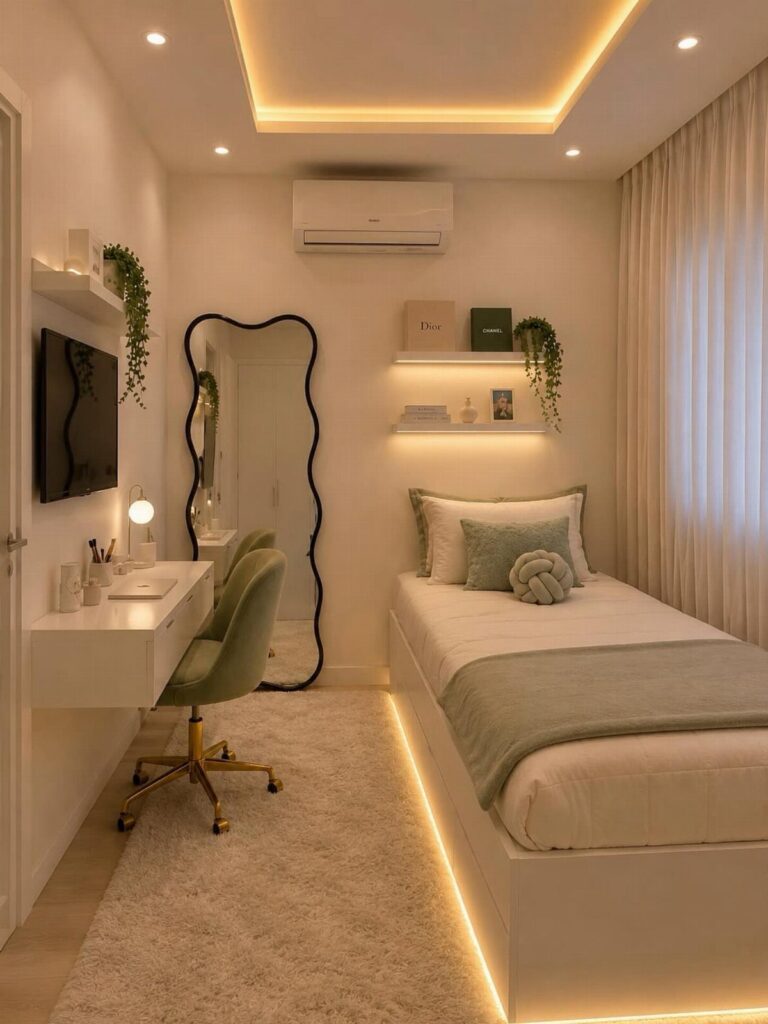
The ideas here run from a floor-to-ceiling wardrobe and a bed with storage drawers to a Murphy bed that folds into the wall. Which one fits comes down to what your room has too little of: floor, light, or storage.
A bed in a corner opens up floor space, a dim room needs mirrors and layered lamps, and a cluttered one needs storage that runs the full height of a wall.
1. Floor-to-Ceiling Wardrobe
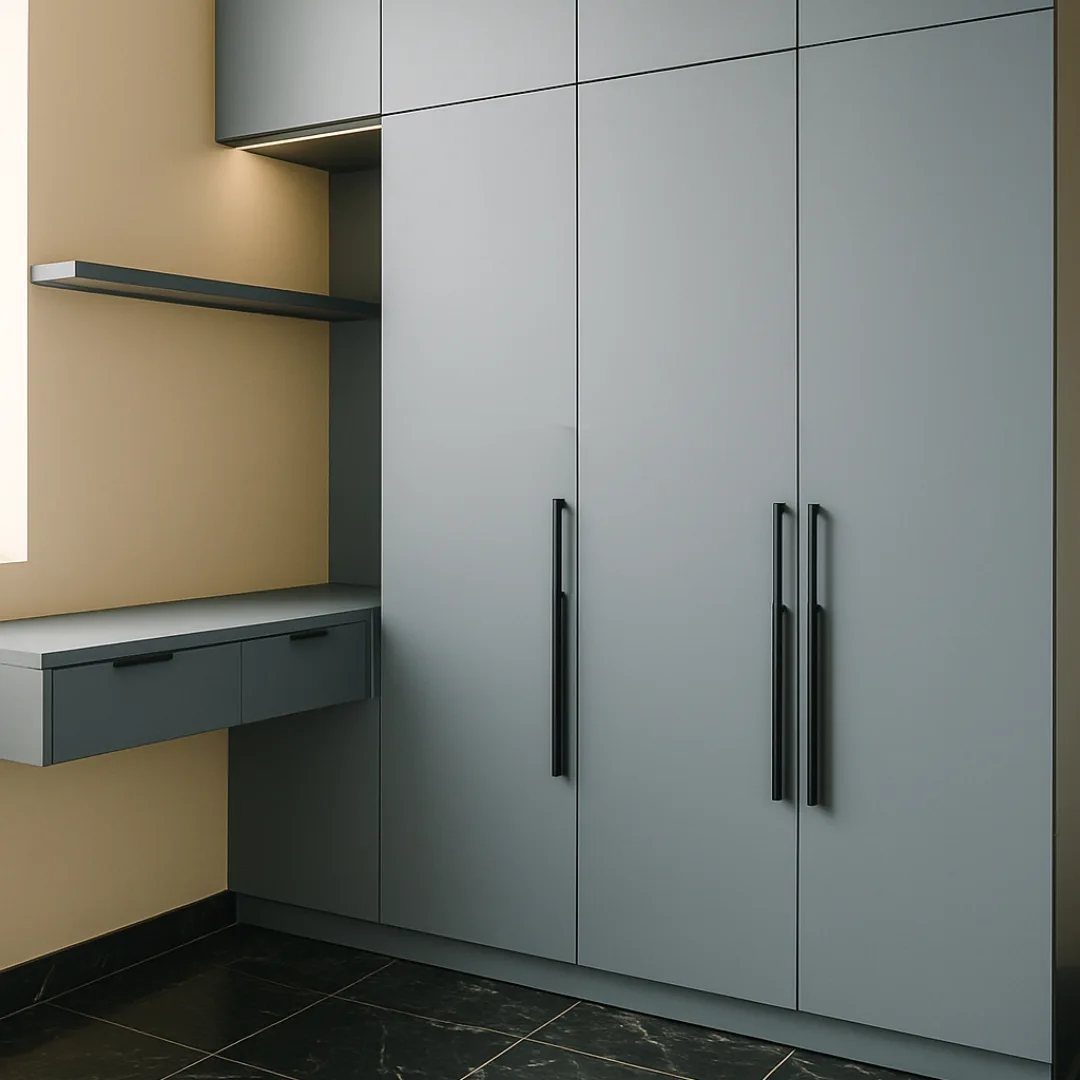
A wardrobe that runs the full height of the wall pulls clothes, bags and boxes up into space the room was already wasting.
Grey with black handles, like this one, stays quiet against a beige wall, so the bulk doesn’t dominate.
Pairing it with a wall-mounted desk and a shelf beside it keeps the floor clear, which matters more than any single piece in a small room.
I’d pick one finish for the whole run so it reads as built-in rather than assembled.
2. Bed with Storage Drawers
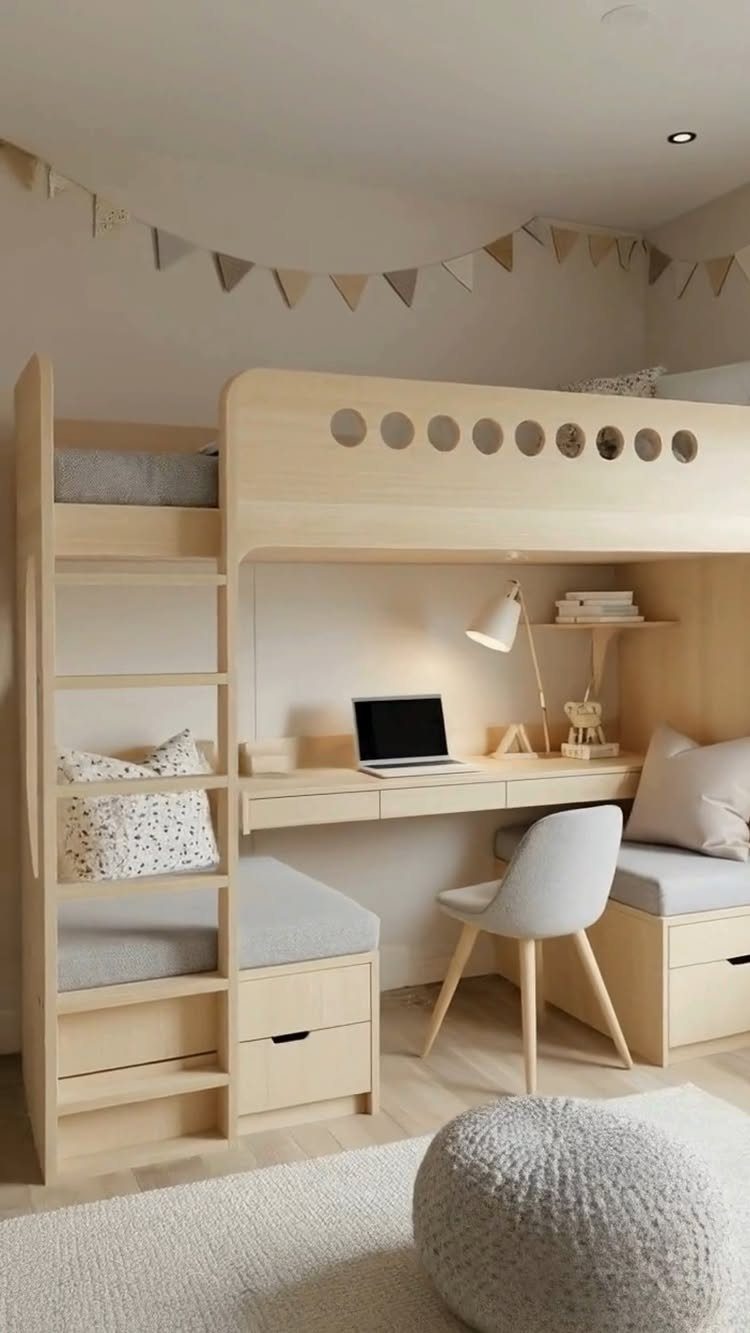
Raising the bed on a frame and filling the space beneath it gives a small room two or three functions in the footprint of one.
Here, a light wood loft has a desk, a seating spot and drawers all tucked under the sleeping platform.
Light wood keeps the structure from feeling heavy overhead. A rug and a pouf soften the zone below and make it feel like a separate corner.
I’d choose drawers over open shelves for anything that gets messy.
3. Bed in a Corner
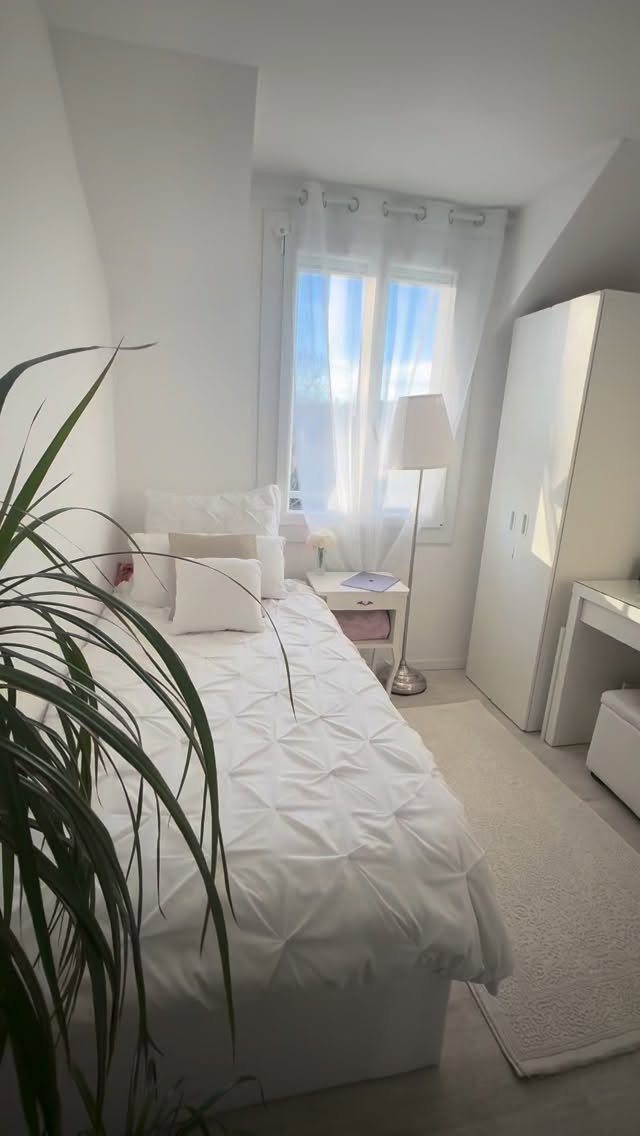
Pushing the bed into a corner frees up the center of the room, and 2 walls double as a headboard and side barrier.
That leaves a single open side for getting in and out, so a single bed suits this layout best.
A floor lamp and a plant fill the leftover corner space without taking up the walkway. Keeping the window clear, with sheer curtains, lets light reach the whole room.
Double beds in a corner get awkward for making the bed, so I’d stay with a single.
4. Large Mirrors
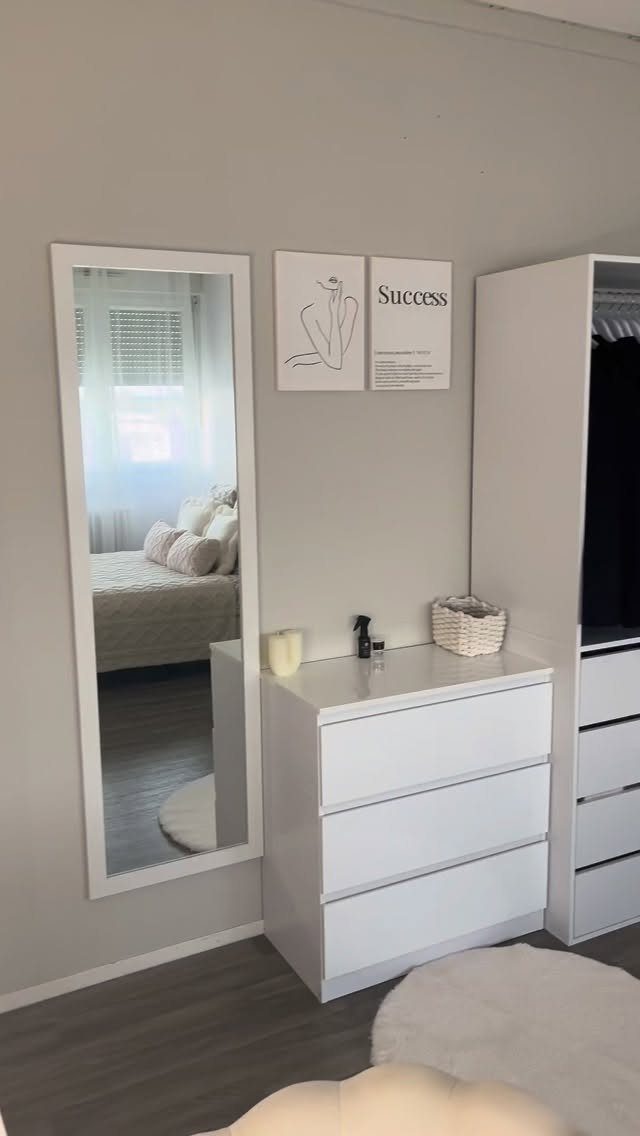
Leaning a full-length mirror against the wall costs far less than mounting one, and it takes about a minute. Placing it opposite or beside a window bounces daylight back into the room and makes the walls feel farther apart.
A leaning mirror also needs no drilling, which suits renters. Set it on a flat spot and check that it can’t slide.
I like keeping the surroundings simple, as in white furniture and a couple of prints, so the mirror doesn’t compete.
5. Photos and Artwork
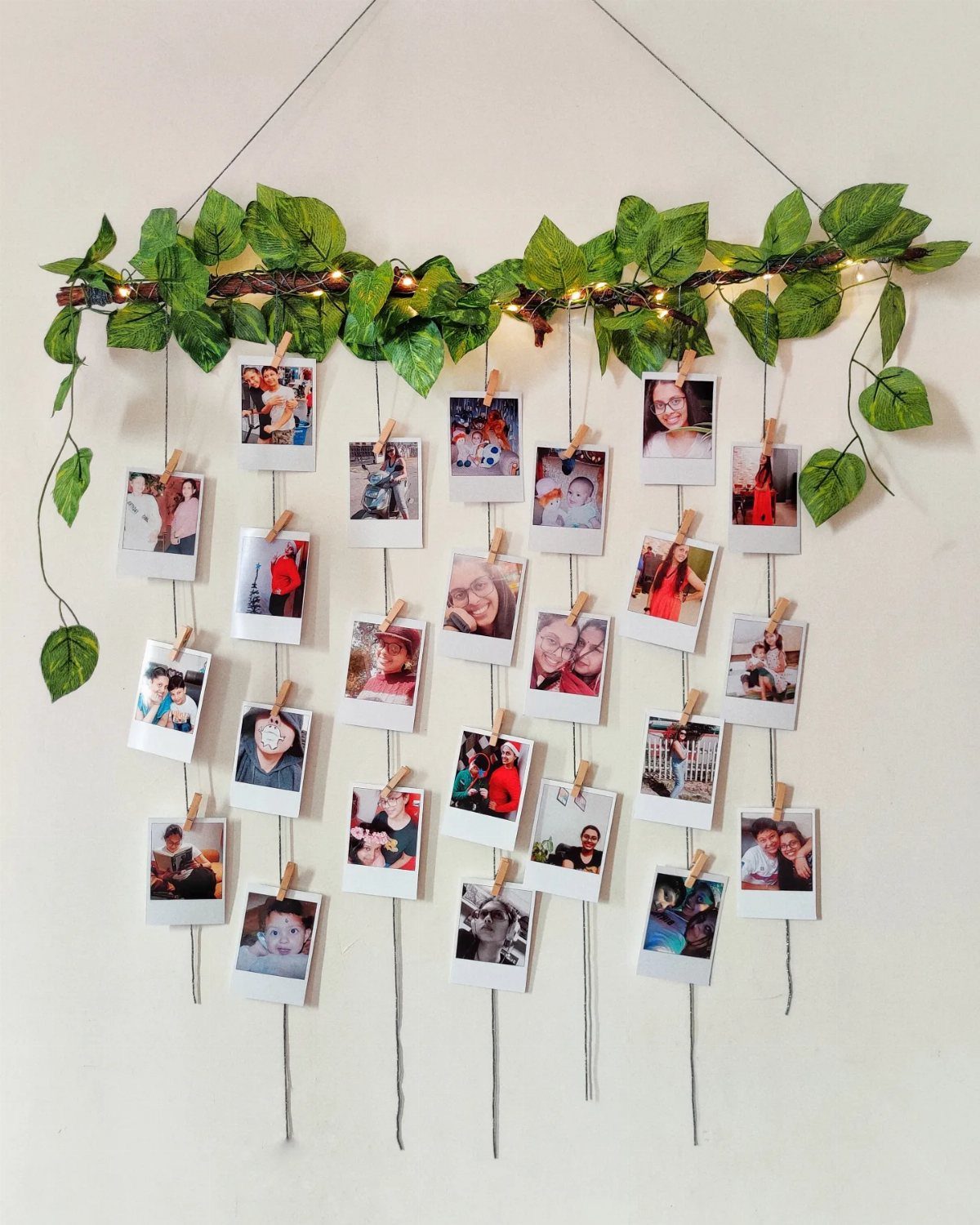
Polaroid-style photos clipped to hanging strings turn a blank wall into something personal without a single frame or nail hole beyond the anchor points.
String lights look better when they follow something with shape, and a leafy branch or piece of driftwood gives them structure instead of sagging in a straight line.
Clips let you swap pictures whenever you like, which a gallery wall of frames can’t match. The whole setup costs very little compared with framed art.
I’d keep the photos in a loose cluster rather than spreading them across the whole wall, so the effect stays tidy.
6. Wood and Plants
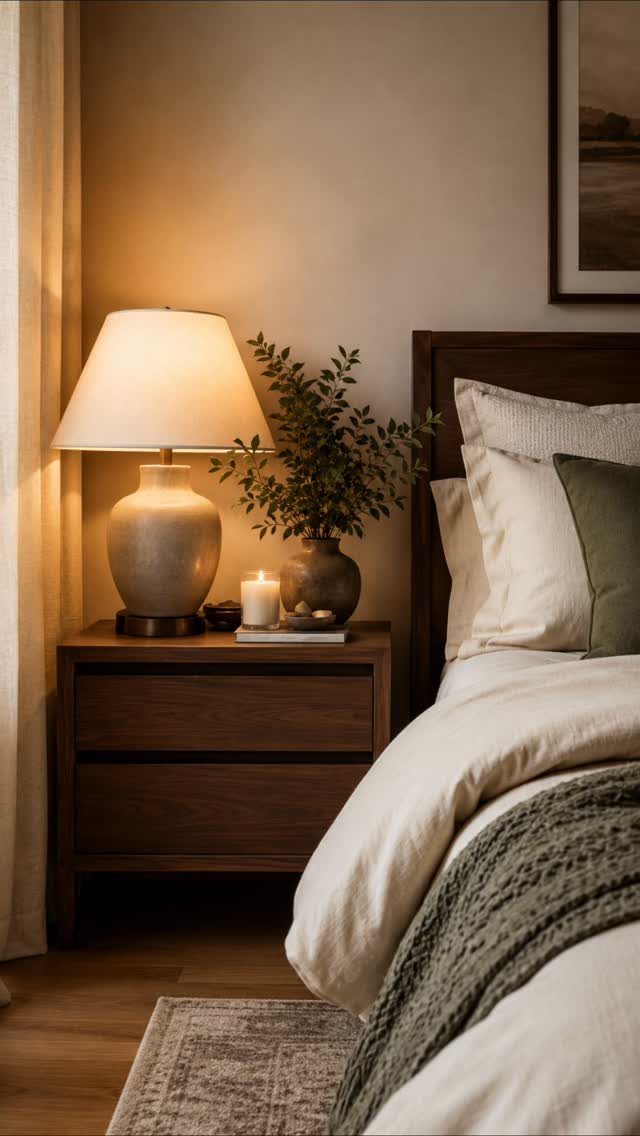
A dark wood nightstand next to green linens gives a bedroom warmth and depth in just 2 materials.
Here, a lamp, a small potted plant and a candle sit on top, which is about as much as a bedside surface should hold.
Dark wood anchors a pale room, so a single piece is enough. The green in the bedding picks up the plant and ties the corner together.
I’d keep the tabletop to 3 items, so there’s still room for a glass of water.
7. Install a Murphy Bed
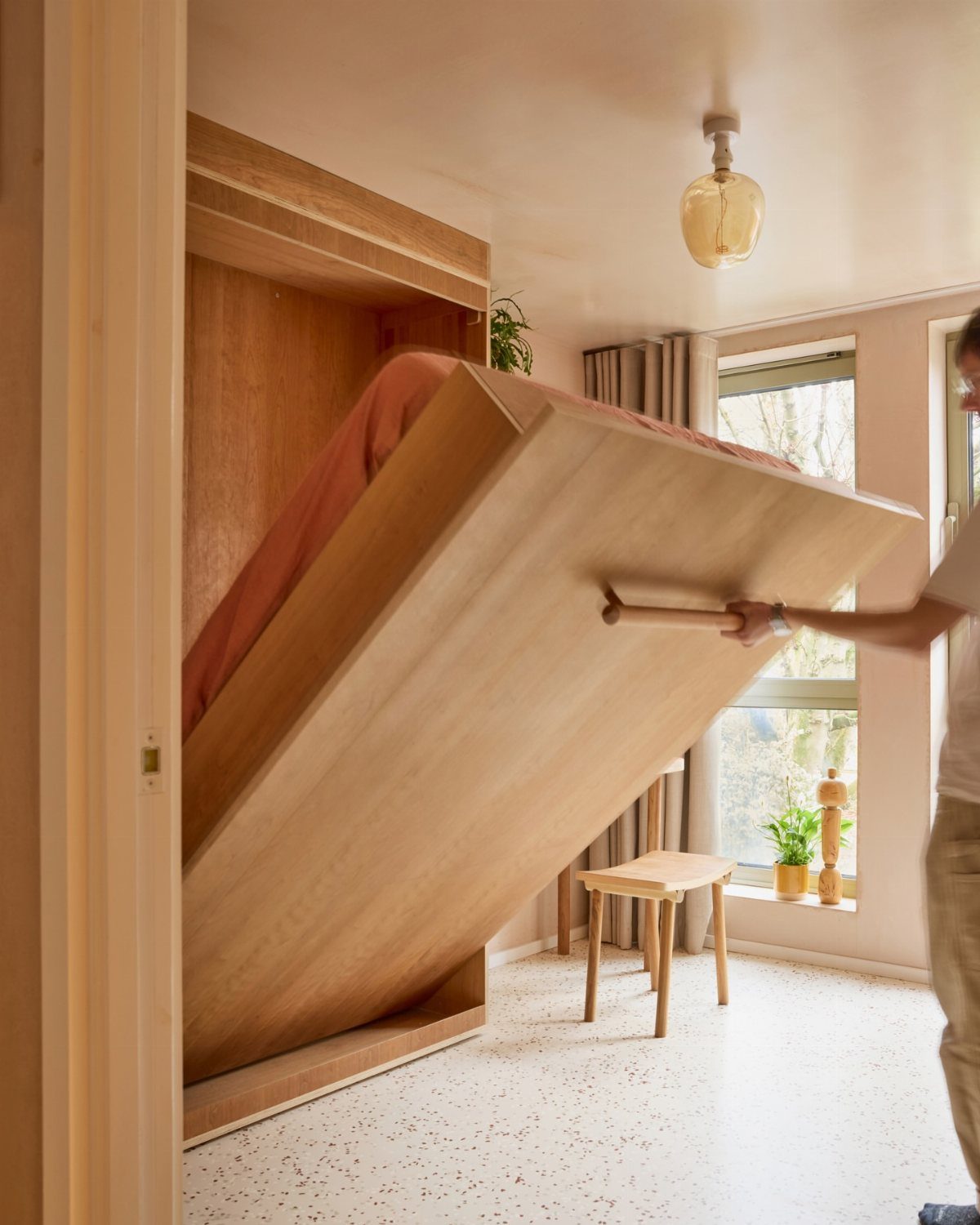
A Murphy bed folds into a wall cabinet, so a small room works as an office or sitting room by day and a guest room at night.
In this wooden version, the open floor in front of the cabinet is what you gain.
Keep the stool and any other furniture out of the swing zone, since the bed needs clear floor to come down. I’d choose wood that matches the other pieces in the room so the closed cabinet looks like storage.
Installing one takes real care with the wall, so read the instructions twice before you start.
8. Layered Bedding
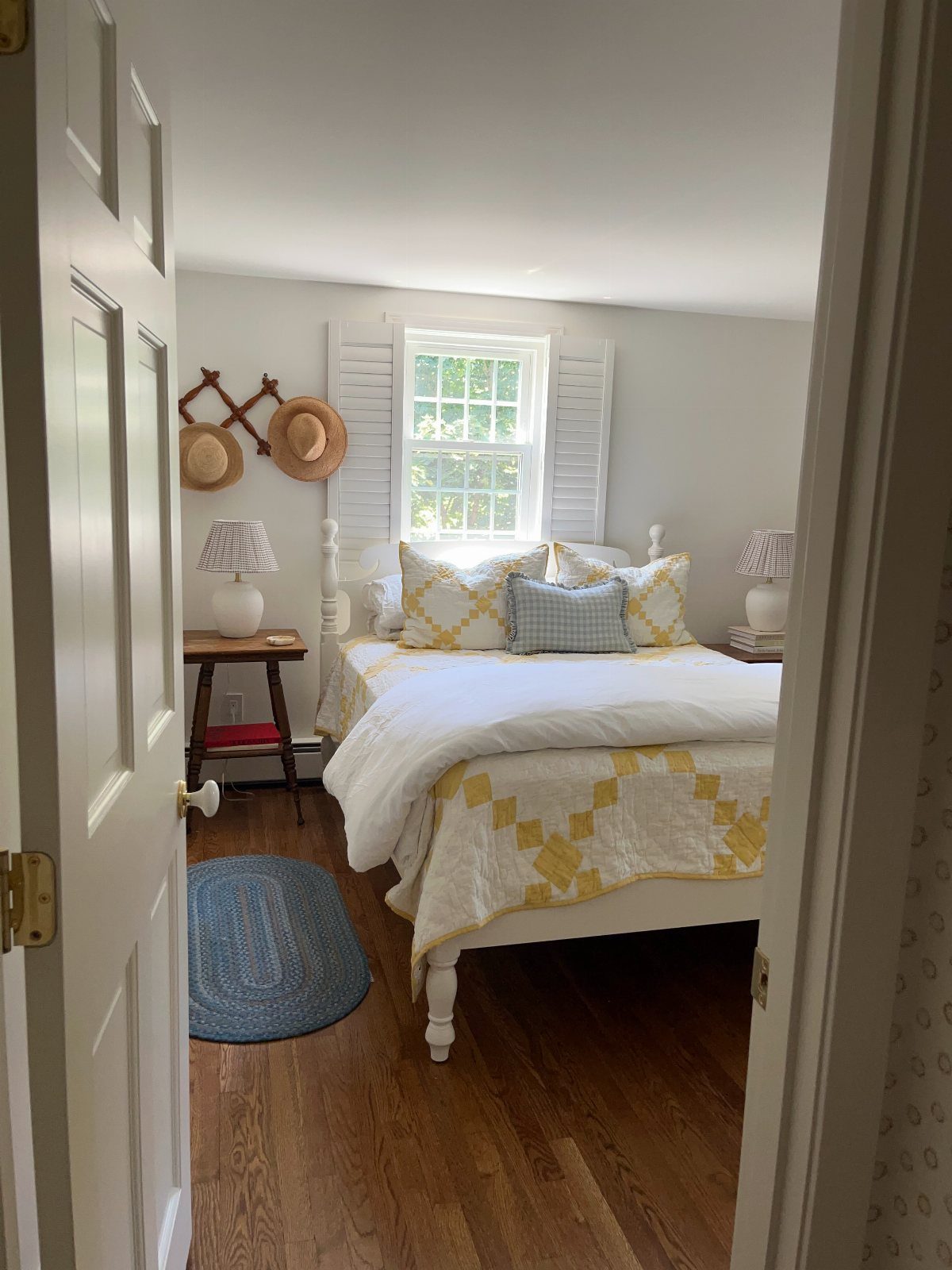
Yellow and white quilts stacked over a white bed give a small room color and softness without adding a single piece of furniture. Bedding is the cheapest layer to change, so it suits a tight budget.
Start with a white base, then add one quilt in a single color and a few pillows in the same family. Matching nightstands and lamps on both sides keep the look tidy.
I’d stop at 2 quilts and a handful of pillows, so the bed still looks made in under a minute.
9. Make a Small Window Do Double Duty
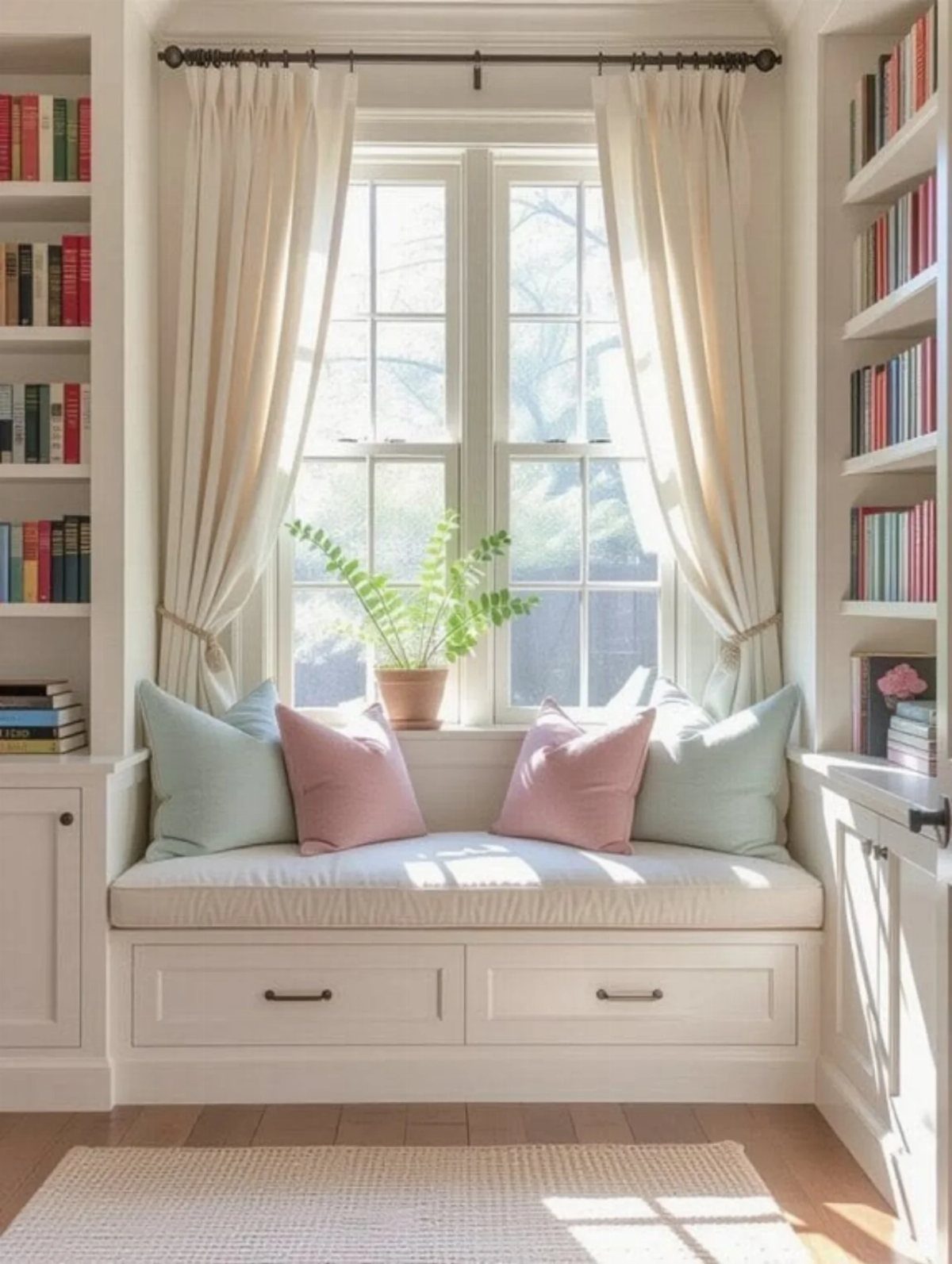
A window seat turns the wall under a window into seating and storage in one build. 2 drawers below the cushion hold what would otherwise crowd the floor, and bookshelves on both sides use the wall space around the glass.
Painting the whole unit white keeps it light and lets the window stay the focus. I’d keep curtains pale and short of the shelves so they don’t snag.
Choose drawers for linens or spare bedding, and leave the sill clear for one plant.
10. Incorporate Greenery
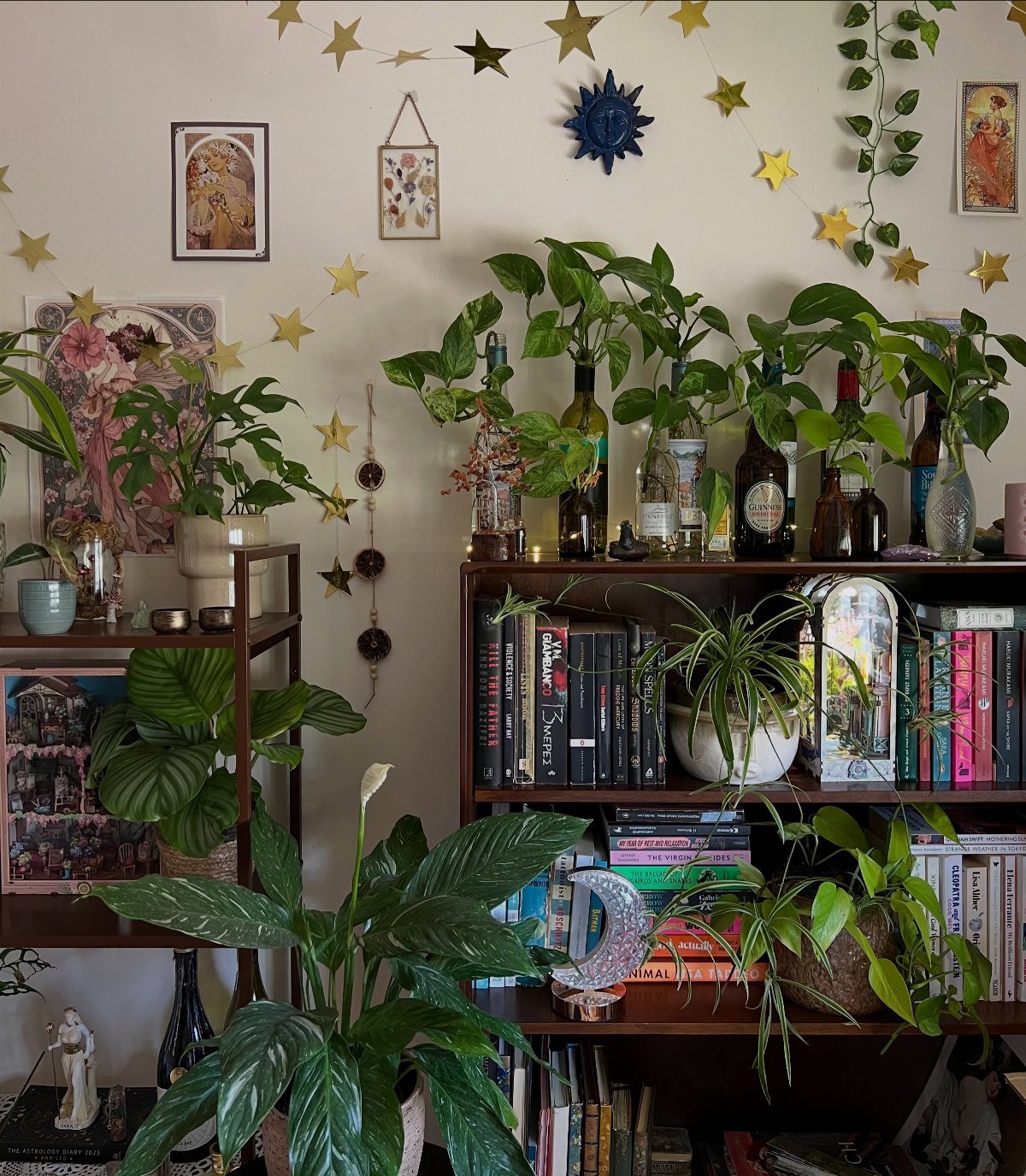
A shelf unit packed with potted plants gives a bedroom corner life without taking up floor. Stacking plants at different heights on wooden shelves, mixed with books and a few decor pieces, makes the corner look planned rather than crowded.
I’d mix trailing plants with upright ones, so the shelves don’t read as a flat row. Leave a couple of gaps for breathing room.
11. Slim Lighting Fixtures
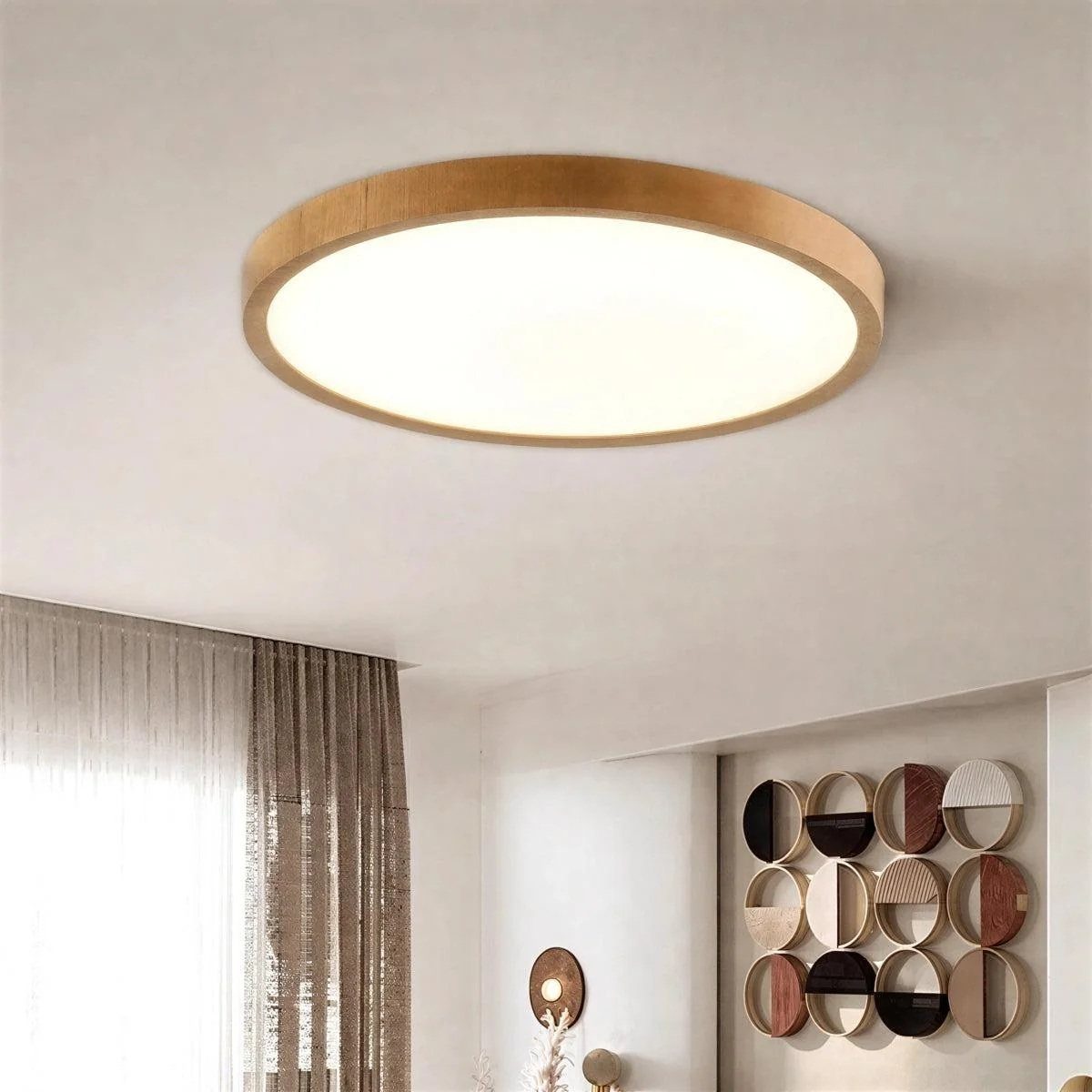
A slim round ceiling fixture lights the whole room while sitting almost flush, so it takes nothing from the space below.
Low-profile fixtures matter most in rooms where a tall person or a loft bed gets close to the ceiling. I’d pick one with a soft, diffused glow rather than a bare bright disc.
Sheer curtains and a simple wall piece keep the rest of the room as quiet as the light.
12. Layered Lighting
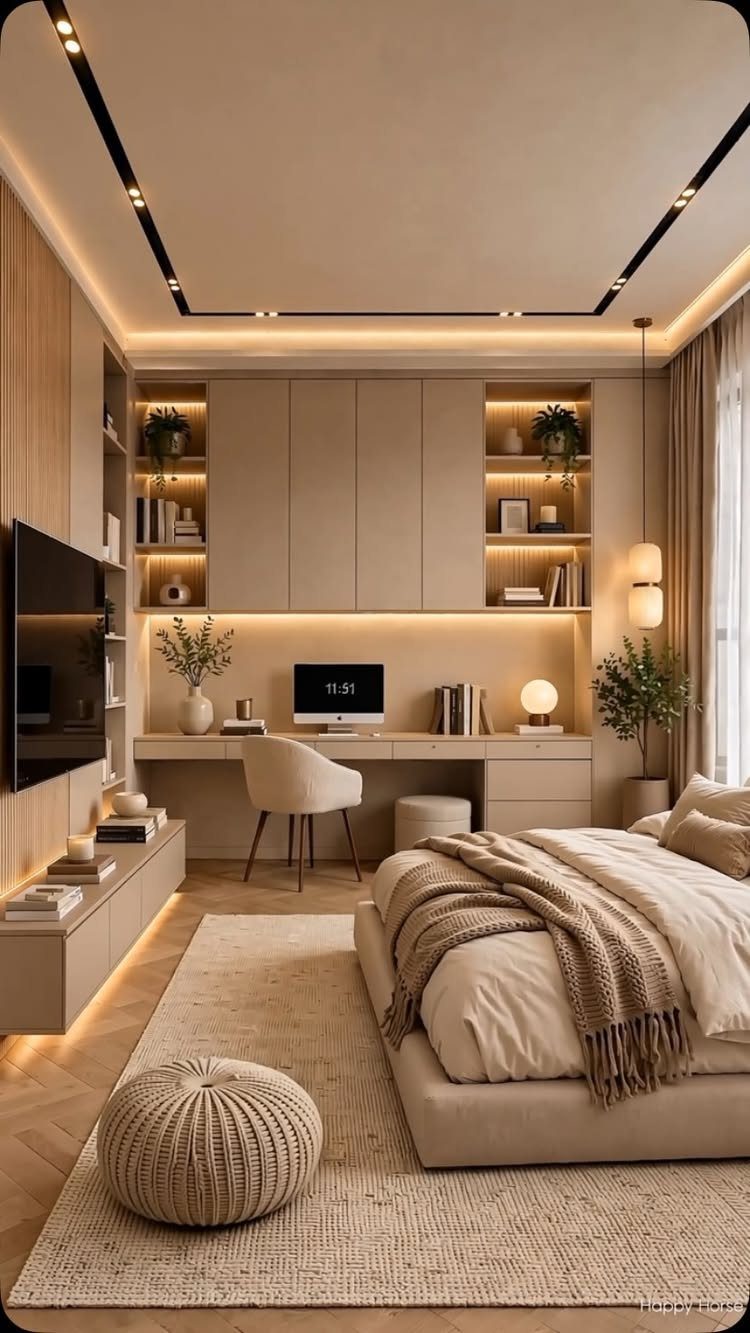
Several light sources at different heights make a small bedroom feel warmer than one overhead fixture ever will. Here, ceiling tracks give general light, LEDs under the cabinet brighten the desk, and a table lamp adds a soft glow.
I’d put each layer on its own switch or plug so you can dim the room down at night. Choose warm bulbs for the lamp.
Under-cabinet strips are the easiest layer to add, and they keep a work surface lit without crowding it.
Maximizing Natural Light
Light paint does a lot of the work before any furniture comes into play. Soft white, beige, pale gray and pastel shades all reflect more daylight than deeper colors, so the same window feels like it’s doing more.
Window treatments deserve a second look. Heavy drapes and layered valances eat into the glass, so I’d go with the lightest covering that still gives you privacy at night.
Hang the rod wider than the frame so the open curtains clear the glass completely. That one change lets in more light than any new fixture will.
Creating a Cozy Ambiance
Warm light is what makes a small bedroom feel like a retreat. Table lamps or wall sconces give a soft glow, and sconces have the added benefit of freeing up the nightstand.
Mix ambient, task and accent light so no single source has to do everything. A reading light by the bed handles the task, while a lamp across the room supplies the glow.
Textiles carry the rest of the comfort. A plush rug, a cozy blanket and a few soft pillows add texture, and I like mixing fabrics so the room has depth.
Keep at least some of them light and breathable so the room still feels fresh rather than heavy.
Planning Layout for Functionality
Start the layout with the longest wall.
Keep bulky pieces away from windows and doors. A dresser that blocks half a window or limits how far a door swings makes the room feel smaller than it is.
Before you move anything heavy, mark the furniture footprints on the floor with painter’s tape.
Then walk the paths you use daily, from the door to the bed and from the bed to the closet. If you have to turn sideways, shift something.
“A common mistake in small spaces is having a rug that’s too small,” says designer Nicci Harrison. In this compact bedroom, the rug extends to the wall, bringing the furniture together for a cohesive look.
Frequently Asked Questions
How can I make my small bedroom feel more spacious?
Paint the walls a light neutral and skip curtains entirely if the window faces somewhere private, or pick sheer panels. Position a full-length mirror across from the window or on the adjacent wall to double the light and add depth.
What are some storage solutions for small bedrooms?
Go vertical and go under. A wardrobe that runs floor to ceiling uses wall height the room was already wasting, and a raised bed with drawers beneath gives you storage in the footprint of the bed.
Floating shelves and wall-mounted organizers add more without touching the floor.
Is it possible to create a functional workspace in a small bedroom?
Yes, and a wall-mounted desk with a shelf beside it is one of the best ways to do it because the floor stays clear.
A loft bed can also hold a desk and a seating spot underneath, and a Murphy bed turns the room into an office by day. Add an under-cabinet LED strip to light the work surface without crowding it.
What is the best way to arrange furniture in a small bedroom?
Tape out each furniture footprint on the floor before you move anything, starting with the bed against the longest clear wall. Leave windows and door swings clear; a dresser that crowds either one makes the room feel jammed.
Should the bed go in the corner of a small bedroom?
Yes, if it’s a single bed.
The corner anchors the bed on 2 sides and keeps the middle of the floor open. A double bed in a corner makes it awkward to make the bed, since only one side is open.
What lighting works best in a small bedroom?
Layer several sources instead of relying on one overhead fixture. A slim, near-flush ceiling fixture with a soft, diffused glow gives general light without taking up space, while a table lamp or wall sconce adds warmth.
Wall-mounted reading lights also clear off the nightstand surface. Run each light on a separate switch and use warm-toned bulbs in the 2700K range.





