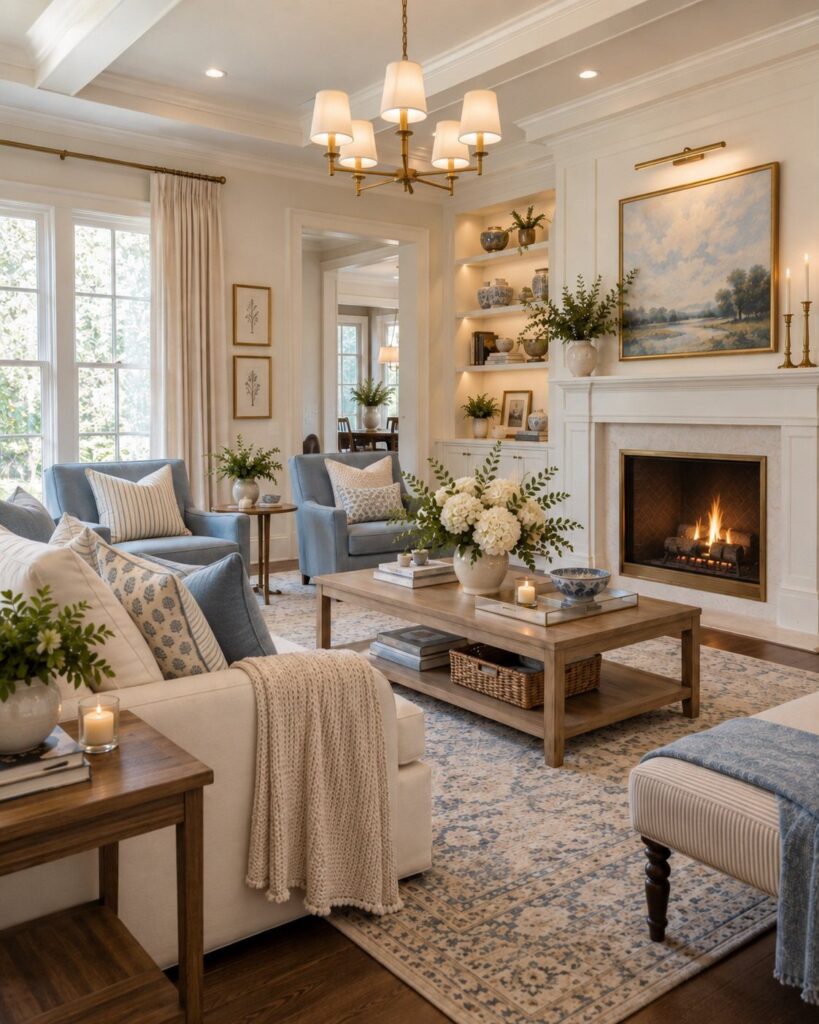
Renting or owning decides which of these ideas is yours: a bedroom mural in peel-and-stick form, a Wood Slatted Media Wall built from lightweight slats, or furniture that separates living room areas leaves the structure alone, while a built-in window reading nook or built-in storage means cutting and building.
Costs run from a few dollars for a pillow swap in the bold bedding idea to custom built-in storage and a full reading nook, and most of the paint, panelling and bedding projects fit into a weekend.
Check your lease and your budget first, and the right idea usually picks itself.
1. Layered Lighting
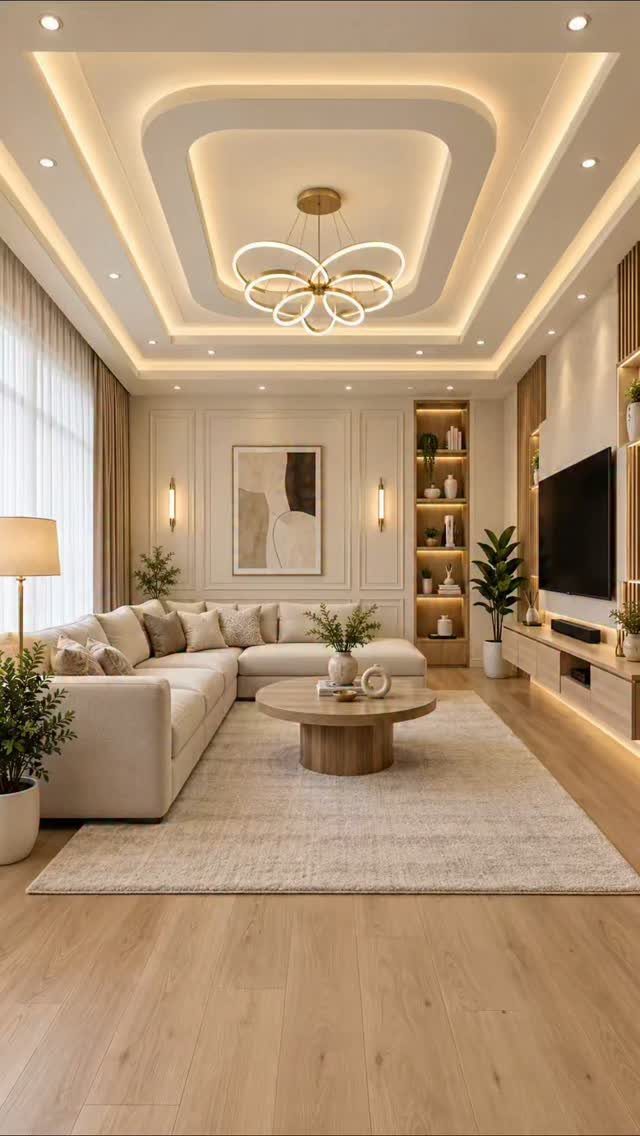
Three light sources at ceiling, mid-level, and low do more for a living room than one bright fixture. A chandelier anchors the center, while recessed lights and a glowing cove along the ceiling edge fill in the rest.
When you rent, copy the layering rather than the tray ceiling. A plug-in LED strip tucked behind a shelf or curtain pelmet, plus a lamp near the sofa, gets you most of the effect.
Put each layer on its own switch or smart plug so you can dim the room down at night.
2. Mix Patterned Textiles
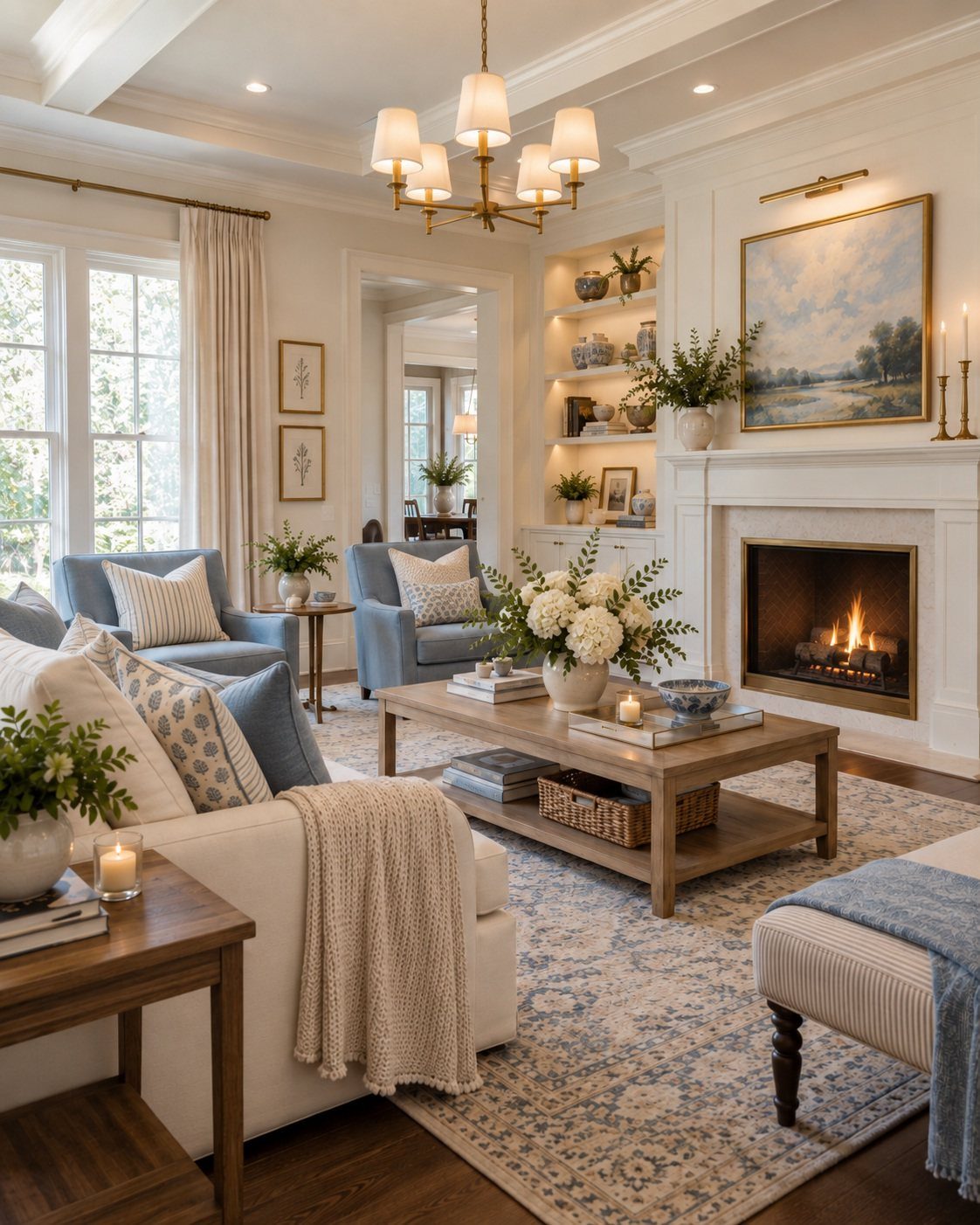
Patterned pillows work best when the patterns differ in scale. Pair one large print with a medium one and a small one, and keep them all within 2–3 colors so the mix reads as planned, not random.
Blue and white is an easy base because it keeps a busy sofa calm.
Pillows and throws are the cheap place to experiment, since a swap costs a few dollars and takes a minute. A big patterned rug is the one bold piece worth choosing first, then match the smaller textiles to it.
3. Two-tone Painted Room
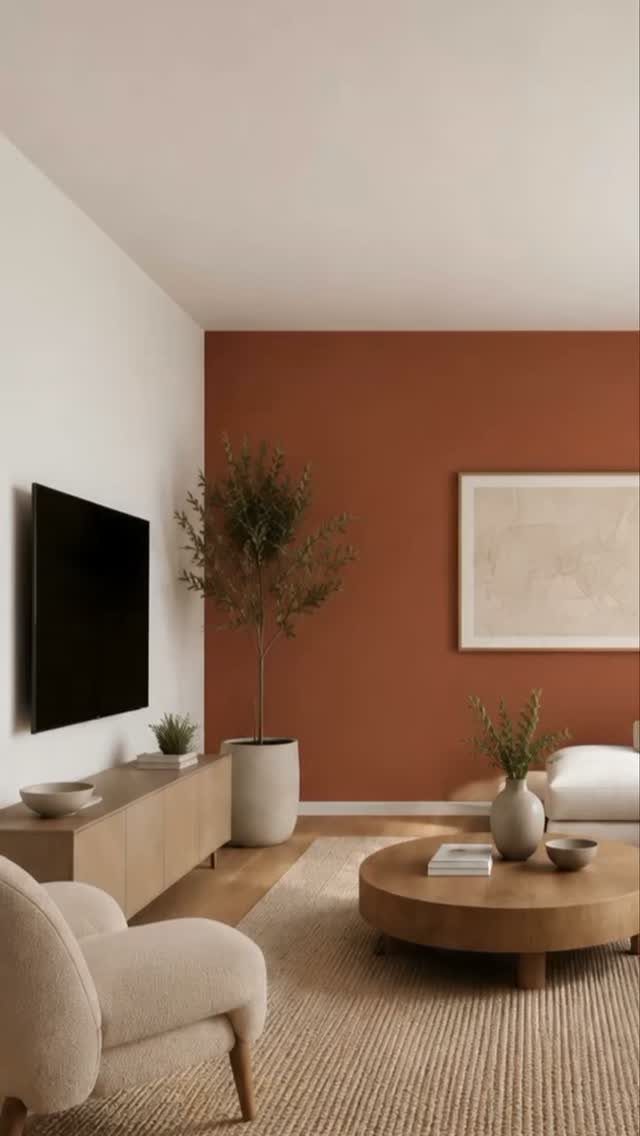
One terracotta wall against white warms a room without the heaviness of painting every surface. Pick the wall the eye lands on first, usually the one behind the TV or sofa, and leave the rest white.
It’s a one-weekend paint job for most rooms.
Tape the edge where the colors meet, and let each coat dry completely before moving to the next. Wood furniture and green plants sit well against that earthy shade, so you may not need to buy anything else.
4. Feature Wall Above the Bed
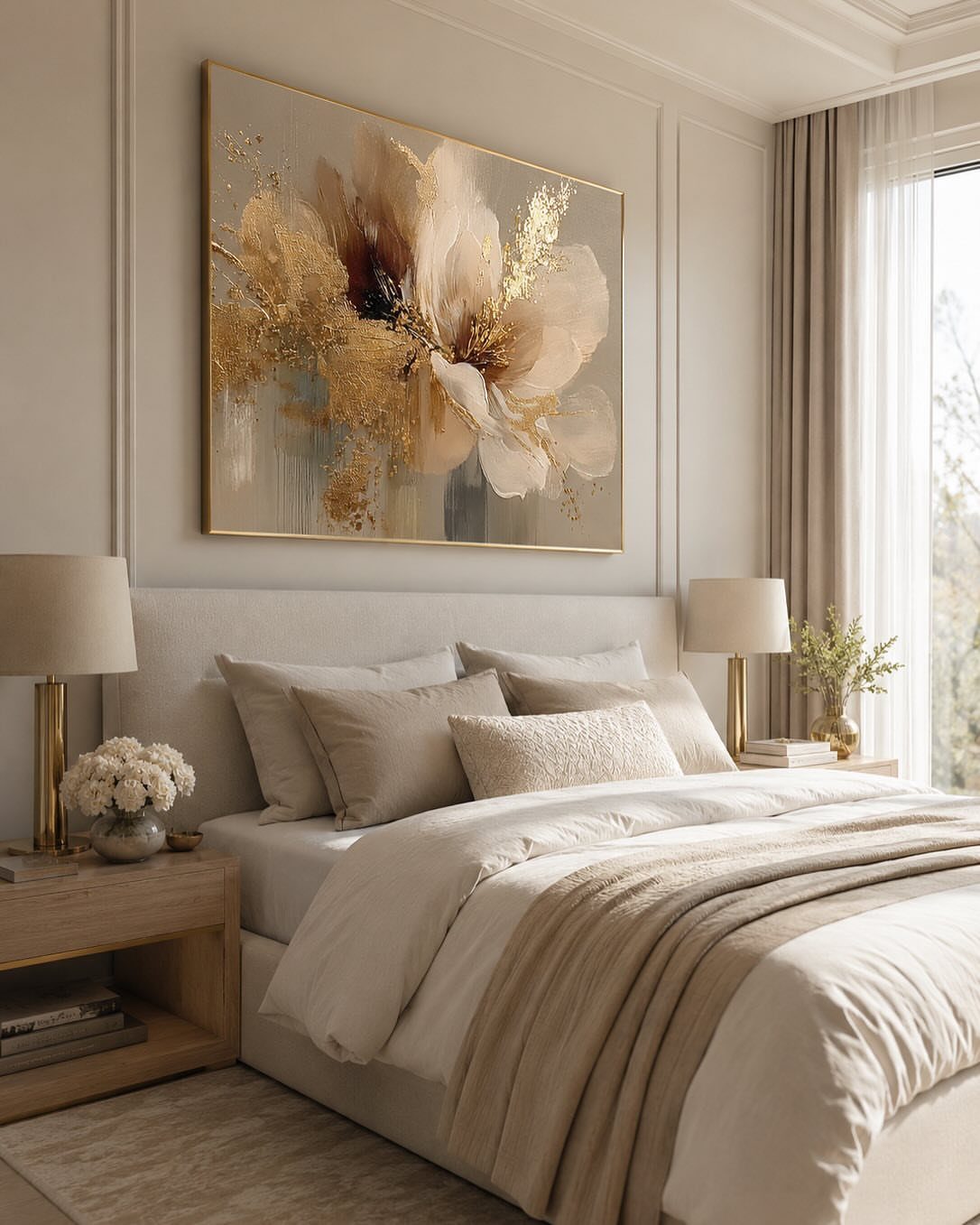
A single oversized painting above the bed does the work of a whole gallery wall, with less to hang and less to level. Choose art that is roughly two-thirds the width of the bed so it looks anchored, not floating.
Warm golds and beiges in the art can tie into neutral linens, so the room feels calm.
Flanking lamps keep the arrangement balanced. If a large original costs too much, a big framed print or a stretched canvas gets you the same look for far less.
5. Ample Seating with Soft Textures
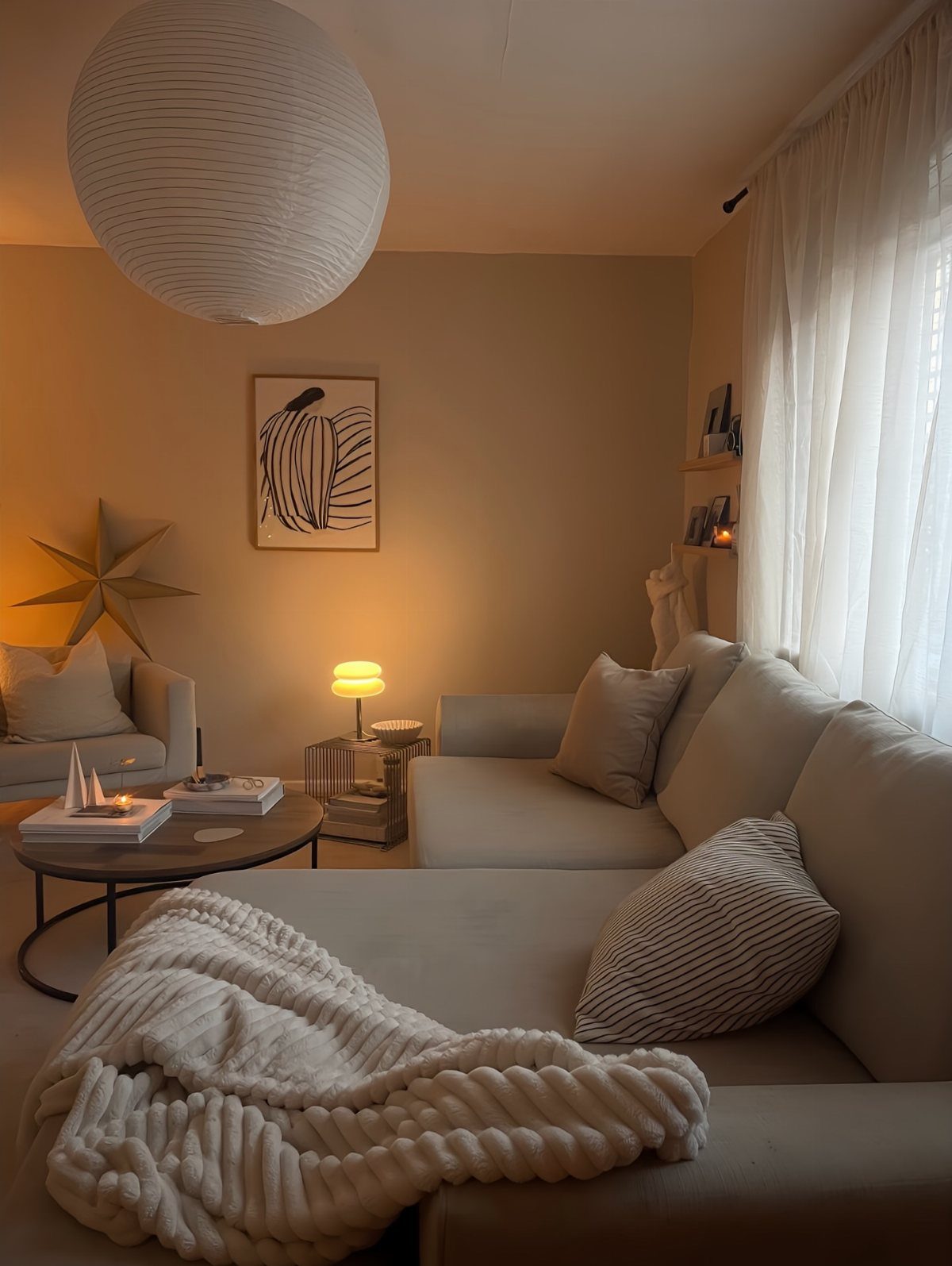
Deep seating only feels cozy when the textures are soft.
I’d mix 2–3 textures, such as knit, linen and a plush fabric, in the same warm neutrals so nothing fights.
A large sectional seats more guests than a sofa and 2 chairs. You lose floor space, so measure the room and leave enough clearance to walk around the coffee table.
6. Choose a Relaxing Color Palette
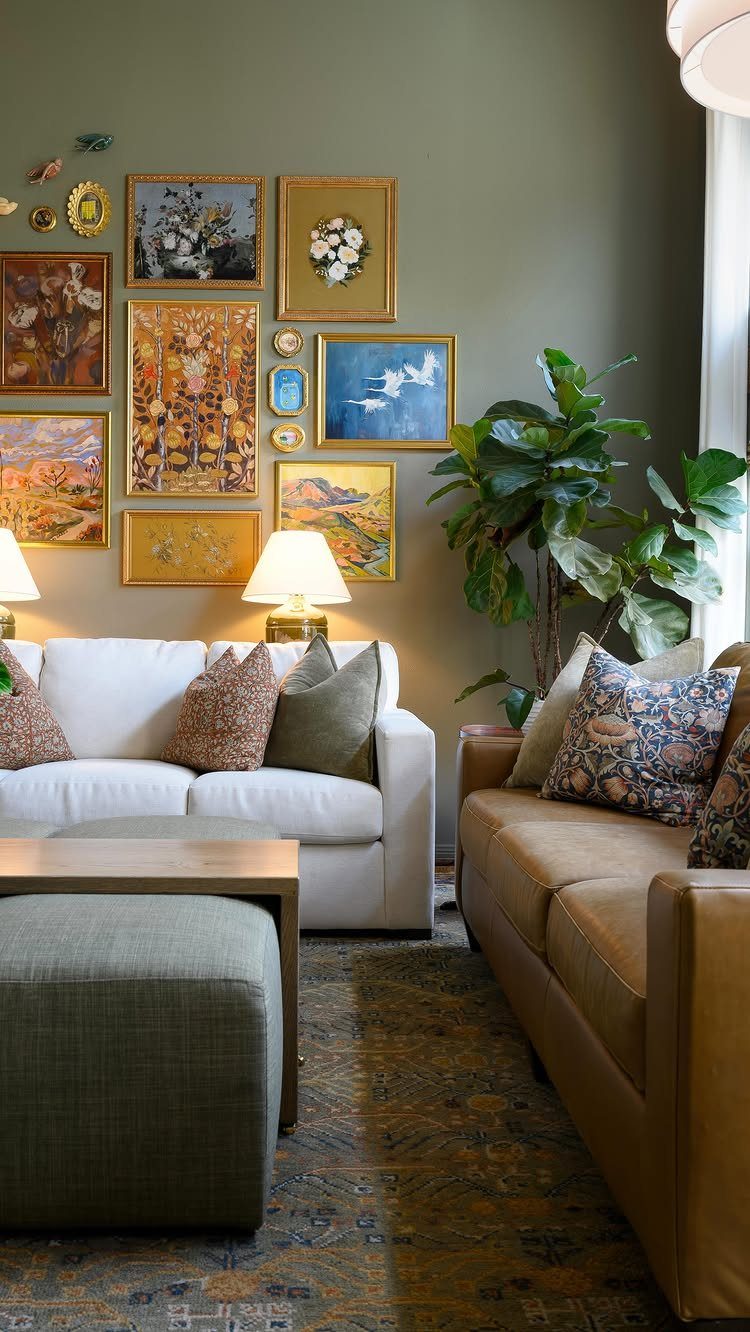
Olive green walls calm a room because the color is muted and earthy rather than bright. It pairs well with warm tones like brown leather and gold frames, and a white sofa keeps the green from closing the room in.
Test a sample patch and look at it in morning and evening light before you commit. Repeat the green with a plant, and let the rug carry a few of the other colors so the palette feels connected.
7. Vintage Furniture
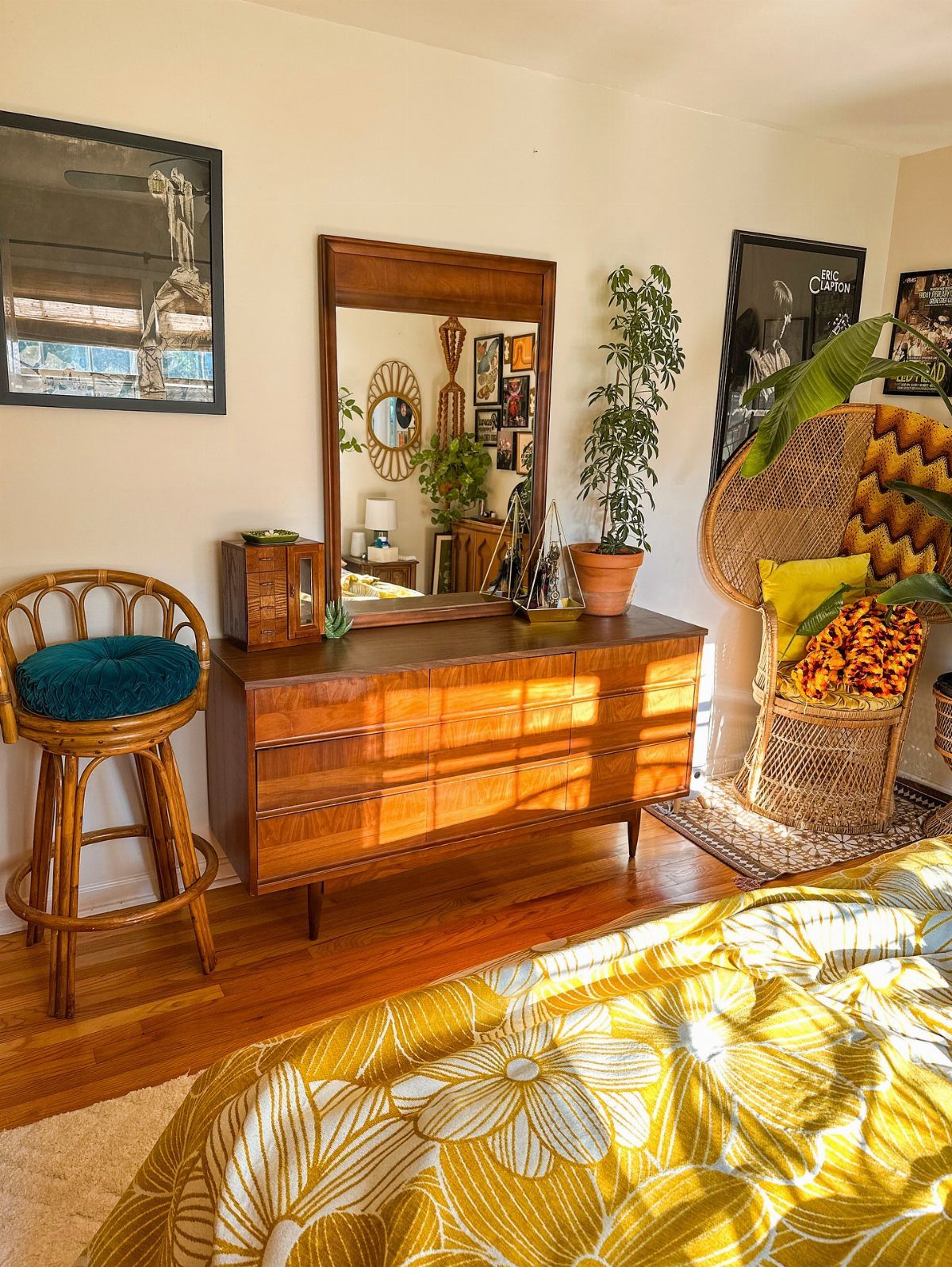
Pair it with rattan or wicker and the wood tones feel intentional instead of mismatched.
Secondhand shops and online listings are the budget route, and one solid piece is enough.
Check that the drawers slide smoothly before you buy. Then let a plant and a bright bedspread do the rest.
8. Symmetrical Furniture Arrangements
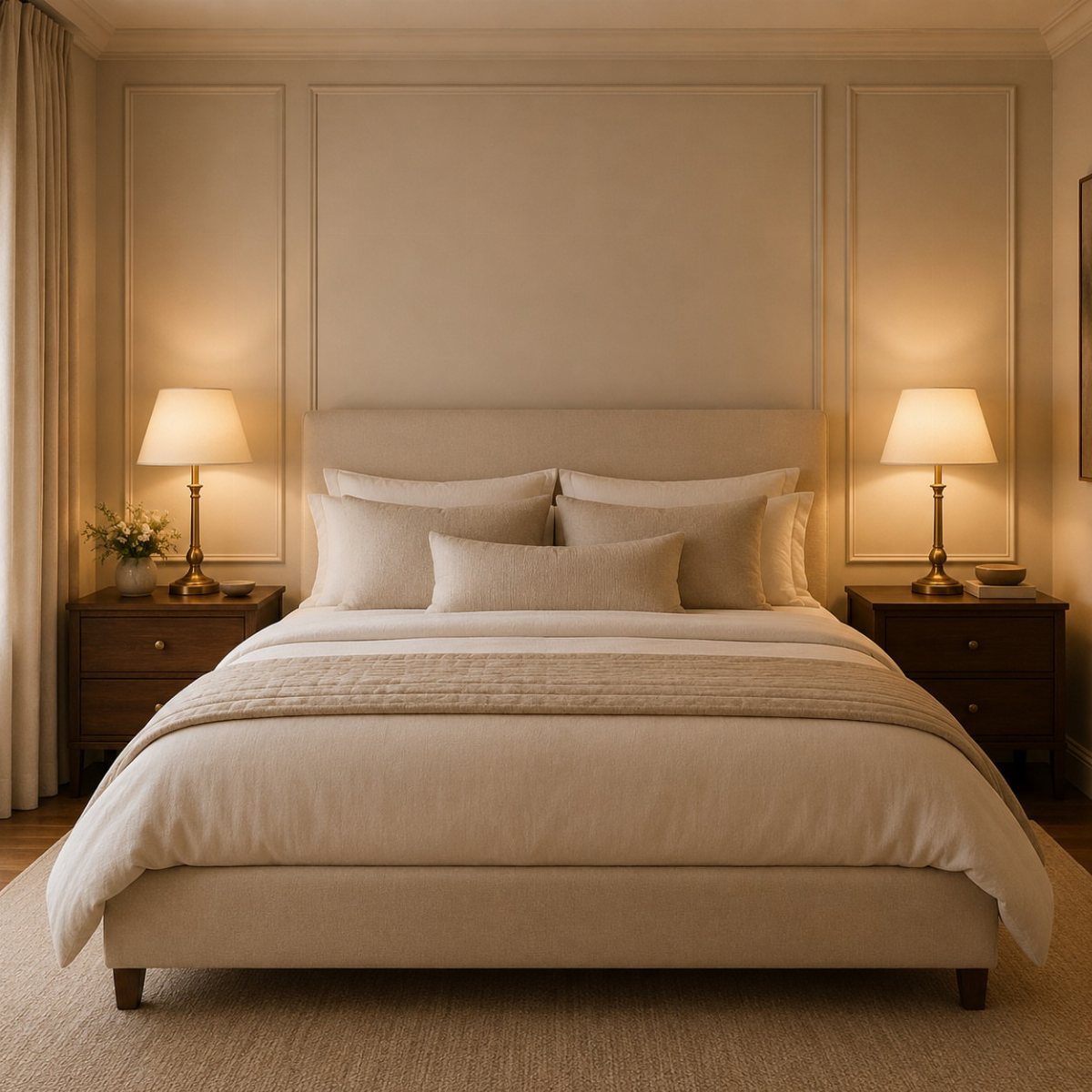
Keep the lamp heights equal and the nightstands at about mattress height. The layout needs wall space on both sides of the bed, so it suits a room where the bed can sit in the middle of a wall.
9. Painted Panelling
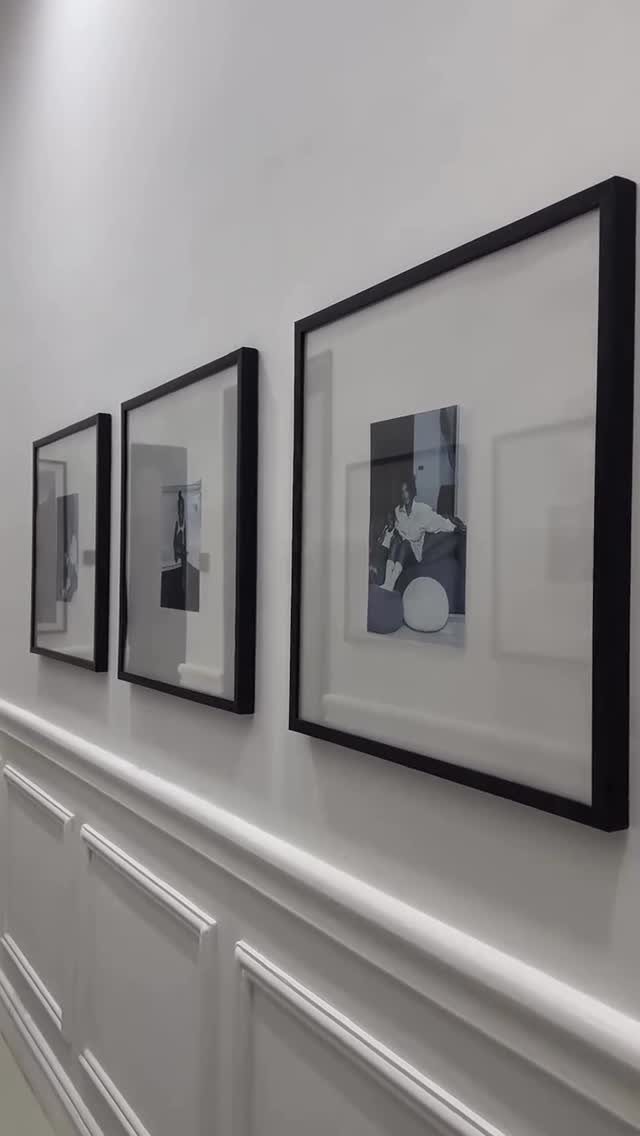
Wainscoting painted the same white as the wall above it adds depth without adding color. Paint the whole thing one shade and the shadows between the panels become the pattern.
Peel-and-stick or MDF panel kits fit a weekend and a small budget.
Caulk the seams and paint the panels and wall in the same finish. Above the panels, a row of 3 frames of the same size and spacing keeps the wall calm and gives the paneling room to be the star.
10. Bold Bedding
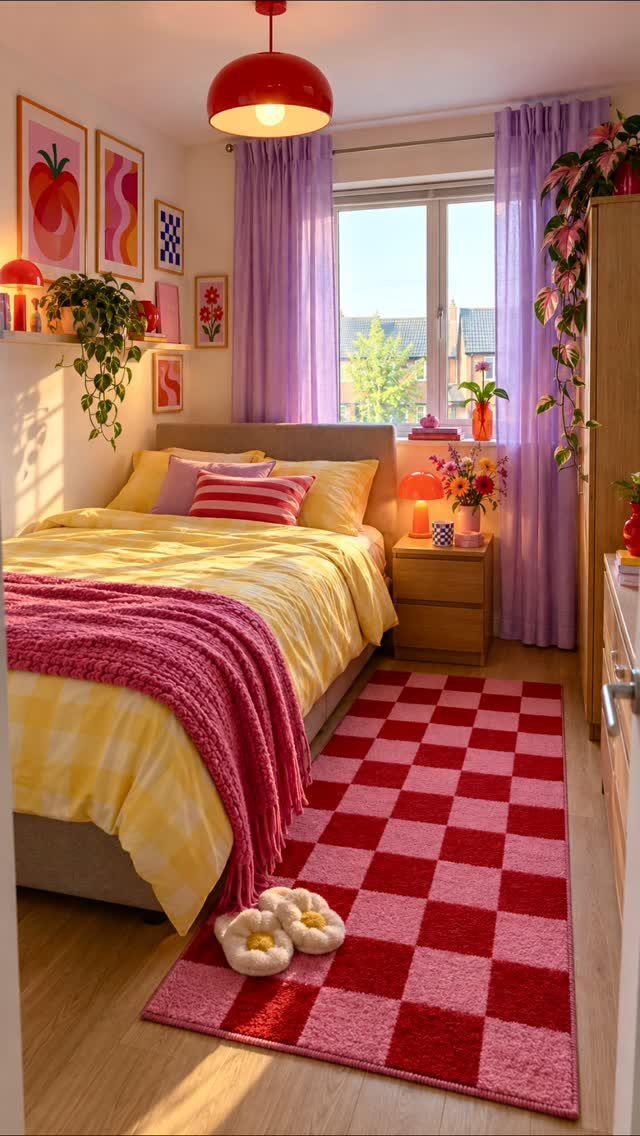
Yellow checks on the duvet, a pink throw, and a red checkered rug only hold together because every piece is a saturated, playful color.
Bedding is the cheapest place to go this bold, since a duvet cover swaps out far faster than paint.
I’d start with one patterned duvet cover, then add a contrasting throw. Curtains and a pendant lamp can pick up the same colors if you want to keep going.
11. Statement Headboard
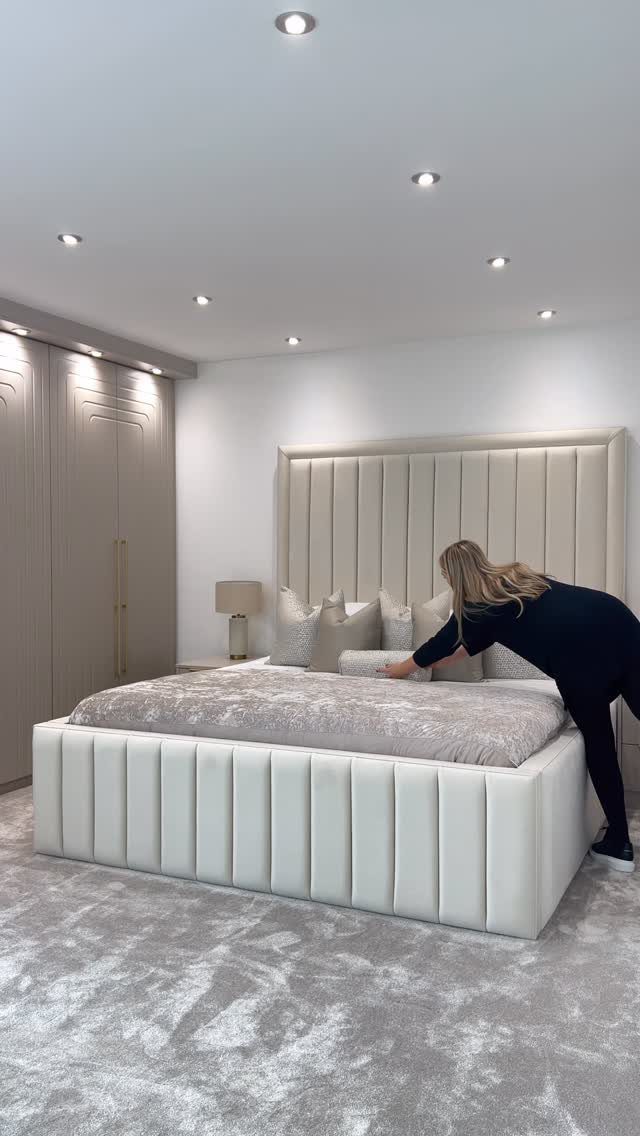
A tall, channeled headboard pulls every eye to the bed, so let it be the main event and keep the rest of the room quiet.
Cream upholstery keeps that much height from feeling heavy, and the vertical channels add shadow and structure.
The maker of this one describes it as a 6 ft tall headboard with a surround.
Measure your ceiling and wall width before ordering anything that big. For a cheaper route, a DIY panel with foam and fabric gives you the height for less.
12. Natural Elements
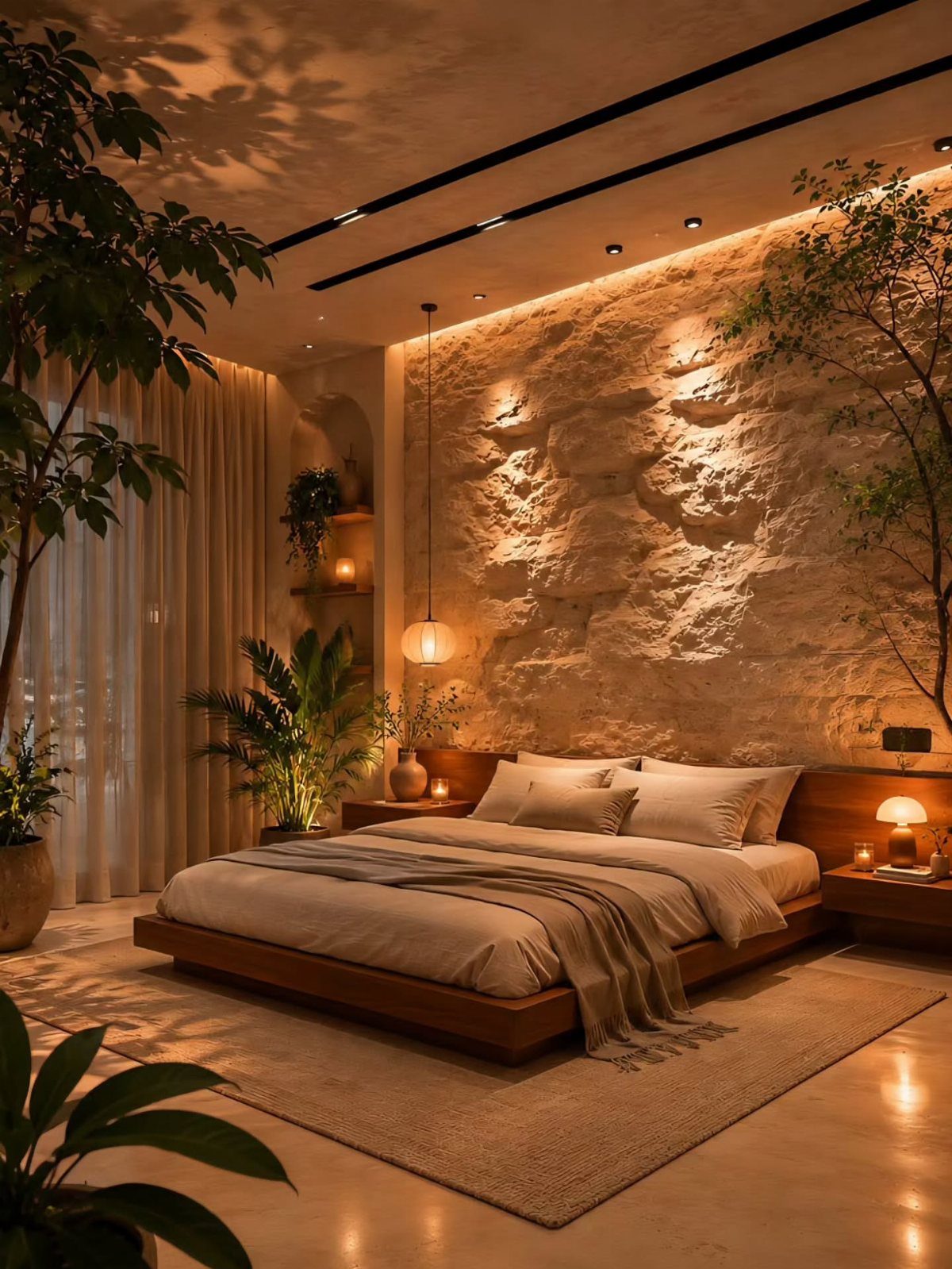
Warm lighting, around 2700K bulbs, makes stone texture look soft rather than cold.
Real stone is a big project, so I’d look at stone-look panels or veneer if you rent or work on a small budget. Plants are the easy part: add a few at different heights, and keep the wood tones warm.
13. Cohesive Color Scheme
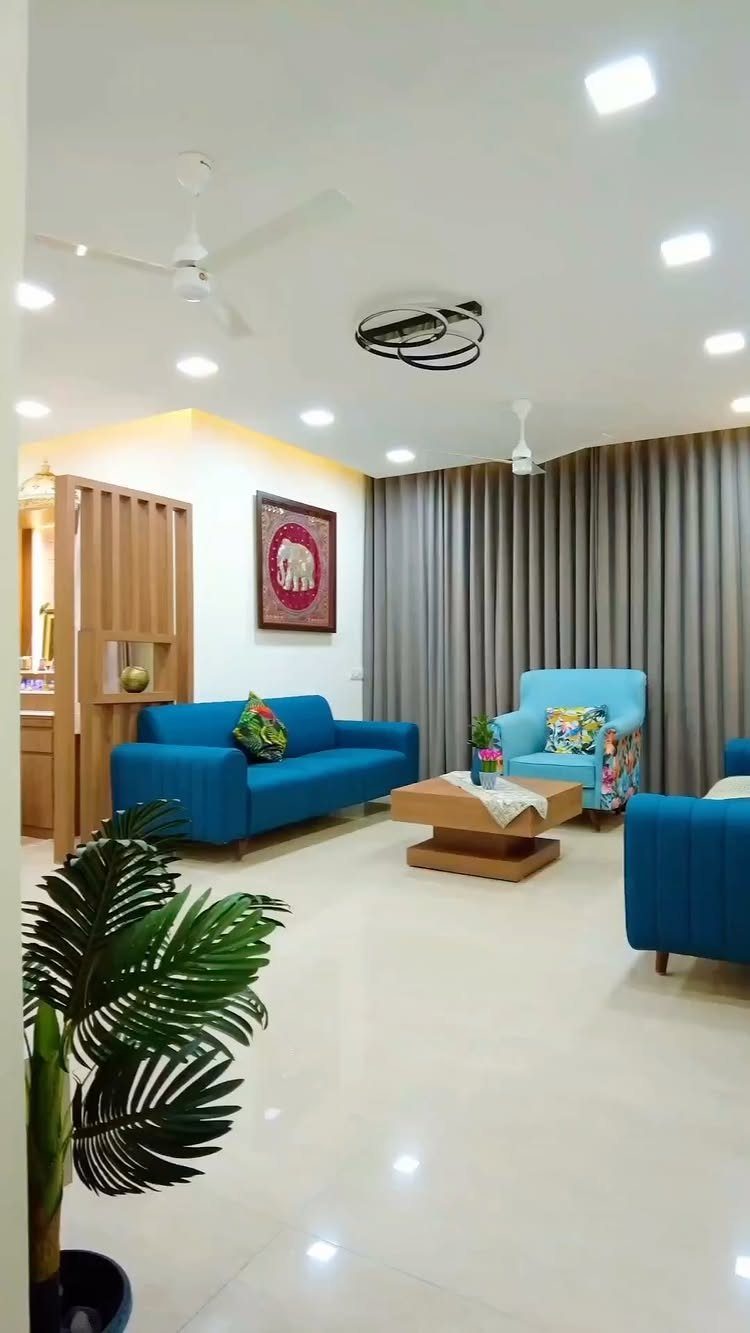
Blue sofas, a light wood table and beige curtains hold together because the palette stays small: one strong color, one wood tone, one neutral. Pick the blue first, then let everything else stay quiet around it.
A white ceiling fan and a white wall keep the room bright, so the artwork can carry the personality. Pillows and a throw are the cheap way to repeat the blue without buying another big piece.
14. Furniture to Separate Living Room Areas
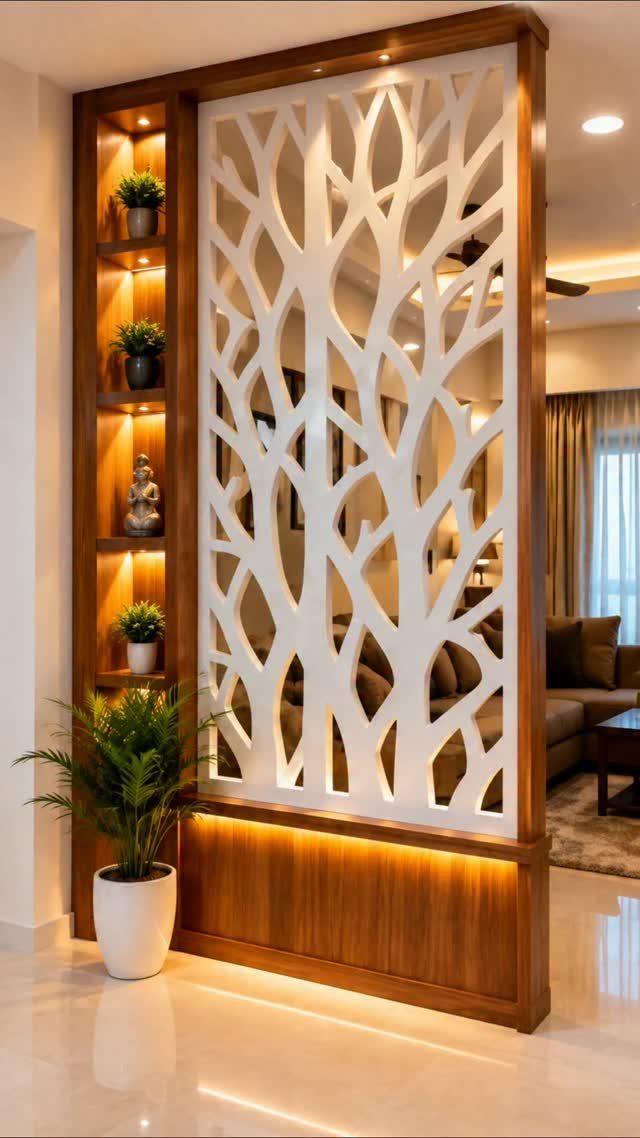
A freestanding divider with shelving splits an open room into zones without a single wall going up. A laser-cut pattern lets light and sightlines pass through, so the space still feels like one room.
Use the shelves for plants and a few objects, and keep the pieces spaced out so the pattern stays visible. For a rental, a freestanding unit leaves the walls and floors untouched.
15. Built-in Storage
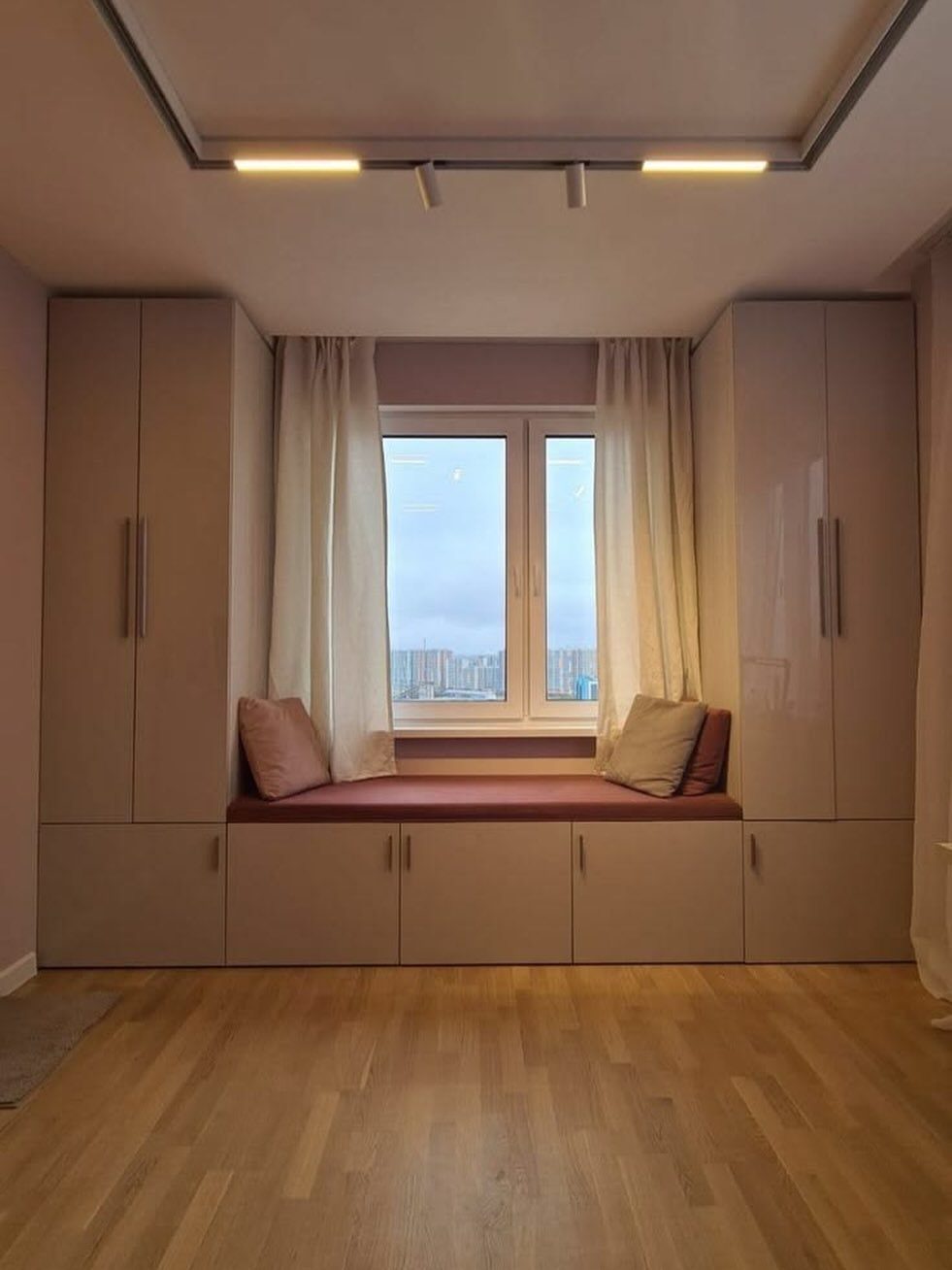
A window seat set between 2 tall wardrobes turns an awkward wall into storage and a place to sit. The cabinets underneath hold the overflow, and the wardrobes take clothes up to the ceiling.
Measure the wall and window carefully, since built-ins are cut to fit and mistakes cost money.
A cushion in a deeper color, like maroon, adds comfort and breaks up all that beige. Custom cabinetry is a big spend, so a flat-pack wardrobe pair with a bench built between them is the budget version.
16. Living Room Seating Conversation Areas
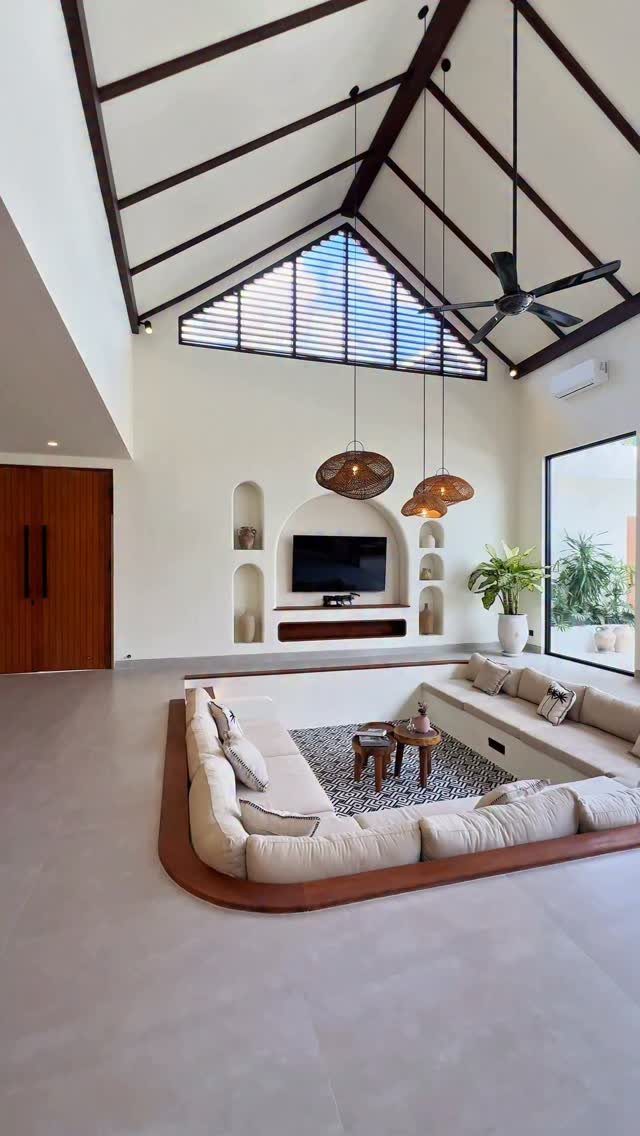
Sunken seating draws a sectional into a tight group, so the sofa itself becomes the room’s boundary. Everyone faces the same direction, which makes the TV wall and the conversation both easy.
Digging out a floor is a major renovation, so skip it unless you’re building. On a flat floor, a large sectional and a rug under it mark the same zone.
17. Bedroom Mural
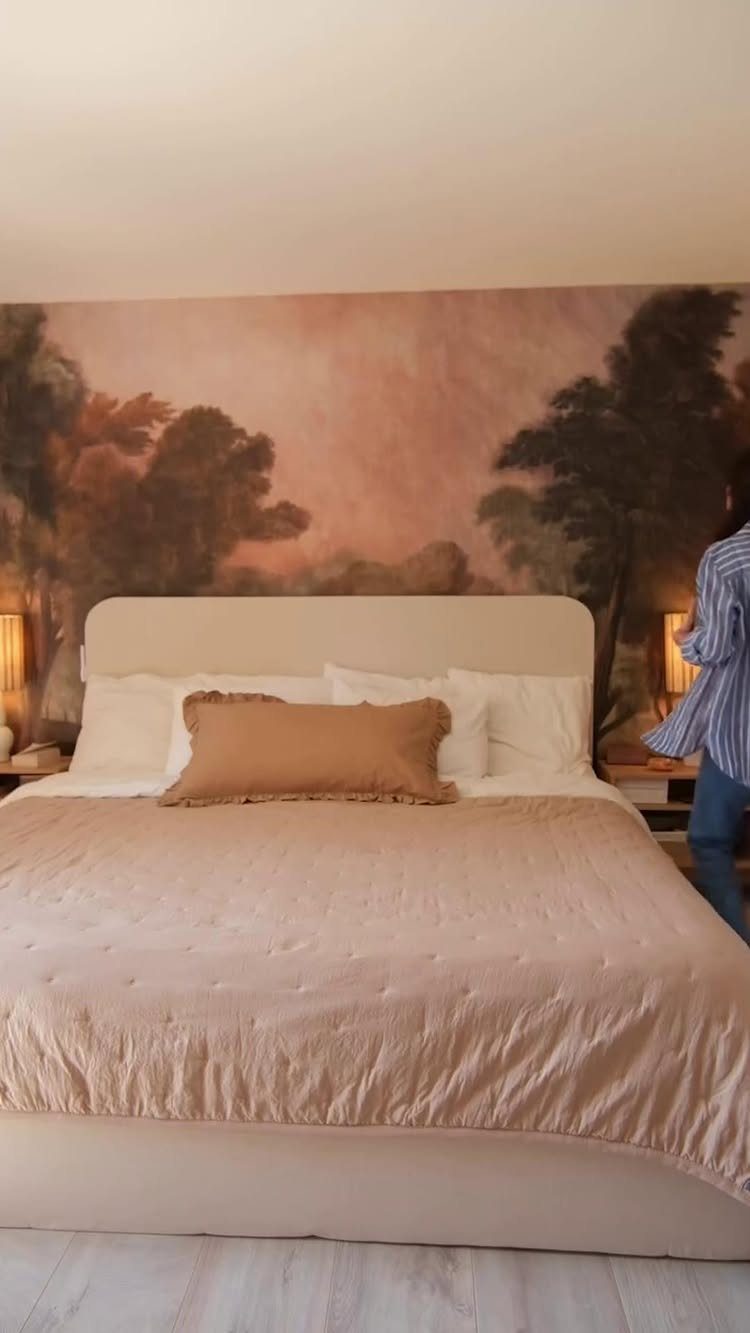
A landscape mural behind the bed gives you a view the room never had. Trees and a sunset in warm tones work well because the bed becomes the foreground of the scene.
Keep the bedding in a neutral shade, like beige, so it doesn’t compete.
Painting a mural yourself takes patience, so a wallpaper mural is the easier weekend route, and the peel-and-stick kind suits renters. Measure the wall width and height before you order so the image isn’t cut off.
18. Greenery Houseplants
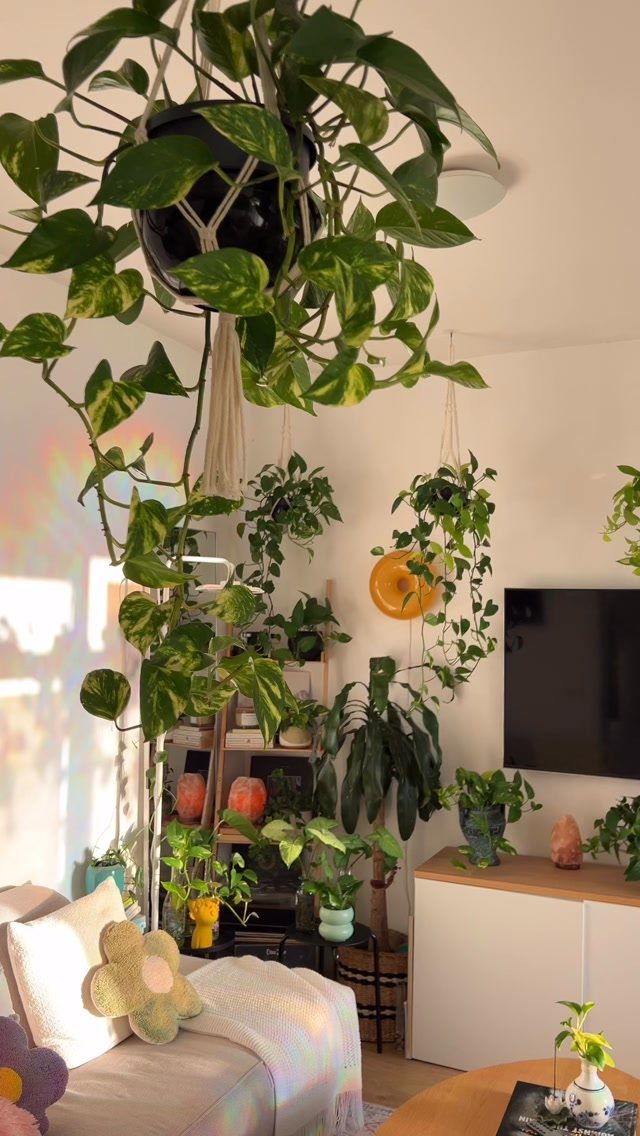
Plants at several heights make a living room feel lived in: hanging pots up high, a shelving unit in the middle, and a few on the furniture itself.
Spreading them out keeps the room from looking like a nursery greenhouse in one corner.
Hanging planters free up floor and shelf space, which matters in a small room.
Start with a few plants and add as you learn which ones your light can support. A single playful pillow, like a flower shape, repeats the theme cheaply.
19. Wood Slatted Media Wall
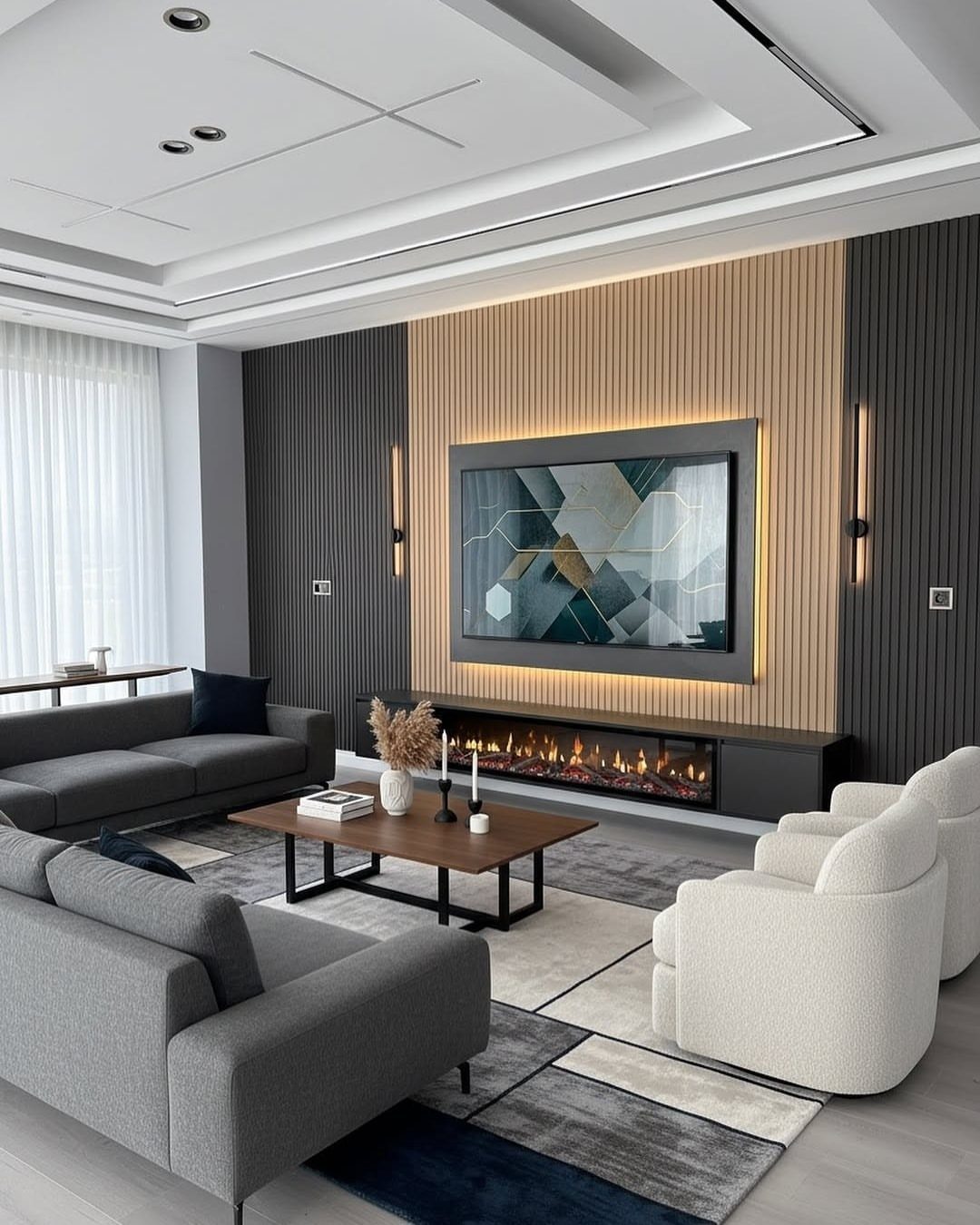
Slats turn a TV wall into a feature instead of a black rectangle. Wood against a linear fireplace adds warmth to a room of grey sofas and white armchairs, so the seating can stay simple.
Keep the slats running vertically so the wall reads taller. Mount the TV and fireplace on the same wall so the whole thing reads as one unit.
Slat panels on a backing sheet are a weekend job and cost far less than custom millwork. Renters should check the lease before drilling into walls.
20. Built in Window Reading Nook
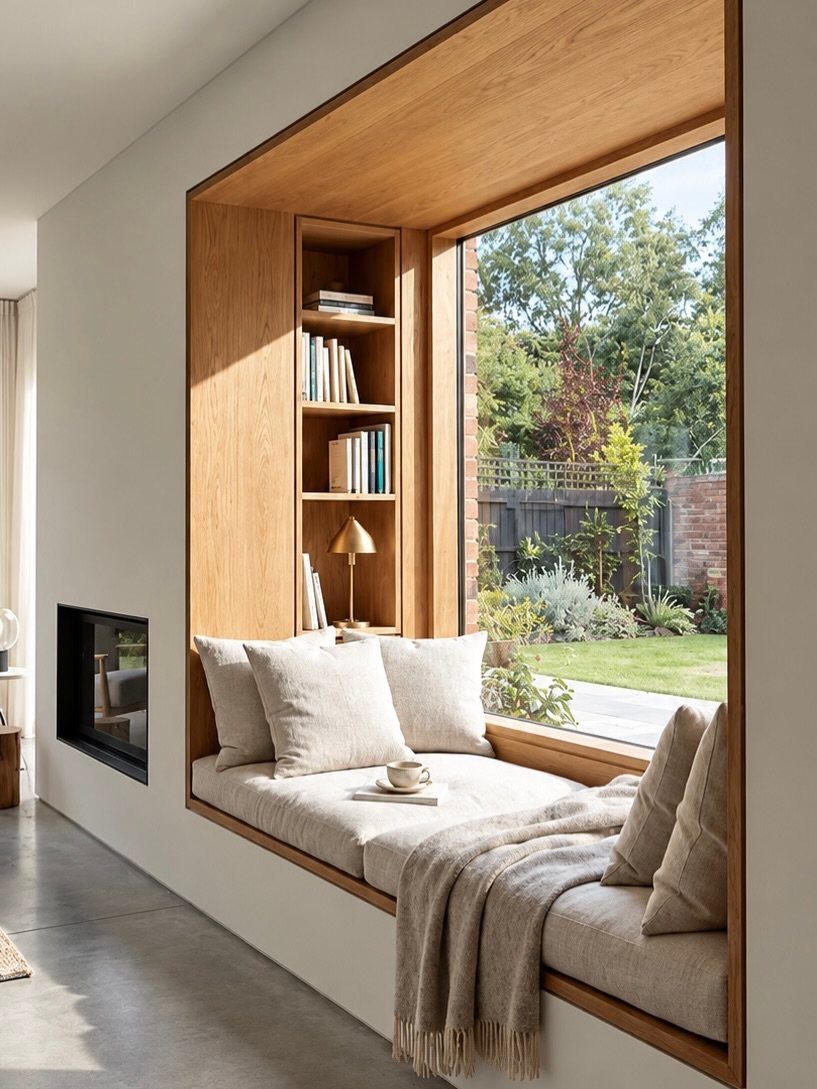
A window bench with bookshelves on both sides gives you a reading spot and storage in one footprint. Beige cushions and a few pillows keep it soft, and a lamp on the shelf means you can read after dark.
Measure the window wall before buying anything, since a built-in only works if it fits to the inch. Wood that matches your trim looks more planned.
For less money, set 2 flat-pack bookcases on either side of a cushioned bench. Add a throw blanket and the nook is ready.
21. Double Desk Workspace Setup
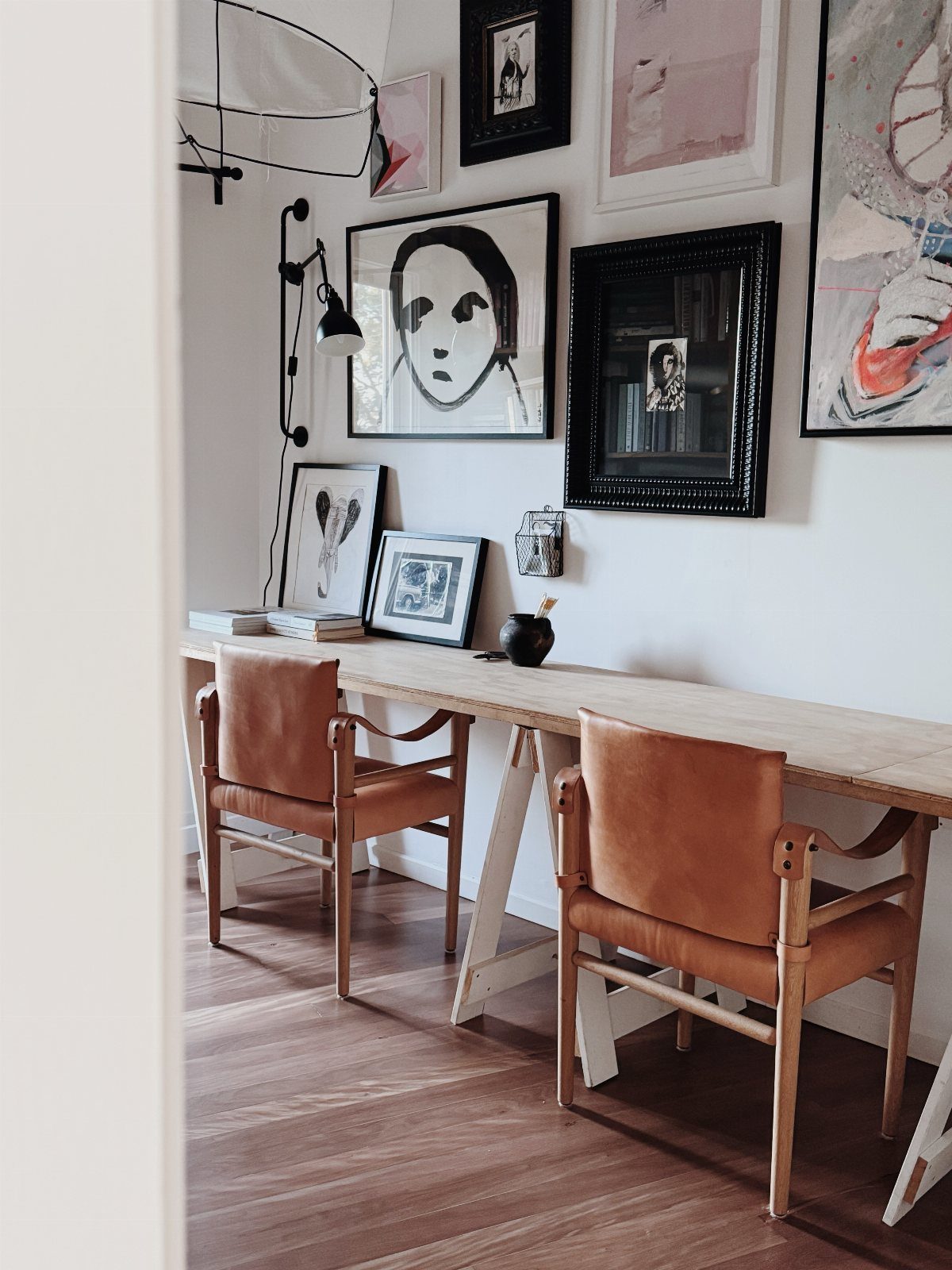
Two chairs at one long desk make a shared workspace without crowding a room. Brown leather seats against a wooden top feel warm, and the white wall behind lets a gallery of framed art carry the personality.
Give each person enough desk length to spread out. A black wall lamp frees the surface from a bulky desk lamp, which matters when 2 laptops are sharing it.
Matching frames in different sizes keep the art wall tidy. Measure the wall before you buy a desk so both chairs can pull out.
22. Bold Pink Sectional Sofa
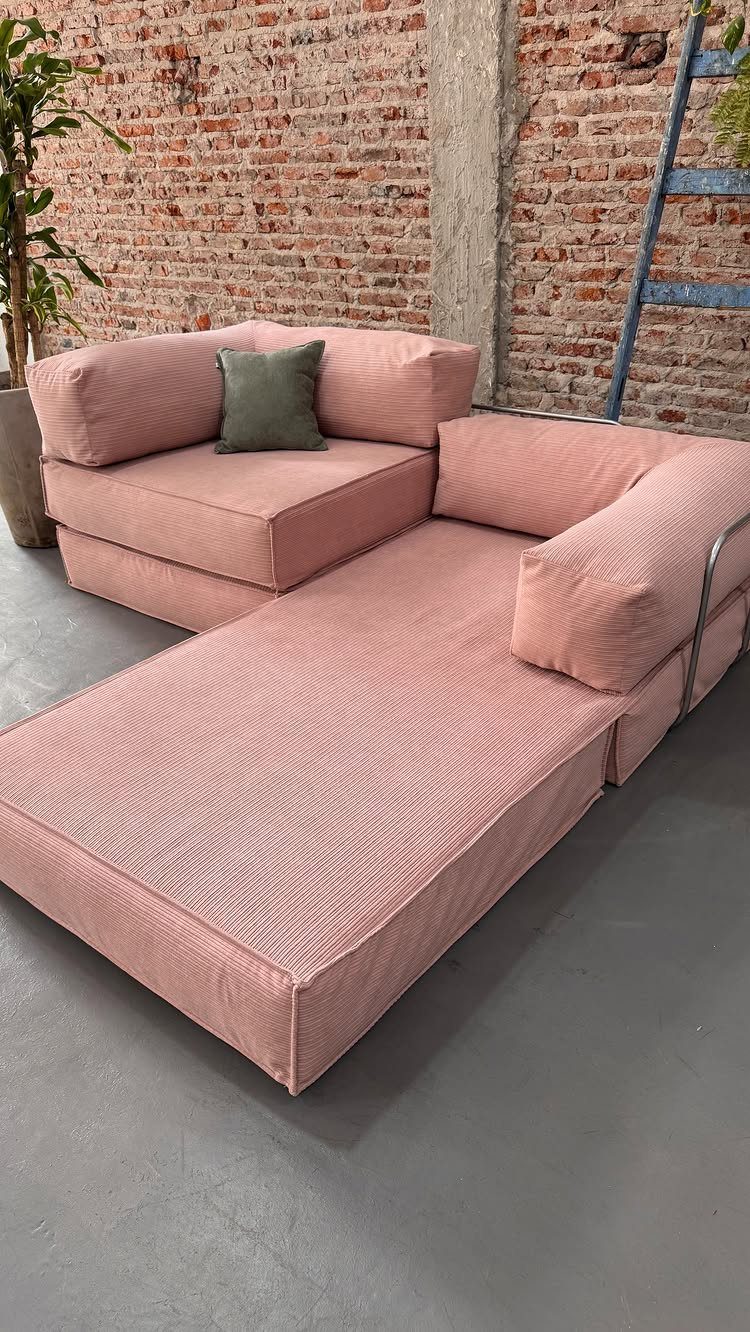
Pink corduroy is the loudest thing in a room, so let it be. Against exposed red brick, the sofa works because both colors are warm and the texture of each is strong.
A modular sectional lets you build the shape your room allows, and the chaise end suits a narrow space. I’d keep everything else quiet: a grey floor, one grey pillow, a single potted plant.
Skip extra patterns. A bold sofa costs real money, so order a fabric swatch first and look at it beside your wall.
23. Bed End Upholstered Bench
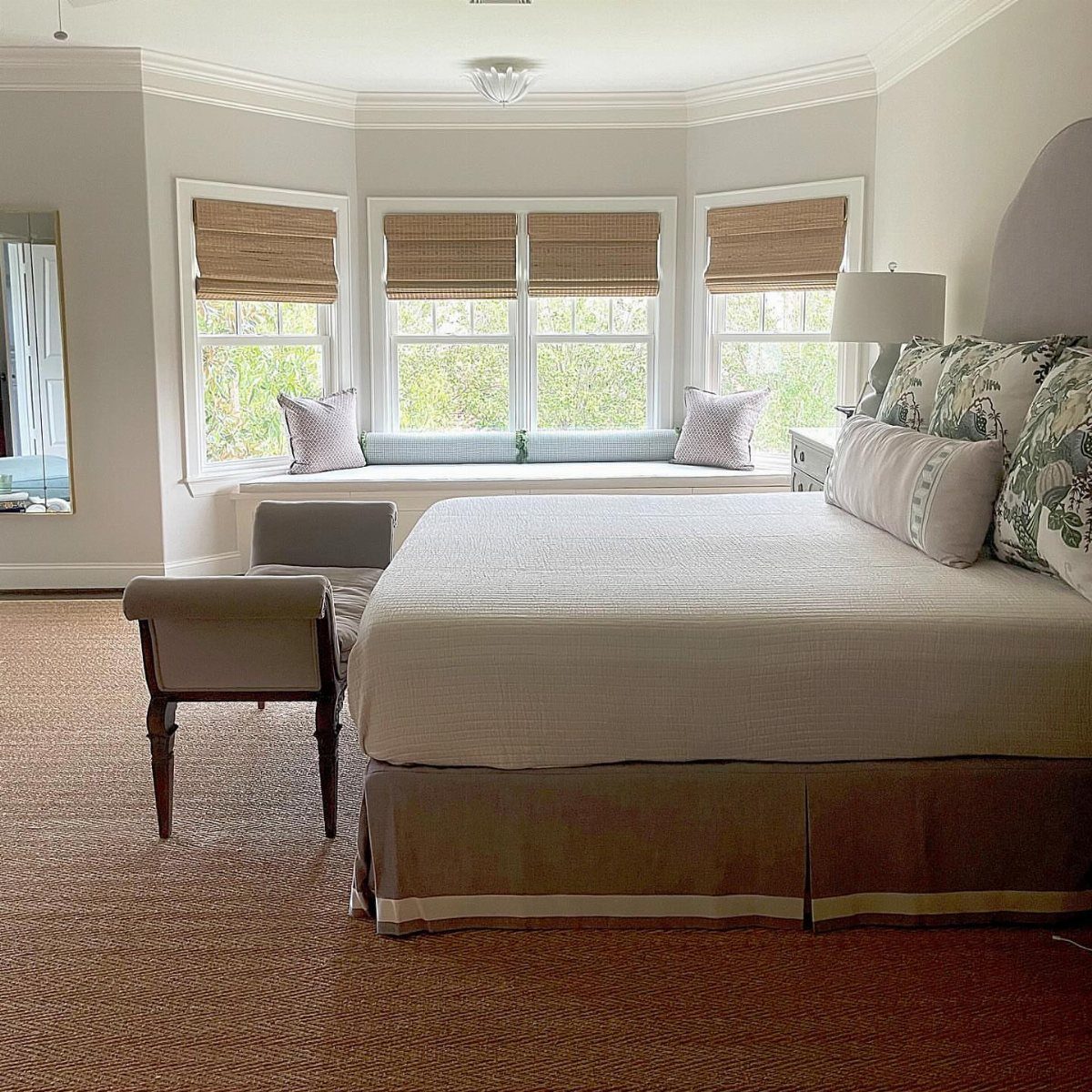
A grey upholstered bench at the foot of the bed gives you a spot to sit and pull on shoes, and it finishes a plain white bed with a beige coverlet.
The tailored look comes from keeping the bench close to the width of the bed.
Pick a fabric in a neutral that sits one step darker than your bedding so the bench stands out without clashing.
Leave room to walk around the bed. Secondhand benches are cheap and easy to recover with a staple gun and new fabric.
24. Wavy Accent Mirror Display
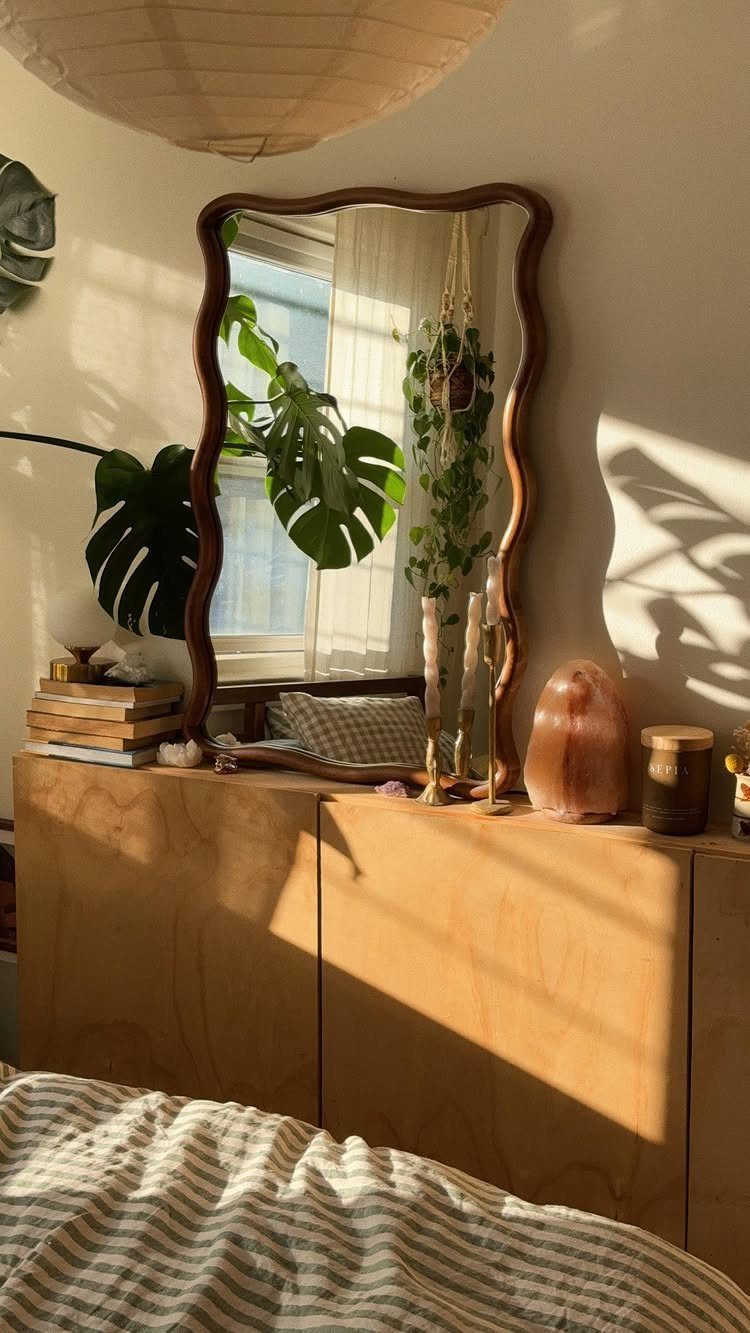
A wavy mirror gives a flat sideboard some movement. The soft edge breaks up all the straight lines of furniture, books and candles.
Lean it against the wall if the mirror is light, and build the display around it: books stacked at different heights, candles, a salt lamp and a couple of plants.
Keep the objects on the sideboard in warm tones so the mirror’s brown frame fits in. Check the weight before hanging it, and use proper anchors on any wall you drill.
Comfort and Coziness
Heavy drapes quiet a tall, echoing room faster than any pillow can.
In one tall living room, the designer brought heavy drapes down below the beams rather than running them all the way to the ceiling, and the room immediately felt smaller and more settled.
You can borrow that logic on a smaller budget. Hang curtains wide and full, and mount the rod high to add height to the room.
For bedrooms, a consignment loveseat, vanity or armoire gives you a solid anchor piece for less than new. Wood, marble and greenery are the natural materials designers lean on to keep a room serene.
Heather French, half of the French & French Interiors duo, loved the size of this lofty living room, but to make it feel cozier and quieter, she used 80 yards of fabric for the drapes.
Color Palettes
A color that looks dull on a swatch can be the right one once it covers the whole room.
I’ve seen paint colors chosen specifically because they read as restful rather than striking, and those rooms do tend to feel quieter. Her point was that the effect comes when the entire room wears it.
Test a sample patch and look at it in morning and evening light before you commit.
A white with a touch of gray-blue undertone on walls and ceiling keeps a bedroom feeling open without the starkness of pure white.
Repeating one dark blue-gray across different textures in the art pulls the room together without adding visual noise. High contrast and bold statements belong in the spaces where you want energy, not where you’re trying to sleep.
Functionality in Design
Furniture that does 2 jobs earns its floor space, so look for pieces with a second function built in: storage under a seat, a surface that folds away, or a bed frame with drawers.
Before buying, sketch the room on graph paper and mark door swings and walking paths.
Leave enough clear floor between furniture that you can move through the room without turning sideways. Any piece that blocks it needs to go elsewhere.
Choose items that move easily, such as a light stool that works as a side table or an extra seat. Fixed furniture should stay minimal in a small room.
Frequently Asked Questions
What are some good ideas for decorating a family room?
Layered lighting and a defined conversation area do the most. A big sectional over a rug sized to hold its front legs defines the seating area, and it fits more people than a sofa with 2 chairs would.
How can I make my bedroom look nice?
Start with bold bedding, a statement headboard or natural elements, depending on how much you want to spend. A patterned duvet cover is the cheapest swap, since it changes the room faster than paint.
What is a good living room layout?
Group the seating into one conversation area so everyone faces the same direction.
A large sectional with a rug under it marks that zone on a flat floor. Allow about 14–18 inches between the coffee table and the sofa so people can pass through without turning sideways.
In an open room, a freestanding shelving divider splits the space into zones without building a wall, and a laser-cut pattern keeps light passing through.





