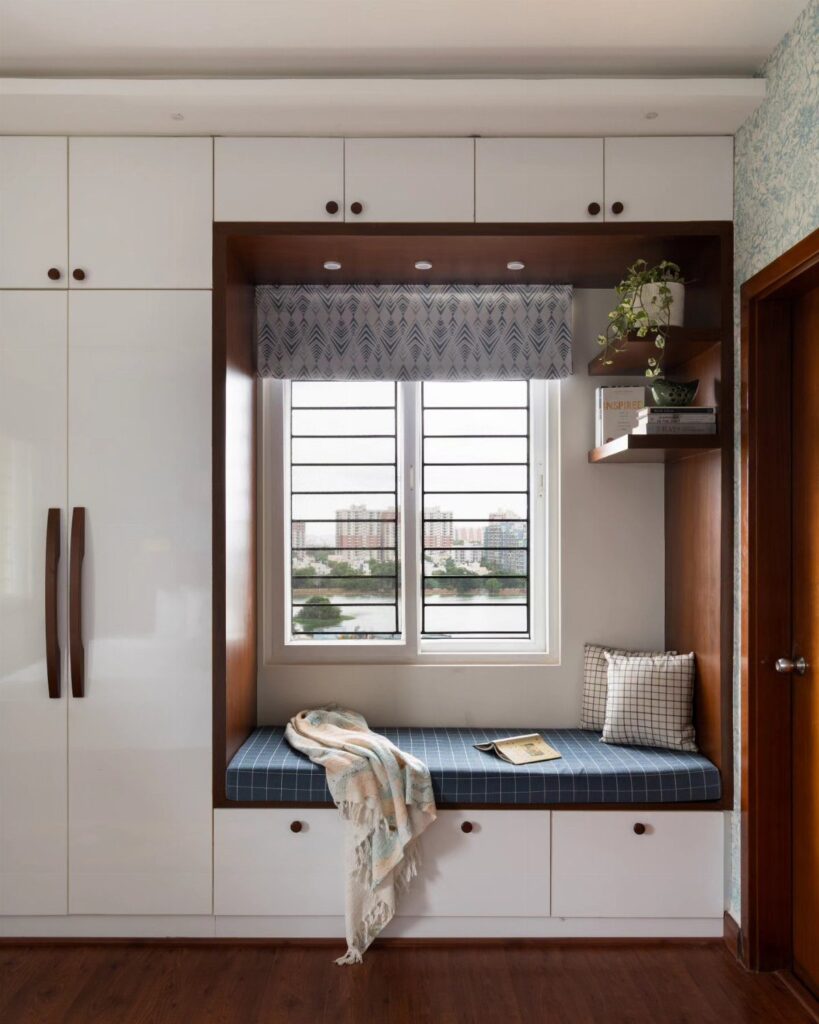
What you do with a bay decides the project: the ideas here run from leaving the ledge bare, which costs nothing, to a built-in window seat with drawers or a curved bench cut to follow the glass, which takes real carpentry.
Bay size, ceiling height and how much floor the bed already takes decide which of these 8 ideas fits, so measure before you pick.
A busy room with built-in cabinets or a patterned headboard wall wants a quiet bay, while a plain room can take a desk, a vanity or a small settee.
Window treatments are on the list too, and they need to bend with the angled walls, so a curved track or a bracket at every corner belongs in the plan whichever idea you choose.
1. Built-in Window Seat with Storage
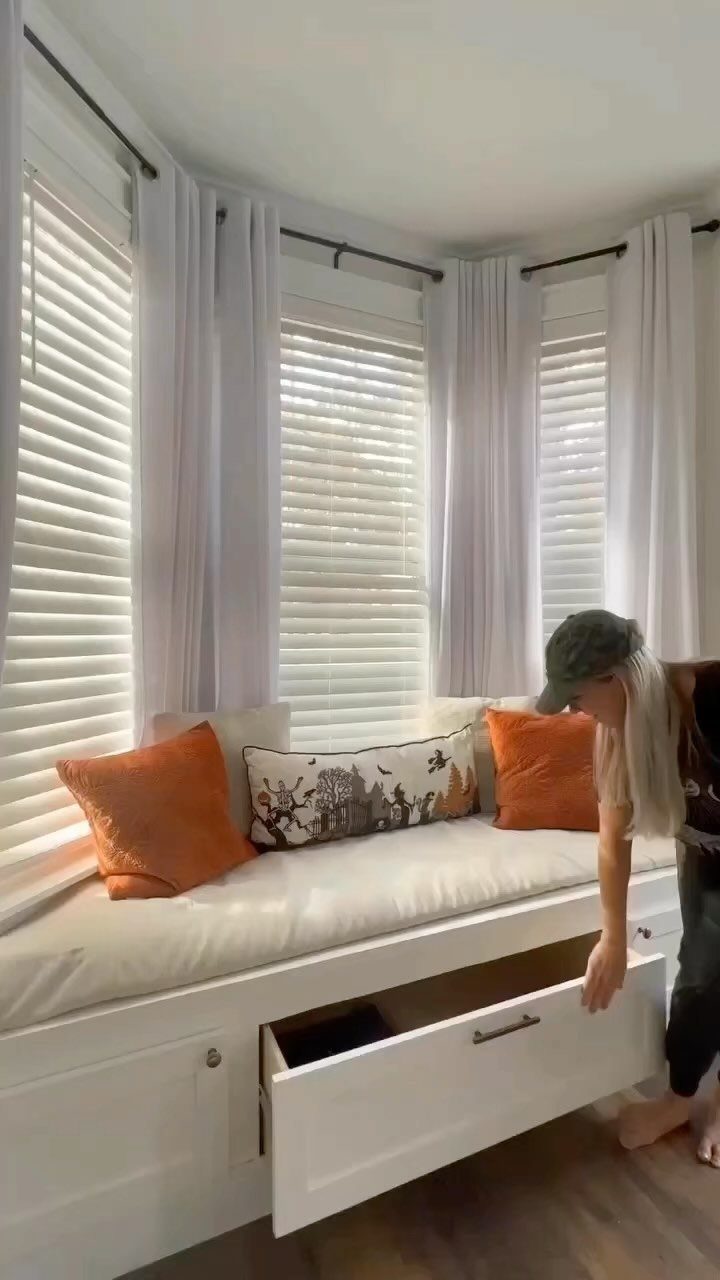
Drawers under a window seat turn dead space into the most useful storage in a bay bedroom. Spare bedding, off-season sweaters and extra pillows all fit below the cushion, so the closet and dresser get some relief.
Paint the base white to match the trim, as this one does, so the seat reads as part of the architecture.
Pick drawers over a lift-up lid if you can: a lid means pulling off cushions and pillows every time you need something, and drawers just slide out.
Adding a built-in seat to a bedroom bay window is a classic, failsafe look that makes great use of the space.
2. Bay Window Reading Nook
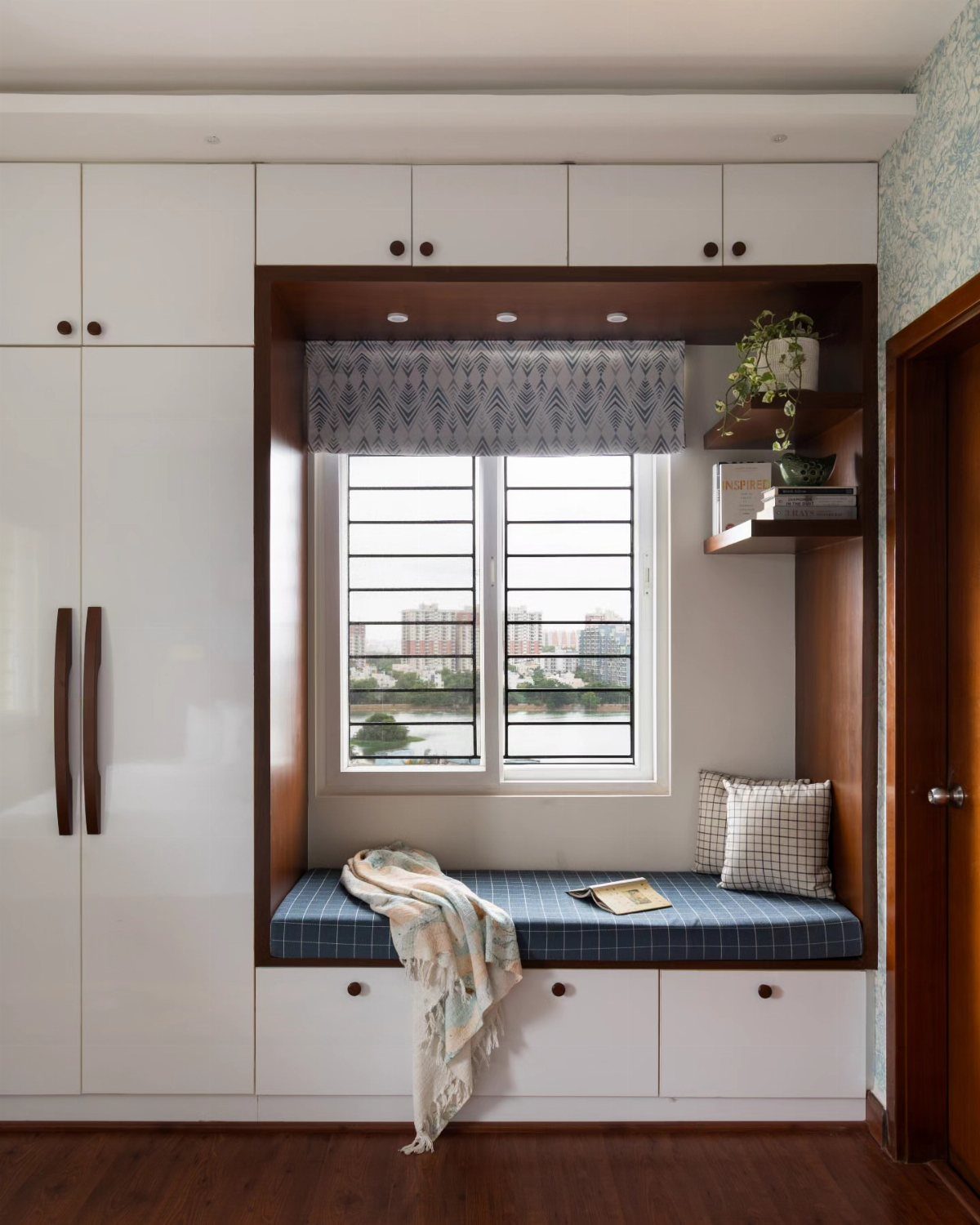
A bay window reading nook comes down to 3 things: a cushion thick enough to sit on for an hour, pillows to lean against, and a throw within reach.
Blue gives the corner its own identity against white cabinetry and wood shelving.
I like keeping a shelf at arm’s length so the books you are reading sit right beside you. Choose a cushion cover you can unzip and wash, since a seat you actually use will get stained sooner or later.
3. Curved Furniture
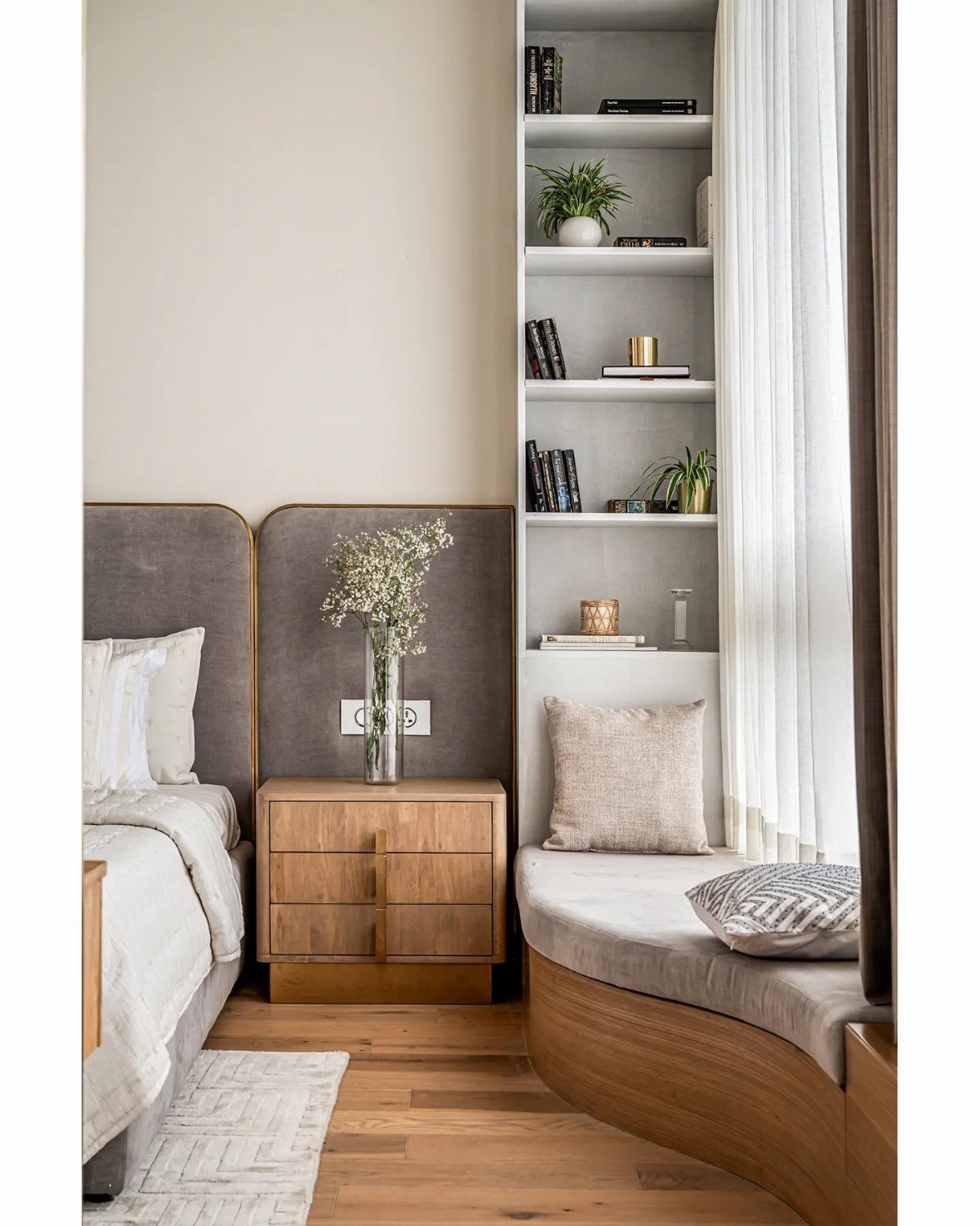
Curving a seat to follow the glass makes a bay feel soft instead of boxy, and the wood does the work that a pile of accessories would otherwise try to do.
Expect a curved built-in to cost more and take more skill than a straight bench, because the cuts and the cushion both have to match the angles.
If that is out of reach, a few straight pieces set along each window face give a similar shape.
4. Leave It Bare
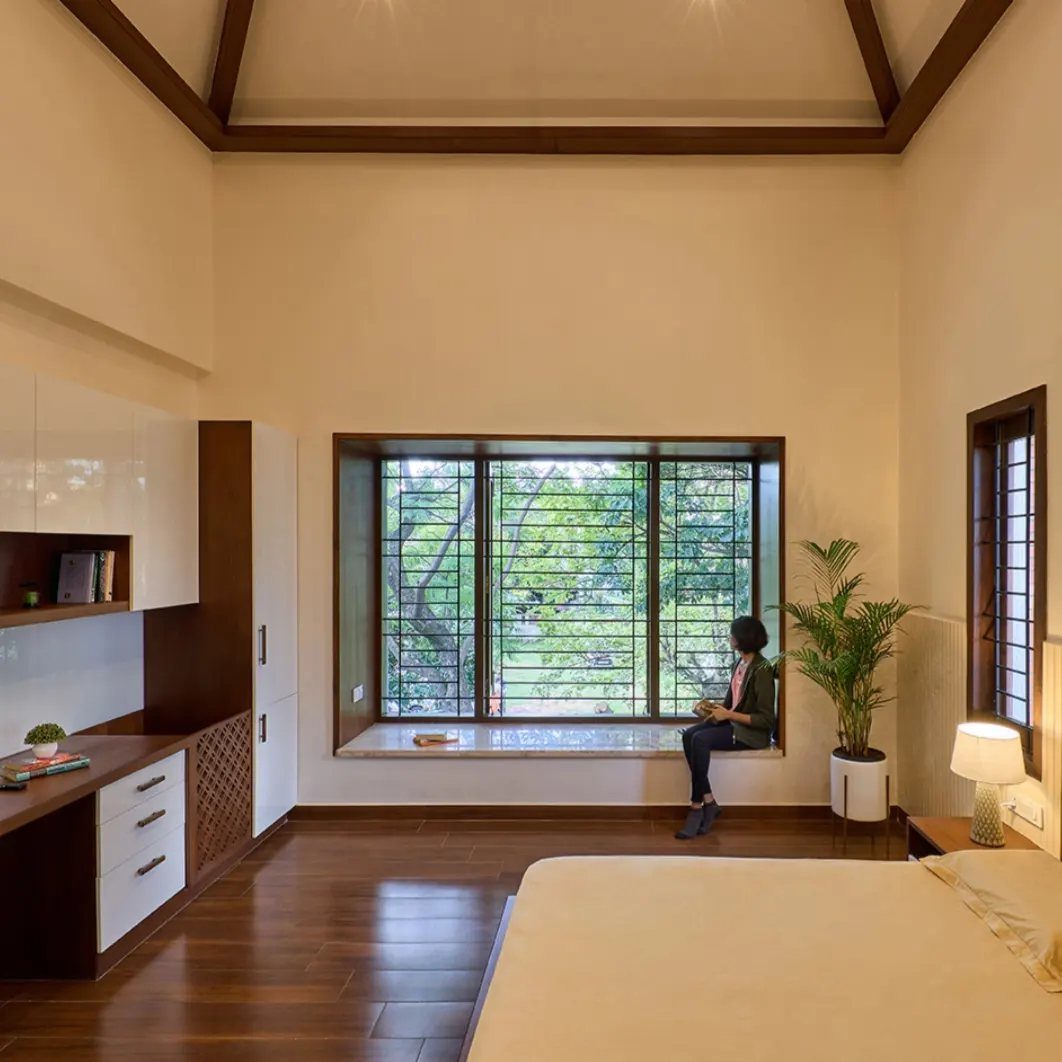
Sometimes the best decision is to add nothing. A bare bay ledge keeps the light and the view uncluttered, and it still gives you a spot to sit.
Leaving the bay bare works best when the rest of the room is already busy, with built-in cabinets, a patterned headboard wall, or a lot of art.
It costs nothing, and you can add a cushion later if you find yourself perching there often. A hard ledge gets uncomfortable fast, so treat it as a place for a short sit.
5. Desk and Chair in the Bay
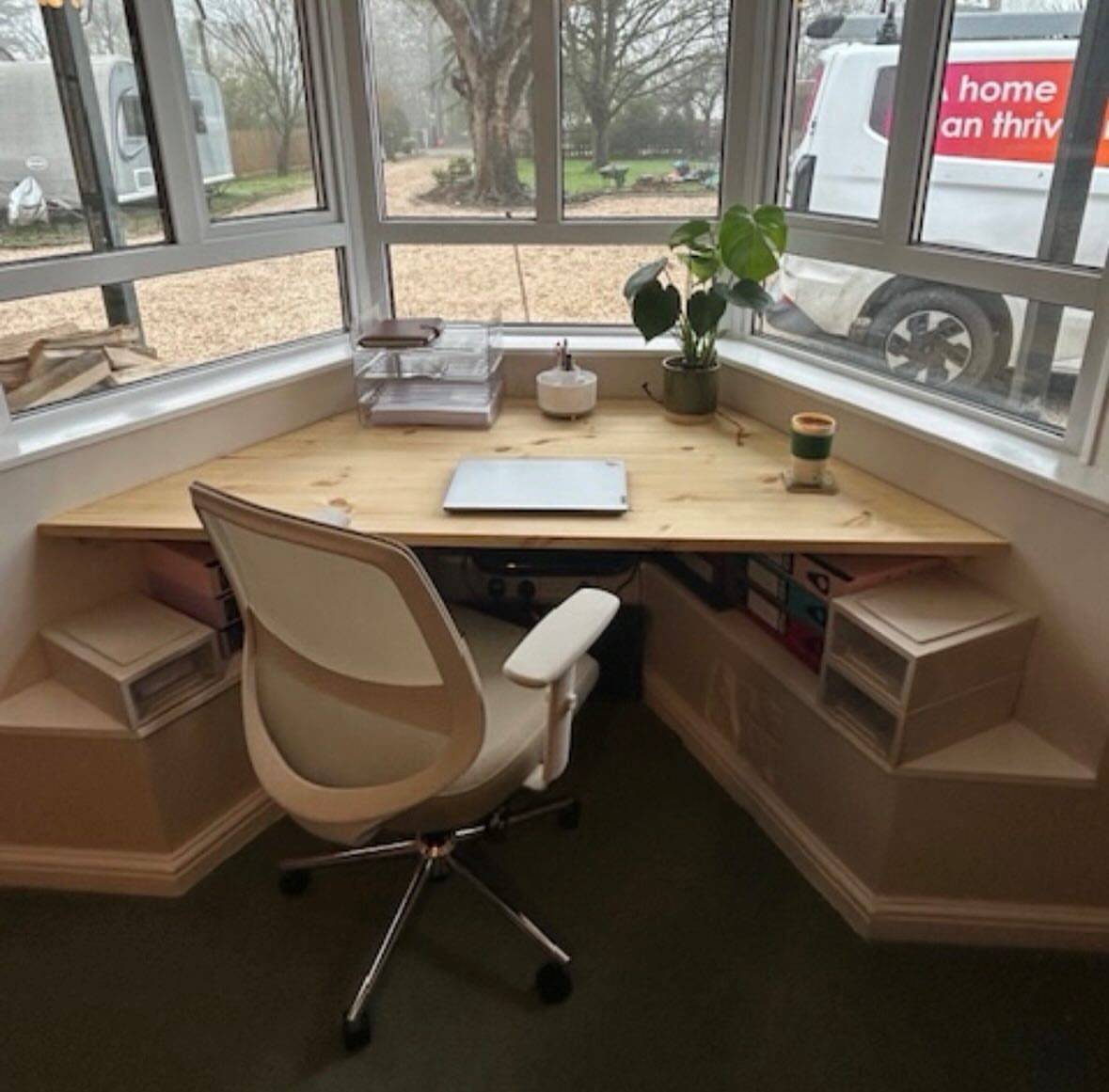
Putting a desk in the bay gives a work-from-home setup the best light in the room, which saves you from squinting at a laptop in a dark corner.
A light wood top and a white chair keep a bay desk from reading as an office, so pick pieces that look more like furniture than workstation gear.
Fit the desk to the window shape so no space is wasted.
Add small organizers and a plant, then keep cables tidy. A desk facing the glass gets plenty of daylight, but it also gets glare on the screen, so add a sheer shade you can pull down midday.
6. Small Settee with Fairy Lights
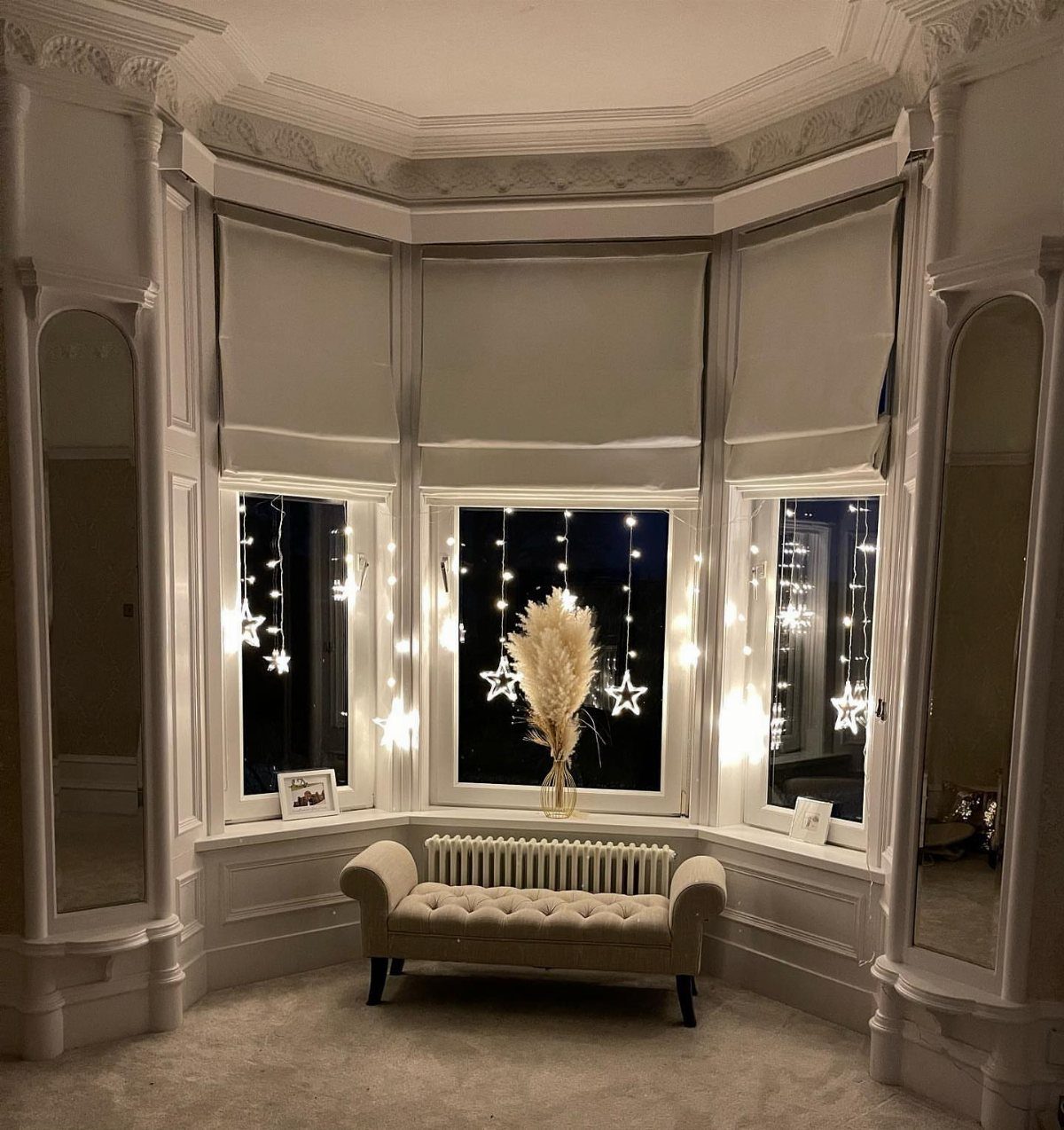
A small tufted settee gives a bay alcove a finished, boutique-hotel look without any carpentry. Beige stays neutral, so the lights and a vase of pampas grass can supply the personality.
Roman shades are the practical choice here since they sit flat against the glass and leave the settee clear.
Hang the star fairy lights from the top of the alcove, and use a plug-in or battery set so you are not running a cord across the room.
It is an easy weekend project and a gentle one on the budget.
7. Sitting Area with Sofa and Armchair
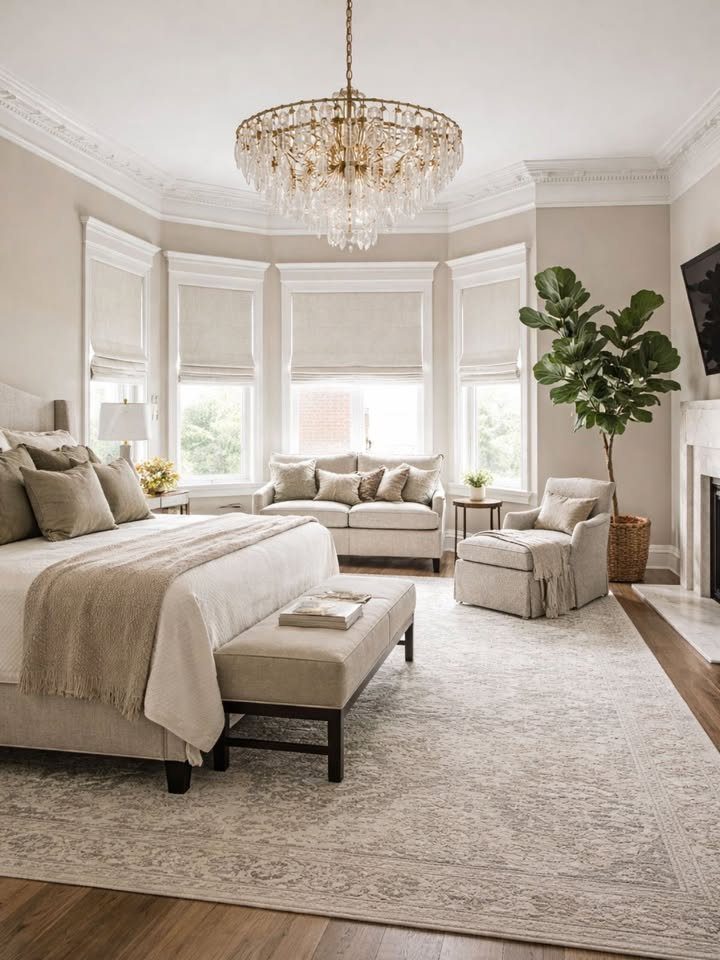
A sofa and an armchair set in the bay turn it into a small lounge, so the bed stays for sleeping and the nook takes over everything else.
Beige upholstery keeps the pair quiet against the shades and lets the light do the talking.
Angle the armchair toward the sofa instead of toward the bed, and leave a walkway to the window so the seating doesn’t block it.
Pick a sofa slim enough to fit the bay without crowding the foot of the bed. A compact loveseat is the safer choice in a standard-size bedroom, since a full sofa eats floor space fast.
8. Vanity Table in the Bay
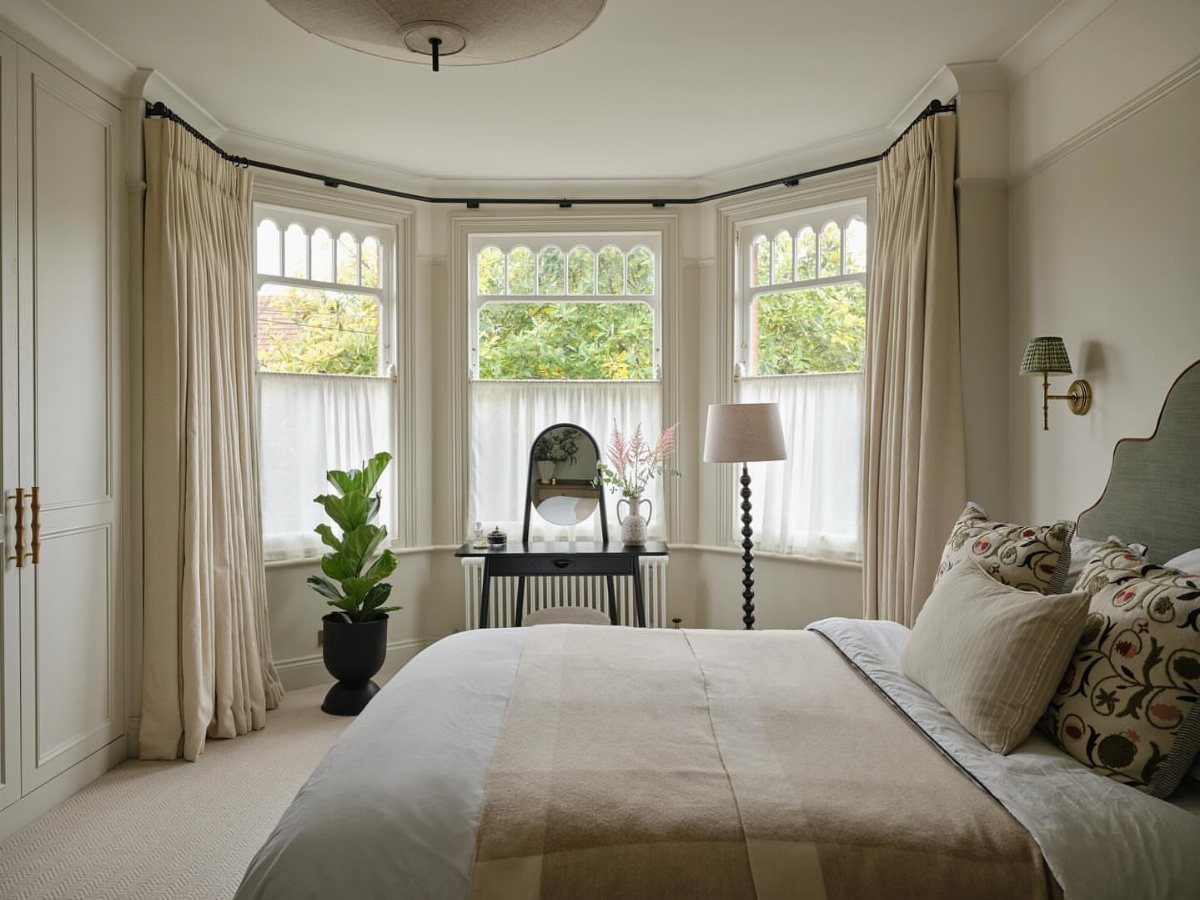
A small vanity tucked into a three-pane bay gives you the best light in the room for getting ready, and it uses a spot that often sits empty.
Black makes the table a clean, graphic accent against cream curtains and neutral bedding.
Choose a narrow table that fits within the center pane so the side windows stay clear. Keep the top nearly bare: a mirror, a tray for daily items and the floor lamp for evenings.
Skip a deep, bulky stool, which will jut into the room. A backless stool tucks under and clears the floor.
Choosing Window Treatments
A bay’s angled walls mean a plain straight rod won’t work; the hardware has to bend with the window, either as a curved track or as separate rods meeting at each corner.
A curved bay takes a flexible curtain track, while a traditional three-panel bay takes angled rods or rods that connect at the corners.
Without a bracket at every corner and another at the middle of any long span, the rod bows over time under the weight of the fabric.
Layering is the most flexible setup. For daytime privacy, I’d hang a sheer or a light blind right up against the glass, then add heavier drapes on a second rod out front to close at night.
Fitting a separate blind to each panel of the bay lets you decide side by side which one gets sun and which one stays shaded.
For an unusual bay shape, made-to-measure treatments look neater than stock sizes, and they’re worth the extra cost when the angles are odd. Cellular shades paired with thermal curtains also help with heat loss in winter.
Maximizing Natural Light
A bay brings in more light than an ordinary window, and the treatment should protect that. Lightweight roller blinds or sheer pleated blinds let sunlight filter in softly while still giving you privacy.
Consider mounting the covering outside the window frame. It keeps the clean lines of the bay intact and stops the hardware from crowding the glass.
Since each section of a bay can hold its own blind, you can lower the one taking the glare and keep the others up. Roman blinds add a softer, more tailored look when you want a little more fabric.
Light also reaches the bed early in the morning, so plan for a second layer that blocks it. That layer helps keep your sleep schedule steady.





