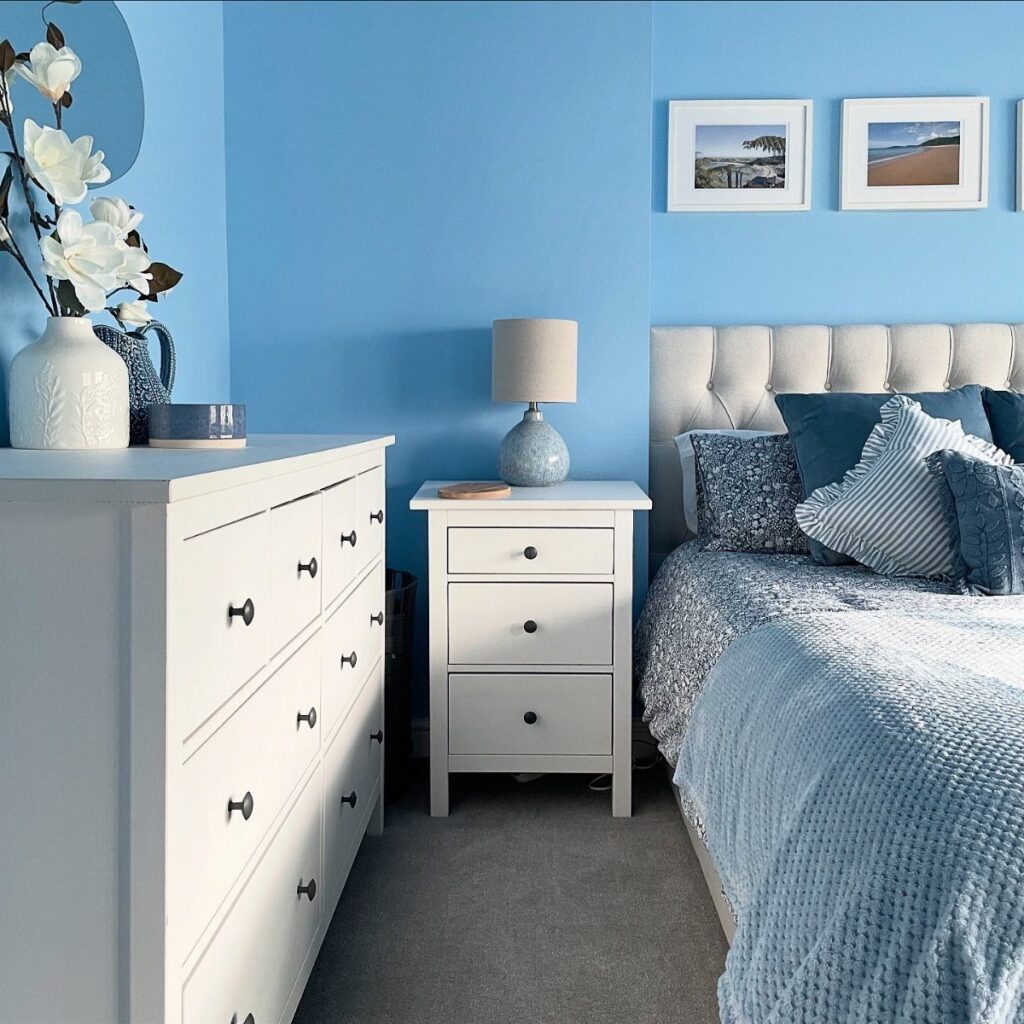
Which wall color suits a small bedroom depends mostly on the light the room gets: a south-facing room can carry cool blue, sage and crisp white, while a north-facing one makes paint look darker than the chip, so it needs a shade lighter than you expect.
The ideas here run from soft whites and pale grays to a dark charcoal, and from one color on walls, trim and ceiling to a single dark accent wall, and the effort climbs with the darkness, since a full charcoal room takes a whole weekend.
1. Soft Whites
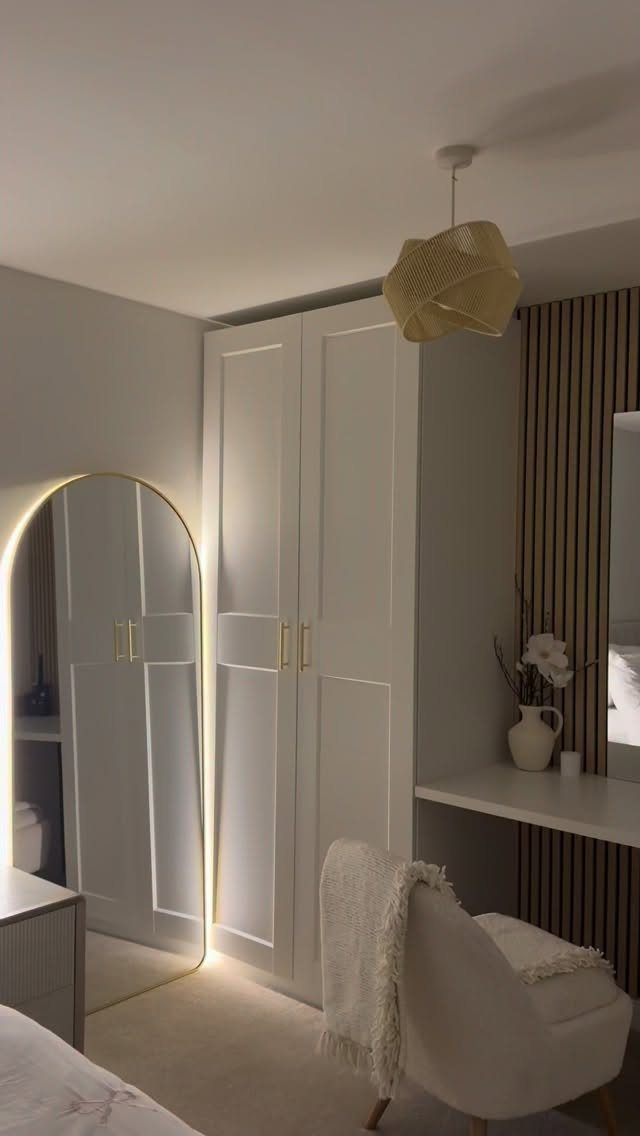
Soft white walls do the most work in a room with one small window, because they bounce whatever light arrives back into the corners.
Pick an off-white with a slight warmth over a stark one, which can turn cold and clinical at night.
Painting furniture the same white as the walls, as in this room, makes a wardrobe nearly disappear.
I like that trick in a tight room. Test a sample patch on 2 walls and look at it morning and evening before buying a gallon.
2. Light Blues
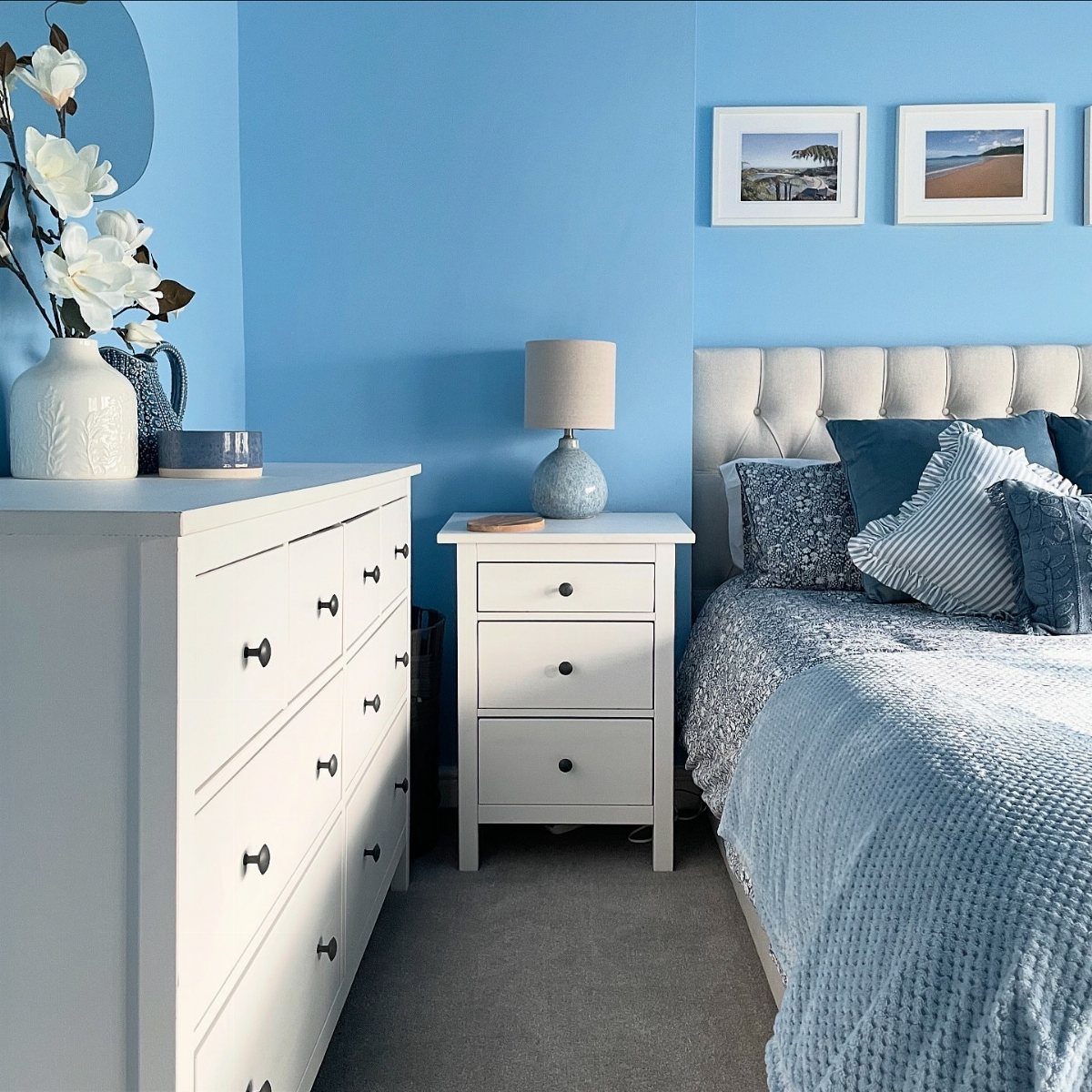
Light blue asks for white furniture and blue bedding from the same palette, and the combination holds together in tight quarters. Keep the headboard neutral, as a gray one is, so the walls stay the only strong color.
Blue can read cool, so choose a shade with a hint of gray if the room faces north. Skip glossy finishes on the walls; matte hides patchy spots better in a rental.
3. Pale Grays
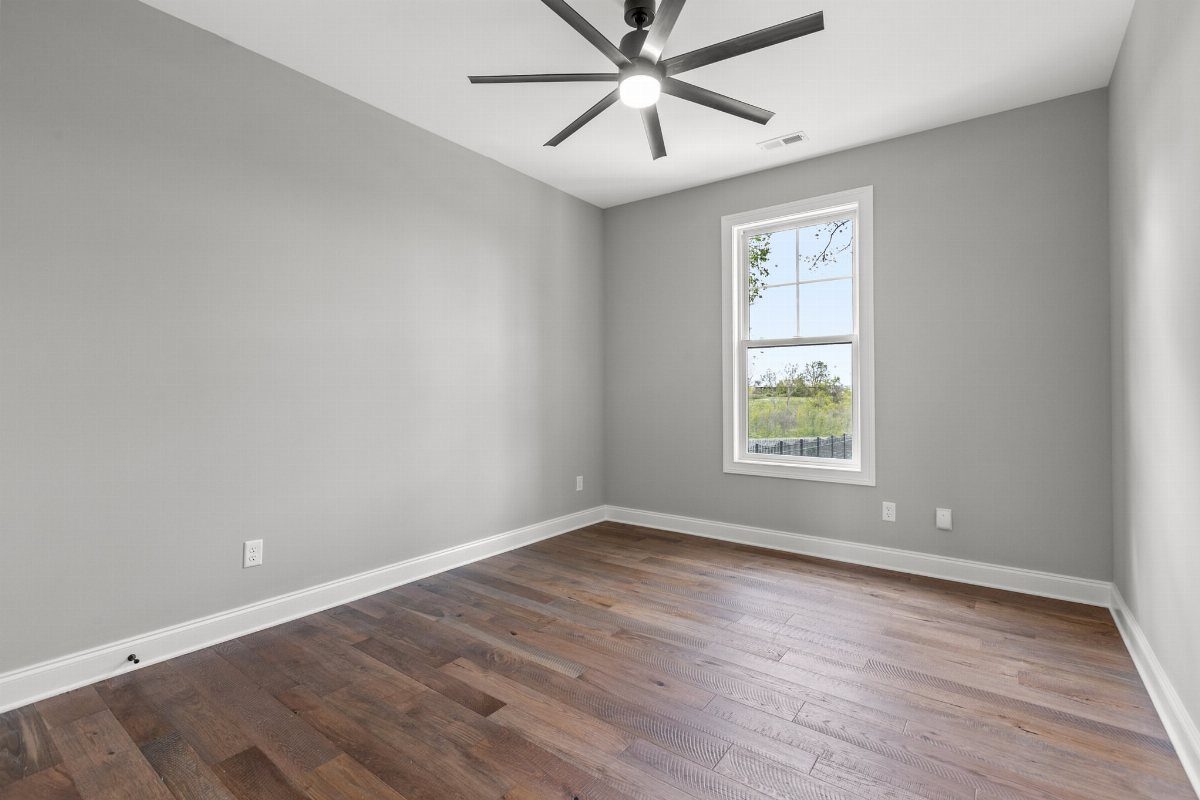
Pale gray is the safest wall color for a renter who will move again, since almost any bedding, rug or wood floor sits comfortably against it. Dark hardwood floors give pale walls a strong contrast to lean on.
Pick a gray with a little warmth so the room doesn’t feel flat on cloudy days. Sample it beside your floor before committing, because gray shifts more than most colors.
4. Soft Greens
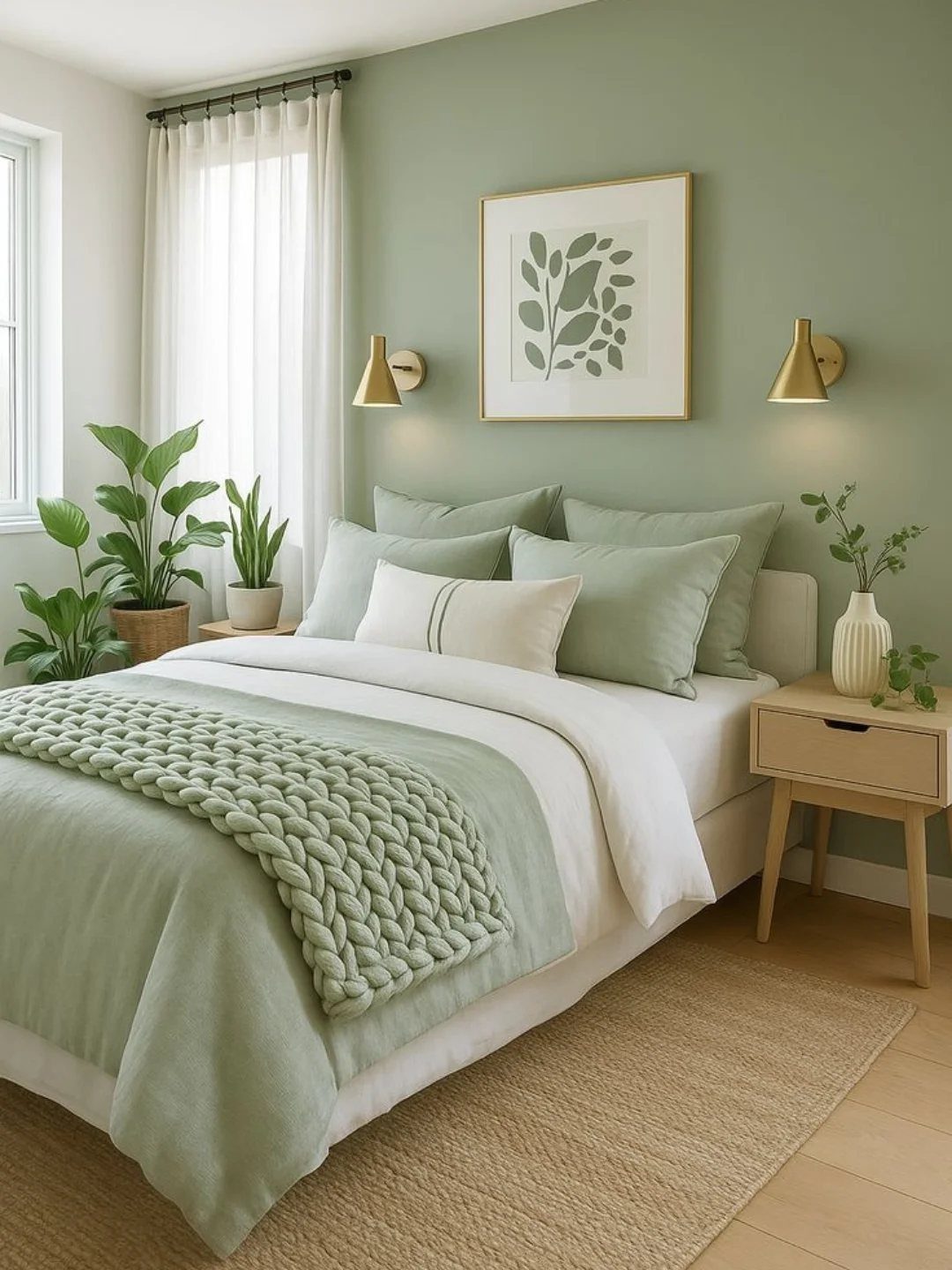
A soft green wall earns its place when you bring in a few plants and one botanical print, which keeps the idea grounded instead of themed.
I prefer a green with some gray in it over a minty one; it looks calmer and ages better. Gold or brass lamps warm it up nicely.
5. Blush Pink
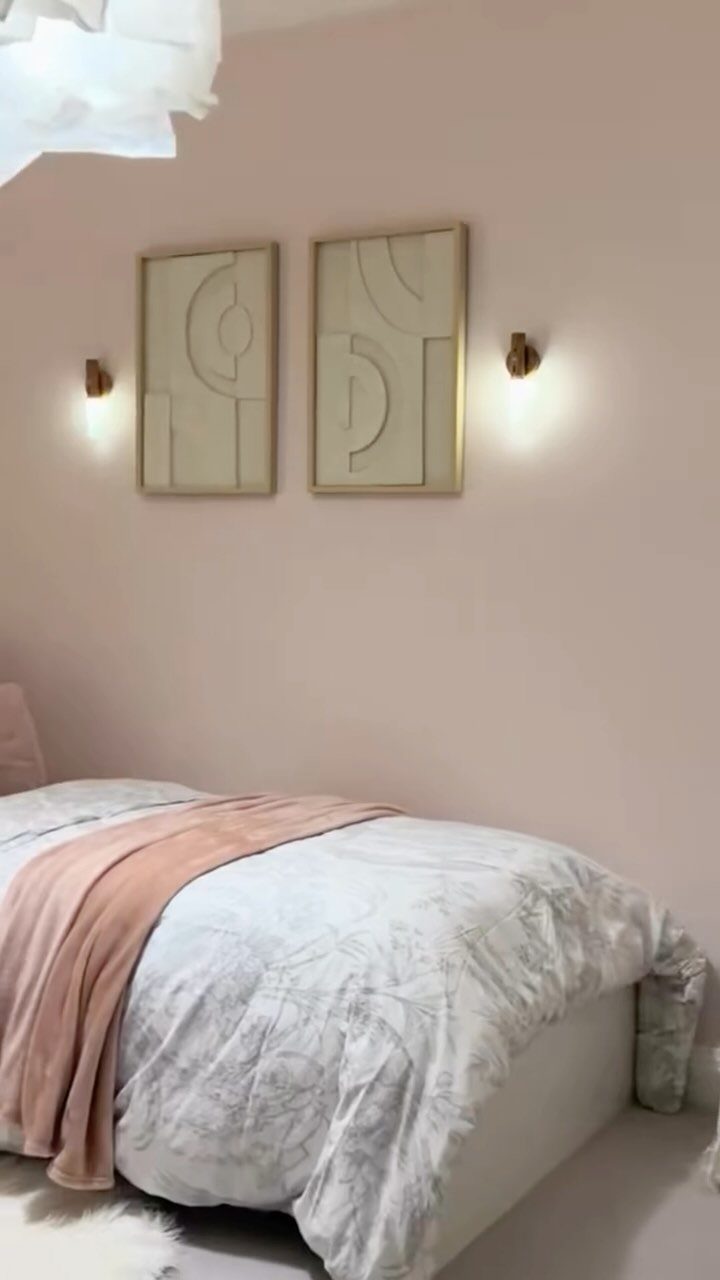
Blush pink works because it reads as a neutral with a pulse, warming tight quarters without making them feel sweet. Keep the art minimal and the bedding mostly white, then let pink show up in one or two pillows.
Choose a blush with a touch of beige if you worry about it looking childish. Sconces flanking the headboard cast a flattering light on it and free up nightstand space.
6. Lavender
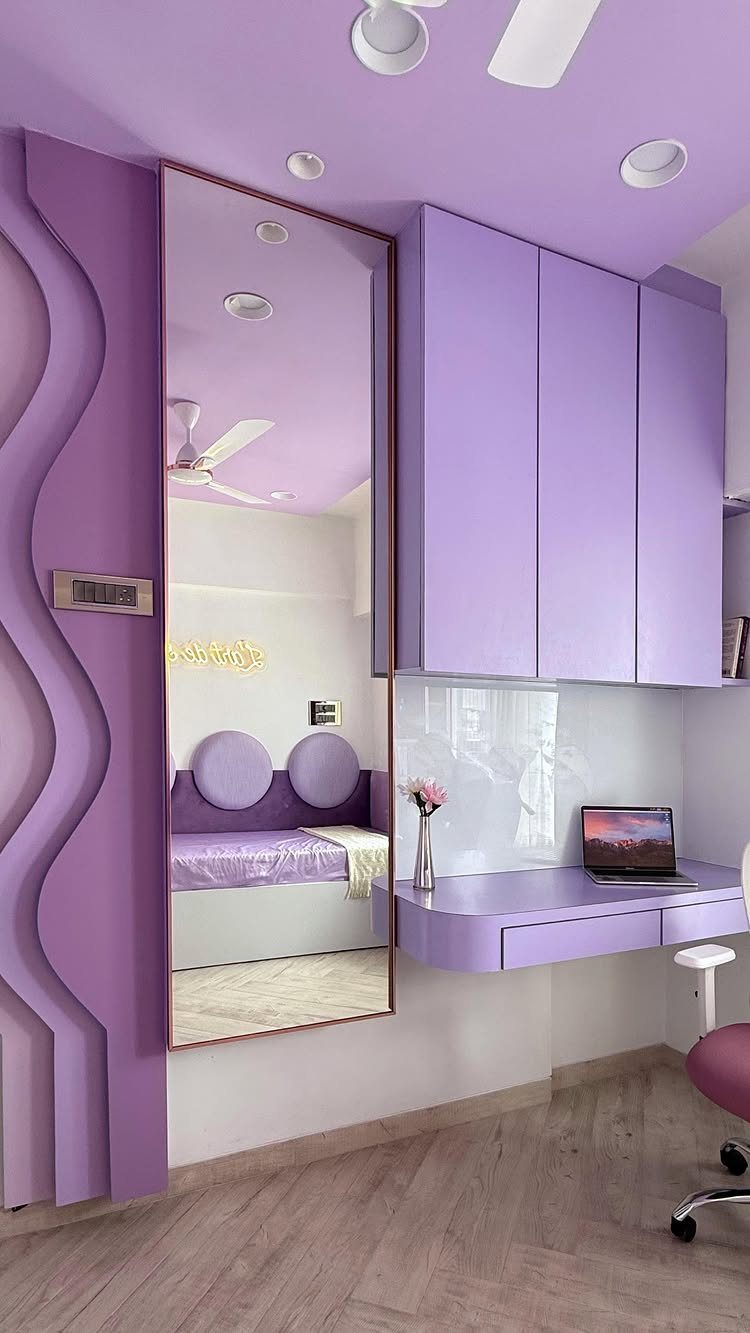
Painting the walls, ceiling and built-ins all lavender wraps the room in one color, so the edges stop showing and the space feels deliberate. A soft, grayed lavender is easier to sleep in than a bright one.
Use the same color on cabinet doors and the desk, then add a contrasting chair for a single bold note. Matte paint keeps the look calm; how it shifts through the day is worth checking with a sample board first.
7. Soft Taupe
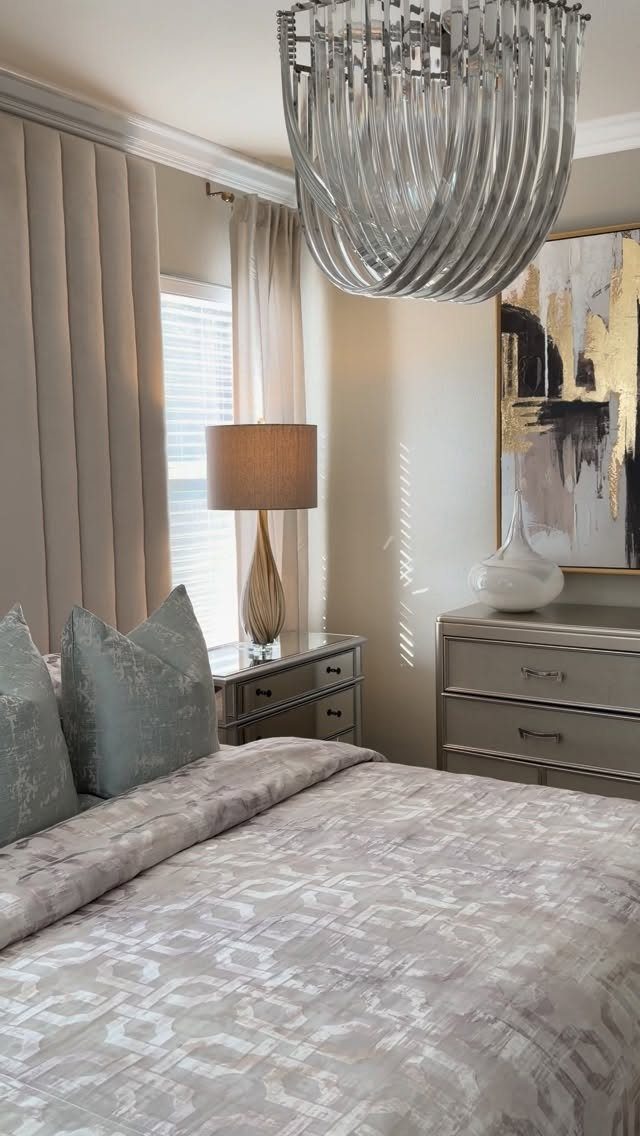
Taupe sits between gray and beige, so it warms the room without turning it yellow or cold. Silver or mirrored pieces, like the chandelier and nightstand here, pick up its gray side, while wood and brass lean into the brown.
Patterned bedding looks calmer against a neutral wall like this. Lamps are an easy place to save: the person who made this room found theirs for $20 each, so thrift stores are worth a look.
Hold your paint sample next to your dresser color, since taupe can drift pink or green beside it.
8. Dark Charcoal Gray
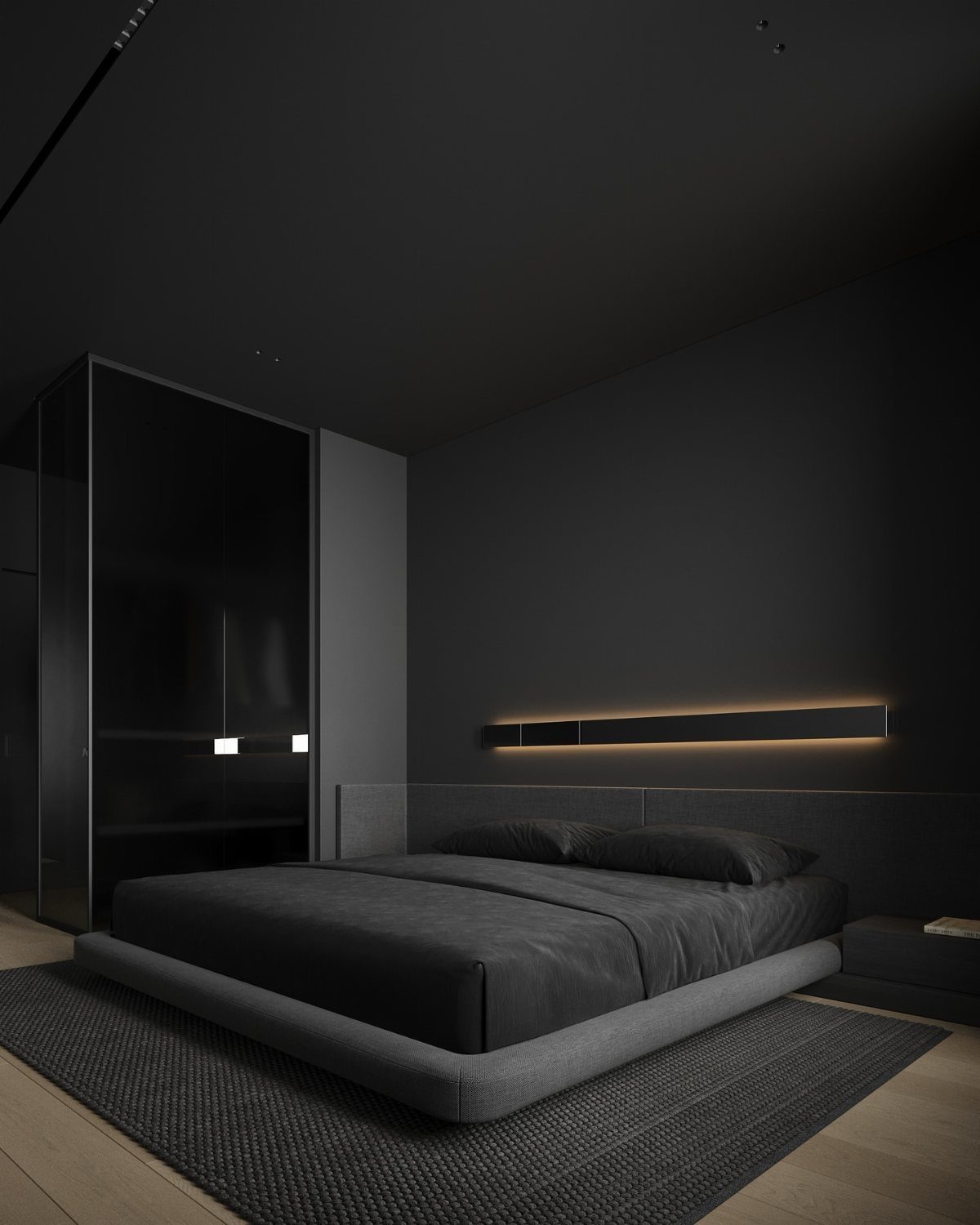
Charcoal on the walls and ceiling together makes a small bedroom feel like a cocoon, with no hard line where the ceiling starts. A low-profile bed keeps the wall area open, which helps the dark color feel intentional.
Use a matte finish and a textured rug, since both soften the look. Expect 2 coats at least, and tape the edges carefully.
9. One Color on Walls, Trim, and Ceiling
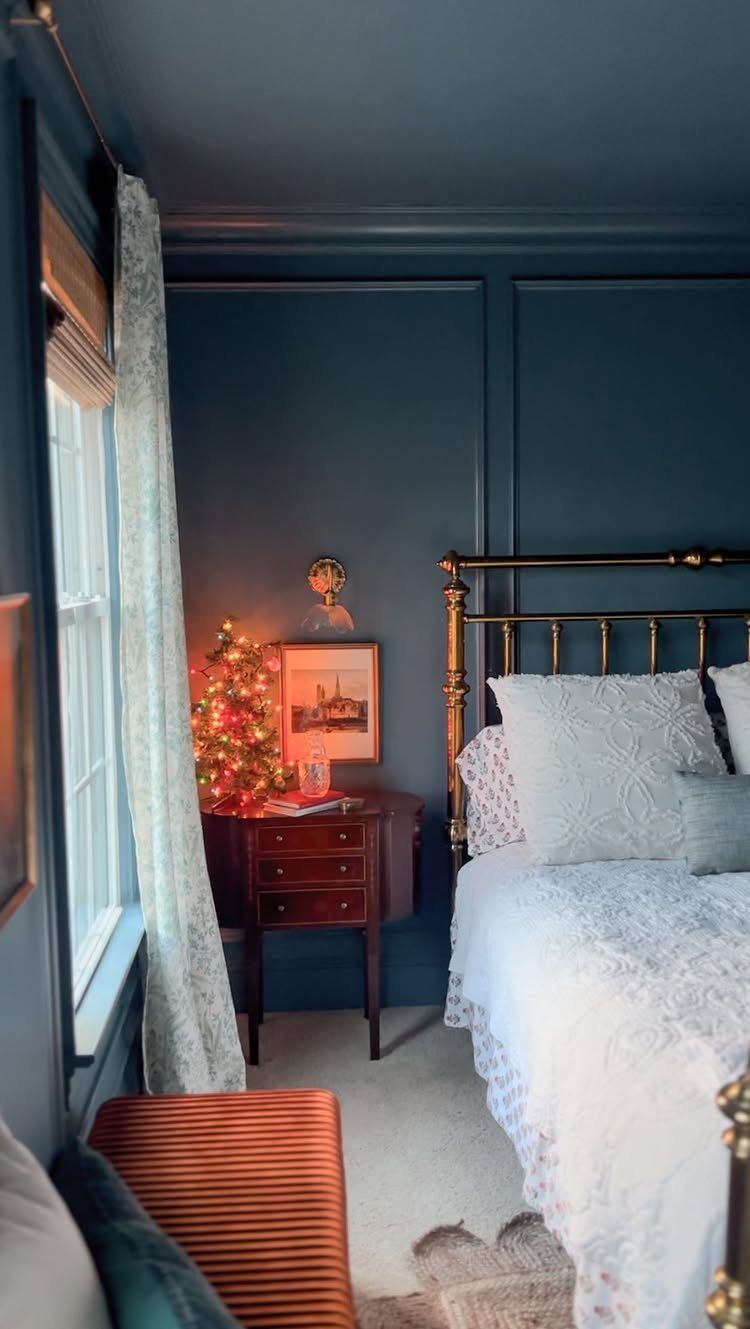
Painting walls, trim, and ceiling the same deep navy removes the white outlines that chop the space into pieces. The room reads as one calm shape instead.
A brass bed stands out well against it, so the metals and furniture stay simple. Light curtains stop the color from feeling heavy near the window.
Use one paint in a single finish, or go a step glossier on the trim if you want a little definition. Plan on a full weekend, because trim and ceiling take longer than walls.
10. Dark Colors on One Wall
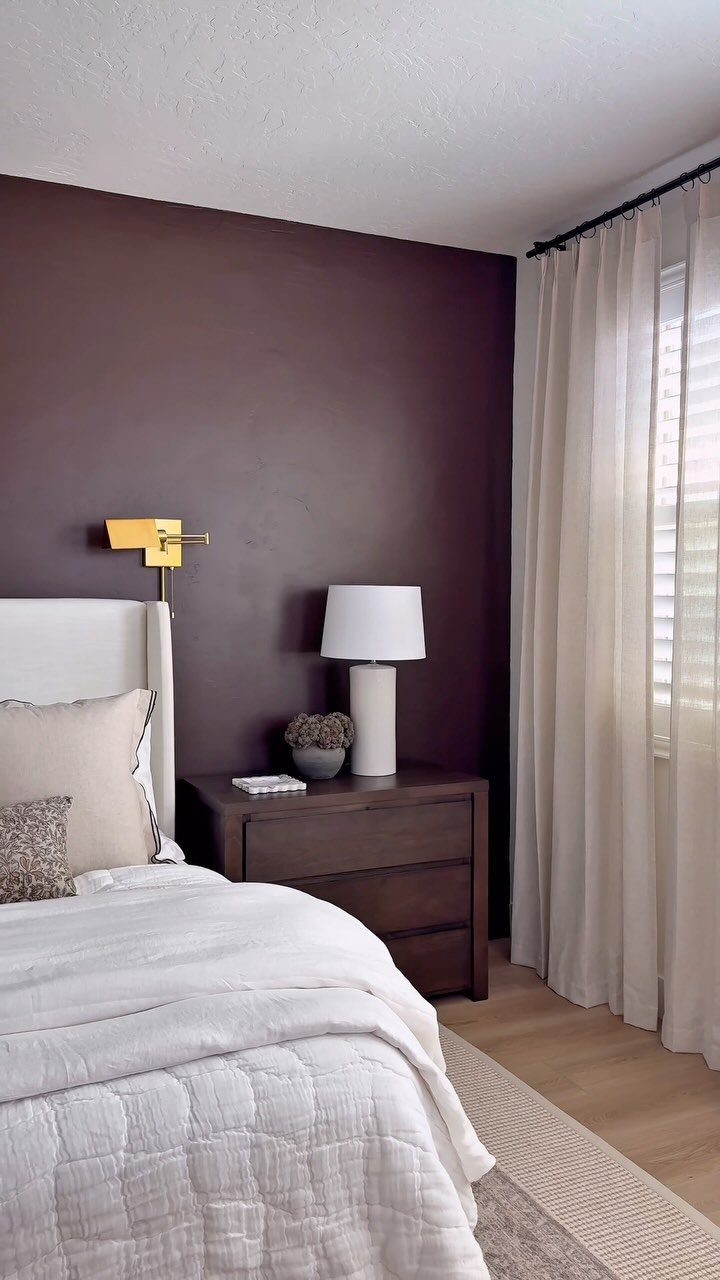
A single dark wall behind the bed gives a small bedroom depth without darkening the whole space. Deep purple reads richest when white bedding and curtains sit against it for contrast.
Choose the wall your eye lands on first, which is usually the one behind the headboard. Leave the other 3 walls light.
One accent wall is also much cheaper than four: a single gallon often covers it, and repainting later is a small job for a renter.
Choosing the Right Undertones
Undertone matters more than the color name on the chip. Cooler shades like blue, sage, and crisp white hold up in a south-facing bedroom, since the strong warm light balances them out.
Because east and west windows swing from warm light to cool over a single day, I’d look at your swatch once in the morning and again at dusk.
Each wall catches light at a different angle, so a color that looks right on one can look flat or off on the other.
If your room gets lots of sun, pale neutrals or pastels will usually make it look larger.
If it’s dark, a deep, cocooning shade can suit it better than fighting it. Greens also connect a dim room to the outdoors.
Impact of Lighting
Daylight shows paint closest to its true color, and lamps and bulbs tend to shift it. Warm bulbs pull white paint toward yellow, while cool LEDs can drain the life out of warm colors.
Since you sleep in the room mostly at night, judge your swatch under the bulbs you actually use. A soft blue that looks fresh at noon can turn heavy and sleepy under warm lamps.
A north-facing room tends to make paint look darker than the chip did in the store, so go a shade lighter than you think you need.
Avoiding Dark Colors
Dark colors make a small bedroom look smaller. Black, brown, red, and deep green are the colors people most often steer away from in a small room, since they make the walls feel closer.
Light colors reflect more light and make the room look larger and airier. If you love a deep shade, give it a small job: a pillow, a lamp base, a framed print, or a painted nightstand.
That way the room keeps its brightness, and you still get the depth you wanted.
For some homeowners, the idea of dark colors might feel foreboding, especially in a small bedroom, but for others, it is the dark ‘night’ of a shade that offers serenity in a room scheme.
Frequently Asked Questions
What is the best color to paint a small bedroom?
Soft whites and light blues are the safest picks. In a room with a single small window, a warm off-white pushes daylight into the corners, and after dark it reads soft instead of the hospital-bright you get from stark white.
A pale blue wall looks best against white furniture, and I’d leave the headboard in a quiet neutral so the 2 colors don’t compete. If the room faces north, choose a blue with a hint of gray.
What colors make a bedroom look brighter?
Pale shades such as off-white, soft sage and powder blue brighten a bedroom because they bounce back more of the light that comes in. In a sunny room, pale neutrals and pastels also make the space look larger.
Can dark paint ever work in a small bedroom?
Yes, and sometimes on all of them if the room gets good light and you commit to the same tone on the trim and ceiling.
Paint the wall behind the headboard, which is usually where your eye lands first, and leave the other 3 walls light.
That gives the room depth without darkening all of it. It also costs less, since a single gallon often covers one wall, and a renter can repaint it easily.





