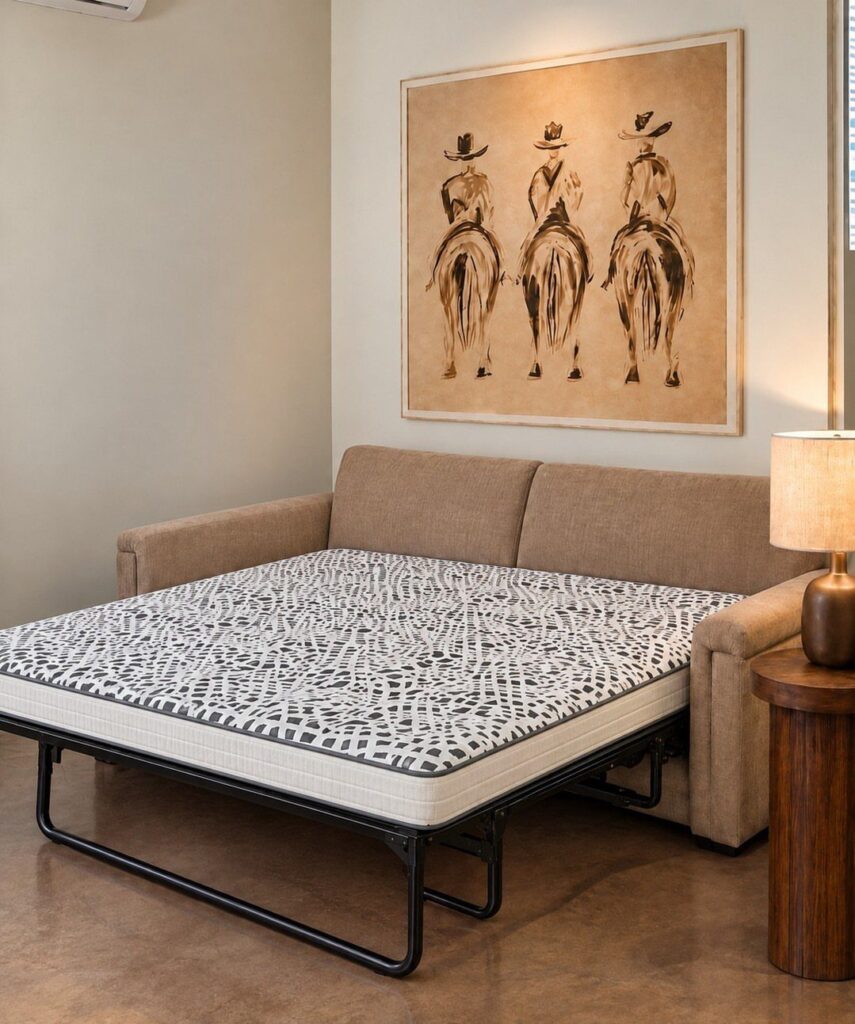
How often anyone actually sleeps in the room decides which of these setups fits: a Murphy bed folds up and projects just 16 inches when closed, so it suits a room that is an office most days, while a sleeper sofa or daybed suits one that needs a place to sit between visits.
The ideas run from a compact desk and a sleeper sofa you can set up in an afternoon to a built-in office nook or a Murphy bed that eats up more than a weekend.
1. Sleeper Sofa
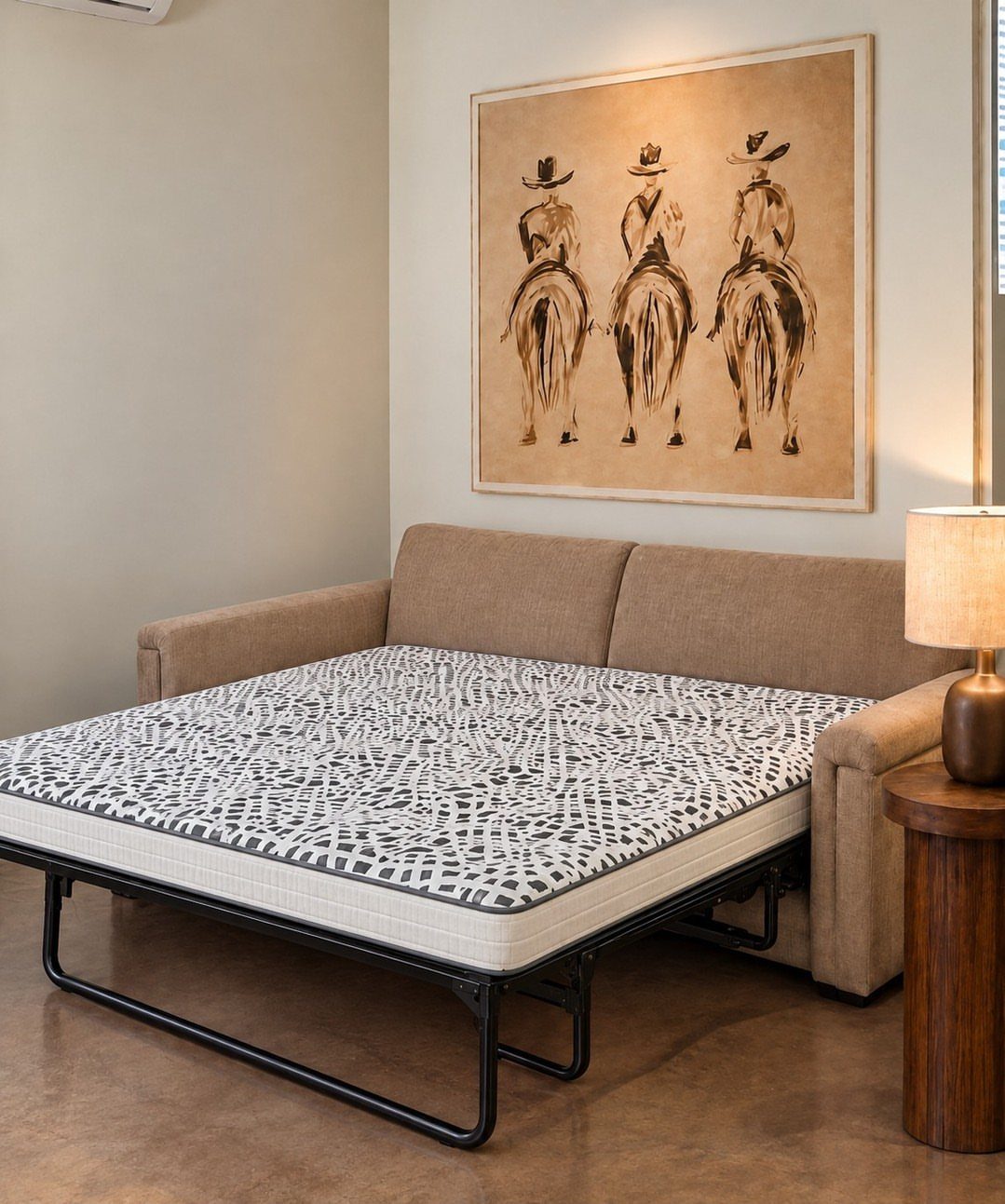
A sleeper sofa earns its floor space by doing 2 jobs in a room that can’t spare a separate bed.
If the room needs a place to sit between visits, this is the piece I would pick over an air mattress, since it never has to be stored.
Before buying, check the mattress.
Sit on it, then lie on it, because a thin pull-out mattress is the usual complaint. Leave about the length of the open bed clear in front of the sofa, and keep the desk chair out of that zone.
A side table with a lamp beside it gives a guest a reading light at night.
2. Compact Desk
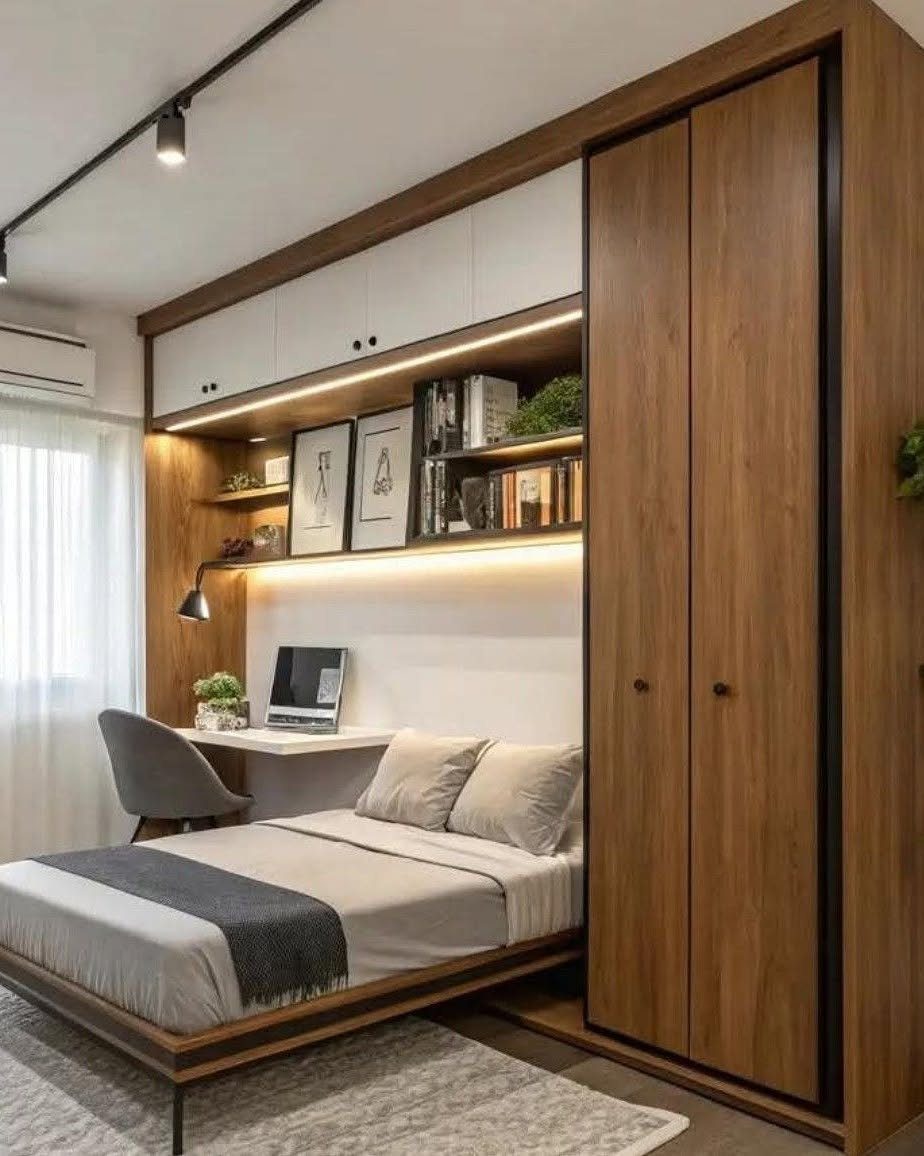
Built into a wall unit beside the bed and wardrobes, a compact desk stops being furniture and becomes part of the wall.
That is the version I like for small rooms: the desk gets a fixed spot, and the floor stays open.
Pick a white top if the unit around it is wood, since it keeps the work corner from looking heavy. Choose a chair that tucks fully under, so a guest can walk past without turning sideways.
Keep the surface clear of clutter. A laptop, a lamp and one tray for papers is plenty.
3. Murphy Bed
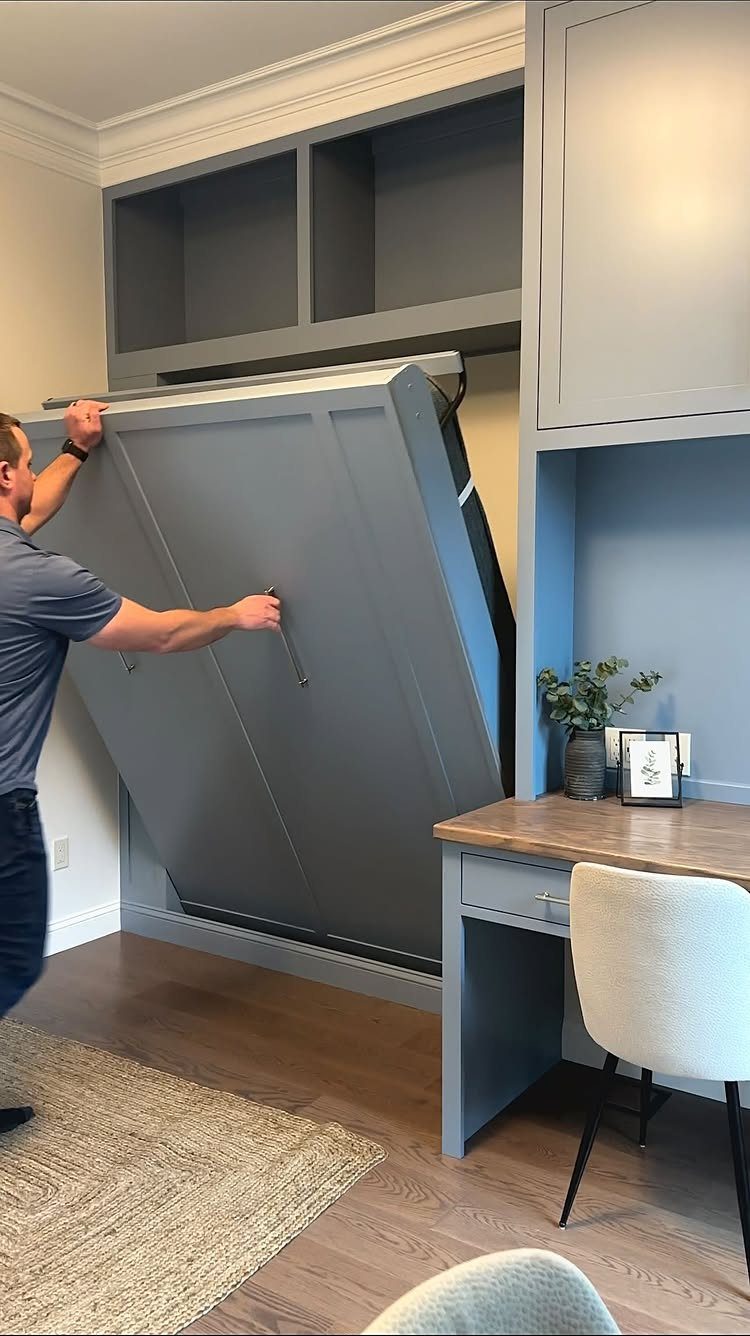
Folded up, a Murphy bed leaves the whole floor free for a desk, and that is why it suits a room used for work far more often than for sleeping.
Pulled down, it gives a guest a real bed instead of a cushion.
Build the desk and shelving beside the bed, not under it, so neither blocks the other. A grey or blue finish keeps the panel from looking like a cabinet door.
Cost is the limit. A Murphy bed is a bigger spend than a sofa or daybed, and it takes more than a weekend if the wall needs work.
4. Daybed
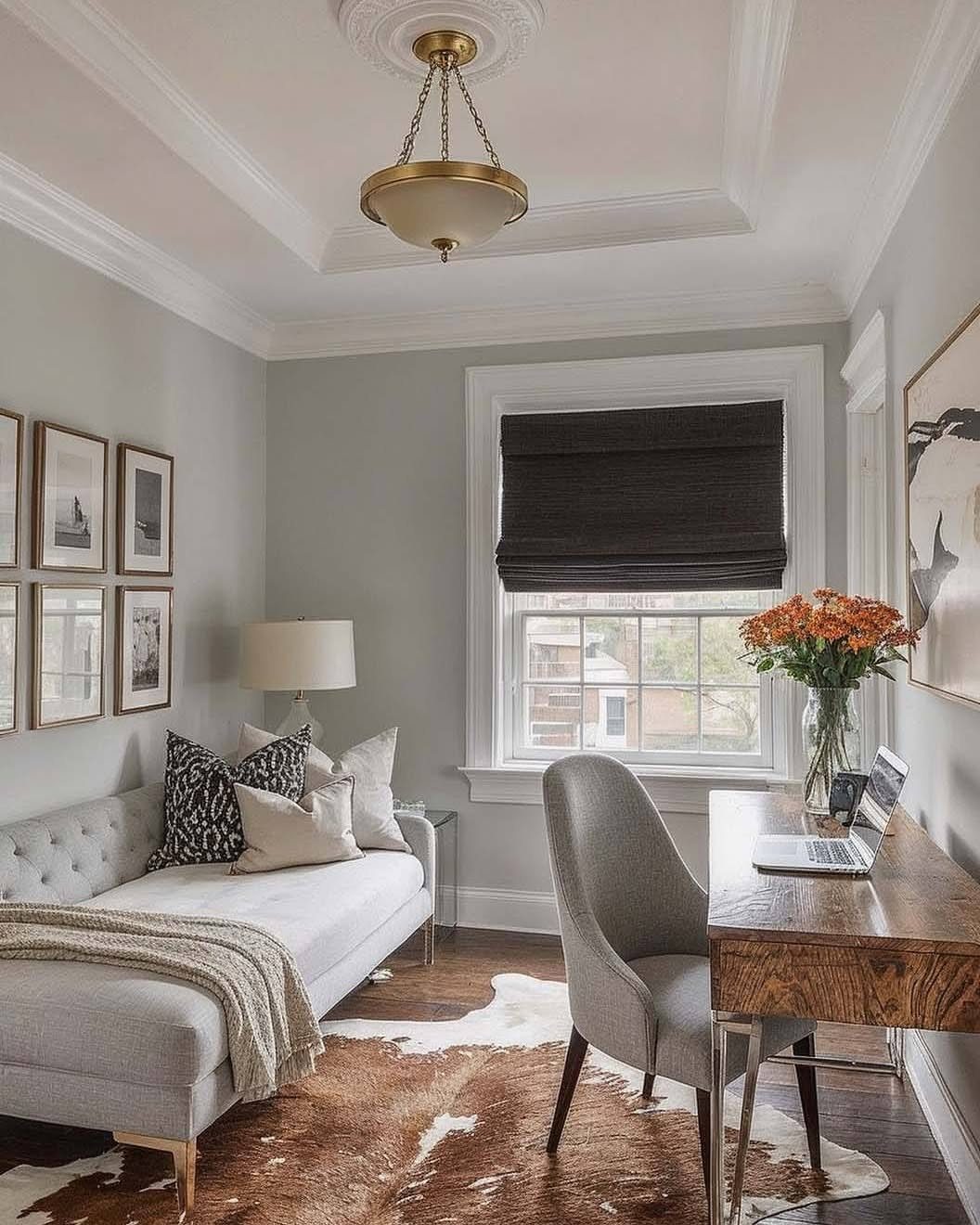
Pushed along a wall, a daybed reads as seating by day and a bed at night, and that double life makes it my pick for a guest room that needs somewhere to sit between visits.
A grey daybed frame stays quiet beside a wooden desk, so the desk gets to be the warm, visible piece in the room.
A rug under the front edge helps define the sleeping zone, so the desk side doesn’t feel like it is in the guest’s way.
5. Guest Amenities
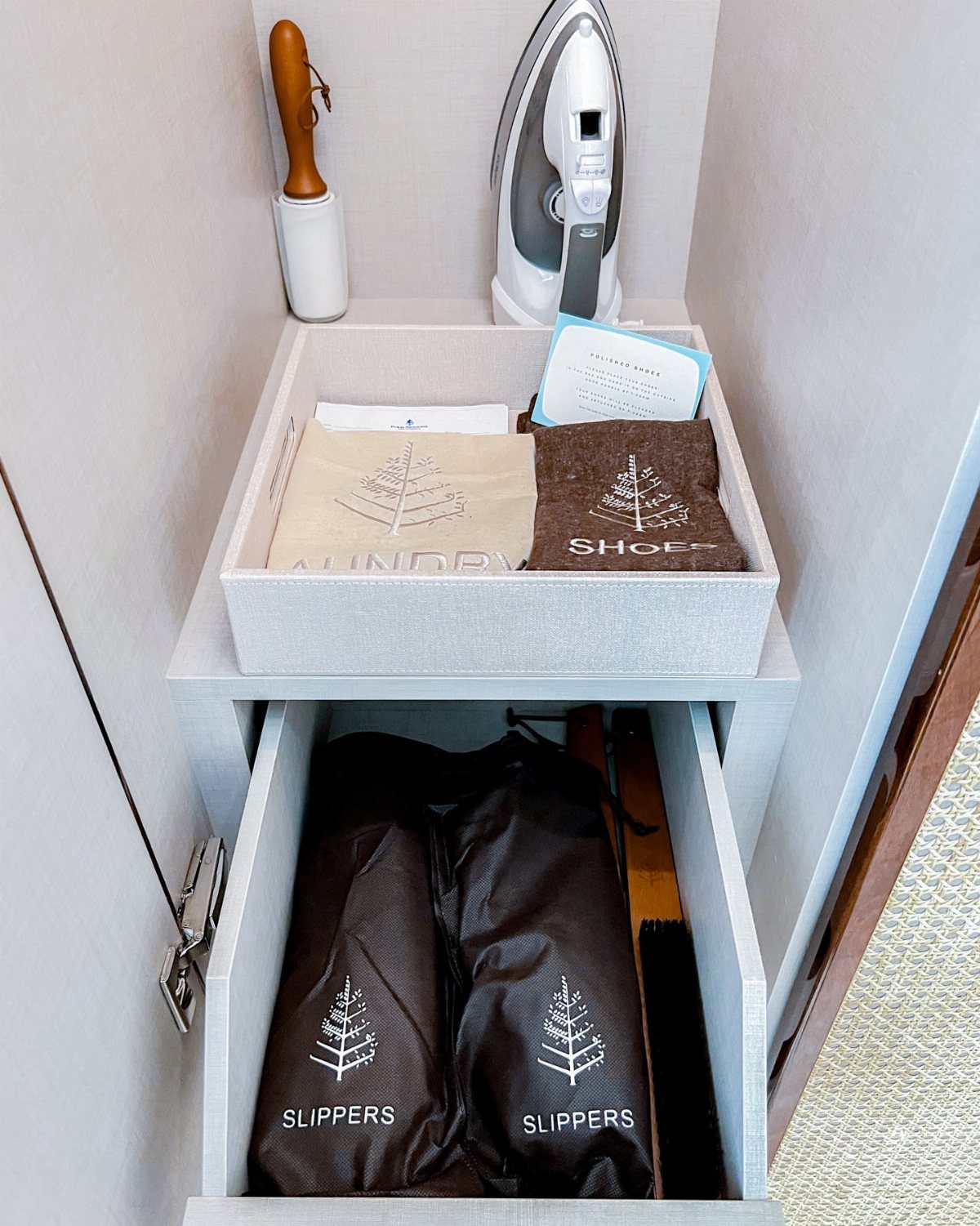
A guest who can find an iron on their own never has to ask.
Labels cost a few dollars and save explaining.
Clear a shelf at eye level if you can, and keep the work supplies lower or in another spot.
6. Guest Kit
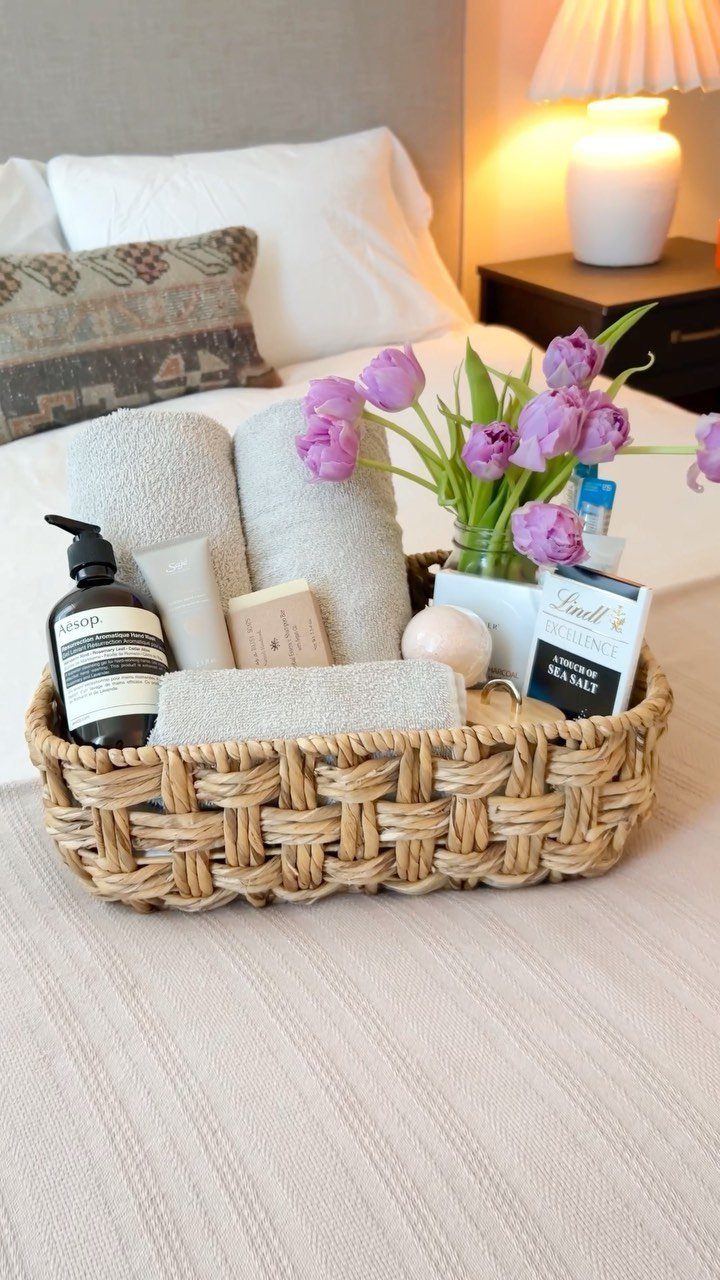
Add fresh tulips and the room feels expected, not borrowed.
Roll the towels so they fit snugly and stay tidy, and tuck the toiletries between them. A basket works better than a tray because it can be lifted off when the guest wants to go to sleep.
Buy travel sizes if the budget is tight; the basket and the flowers matter more than the brand on the soap.
7. Built-In Office Nook
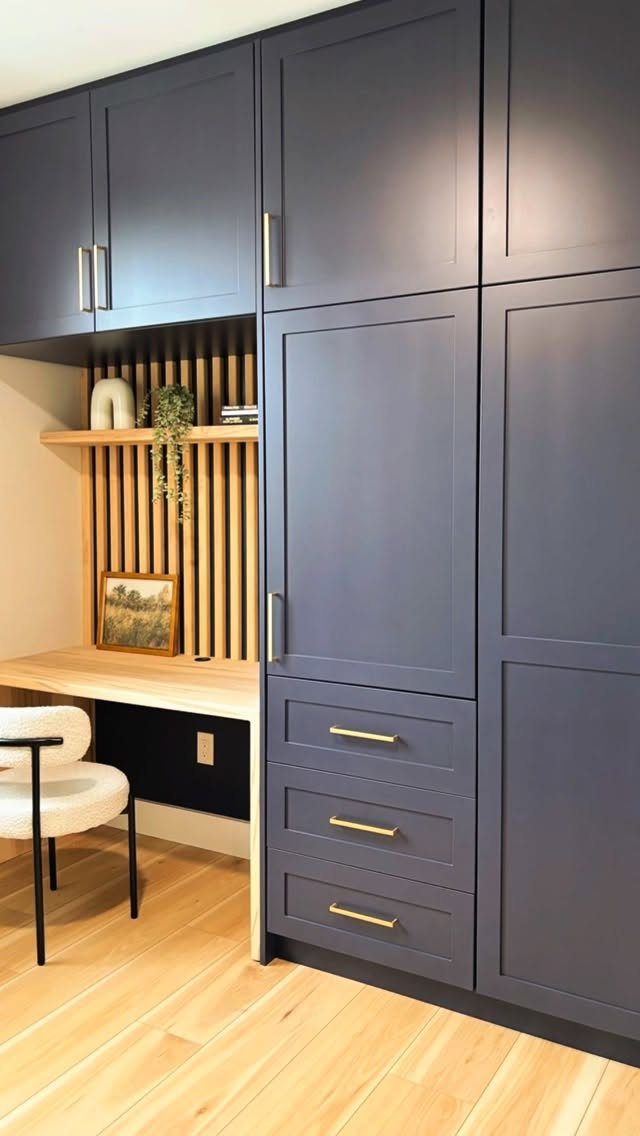
Dark blue cabinets with a light wood desk give a work corner real contrast, and the wood slat wall behind it adds warmth so the blue doesn’t turn heavy. That pairing is what I would copy in a guest room.
Because the desk is part of the cabinetry, the rest of the floor stays free for a bed or sofa. A white chair keeps the corner light and tucks away easily.
Built-ins cost more than freestanding furniture and take longer than a weekend. On a tight budget, paint basic cabinets deep blue and add a plain wood desktop.
Mapping Out the Room
Before buying anything, lay painter’s tape on the floor to outline each piece at its real dimensions. A rectangle on the floor tells you more than a measuring tape does, because you can walk around it.
Check the paths as well as the footprint. Step from the door to the closet, the window and the desk, and notice where you turn sideways or bump a corner.
A long, narrow room is the hardest test.
A bulky bed that looks fine on a product page can eat the only walkway, so tape out the dimensions on the floor first. If the outline blocks the path, pick something slimmer or move to a different bed style.
Leave the tape down for a day or two. Working at a taped-out desk and walking past it at night shows problems a quick look misses.
Resetting the Room
Tidy the room before a guest arrives.
Stacks of paper and a tangle of cords make a visitor feel like they are intruding on your workspace, so clear the desk surface and put work supplies in a closet or a bin.
Reset it once they leave. Strip the bed and start the wash right away, because a sofa still covered in used sheets will pull your attention on Monday morning.
A clean slate helps the room switch roles more easily. Light floors and a simple, uncluttered wall treatment make the space feel more open, and that is especially useful if the windows face north and the daylight is limited.
If the room is small, add furniture slowly after the basics are done. Each piece should earn its place in both the work week and the guest weekend.
Choosing the Right Bed
Start with a question: will anyone use this bed between visits? If the room only needs a bed when guests stay, a Murphy bed folds against the wall and projects just 16 inches when closed.
Styles vary. You can find classic wall models, cabinet versions, and ones built with desks and cabinetry that look custom.
A horizontal model opens with the long side of the mattress against the wall, and cabinet versions come in vertical or horizontal layouts.
If you want a place to sit and relax in the office, choose a sofa bed or daybed instead. A trundle bed is another option worth a look.
Match the choice to how the room is really used, not to how you imagine hosting.





