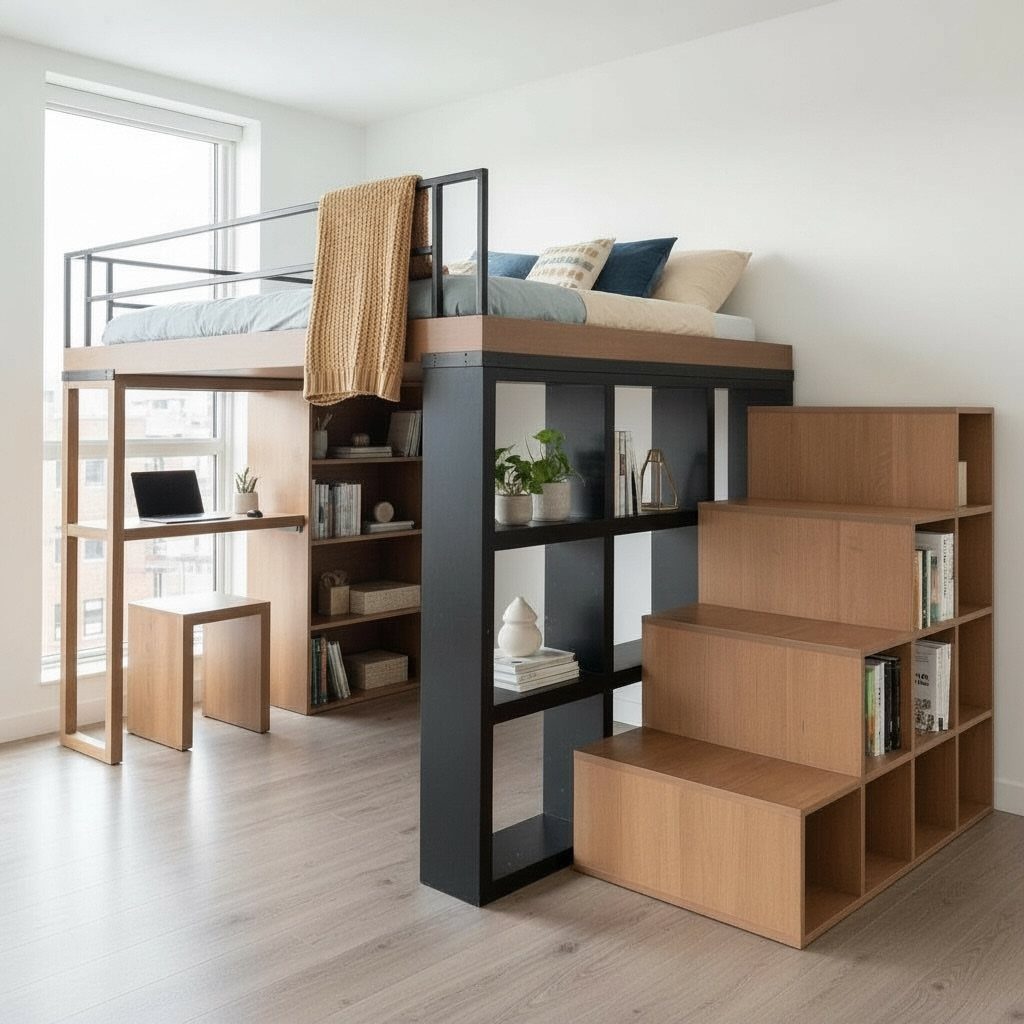
Ceiling height decides which of these loft beds is yours, and the post’s rule is 33–36 inches of clearance from the mattress top to the ceiling. If your room gives you less, a shorter frame is the only version that works.
The ideas include work stations, storage built into the frame, reading nooks, couches and gaming lounges below, plus guardrail and material choices that affect how much vertical room you need. Guardrails and materials matter once you know the height works.
1. Loft Bed with Work Station
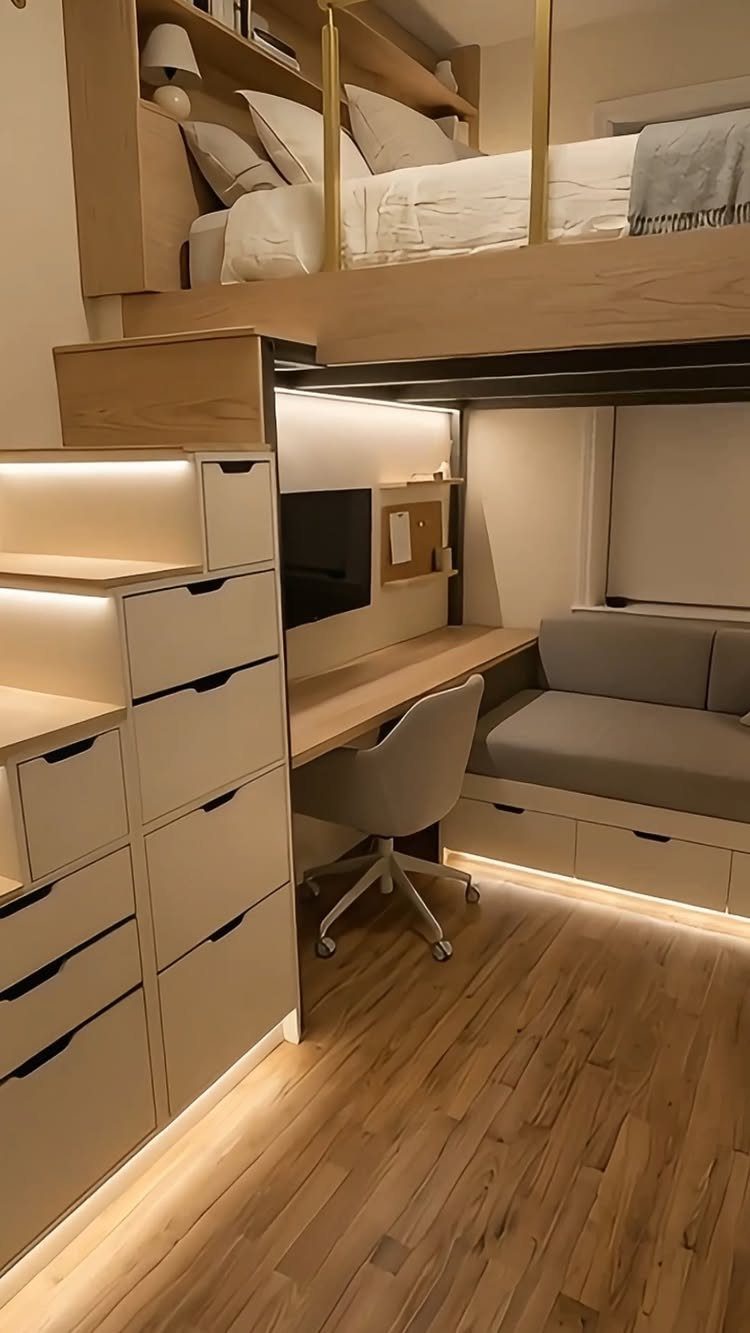
A desk tucked under a loft bed turns dead floor space into a working corner, and with a small sofa beside it the same footprint also handles reading and lounging.
In tight square footage, that’s two or three zones in the space one bed would normally eat.
I’d pick a light wood finish like this one in a tight room, since it keeps the underside from feeling like a cave.
Check the chair too: a seat that slides fully under the desk saves floor space.
2. Low Ceiling Loft Bed
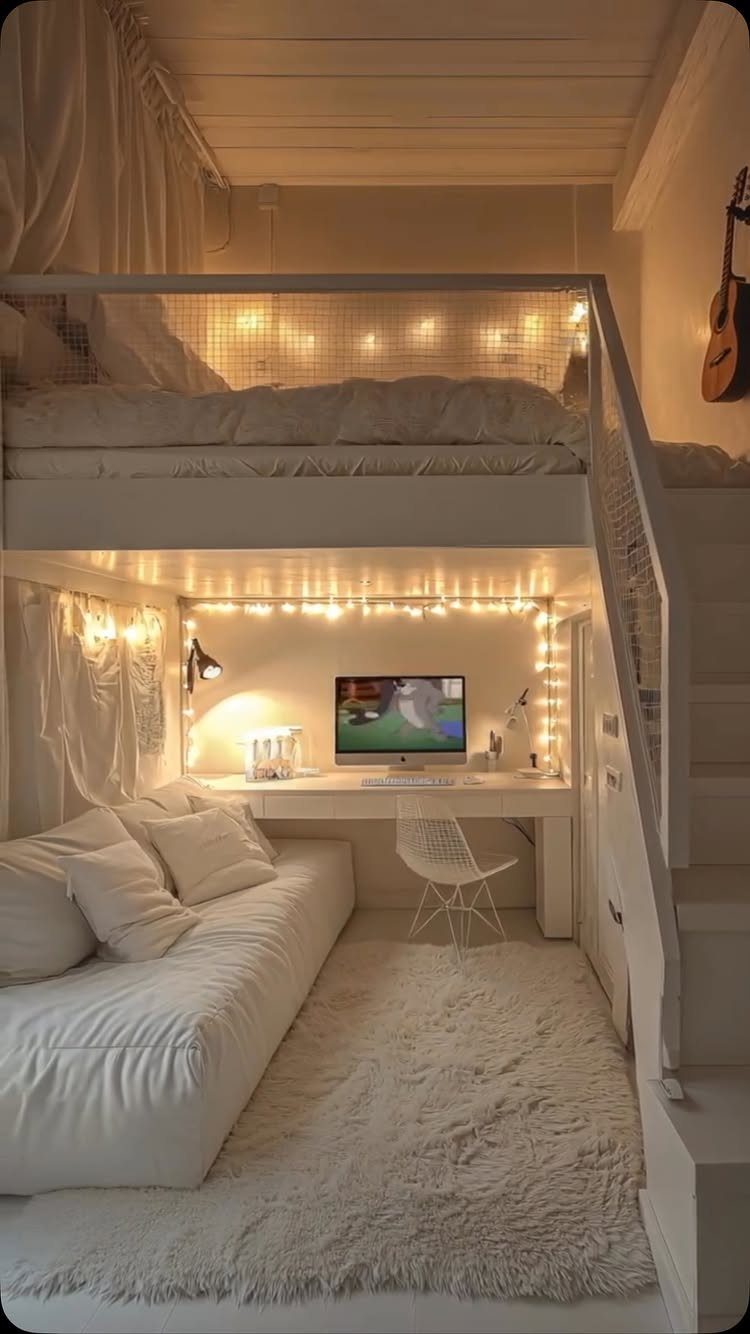
White is the safest finish for a loft bed in a room with a low ceiling, because the frame blends into the walls and stops reading as a big block overhead.
A white shag rug and warm string lights do the rest, softening the underside so the desk and sofa area feels like a room of its own.
Before buying, measure ceiling height and add the mattress thickness to the frame height. Subtract that sum from your ceiling height, and what’s left decides how much sitting room you have up top.
Choose a low-profile frame over a tall one, and skip anything that leaves you ducking.
3. Loft Bed with Storage Solutions
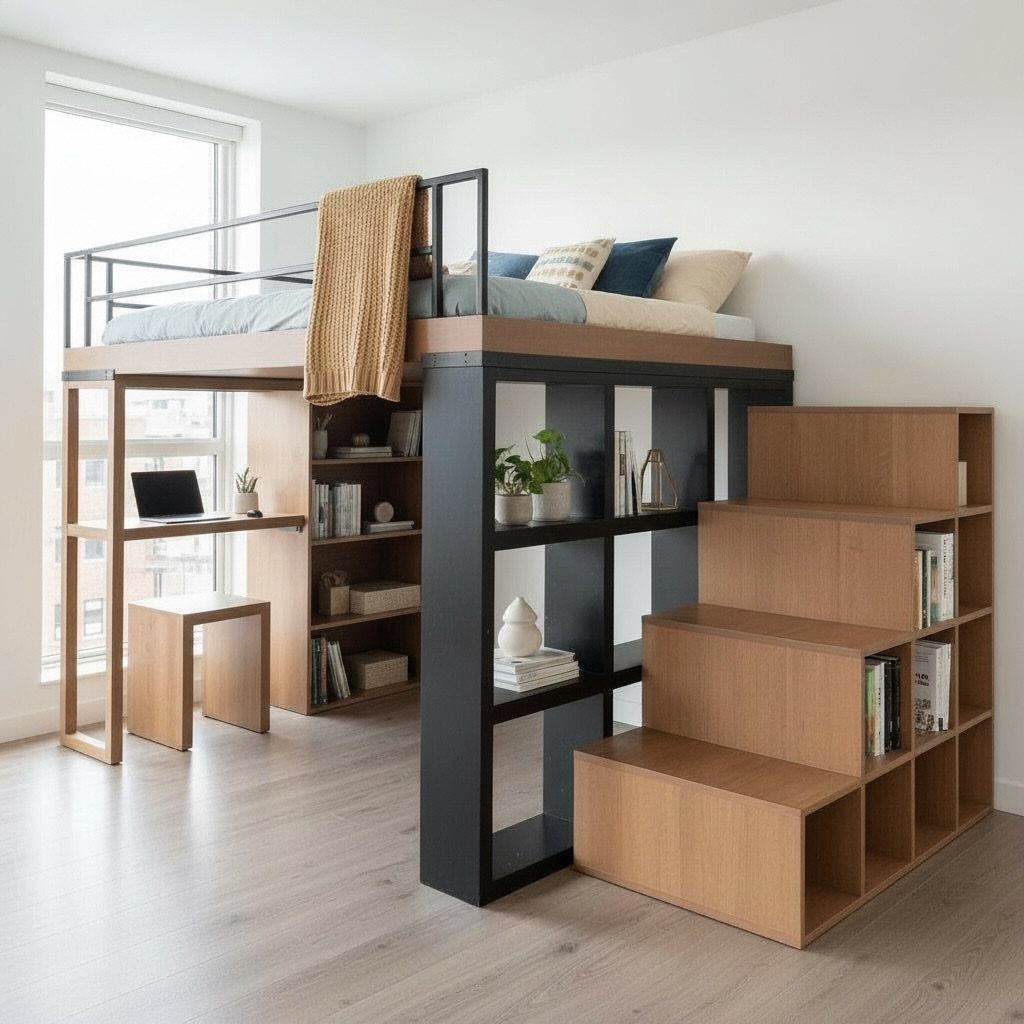
Stairs that double as storage are the feature I’d pay extra for, since a ladder gives you nothing back. Each step becomes a drawer or cubby, and shoes, books or bedding stop piling up on the floor.
Pair that with a built-in desk and bookshelves, and one frame holds most of what a compact bedroom needs.
Keep the stairs on the side with open floor so the drawers can pull out fully.
4. Loft Bed Guardrails
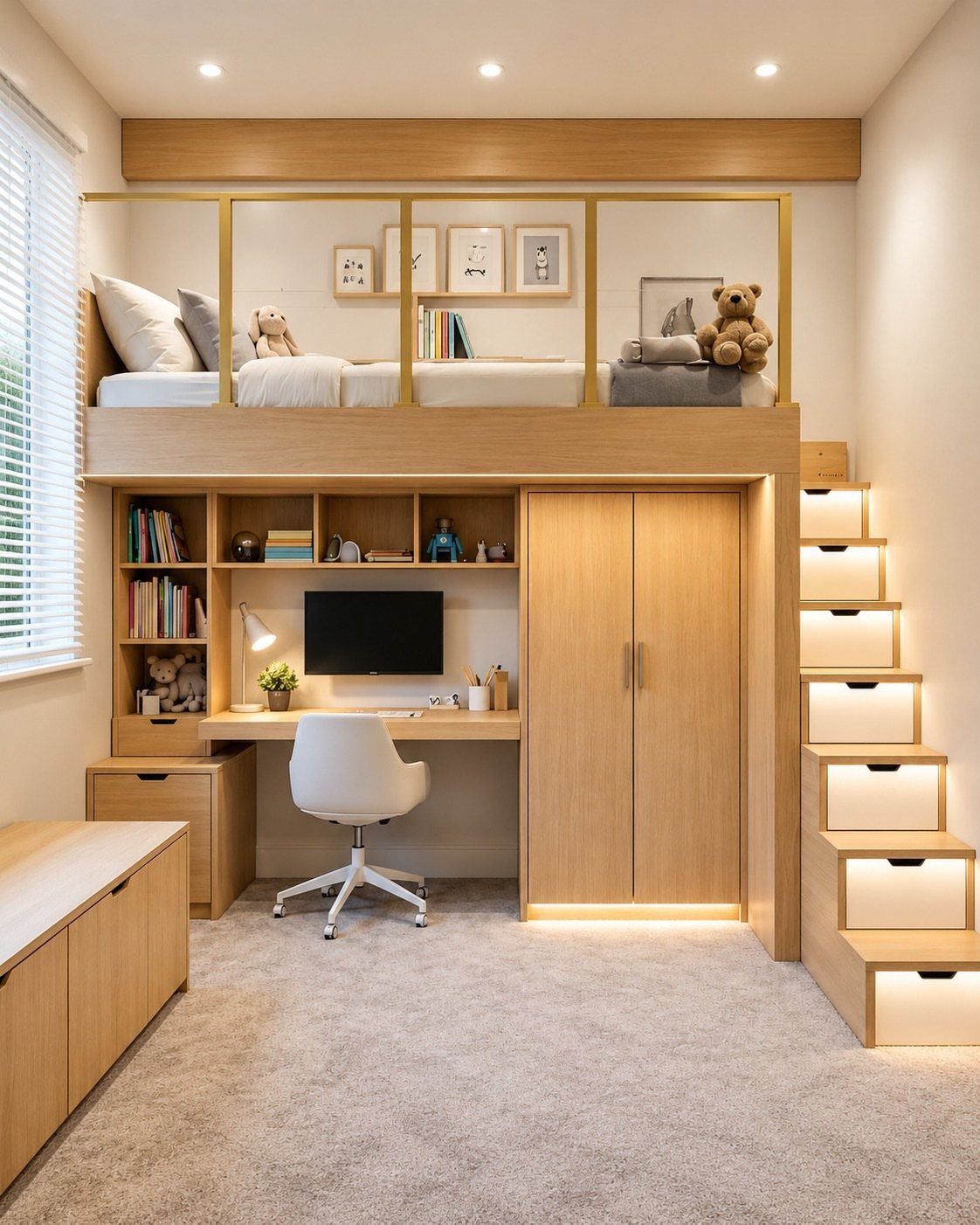
Guardrails decide whether a loft bed feels safe to sleep in, so look at them before the finish or the desk.
Gold metal rails, like these on a light wood frame, add a bit of style without adding bulk, since they’re thin and let light through.
Choose rails that sit well above the mattress surface, and check that they run along every open side. Since this bed has stairs rather than a ladder, the opening for the steps is the one gap to look at closely.
A wardrobe and desk below keep the whole setup tidy.
5. Loft Bed with Reading Nook
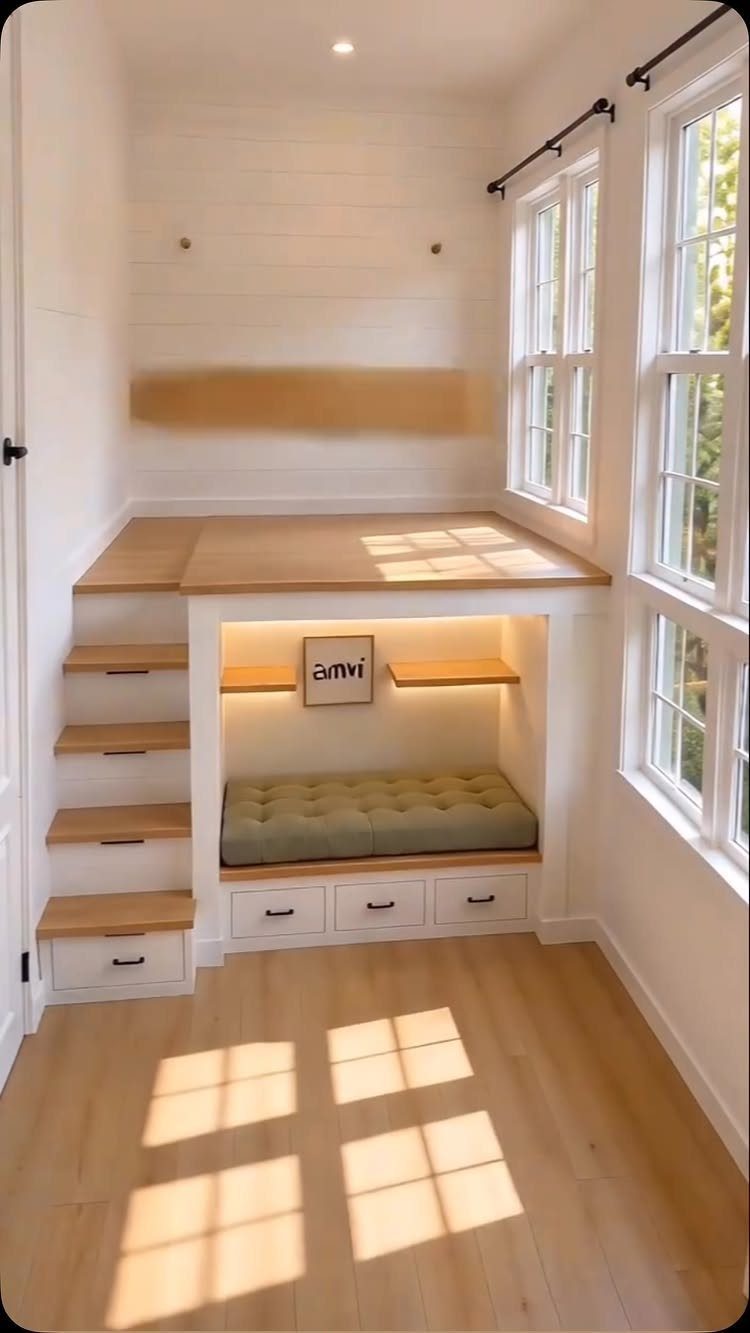
A cushioned bench built into the frame gives you a reading spot that doubles as a seat, with drawers underneath for books, blankets or spare linens.
Add a small clip-on reading light and a pillow or two, and the bench becomes the best seat in the room.
6. Loft Bed Over Couch
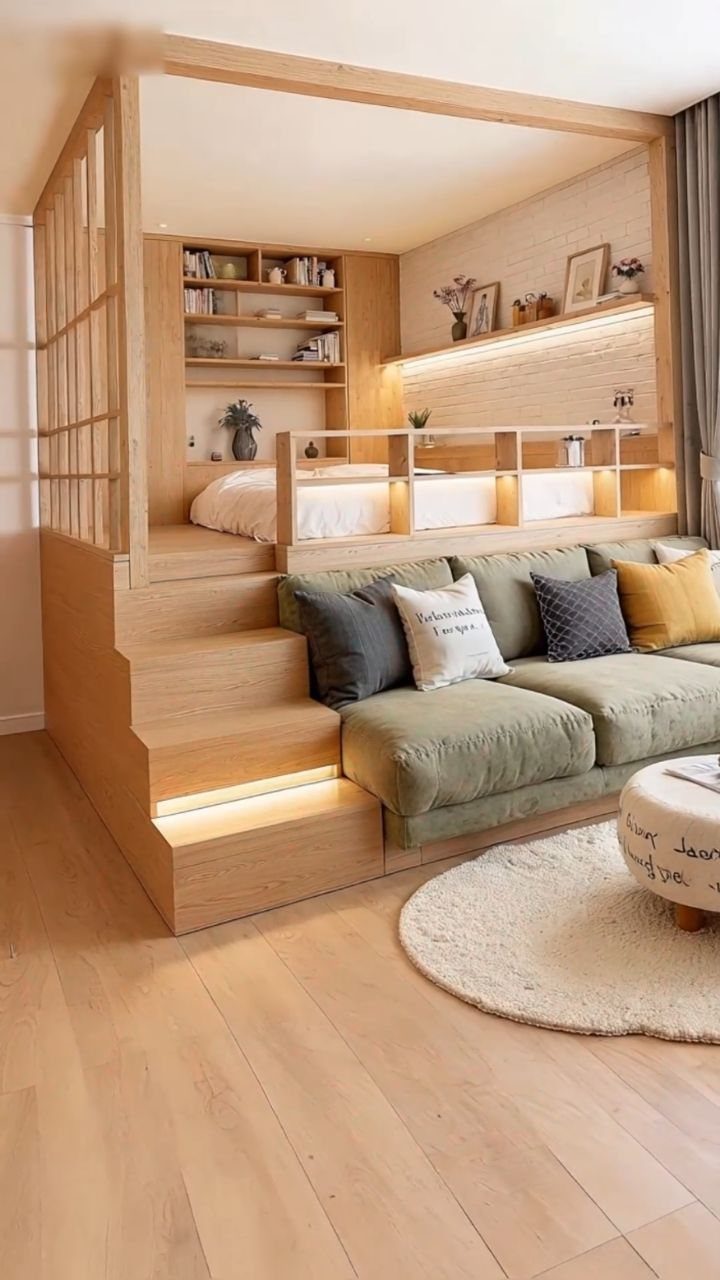
Seating under a low loft bed is the move for people who want a couch and a bed but only have room for one footprint.
A green sofa gives the underside some color, and a built-in bookshelf and warm lighting turn it into a small living room instead of leftover space.
Measure the sofa’s height before choosing the frame, since the clearance is tight. A compact, low-backed couch is easier to sit on comfortably than a full-size one.
Integrated stairs also keep the climb steadier than a ladder.
7. Loft Bed with Gaming Lounge
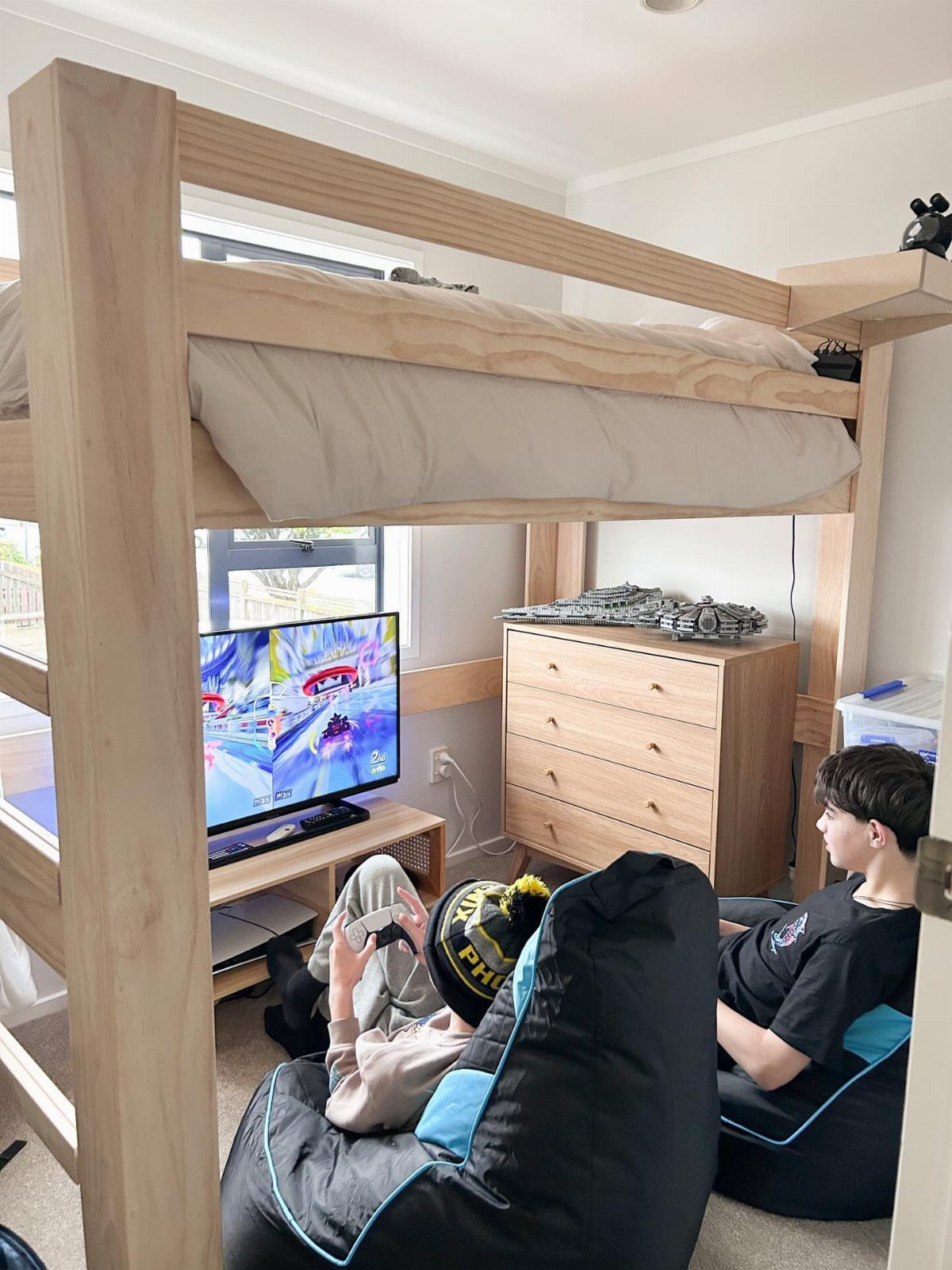
Bean bags are the right seats for a gaming spot under a loft bed, since they slide flush to the baseboard when the screen is off and don’t need the clearance a sofa does.
With a TV and dresser also fitting beneath the wooden frame, one footprint holds sleeping, storage and play.
Mount or place the TV so the cords run to one outlet, and keep the dresser on the side away from the screen so drawers open without shoving the bean bags aside.
A wood frame like this one also gives the area a warmer feel than metal would.
Ceiling Height Considerations
Plan on 33–36 inches of clearance from the mattress top to the ceiling, which is enough to sit up without hitting your head. Less than that and the bed feels like a shelf you crawl onto.
If the ceiling is low, buy a shorter loft frame rather than a tall one. A mid-height model still frees up room underneath for storage or seating, and the climb stays safe and easy.
Shorter frames also suit attic rooms with slanted ceilings, where a tall bed would run out of headroom on one side.
Age Suitability
Look for wider ladders, reinforced slats and a higher weight capacity, which are the features that make daily use safe.
For kids, I’d keep children under 6 out of a loft altogether. Age is only part of it, because maturity matters too.
Once an older child is ready for the top bunk, I’d set one house rule right away: up there is for sleeping and reading, nothing else. No jumping or roughhousing up there.
Material Choices
Wood brings natural warmth, and it fits cottage, farmhouse and Scandinavian rooms well. Metal suits industrial or modern spaces and looks sleeker.
Powder-coated steel gives you a strong frame that still weighs little, so it comes apart and moves to the next apartment more easily than most wood.
A wood and metal mix balances both looks and works in a kid’s room or an adult’s.
Whichever you pick, put stability first. Give the frame a firm shake before you commit, since a wobbly structure undoes every style choice.
Frequently Asked Questions
Can an adult sleep in a loft bed?
Yes, as long as the frame is built for it. Check that the ladder has wide rungs or full stairs, the slats are reinforced, and the weight capacity goes past 250 pounds.
How to decide if a loft bed is right for you?
Measure clearance first, because anything under 33 inches turns the bed into a platform you squeeze onto instead of sleep in.
Then think about what you want under it: a desk, a small sofa, a dresser or a reading bench can all fit in the footprint one regular bed would take.
Add the person’s age and maturity, because loft beds are not for children under 6.
What is the best loft bed finish for a low ceiling?
White is the safest choice, because the frame blends into the walls and stops reading as a big block overhead.
Light wood keeps the underside open without going dark, which matters when the ceiling sits close. A shorter frame does more for you than any finish, so pick the lowest platform that still gives usable space below.
Is a wood or metal loft bed better?
It depends on the room.
Wood adds warmth and suits cottage, farmhouse and Scandinavian looks, while metal reads sleeker and fits industrial or modern spaces. Powder-coated steel is lighter per pound of strength, which makes it easier to disassemble and haul when you move.





