A small one-bedroom calls for either a fold-away fix or a full layout change, and the deciding fact is who holds the deed: a lease limits you to what can come out again, while ownership lets you move walls and build in.
Beds with built-in storage and tall bookshelves or ceiling-height cabinetry make the most of the floor area, and an open-concept layout can free up the rest if the walls are yours to change.
The ideas here run from a swapped set of cabinet handles that takes an afternoon to a black slatted wall behind the TV, and the lease advice at the end applies to every one of them.
1. Outdoor Space Benefits
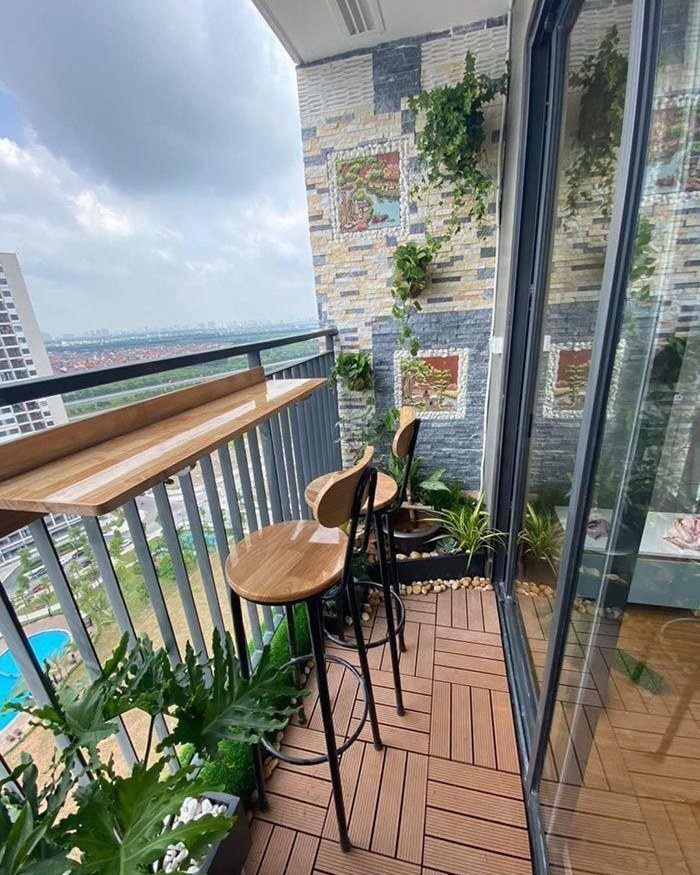
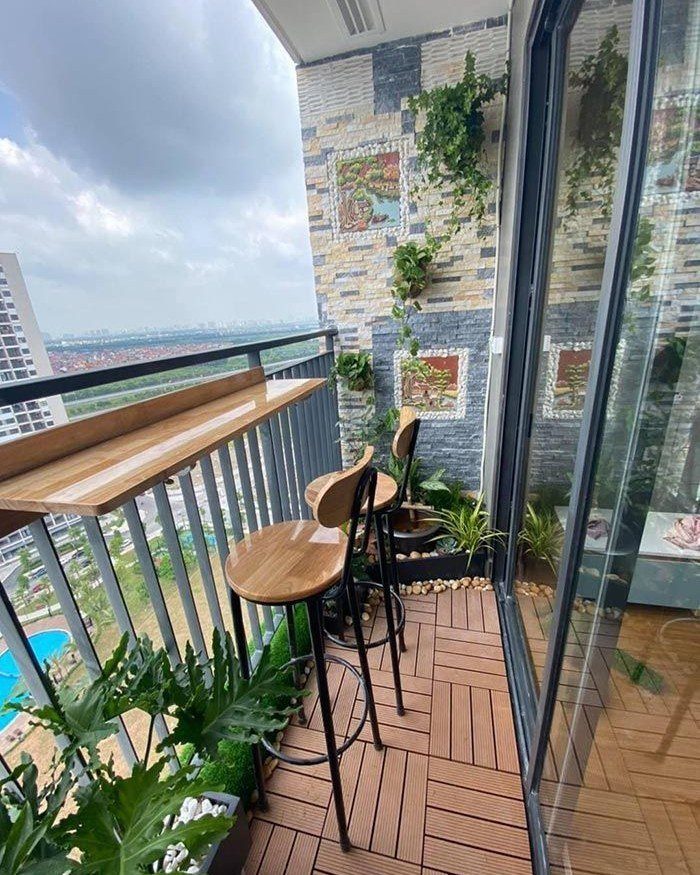
A balcony this narrow earns its keep with a wall-mounted bar counter, because nothing stands on the floor and the wood planks stay clear to walk on. 2 stools tuck under it when you want the space back.
Climbing plants add privacy and height without using any floor. A balcony like this works as a second room for morning coffee, and a bar counter along the rail is the cheapest way to make it feel like one.
2. Common Uses for One-bedroom Apartments
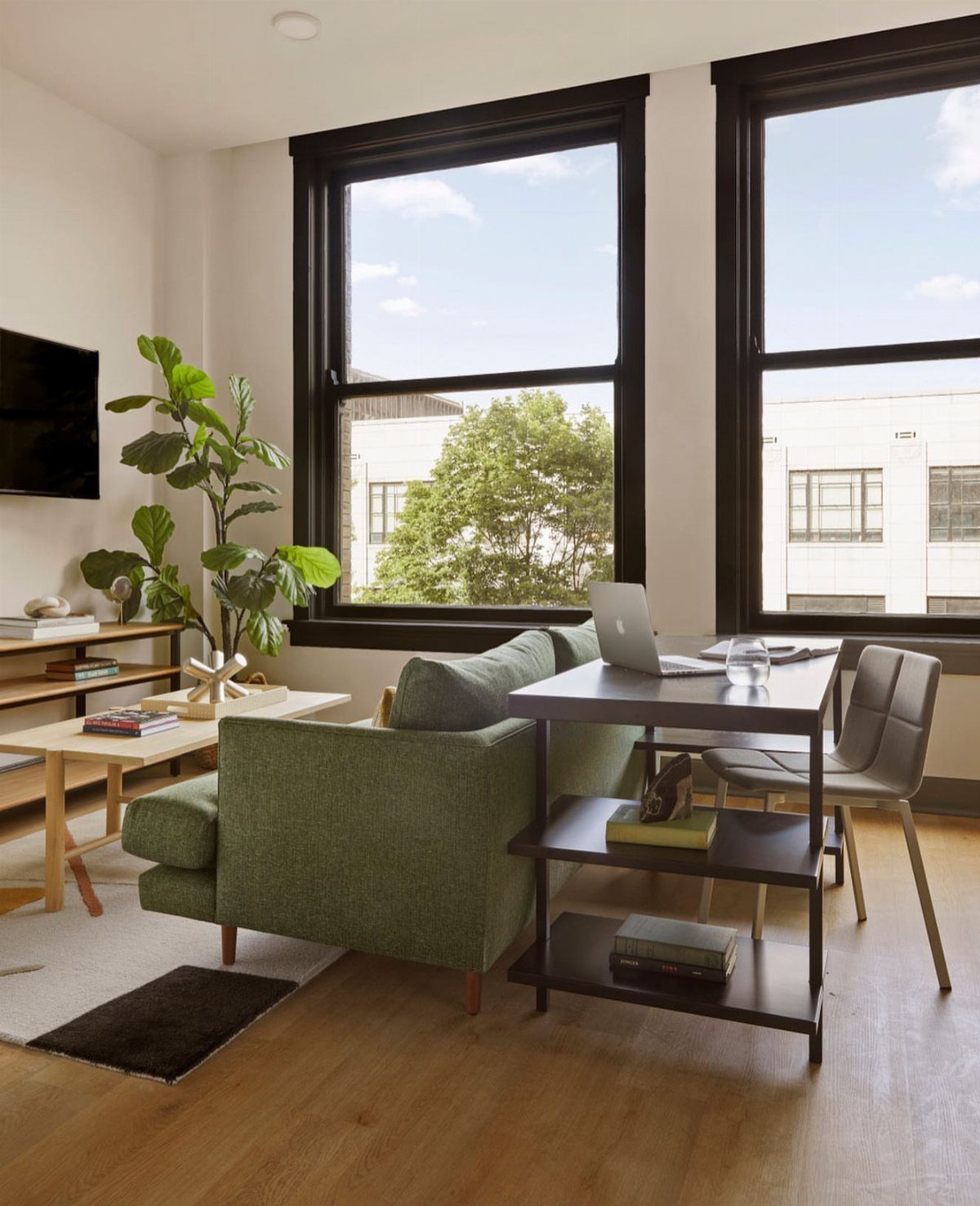
Putting a desk in the living room is the most common way a one-bedroom stretches to cover work and relaxing.
Keep the desk near a window, as it is here, so the laptop gets daylight and the bedroom stays free of work.
A dark wood desk beside a green sofa reads as part of the room instead of an office corner. I’d pick a desk that matches your wood tones and add a plant, which softens the setup.
3. Choosing the Right Layout
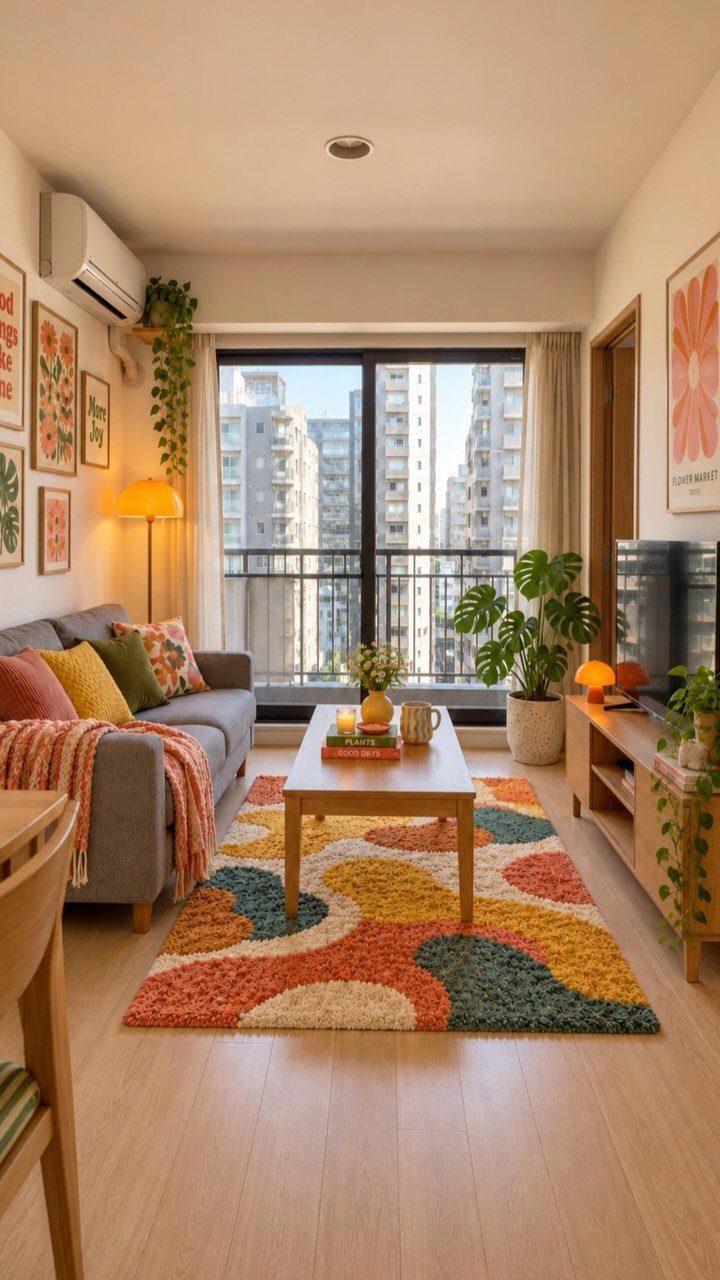
Layout decides how a small apartment feels day to day, and a sofa, rug and coffee table in one tight zone can do more than extra square footage.
A colorful rug is my favorite way to mark the living area without building anything.
A single apartment can be rearranged into many different layouts, which is why I favor movable pieces over fixed ones: one space does the work of several. Before buying furniture, ask which pieces can move or fold.
4. Beds with Built-in Storage
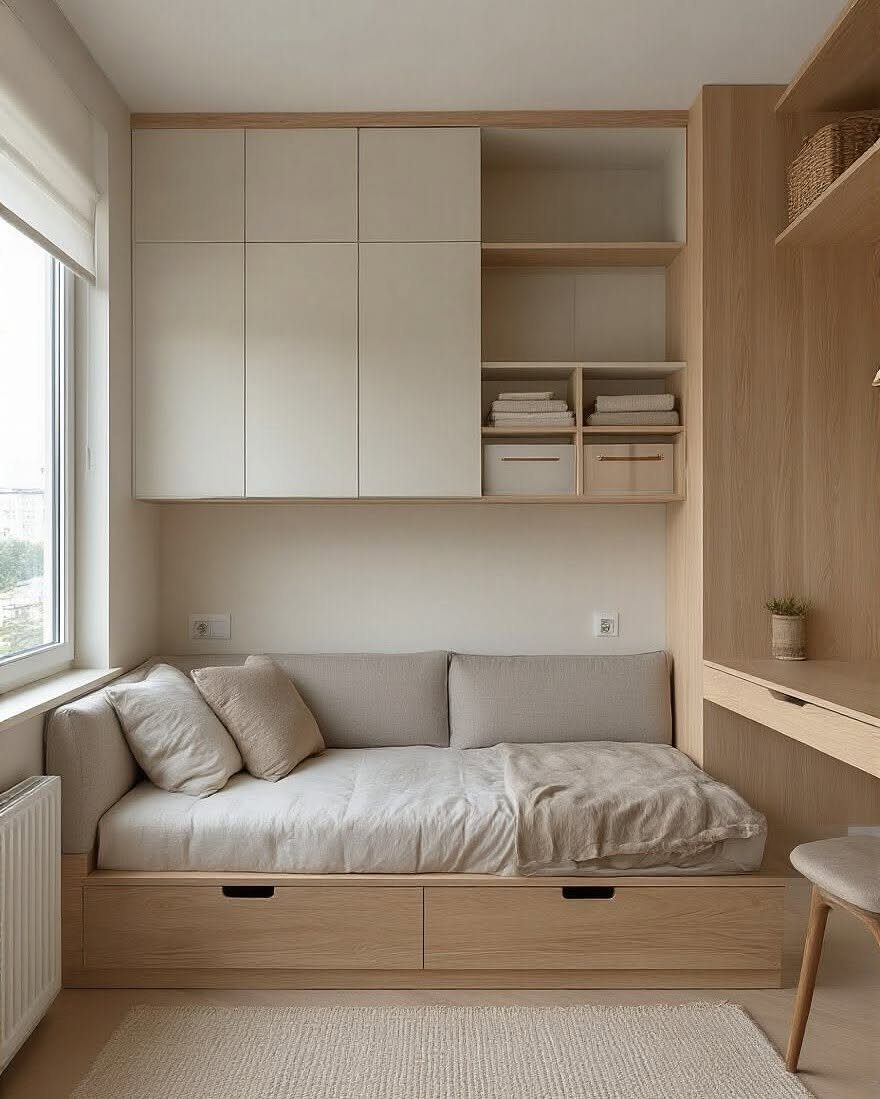
A daybed with drawers built into its base gives you storage without a separate dresser, which a small one-bedroom rarely has room for. Light linens keep the wooden drawer fronts from looking heavy.
Overhead cabinets add a second storage layer over the headboard wall, using space that would otherwise sit empty. I’d keep seasonal bedding in the drawers and everyday items up top, so you never have to lift the mattress.
5. Tall Bookshelves and Ceiling-height Cabinetry
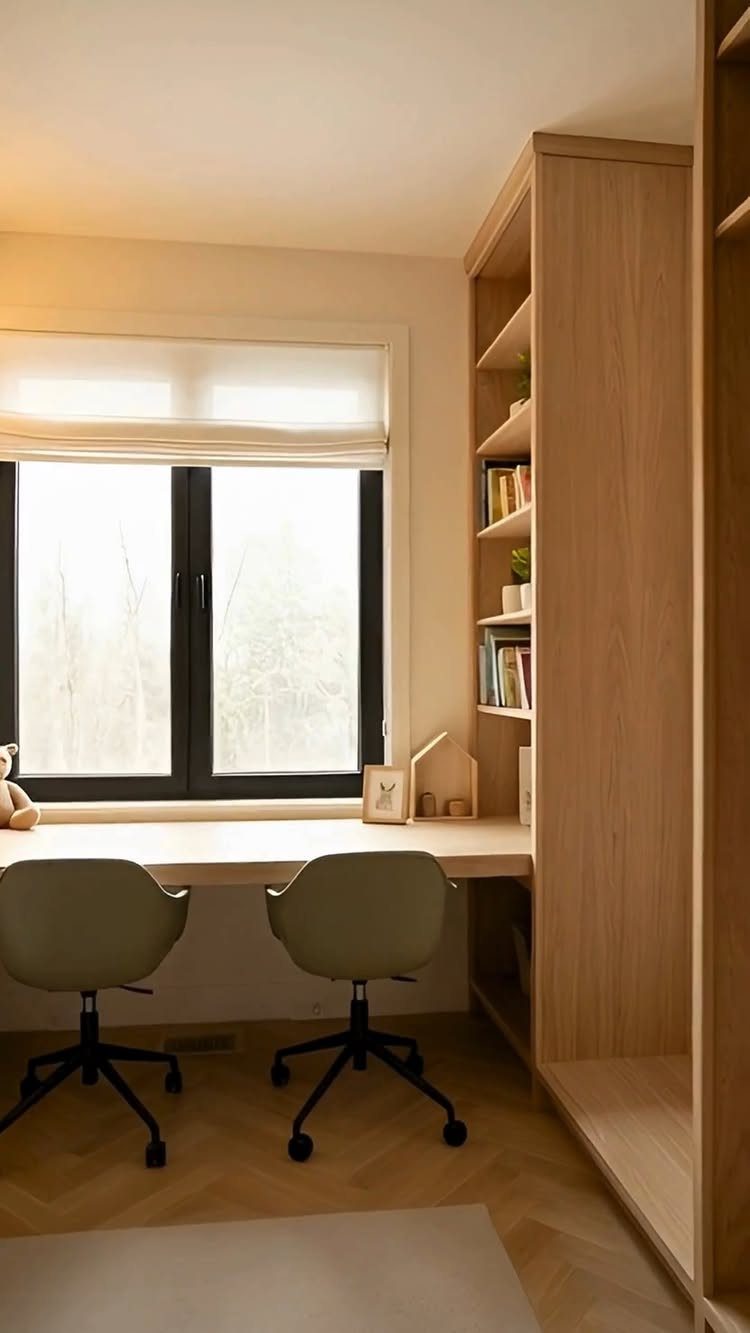
Ceiling-height shelving uses the wall space most apartments waste. Pairing it with a built-in desk in the same light wood, as here, makes the whole run look like one piece of furniture.
For a rental, I’d choose freestanding tall shelves over true built-ins, and anchor them to the wall so they stay put.
6. Open-concept Layout
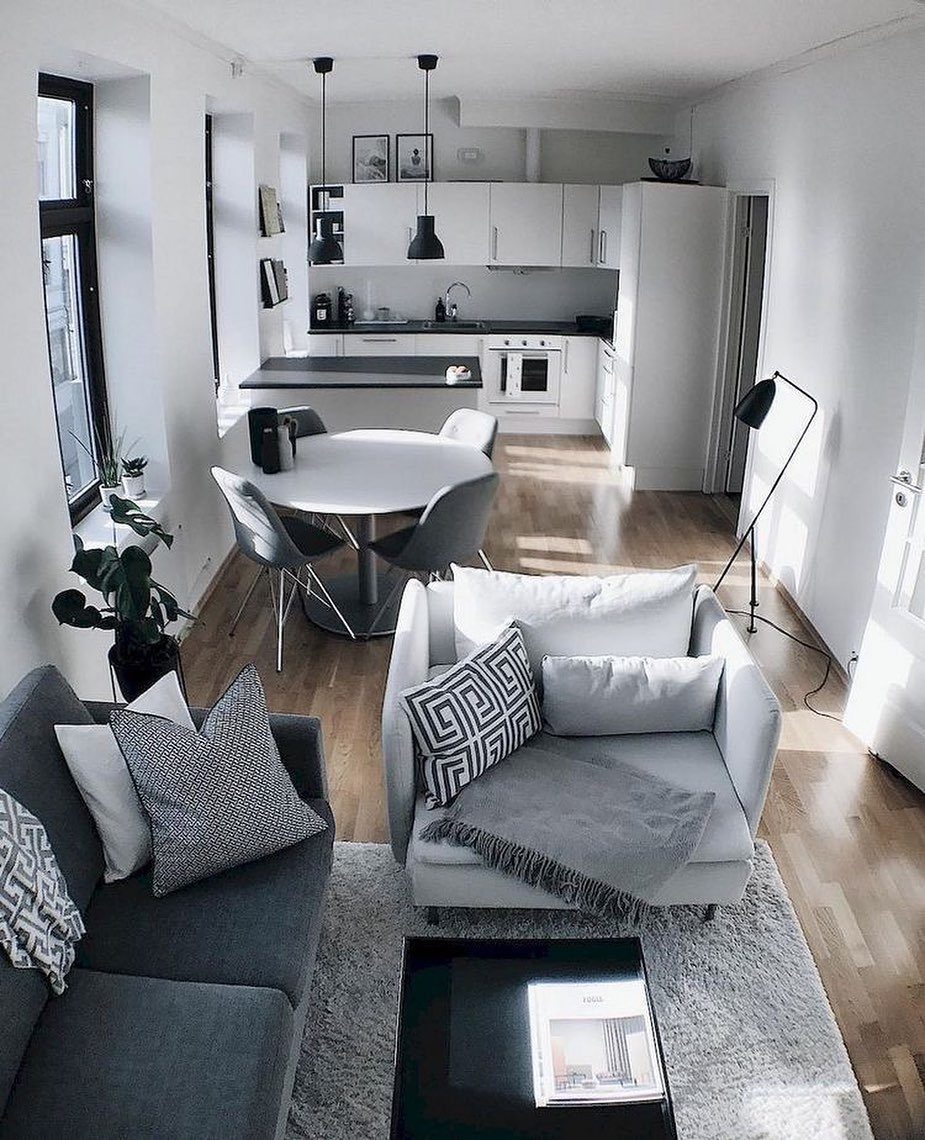
Removing the walls between kitchen, dining and living areas makes a small apartment read as one room, which is why it suits hosting.
A round dining table is my pick here, since it has no corners to bump and seats guests easily.
Repeat one or two colors, like the white and grey on show, so the zones feel connected. Cooking smells and noise will reach the sofa, since nothing separates the kitchen from the living area.
7. En Suite
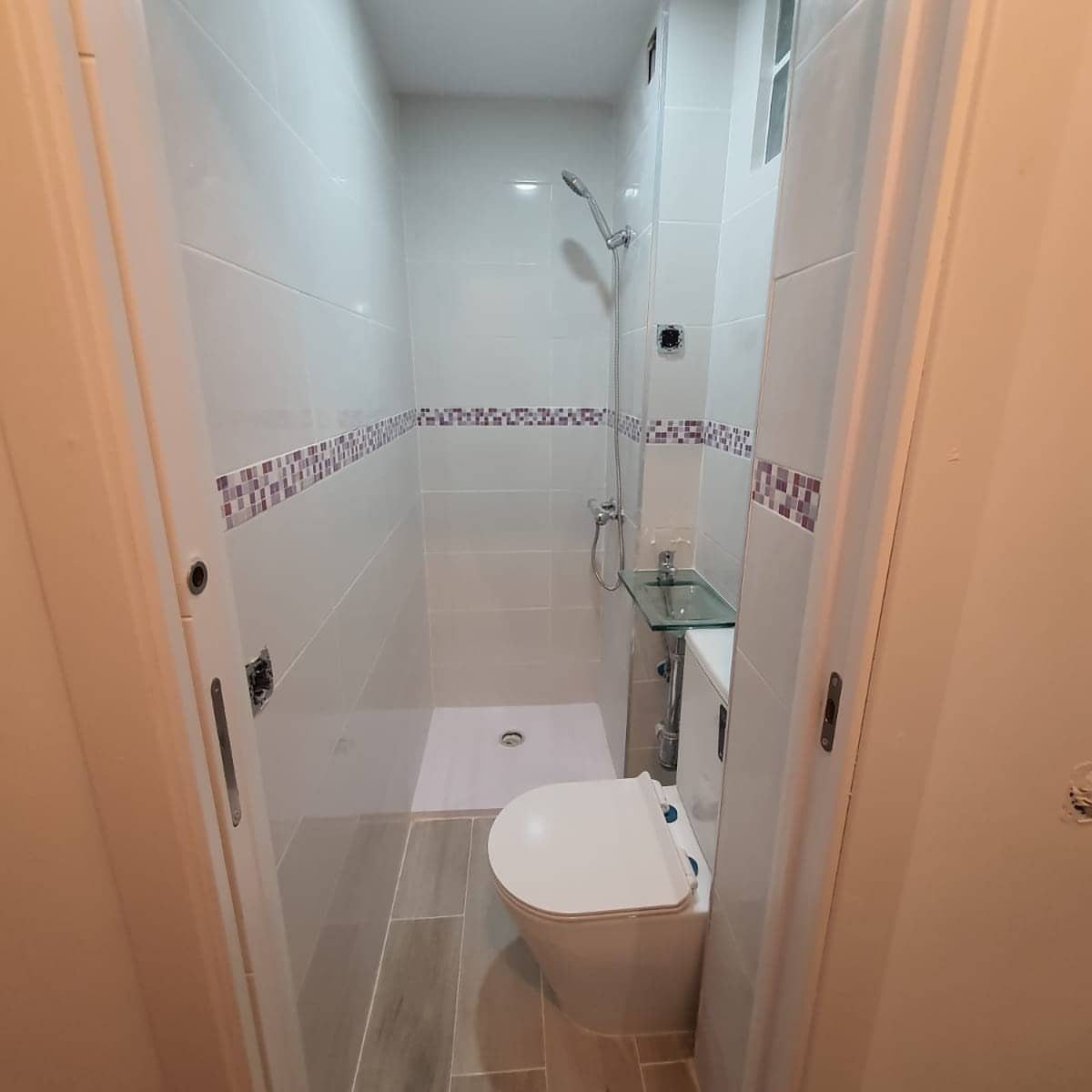
In a narrow bathroom, a doorless walk-in shower keeps the floor visible from the doorway, and that unbroken sightline makes the room read longer.
Running the same white tile across the walls and floor stretches the effect, since there are no seams of contrast to stop the eye.
A small glass shelf beside the showerhead holds the daily bottles without a bulky caddy. I’d keep the shelf nearly empty, since clutter is what makes a tight bathroom feel tighter.
8. Compact Living Room Setup
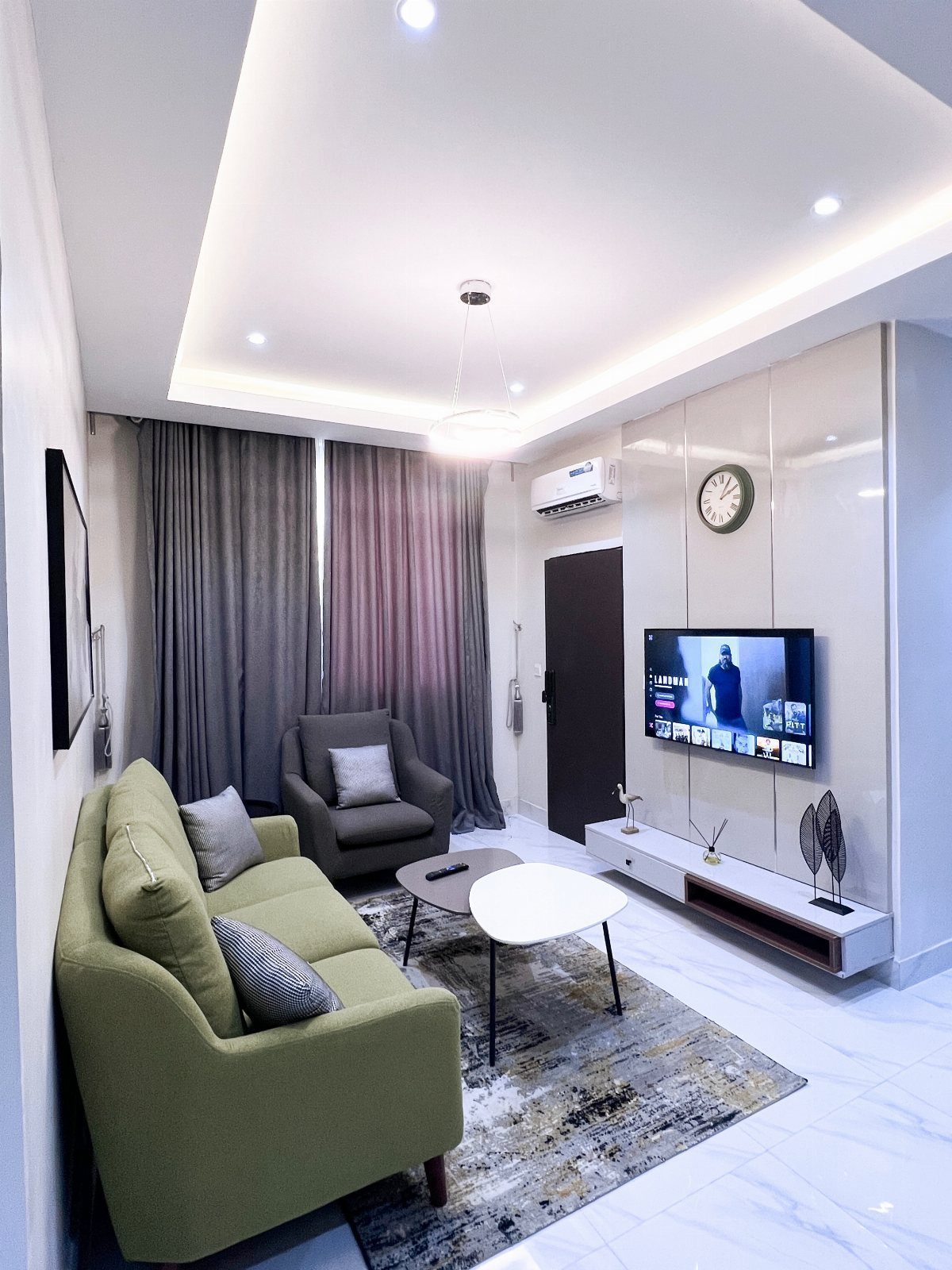
A green sofa gives a small living room one strong color, and a grey armchair and grey rug keep it from competing. I like this combination because the neutrals do the quiet work while the sofa carries the room.
Mounting the TV on the wall frees the floor for a white coffee table, which looks lighter than a dark media stand would. Pick a coffee table small enough that you can walk around it without turning sideways.
9. Small Kitchen with White Cabinets
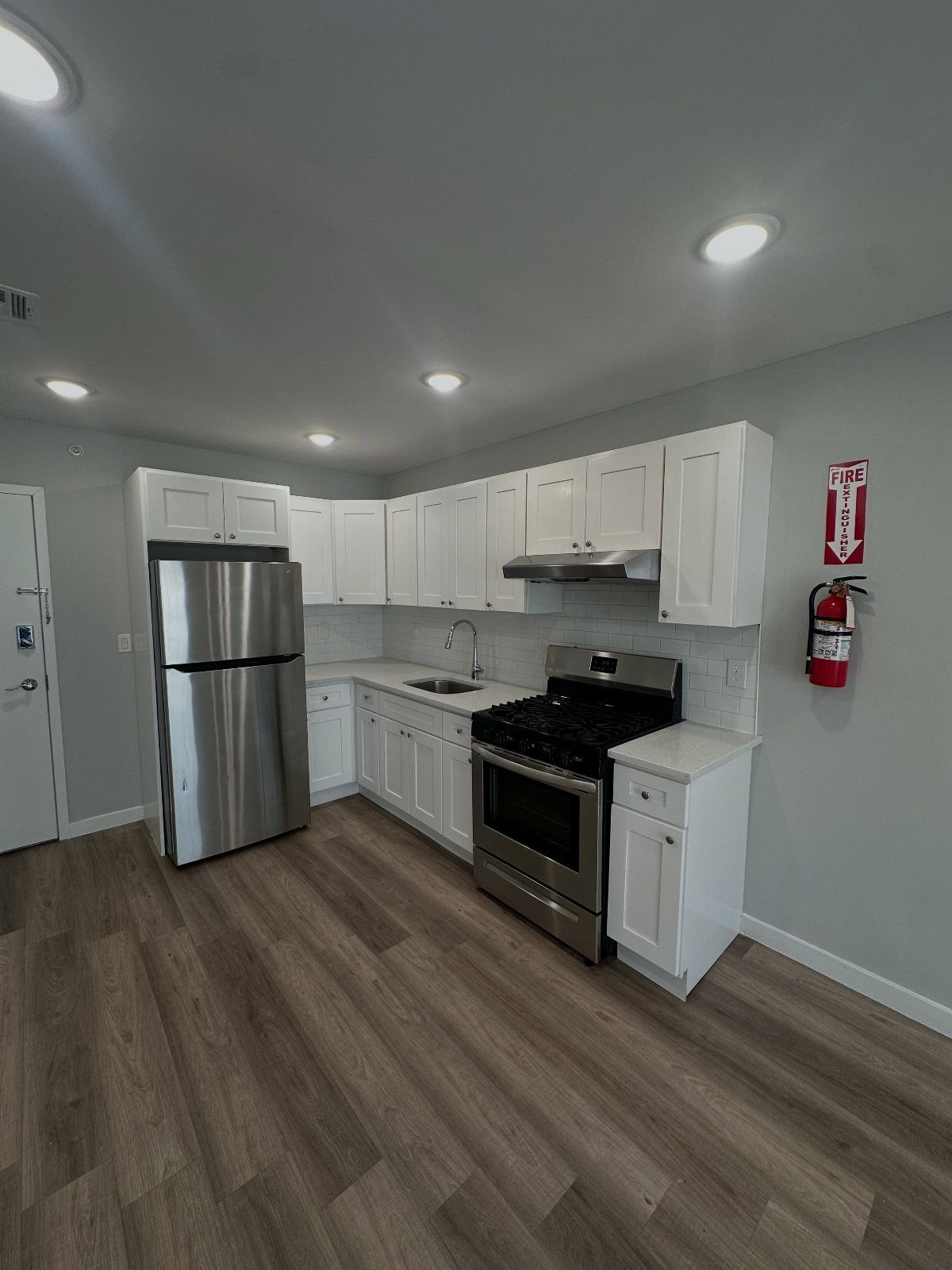
White cabinets, stainless steel appliances and wood-look flooring make a small kitchen read as clean and bright without much effort.
Wood-look laminate warms up all that white, and a typical roll or plank runs a fraction of what real hardwood costs.
If the cabinets are builder-grade, I’d swap the handles first. It takes an afternoon with a screwdriver and changes the look more than you’d expect.
10. Black Accent Wall Living Room
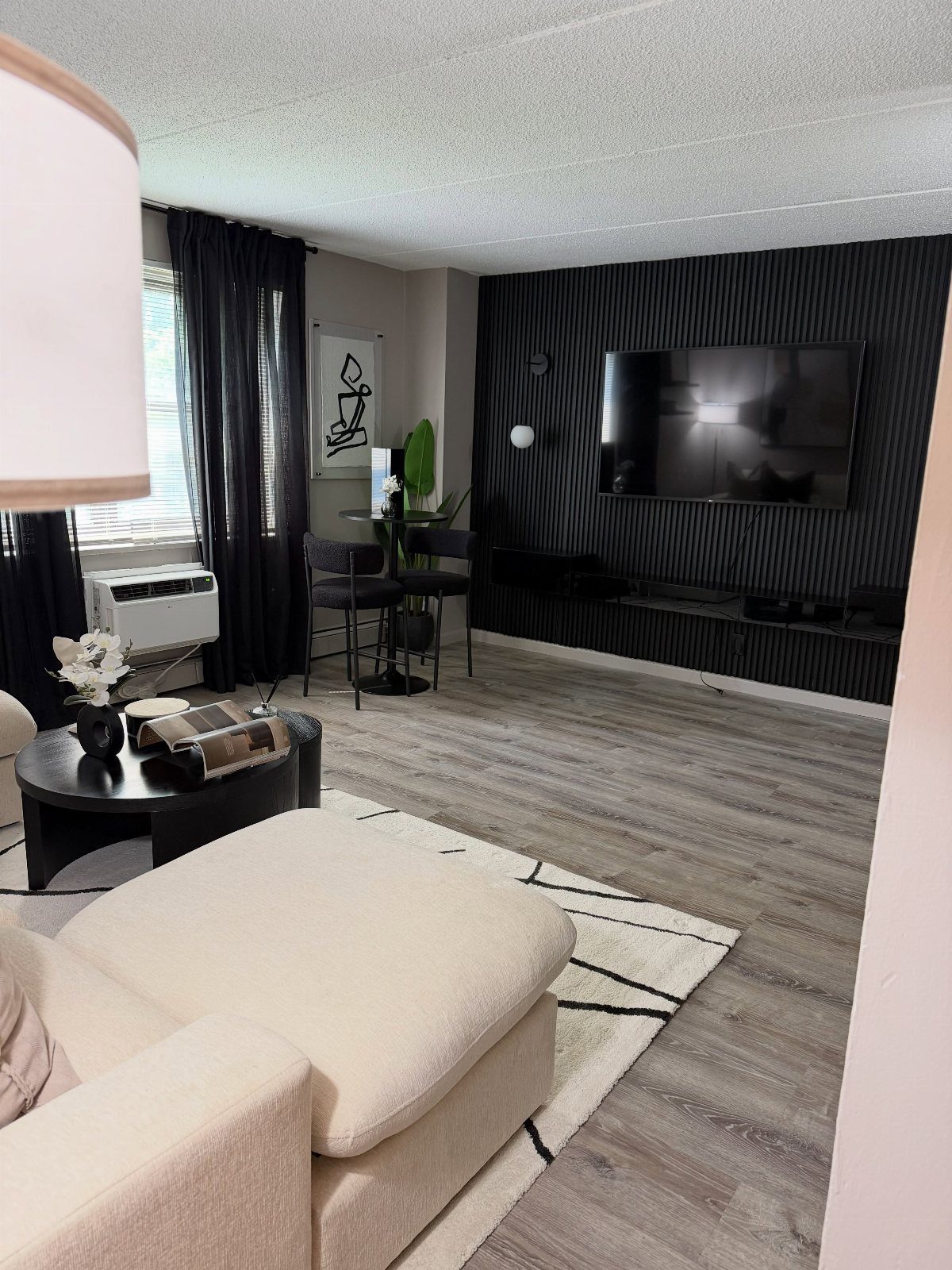
A black slatted wall behind the TV gives a small living room a focal point, and it hides the screen’s dark glare better than a white wall would.
I’d limit black to this one wall so the room doesn’t close in.
Keep everything else pale, with a white ottoman and light grey wood flooring, so the black wall is the only heavy note in the room. The ottoman can pull double duty as extra seating or a footrest.
Dark walls absorb light, so add a lamp or two if the room has a single window.
Tips for Searching Apartments
Zillow and Apartments.com make the best first 2 tabs, and Rent.com is worth adding as a third. Set up saved-search alerts so a matching 1 bedroom reaches your phone the day it posts, since good units go fast.
Zillow lets you watch price trends, but expect some duplicate listings.
Apartments.com tends to list units from professional management companies, and its amenity filters help you narrow them quickly. Apartment List uses a short quiz to match you with places, which helps if the options feel like too many.
Don’t stop at the big sites. Small landlords often skip the big sites and post only on their own pages or on local community boards, so look at neighborhood forums and local property management sites as well.
Craigslist is still popular, but I’d treat it carefully because of scammers, and I’d verify every listing myself.
If you have no furniture to move in, a managed provider like Tripalink rents furnished 1-bedrooms with utilities already built into the price.
Avoiding Rental Pitfalls
Hidden costs add up quietly. Application, amenity and parking fees can turn a fair rent into a stretch, so ask for the full list of fees before you apply.
Square footage can mislead too. Some landlords count hallways or balconies, so measure the livable rooms yourself or ask for the layout with dimensions.
To spot a scam, look at when the listing was posted, who actually owns the building and whether the contact details check out. Never pay anyone before you’ve seen the unit, and never wire money to someone you haven’t met.
Scan the lease for automatic renewals, heavy penalties for ending it early and repair clauses with no timeline, since each one can cost you later.
Evaluating Lease Agreements
Match the lease length to your life. If your plans might shift, a 6 or 12 month term is safer than a longer commitment.
Go through the pet policy and the subletting clause line by line, because either can sink a lease that otherwise looks fine. With a pet, have every fee, deposit and monthly charge written into the lease.
After that, put a few direct questions to the property manager:
- What is the unit’s history?
- Where do guests park?
- What are the rules on noise complaints?
- How fast are maintenance requests usually handled?
Read the community rules before you sign, so a small annoyance doesn’t grow into a real dispute. People tend to answer more honestly face to face, and that gives you a truer read on the place.
Frequently Asked Questions
What is the average cost of a 1 bedroom apartment?
Across the country, a one-bedroom now rents for roughly $1,640 a month at the median, based on Apartments.com data.
Expect it to swing a lot by city, and in places like New York or San Francisco even a 1-bedroom can top $3,000.
Get every application, amenity and parking fee in writing before you apply, because those extras can push a reasonable rent out of reach.
What’s the cheapest one bedroom apartment?
Mid-sized Midwestern and Southern cities tend to be cheapest.
In cities like Wichita, Toledo and Cedar Rapids, median one-bedroom rents tend to land around $695–$750 a month. In pricier metros, transit-accessible suburbs often come in $300–$600 lower than the city center, and micro-units or income-restricted programs can cut the bill further.
How do I avoid rental scams when apartment hunting?
Check when the listing was posted, who actually owns the building and whether the contact details hold up.
Hold your money until you’ve toured the unit in person, and don’t wire funds to a stranger under any circumstances. Craigslist is popular but carries the most scam risk, so confirm every listing on your own.





