Which closet bunk fits depends on the ceiling and who sleeps there: a sloped ceiling can cut the upper bunk’s headroom fast, and younger kids do better with stairs than a ladder.
Closet bunk setups here start with a simple curtain on a wooden nook and reach built-ins in sage green or grey, and costs climb from a $500 big-box bunk to a $5,000 custom one.
Measure the alcove and the headroom first, then pick the finish.
1. Wood Slat Accent Wall Bunks
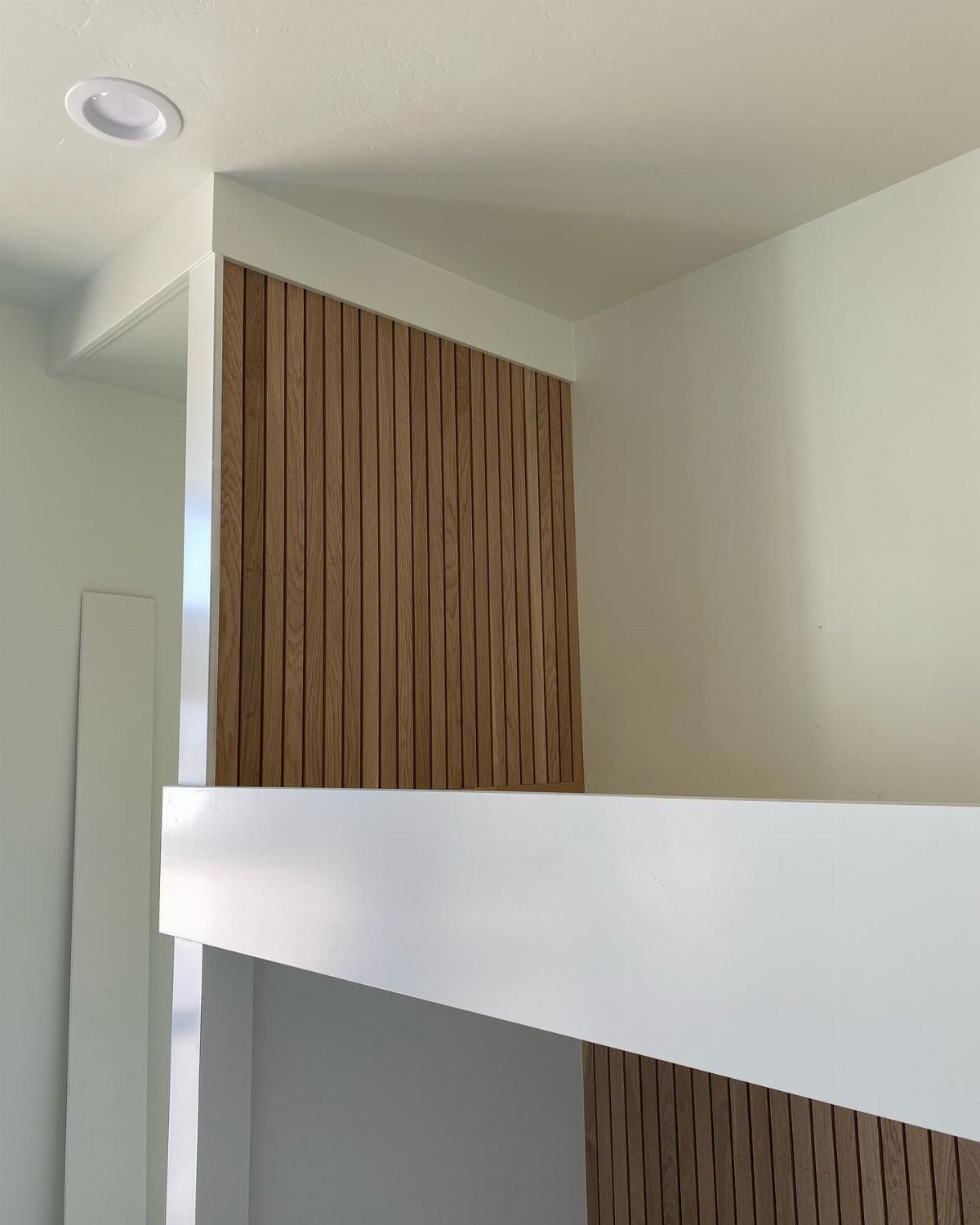
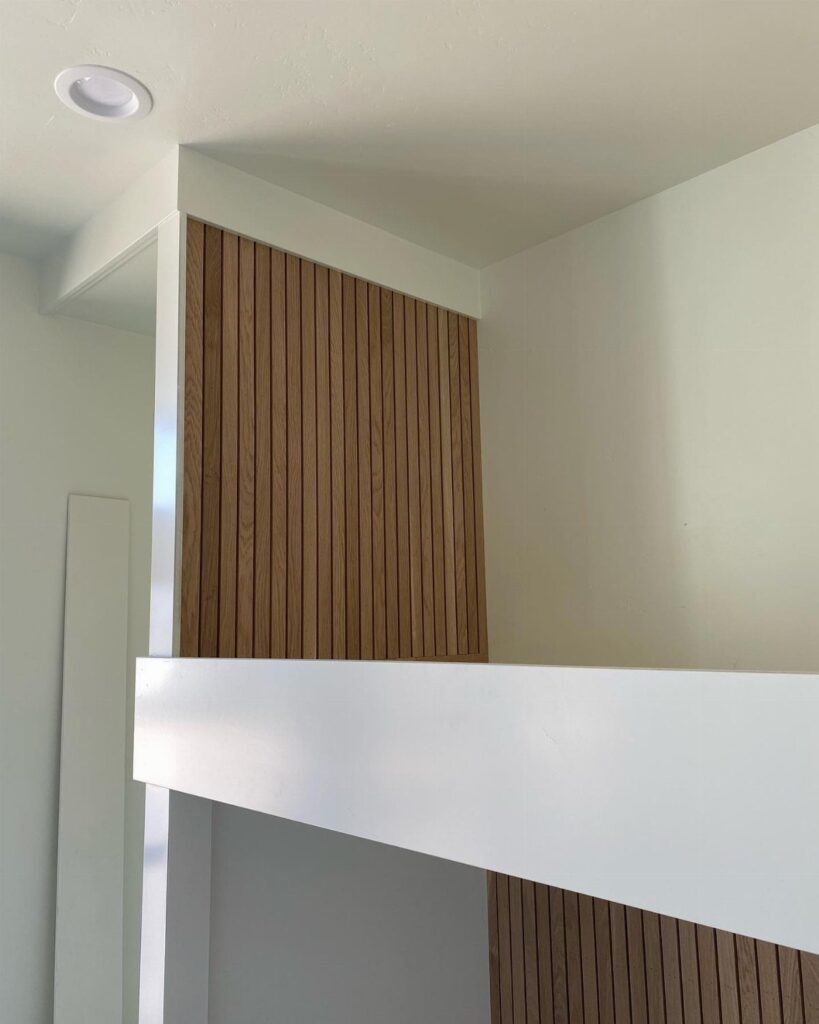
Vertical light-wood slats turn the back wall of a closet bunk into the part people look at, so the bedding can stay plain white.
Slats read as texture, and they hide the fact that the nook is only as wide as one bed.
I would keep the wood to that one wall. White on the bunk frame and the other surfaces keeps a narrow space from feeling like a box.
A small recessed light above the bunks gives the slats a soft glow without taking up any room.
2. Closet Nook with Privacy Curtain
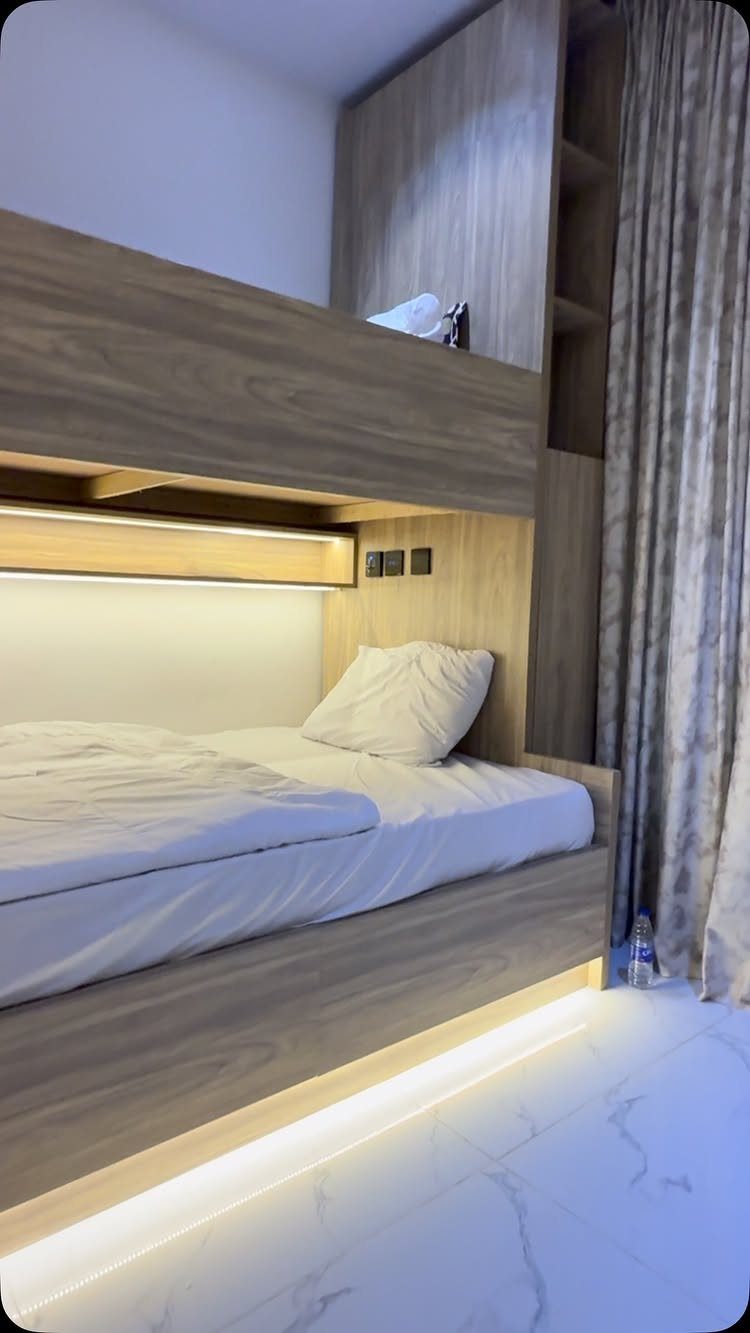
A curtain on one side of a wooden bunk nook does a job a bare opening can’t: it gives the kid who sleeps there a bit of privacy and lets you hide a messy bed in seconds.
For a guest or a shared room, that matters.
Pick a heavy fabric in a quiet color like grey, and hang it on a rod mounted just outside the alcove so it clears the frame.
White linens against warm wood keep things calm. Add a warm-toned light inside the nook so it feels like a bedroom and not a closet.
3. Arched Wall Niche Bunk Beds
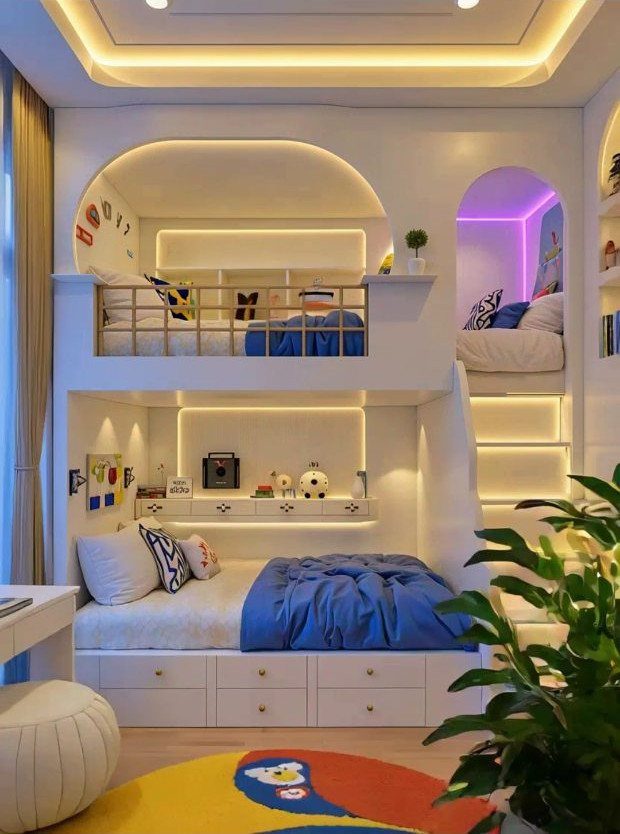
Arches soften what is otherwise a boxy closet, and here the upper bunk sits in a curved opening that makes it feel like a small hideaway.
I like this version best for a child’s room, since the shape looks designed, not squeezed in.
Drawers built under the lower bunk keep toys and spare sheets off the floor. That storage is what makes the idea work in a small room.
Strip LED lighting along the niche edge for a night glow. A bright rug and one plant keep the white built-in from feeling stark.
When the owner and principal designer of Indigo House realized she didn’t have enough spare rooms to accommodate her guests, she converted her studio’s closet into a bunk bed room—problem solved.
4. Recessed Bunk Beds with Bookshelves
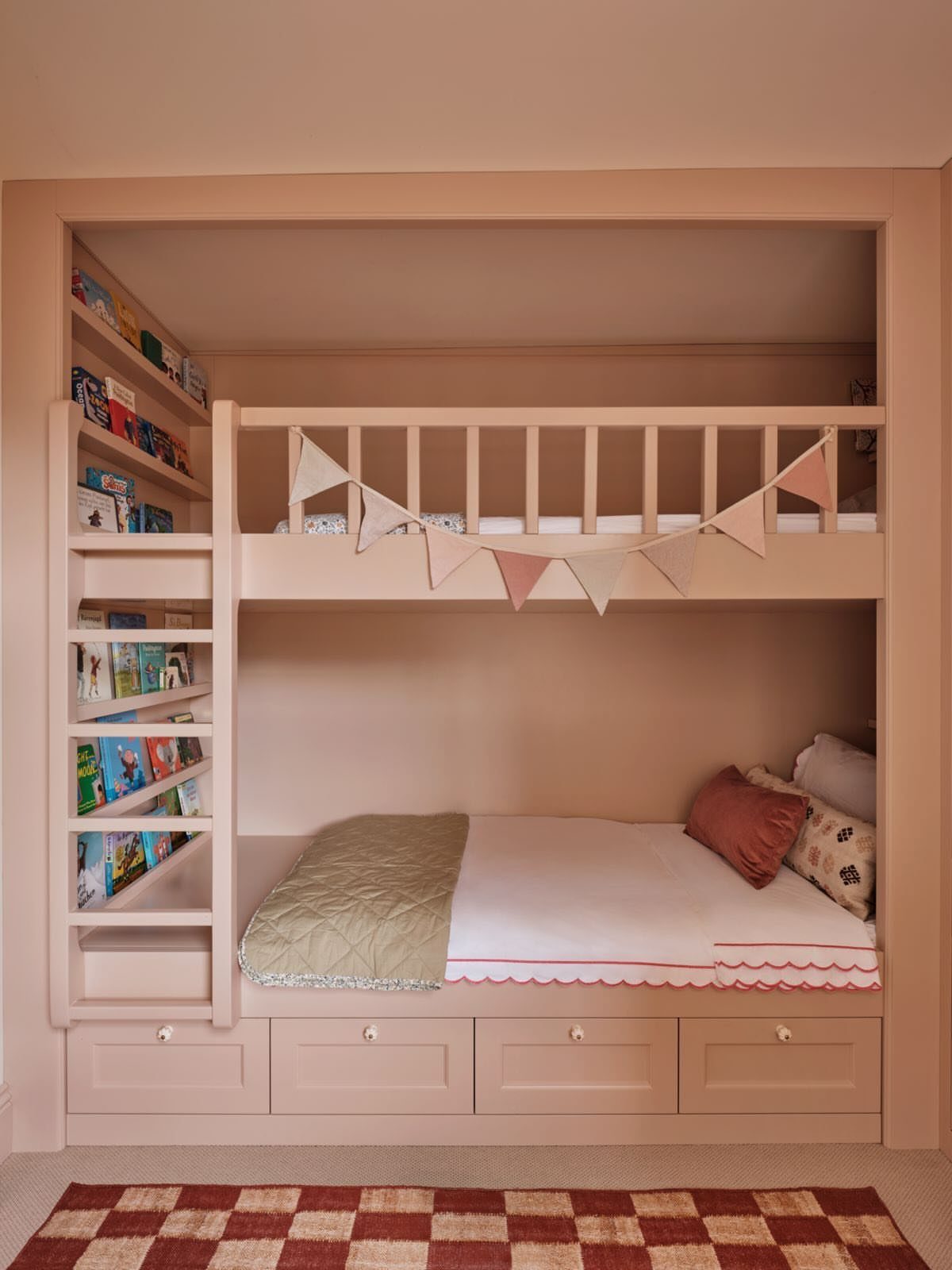
Bookshelves built into the sides of a bunk niche mean nobody needs a separate bookcase, which frees up floor space in a small kids’ room.
Pink paint carries through the ladder and frame so the whole unit reads as one piece.
Keep the shelves where a child can reach them from the lower bunk, and put heavier books low.
Drawers under the bed hold what won’t fit on shelves. A bold checkered rug works because the built-in itself stays a single color.
5. Recessed Alcove with Sloped Ceiling
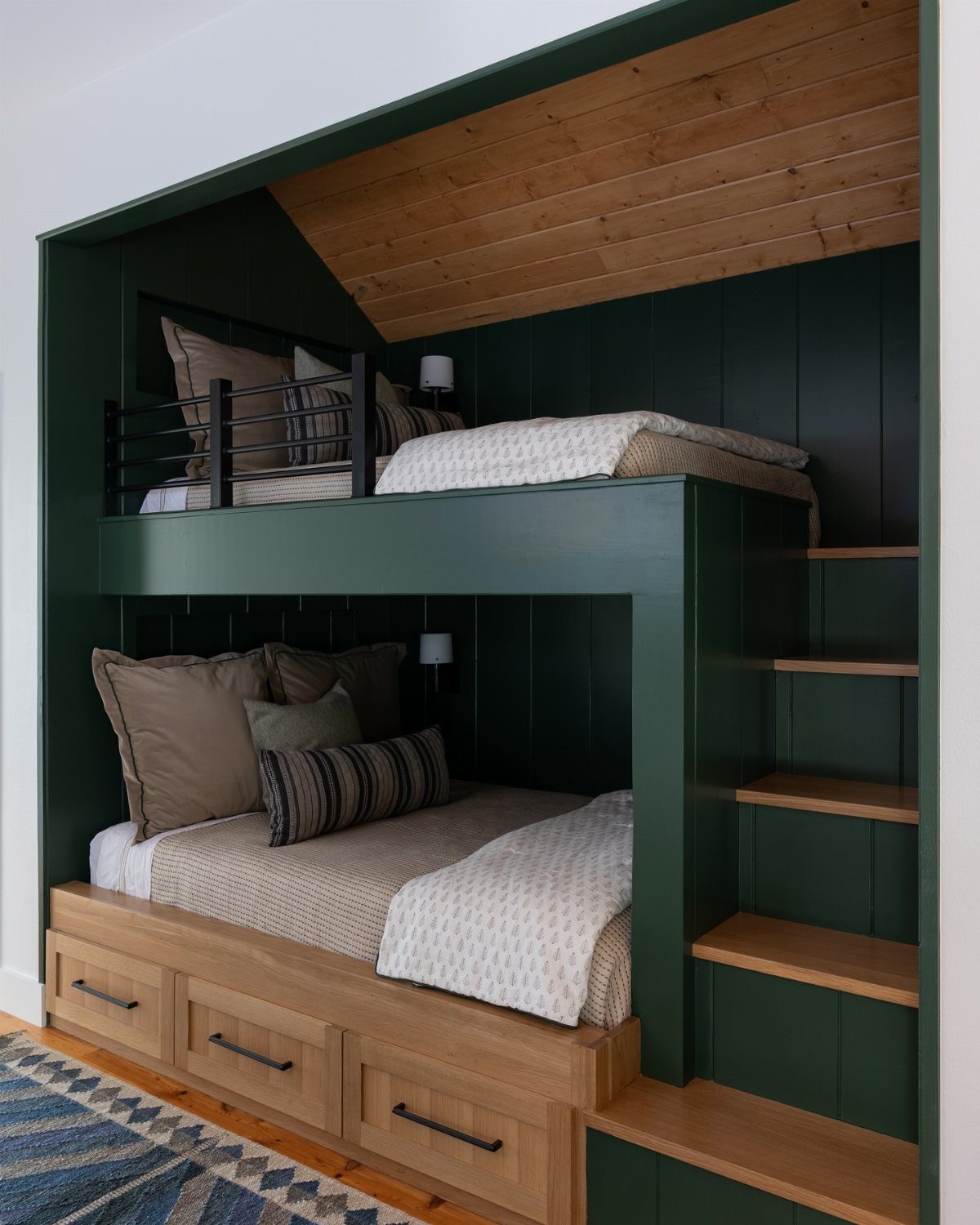
A sloped ceiling usually wastes space, but a closet alcove under one gives the bunks a cozy, tucked-in feel. Dark green paint with a wooden ceiling above it looks warm, like a cabin.
Stairs beat a ladder in this setup. Their steps can hold storage drawers, and they are easier for younger kids to climb.
Before you build, measure the headroom on the upper bunk, because a sloped ceiling can cut the sleeping space down fast.
A slope can leave very little room to sit up, so I would put the pillow end where the ceiling is tallest.
6. Built-in Green Recessed Bunks
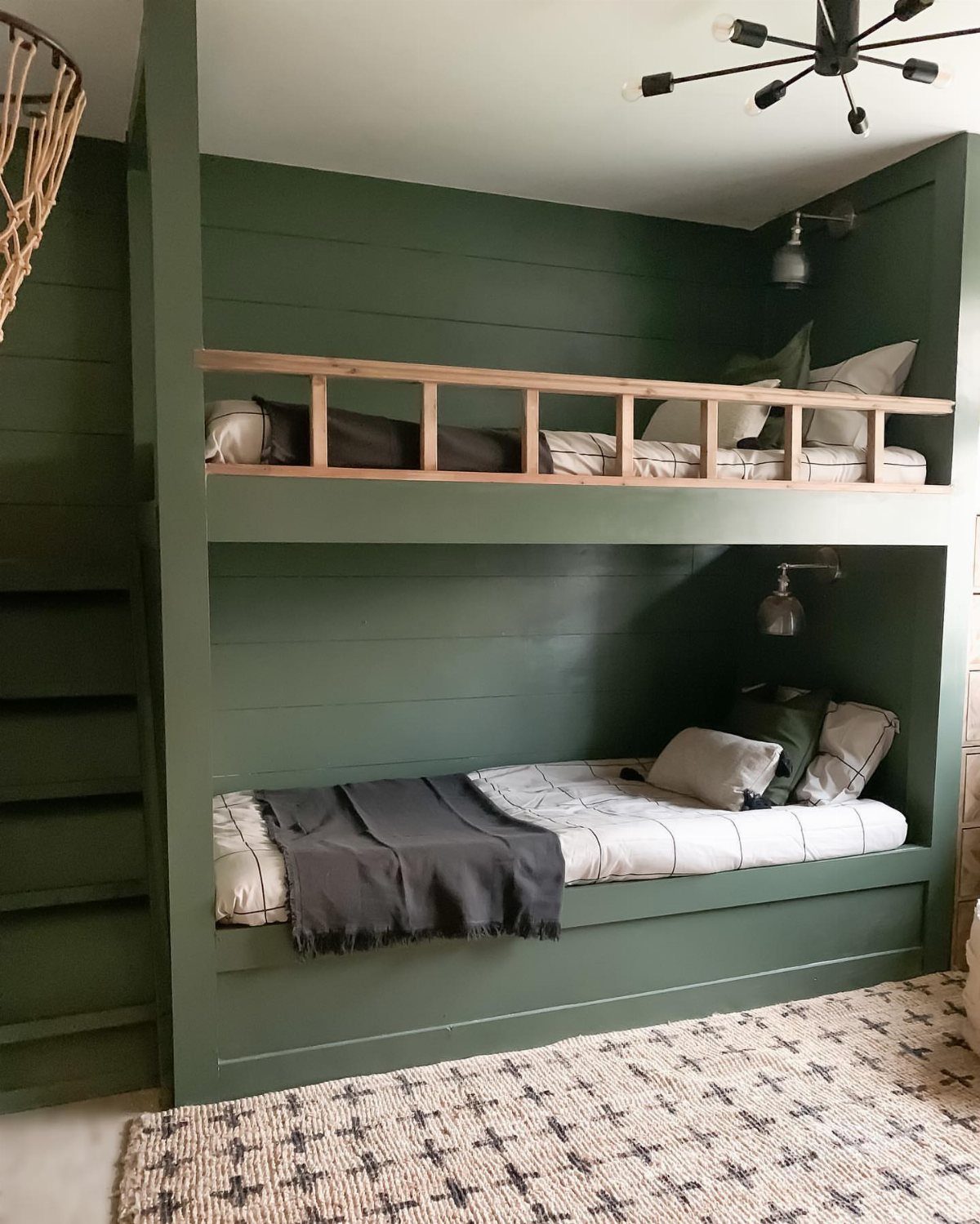
Sage green is a forgiving color for a built-in bunk: it reads calm, hides wear, and goes with wood and patterned rugs. Building the bunks flush with the wall makes them look like part of the house, not furniture.
A wooden guardrail on the upper bunk is a sensible finishing detail, and it matches the warm wood tones nicely.
Mount a reading light for each bed so no one needs a lamp on the floor. A busy patterned rug balances the plain green.
7. Recessed Grey Bunks with Stairs
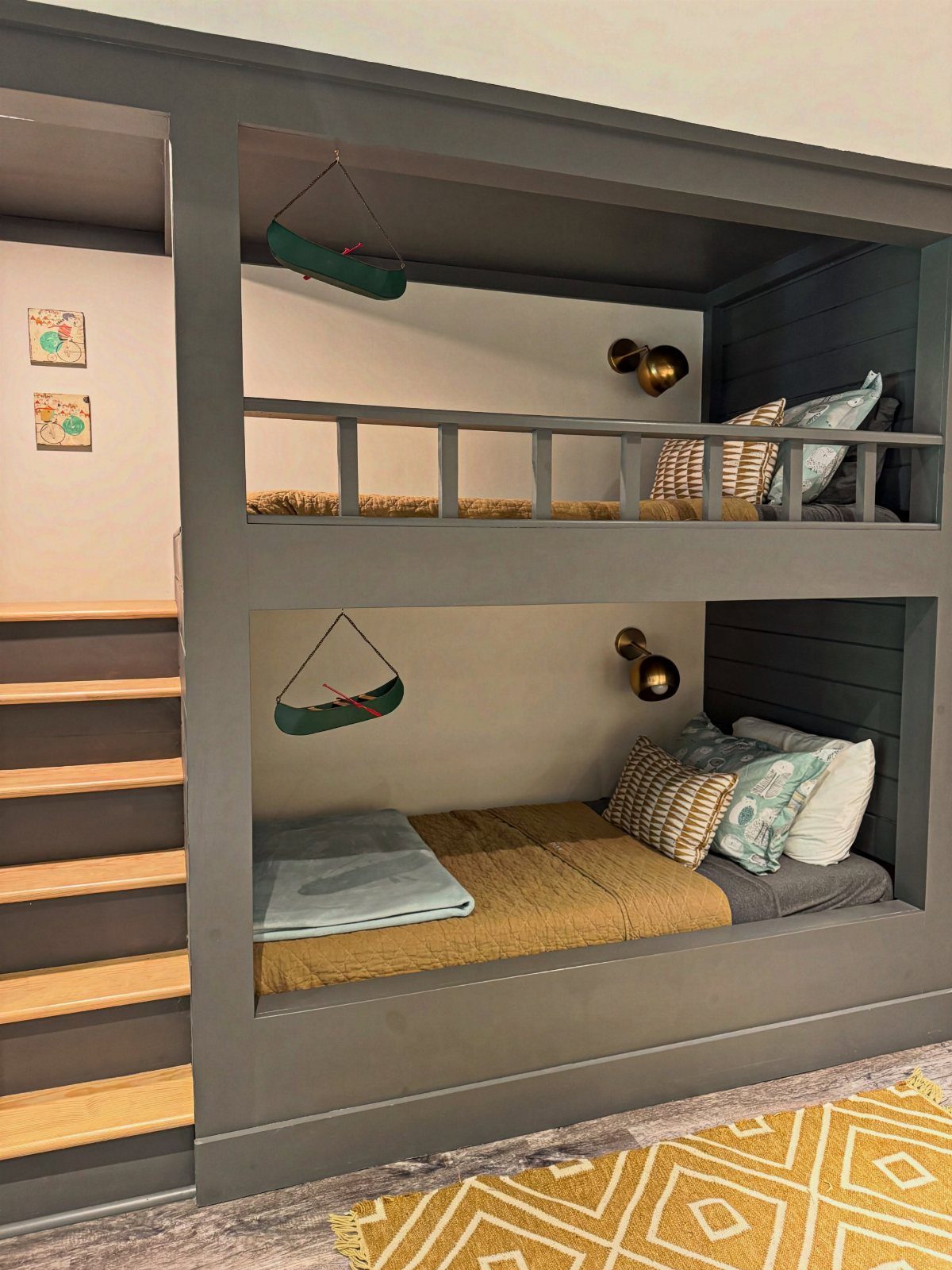
Grey paint on a built-in bunk is the quiet choice, and it lets the wooden stairs and brass sconces carry the warmth.
Pick a mid-tone grey over a pale one, since it hides scuffs better on a unit kids climb every day.
Stairs suit this setup better than a ladder, as the last few entries point out. Their wood tone matches the lamps nicely, and the steps can hide drawers.
Wall-mounted sconces keep the nightstand space free. Pair them with patterned pillows in one or two colors so the grey doesn’t go flat.
DIY Bunk Bed Construction Tips
Solid wood or plywood is the right material for a bunk frame, because it holds screws and takes years of climbing without loosening.
Measure the alcove twice, then measure the mattress, and build the frame to the mattress size rather than guessing.
Anchor the frame to the wall.
Find the studs and fasten heavy-duty L-brackets into them. Furniture that feels solid can still move when a child climbs on it, so anchoring to the wall belongs in every installation.
Budget shapes the build. A big-box bunk can run $500 and a fully custom one $5,000, with the $1,200 to $2,000 range usually giving real wood and decent hardware.
Space-saving Benefits of Loft Beds
Lift it up and that footprint becomes a desk area, a reading nook, or a wardrobe, which is a big gain in a small room.
Loft beds also help with closet creep, when a packed wardrobe sends plastic bins across the floor. A loft with integrated storage pulls those bins off the carpet.
For tight clearances, a low-profile mattress buys back headroom.
Safety Considerations for Bunk Beds
Check the weight rating before you buy. Most twin loft beds stop at a 200- to 250-pound capacity, and a teenager who weighs 150 pounds on a 50-pound mattress is already close to the limit.
I look for frames rated to at least 400 pounds, which keeps the structure quiet and stable as kids grow.
Ladder hardware deserves the same attention. Use sturdy hooks and brackets, and check that they sit tight against the frame.
Every upper bunk needs a safety rail to prevent falls. Retighten bolts and brackets now and then, since kids climbing daily will work them loose.
Frequently Asked Questions
How to decorate a bedroom with bunk beds?
Paint the whole built-in a single color, then let a bold patterned rug carry the personality, with crisp white sheets against the warm wood and a clip-on or wall reading light at each bunk.
Mounting sconces or running a strip LED along the niche edge gives each sleeper a soft night glow and leaves the nightstand space open for other things.
One color on the frame with one busy element, like a checkered rug, looks designed instead of cluttered.
Can you make a loft bed out of a bunk bed?
Only if the bunk bed was sold as a convertible set, and the manufacturer’s instructions will say so; otherwise, don’t take the lower bunk out and assume the frame will hold.
Check the frame’s weight rating first, since most twin lofts top out at 200–250 pounds and I look for frames rated to at least 400.
Does a bunk bed have to be against a wall?
No, but placing it against a wall makes it more stable and safer. A built-in bunk goes further: anchor the frame into the wall studs with heavy-duty L-brackets.
A bunk can feel rock solid and still sway when a kid climbs the ladder, so I anchor every one to the wall studs, whatever the setup.





