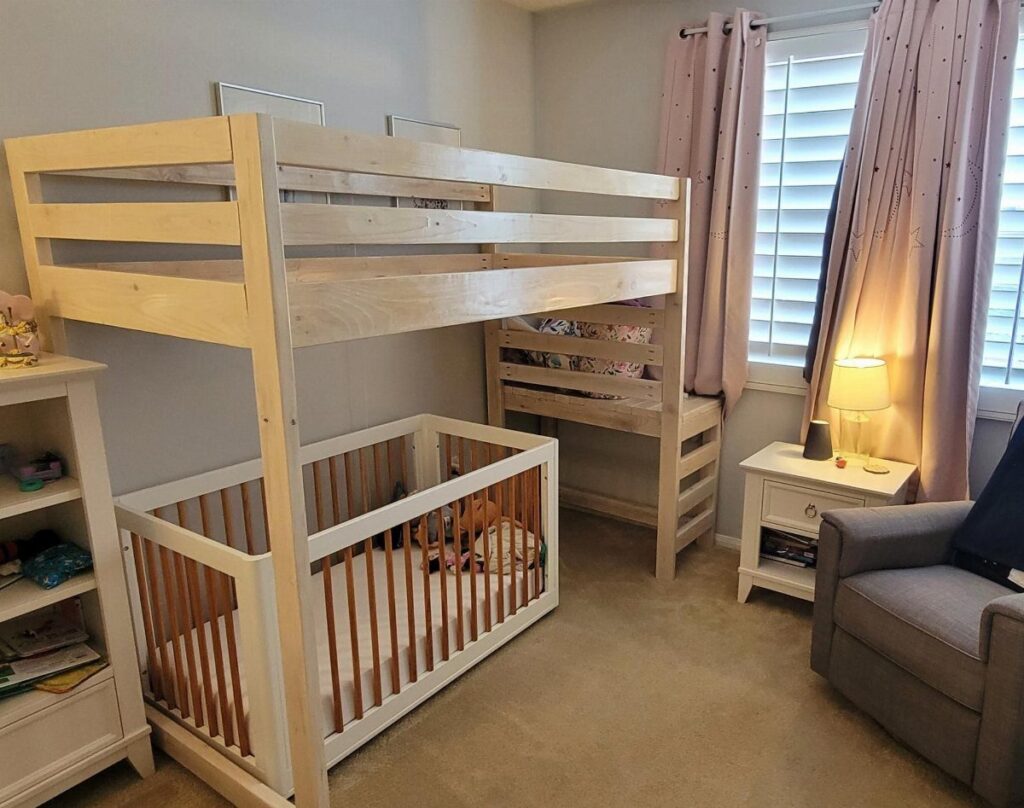
The ideas run from an IKEA MYDAL frame set up over a weekend to a custom build that costs the most and takes the longest, and the older child’s age decides which one fits.
A loft or top bunk only works for a child who can climb a ladder safely, so with a younger sibling, the loft-with-crib-underneath idea and the integrated crib setup need a closer look before you buy.
1. Bunk Bed with Crib
A crib on the bottom level of a bunk bed is the cleanest answer when a baby is on the way and the older child already owns the room.
The top bunk takes the older child, and the floor space under it holds the crib instead of going to waste.
Pick light wood if the room is small, since it keeps a tall piece from looking heavy.
Before buying, check that the crib you plan to use actually fits the lower space, because a crib that is tight on all sides is hard to reach into.
2. IKEA MYDAL Bunk Bed and Crib
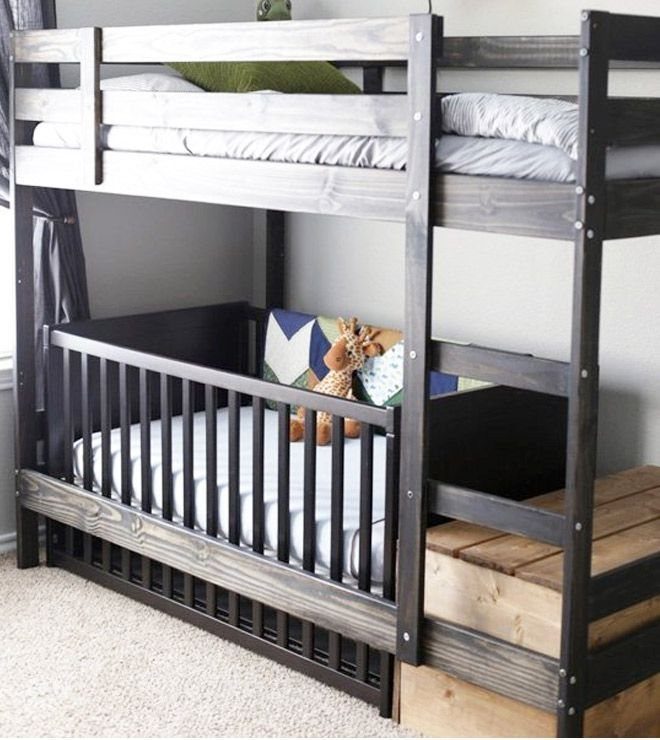
Buying a ready-made IKEA frame and adapting it is the budget route to a bunk and crib pairing, and it suits a weekend build far better than commissioning furniture.
A darker stain, like the one here, hides scuffs better than pale wood in a room with a toddler.
Wooden stairs on the side are easier on small legs than a ladder, though they take more floor space. I would measure the wall run first, then decide.
3. Bunk Bed with Integrated Crib
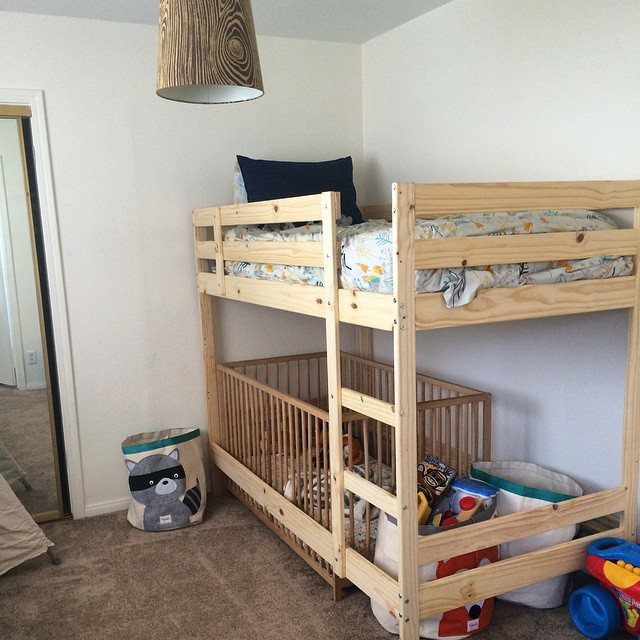
Here the crib is part of the bunk’s design, with a twin bed above, so nothing needs to be matched or squeezed in afterward. That is the biggest advantage: one purchase, one footprint, one finish.
The limit is flexibility. When the baby outgrows the crib, the lower level is still shaped for it, so I would check before buying what the bottom space can become later.
4. Loft Bed with Crib Underneath
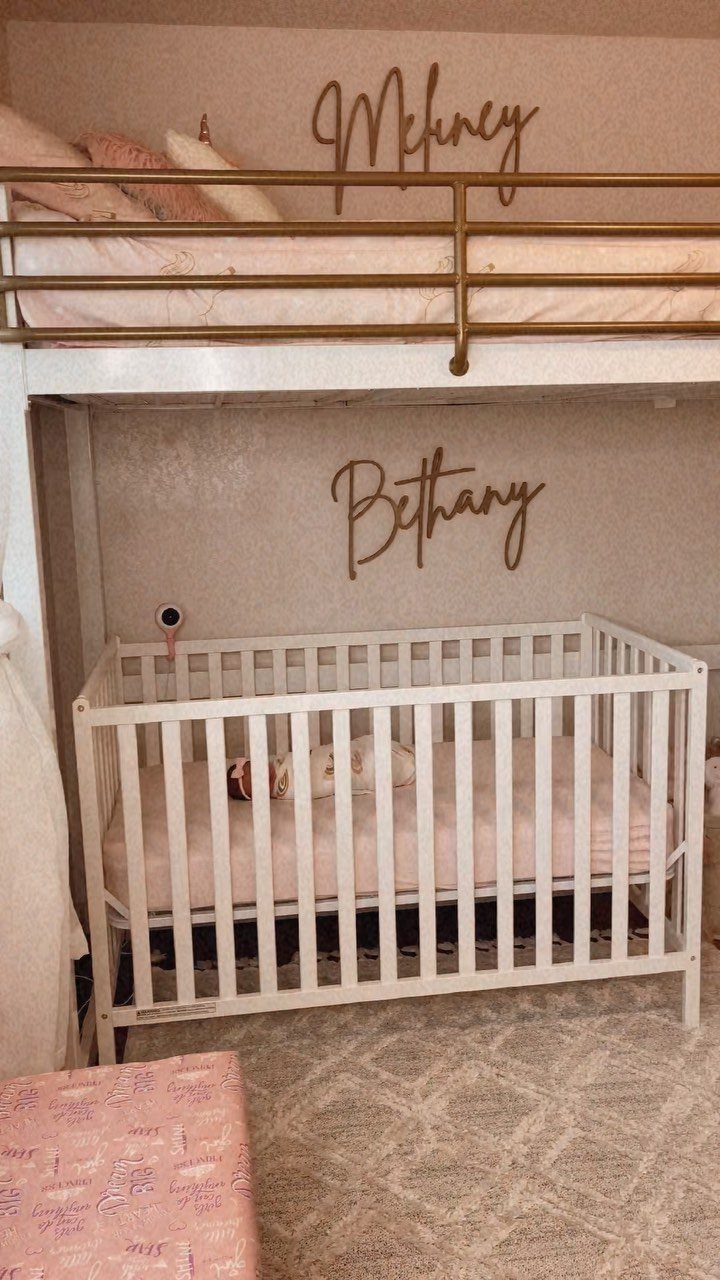
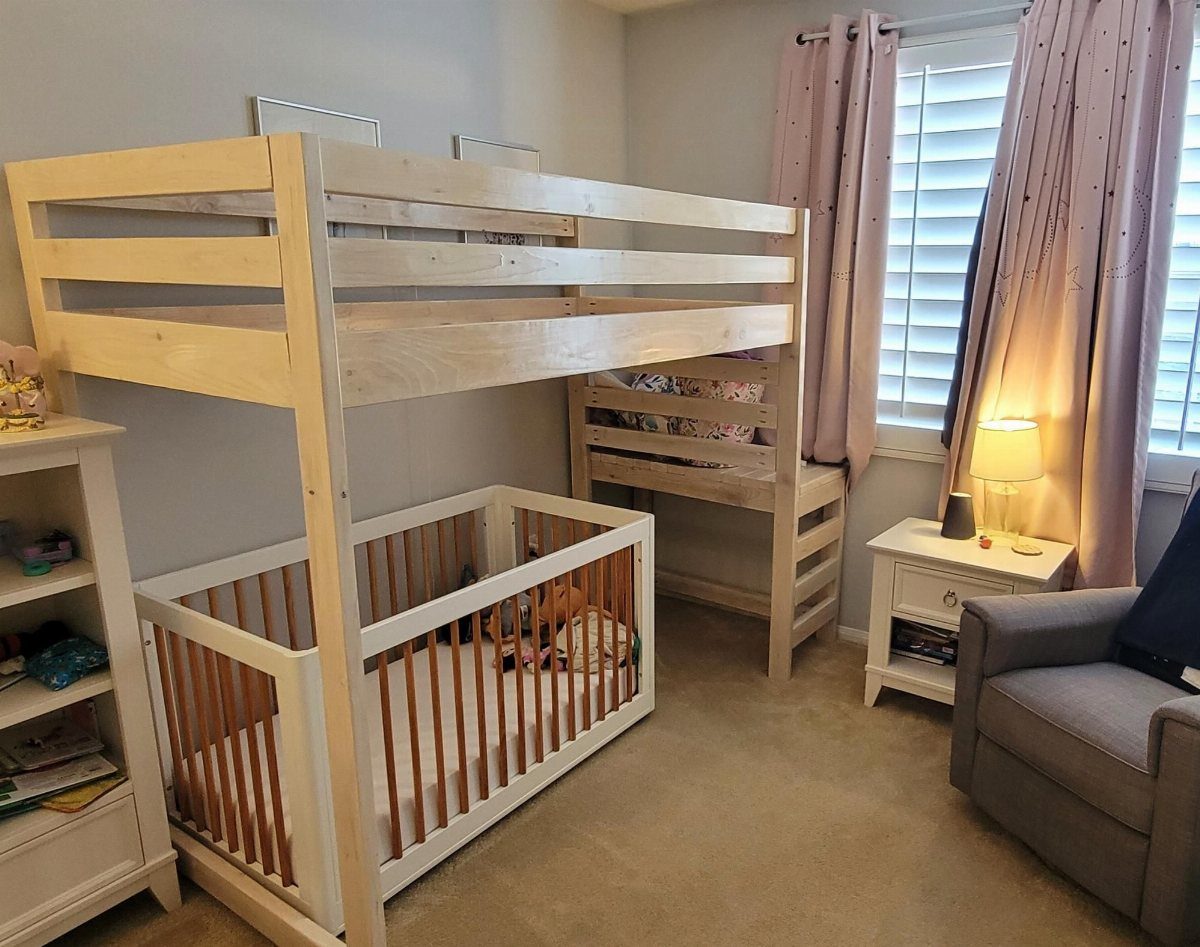
Lofting the big bed and tucking a white crib underneath keeps the floor open on the sides, which makes a shared room feel less crowded. White on white, as here, also makes the structure fade back into the wall.
Because the sleeper climbs up, this works best for an older child who can handle a ladder safely. Leave enough room under the frame to lift a baby out comfortably.
If you choose this option, be sure to check the heights of the loft bed and crib, to make sure it’ll fit underneath and that you can get underneath to reach the baby.
5. Custom-built Bunk Bed and Crib
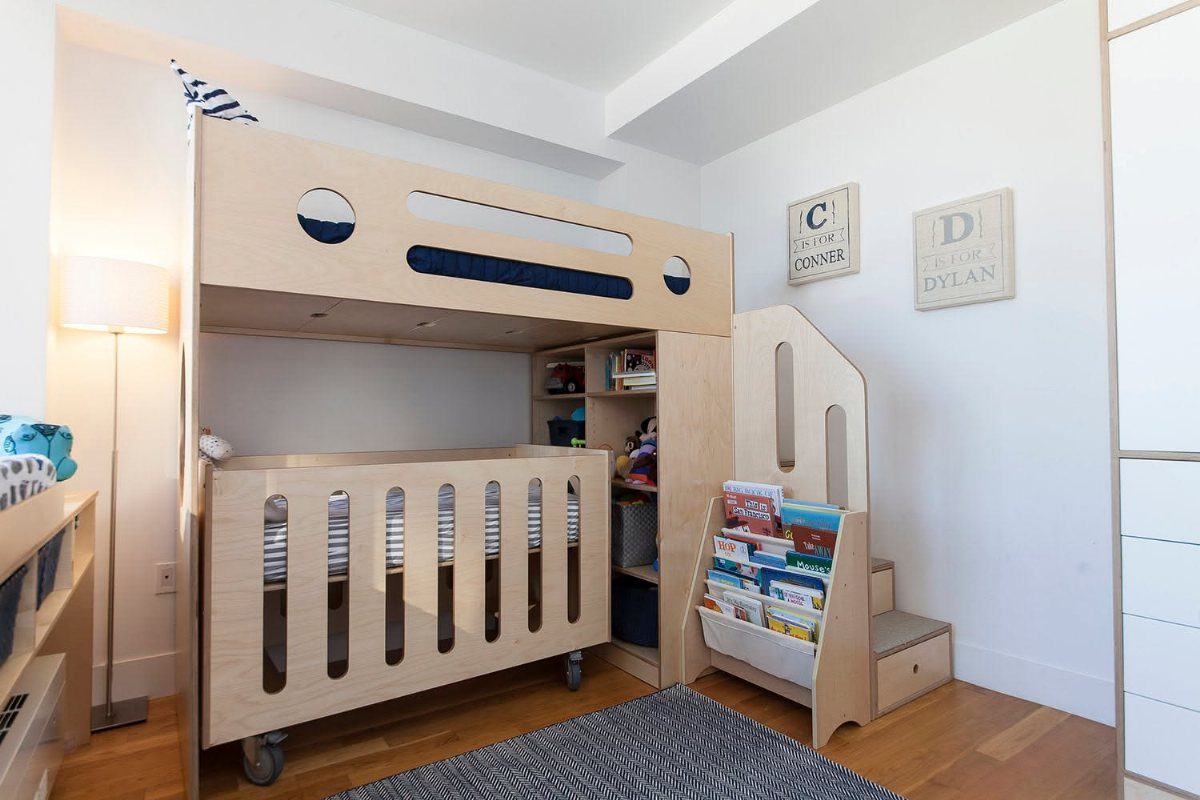
A custom build lets you size the frame to your crib and your wall, which matters most in an odd-shaped room where store-bought bunks never quite fit.
Stairs and built-in bookshelves, both in light wood, turn the structure into storage as well as sleeping space.
Expect the most cost and time of the 5 ideas. Decide on the crib first, then give the builder its exact dimensions so the lower space is made around it.
Space-saving Solutions
Matching the two frames in one wood tone and keeping the walls neutral makes the pair read as one set instead of two pieces of furniture fighting for space.
A natural wood loft leaves the floor below free for a crib and a narrow shelving unit, which gives a baby corner without claiming any extra square footage.
Beige fabric curtains on the open sides add privacy, which helps in a studio or a one-bedroom where the nursery has no door.
Tape the footprints of the bed and crib on the floor first, then walk the room to see whether you can still open the door and reach the crib rail.
You want a clear path to the door and to the crib side you will reach into most.
Safety Considerations
A loft over a crib needs a firm plan for whoever sleeps up top: a guardrail at least 5 inches above the mattress, a sturdy ladder, and a child old enough to climb it safely.
Pick a frame with a guardrail on every open side, and keep the ladder fixed in place instead of leaning or hooked on.
Check that the crib sits snug and level beneath the frame, with the mattress at its lowest setting once the baby can pull up.
Tighten every bolt after the first week, then recheck every few months, because wood frames loosen with use.
A ladder with built-in shelving looks handy, but treat it as a climbing surface only. Keep toys and heavy items off it so small feet have a clear step.
Look at the ceiling height too. The top sleeper needs room to sit up without hitting the ceiling.
Transitioning from Crib to Bed
Plan the move out of the crib around the child, not the calendar. Signs to watch for include climbing over the rail and repeated attempts to get out, and your pediatrician can help you judge the timing.
A toddler bed placed next to the crib, in the same wood tone, makes the change gradual.
The younger child sees the new bed every day before sleeping in it, and a sibling already in the room can set the example.
If the crib is under a loft or bunk, think ahead about what goes in its place.
A child who resists the change may need a few weeks of naps in the new bed first.





