The projects range from a gallon of sage paint on the lower wall to floral wallpaper, vintage furniture and a swap of patterned curtain panels, so the effort runs from an afternoon to a full weekend.
What decides which one is yours is whether you can touch the walls: renters get the most from removable floral wallpaper, patterned rugs and green curtains, while owners can paint pink wainscoting and let the furniture stay simple.
Either way, one dominant green and one dominant pink hold the room together, and the rest stays in supporting shades.
1. Sage Green Backdrop
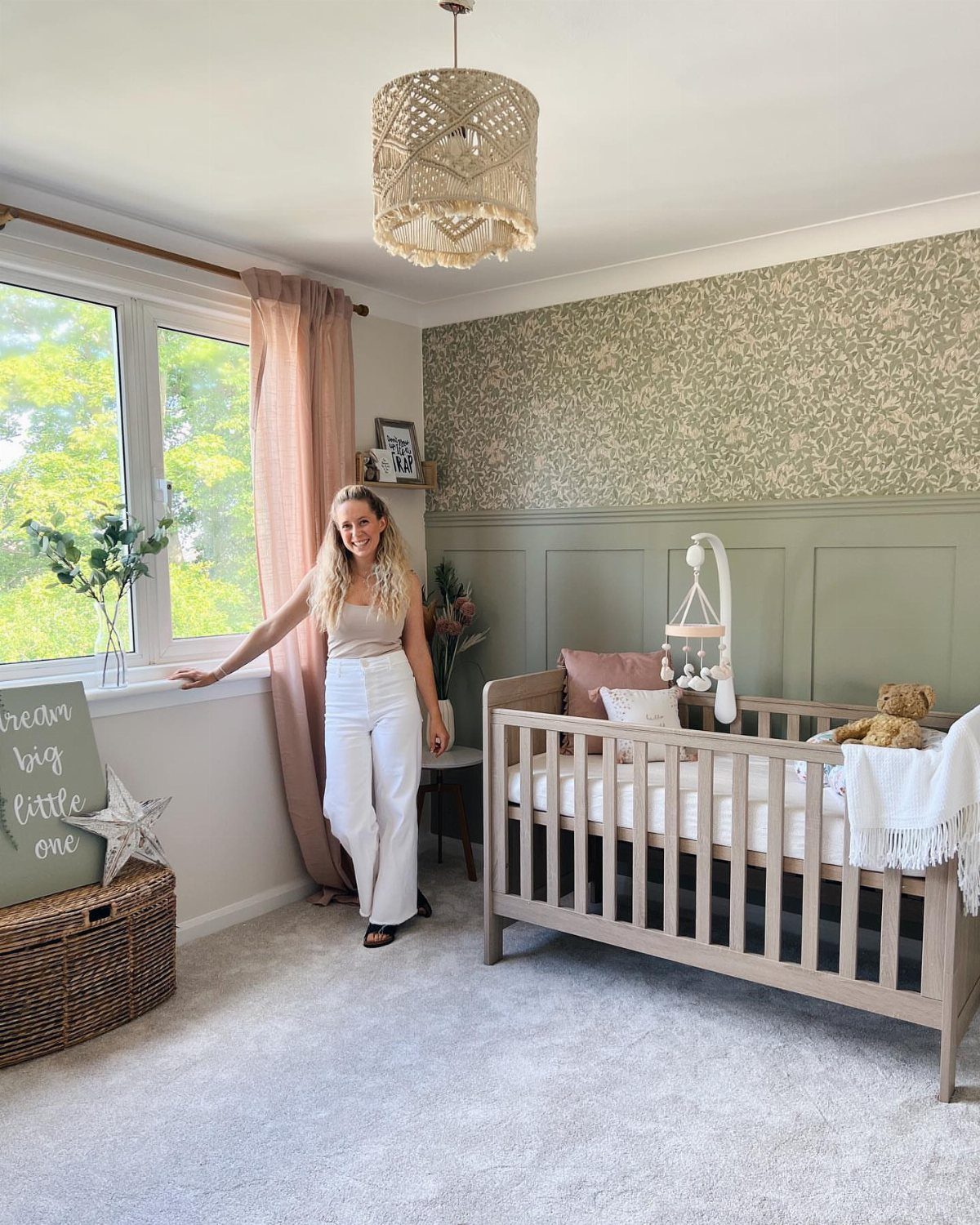
Sage green wainscoting gives a nursery a calm base that softens everything layered on top of it.
Pink curtains and a floral wallpaper above the paneling sit comfortably against it, because sage is a muted green that doesn’t compete with pink.
For a weekend project, I’d paint the lower wall sage and keep the upper wall lighter or patterned.
A gray-leaning sage reads quieter than a bright green, and quiet is what you want in a room where someone will be sleeping.
2. Patterned Rugs
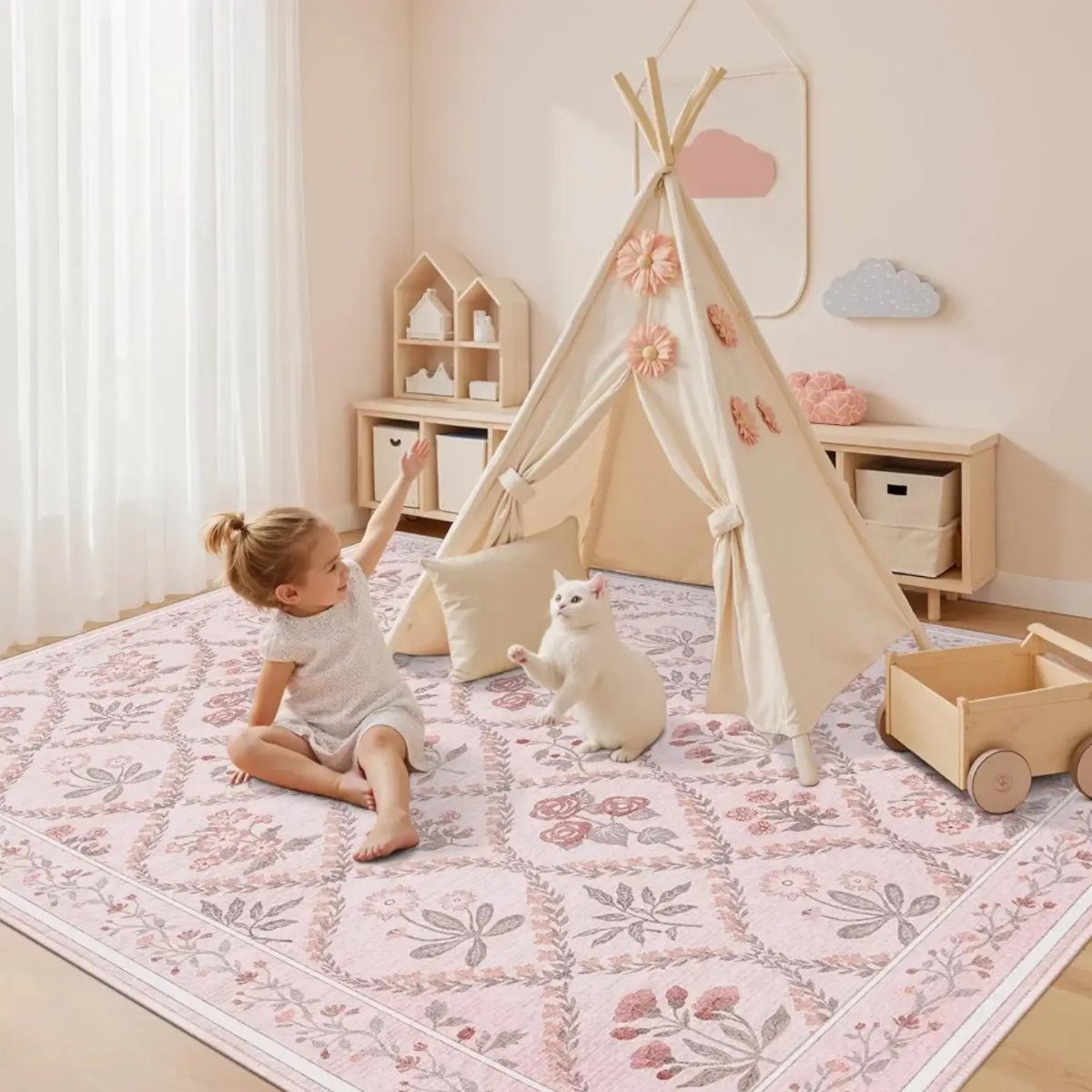
A pink floral rug does more for a nursery floor than almost any other single piece. Pattern hides crumbs and smudges that a solid pale rug would show by week two, which matters once a baby is crawling.
I’d choose a rug with a low pile so toys and a play teepee sit steady on it. Keep the walls light and plain, as they are here, so the floral is the one busy surface in the room.
3. Floral Wallpaper
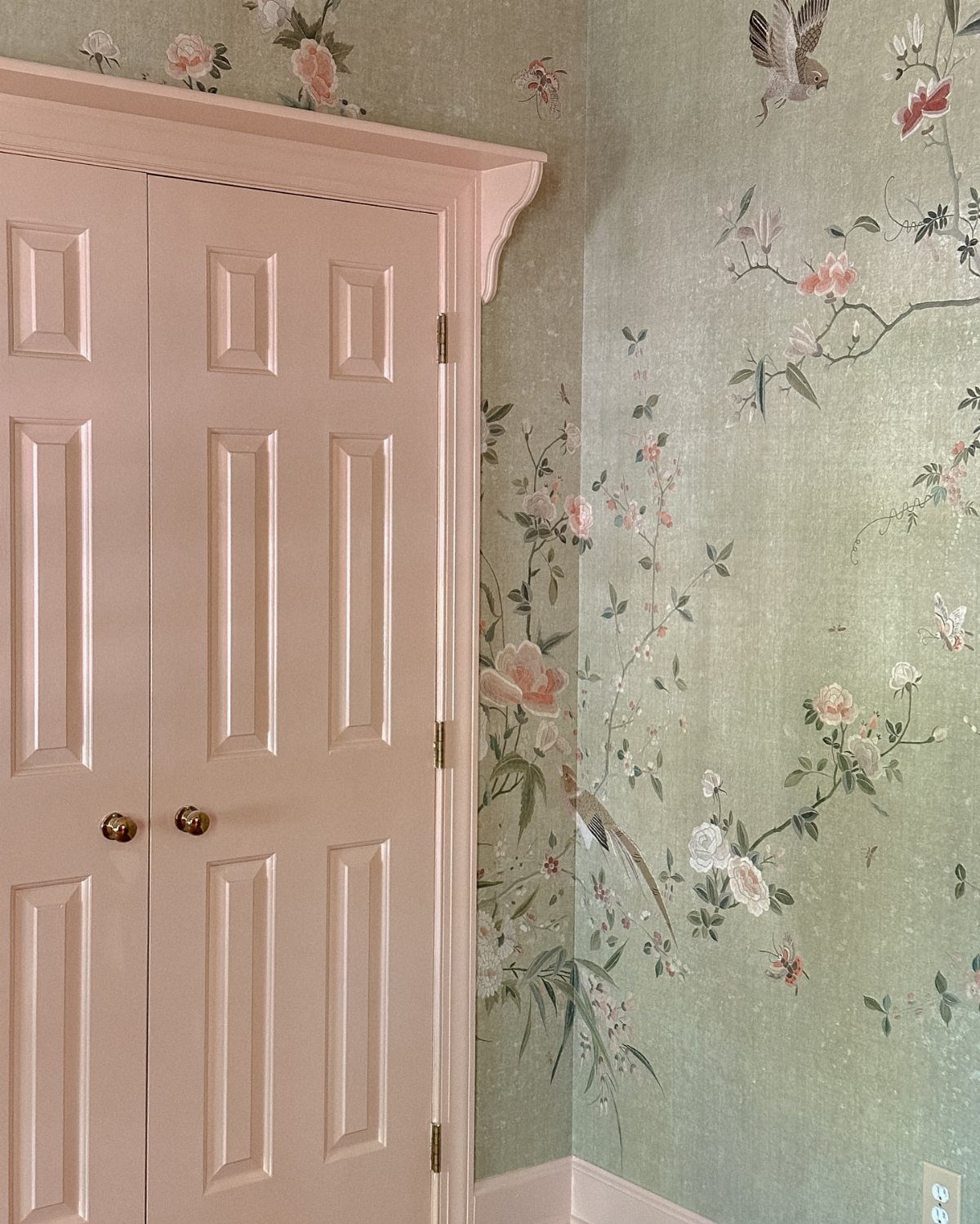
Light green wallpaper with pink blossoms and small birds is the quickest way to get pink and green into one surface. The 2 colors are already balanced for you, so there’s no paint matching to fuss over.
Removable wallpaper suits renters and takes an afternoon. I’d paper one wall or the upper half of a wall, then let pale pink trim or doors pick up the flowers.
4. Vintage Furniture
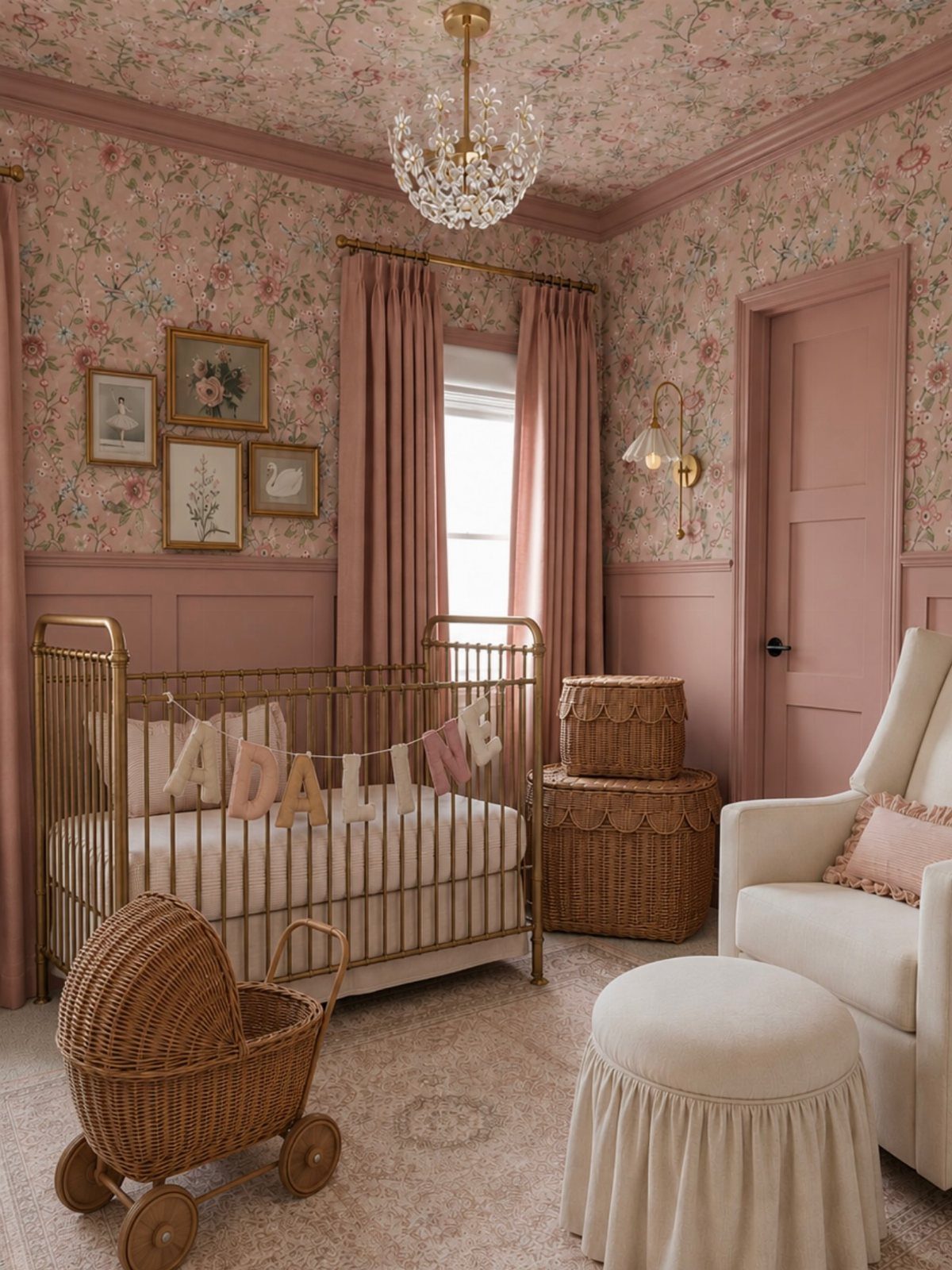
Gold metal cribs, wicker prams and a crystal chandelier give a pink floral nursery the feel of a room collected over time rather than bought in one trip.
Secondhand pieces keep the budget low.
Wicker baskets double as toy and blanket storage, and a white armchair keeps the older pieces from crowding the room. I’d pick one statement item, like the crib or the chandelier, and keep the rest simple.
5. Crib Bedding
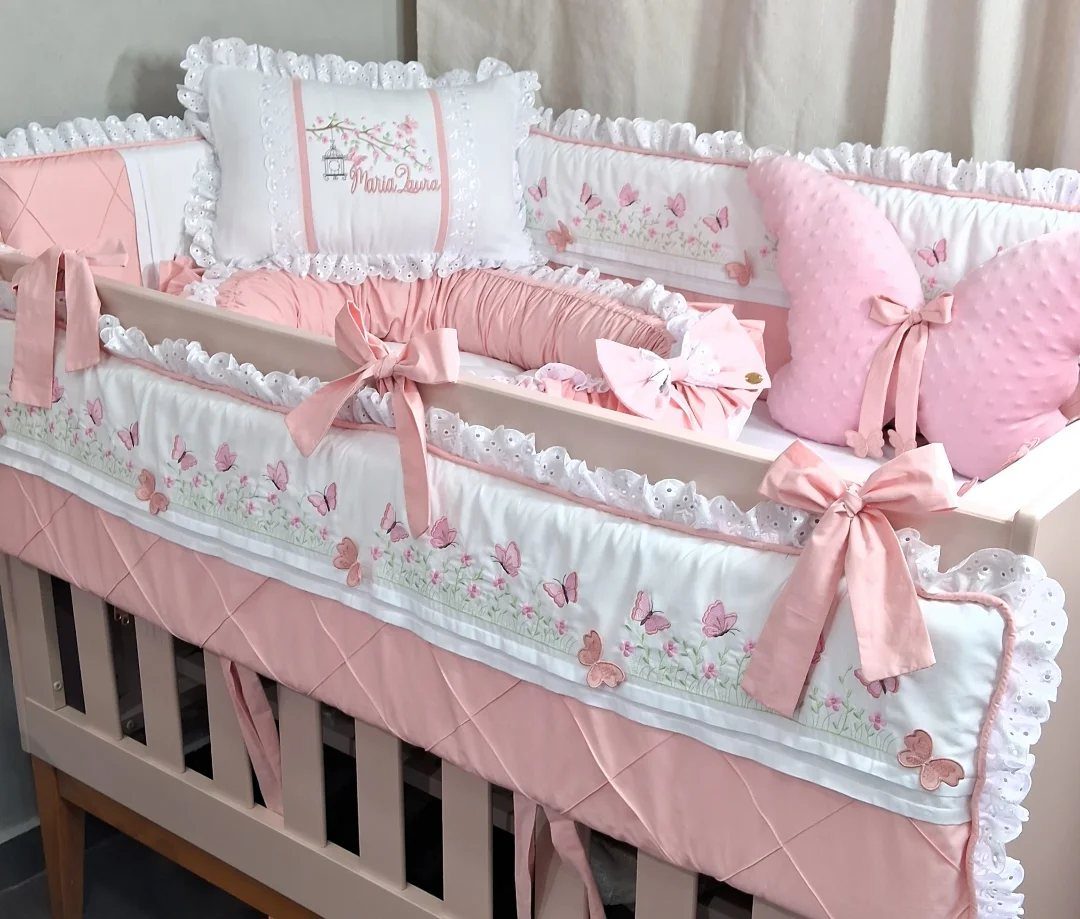
Bedding anchors the look of the crib itself, and I choose it after the walls are finished so it ties into the room’s palette rather than fighting it.
White with pink butterflies and green accents ties both colors together without overwhelming a white wooden crib.
Embroidery and ribbon trim add softness, and a monogrammed pillow makes a keepsake. Skip loose pillows once the baby is sleeping in the crib; keep those for photos.
6. Wood and Soft Fabrics
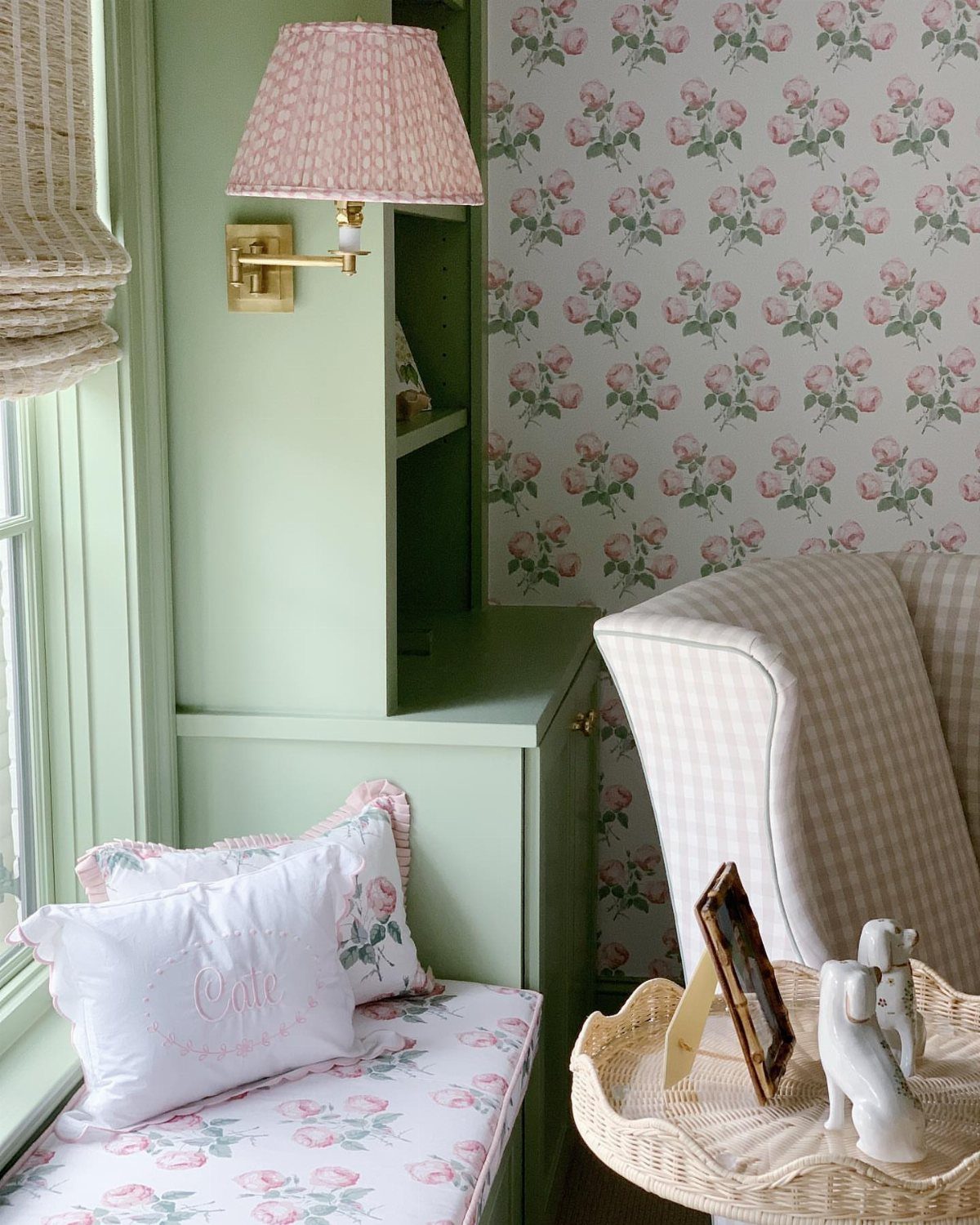
Green painted wood next to floral pink fabric is a pairing that feels warm instead of sweet. A built-in bench in sage gives you seating and storage, while cushions in pink florals soften the hard edges.
A checkered chair adds a second pattern without adding a new color. I’d keep the lampshade pink, since a shade is cheap to swap, and let the cabinetry stay the steady green.
7. Different Shades of Pink and Green
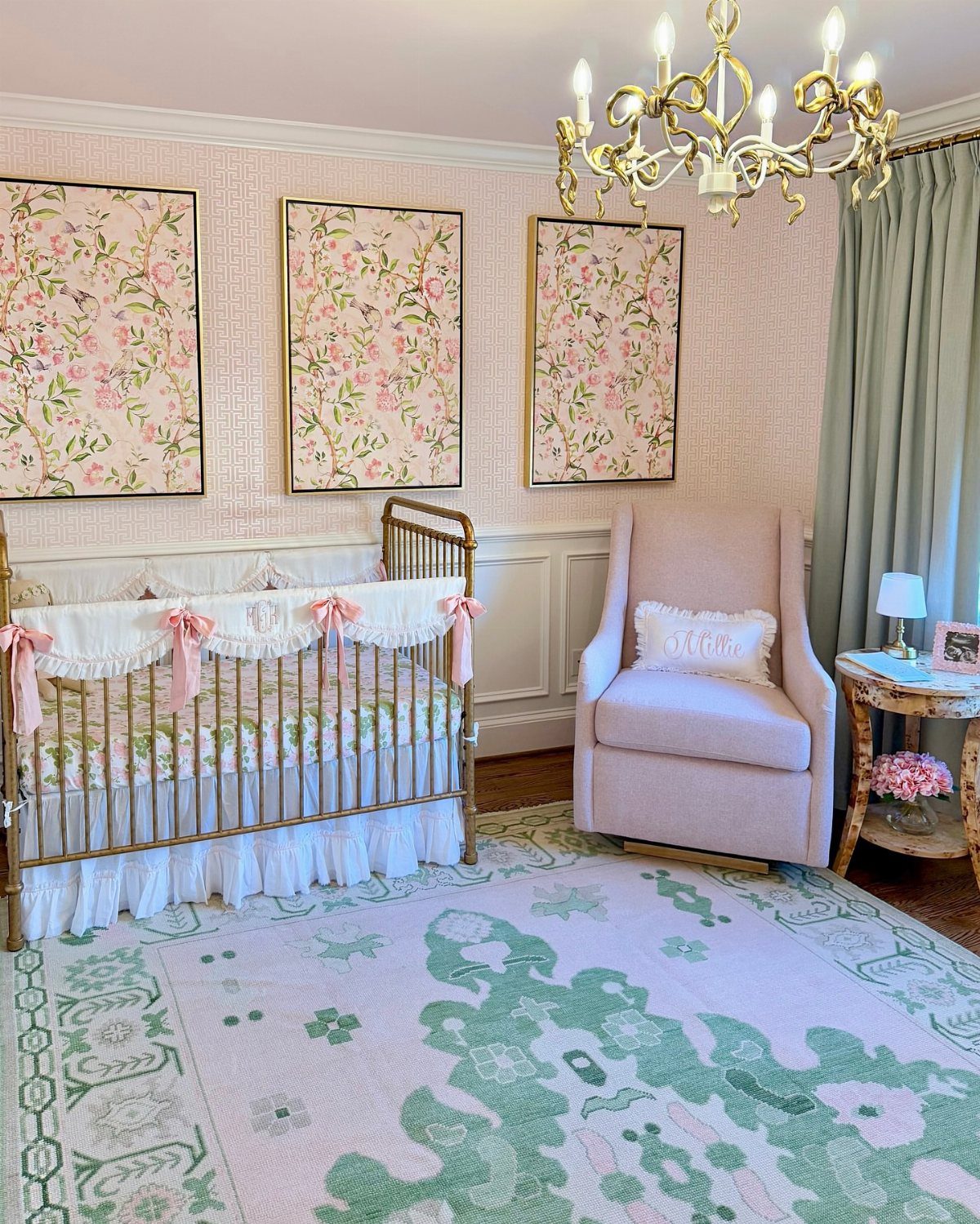
Pink and green don’t have to match to get along. Mix blush with deeper rose, mint with forest green, and the room holds more visual interest than a single shade of each.
I’d pick one dominant pink and one dominant green, then let the others stay supporting players.
Gold hardware and lighting act as a bridge between the 2 colors without competing with either. A personalized pillow is a cheap way to add a pink note.
8. Light Green Changing Dresser
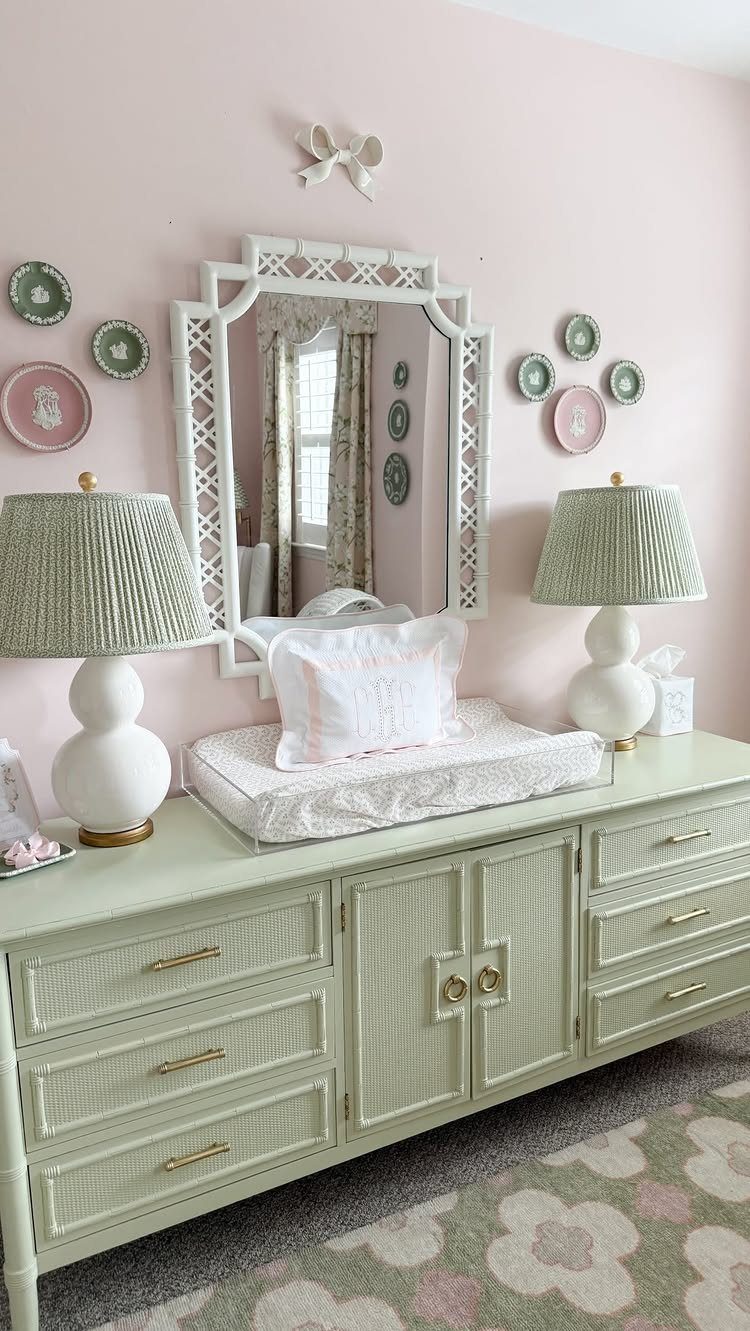
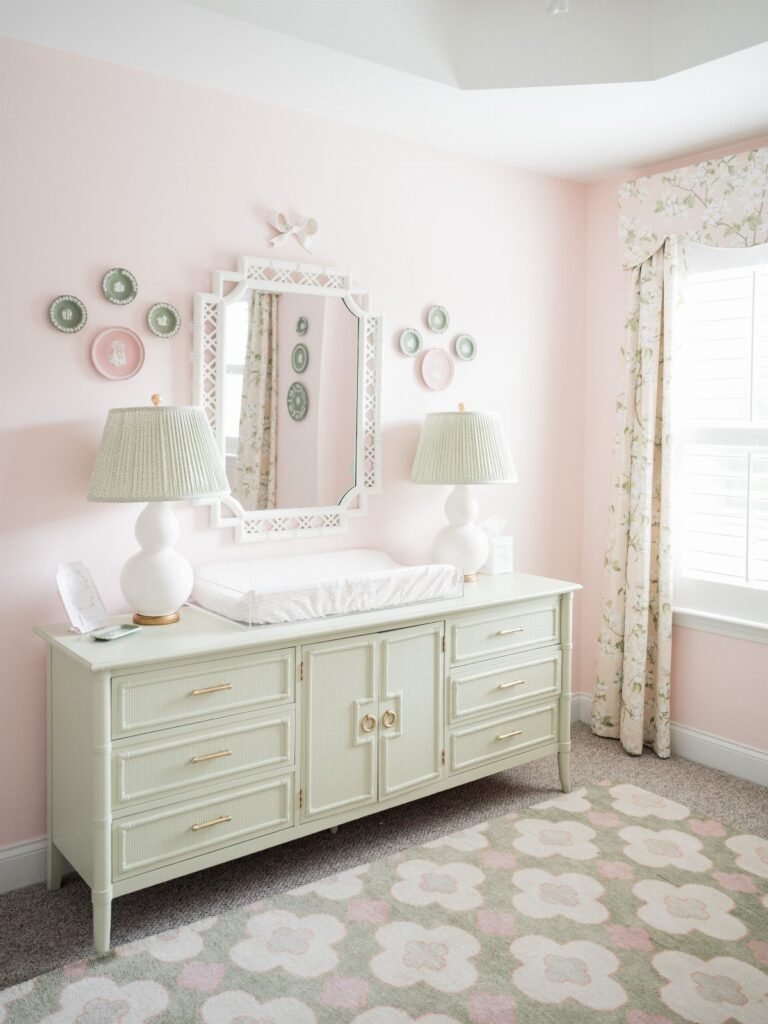
A light green dresser against pale pink walls puts the green at changing height, right where your hands spend the most time. With a changing pad on top, it does 2 jobs and saves buying a separate table.
2 small lamps give you softer light than an overhead fixture for night changes.
I’d hang a mirror above and keep the top clear except for what you grab daily. If you’re buying secondhand, a coat of light green paint is an easy weekend fix.
9. Green Patterned Curtains
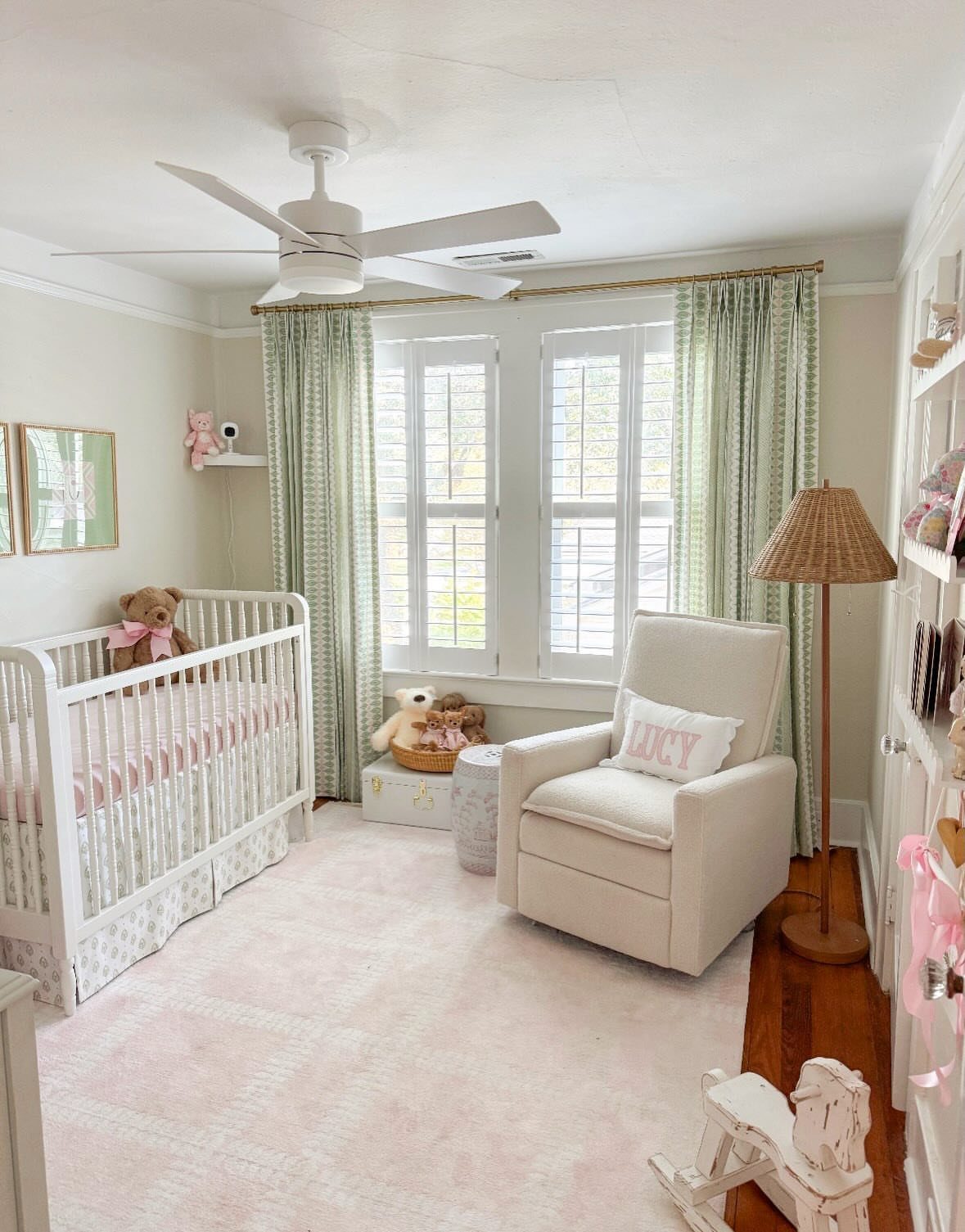
Curtains add green pattern for less money than wallpaper or upholstery when the furniture is staying white. Mount the rod a few inches above the frame and extend it several inches past each side, and the window reads larger.
A pink area rug on the floor balances the green overhead, so neither color takes over.
I’d choose a pattern with a little white in it, which ties the curtains back to the crib and chair. Swapping panels later costs far less than repainting.
10. Pink Wainscoting
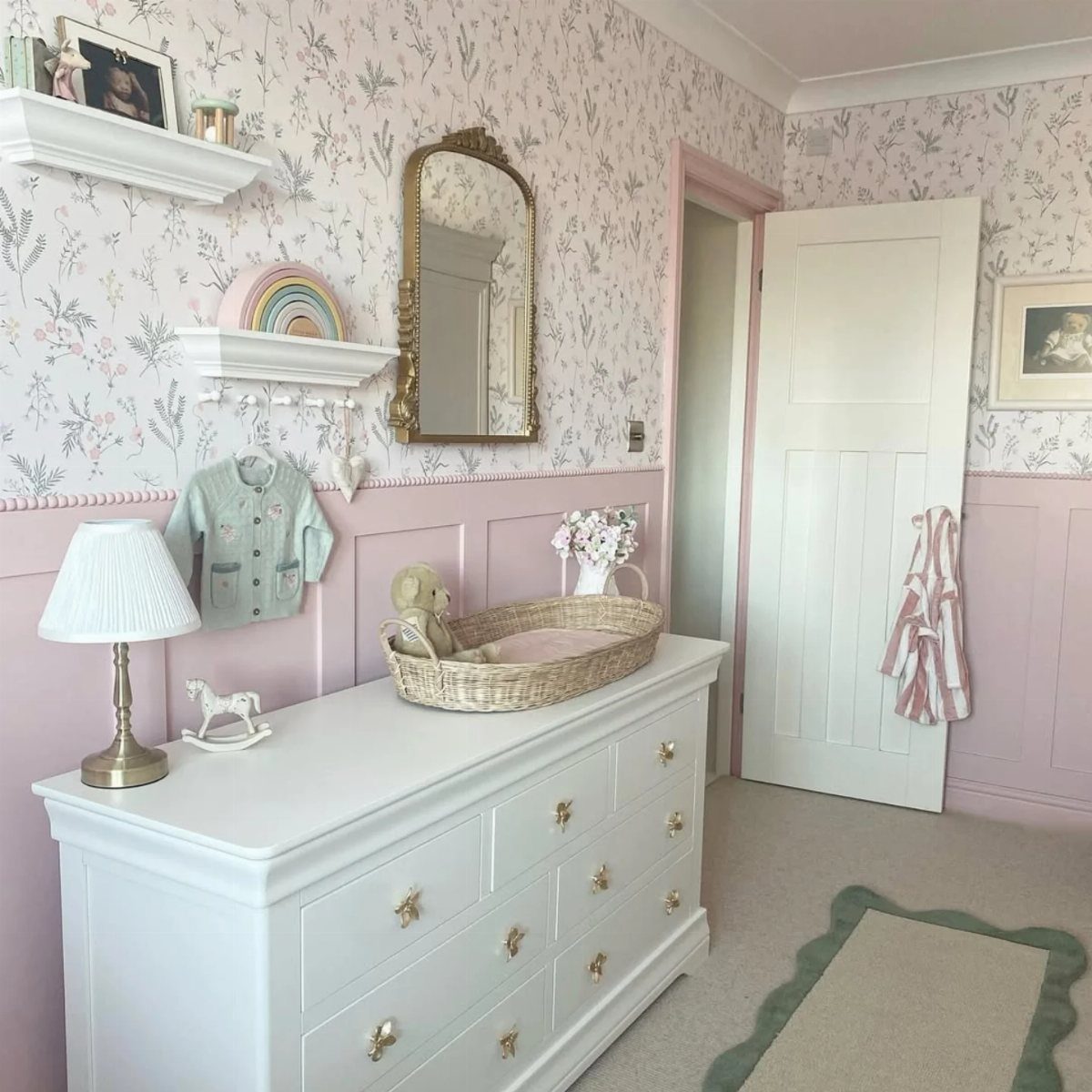
Pink wainscoting turns the lower third of a wall into a soft border, and floral wallpaper above it carries the pattern. Because the paneling is a solid color, the room stays calm even with a busy print overhead.
I’d paint the paneling a pale pink pulled from the flowers, then add green through a rug with a scalloped edge.
Paint is the budget route. Choose a washable finish for the lower wall, since that’s the part little hands will reach.
Choosing the Right Colors
Pick the green first and let it carry the room. A calm, muted green works as the base, and pink comes in as the accent, so the room never reads as a candy shop.
If a floral shows up in two spots, change the scale of the print so one is big and one is small; repeating the same colors at different sizes lets the pieces relate without competing.
Bare wall space matters too, because it gives the eye somewhere to rest between the pink and the green. Your eye needs somewhere to rest.
Planning Nursery Decor
Work from the biggest surfaces down. Paint and wallpaper come first, then furniture, curtains and a rug, and bedding and accessories come last, because those are easiest to match to what is already on the walls.
A nursery that has to last works best when the permanent pieces are in colors you will still like in a few years.
Avoiding Visual Clutter
Empty wall is part of the design. I’d leave at least one stretch bare, usually the one next to the busiest print, so the pattern has room to breathe.
Skip the urge to match every piece. Pieces that share a color family but differ in shade, finish and print look collected, while a perfectly matched set looks flat.
Before adding anything new, I’d remove one thing. If the room still feels full, the new piece can wait.
Frequently Asked Questions
What shade of green looks best with pink in a nursery?
A muted, gray-leaning sage is my first pick. It stays quiet next to pink and doesn’t compete with it, which suits a room where a baby will sleep.
Mint is the lighter, brighter pick, and it looks best against white furniture, which keeps the pairing from tipping into candy territory. Choose one dominant green and one dominant pink, then let other shades play supporting roles.
Can a pink and green nursery grow with my child?
It can, as long as the largest pieces, like the crib, dresser and paint, are shades I’d still be happy to see years from now. Paint, furniture, curtains and a rug should lean on a calm, muted green.
Let the baby feel live in the soft goods: crib sheets, a framed print, a mobile. All of it costs little and comes down in minutes when the room needs to age up.
Should the nursery use floral patterns everywhere?
No. One busy floral surface is enough, whether that’s wallpaper or a rug, and the rest should stay plain.
When two florals share a room, I scale them differently, one big and one small, so they read as a pair instead of fighting for attention. Leaving a stretch of bare wall also gives the eye a place to rest.





